


Memory Garden 🌱
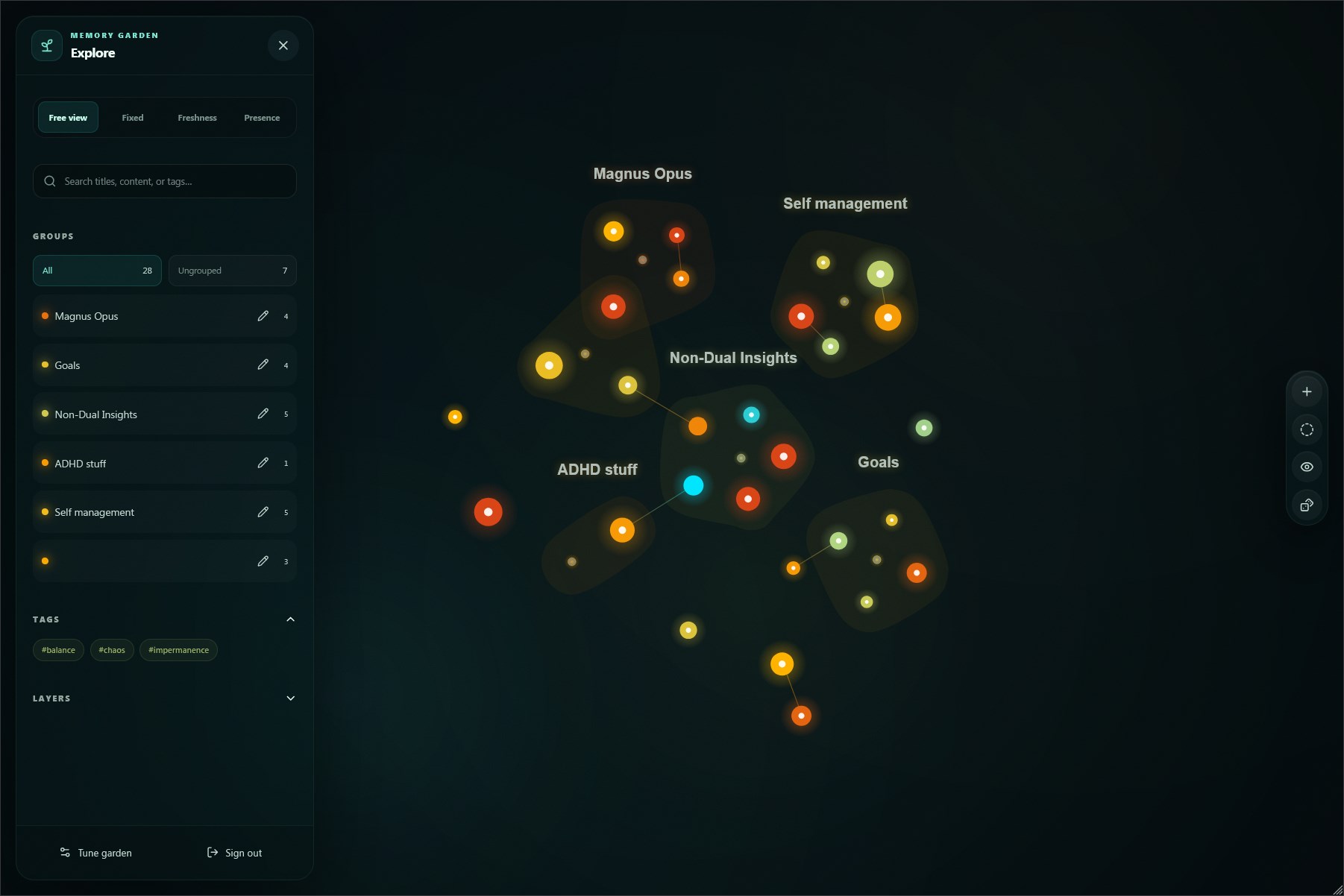
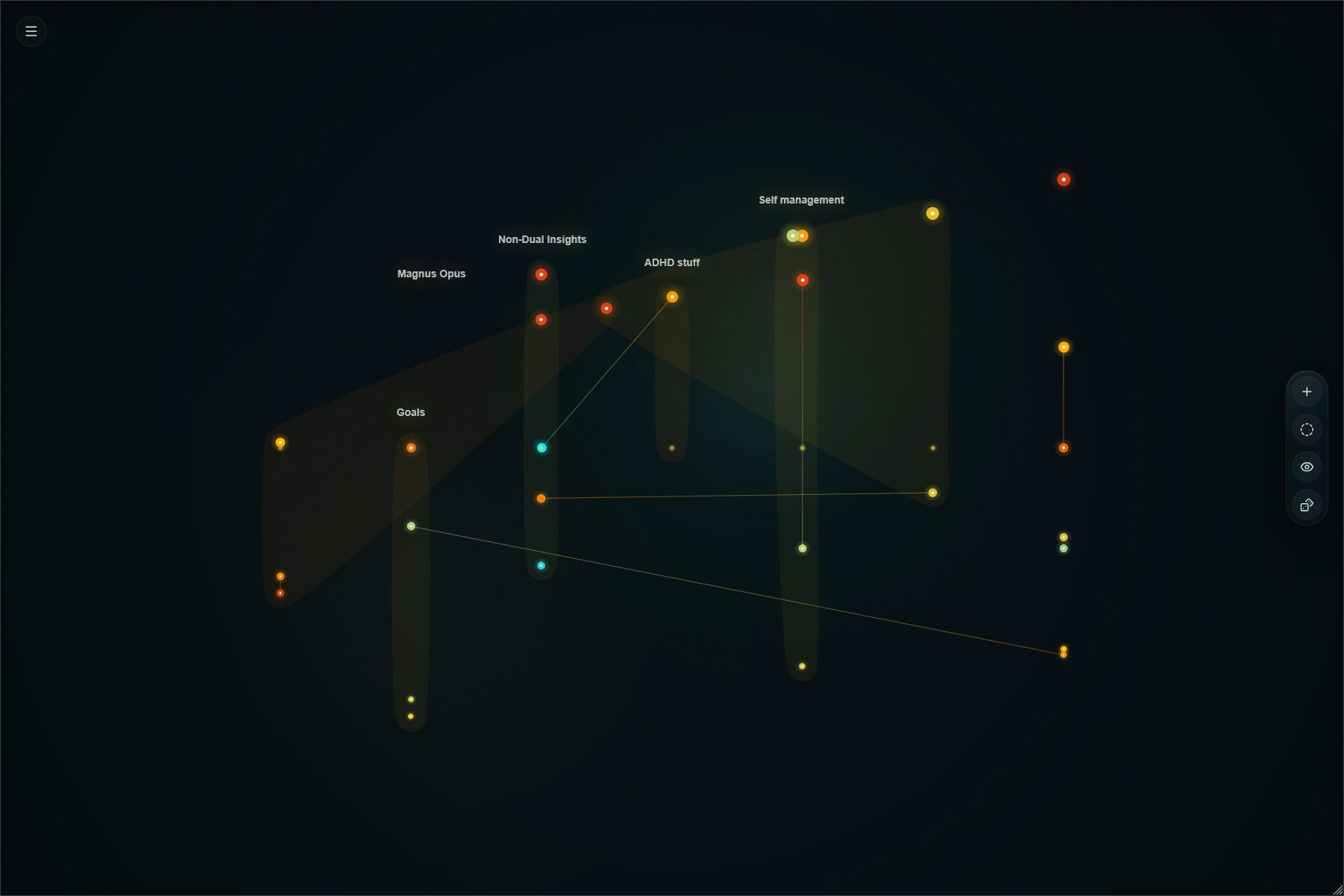
We save more ideas than we can keep alive. Existing tools either archive our knowledge or pressure us to review it. Memory Garden offers a different approach: a visual landscape that shows, at a glance, everything you’ve saved, its importance, and how present it is in your memory, allowing you to choose what to revisit accordingly.
Project Overview
The Problem
We encounter ideas, lessons, quotes, concepts, and pieces of knowledge that could positively influence our lives; yet most of them eventually disappear from our awareness.
- Traditional note-taking tools are good at storing information, but stored information is often placed into folders, documents, or databases that users rarely revisit.
- Spaced-repetition systems can improve retention, but they usually turn remembering into a scheduled obligation: the system decides what should be reviewed, when it should be reviewed, and whether the user is falling behind.
At the same time, the amount of information we encounter has never been greater, making it increasingly difficult to keep personally meaningful knowledge present without creating yet another list of tasks to maintain.
The Proposed Solution
Instead of presenting knowledge as a list of notes or a queue of required reviews, Memory Garden represents ideas as living nodes inside an organic visual space, where each memory-node has:
- A freshness that reflects how present it currently feels.
- A desired presence that represents how important the user wants it to remain.
Freshness influences the node’s visual state/color, while desired presence determines its size within the garden. Desired presence also shapes the rhythm of the memory over time. An idea the user wants to keep especially close will begin to show its distance sooner when it has not been revisited. A memory meant to remain more quietly in the background can fade at a gentler pace.
Users are not chased by notifications, deadlines, streaks, or overdue reviews. They can simply open the garden, wander through their ideas, notice what seems vivid or distant, and choose what deserves attention.
The garden does not assume that the user wants to complete a task, master a subject, or achieve a specific productivity goal. It only reflects the evolving remembrance-state of the knowledge the user chose to place inside it.
Why It Is Different
Memory Garden explores a different relationship between memory and software: remembering as an environment to revisit rather than an obligation to complete.
Its interface uses the metaphor of a living garden:
- Memories are "planted" as nodes in the canvas/"garden".
- Memory-nodes change visually as their "freshness" evolves.
- Important memories occupy more visual space.
- Related memories can be grouped to form visually organic regions.
- Explicit connections reveal relationships between concepts.
- Interaction feels spatial and physical rather than administrative.
The result is a playful, low-pressure alternative to conventional note-taking and spaced-repetition systems. Instead of asking, “What am I required to review today?”, Memory Garden invites the user to ask, “What do I want to keep present?”
Cultivate what you want to keep present.

Built With
- indexeddb
- next.js
- postgresql
- react
- supabase
- tailwind-css
- typescript
- vite
- zustand


Log in or sign up for Devpost to join the conversation.