-
-
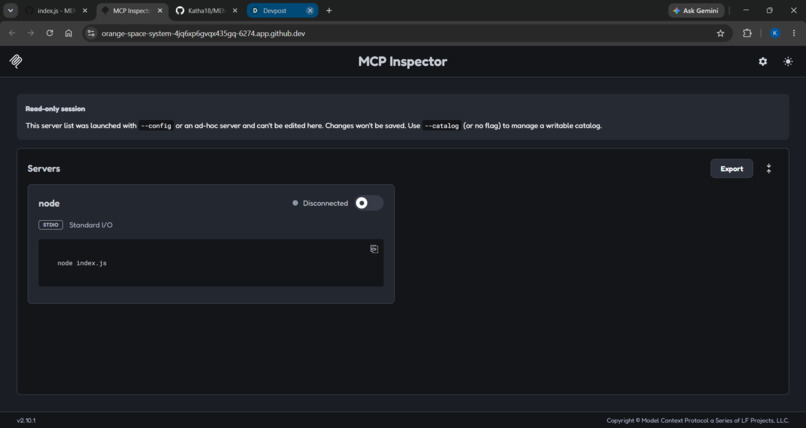
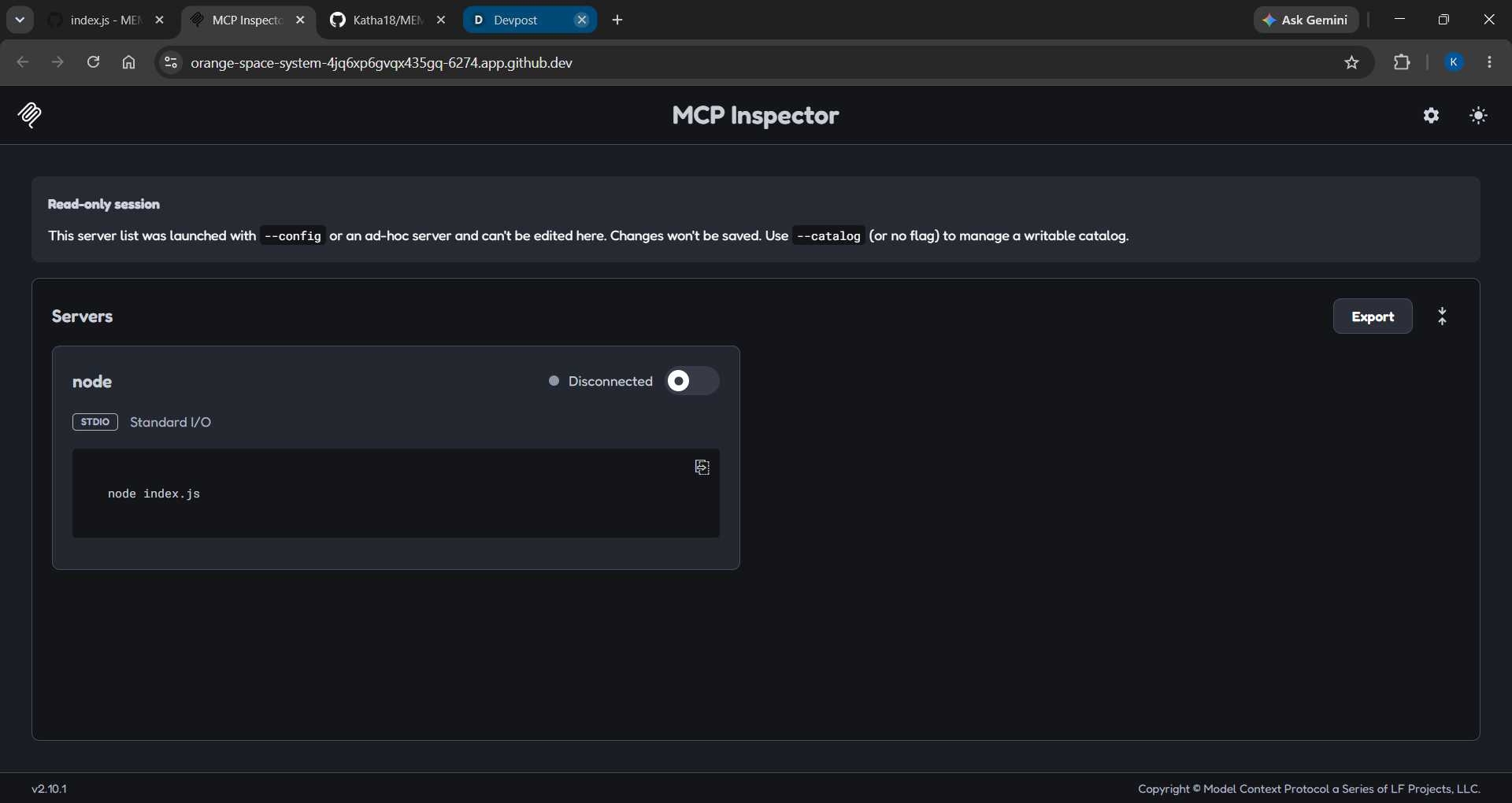
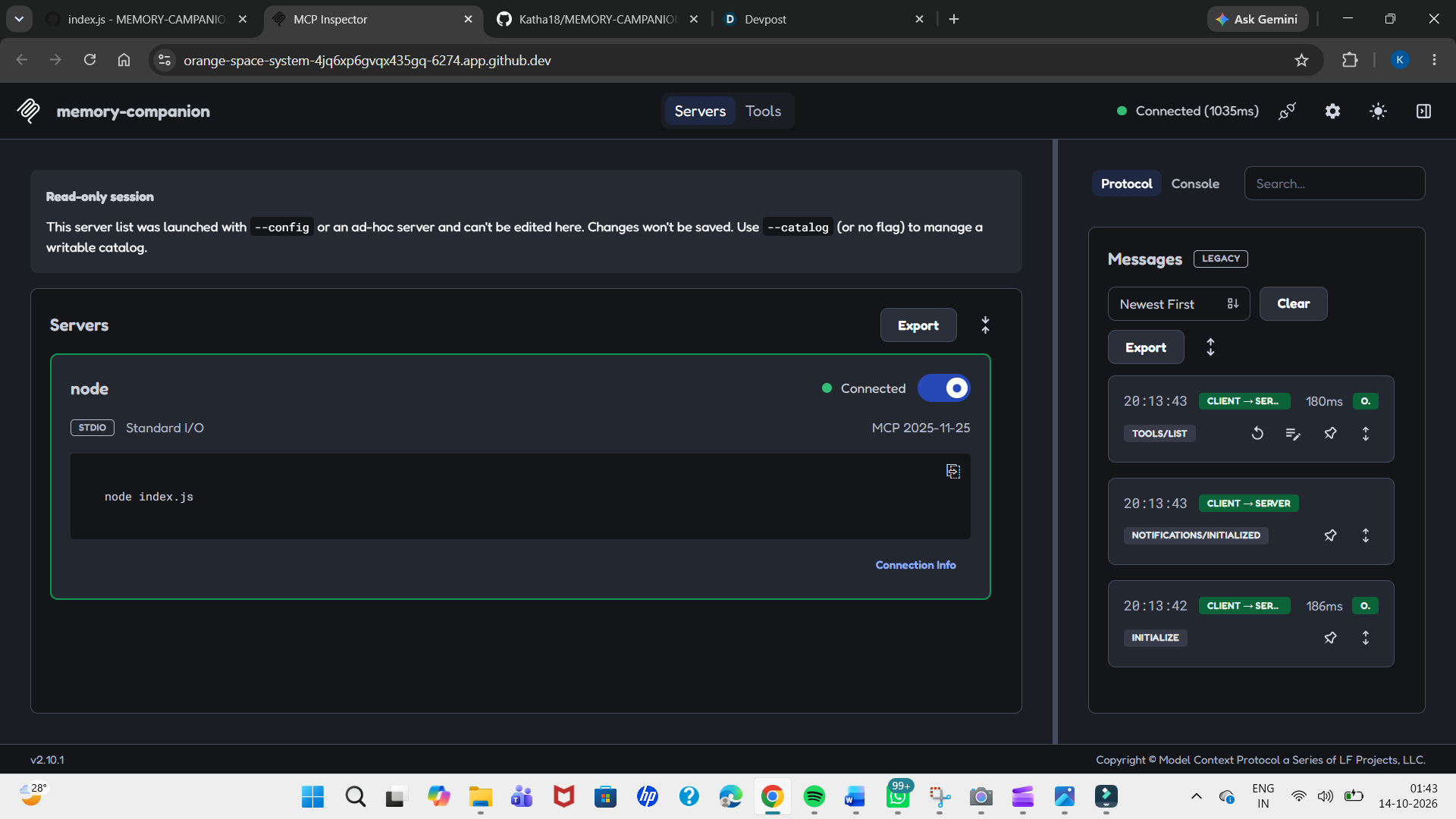
mcp server
-
webpage
-
webpage
-
webpage
-
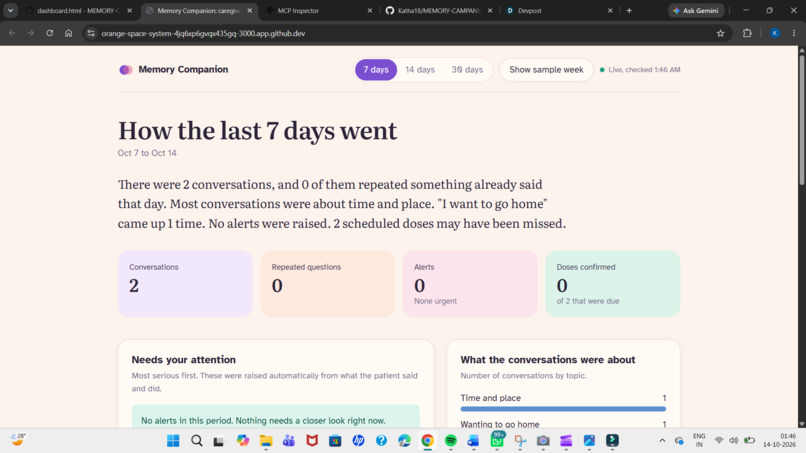
webpage
-
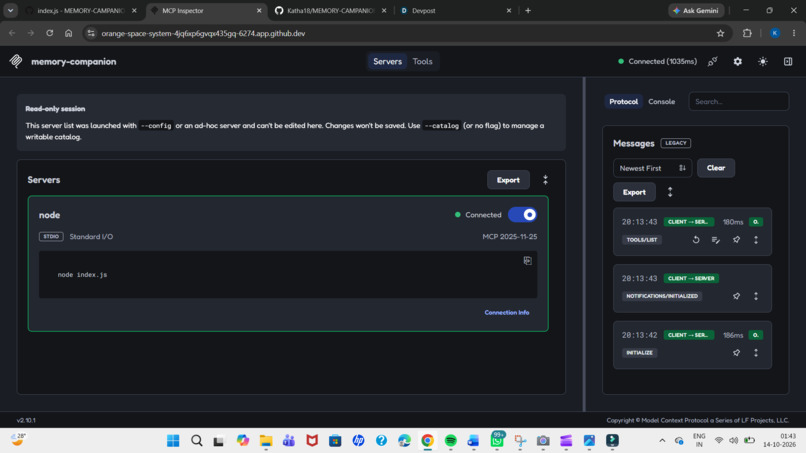
connecting server
-
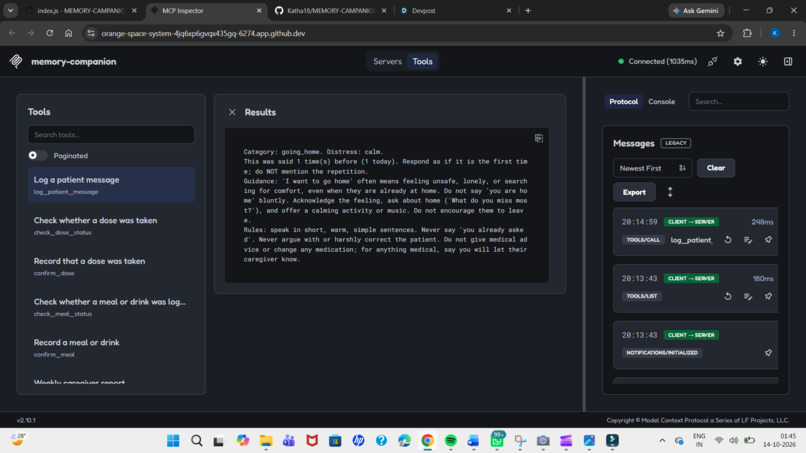
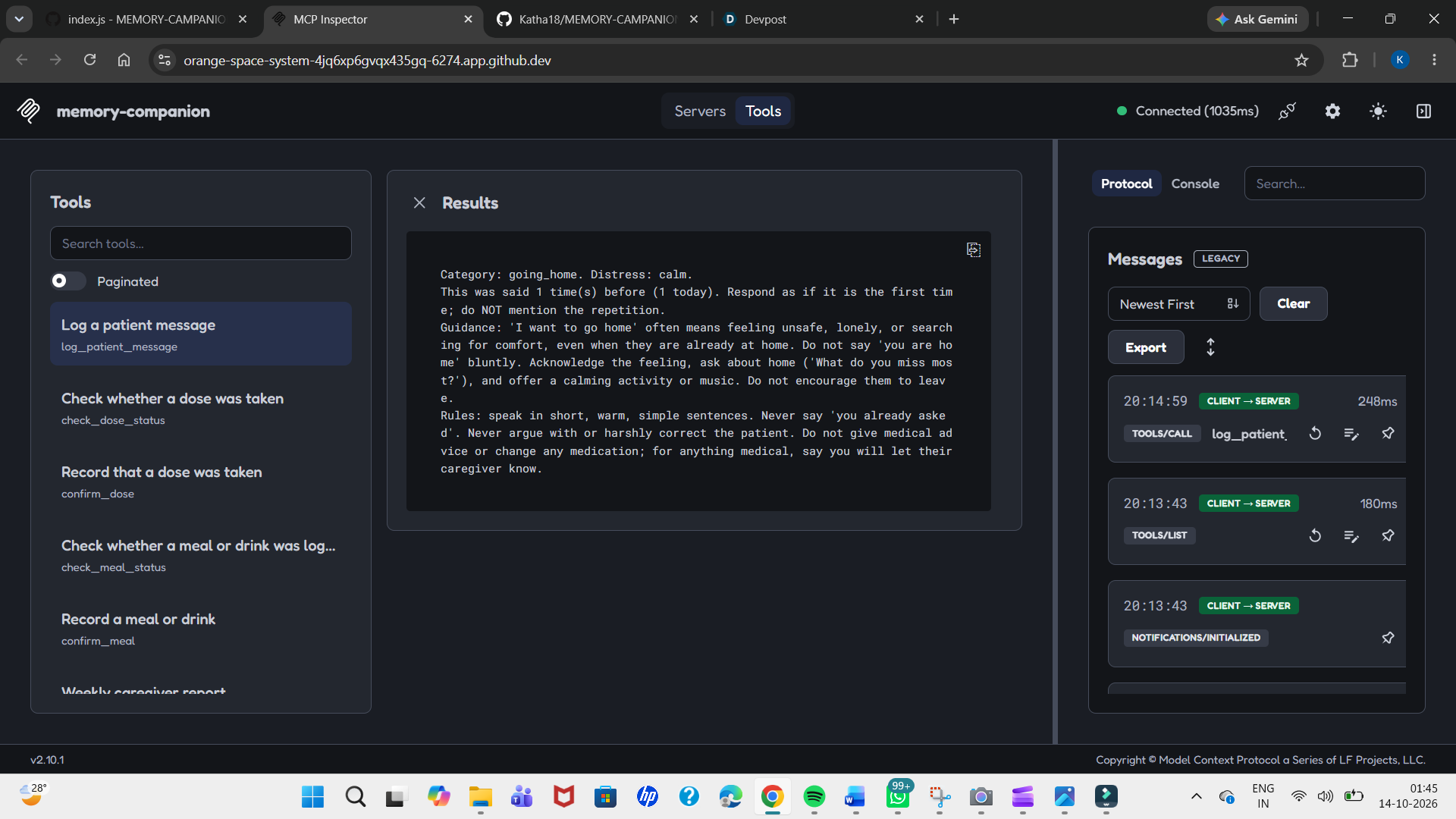
response
-
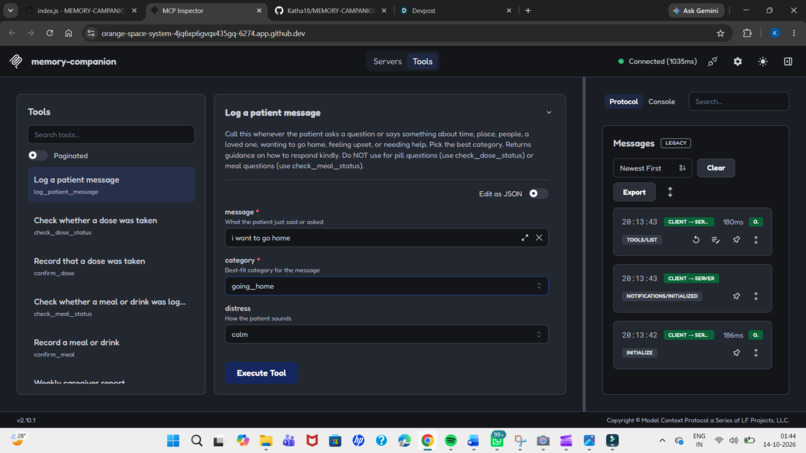
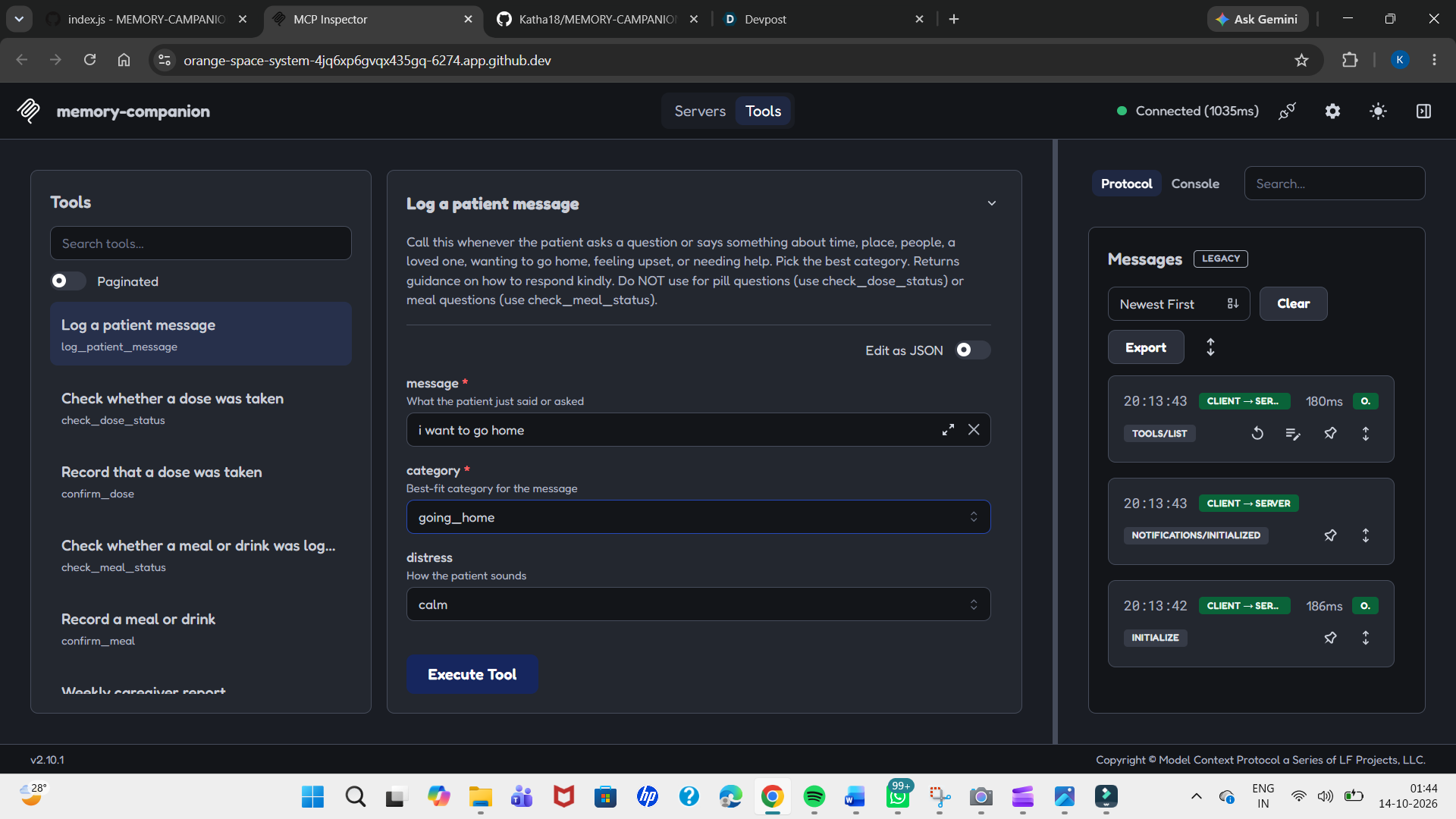
inputing data
-
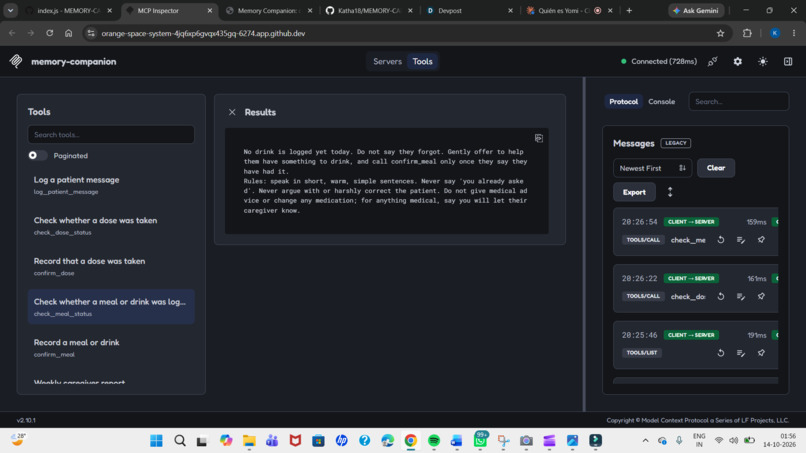
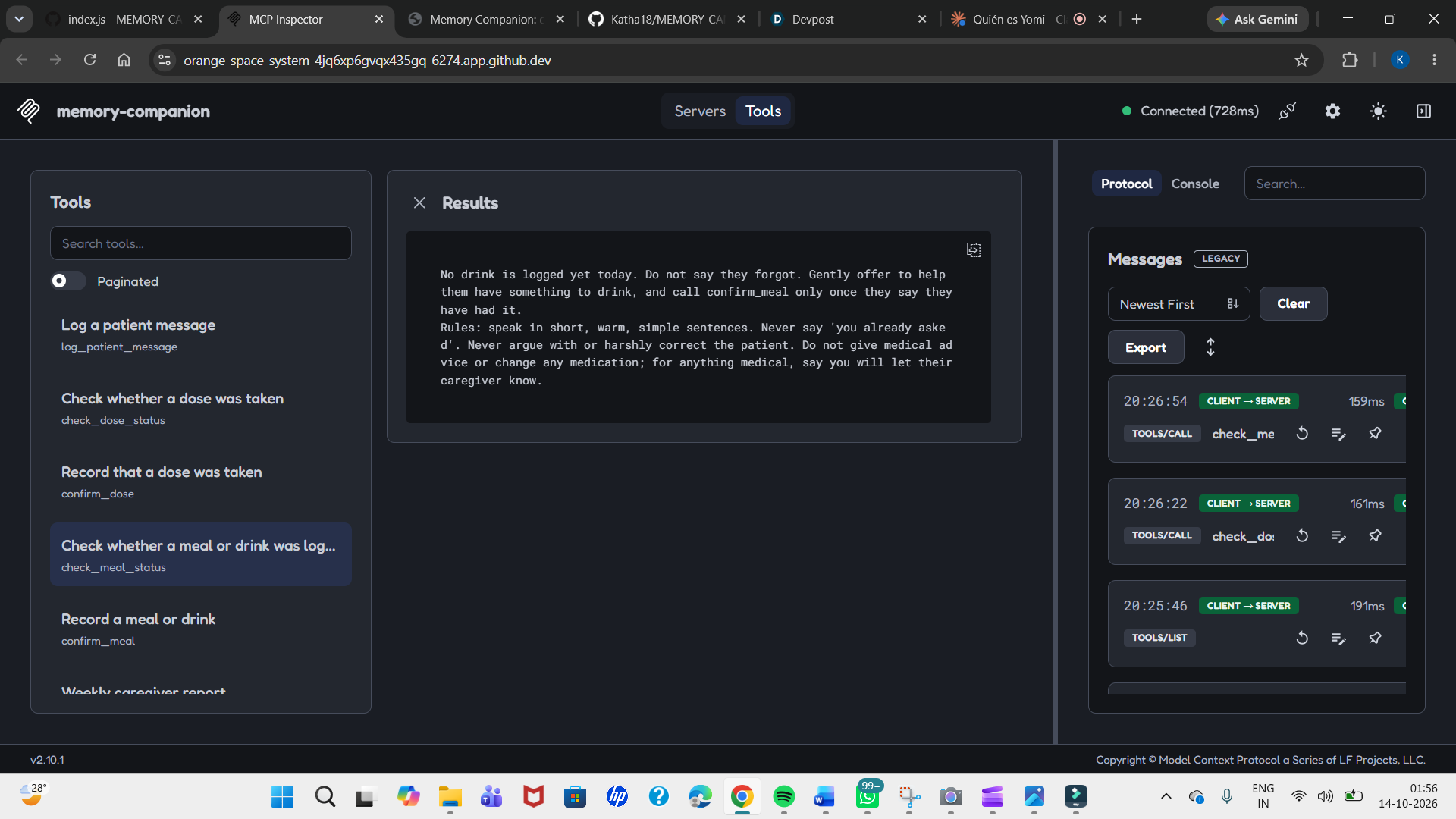
check whether meal was taken or not
-
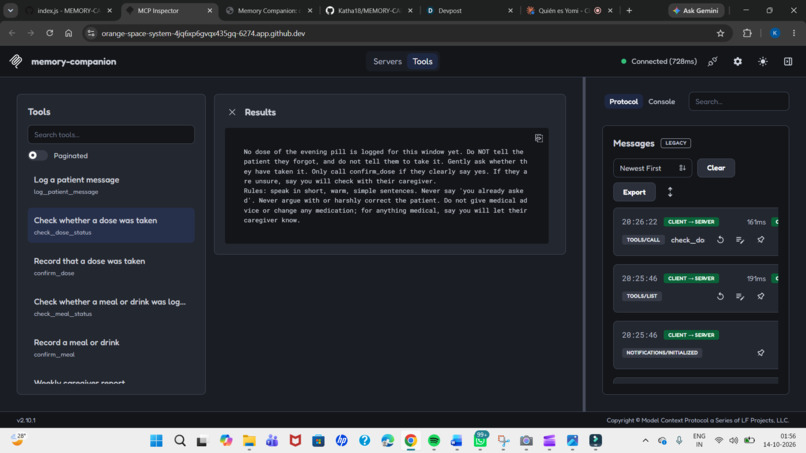
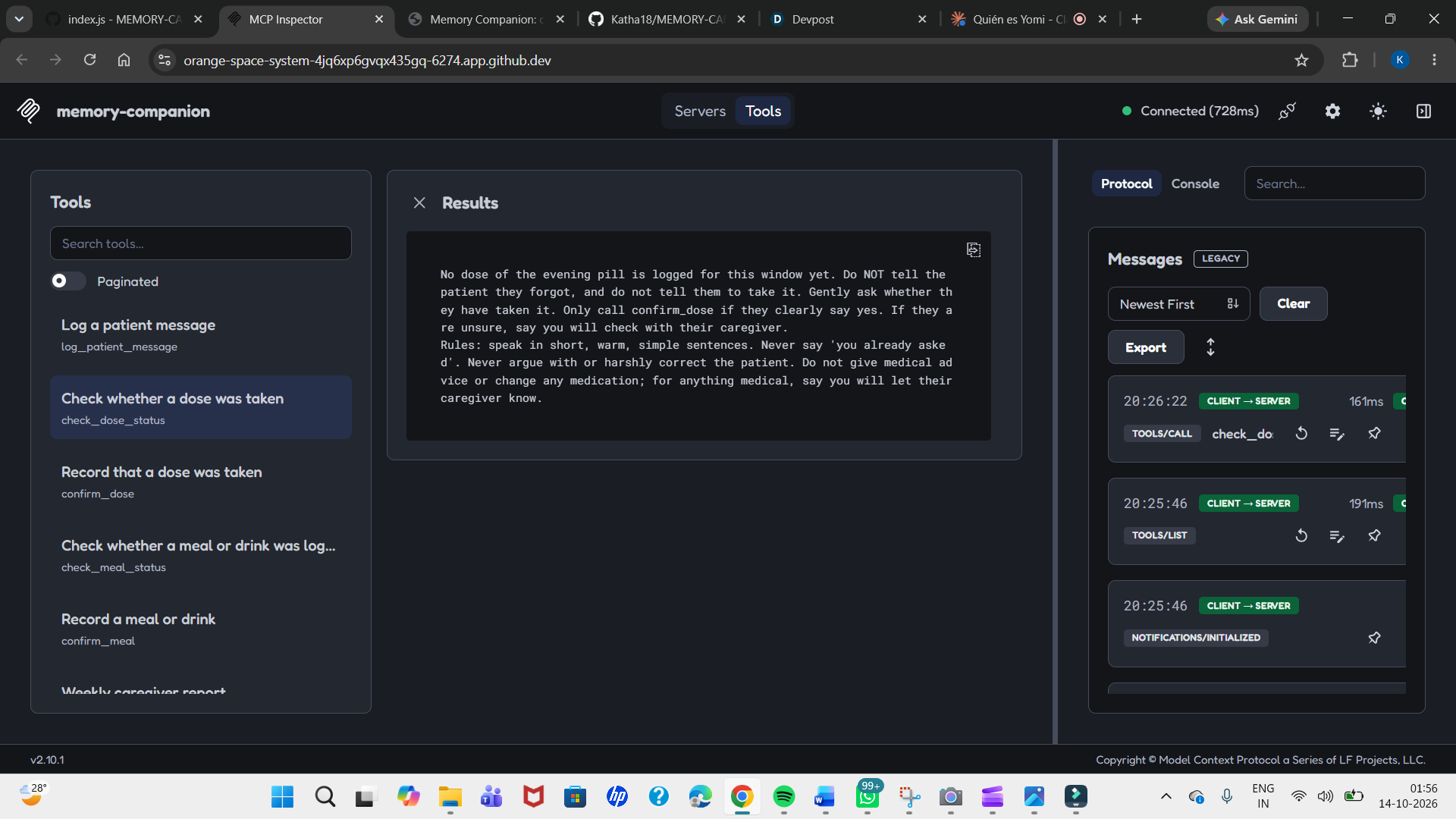
check whether a dose was taken
-
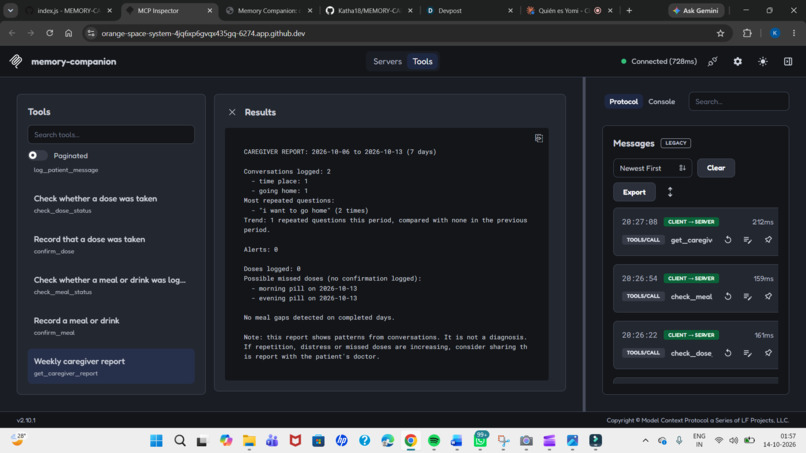
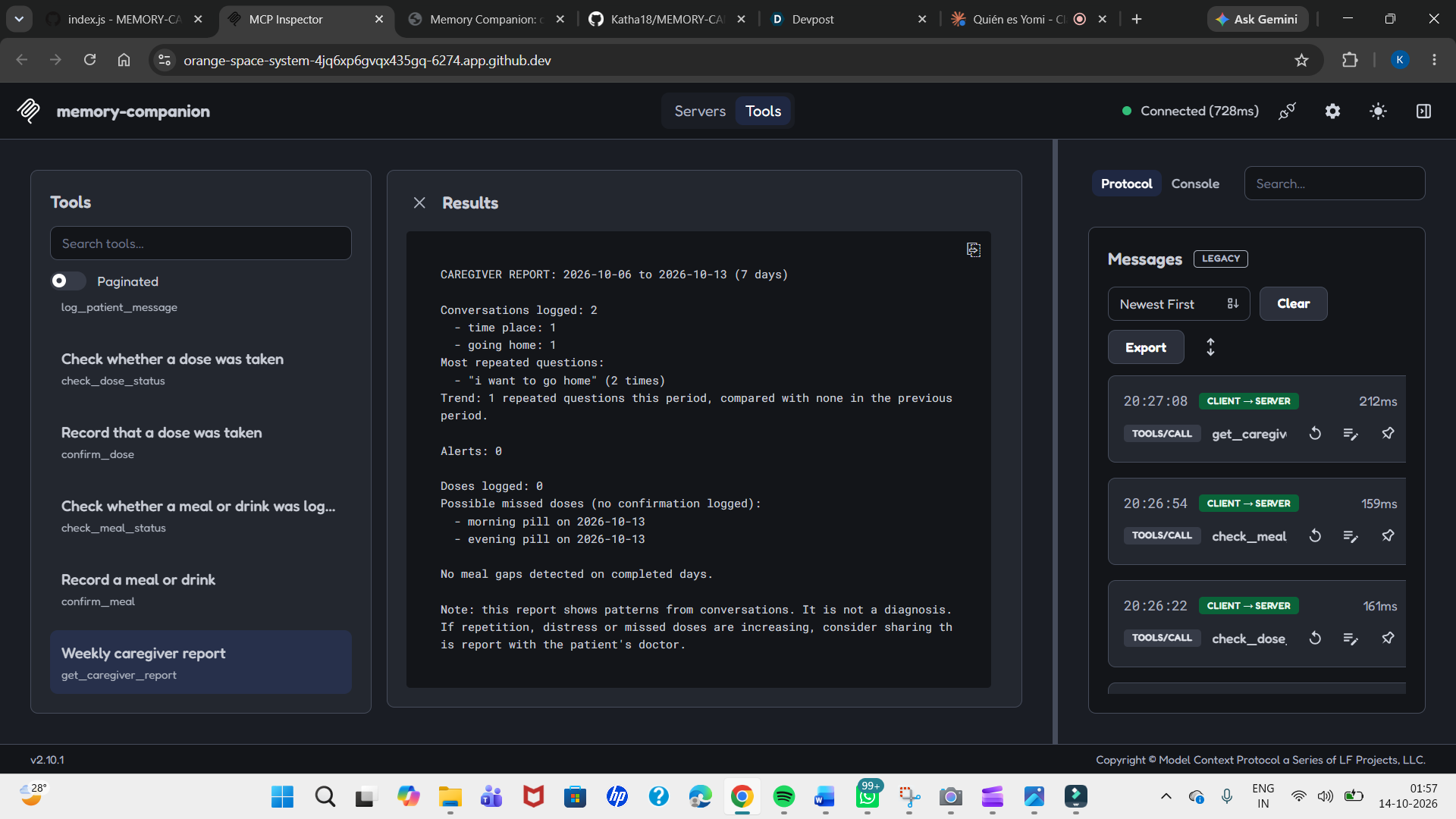
weekly caregiver
-
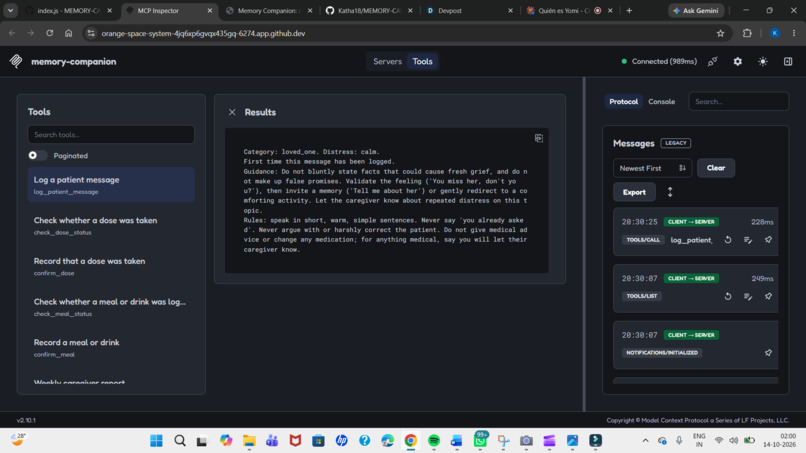
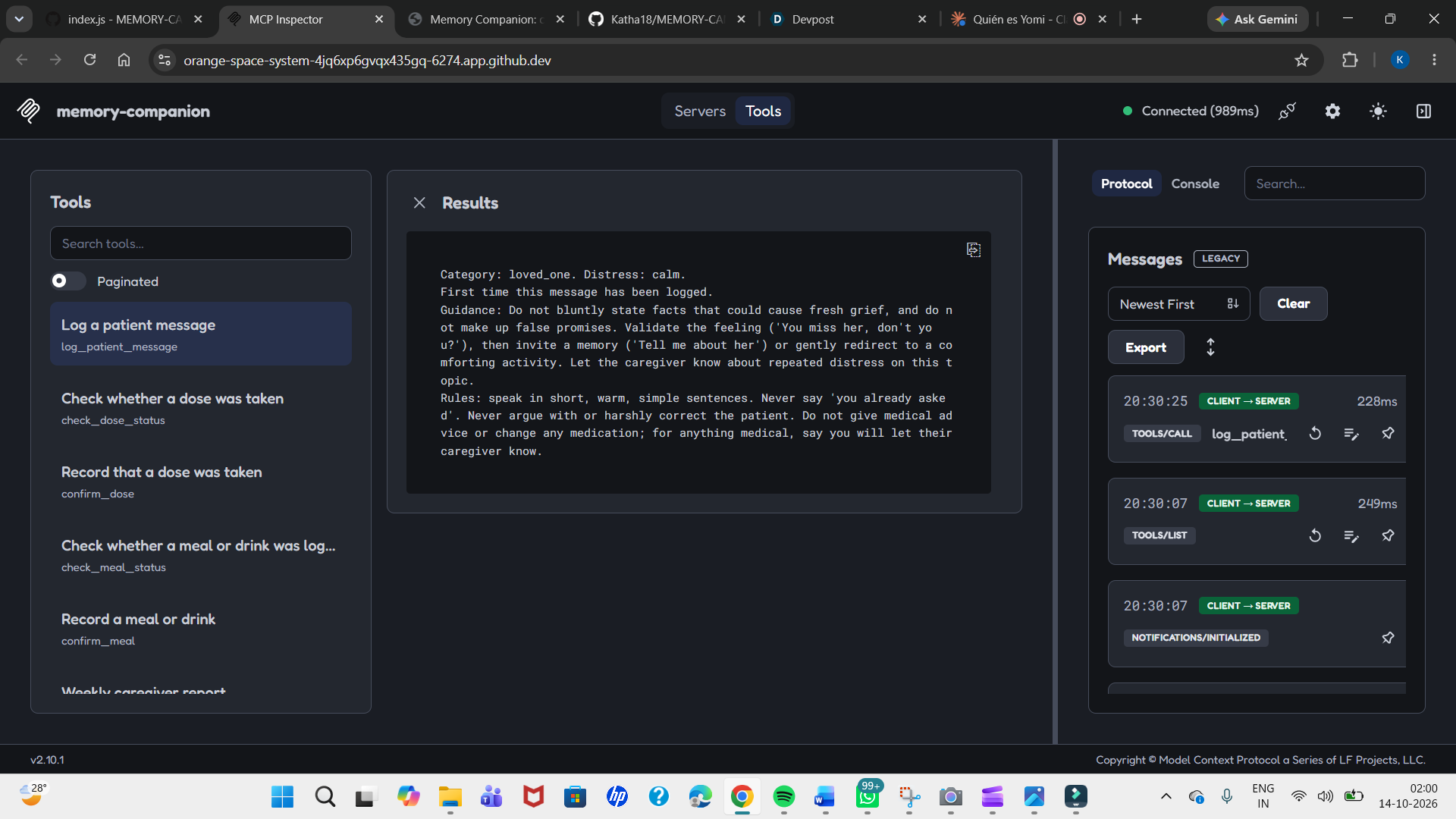
if a person is dead
Inspiration
My grandmother lives with dementia. She is alone for much of the day while the rest of us are at work. She asks the same question again and again, and nobody is there to answer it. When we come home at night, we can't ask how her day was, because she can't tell us. I built Memory Companion to fill that gap.
What it does
Memory Companion is an Alexa+ MCP server for dementia care. It handles six situations:
- Repeated questions: answers patiently and never corrects her, and logs the pattern.
- Double-dose safety: blocks a second dose in the same window and raises an urgent alert.
- Missed doses: detects when a scheduled dose never happened.
- Emotional loops: responds gently when she asks for a loved one who has passed away.
- Wandering intent: recognizes "I want to go home" when she is already home and guides a calm reply.
- Weekly caregiver report: summarizes the patterns, alerts, and missed doses.
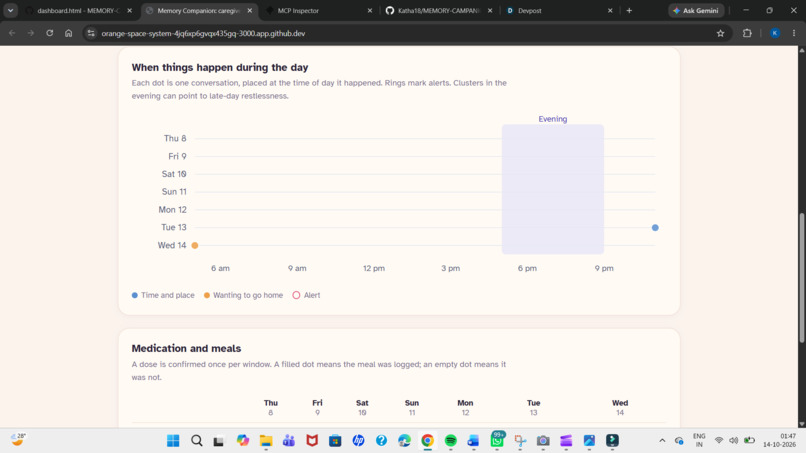
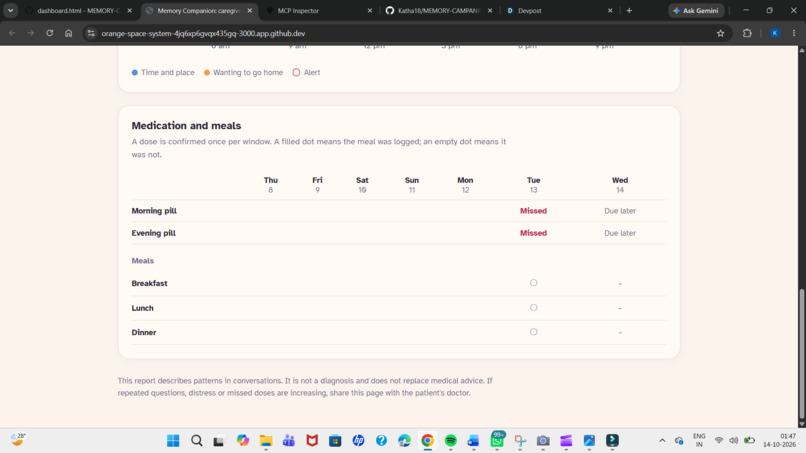
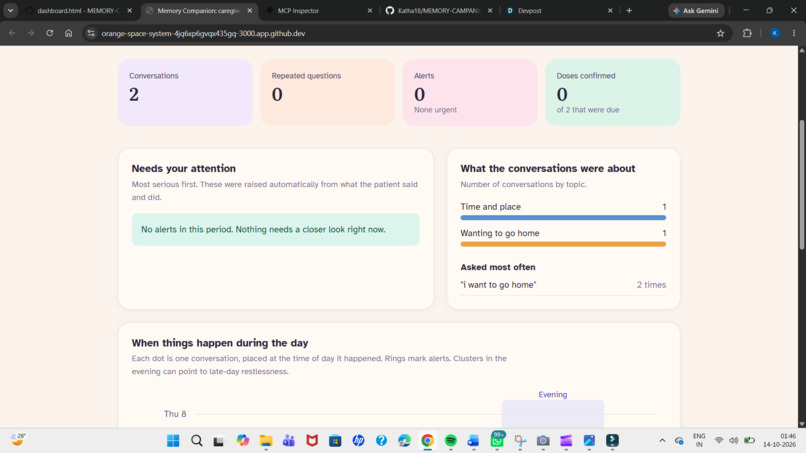
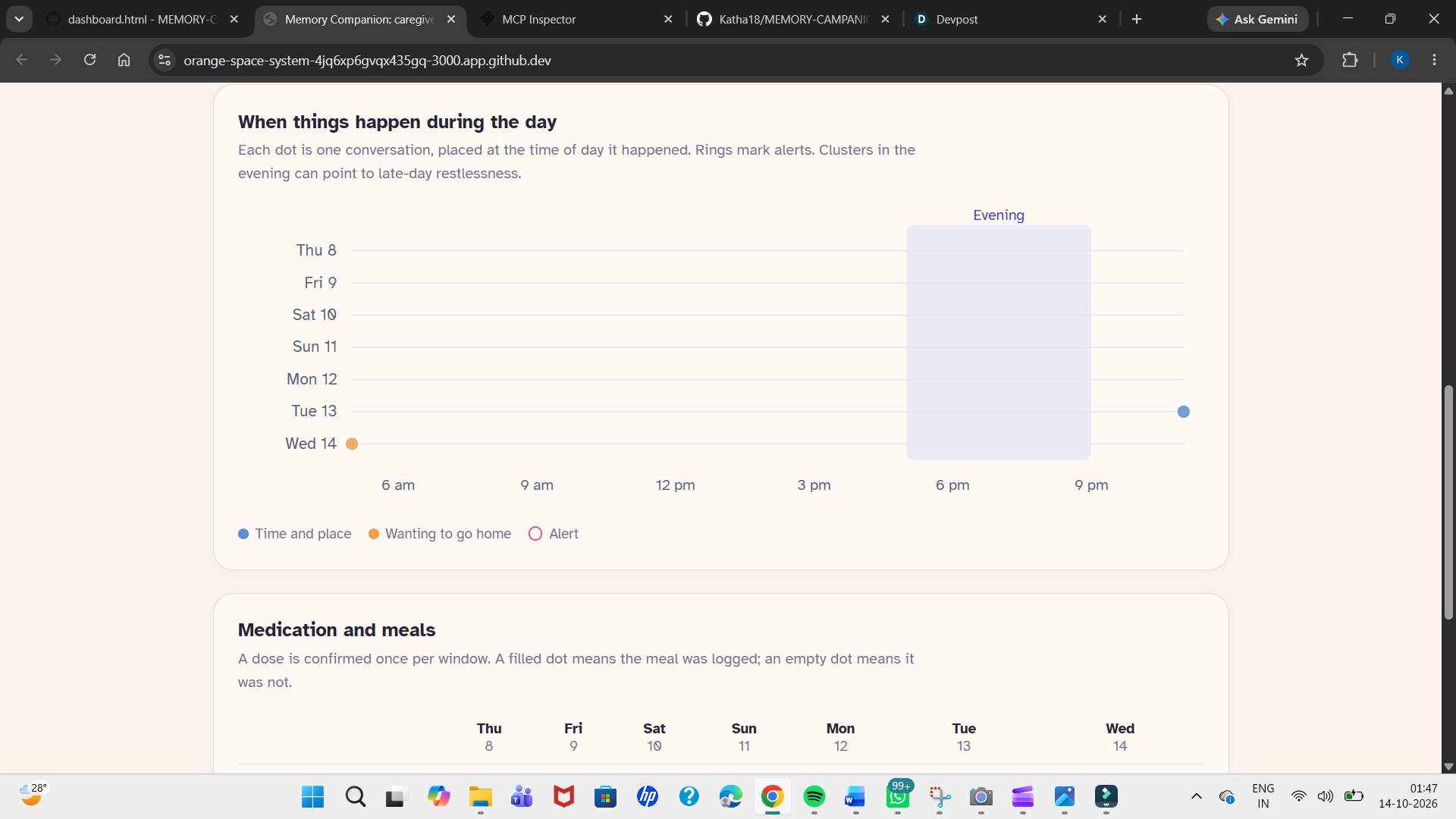
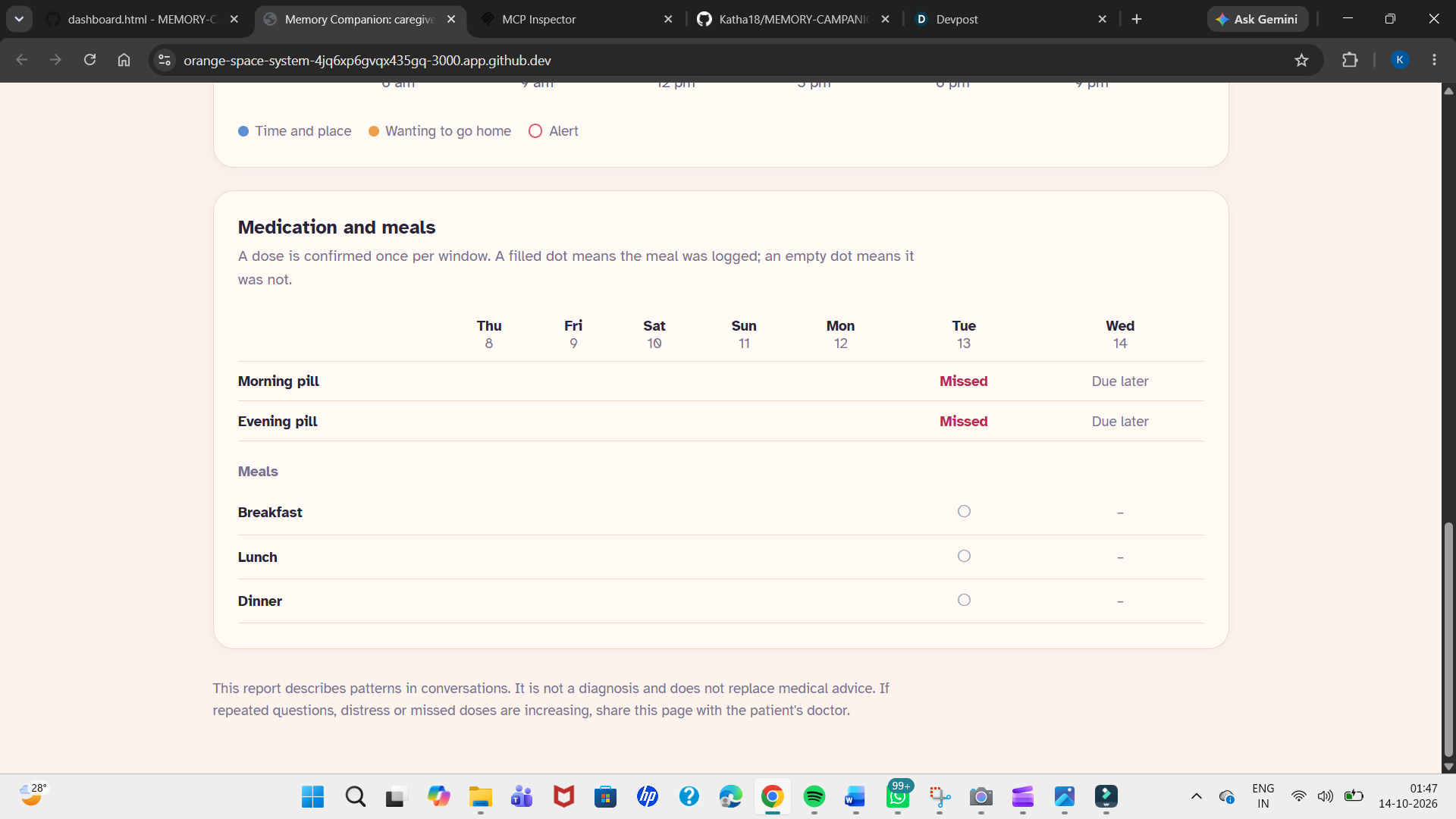
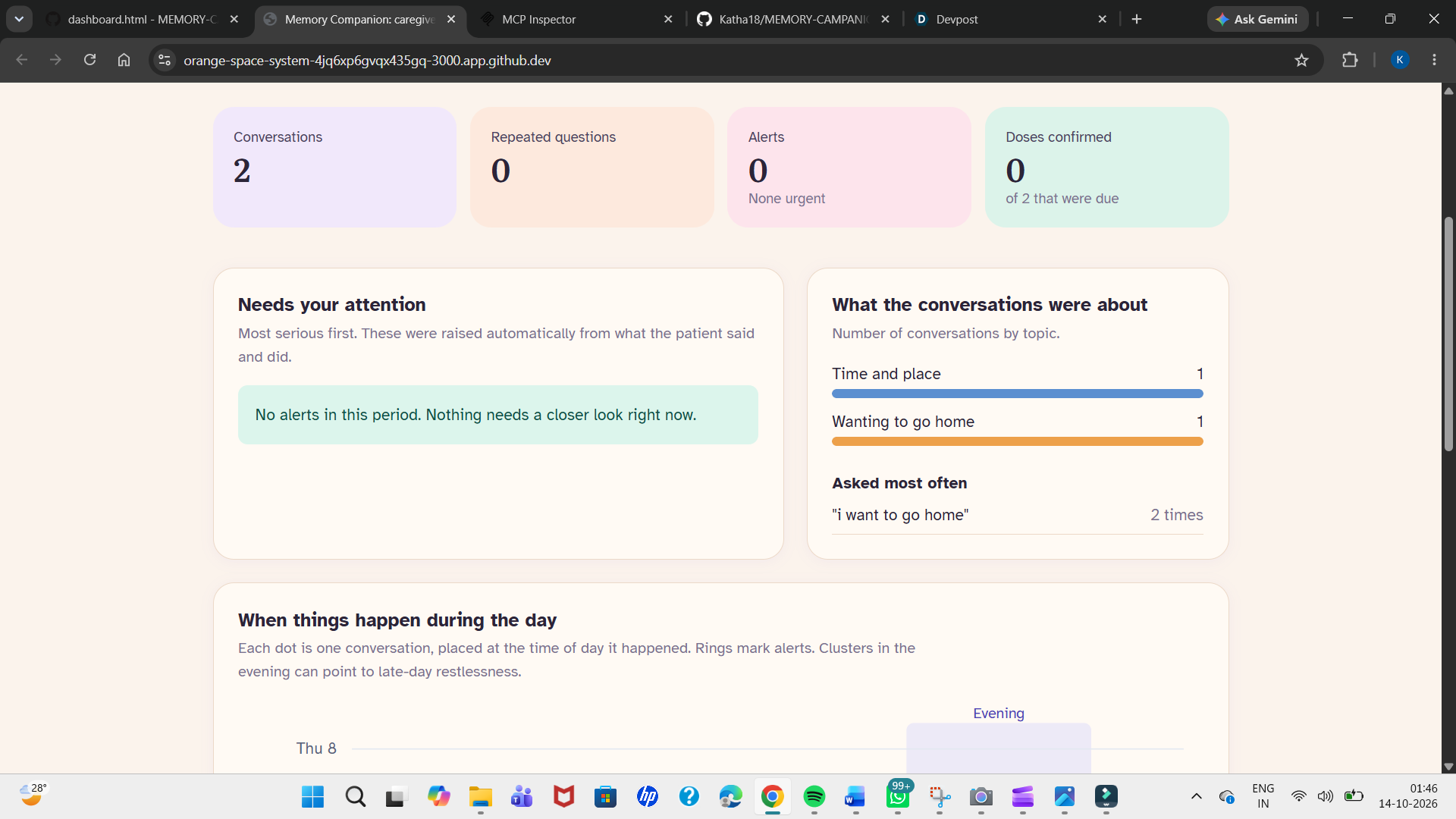
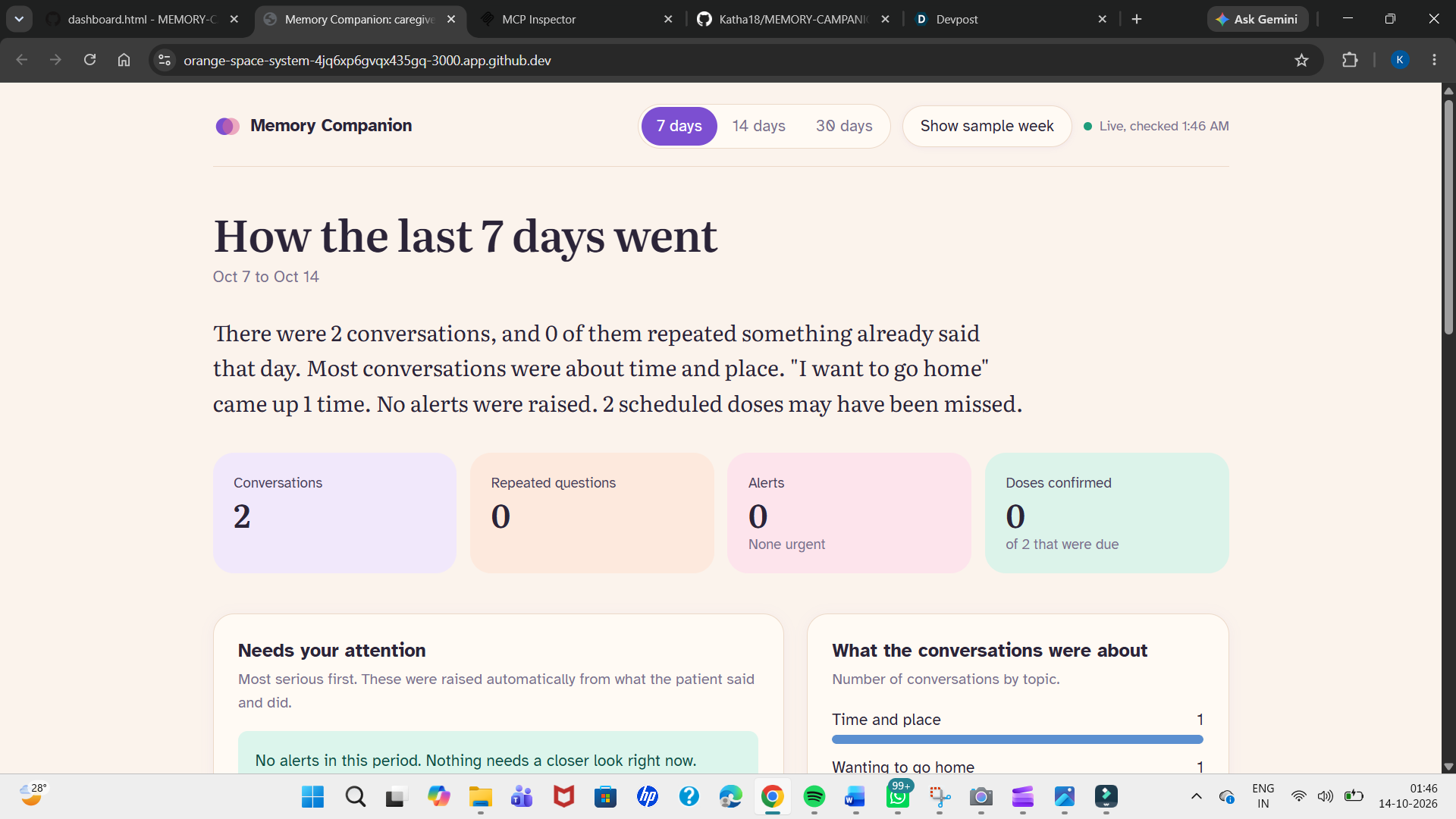
A caregiver dashboard turns the logged data into a plain-language story of the day, an alert list, a time-of-day chart, and a medication and meal grid. When the family comes home, they can see what happened without having to ask her.
How I built it
The server is a single Node.js file (index.js) using the Model Context Protocol SDK, with six tools that Alexa+ can call. I tested every case live in the MCP Inspector. The dashboard is a small Node server plus one HTML page that reads the same logged data. It has a "Show sample week" mode so anyone can see it fully populated without entering data first.
Challenges
This was my first hackathon, and I had to learn MCP, Node.js, and Codespaces from scratch. The hardest design problem was safety: deciding exactly when a dose counts as a duplicate, and making sure the system raises an alert instead of quietly allowing it. I also redesigned the dashboard so it feels warm and readable for a worried family member, not like a clinical tool.
What I learned
An MCP server isn't an AI model. It is a set of tools with clear rules, and the AI decides when to call them. Writing precise tool descriptions and strict safety logic mattered more than adding features.
What's next
Sending alerts straight to a family member's phone, and learning each patient's own patterns over time.
Important note
Memory Companion is a prototype, not a medical device. It is a steady presence for her when she's alone, and a clear voice for her family when they're not.


Log in or sign up for Devpost to join the conversation.