-
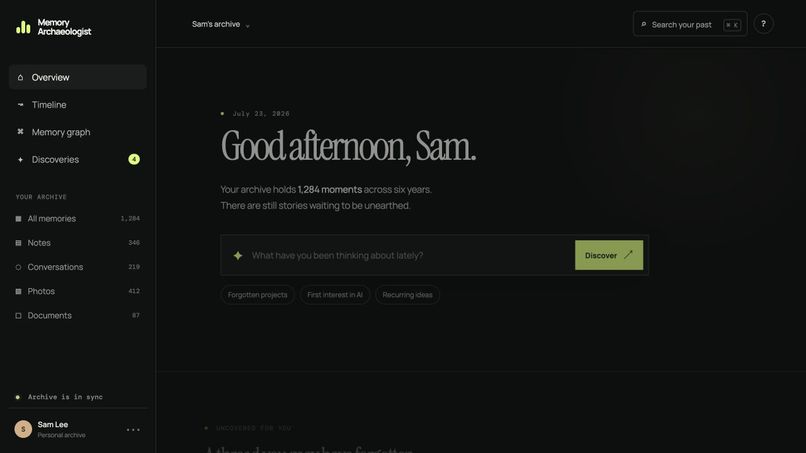
A calm, evidence-first home screen that helps users uncover forgotten stories across their digital archive.
-
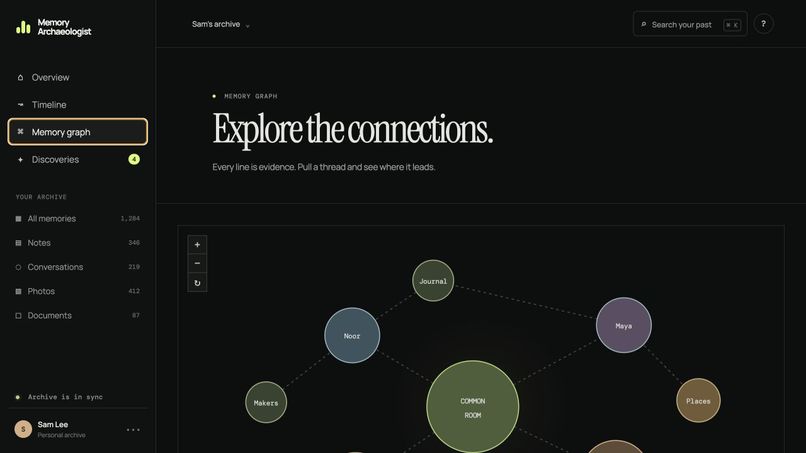
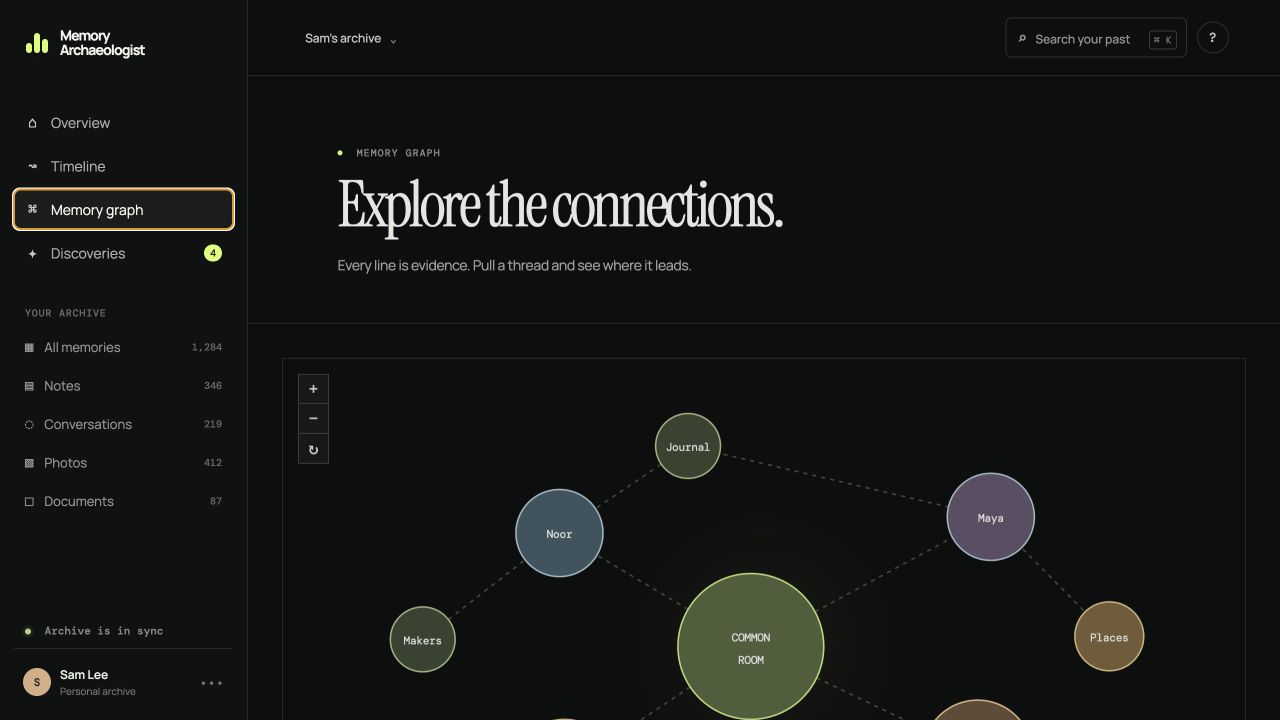
Explore the people, places, ideas, projects, and documents connected to a single forgotten memory.
-
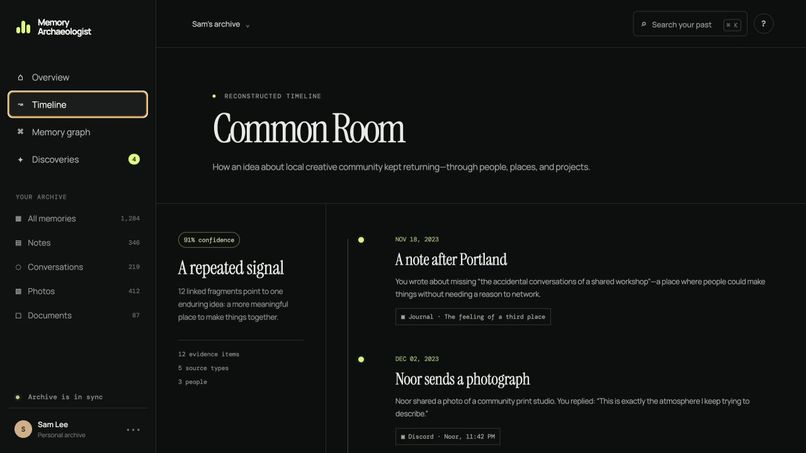
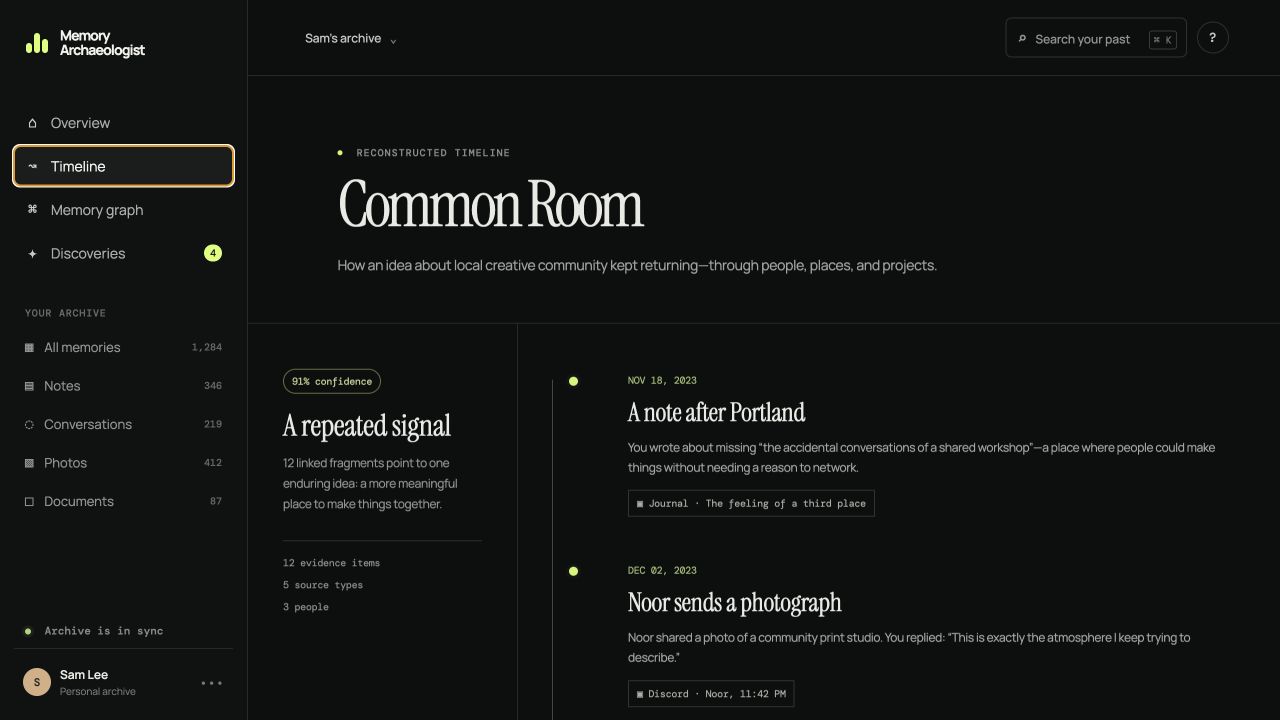
A chronological reconstruction showing how an unfinished idea developed across notes, conversations, and projects.
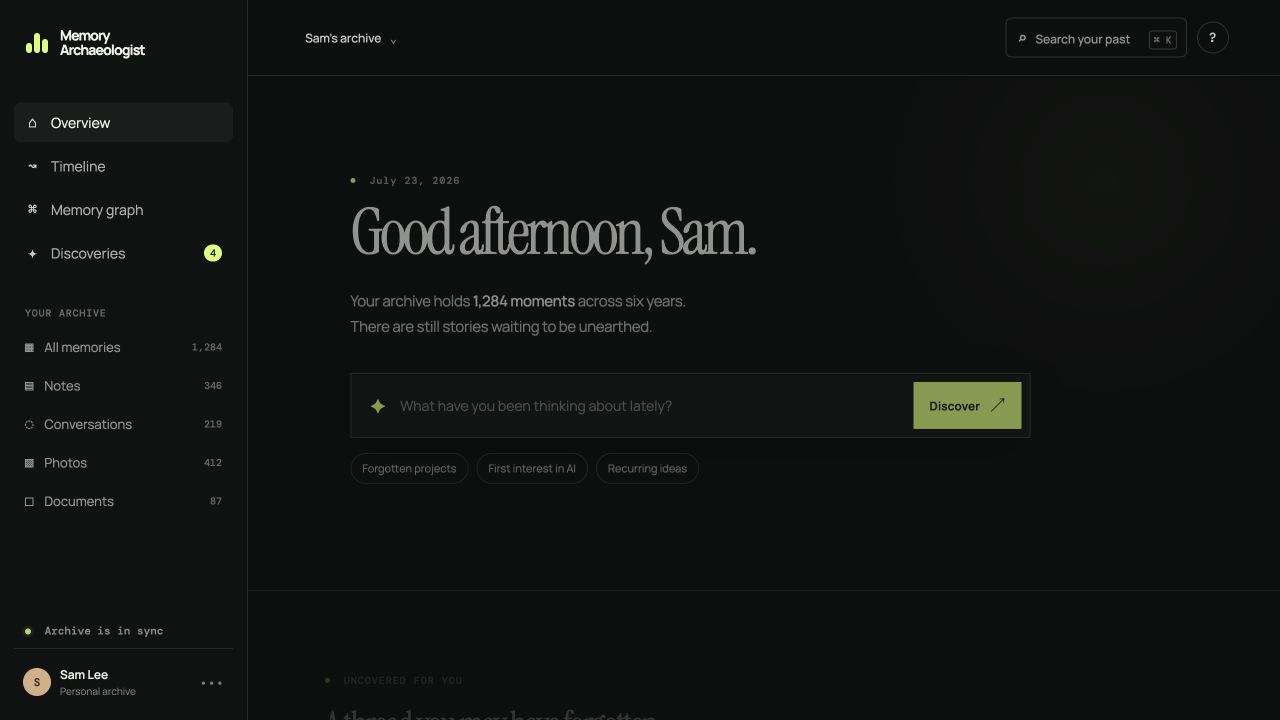
Memory Archaeologist
Memory Archaeologist helps people rediscover meaningful moments that have been buried in years of digital clutter.
What inspired this project
I kept thinking about how much of our lives now exists as disconnected fragments. Notes, messages, photos, bookmarks, calendar events, and half finished projects all hold parts of our story. The problem is that normal search only works when we already know what we are looking for.
What if your digital archive could help you remember something before you knew to search for it?
That question became Memory Archaeologist. It is designed to feel less like a chatbot and more like an investigative tool for your own past.
What it does
Instead of returning a list of search results, Memory Archaeologist reconstructs a story from connected evidence.
For example, it can uncover an abandoned project, show when an interest first appeared in your life, connect a person to several forgotten memories, or reveal patterns that keep showing up over time.
Every discovery is grounded in evidence. The experience includes a confidence score, supporting records, a reconstructed timeline, and an interactive graph of people, places, projects, ideas, and documents.
Key features
- Timeline reconstruction that turns scattered records into a chronological story
- Story mode that explains what likely happened and why it matters
- Interactive memory graph for exploring relationships between memories
- Pattern discovery for recurring interests, unfinished projects, and personal changes
- Evidence-first design with confidence scores and supporting source fragments
- Archive filters for notes, conversations, photos, and documents
- Responsive, accessible interface with keyboard navigation and reduced-motion support
How I built it
I built the project as a polished, dependency free web experience using HTML, CSS, JavaScript, and SVG.
The demo uses a fictional archive so it can safely tell realistic, connected stories. The sample records explore an unfinished local creative-community project called Common Room, recurring interests in humane technology, travel plans, friendships, and changing career priorities.
I focused heavily on making the product feel calm, personal, and trustworthy. The visual direction was inspired by products that prioritize clarity and craft. I wanted the interface to feel like exploring an archive, not prompting an AI assistant.
What I learned
The biggest lesson was that trust matters as much as intelligence. If an AI makes a personal conclusion, users need to understand where it came from. That is why confidence, source evidence, timelines, and relationships are part of the experience instead of hidden behind a single generated answer.
I also learned how much product quality comes from the details. Keyboard access, clear focus states, mobile behavior, reduced motion, and thoughtful empty states are not extras. They make a project feel ready for real people.
Challenges I faced
The hardest challenge was making the idea feel meaningful without turning it into another generic chatbot. I solved this by centering the experience around discovery, visual evidence, and narrative reconstruction.
Another challenge was designing fictional data that felt connected and emotionally believable. Each record had to support a larger story while still feeling like something a real person might have saved over several years.
Memory Archaeologist is a prototype, but the larger vision is a privacy-first personal memory system that helps people understand the stories already hidden in their own digital lives.

Log in or sign up for Devpost to join the conversation.