🧠 Memory AI – Your Personalized Knowledge Graph Assistant
🚀 Inspiration
We were inspired by a simple but powerful idea: What if an AI could remember you—not just what you say, but who you are?
Traditional AI tools offer impressive responses but forget everything once the session ends. We wanted to build something deeper—an assistant that learns through conversation, remembers over time, and helps users understand themselves better. From that vision, Memory AI was born: the first personalized assistant that constructs a dynamic knowledge graph of your interests, skills, and traits.
💡 What it does
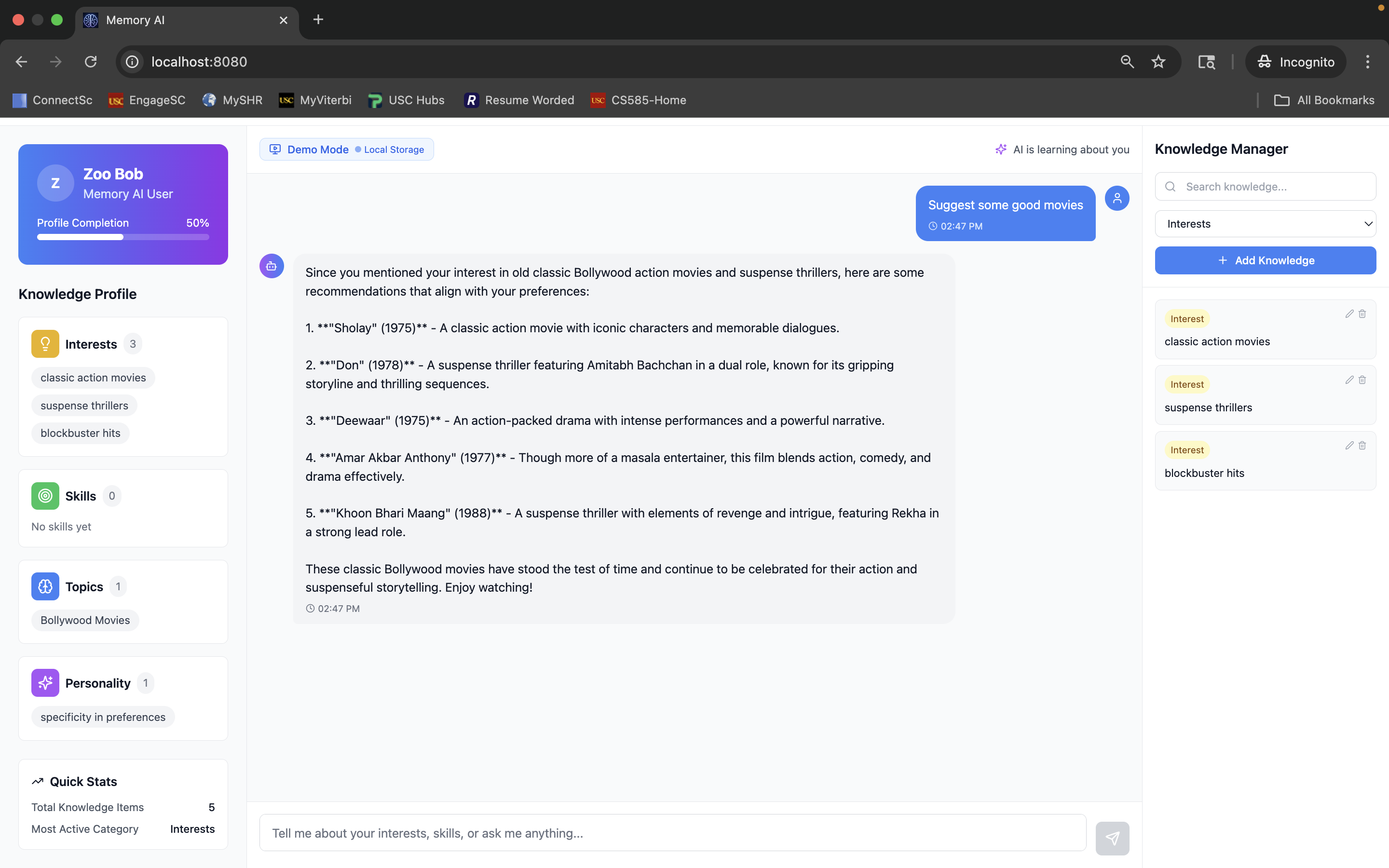
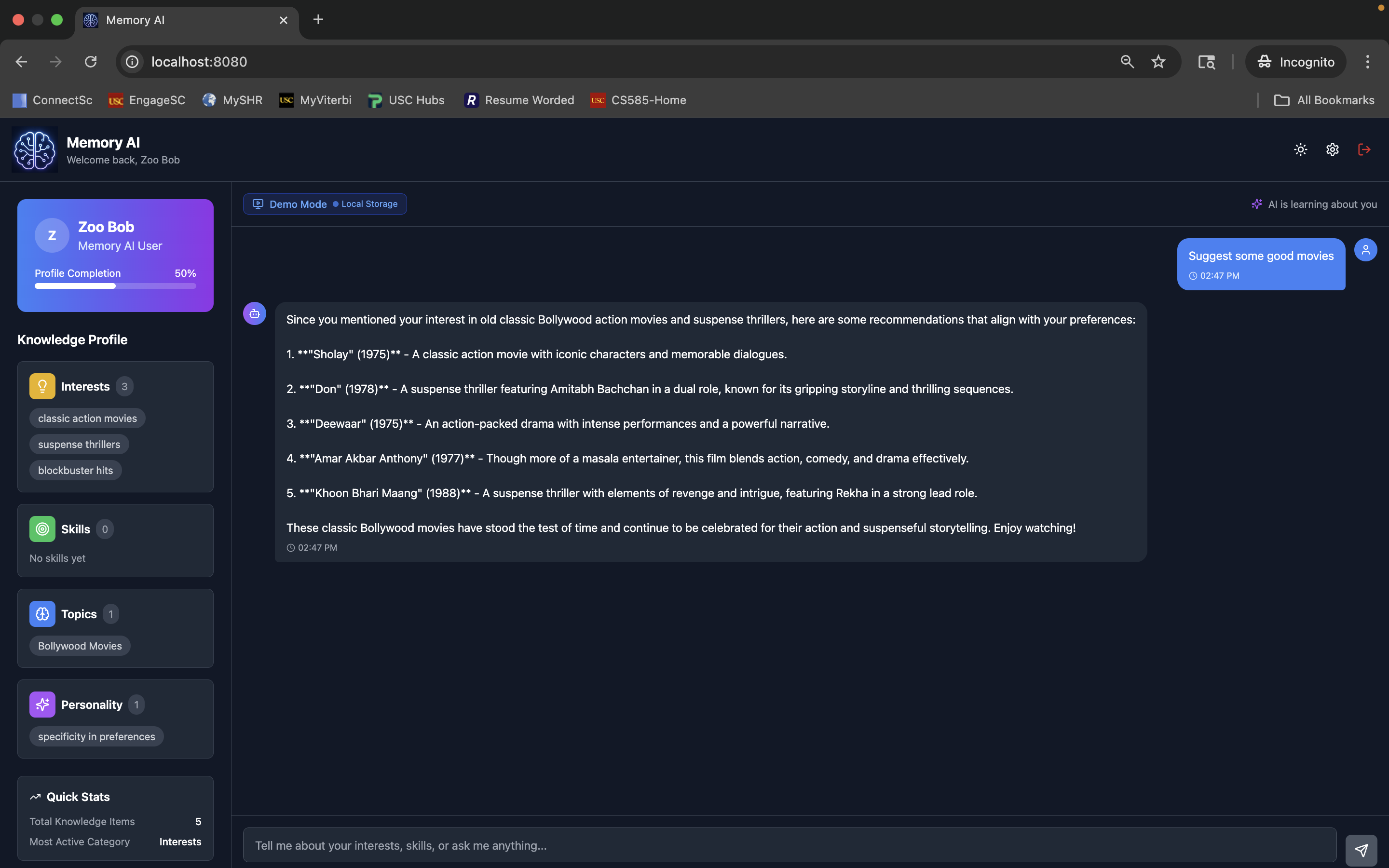
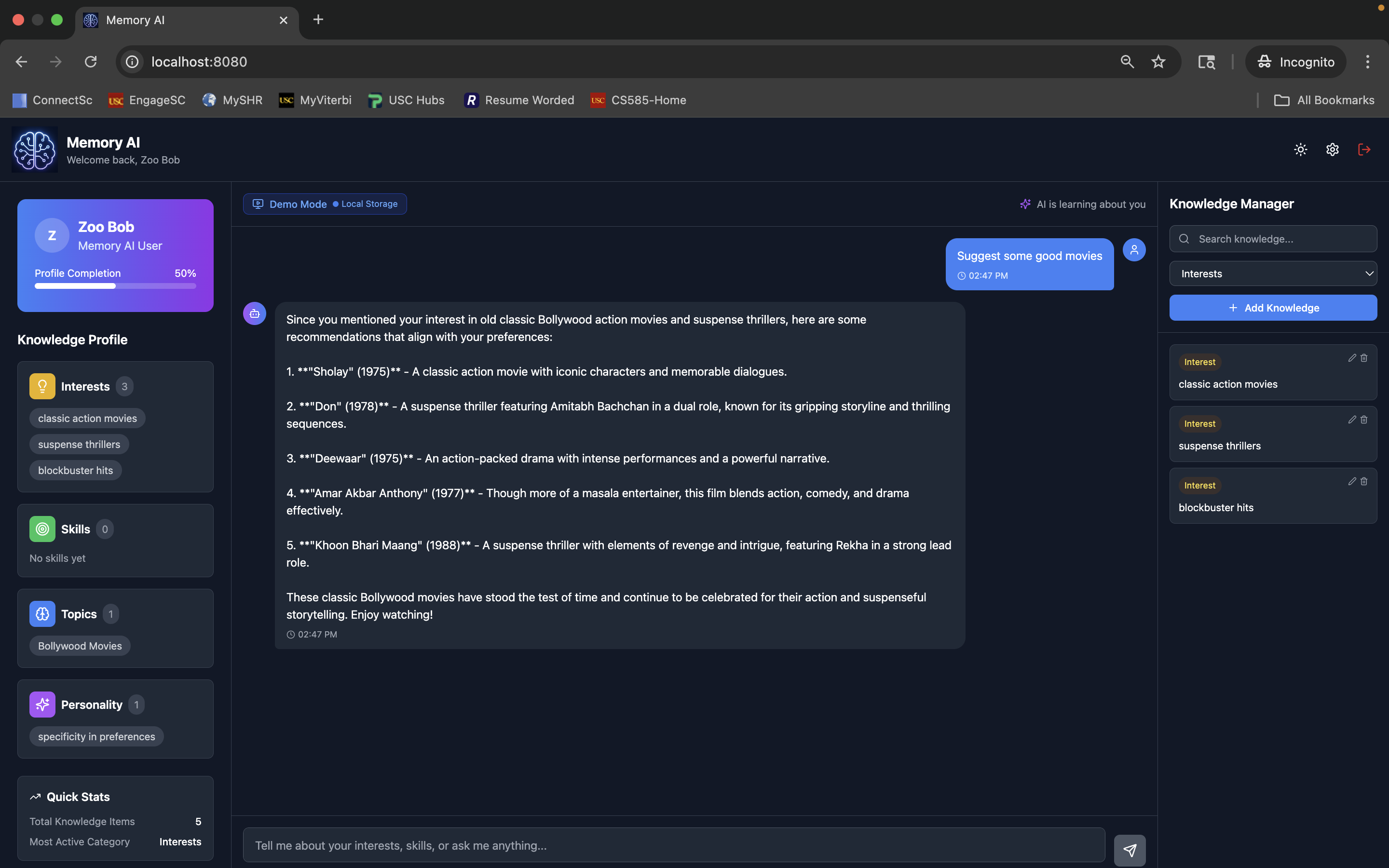
Memory AI is a graph-powered personalized assistant that:
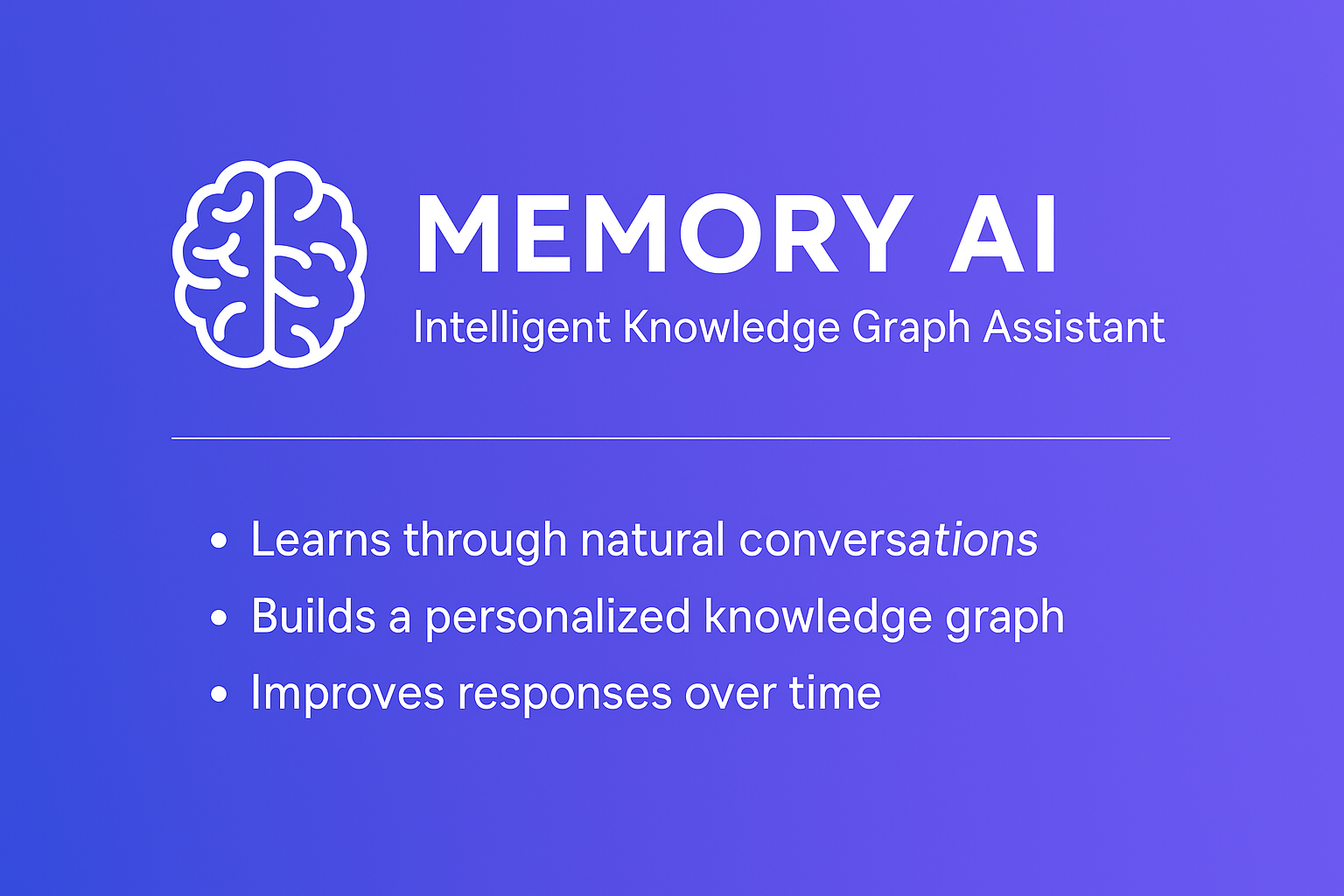
- Builds a dynamic knowledge graph about you through natural conversation
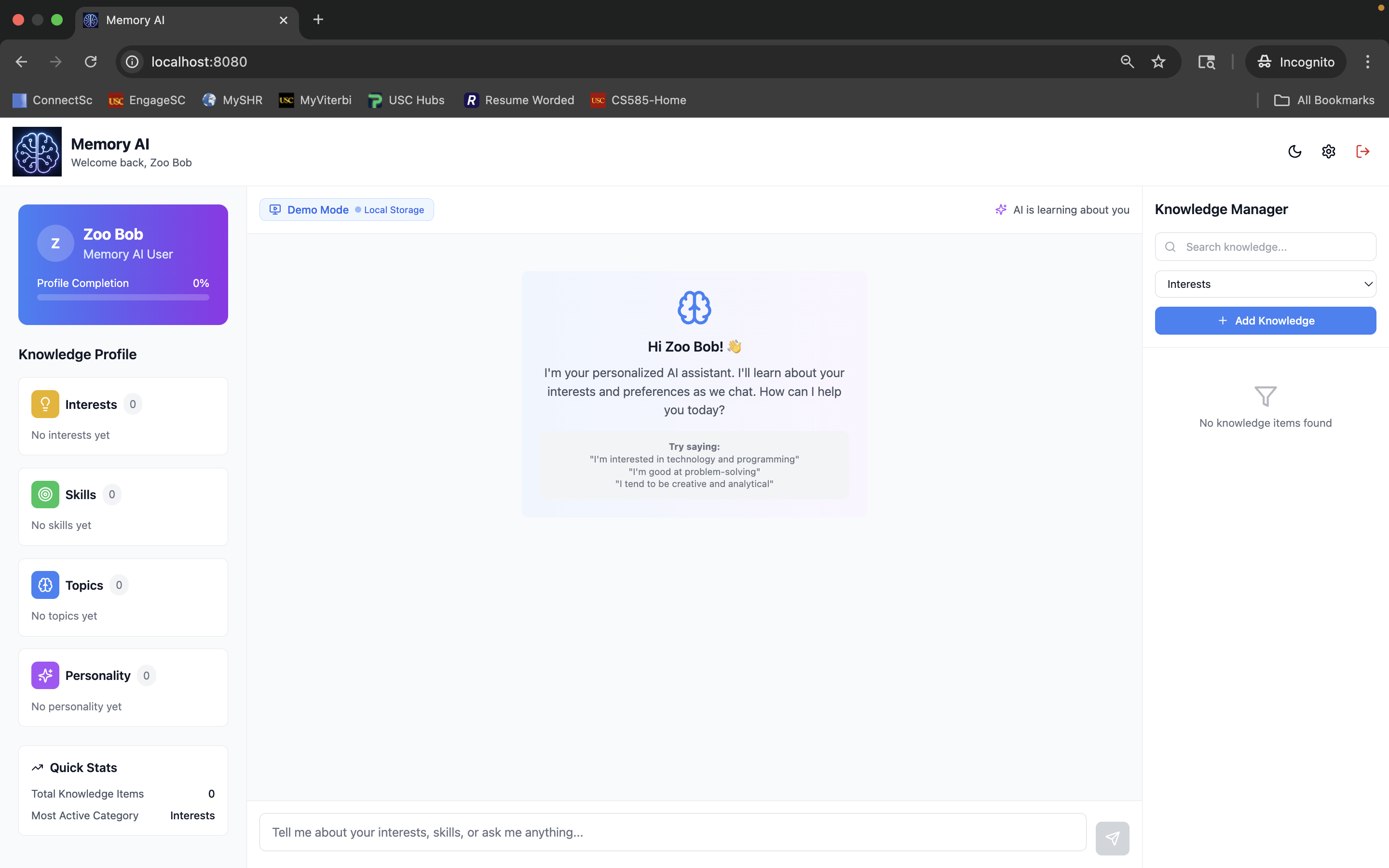
- Tracks your interests, skills, topics of expertise, and personality traits
- Offers context-aware and trait-aware responses
- Lets you view, edit, and manage your knowledge profile
- Learns and evolves with every interaction—like a second brain
Whether you're chatting about hobbies or professional goals, Memory AI listens, understands, and builds your digital memory in real time.
🔧 How we built it
🖥️ Frontend
- React + TypeScript + Vite for a modern, performant UI
- Tailwind CSS + shadcn/ui for clean, responsive design
- React Context API for lightweight state management
- Axios for backend communication (REST + WebSocket ready)
⚙️ Backend
- FastAPI to serve RESTful APIs and manage session memory
- Neo4j as the persistent graph database for structured knowledge
- OpenAI GPT-3.5-turbo for intelligent, natural language responses
- NLP pipeline to extract traits and categorize them into graph nodes
- In-memory session history to maintain context during conversations
🚧 Challenges we ran into
- Scope vs. personalization: Keeping memory meaningful while managing complexity
- Accurate trait extraction from unstructured conversation using NLP
- Mapping free-form chat to structured graph data in Neo4j
- UI design that balanced utility, visibility, and clarity
🏆 Accomplishments that we're proud of
- Built a complete memory loop: from user input → NLP → graph → personalized response
- Live Neo4j integration with dynamic trait visualization and updates
- Developed a visual knowledge dashboard for managing memory
- Demonstrated visible personalization, not just hidden prompt injection
📚 What we learned
- Graph databases enable flexible and explainable personalization
- Subtle UX signals (e.g., remembering a user’s name) dramatically improve trust
- True personalization needs to be transparent and user-editable
- Real-time learning is most effective when users feel in control
🚀 What's next for Memory AI
- ✅ Integrate Faiss for vector-enhanced memory recall
- ✅ Support multi-session history and long-term memory persistence
- ✅ Add model switcher for use with local models (Ollama, Claude, Mistral)
- ✅ Enable voice support for hands-free interaction
- ✅ Provide exportable knowledge graphs for self-reflection or sharing
- ✅ Enhance graph UI with analytical insights into your digital self
Our vision: every person deserves an AI that truly knows them—not just one that responds to them.


Log in or sign up for Devpost to join the conversation.