-
-
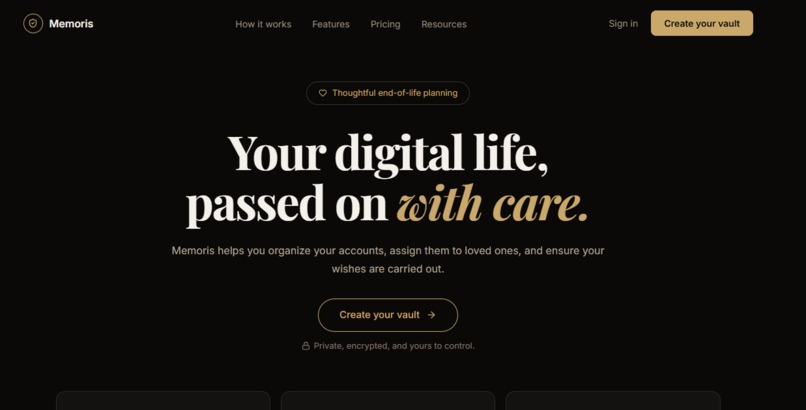
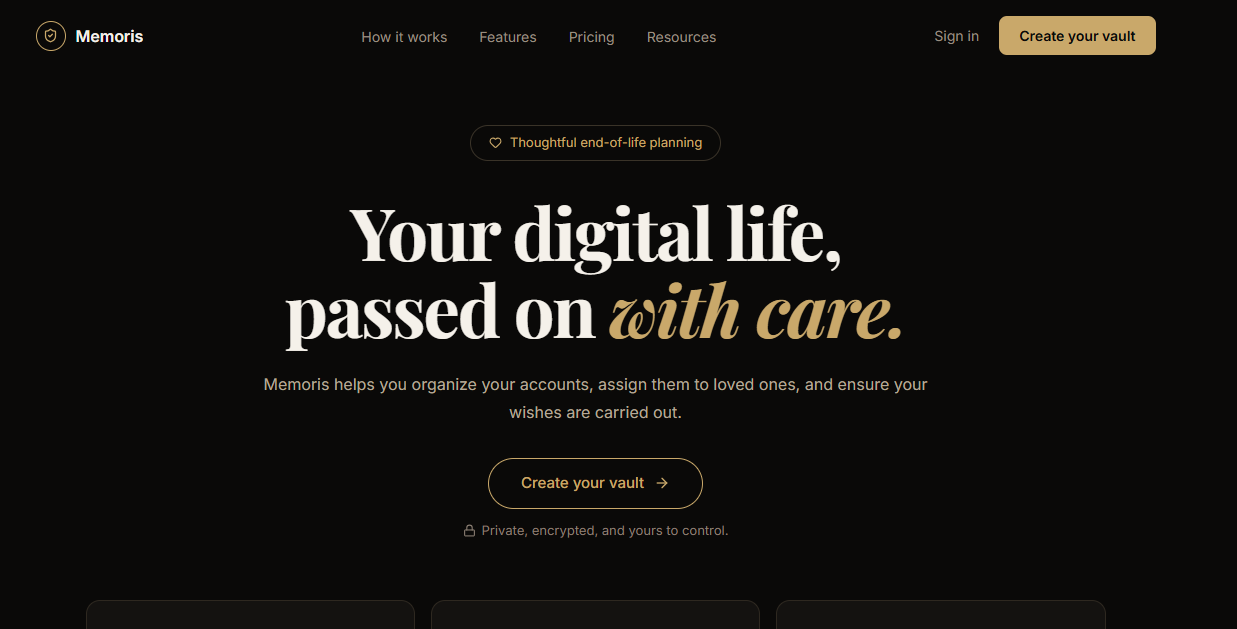
Memoris landing page built with Vercel v0 and Next.js. Warm gold design chosen to feel human and trustworthy
-
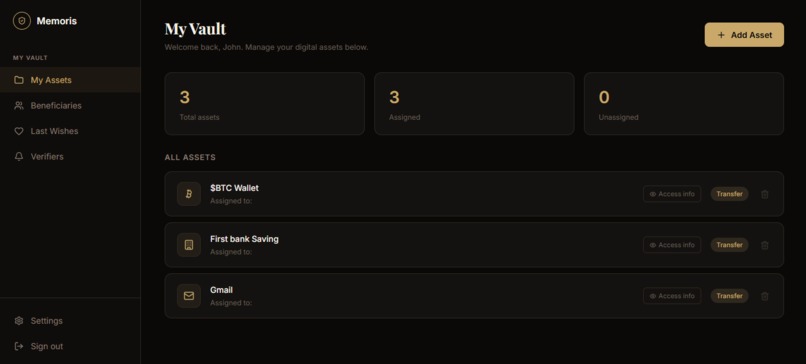
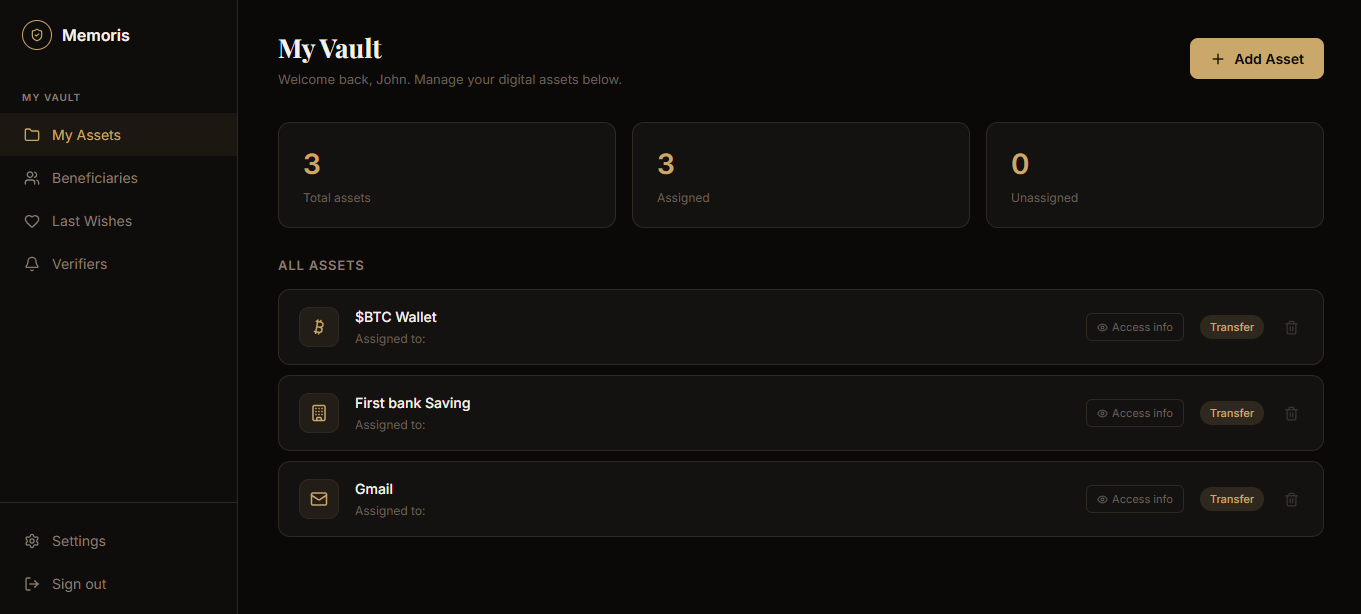
The asset vault where users add their digital accounts and write encrypted access instructions for each beneficiary.
-
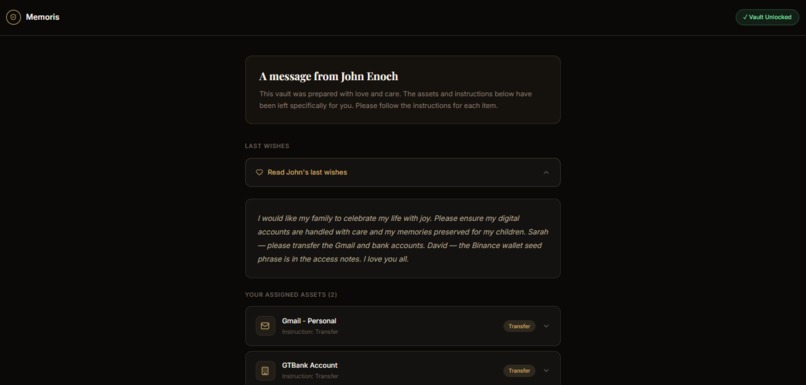
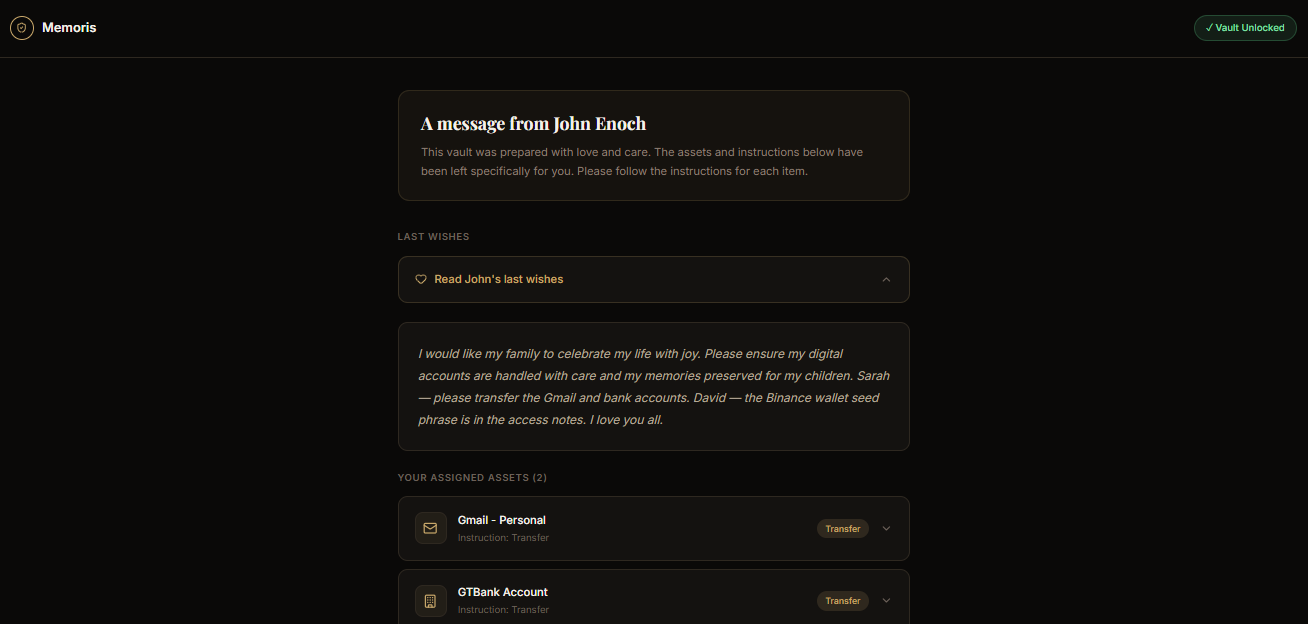
The executor view that family members see after verifiers confirm. Each beneficiary sees only the accounts assigned to them & last wishes
-
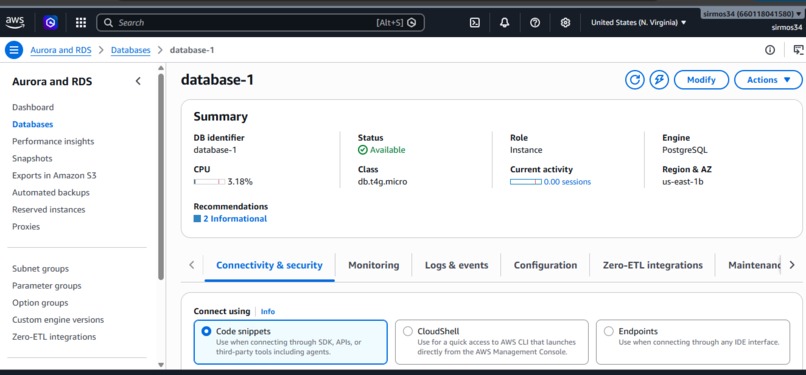
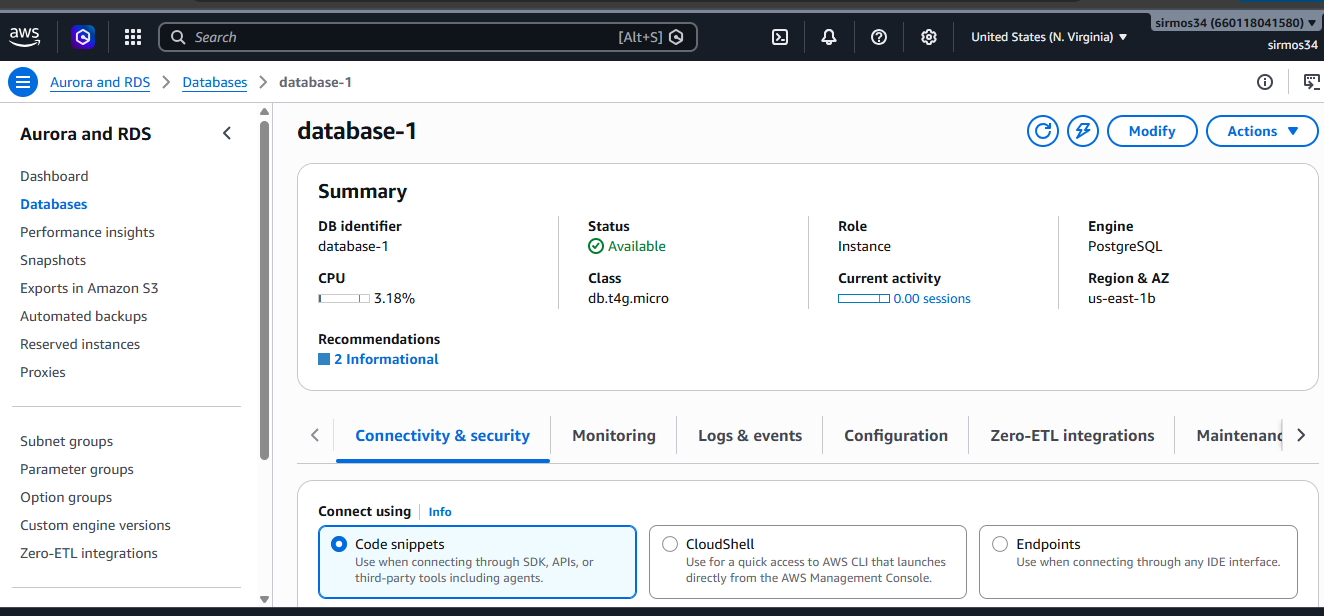
Amazon Aurora PostgreSQL database on AWS RDS powering the Memoris backend with full relational integrity and SSL encrypted connections.
Inspiration
Two years ago a close friend lost his father suddenly. His father was an organised man but when he died, the family discovered he had 17 online accounts nobody could access. A bank account with money in it. A crypto wallet with a seed phrase nobody could find. An email full of insurance policies and property documents, completely locked. His wife spent four months writing letters to companies and crying on phone calls with customer support. Some accounts were closed with money still inside them.
"He was the most organised man I knew," she said. "But he never thought about this."
Nobody does. We spend our whole lives building a digital world and we leave no instructions for the people who love us. When the H0 Hackathon came along I knew exactly what I wanted to build.
What it does
Memoris is a digital estate manager. It helps you answer one simple question nobody wants to think about but everyone needs to:
If I died tomorrow, would my family know what to do with my digital life?
With Memoris you can add all your digital accounts, write encrypted access instructions for each one, assign each account to a specific person, and add trusted verifiers who confirm your passing. When you die, your verifiers get an email with one button to click. When all of them confirm, the vault unlocks. Each beneficiary sees only what was assigned to them. Nobody has to guess. Nobody has to fight.
How we built it
I started with v0.dev and gave it a detailed prompt describing the whole product. It generated a complete Next.js application in under 60 seconds with a landing page, dashboard, and sidebar navigation. I then customised everything, switched to a warm dark brown with gold accents because this product needs to feel human and trustworthy, not like a bank app.
For the database I chose Amazon Aurora PostgreSQL on AWS RDS. Memoris handles deeply relational data. A user has assets. Each asset is assigned to a beneficiary. Verifiers are connected to users. The conditional access logic that unlocks the right assets for the right person requires proper relational queries with foreign keys. PostgreSQL was the right call.
I built five sets of API routes inside Next.js to handle auth, assets, beneficiaries, verifiers and last wishes. Every route checks for a user ID before doing anything. Passwords are hashed with bcryptjs before they ever touch the database.
Challenges we ran into
The AWS Aurora connection was the trickiest part. The default express configuration uses IAM only authentication which took several attempts to work around from Vercel's serverless functions. I ended up using a standard PostgreSQL RDS instance that accepts password authentication over SSL. Simpler, faster and easier to debug.
The other challenge was not technical at all. Every time I designed a new screen I had to think about what the person using it is feeling. When someone fills in the last wishes form they are thinking about their own death. When a family member opens the executor view they are probably grieving. Every word in the UI matters. I rewrote the copy at least five times.
Accomplishments that we're proud of
The verifier system is something I am so proud of. I could have used a simple timer to unlock the vault after months of inactivity but that is dangerous. What if the user is travelling or in hospital? The verifier system requires people who actually knew the deceased to confirm. All of them must agree before anything unlocks. For something this important, that friction is a feature not a bug.
I am also proud of the executor view. When a beneficiary logs in they see a clean page with only their assigned accounts, the access instructions, and a personal message from the person who is gone. The vault unlocked banner at the top says one thing clearly: he thought of you. He prepared this. You are not alone.
What we learned
v0 is a superpower for hackathons. One detailed prompt and you have a production quality Next.js UI to customise instead of starting from scratch.
Aurora PostgreSQL is the right database for relational data with complex access logic. I considered DynamoDB but the moment I drew out the data model I knew it had to be PostgreSQL.
Build the emotional core first. The last wishes feature was the most important feature to build. Without it Memoris is just a password manager. With it, it is something a person would actually use and be grateful exists.
What's next for Memoris
- AES-256 encryption for asset notes using a user controlled master key
- Real email sending for verifier links using AWS SES
- Two factor authentication for vault owners
- Legal document uploads for wills and insurance policies
- Multi language support starting with Yoruba, Igbo, Hausa and Ibibio for the Nigerian market
The Nigerian market is where I see the biggest immediate opportunity. Millions of families deal with digital estate problems every year and there is no product built for this context with local bank support and local languages.
Built With
- amazon
- amazon-web-services
- aurora
- css
- next.js
- node.js
- postgresql
- rds
- tailwind
- typescript
- v0
- vercel

Log in or sign up for Devpost to join the conversation.