-
-
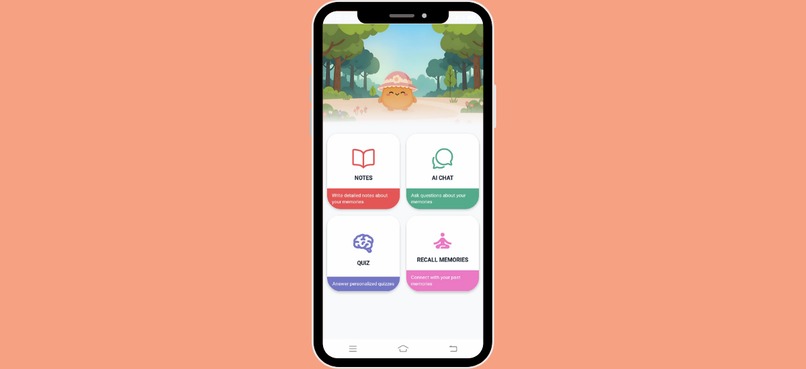
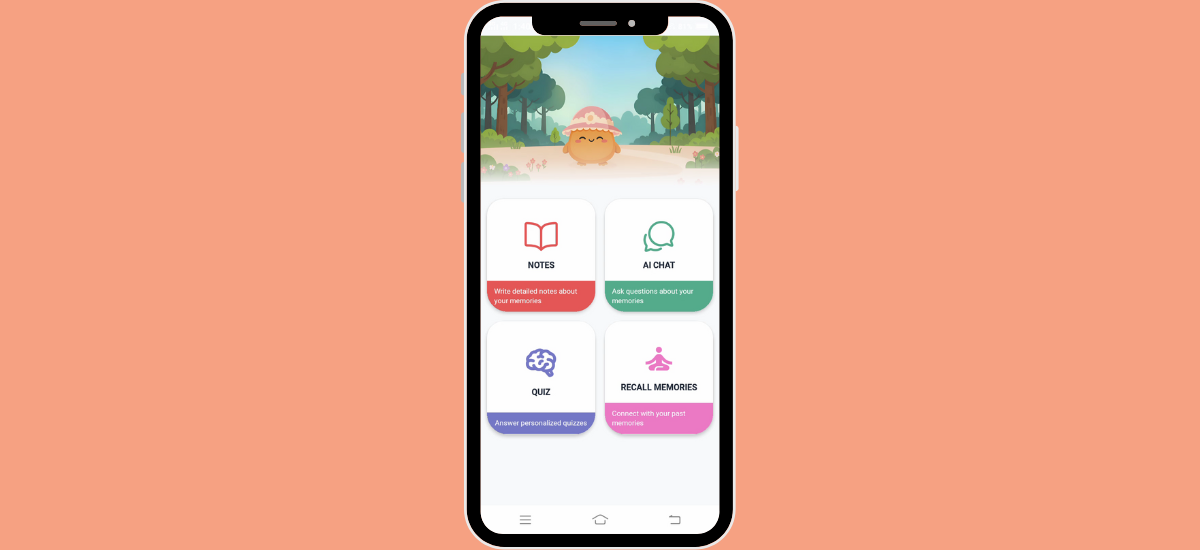
main page
-
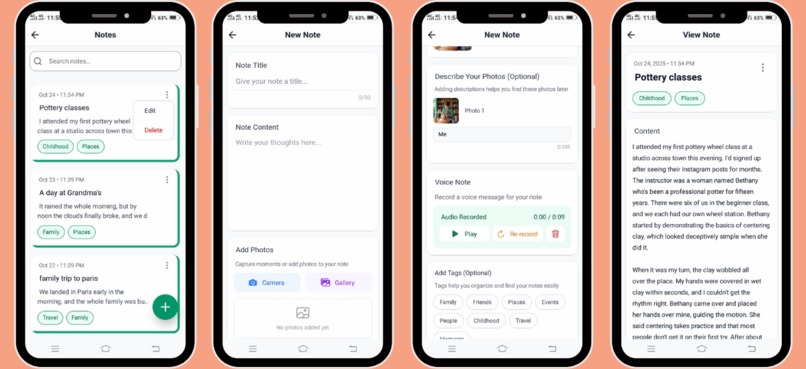
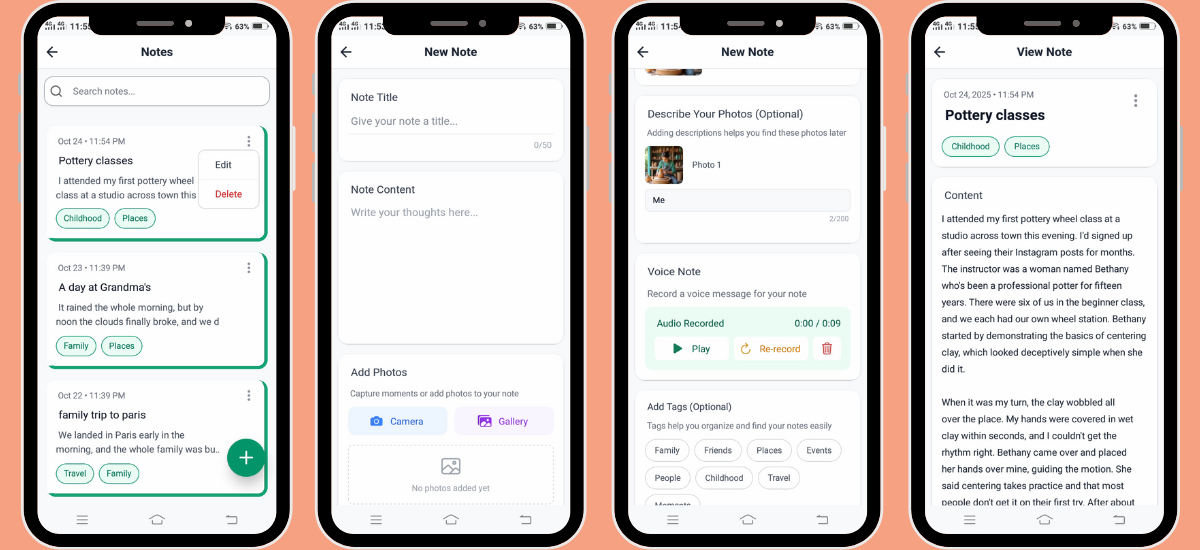
notes page
-
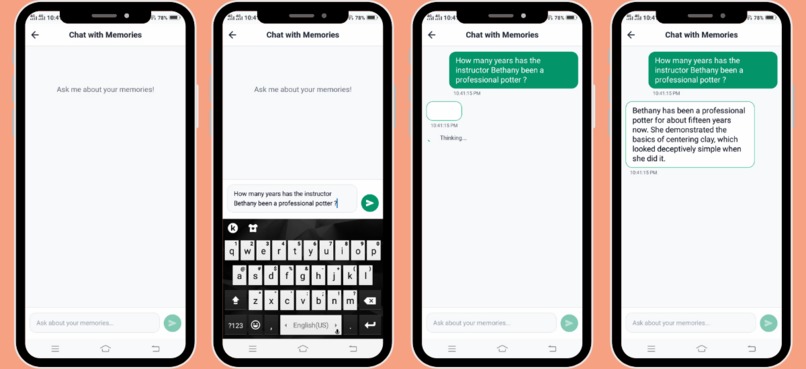
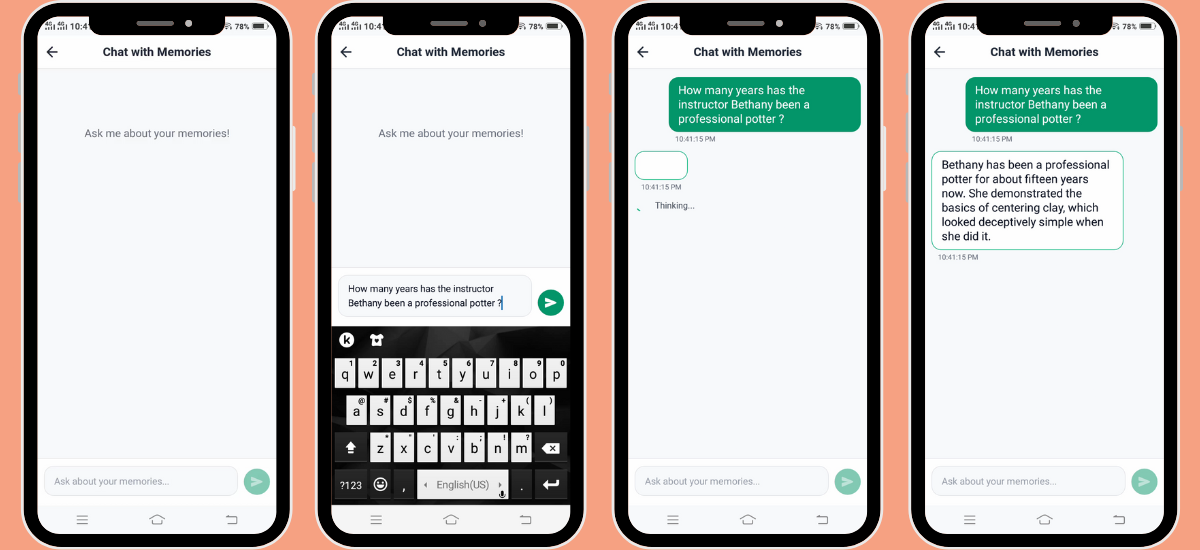
chat page
-
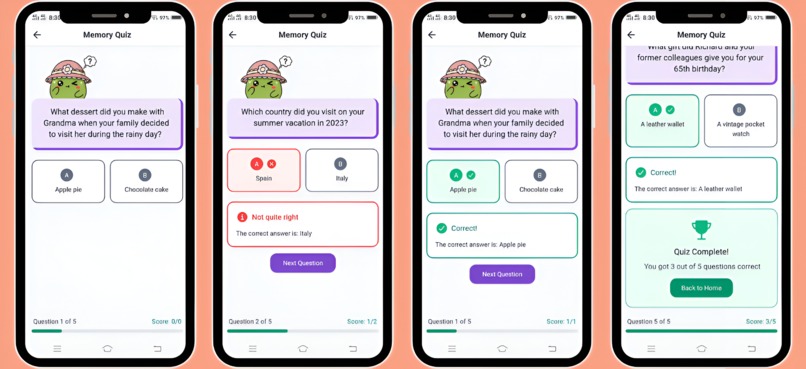
quiz page
-
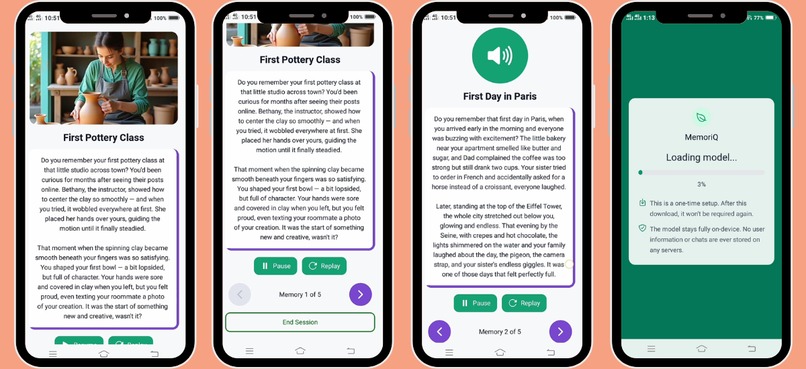
Recall and loading page
Inspiration
Problem: Memory loss affects thousands of people every day. While it is commonly associated with conditions like dementia or Alzheimer’s, there are many other causes that impact people of all ages. Head injuries, strokes, long-term alcohol misuse, seizures, and various forms of amnesia can all lead to temporary or long-term memory challenges. Regardless of the cause or duration, people experiencing memory loss often need consistent, accessible support beyond traditional therapy. Although some digital tools exist to assist them, most fall short of providing a complete, reliable, and privacy-conscious experience. In an age of cloud-based AI applications, users are understandably concerned about sharing personal memories or photos online, especially when such data could be stored on servers or used to train external models. Additionally, many of these tools require constant internet access and complicated login systems, which can make them difficult to use for those who value simplicity or live in low-connectivity areas.
Solution: Developed as a proof of concept, MemoriQ is an Android application that supports individuals dealing with memory loss while maintaining their independence and protecting their personal information. It operates completely offline, with no reliance on external or cloud servers, ensuring that all data remains securely stored on the user's device at all times. By running AI models locally, MemoriQ eliminates the need for internet connectivity or user logins, removing common privacy and accessibility barriers while giving users full control over their personal data.
Features
1. Comprehensive Memory Notes: Users can create detailed memory entries that include text, images, audio, and image descriptions, allowing each note to capture the full essence of a moment. This combination of multiple media forms helps preserve memories in a way that feels vivid and complete.
2. AI-Powered Memory Chat: As the number of saved notes grows, finding specific details can become difficult or overwhelming. The built-in AI chat simplifies this by allowing users to talk directly with their memories. Instead of searching manually, users can simply ask questions, and the chat retrieves relevant information from their stored notes, making memory retrieval faster, easier, and more natural.
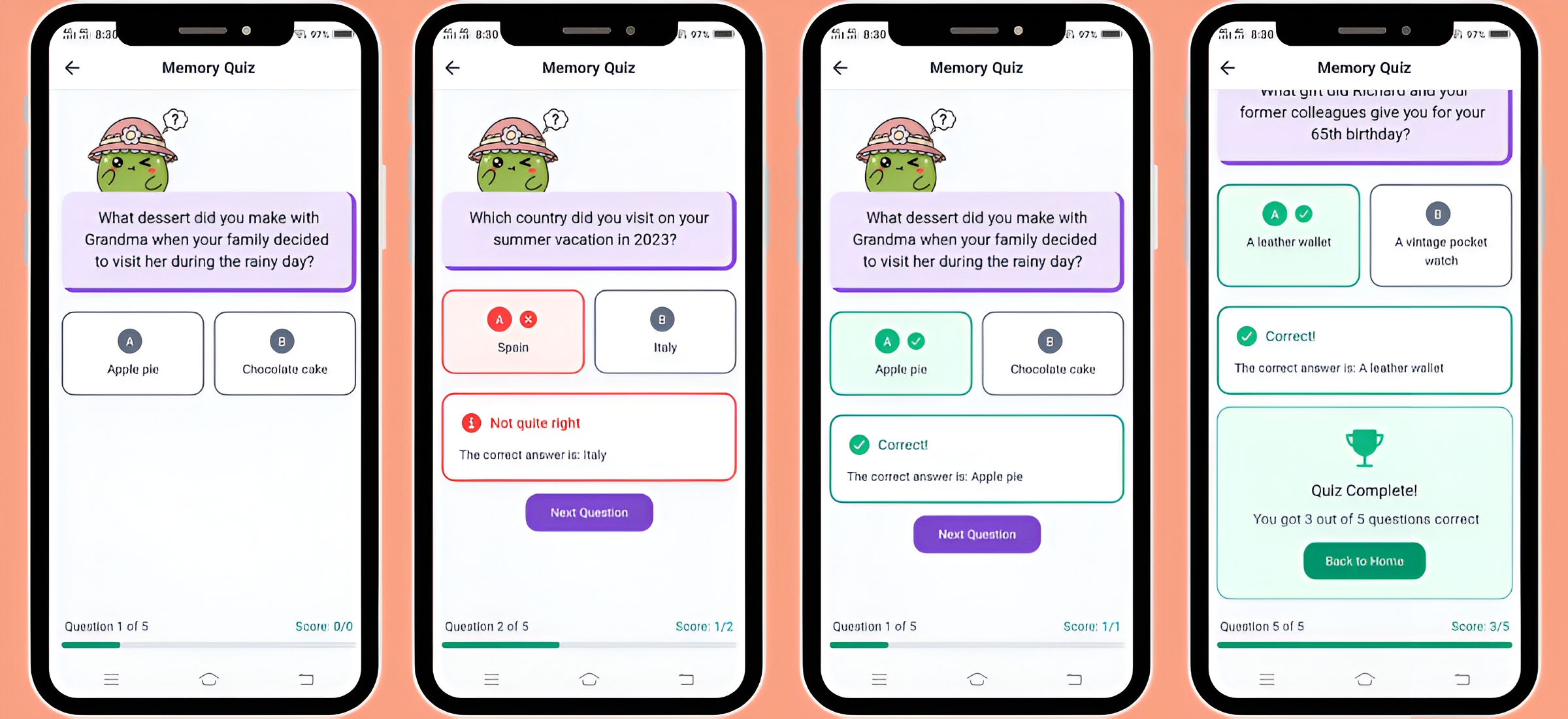
3. Personalized Memory Quiz: To encourage active engagement and strengthen recall, MemoriQ generates quiz-style questions with two possible answers directly from the user’s notes, prompting them to choose the correct one. Unlike typical memory games, this approach not only helps improve cognitive recall but does so through meaningful, personal content which helps keep the user connected to their own life and experiences.
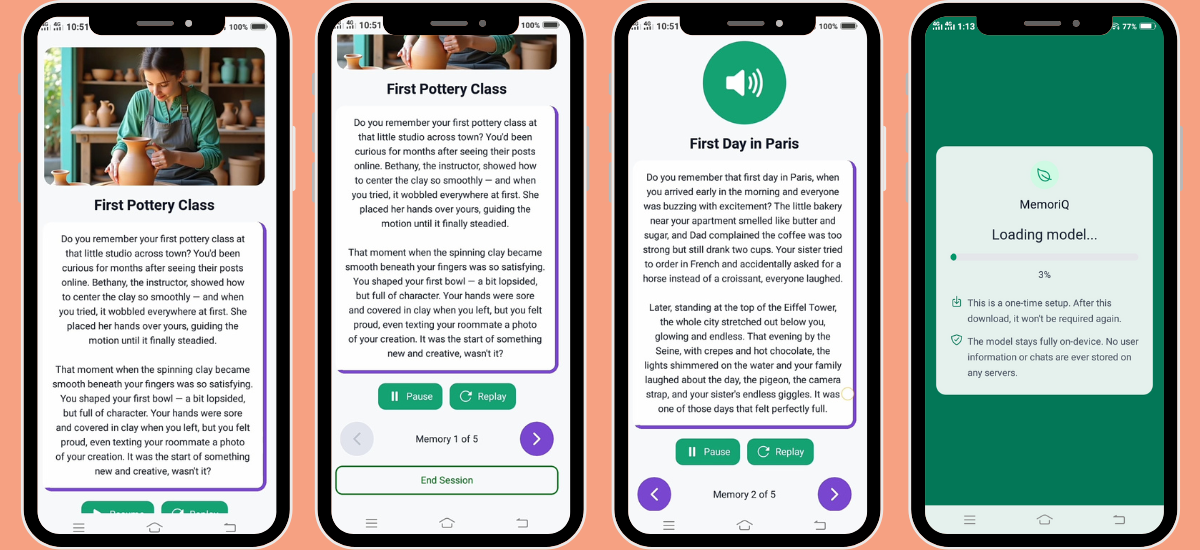
4. Reminiscence Mode: MemoriQ includes a unique reminiscence feature that transforms saved notes into an immersive, spoken experience. Rather than simply reading notes aloud, the system converts them into a soothing conversational script as if a companion is gently guiding the user through their memories. Each session selects five random notes and allows playback, pausing, or revisiting previous moments, creating a calming space for reflection. The interface for this mode is designed with soft tones and simplicity in mind, fostering a sense of comfort and emotional grounding.
5. Privacy and Offline Functionality: Every element of MemoriQ is designed to protect the user’s privacy. A secure local database is created directly on the user’s device, storing all notes, images, and audio files safely without ever leaving their control. After an initial one-time download of AI models from Hugging Face (which requires internet access), the models operate locally for all future sessions. This ensures complete privacy, data ownership, and reliable accessibility without any dependency on servers or logins.
Tech Stack Used
1. Expo and React Native: MemoriQ is built using Expo and React Native, providing a seamless development environment optimized for Android. This combination enables a responsive and intuitive mobile experience while maintaining efficient performance and clean, modular code.
2. Llama.rn Integration: The application leverages Llama.rn, a React Native binding for llama.cpp to run AI models locally on the device. Through this framework, models are downloaded from Hugging Face during initial setup and then used directly within the app, powering chat interactions, quizzes, and reminiscence features.
3. Custom Model Training using unsloth: To ensure that each feature operates optimally, MemoriQ employs task-specific RAG model that was fine-tuned using Unsloth. This approach allows for precise performance across different components.
Challenges I ran into
One of the biggest challenges was selecting the right set of models for each task while staying within the strict memory limits of an Android app. My goal was to keep total usage under 2GB and ideally no more than 1.5GB once the models were downloaded to the user’s device. Larger models generally deliver higher accuracy, but they can easily exceed 4GB, which creates serious issues for users with limited hardware. The main difficulty was therefore adapting smaller, lightweight models while preserving as much accuracy and performance as possible.
Future Improvements
While MemoriQ successfully demonstrates the core concept of an offline, privacy-focused memory assistance application, several enhancements would significantly improve the user experience and functionality:
1. Multi-Turn Conversation Support: Currently, the chat feature does not persist conversation history in the database. Each user query is treated as an independent interaction, which limits the ability to have multi-turn conversations. A future implementation would save chat sessions and message history, allowing the AI to reference previous exchanges and maintain conversational context throughout a session.
2. Optimized Model Selection: The current implementation allows flexibility in model choices, which is valuable for experimentation but may lead to inconsistent performance across different devices and use cases. Future versions will focus on identifying and fine-tuning a fixed set of models that deliver reliable, consistent performance for all users.
3. Audio Model Integration: While the reminiscence feature currently uses text-to-speech (TTS) API by expo to read recall scripts, integrating a dedicated audio generation model would significantly enhance the emotional quality and naturalness of the assistant's voice.
4. Customizable Quiz Length: The quiz feature is currently fixed at 5 questions per session. Future updates will allow users to select their preferred number of questions (e.g., 3, 5, 10, or 15), providing flexibility for different time commitments and engagement levels.
Beyond these specific improvements, MemoriQ as a proof of concept demonstrates significant potential for expansion. With continued development and refinement, MemoriQ could evolve from a promising prototype into a robust, widely-accessible tool that genuinely improves quality of life for people dealing with memory loss.
Extra
Please refer to the project's README on github for detailed architecture and more explanations :)
Built With
- expo.io
- llama.rn
- op-sqlite
- react-native
- typescript
