-
-
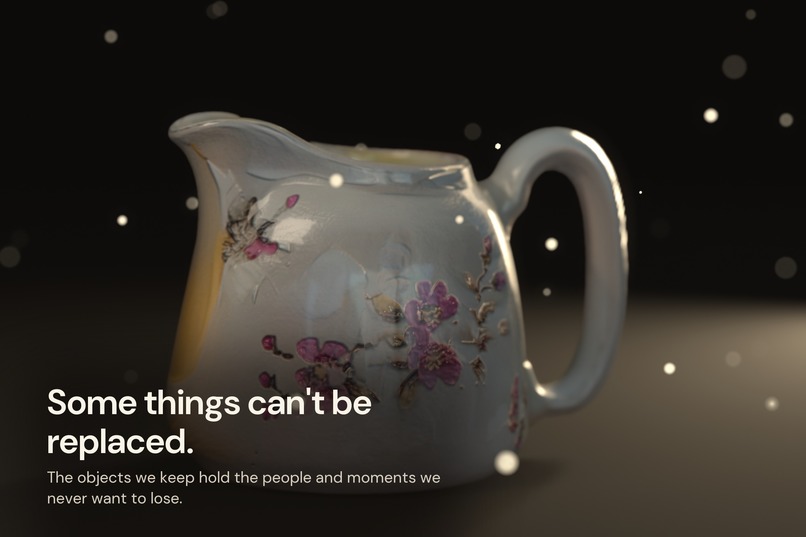
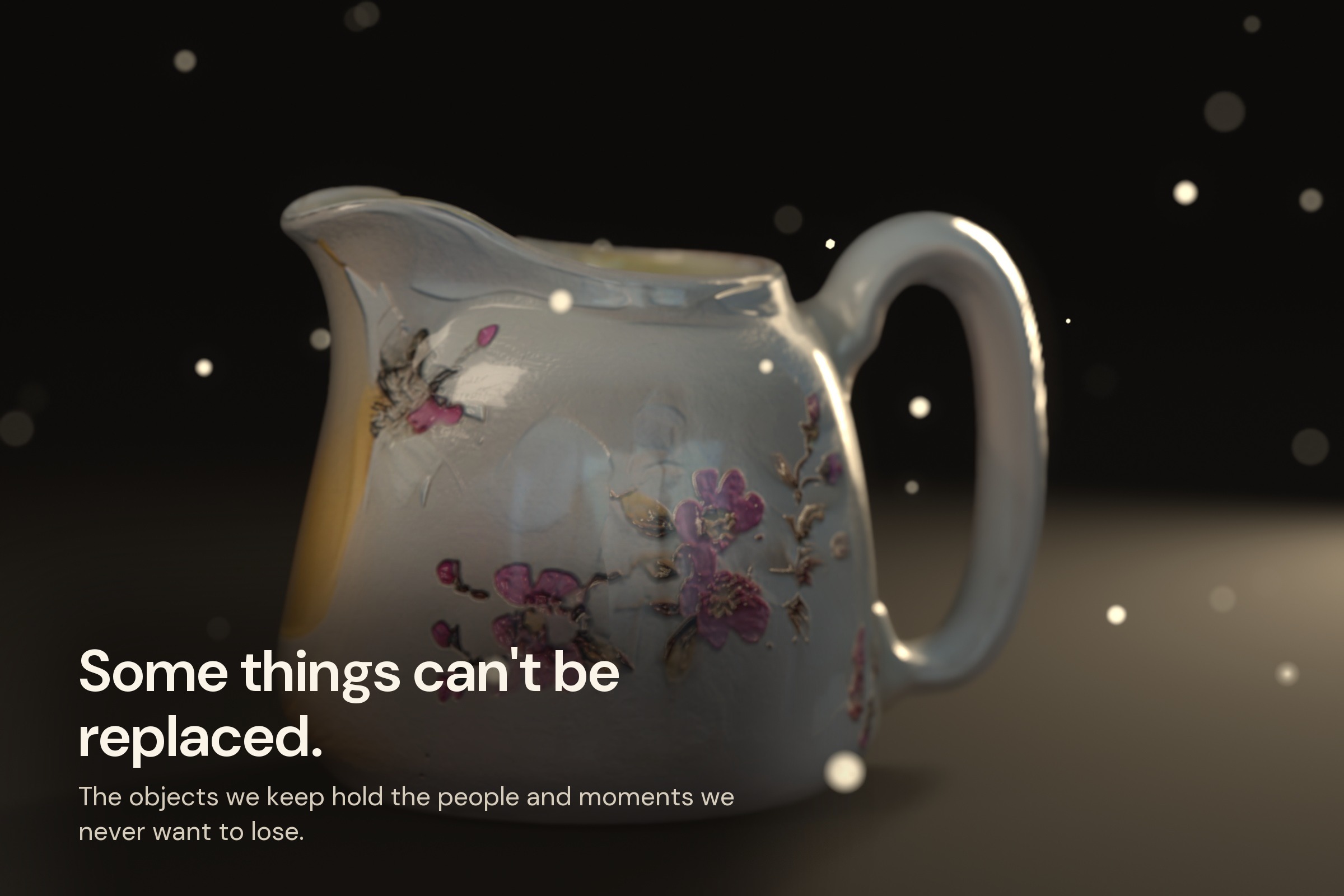
Some things can't be replaced.
-
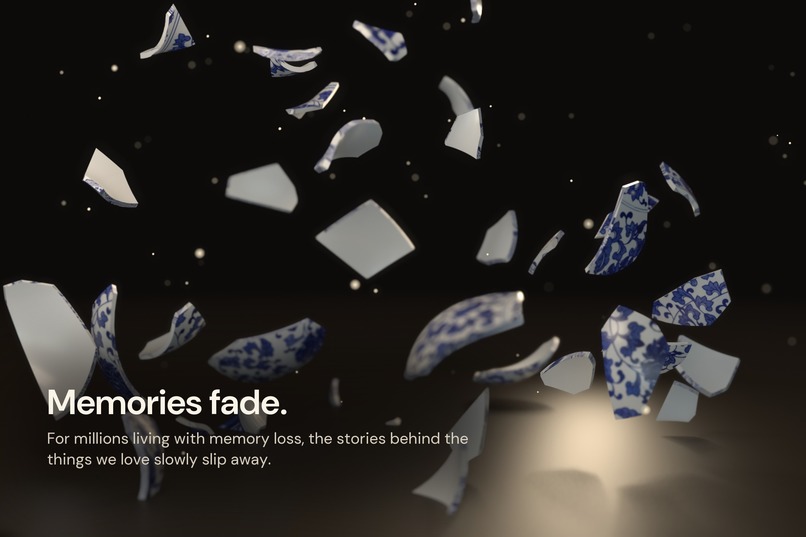
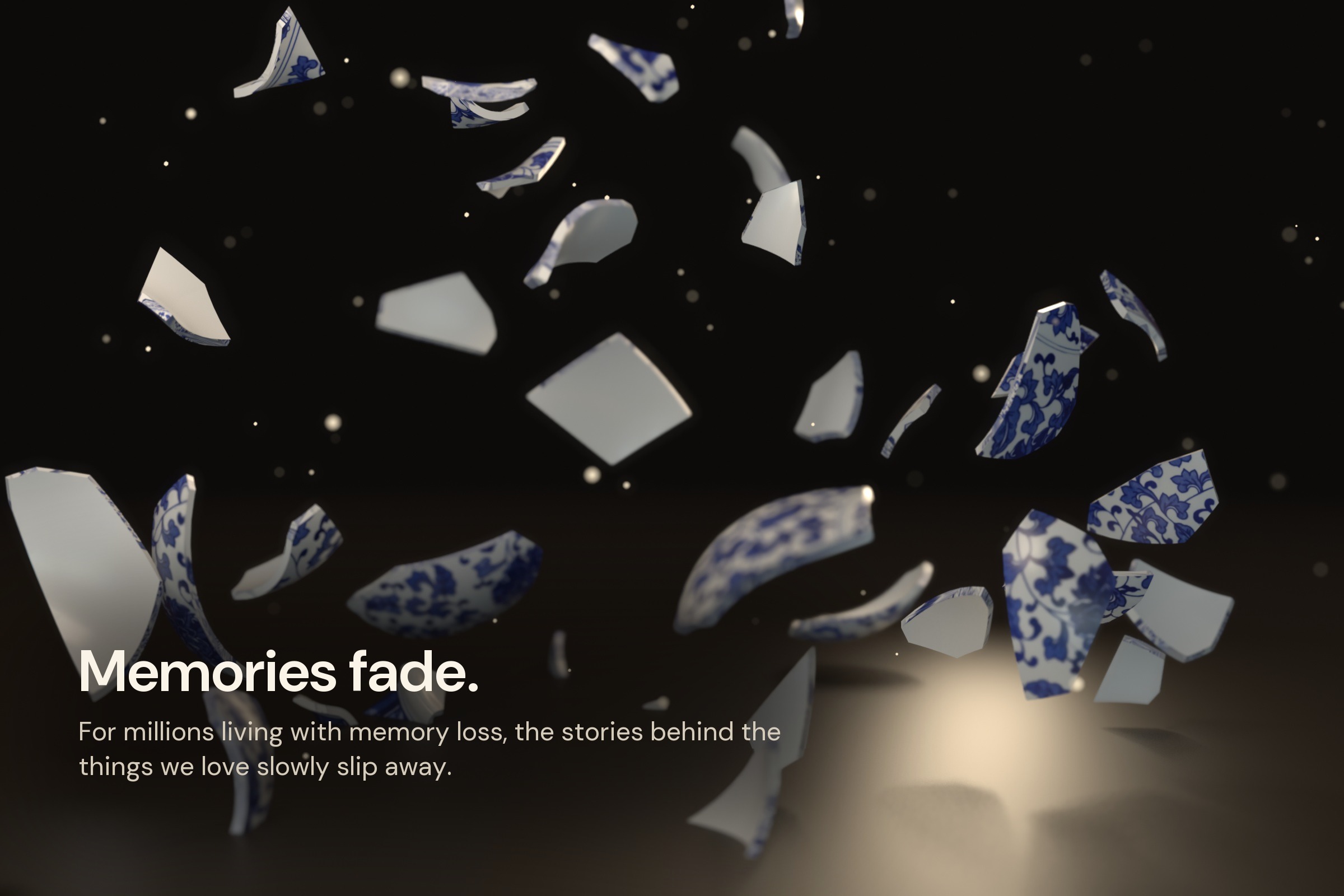
For millions living with memory loss, the stories behind our things slowly slip away.
-
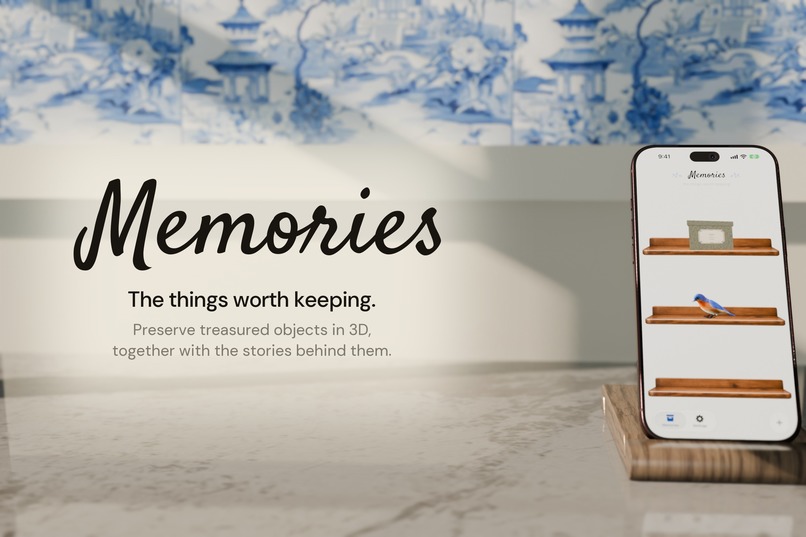
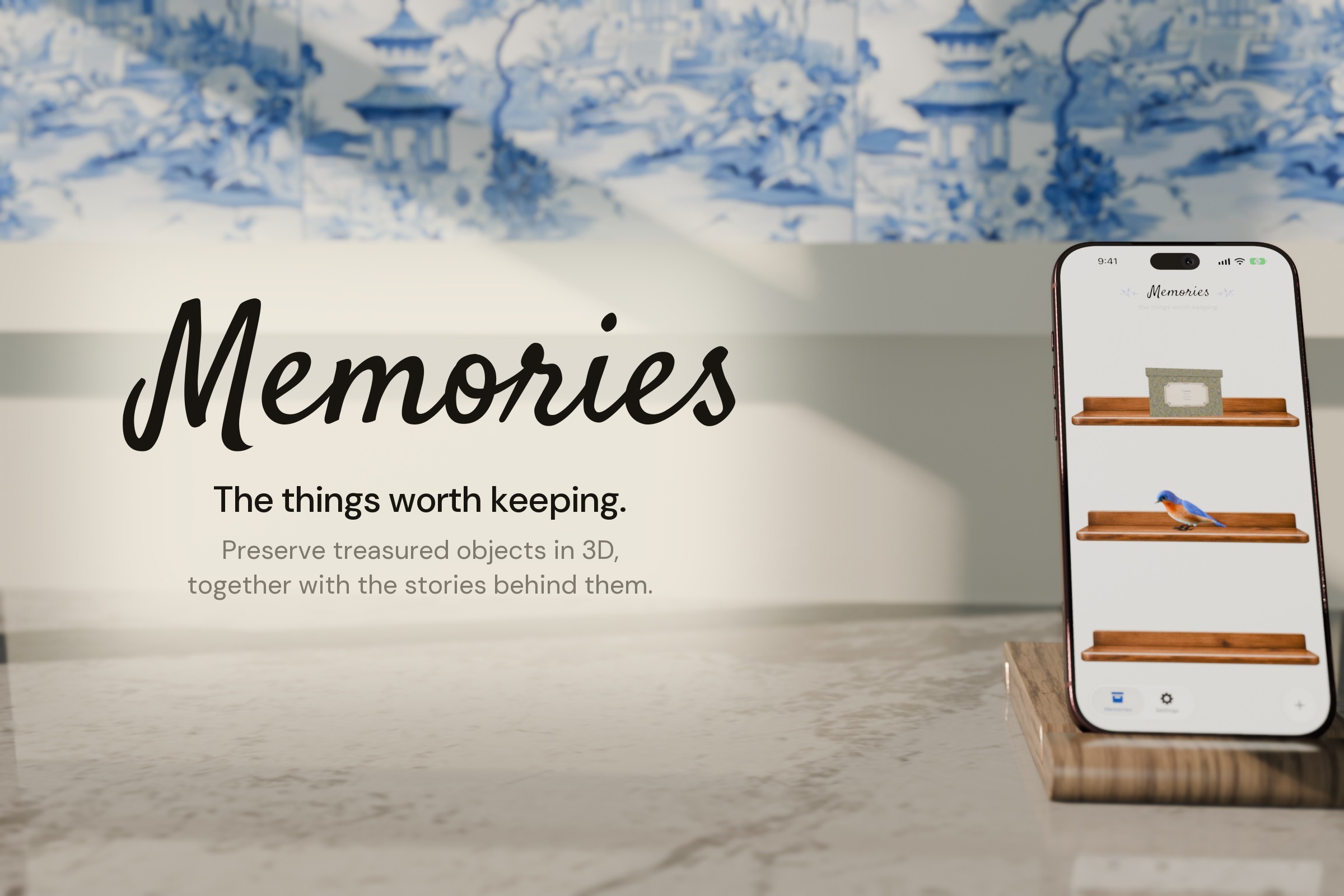
Memories — the things worth keeping.
-
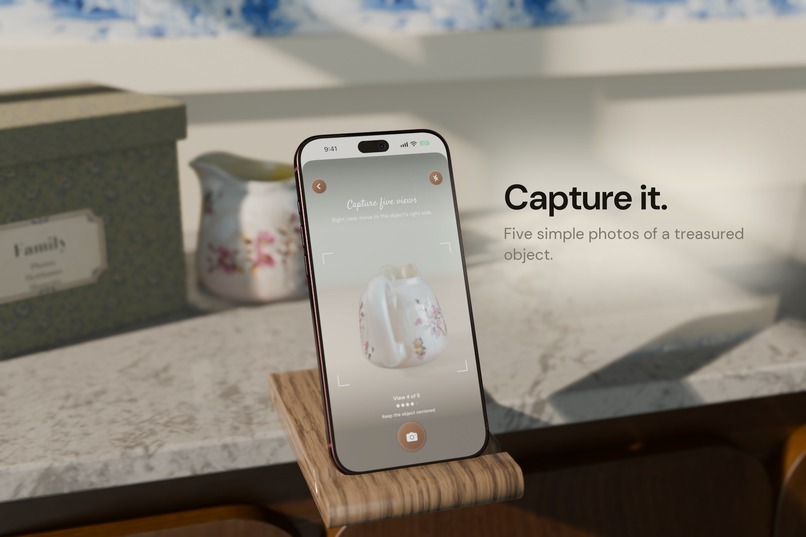
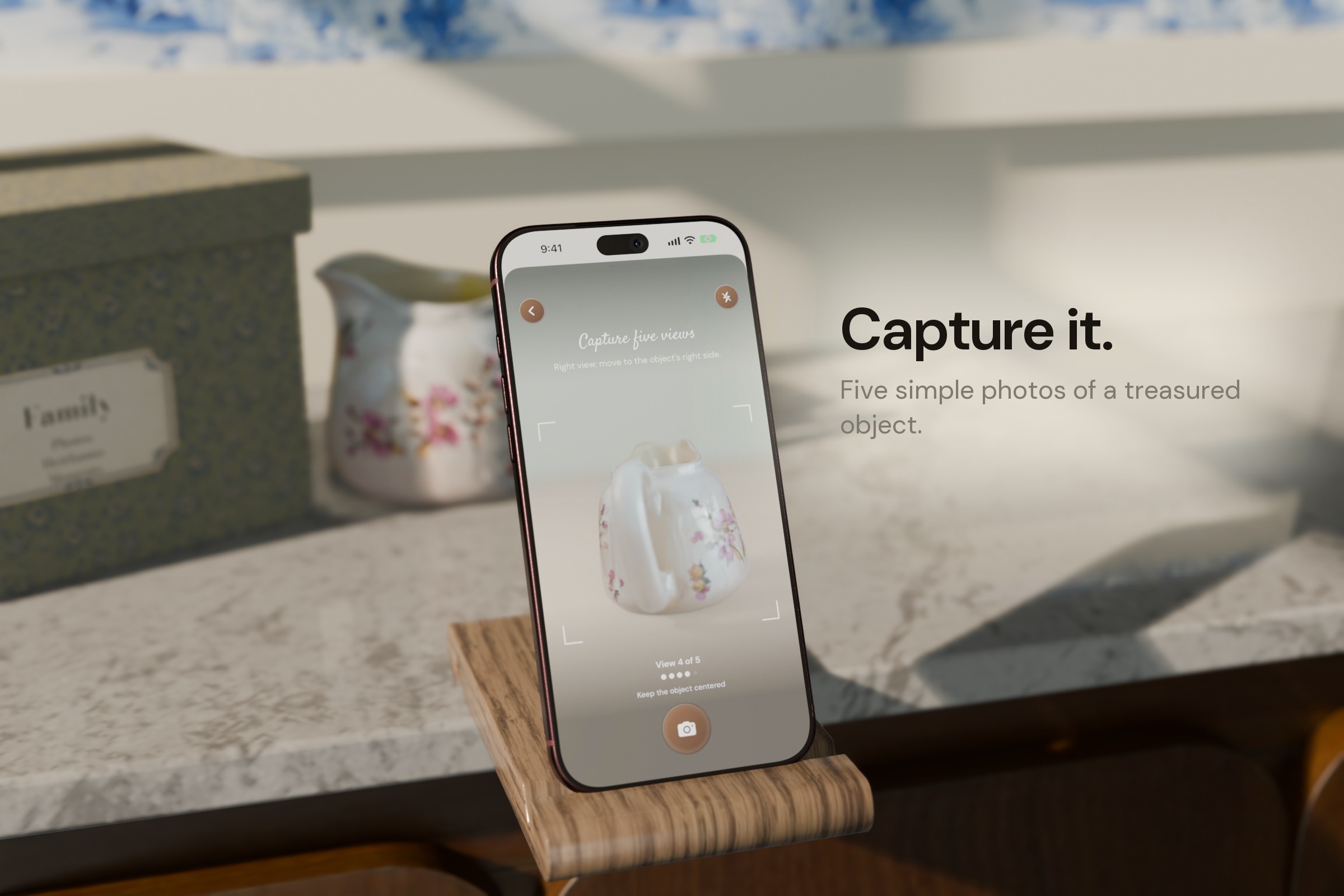
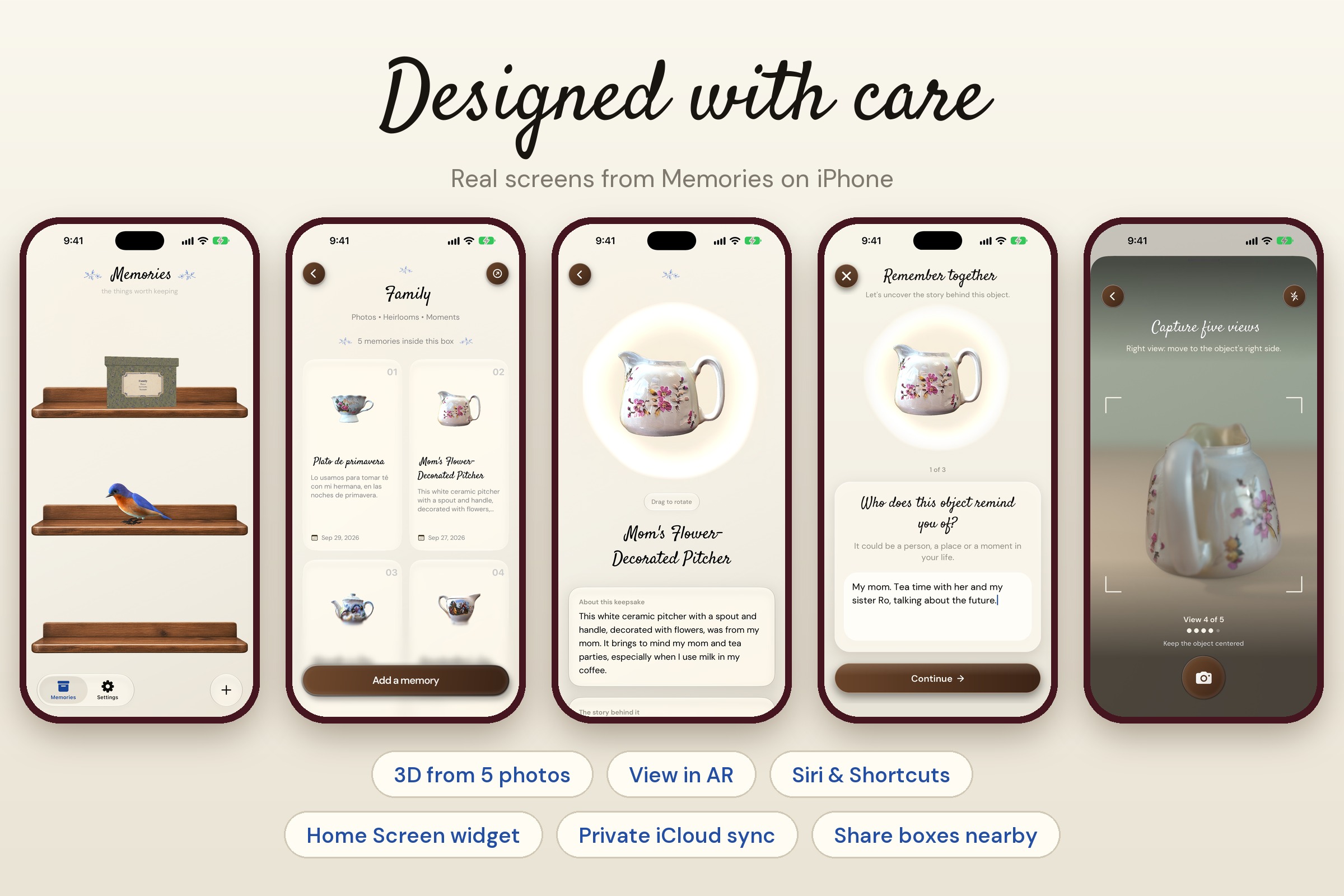
Capture a treasured object in five simple photos.
-
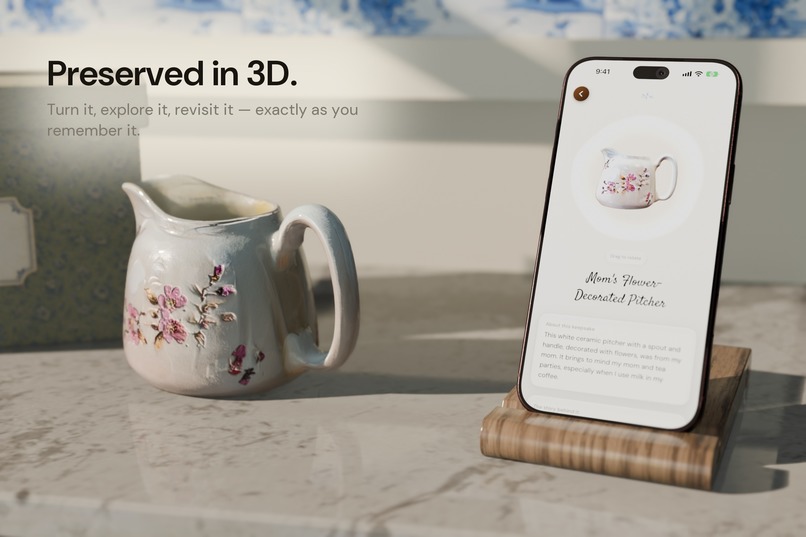
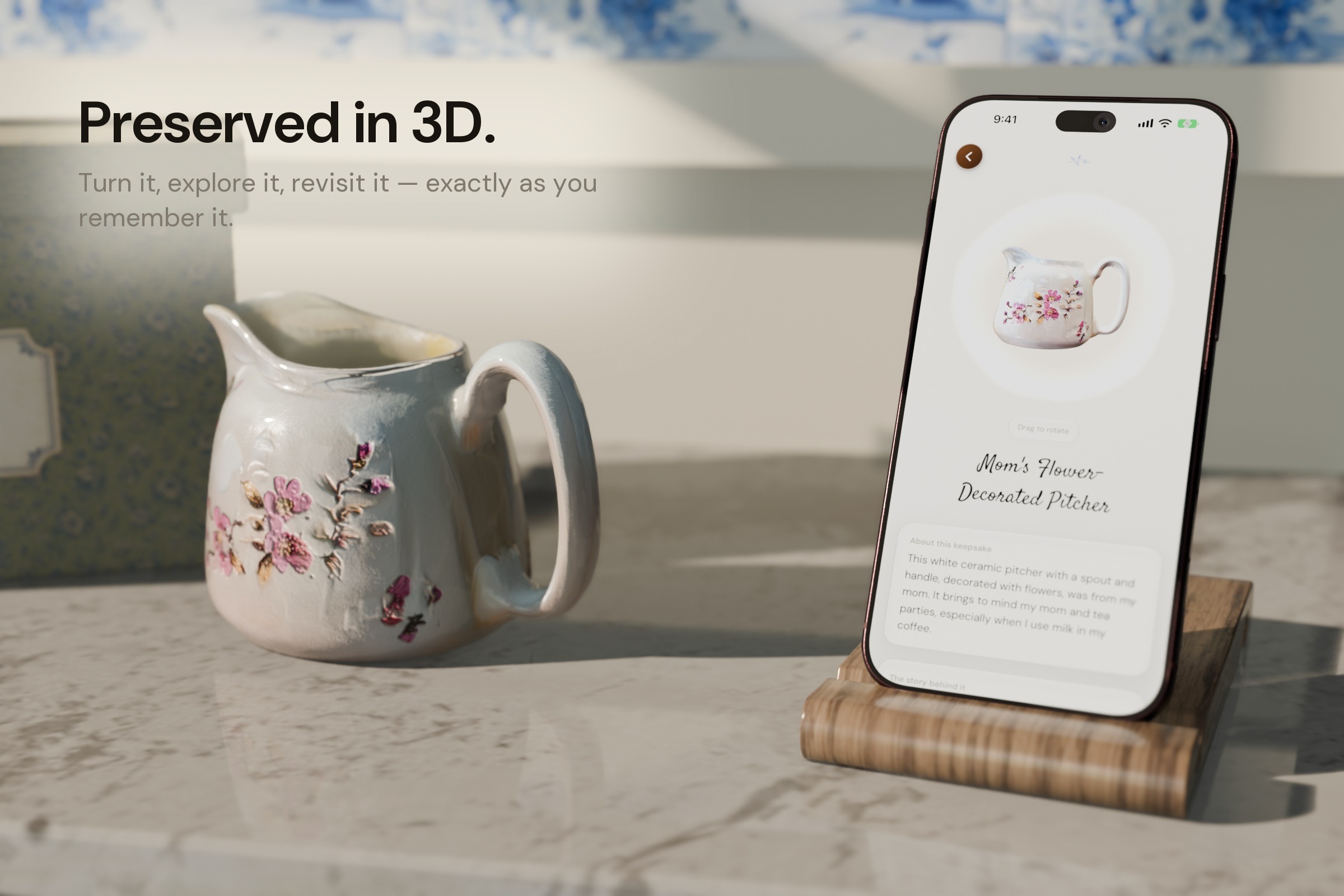
Preserved in 3D — exactly as you remember it.
-
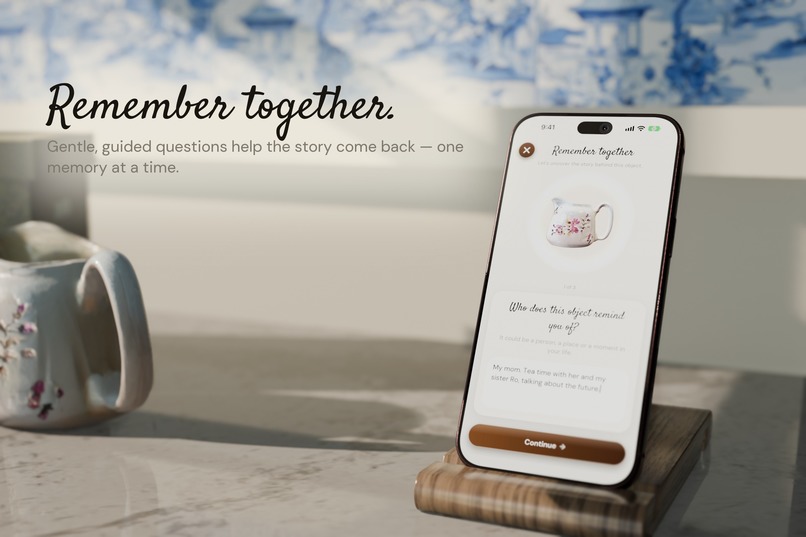
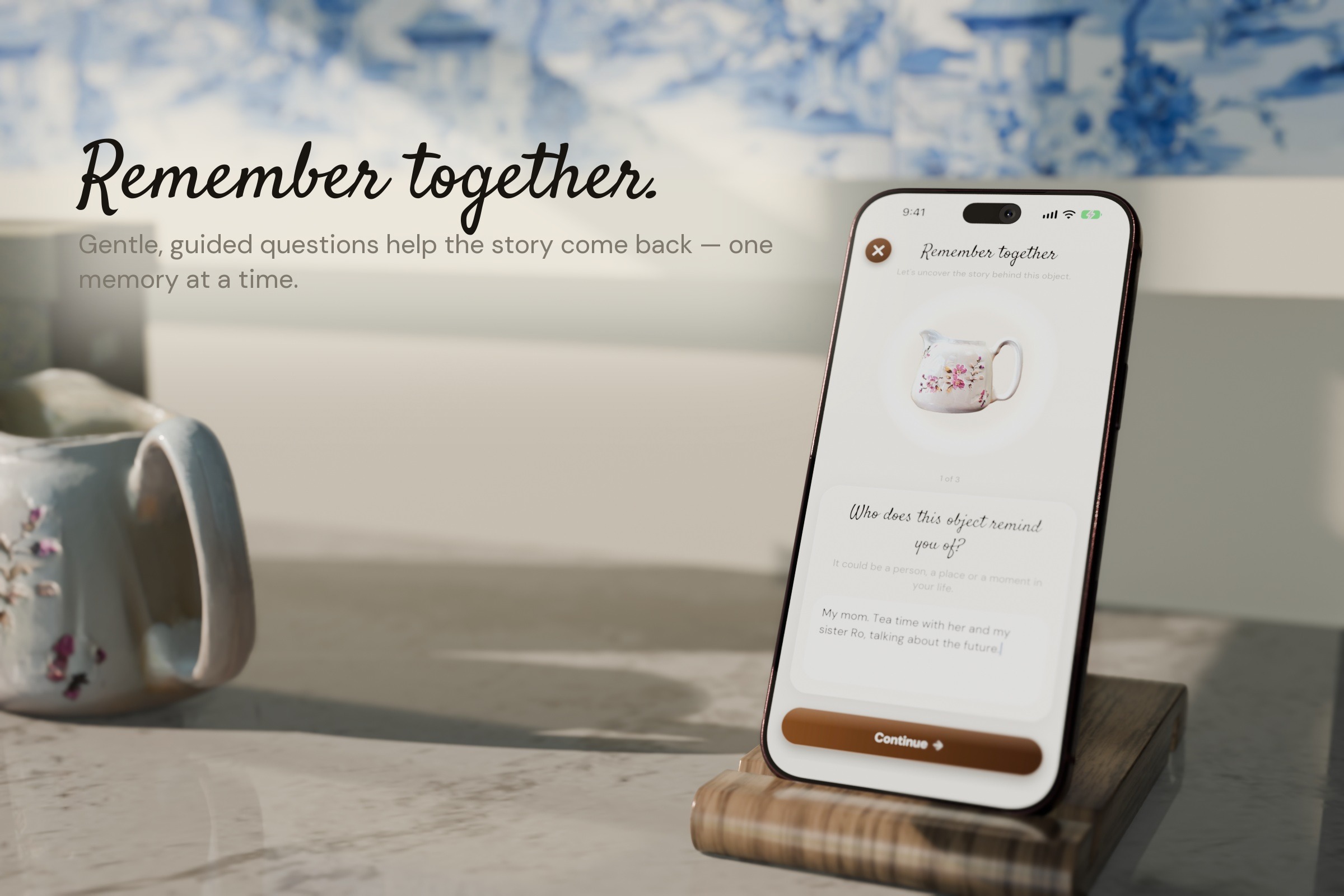
Gentle, guided questions help the story come back.
-
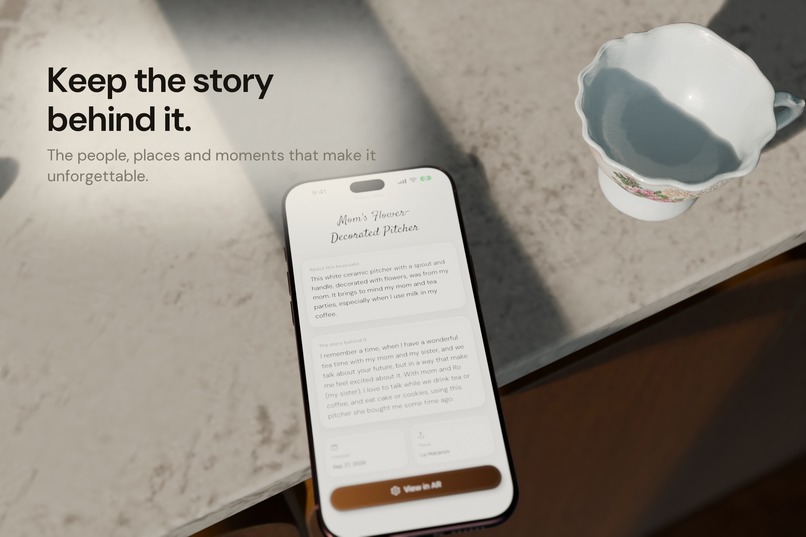
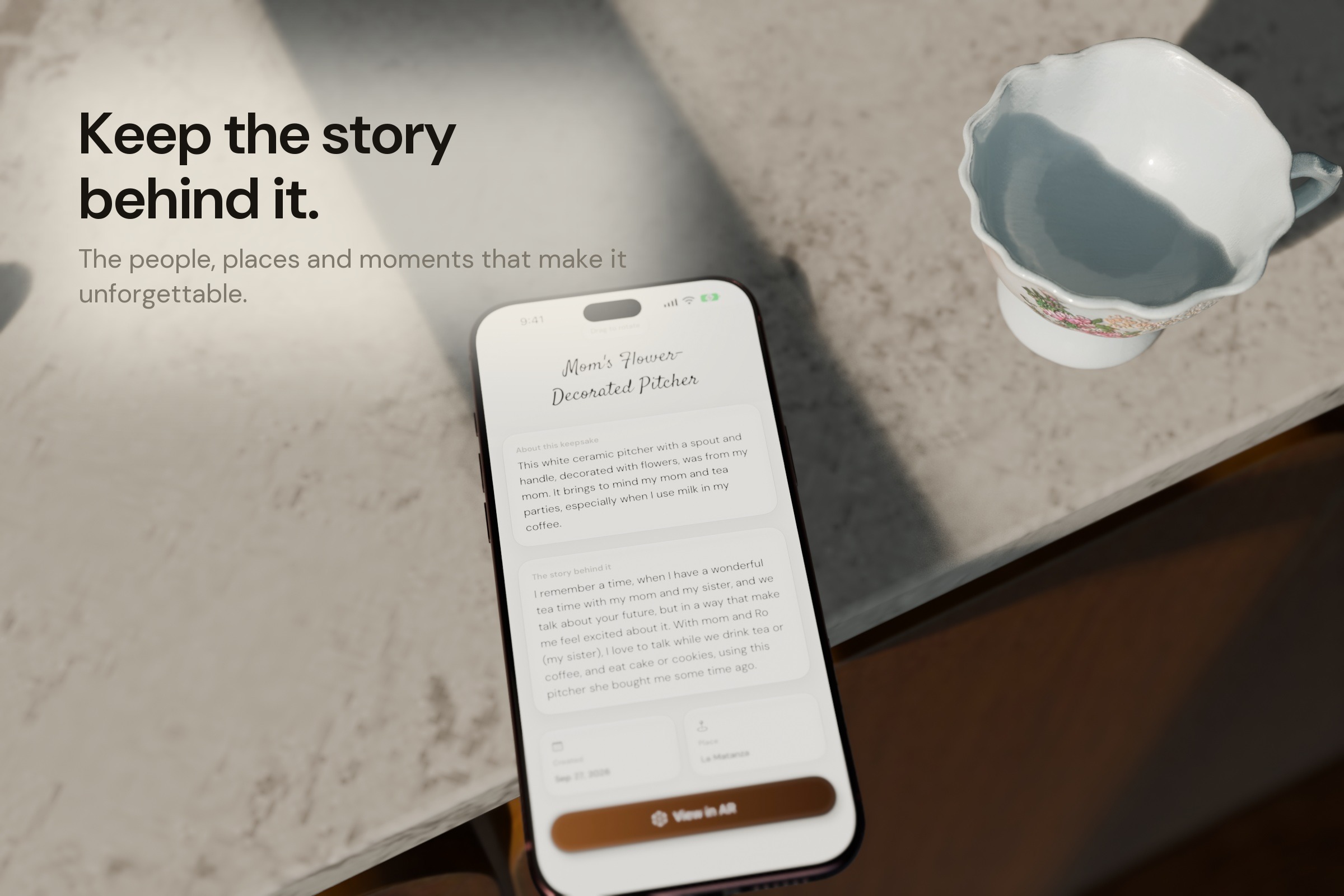
Keep the people, places and moments behind every object.
-
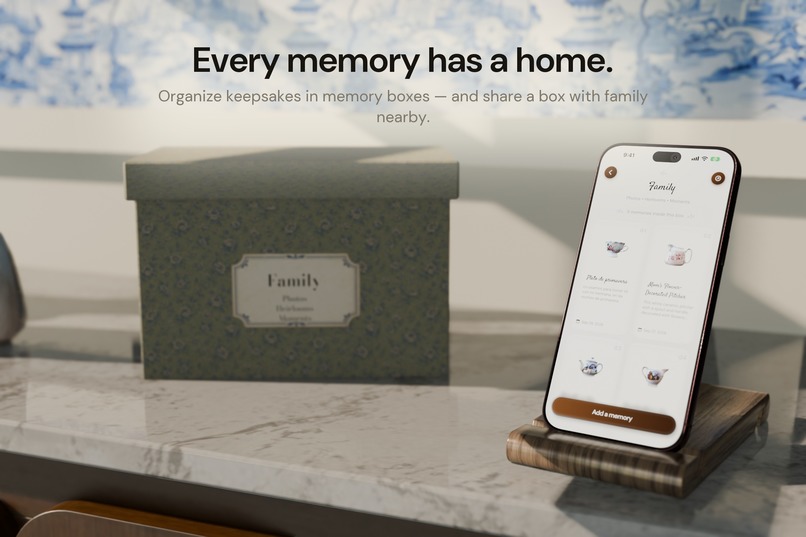
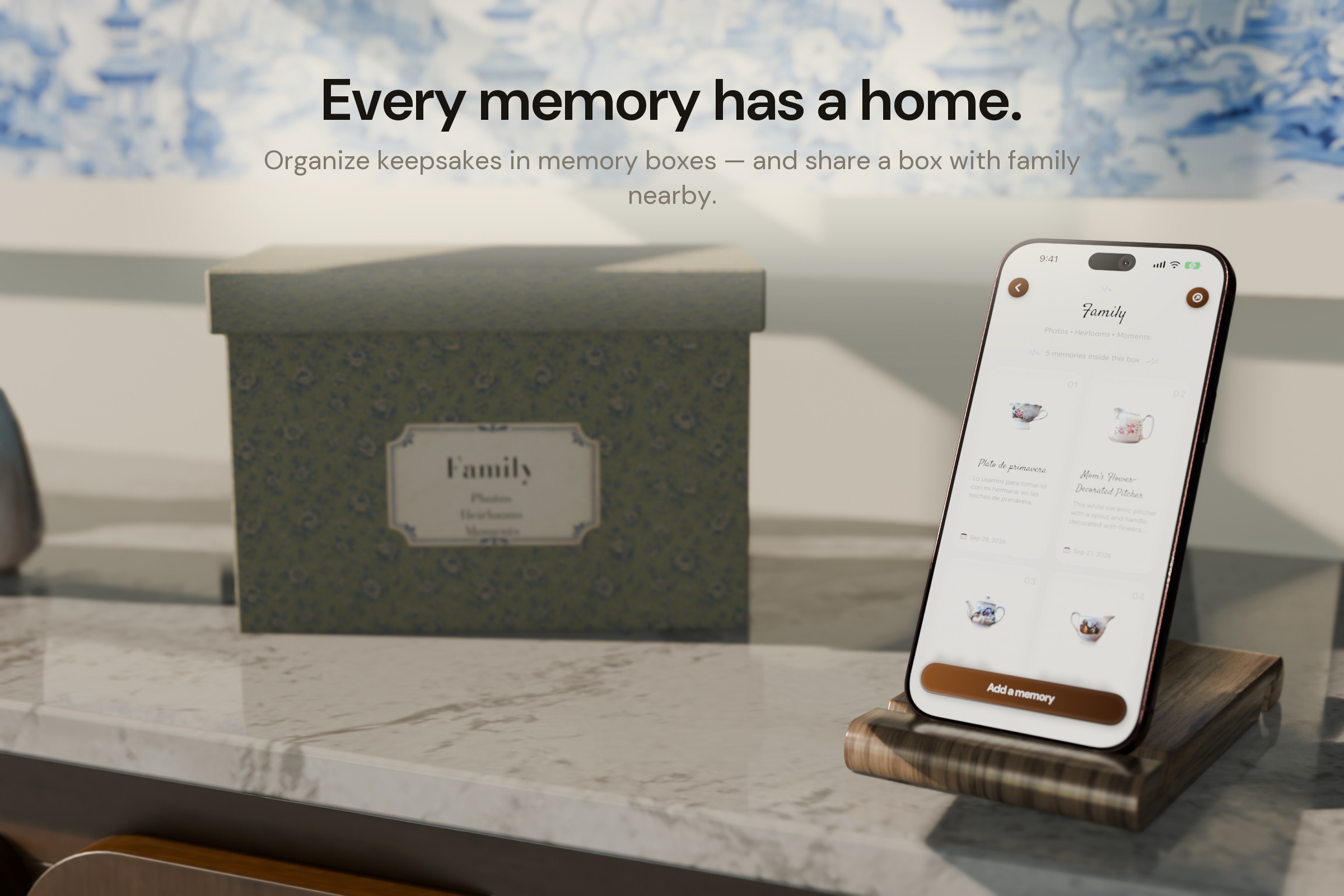
Organize keepsakes in memory boxes and share them with family nearby.
-
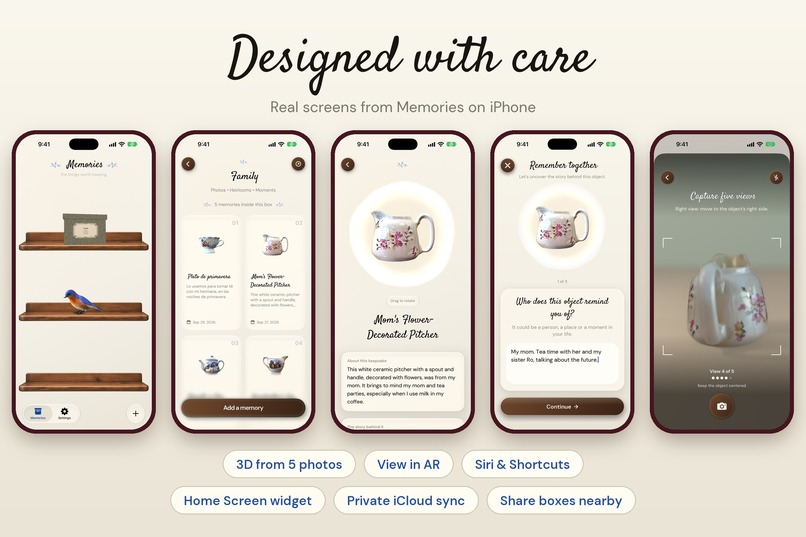
Real screens from Memories: 3D, AR, Siri, widgets, iCloud and nearby sharing.
-
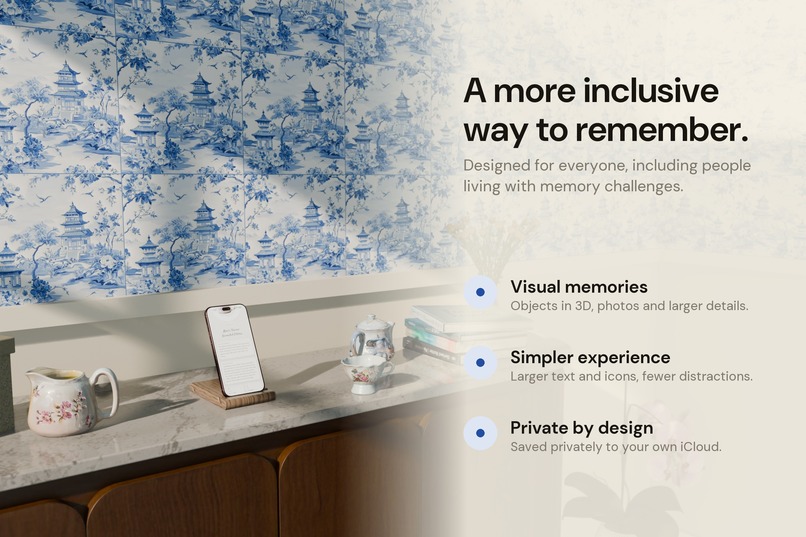
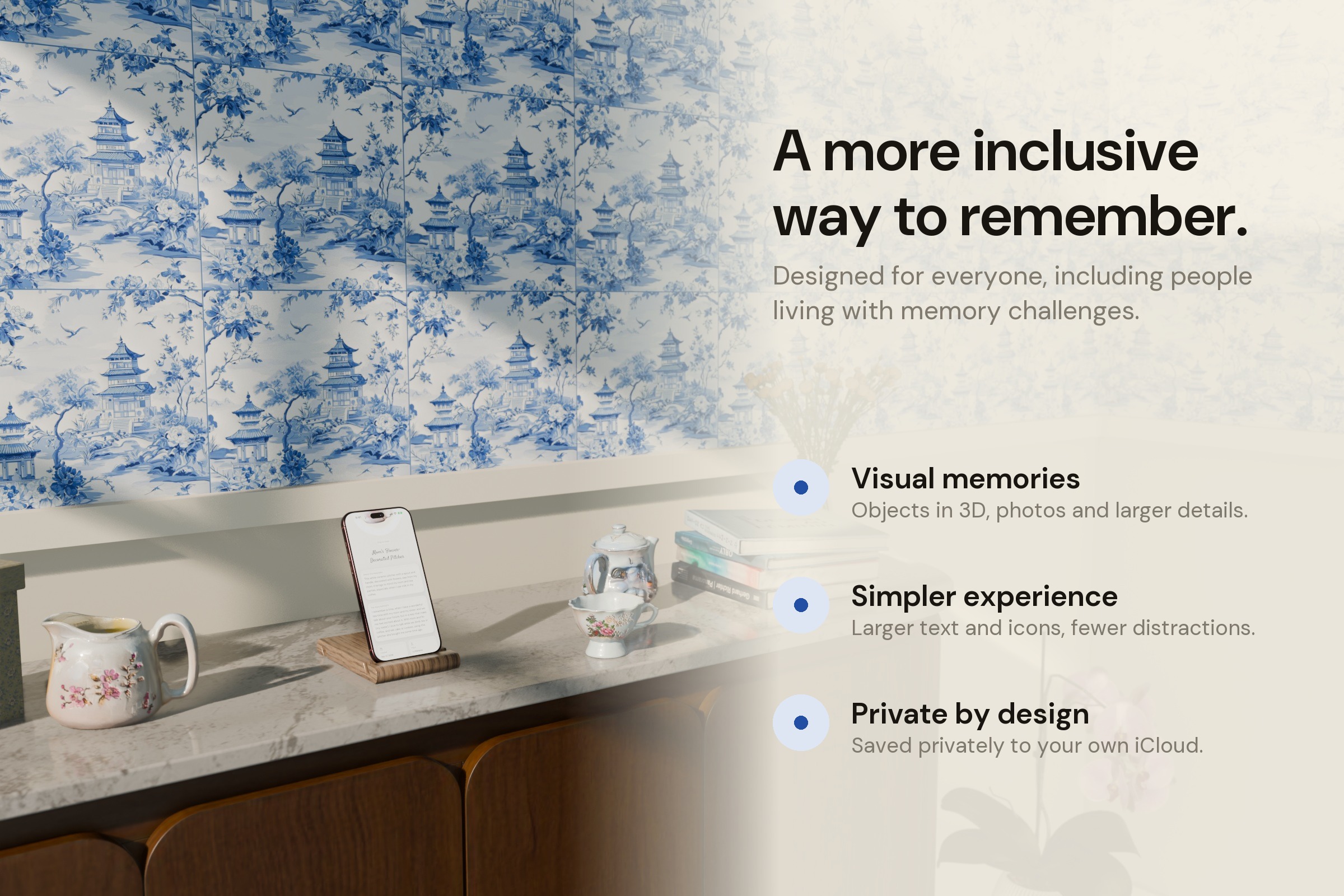
A more inclusive way to remember, designed for people living with memory challenges.
Inspiration
Memories started with a simple question: what happens to the little things we love as time passes?
Growing up, I was surrounded by objects that became part of my memories: porcelain pieces from my grandmother's home, childhood toys, old decorations, and everyday things that might have had little material value, but carried entire stories with them.
Over time, homes change, objects get lost, break, or simply disappear. I wanted to create a way to preserve not only a photograph of them, but also the feeling of being able to encounter those objects again years later.
That's how Memories was born: a digital home for the little things worth keeping.
What it does
Memories turns meaningful physical objects into 3D memories.
You can capture an object, preserve it in 3D, write its story, and add voice notes. Those memories can then be organized inside customizable keepsake boxes and shelves.
Objects can be explored again in three dimensions and brought back into your surroundings through augmented reality.
The experience also extends beyond the app through widgets and App Intents, while accessibility features such as VoiceOver and Voice Control help make Memories accessible to more people.
The goal is simple: years from now, I want someone to be able to open a box, see an object they once loved, and hear the stories and voice notes that were preserved alongside it.
How we built it
I built Memories independently as a native experience for Apple platforms, primarily using Swift, SwiftUI, RealityKit, ARKit, Vision, App Intents, Foundation Models, SharePlay, and WidgetKit.
3D is at the heart of the experience. Preserved objects become part of interactive 3D scenes, live inside virtual boxes and shelves, and can return to the physical world through augmented reality.
I also integrated RevenueCat to manage the app's subscription experience.
One of my priorities throughout development was making Memories feel deeply integrated with Apple platforms. This includes widgets, Siri and App Intents, experiences adapted for iPhone and iPad, accessibility through VoiceOver and Voice Control, Foundation Models, and small details such as animations, haptics, sounds, and microinteractions.
I wanted all of these technologies to serve the original idea behind Memories: preserving the little things that mean so much to us.
Challenges we ran into
One of the biggest challenges was creating an experience centered around 3D while keeping it simple, intuitive, and performant on mobile devices.
Working with 3D objects meant solving challenges involving processing, rendering, materials, lighting, memory usage, and performance.
But there was another challenge that was just as important: making all of that technology not feel technical.
I didn't want Memories to feel like a 3D scanner or a file manager.
I wanted it to feel like opening an old box filled with things you once loved.
That meant spending a lot of time on details that may seem small individually: lighting, materials, shelf layouts, transitions, sounds, accessibility, adapting the interface to different screen sizes, and even the way interacting with each object feels.
Accomplishments that we're proud of
I'm especially proud that Memories became much more than the original idea of preserving objects in 3D.
It became a place for memories.
Objects can preserve their stories and voice notes. They can live inside boxes, appear on shelves, return to the physical world through augmented reality, and become part of different experiences throughout Apple's ecosystem.
I'm also proud that technologies such as 3D, augmented reality, Foundation Models, App Intents, and SharePlay can coexist inside an experience that still maintains its own visual identity.
Most importantly, I'm proud that an idea inspired by small objects from my own life is now a real app that anyone can download from the App Store.
What we learned
Building Memories taught me that the hardest part of using advanced technology isn't always making it work.
Sometimes, the hardest part is making the technology disappear.
Someone shouldn't have to think about rendering, 3D models, artificial intelligence, or spatial computing when they're trying to preserve something they love.
They should simply feel like they're keeping a memory.
I also learned how much small interactions matter. A transition, a sound, a haptic, the way an object moves, or how a box is presented can completely change the emotional character of an experience.
Building all of this independently also taught me how to constantly move between engineering, design, and product while never losing sight of why I started building Memories in the first place.
What's next for Memories: Things We Keep
Memories will continue exploring new ways to preserve and rediscover the objects that become part of our lives.
I want to keep expanding personalization, including the ability to create custom wallpapers with Image Playground, deepen the app's integration with Apple technologies, and find new ways to rediscover the memories we preserve.
My long-term goal is for Memories to become a personal archive that grows with you: a place where the little things, stories, and voices that make up a life don't have to disappear.
Built With
- 3d
- 3d-models
- accessibility
- app-intents
- arkit
- artificial-intelligence
- augmented-reality
- design
- foundation-models
- haptics
- intuitive
- ios
- ipados
- realitykit
- shareplay
- siri
- storekit
- swift
- vision
- widgetkit


Log in or sign up for Devpost to join the conversation.