-
-
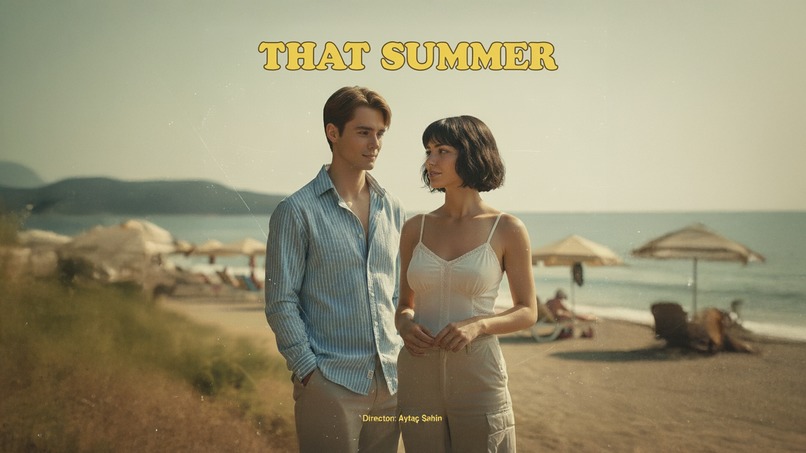
"THAT SUMMER"
Inspiration
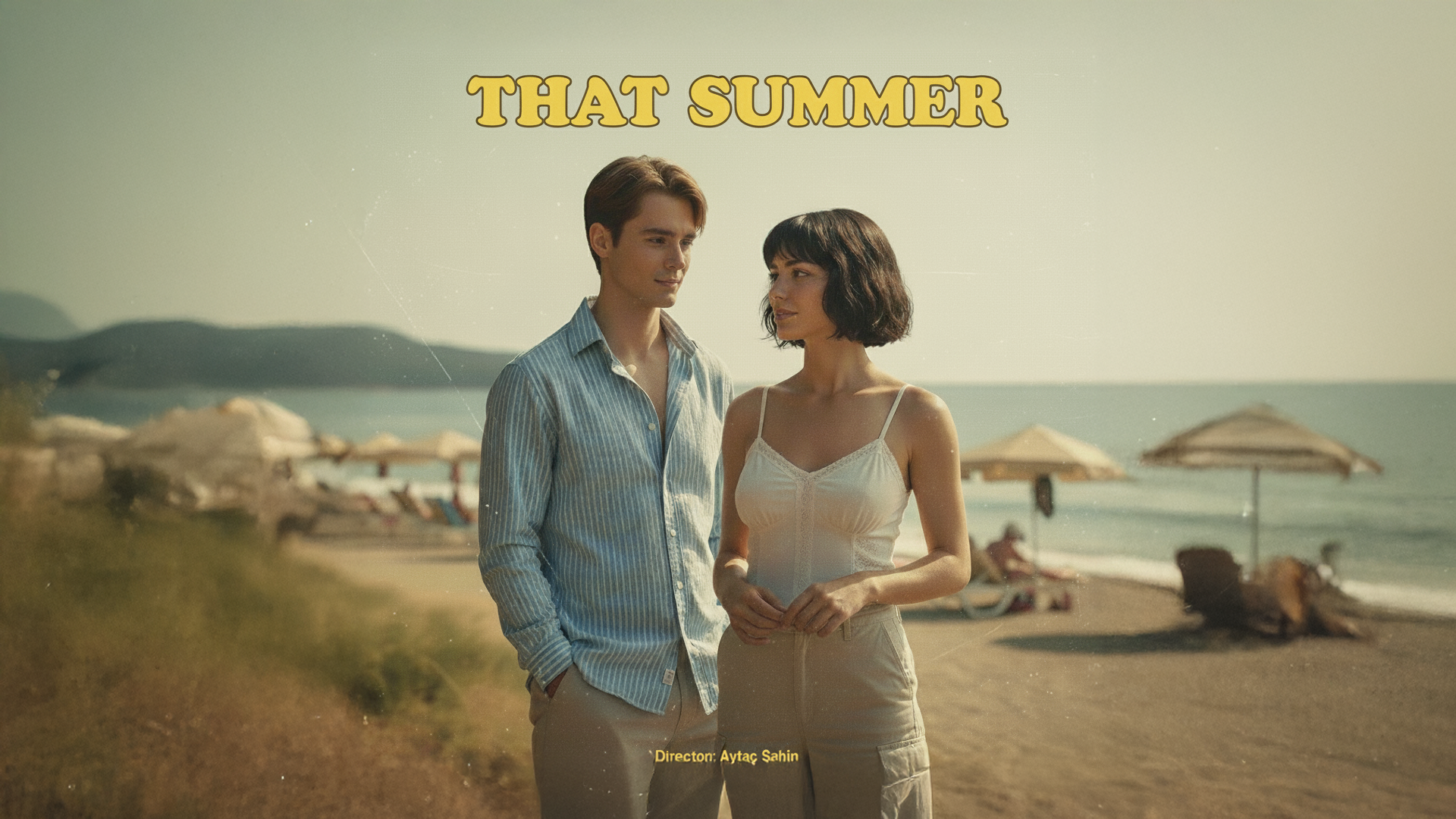
My primary motivation was to explore the synergy between artificial intelligence and cinematic narrative. As a director, I was driven by a desire to push visual storytelling boundaries using emerging AI tools. This project was conceived as a personal experiment to experience firsthand how an AI framework could contribute to filmmaking and what its current capabilities are in generating a complete, coherent narrative. I specifically chose to tell a nineties-era youth romance story due to its rich, nostalgic aesthetic, providing a clear visual target for the AI.
What it does
The project is a proof-of-concept short narrative generated using AI tools. It aims to: Tell a Cohesive Story: Successfully deliver a compelling youth romance narrative set in the 1990s. Test Cinematic Language: Validate the effectiveness of using specific directorial language (camera angles, lighting, film grain) within text prompts to achieve a high-quality, cinematic aesthetic. Evaluate Consistency: Act as a testing ground for the AI's ability to maintain spatial and character consistency across multiple sequential shots.
How we built it
Elbette, önceki hikayenizi yüklediğiniz başlıklara göre düzenleyerek İngilizce olarak yeniden oluşturuyorum. Anlatınızdaki unsurları en uygun başlıkların altına yerleştirdim ve "Memories from a ghost" başlığının ne olduğunu bilmediğim için, onu projenizin adı olarak kabul ettim.
Memories from a ghost: An AI Filmmaking Experiment
Inspiration
My primary motivation was to explore the synergy between artificial intelligence and cinematic narrative. As a director, I was driven by a desire to push visual storytelling boundaries using emerging AI tools. This project was conceived as a personal experiment to experience firsthand how an AI framework could contribute to filmmaking and what its current capabilities are in generating a complete, coherent narrative. I specifically chose to tell a nineties-era youth romance story due to its rich, nostalgic aesthetic, providing a clear visual target for the AI.
What it does
The project is a proof-of-concept short narrative generated using AI tools. It aims to: Tell a Cohesive Story: Successfully deliver a compelling youth romance narrative set in the 1990s. Test Cinematic Language: Validate the effectiveness of using specific directorial language (camera angles, lighting, film grain) within text prompts to achieve a high-quality, cinematic aesthetic. Evaluate Consistency: Act as a testing ground for the AI's ability to maintain spatial and character consistency across multiple sequential shots.
How we built it
The project was executed through a highly iterative, director-led process: 1-Conceptual Blueprint: The 1990s youth romance concept was established, and the core emotional beats were mapped out.
2-Prompt-Driven Generation: We used specific camera language (e.g., "medium close-up," "golden hour light") to define each shot, translating traditional directorial intent into prompt engineering.
3-Refinement Loop: Scenes were generated, evaluated, and refined. When inconsistencies arose, we implemented small, targeted adjustments (micro-adjustments) to the prompts rather than rebuilding entire sequences. This proved to be the most efficient method for maintaining continuity.
Challenges we ran into
The primary difficulties were related to the inherent limitations of current generative AI models regarding continuity:Character Consistency: Maintaining the same character's appearance, clothing, and facial features across different shots was a persistent hurdle. The model struggled with identity retention.Spatial Consistency: Ensuring the physical environment (mekan) and its geometry remained consistent from one frame to the next also required significant effort.$\text{The Consistency Challenge ($\chi$)}$: We treated the challenge of coherence as a statistical problem, seeking to minimize the variance in outputs. The effort invested in managing these consistency errors, $\chi$, was inversely proportional to the prompt specificity: $\chi \propto 1/\text{Prompt Detail}$.
Accomplishments that we're proud of
Seamless Integration: We achieved a complete workflow where the director encountered no difficulty in adopting and utilizing the AI tools for visual generation.
Directorial Control: We demonstrated that a director's eye for camera angles and composition translates directly and effectively into the AI prompting process.
Story Completion: We successfully realized the final goal of delivering the intended nineties-era youth romance story, overcoming the consistency hurdles to deliver a complete narrative.
What we learned
The most significant takeaway was the realization that AI is a powerful visual assistant, but currently requires strong human intervention for narrative coherence.
We learned that the technical execution (using the AI and creating the environment) was easy.
We learned that the true challenge is in prompt-based continuity management.
Crucially, we learned that inconsistency issues could be resolved with small, targeted efforts rather than starting over, making the post-generation refinement process more efficient than anticipated. The director's role shifts from managing logistics to managing prompt details
What's next for Memories from a ghost
Moving forward, the next steps for this project or subsequent AI filmmaking endeavors will involve:
Advanced Consistency Techniques: Experimenting with new techniques (e.g., control nets, character embeddings) to automate and improve the maintenance of character and spatial continuity.
Expanding the Narrative Scope: Applying the learned workflow to more complex narratives involving dynamic action sequences or detailed dialogue scenes to test the current limits of AI's storytelling capability.
Sound and Music Integration: Focusing on the integration of a compelling soundtrack and sound design that matches the AI-generated visuals to create a truly immersive final product.
Built With
- adobe
- capcut
- elevenlabs
- falai
- suno
- veo


Log in or sign up for Devpost to join the conversation.