-
-
Home Screen
-
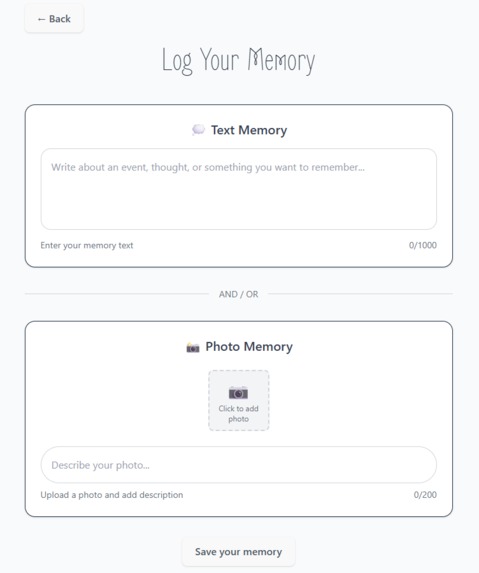
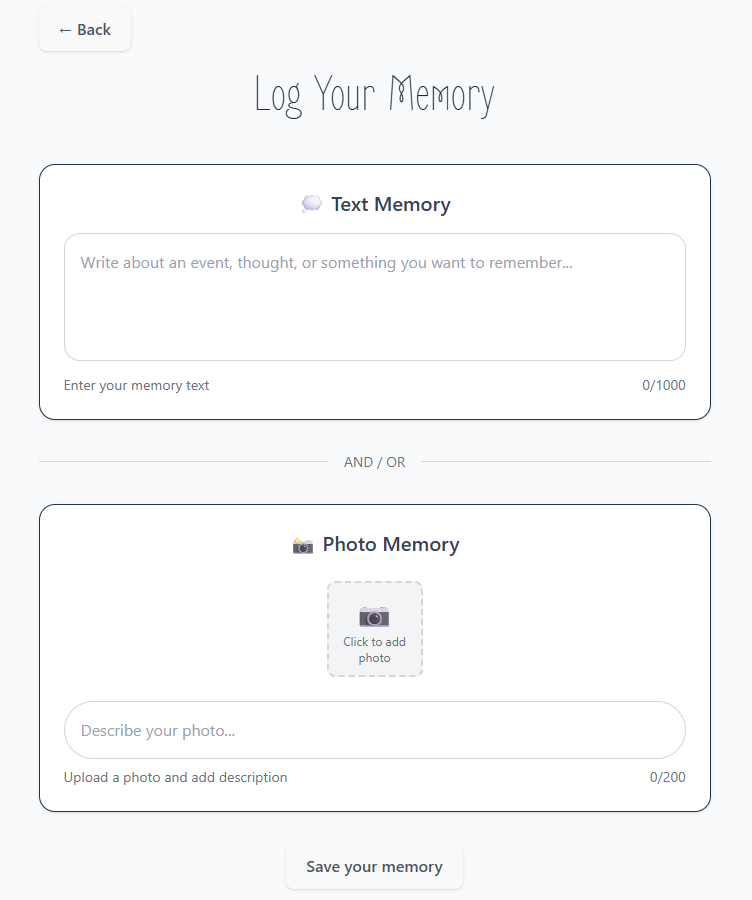
Log Memory Screen
-
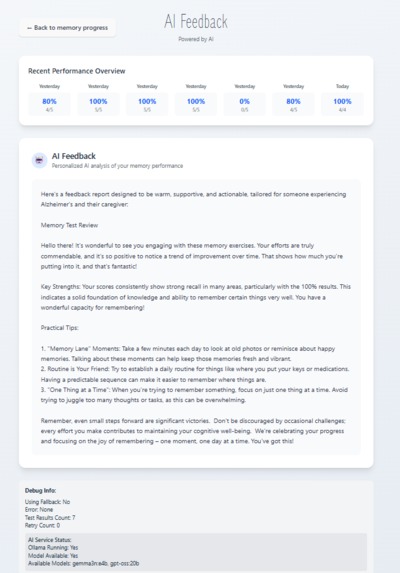
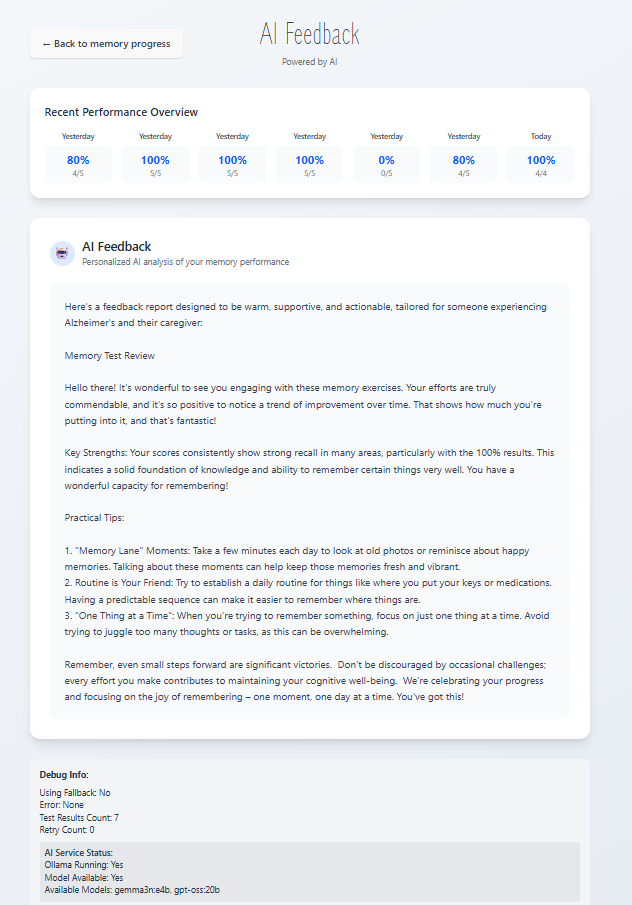
AI Feedback Screen
-
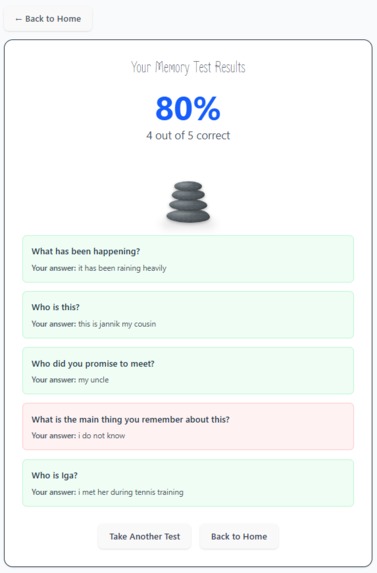
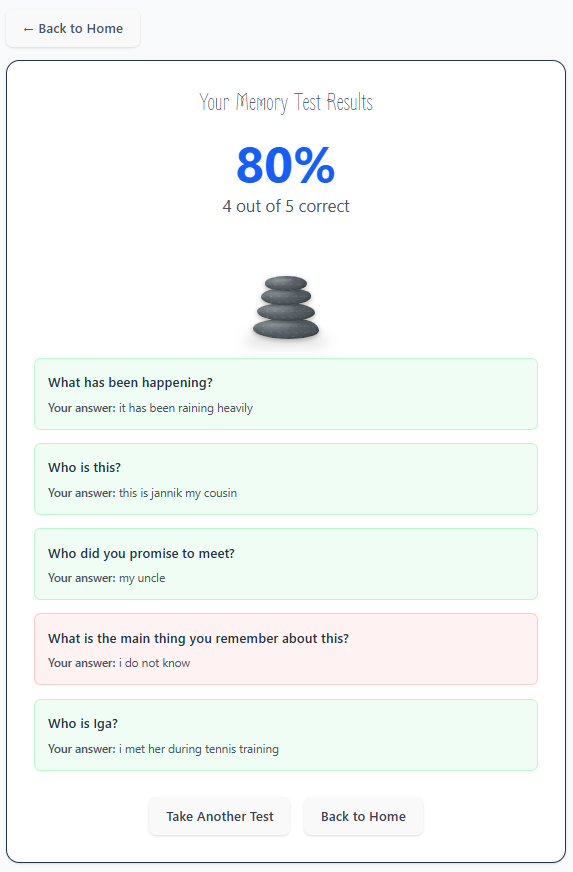
Test Result Screen
-
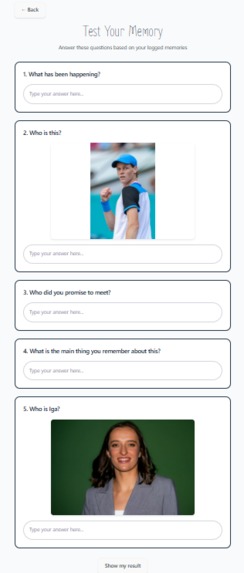
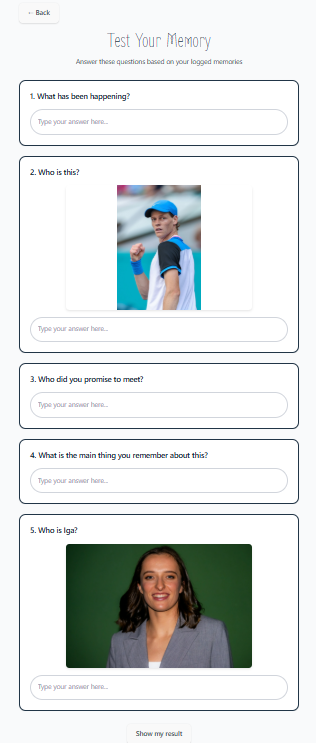
Test Memory Screen
-
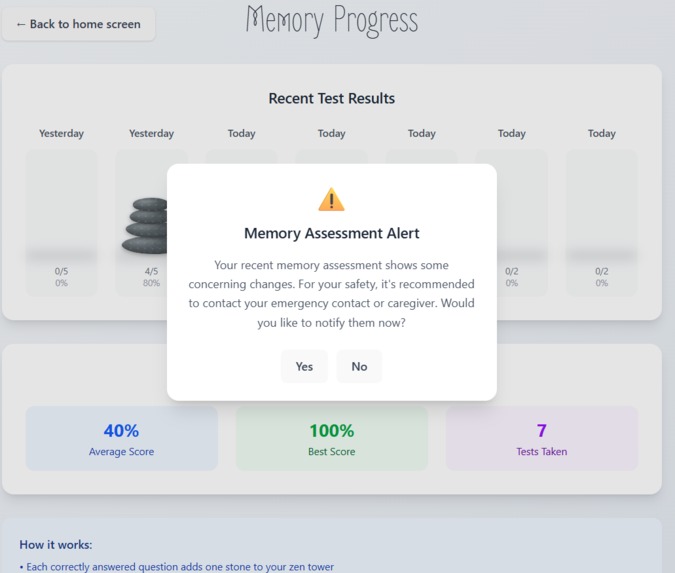
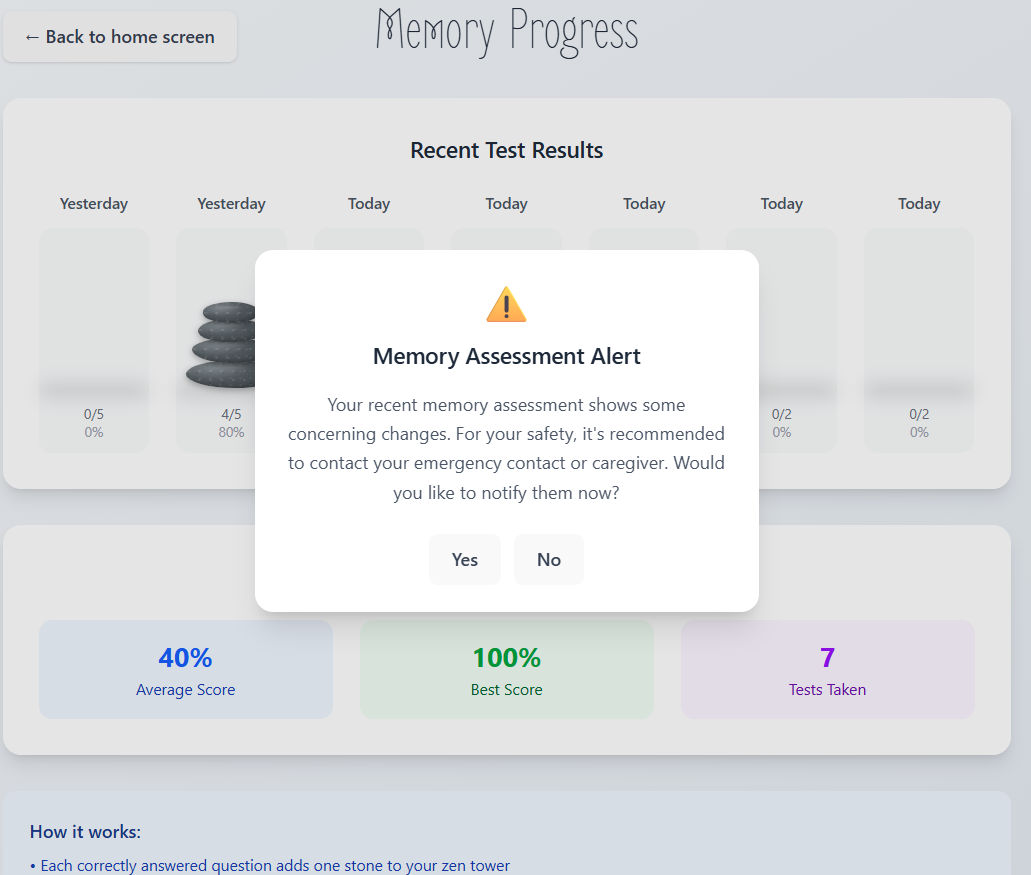
Memory Alert Screen
-
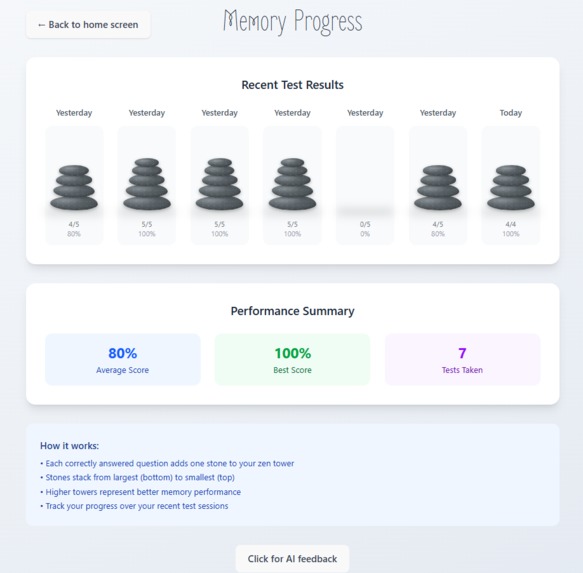
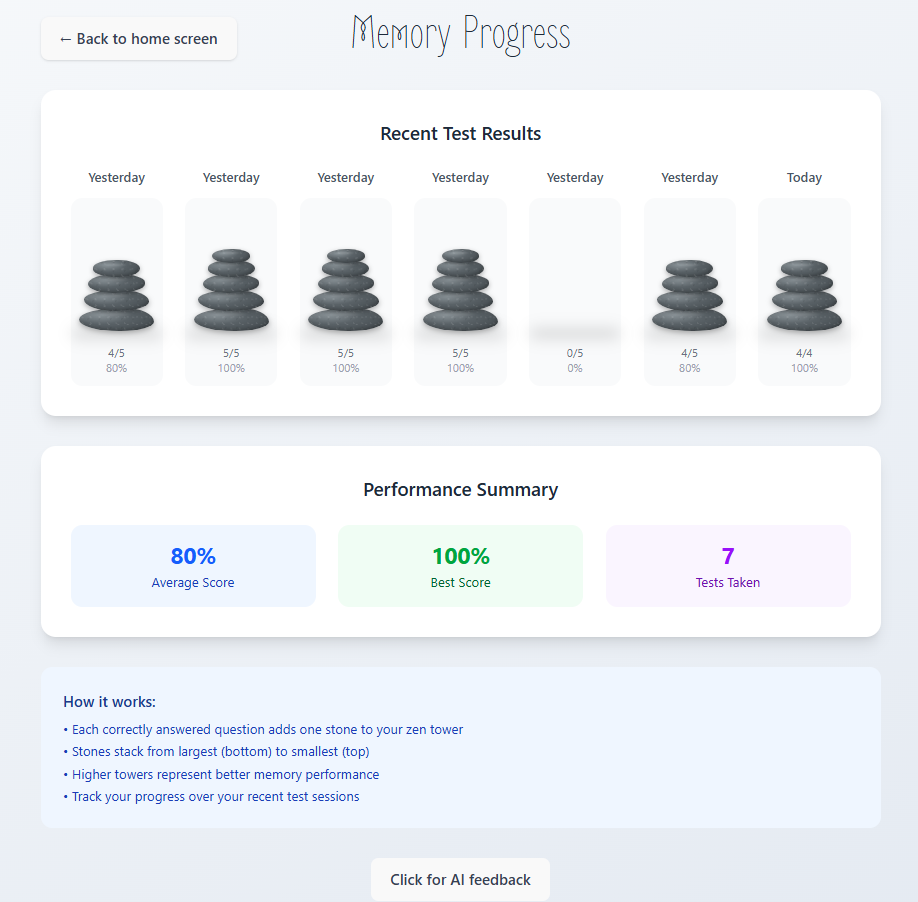
Track Memory Screen
💡 About the Project
Inspiration
Alzheimer’s is a disease that slowly takes away one of life’s most precious gifts: our memories.
I was inspired to create Memoria after seeing how families struggle to support loved ones through memory loss.
Instead of another generic health app, I wanted to design a gentle, local-first companion — one that respects privacy, offers calm encouragement, and turns everyday moments into opportunities for memory practice.
What I Learned
- 🧠 How to integrate a large local LLM (GPT-OSS:20B) into a memory care workflow
- 🗃️ The importance of local storage (SQLite) for privacy-first healthcare apps
- 🎨 Designing an interface that is calm, simple, and accessible for elderly users
- 🔐 Why local-first AI matters: no internet dependency, no risk of sensitive data leaving the device
How I Built It
Frontend (React + Tailwind)
- A lightweight, accessible UI designed for simplicity.
- Includes Zen Stones visualization for progress — a metaphor for stability and growth.
- A lightweight, accessible UI designed for simplicity.
Backend (Node.js + Express + SQLite)
- Local API endpoints for logging, testing, and scoring memories.
- Uses
memories.dbto securely store all personal data on-device.
- Local API endpoints for logging, testing, and scoring memories.
AI Engine (GPT-OSS:20B via Ollama)
- Generates personalized quizzes from user-logged memories.
- Evaluates answers in natural language, not just exact matches.
- Provides AI Feedback: encouraging notes, tips, and progress insights.
- Generates personalized quizzes from user-logged memories.
Alerts & Safety Layer
- If average test performance drops below a safe threshold (default:
[ \text{Alert Trigger} = \text{Average Score} < 50\% ]
), Memoria gently prompts caregiver notification.
- If average test performance drops below a safe threshold (default:
Challenges I Faced
- ⚖️ Model Optimization — Running GPT-OSS:20B locally required tuning performance while keeping memory usage safe.
- 🖥️ Local-only Architecture — Ensuring zero cloud calls while still delivering AI-powered personalization.
- 🎭 UX for Vulnerable Users — Designing an app that is calming, intuitive, and respectful for elderly users.
- 💬 Balancing AI Feedback — Making responses empathetic and supportive, not clinical or robotic.
✨ In building Memoria, I learned that technology alone cannot solve Alzheimer’s — but it can provide hope, dignity, and connection. This project is a small step toward that vision.


Log in or sign up for Devpost to join the conversation.