-
-
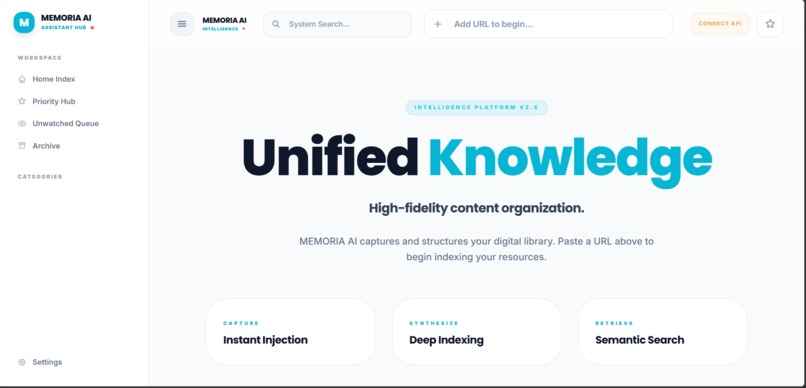
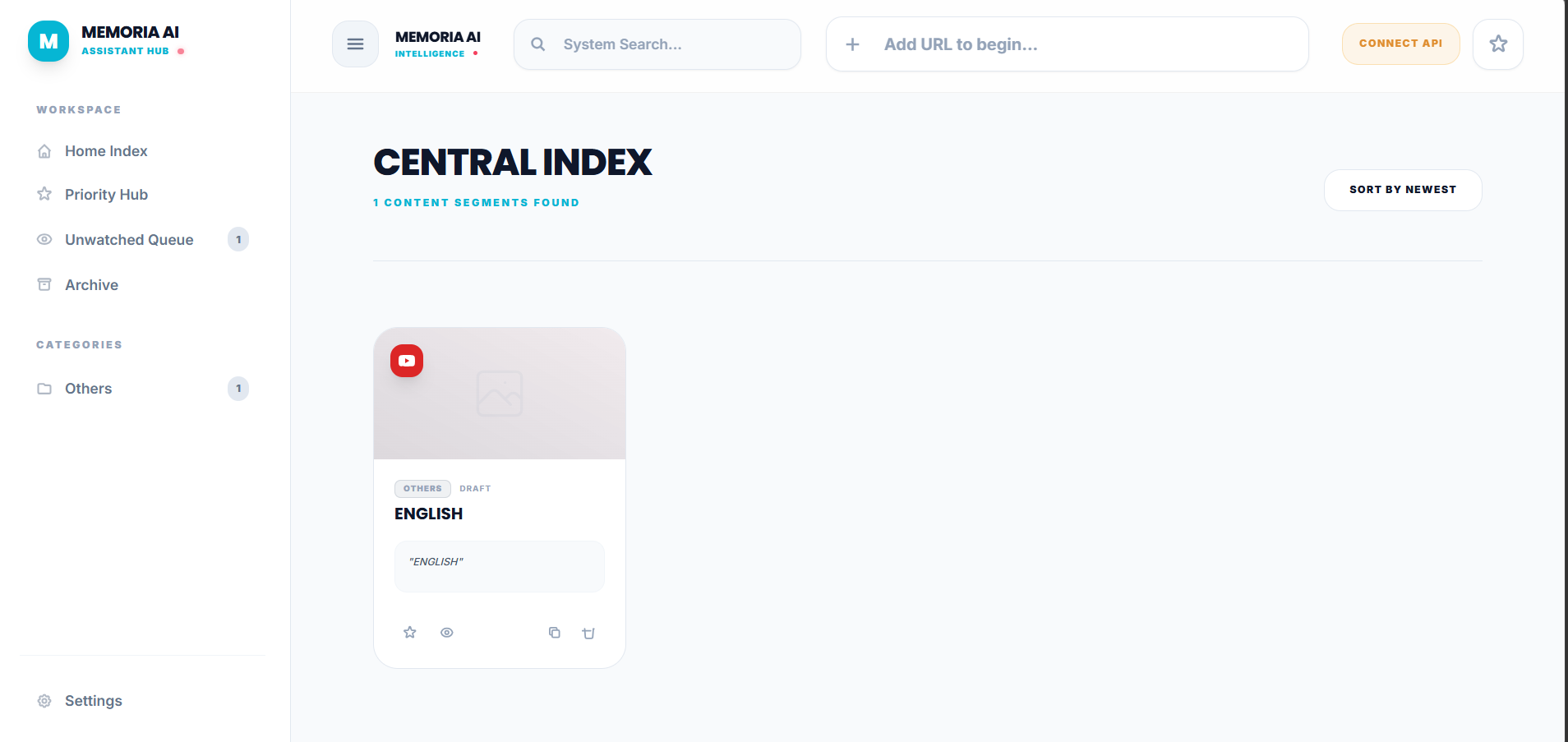
THIS IS FRESH PAGE BEFORE INSERTING CONTENT . AFTER INSERTING CONTENT YOU WILL SEE THE VIDEOS OR ARTICLES IN THE FRONT PAGE
-
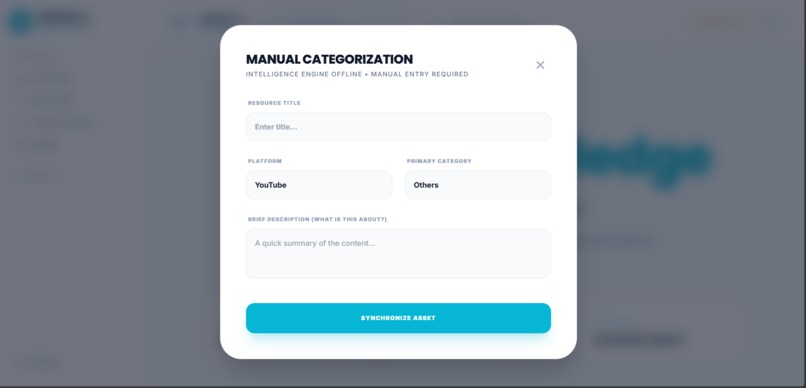
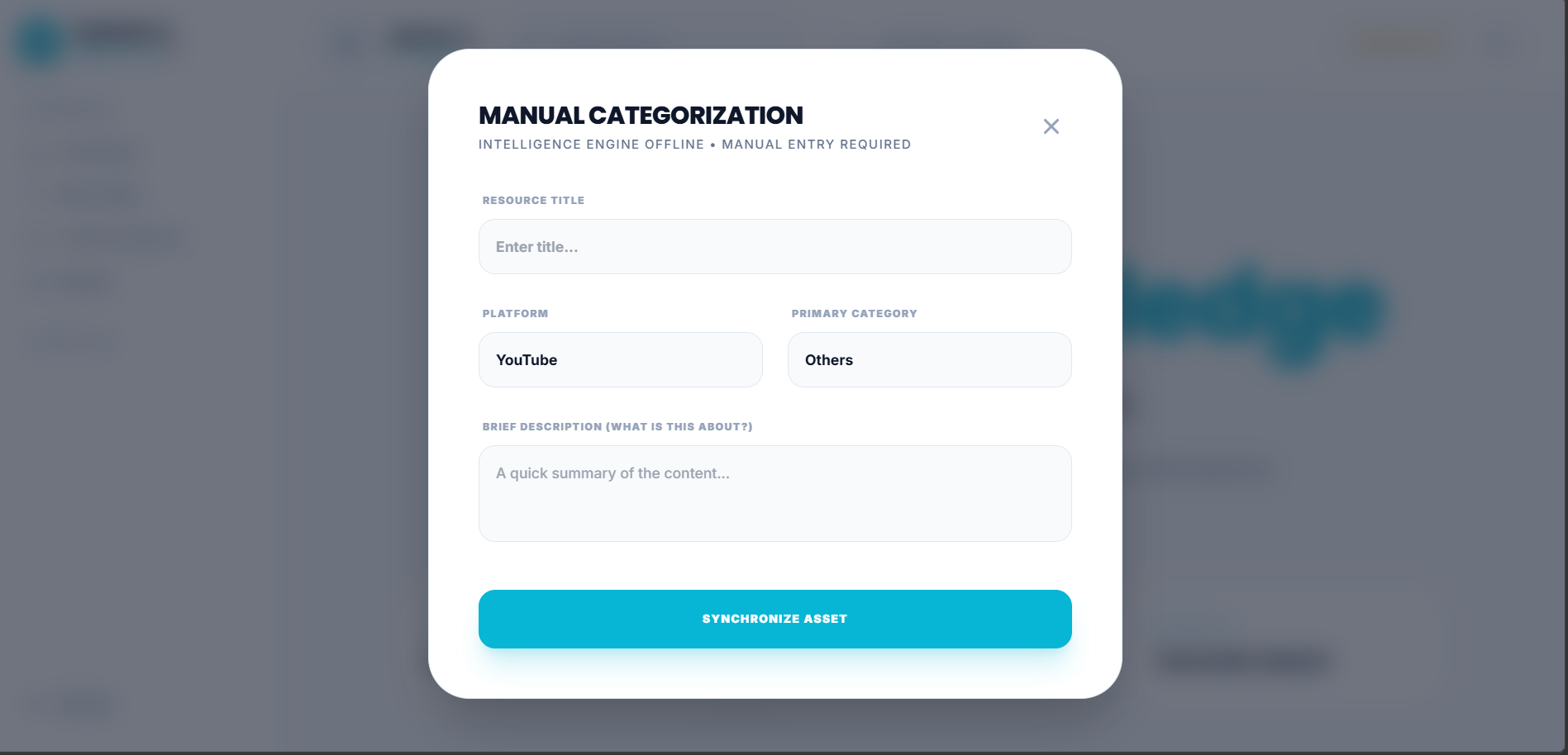
IF YOU NEED TO MANUALLY GIVE A TITLE THERE IS ALSO A SECTION FOR THAT
-
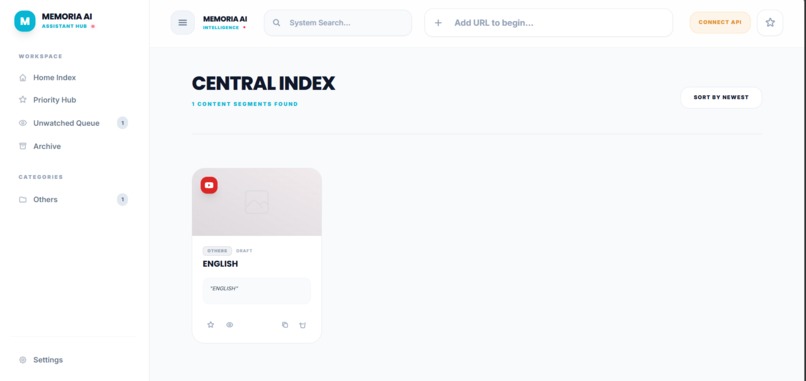
AFTER INSERTED
-

CATEGORIZATION

Inspiration
Across platforms like YouTube, Instagram, Reddit, and the web, people save valuable content every day—tutorials, learning resources, research, ideas, and inspiration. However, these saved items quickly turn into unstructured lists that are difficult to revisit or search. This problem affects students, professionals, developers, and creators alike.
MEMORIA AI was inspired by this widespread issue of content overload and forgotten saves. The goal was to build a scalable, AI-powered system that helps users remember what they saved and why, transforming scattered content into organized, retrievable knowledge.
What it does
MEMORIA AI is an AI-powered personal content intelligence app that allows users to save content from multiple platforms and automatically organizes it into meaningful categories and subcategories.
The app:
- Detects the source platform (YouTube, Instagram, Reddit, Web)
- Uses semantic understanding to categorize content by intent, not keywords
- Dynamically creates categories and subcategories as content grows
- Displays saved content counts per category on the home page
- Allows users to search only within their saved content
- Clearly distinguishes watched and unwatched content
The app focuses on organization and recall, not recommendations or feeds.
How we built it
MEMORIA AI is built using Google Gemini 3 through AI Studio, which handles semantic understanding and categorization of user-saved content. The application logic is defined using structured prompts that simulate real product behavior, while the frontend emphasizes clarity, minimalism, and usability.
The system was designed with clear boundaries:
- No external content fetching
- No recommendations
- No social feed behavior
This ensures a distraction-free, user-controlled experience.
Challenges we ran into
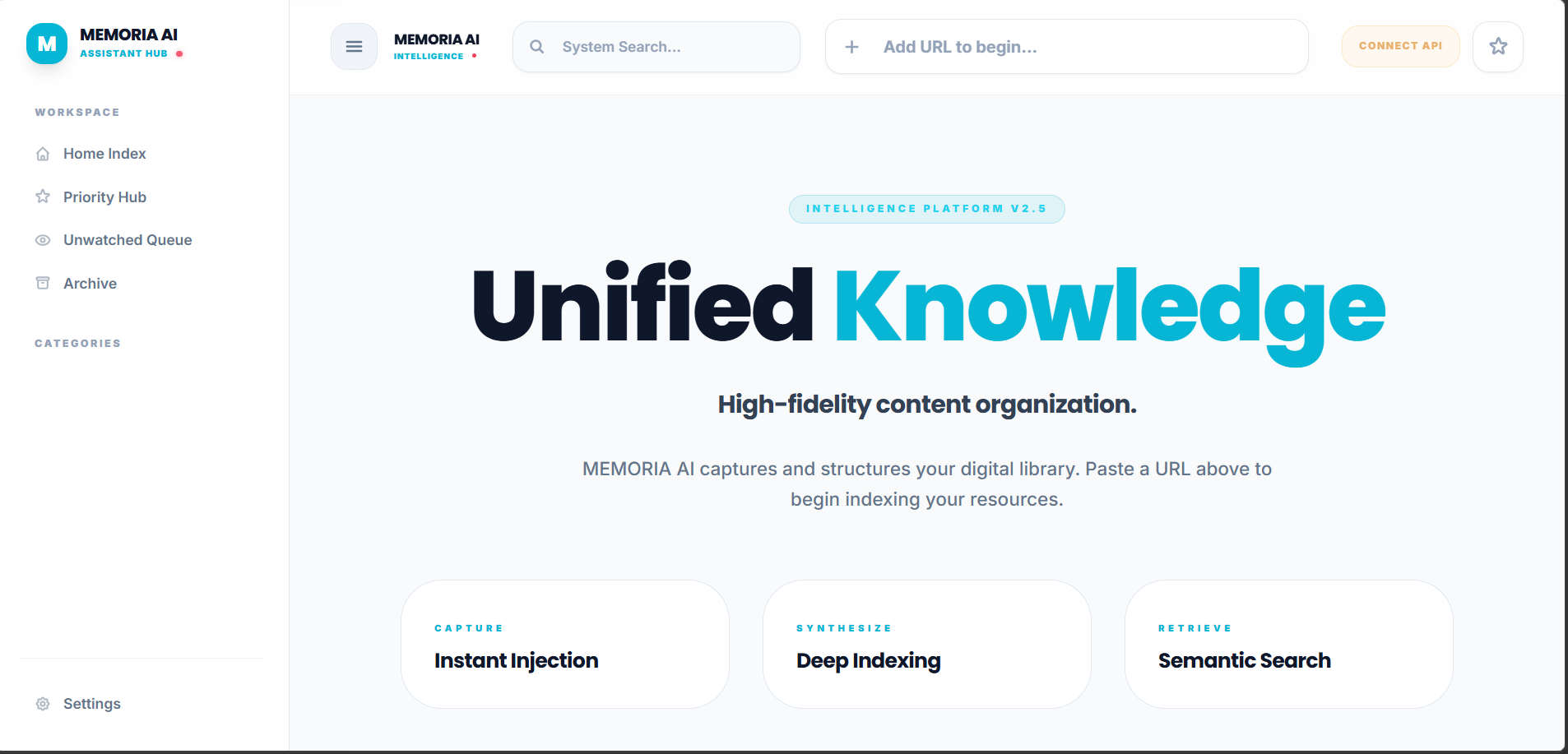
One of the main challenges was achieving consistent semantic categorization without relying on simple keyword matching. Another challenge was designing a clean home page experience that clearly communicates the app’s purpose when a user first opens it with no saved content.
Additionally, presenting the application as a working prototype while maintaining realism for judges required careful design decisions and clear demonstrations.
Accomplishments that we're proud of
- Successfully built a Gemini-powered system that semantically categorizes content across platforms
- Designed a clean and intuitive home page with dynamic categories and counts
- Implemented watched vs. unwatched content tracking
- Created a realistic product-like experience without unnecessary features
- Delivered a clear, focused solution to a real and common problem
What we learned
Through this project, we learned how to:
- Design AI-driven systems with well-defined responsibilities
- Use Gemini 3 for structured reasoning and semantic understanding
- Balance functionality with simplicity in product design
- Build prototypes that communicate value clearly to both technical and non-technical audiences
The project strengthened our understanding of prompt engineering, AI UX design, and product thinking.
What's next for MEMORIA AI
The future vision of MEMORIA AI is based on a three-layer content intelligence model, where content discovery progresses only when necessary, maintaining user control and reducing overload.
Layer 1: Personal Saved Content (Current Focus)
The core layer, already implemented, searches and retrieves content that the user has explicitly saved across platforms. This ensures that existing personal knowledge is always prioritized.
Layer 2: Personal Digital Ecosystem
The next phase extends search and organization to the user’s personal digital space, such as Gmail, Google Drive, and other connected Google applications. This allows MEMORIA AI to surface relevant documents, emails, and files related to the user’s saved content.
Layer 3: Intelligent Recommendations
Only when personal sources are insufficient, the system will provide recommendations based on quality signals such as ratings, engagement, and relevance. These recommendations are contextual, minimal, and never intrusive.
By progressing through these three layers, MEMORIA AI ensures that users first reuse what they already have, then leverage their personal ecosystem, and only finally explore high-quality external content. This model promotes intentional consumption over endless scrolling.
MEMORIA AI aims to evolve into a comprehensive personal knowledge system that helps users retain and reuse what truly matters.


Log in or sign up for Devpost to join the conversation.