
Inspiration
One of our team members had a grandmother with Alzheimer’s. Experiencing first hand how painful it is when a loved one forgets your face made us realize how much of a gap there is in tools that can help reconnect patients with the people around them. We wanted to channel that experience into something constructive, a way to preserve memories and make daily interactions less disorienting. Even for those of us without that personal connection, the idea of helping families hold on to their relationships felt meaningful and worth building.
What it does
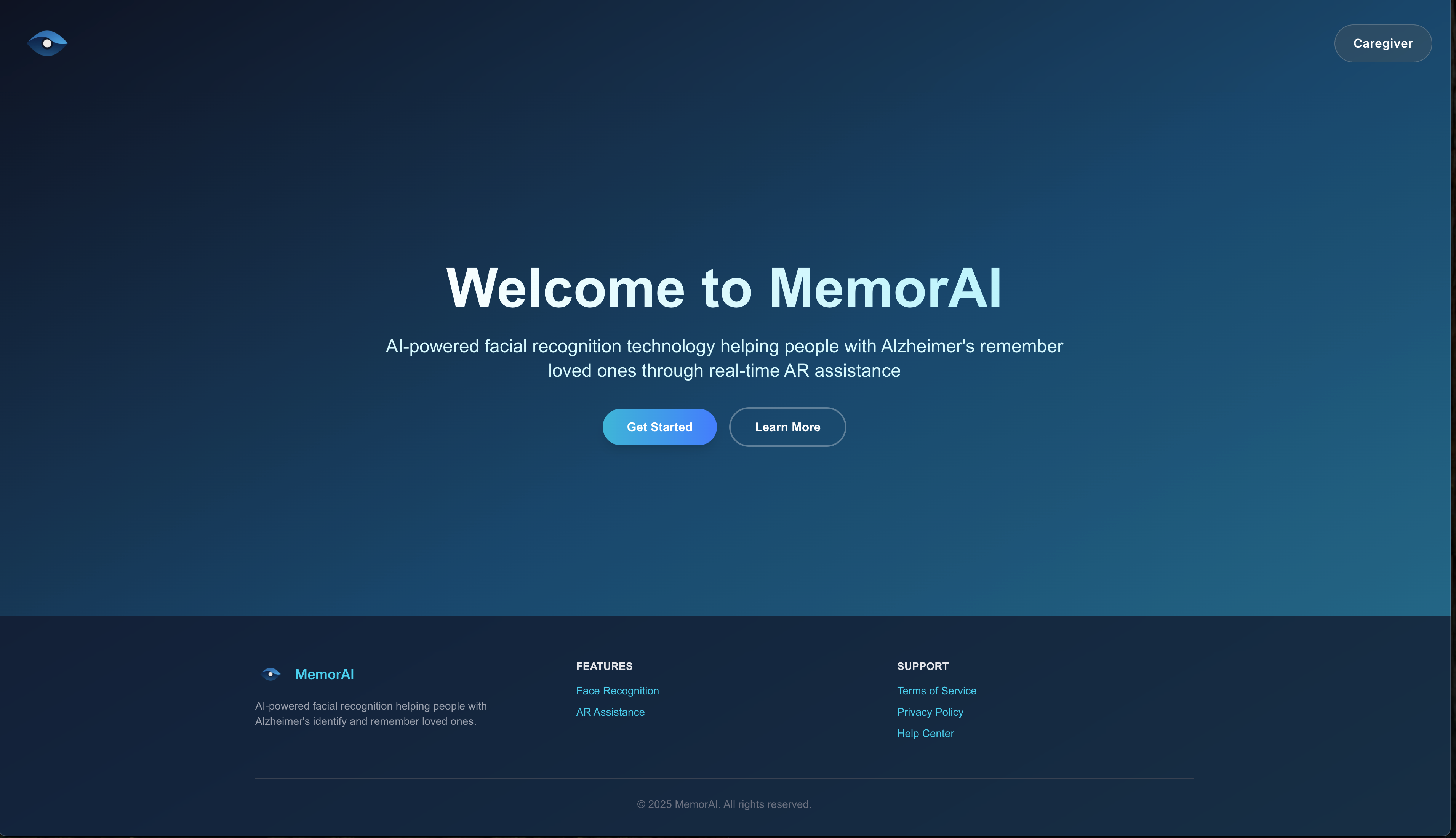
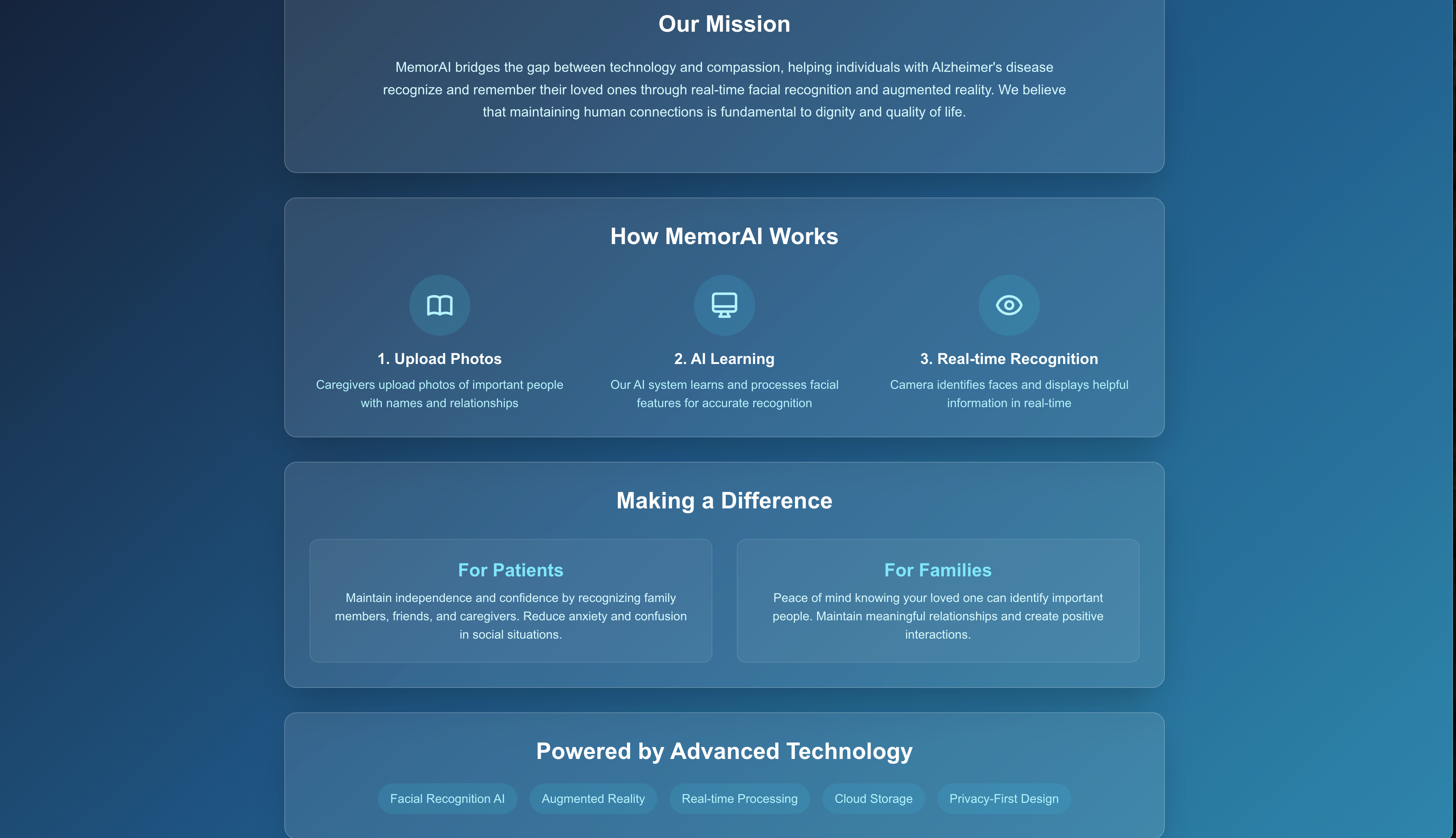
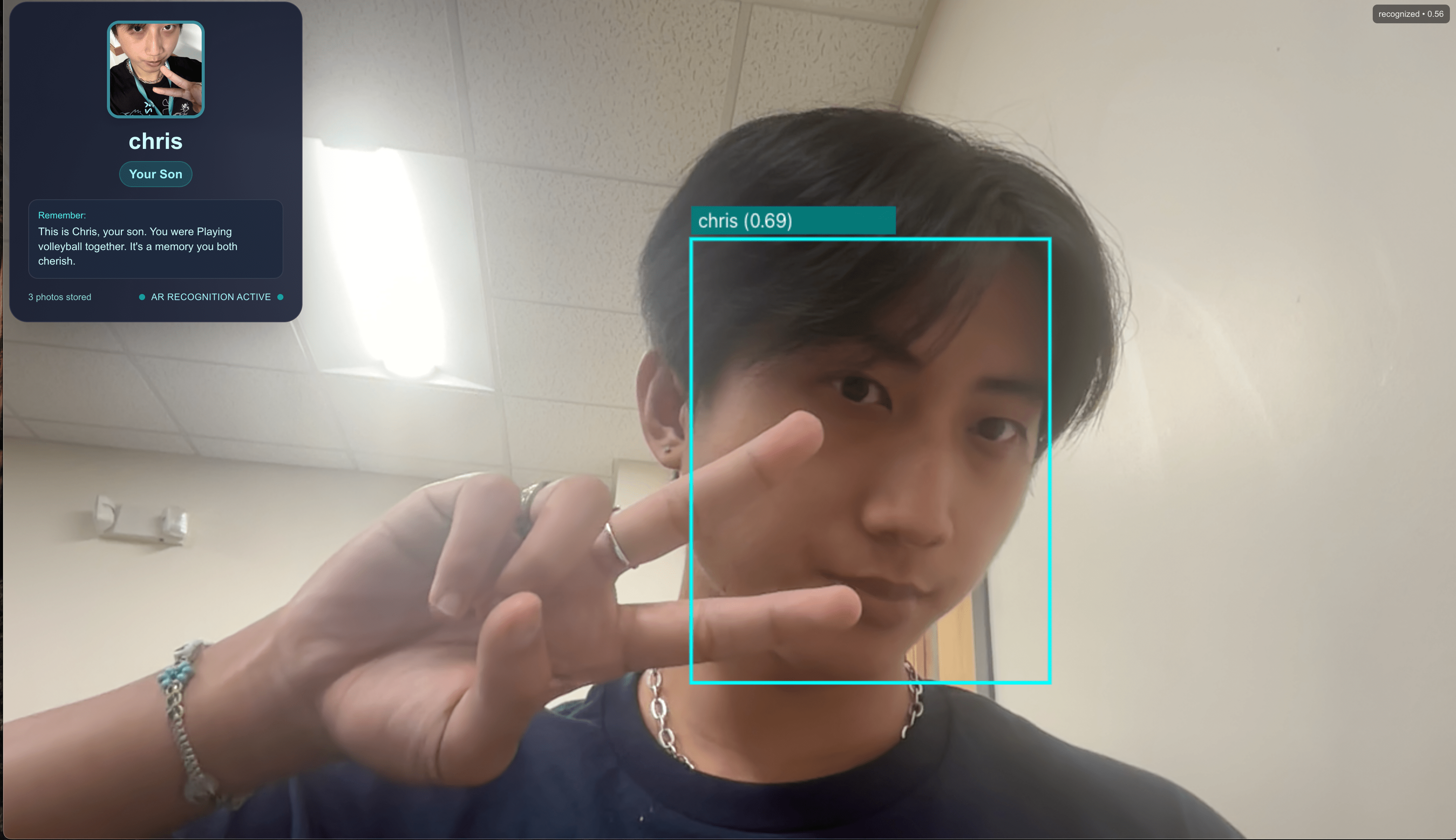
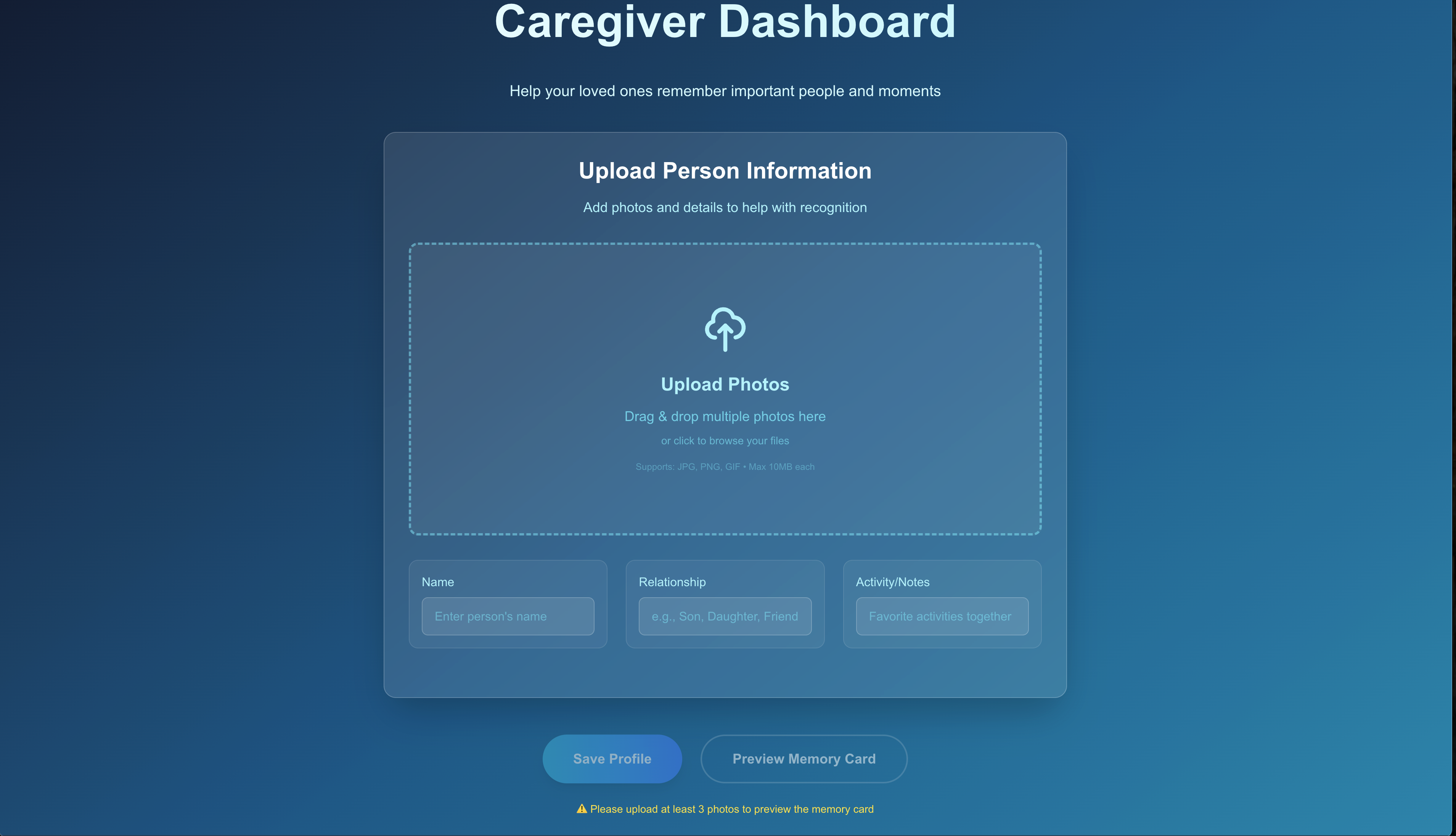
MemorAI is a web app that allows patients with Alzheimer's remember their loved ones. Caregivers upload 3 or more photos of a patient's close friends and family, specify who's in the photo, and describes the activity occurring in the photo. Then, we use facial recognition to bring up a "memory card" of that person when they are in frame of the camera next to the patient.
How we built it
We used Azure for image storage and Firestore for image metadata storage (name, relation, activity). For facial recognition, we used the Python OpenCV library. Google Gemini was used for narration and wording image descriptions in an impactful, emotional way. Finally, a combination of TailwindCSS, Typescript, and Node.js was used to bring the frontend and backend together.
Challenges we ran into
In order to integrate firebase and azure, we had to send and receive json packages. It was giving us too many errors so we ended up having to also switch it to the REST api version instead of firebase-admin sdk.
We also had to completely switch up the fire store embedding half way through the project as it was difficult connecting the backend to the frontend and getting the image uploading to work so we ended up just converting it to URLS. Lastly, the latency of the CV microserver was too slow on some of our computers so we decided to pivot last minute and demo on only one of our computers that is running smoothly.
What we learned
We learned how to integrate multiple cloud services such as Azure Blob and Firebase. Also, we had to learn how to connect these services to the front-end and work with embedding pictures and GET and POST requests to the databases. Since this was our first time using these services, we learned how to also connect it to our facial recognition service and OpenCV.
What's next for MemorAI
We see several directions for MemorAI’s future:
Wearable Integration: Embedding the system into AR glasses like Meta’s or VR headsets to make recognition and memory recall even more seamless in daily life.
Privacy & Security: Strengthening protections around sensitive face data and personal memories to ensure that patients and caregivers feel safe and in control.
Caregiver Dashboard: Improving the caregiver-facing interface to make uploading, managing, and updating memory cards more intuitive and accessible.
Clinical Exploration: Partnering with healthcare professionals to further study whether consistent reminders of people’s names and associated memories can help reinforce neural pathways. While this won’t cure Alzheimer’s, it could help patients preserve recognition longer, making everyday interactions more meaningful.
Built With
- api
- azure
- azuretts
- express.js
- fastapi
- firebase
- gemini
- next.js
- node.js
- numpy
- opencv
- python
- react
- tailwindcss
- typescript
- uvicorn


Log in or sign up for Devpost to join the conversation.