-
-
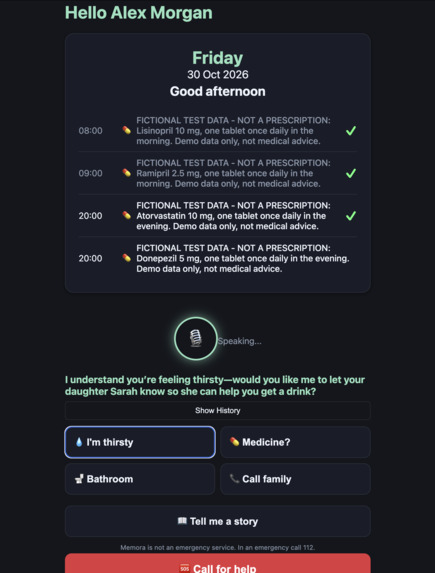
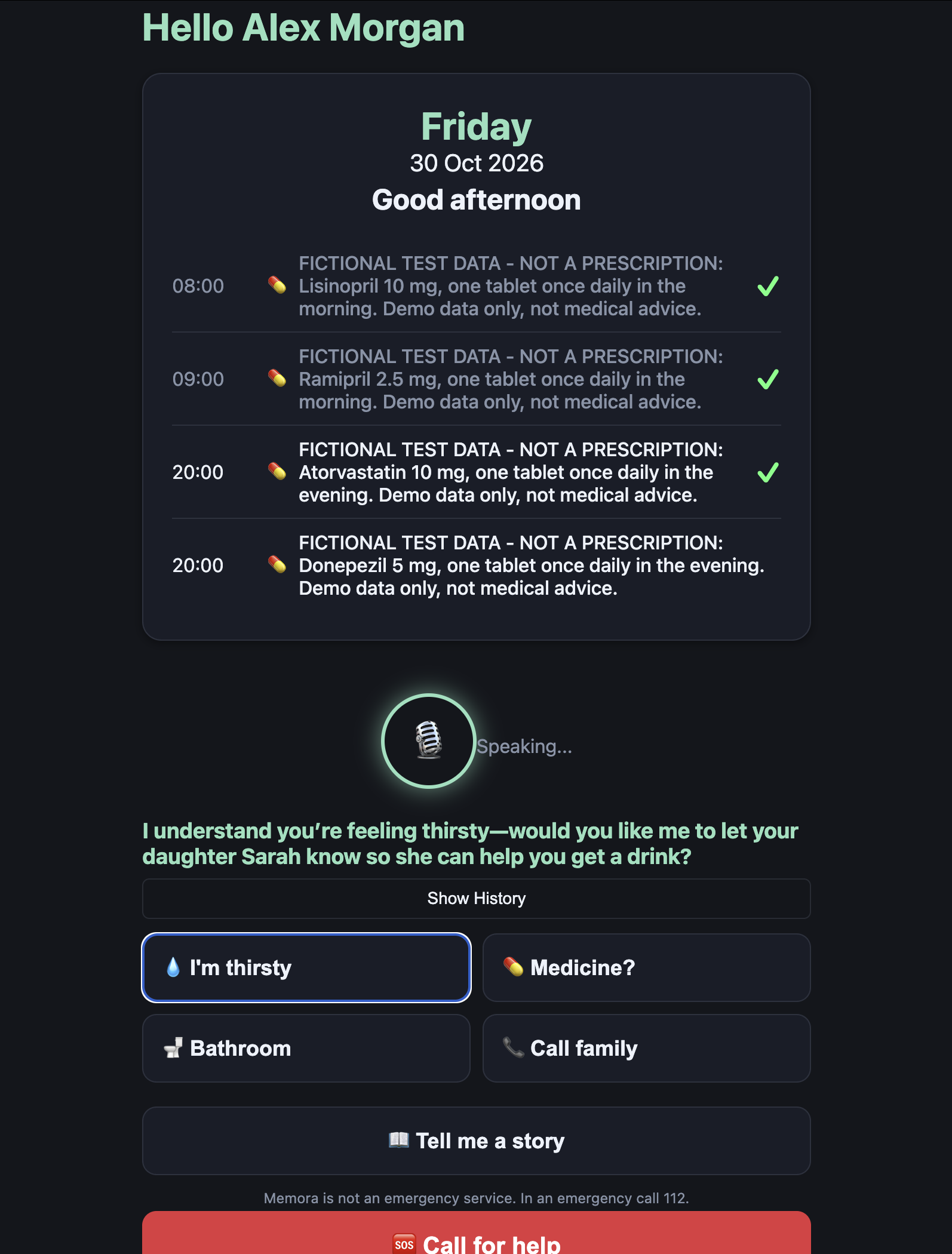
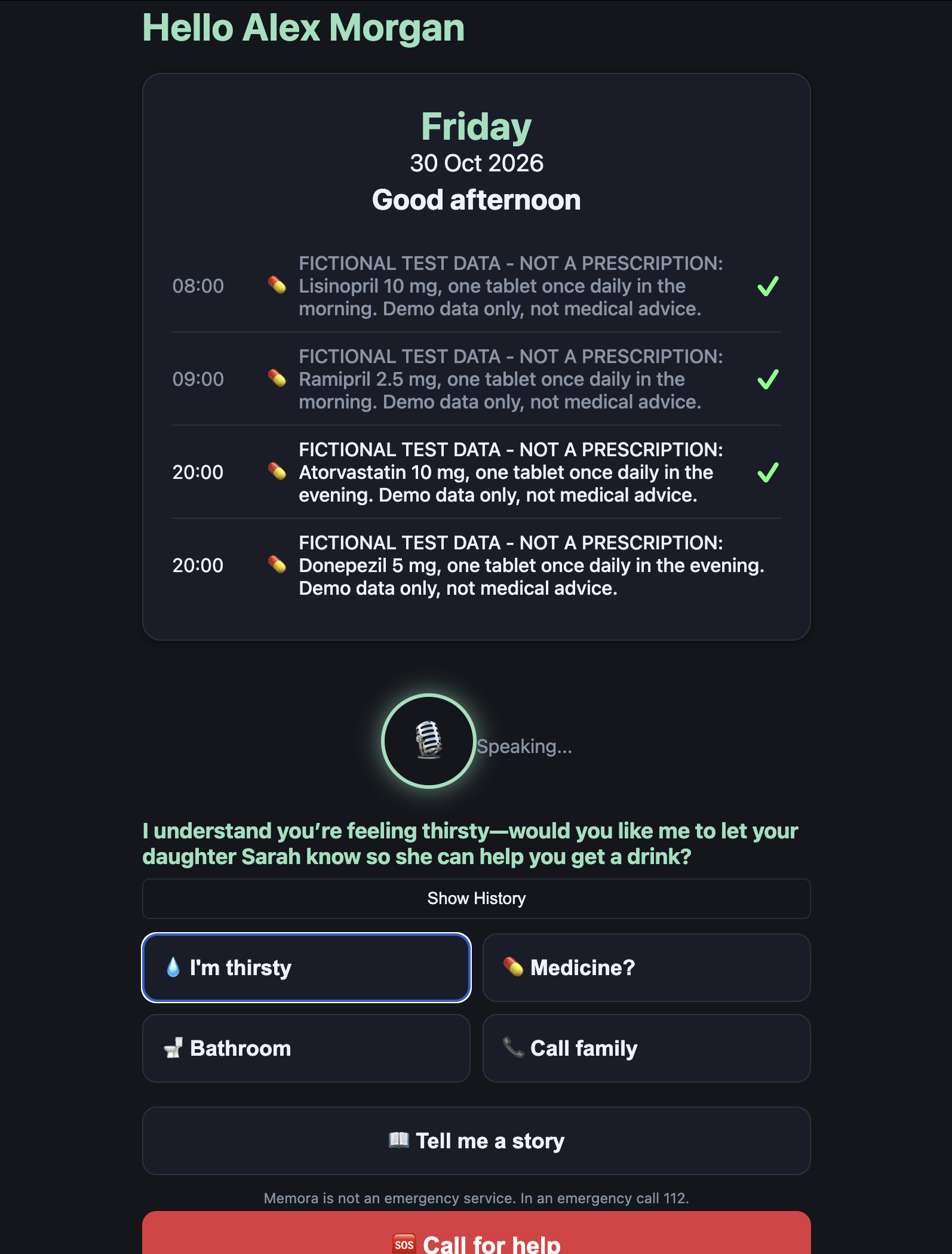
Memora Patient App
-
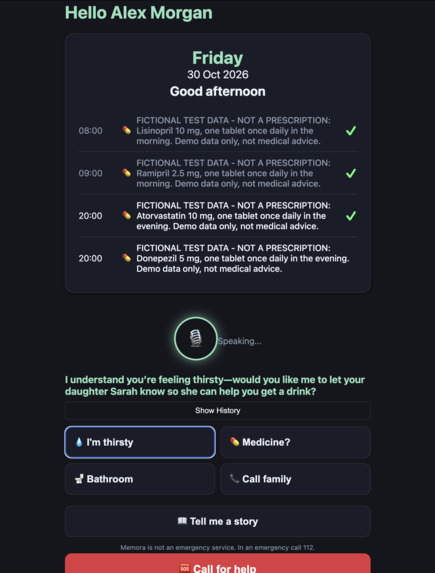
Memora Patient Call
-
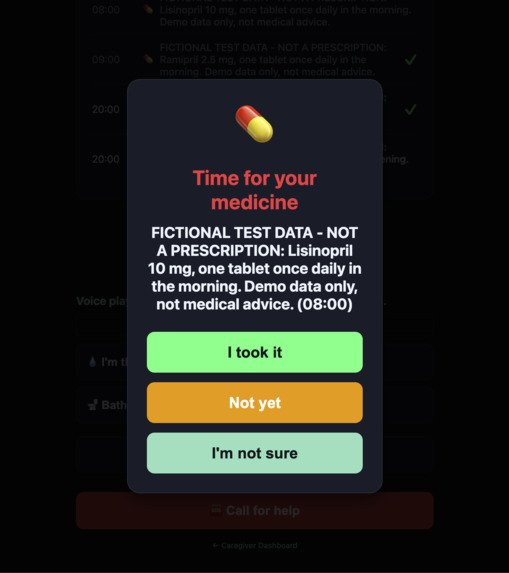
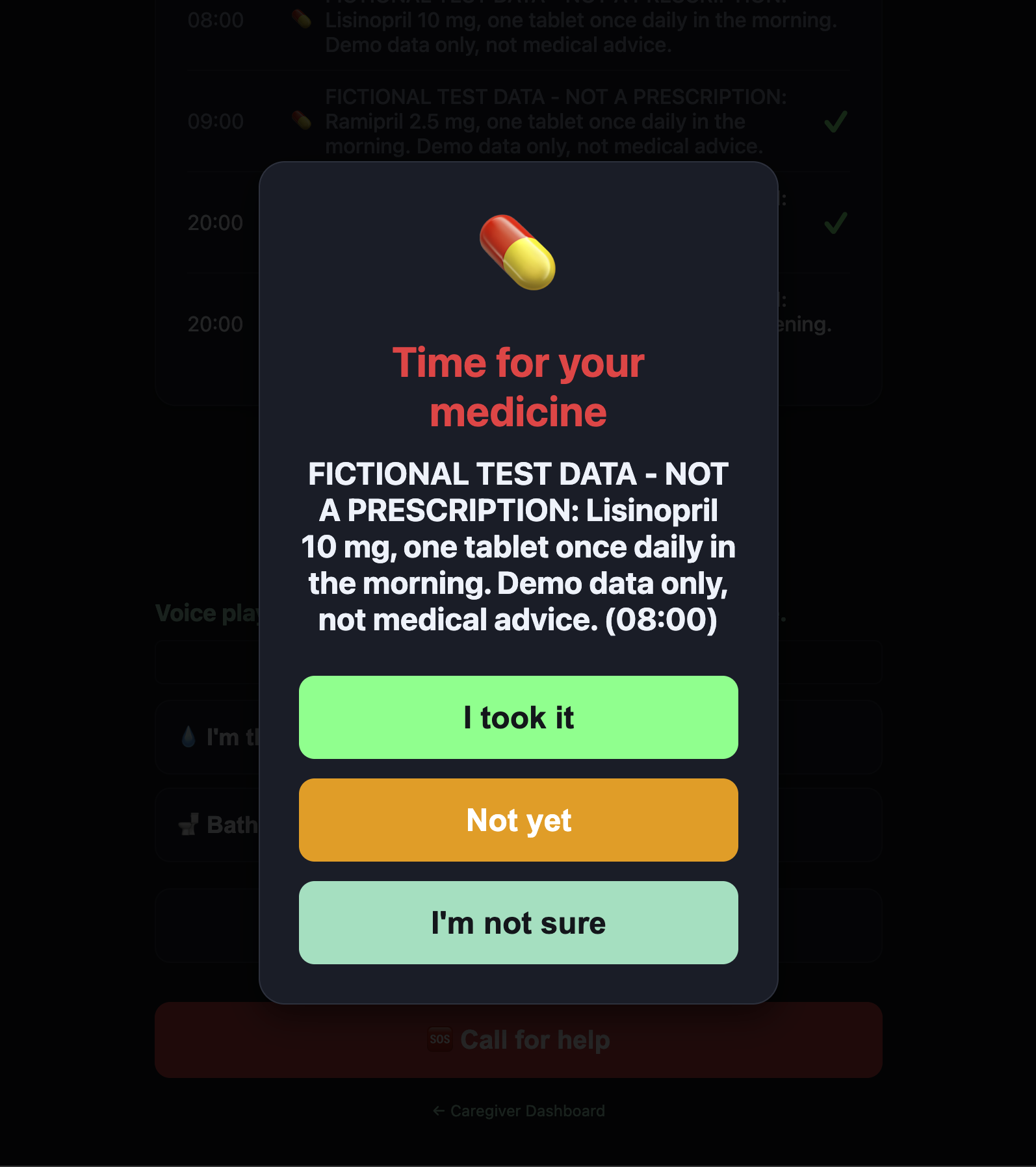
Memora Patient remember prescription
-
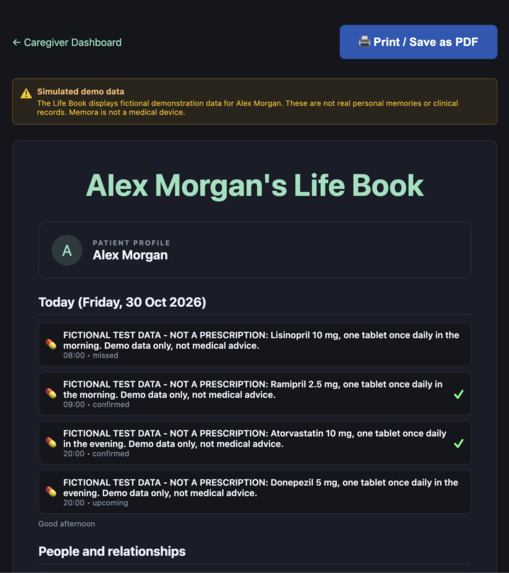
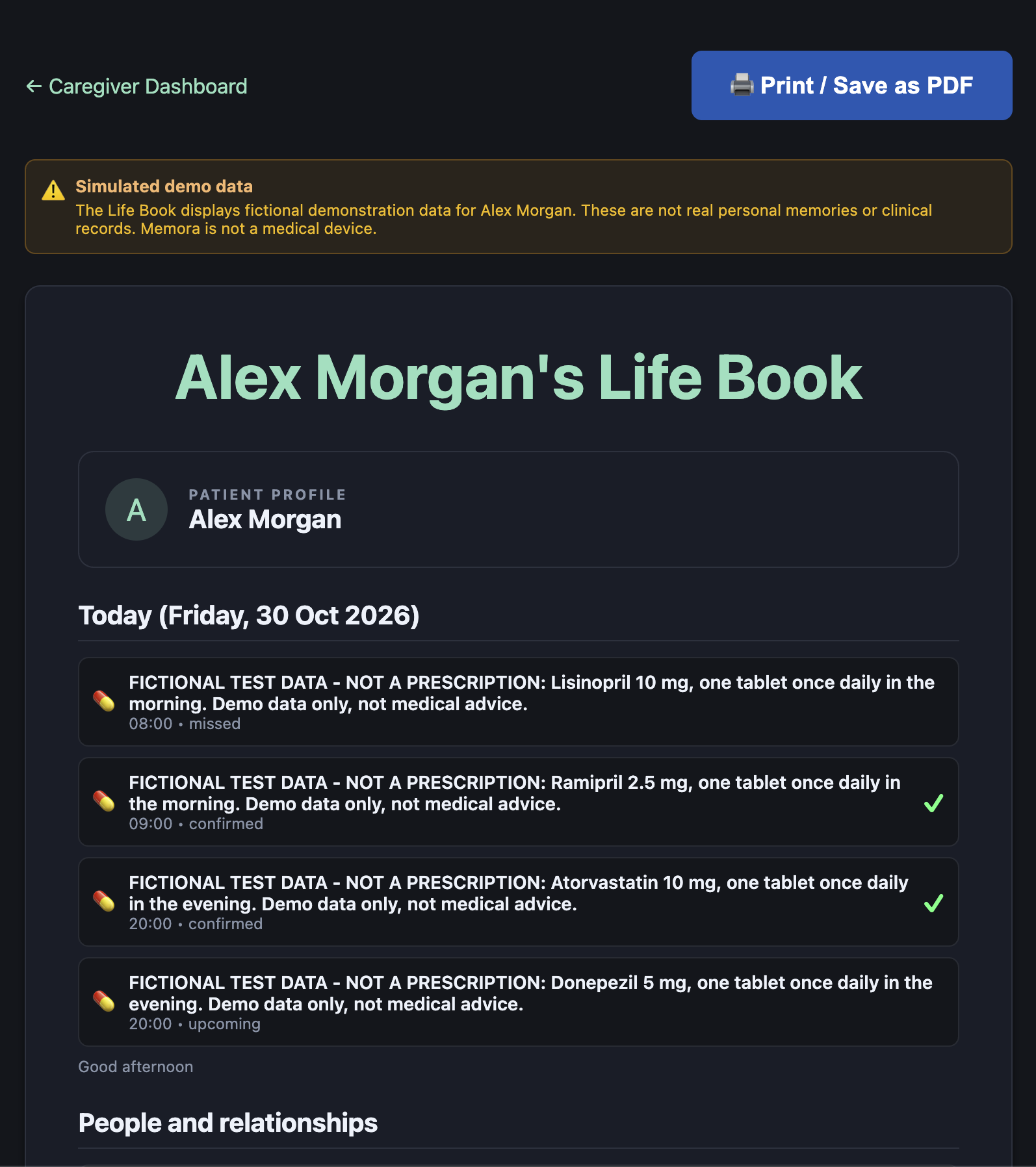
Memora Patient 's life book
-
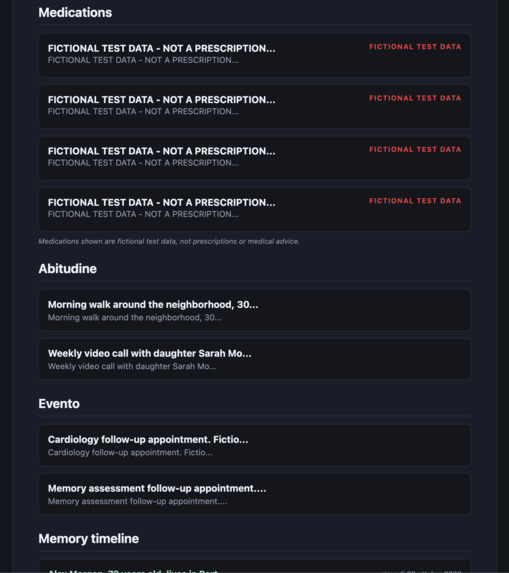
Memora Patient 's life book prescription
-
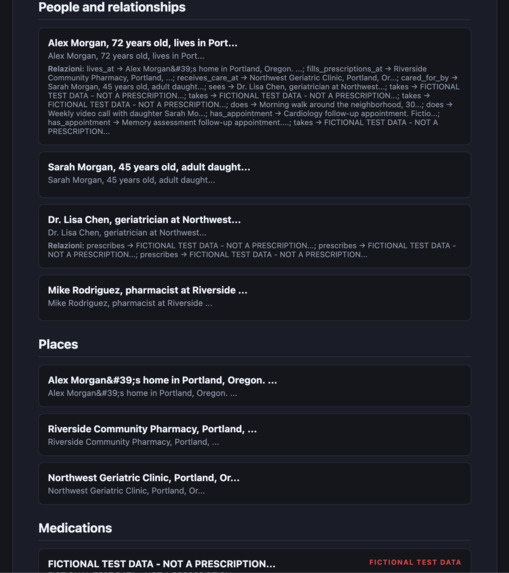
Memora Patient 's life book relationships
-
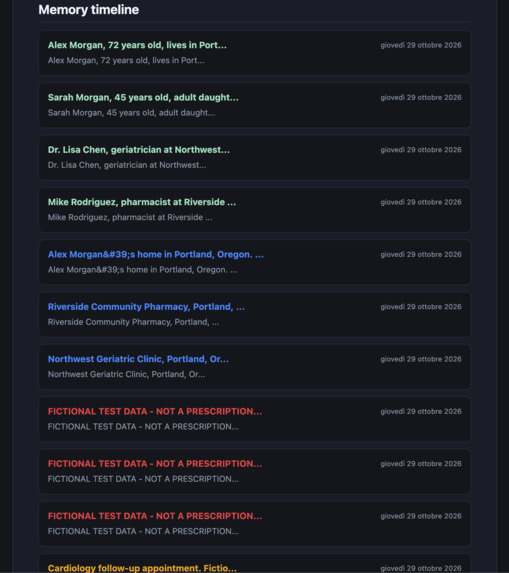
Memora Patient 's life book story
-
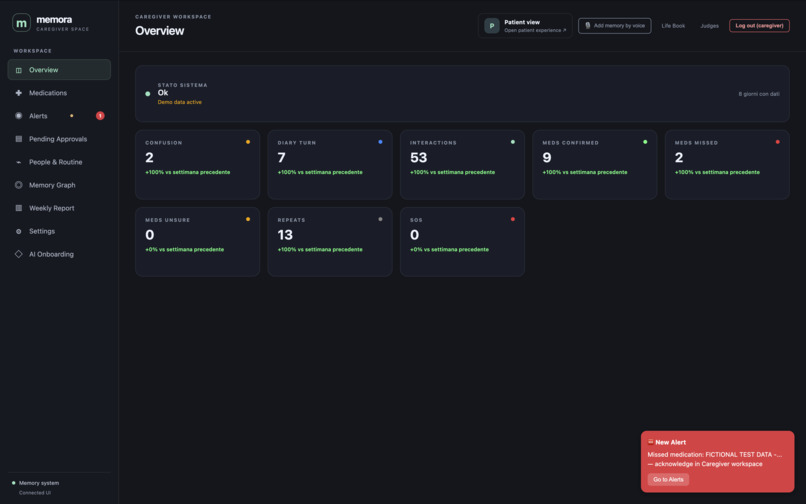
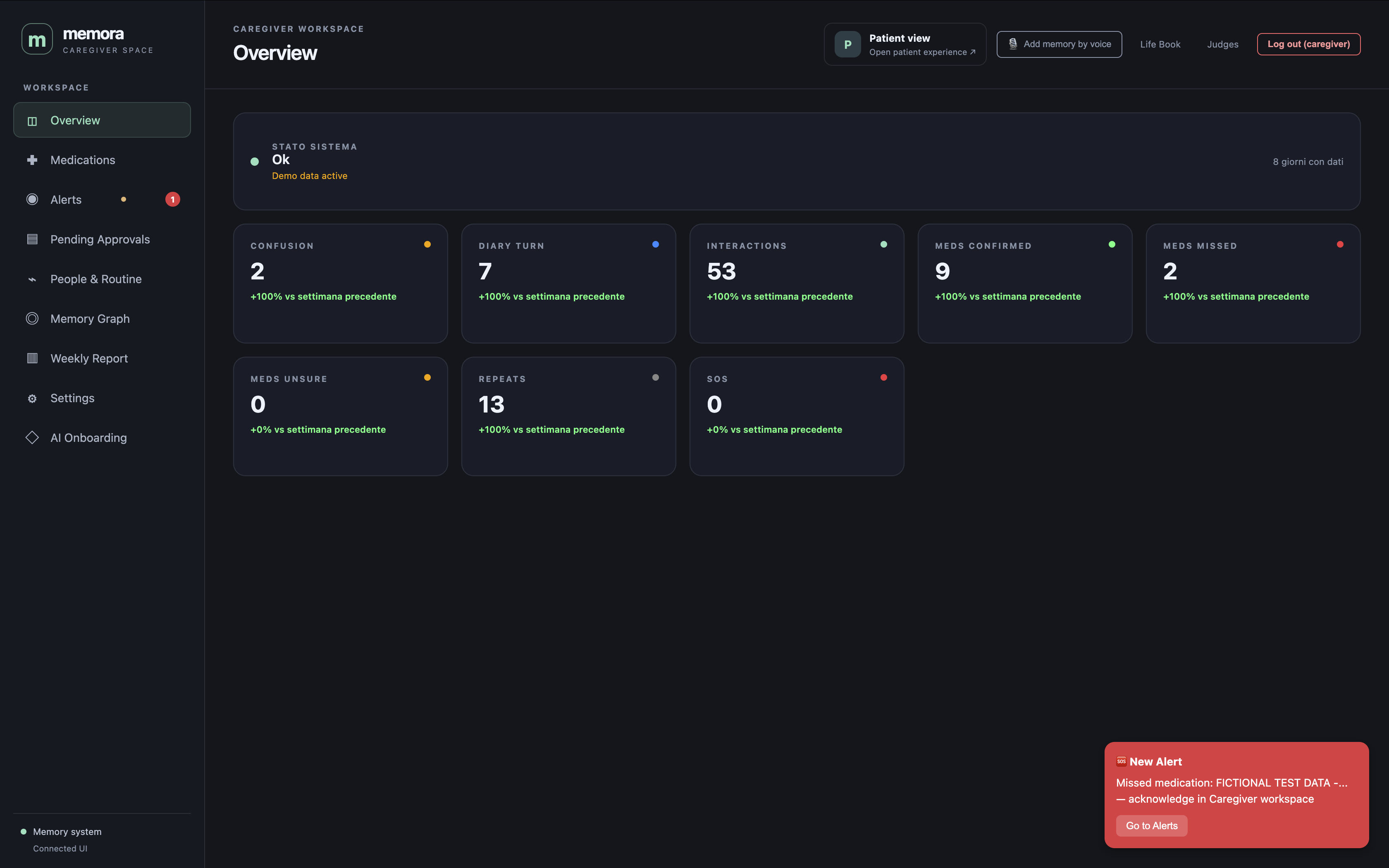
Memora caregiver home
-
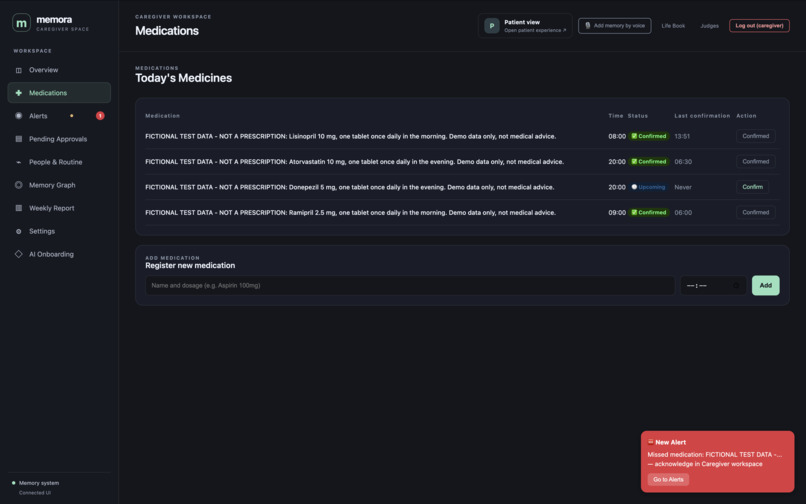
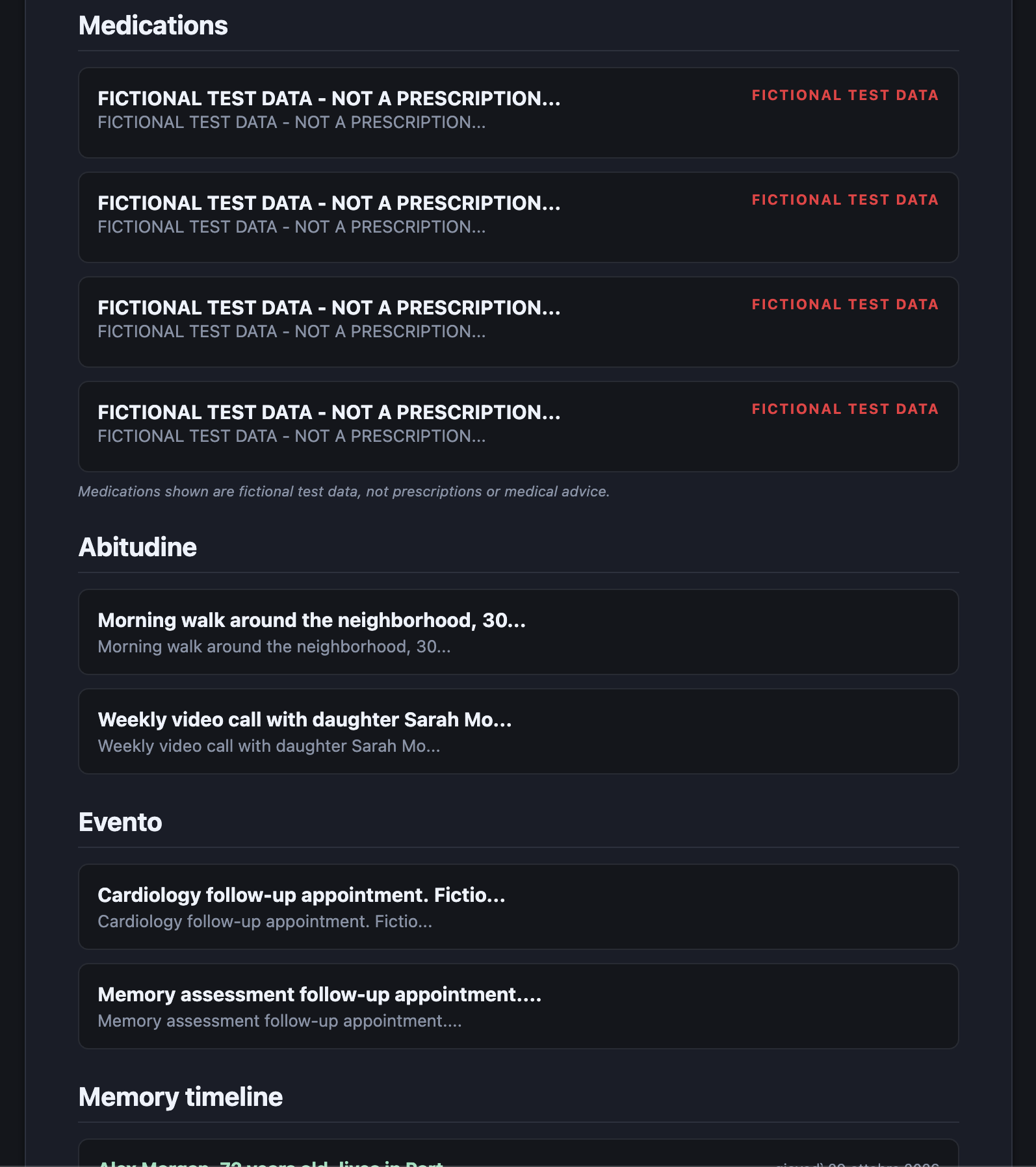
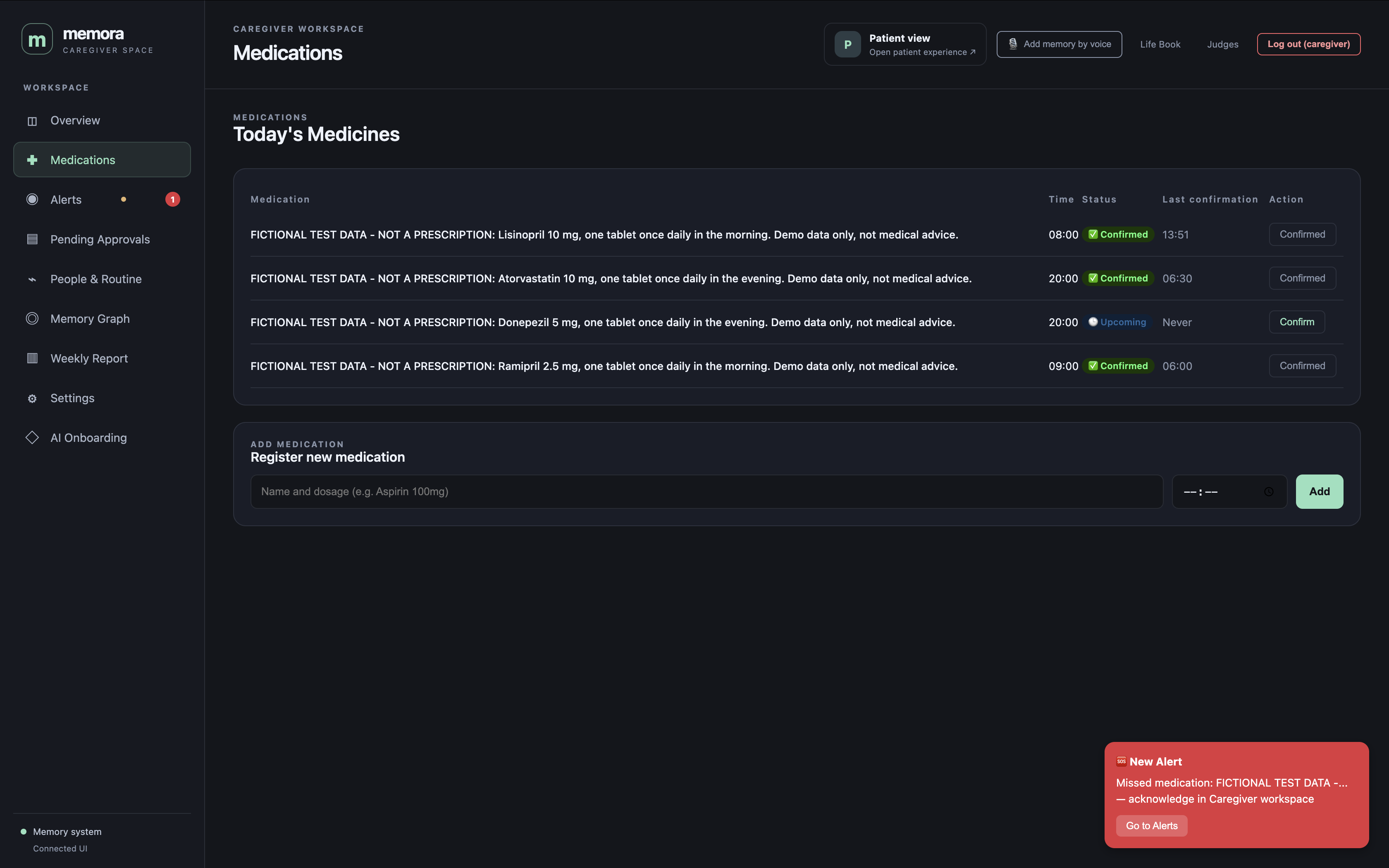
Memora caregiver medications manager
-
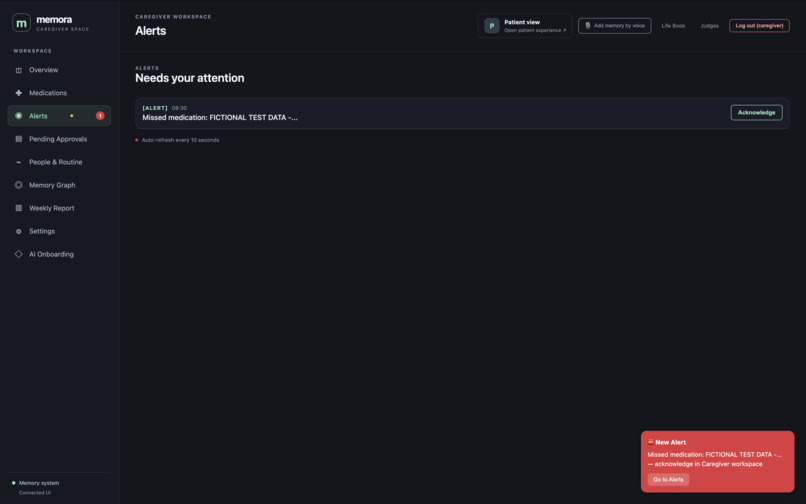
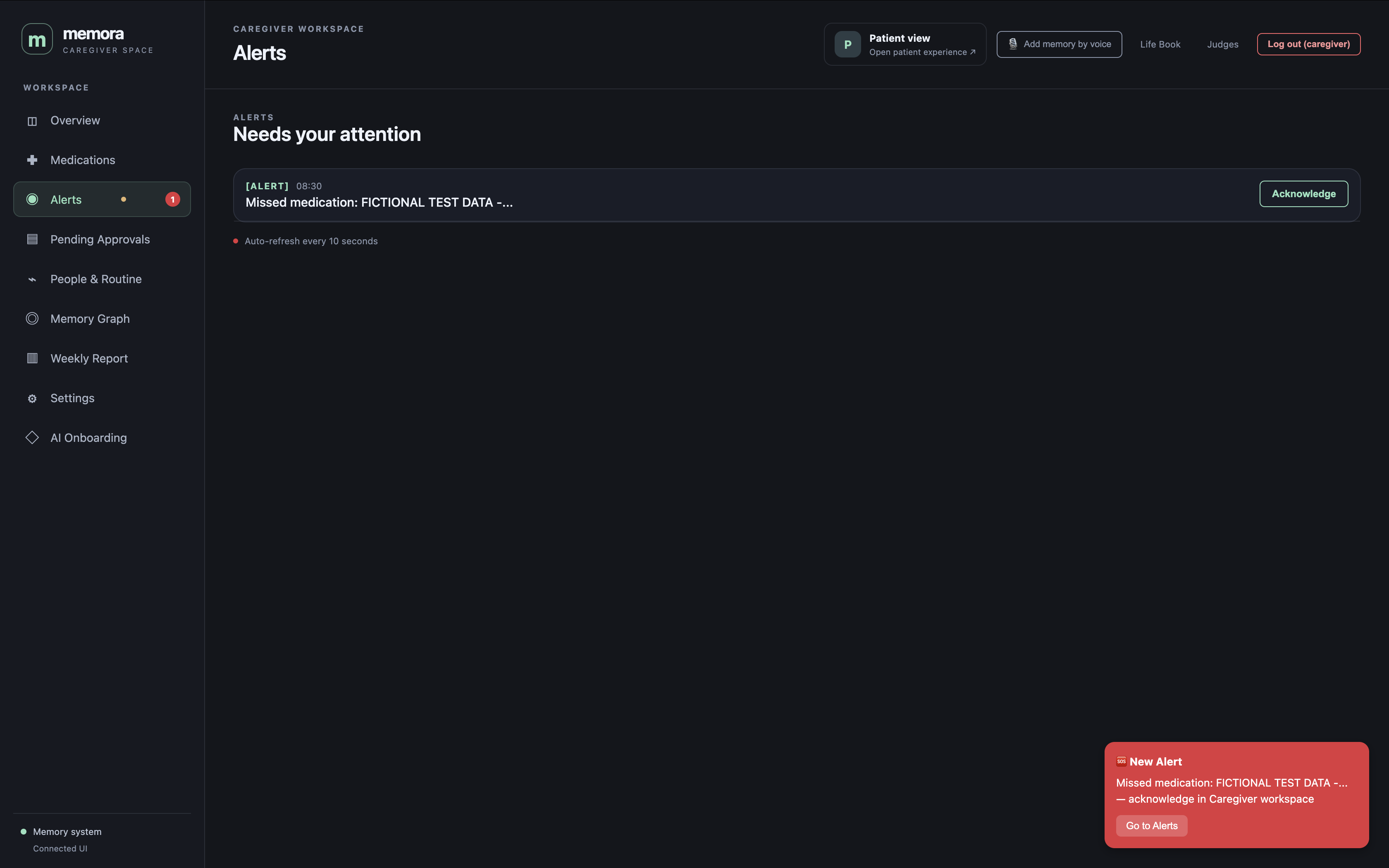
Memora caregiver alerts
-
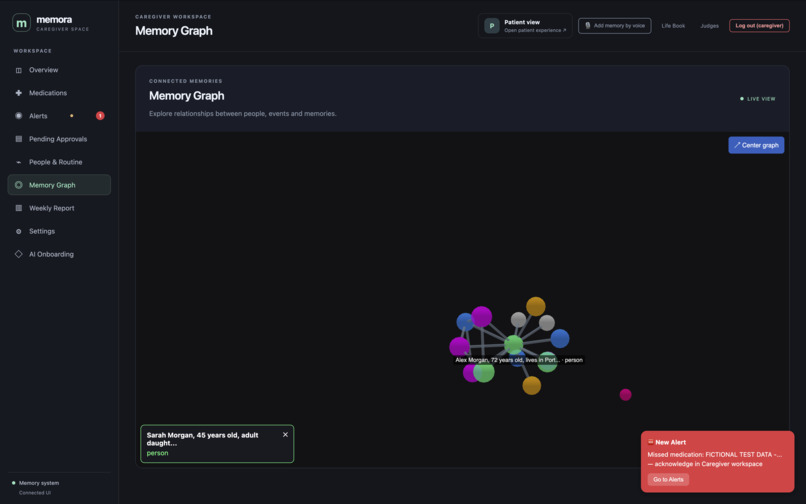
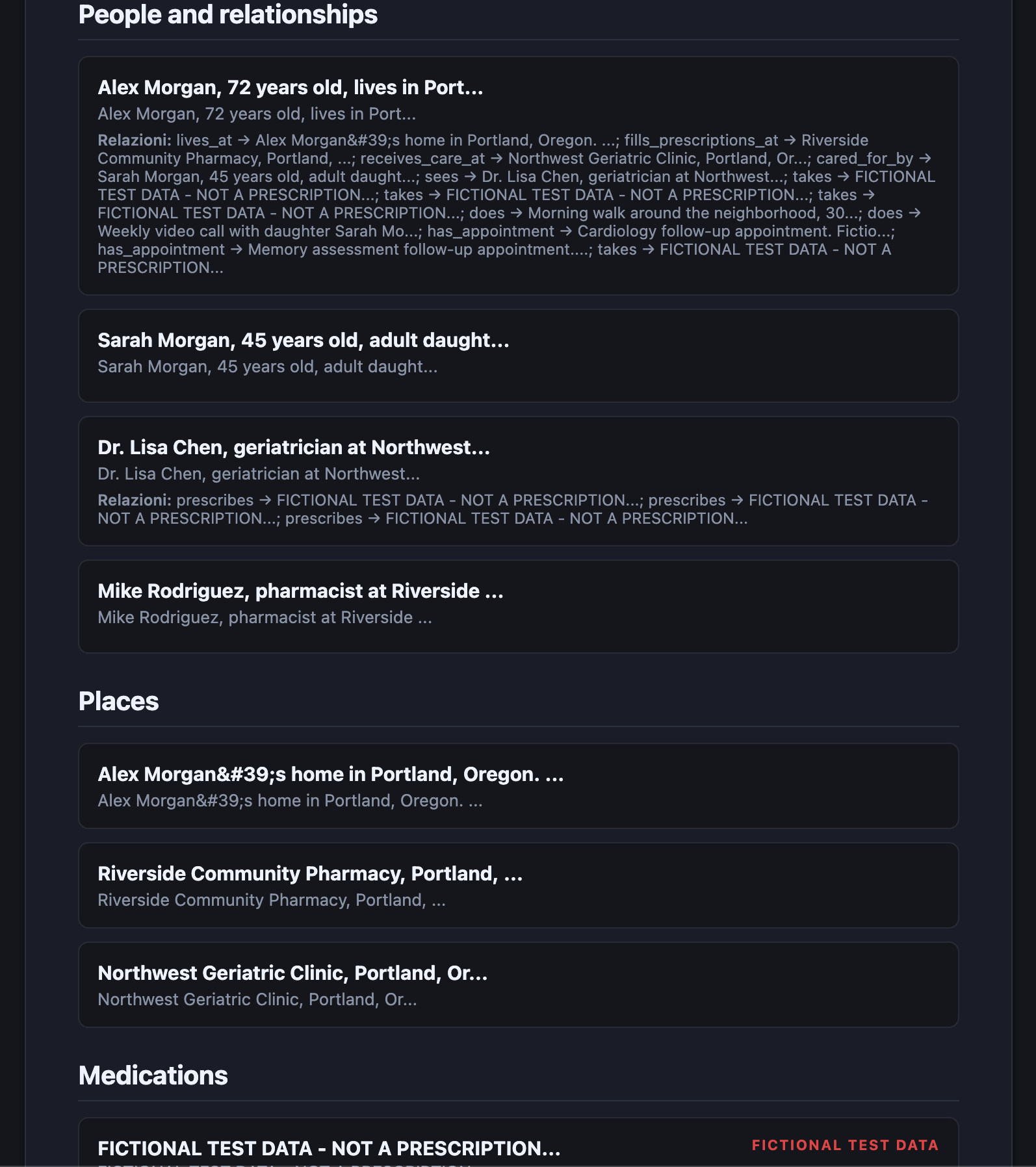
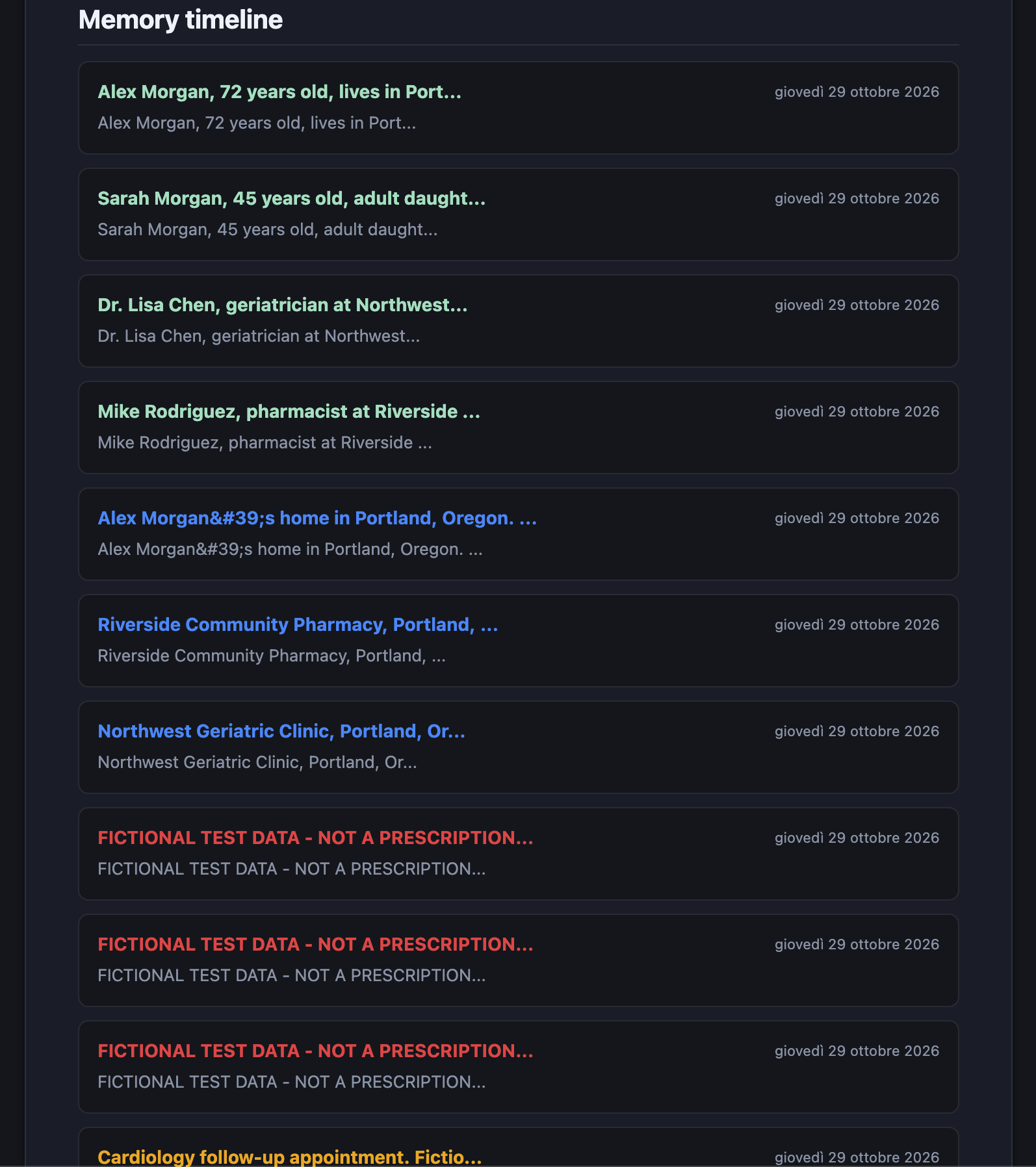
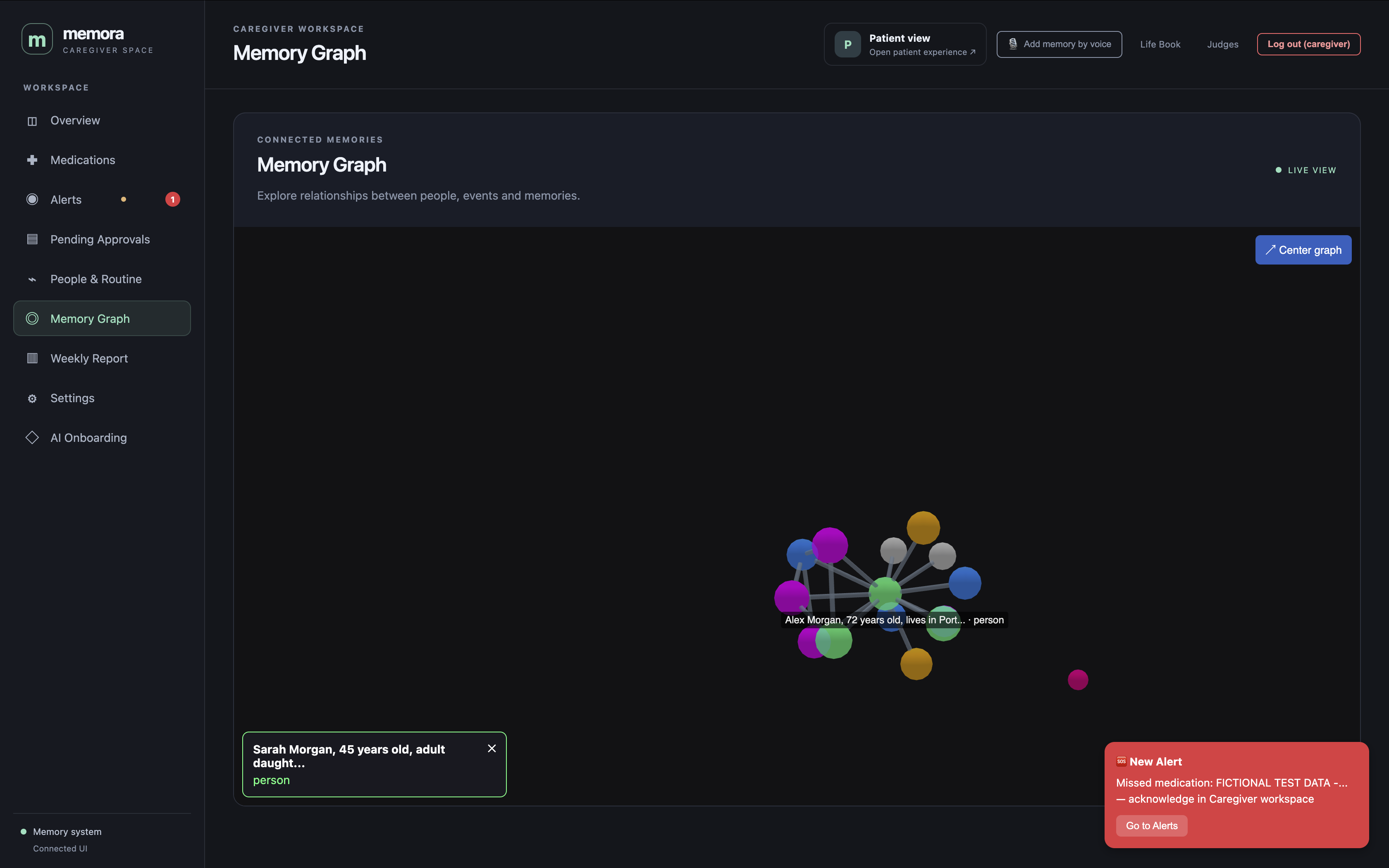
Memora memory graph
-
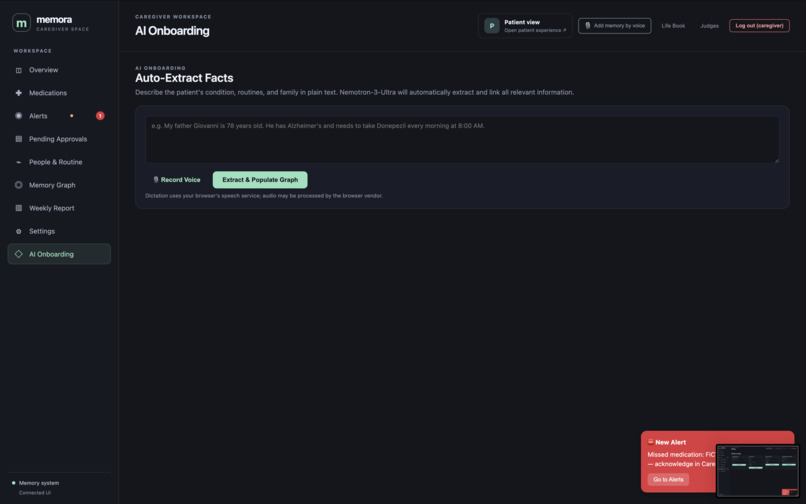
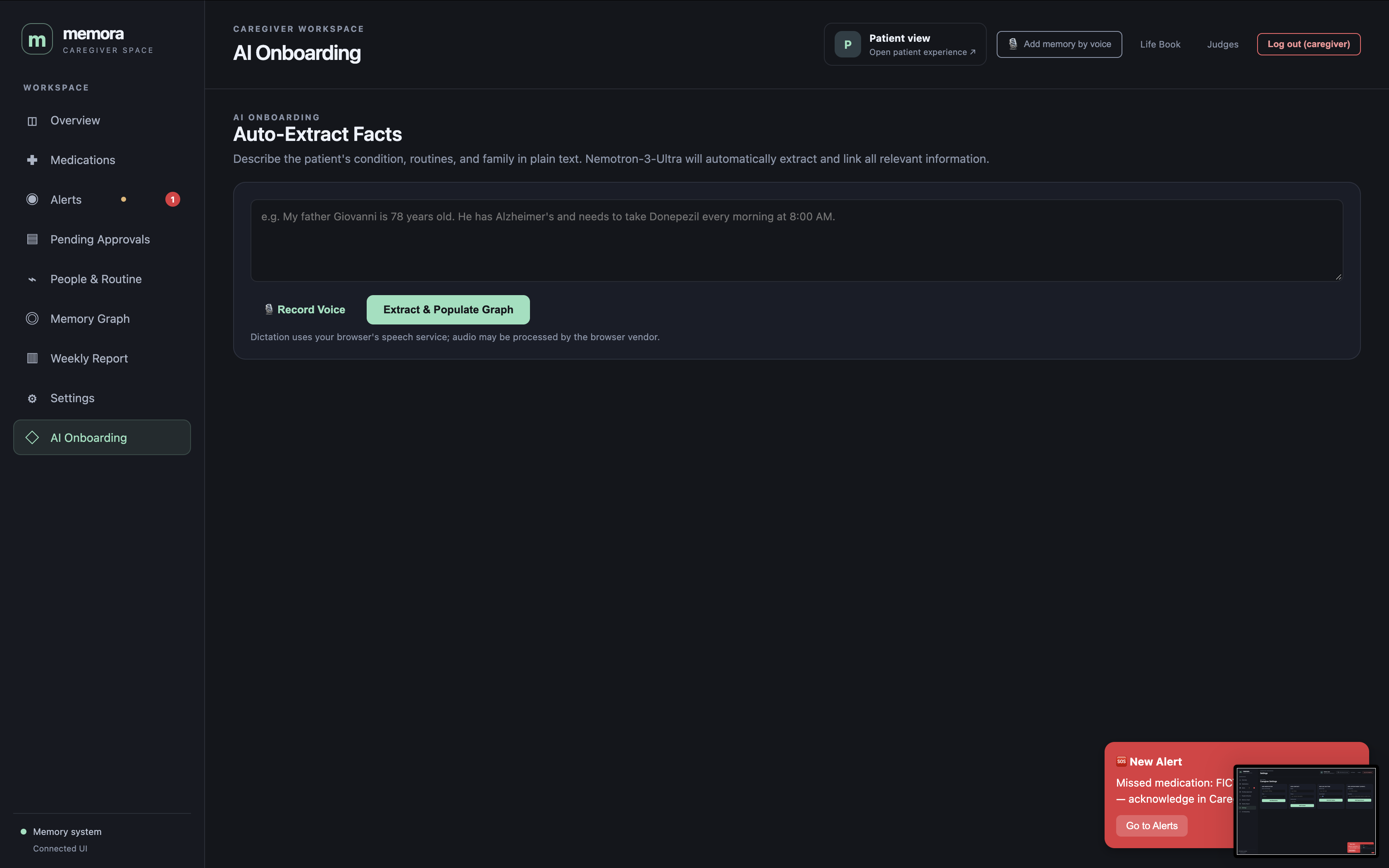
Memora AI extraction facts from voices
Memora — The User Forgets. The System Remembers.
Inspiration
I don't have a personal story about cognitive decline. What I have is a question that became difficult to ignore: how can technology help people who struggle with memory without taking control away from them?
For someone experiencing mild cognitive difficulties, everyday tasks can become stressful. Remembering appointments, recognizing relationships, keeping track of routines, or asking for help may require repeated effort. Caregivers face another challenge: staying informed and providing support without turning every interaction into a monitoring exercise.
Most assistants are designed to answer isolated questions. Memora explores a different idea: an assistant that can retain useful personal context, retrieve it when needed, and help connect the person to the people who support them.
The goal is not to replace human care. It is to make everyday assistance more personal, consistent, and accessible.
What it does
Memora is a prototype personal AI assistant designed for people with mild cognitive difficulties and their caregivers.
It combines four capabilities:
Persistent personal memory. Memora stores information about people, relationships, routines, appointments, and medications in a structured memory graph. Semantic retrieval helps the assistant find relevant context instead of treating every conversation as a blank slate.
Accessible patient interaction. The patient interface combines voice input, spoken responses, and simple AAC-style buttons for common needs such as getting water, checking medication information, using the bathroom, or contacting family. The goal is to make interaction possible without requiring long prompts or complex navigation.
Caregiver awareness. The caregiver dashboard provides access to alerts, medication-related information, the memory graph, and personal history. Repeated questions can trigger an in-app alert, giving the caregiver a reason to check whether additional support is needed. A repeated question is a signal for human attention, not a medical diagnosis.
Real-world information and memory management. Tavily search can help answer requests that need current external information. Caregiver workflows support reviewing and managing personal information, while AI-assisted reporting helps organize relevant context.
Memora is a support tool, not a medical device. It does not diagnose conditions, prescribe treatments, or replace clinical judgment or human caregivers. An AI response alone is not proof that a real-world action, such as a telephone call, has occurred.
How I built it
Memora is built with Python, FastAPI, Flask, and a browser-based interface.
- Nebius Token Factory provides hosted model inference through an OpenAI-compatible API.
- NVIDIA Nemotron Nano supports lightweight tasks, while Nemotron Super powers the main conversational and orchestration workflow.
- Qwen3-Embedding-8B supports semantic retrieval of relevant information from the memory graph.
- The agent layer retrieves context, chooses appropriate tools, and applies instructions intended to keep responses calm, focused, and within the application's capabilities.
- Tavily provides web search for requests that require current external information.
- The memory layer stores structured nodes and relationships. SQLite is the local default; Turso can be used when the corresponding remote database configuration is enabled.
The application combines language-model reasoning with application-level logic. This distinction matters: a model can interpret a request or propose an action, but the application must handle persistence, confirmations, and alert state.
Challenges
Supporting people without pretending to be a clinician
An assistant intended for vulnerable users must be helpful without creating false confidence. Memora is designed to avoid diagnosis and medical advice, use short and supportive responses, and involve human caregivers when additional help may be appropriate.
Making memory useful rather than merely persistent
Saving facts is not enough. The system must retrieve relevant relationships and routines at the right moment. A graph-based representation combined with semantic embeddings provides a foundation for connecting information across interactions.
Combining AI flexibility with reliable actions
Language models are useful for understanding natural language, but consequential application behavior cannot depend solely on generated text. Alerts, memory changes, and confirmations need explicit application-level handling. This is an important design principle for an assistant intended to support everyday life.
Balancing privacy and hosted inference
Privacy is a central design requirement because personal memories can contain sensitive information. The current prototype uses hosted inference through Nebius Token Factory and supports different storage configurations. It should not be understood as a fully local, end-to-end encrypted system. Further work is needed to validate data minimization, encryption, and deployment-specific privacy guarantees.
The demonstration uses a simulated patient persona rather than real clinical records.
What I learned
- Memory needs structure. A relationship between two facts can be more useful than either fact stored alone.
- Model routing should reflect the task. Lightweight classification and more complex dialogue have different latency and cost requirements.
- AI must not be the source of truth for consequential actions. The application needs explicit state, validation, and confirmation.
- Human oversight is part of the design. A caregiver should be able to review information and respond to alerts instead of blindly trusting an AI-generated conclusion.
- Privacy claims must match the implementation. A system that handles personal memories needs clear boundaries between hosted inference, persistent storage, and user control.
Why it matters
The purpose of Memora is not to make people dependent on another chatbot. It is to explore whether a personal assistant can help preserve continuity in everyday life while keeping caregivers involved.
The prototype is an early step toward that goal. Its most important measure of success is not how much text an AI can generate, but whether the system can provide relevant context, communicate clearly, and help a person get appropriate human support when needed.
The user forgets. The system remembers. The person stays in control.
Demo hosting note: Memora's dashboard and API are hosted on Render's free tier. After 15 minutes of inactivity, free web services may spin down. The first request may therefore take approximately one minute while the services wake up. Please allow the initial loading period before retrying. Subsequent requests should be faster.
The demo uses simulated patient data only.
