-
-
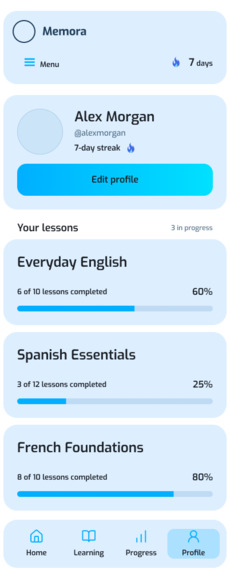
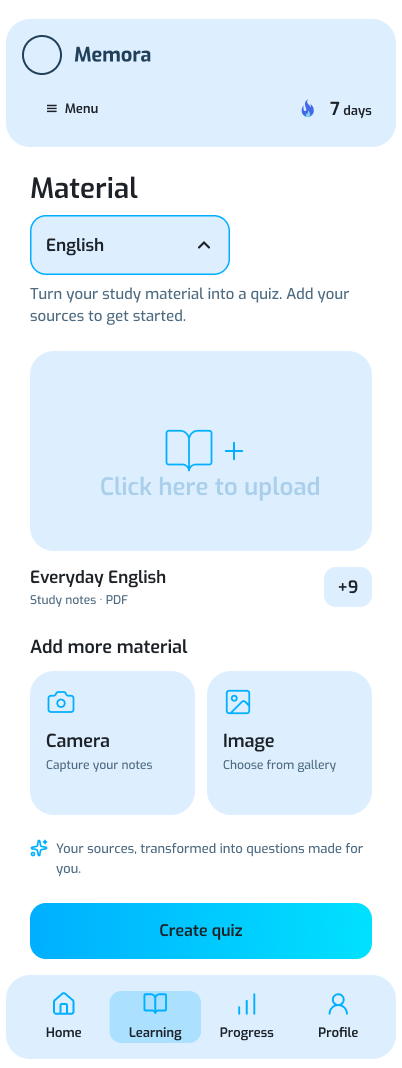
Home Screeb
-
-
-
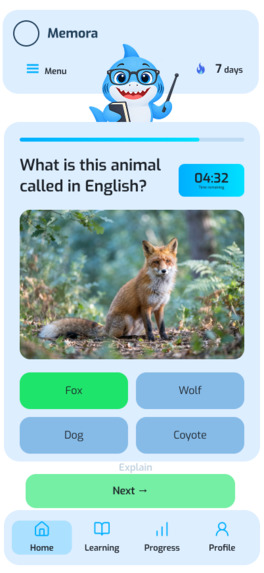
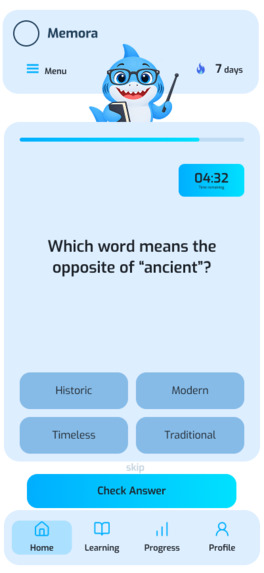
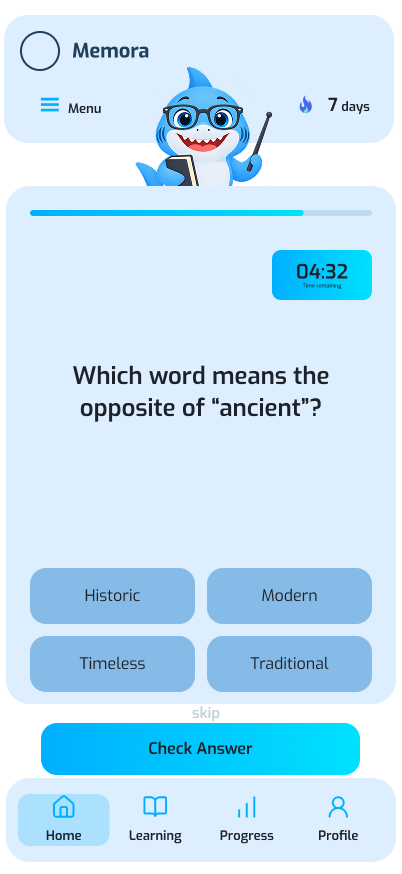
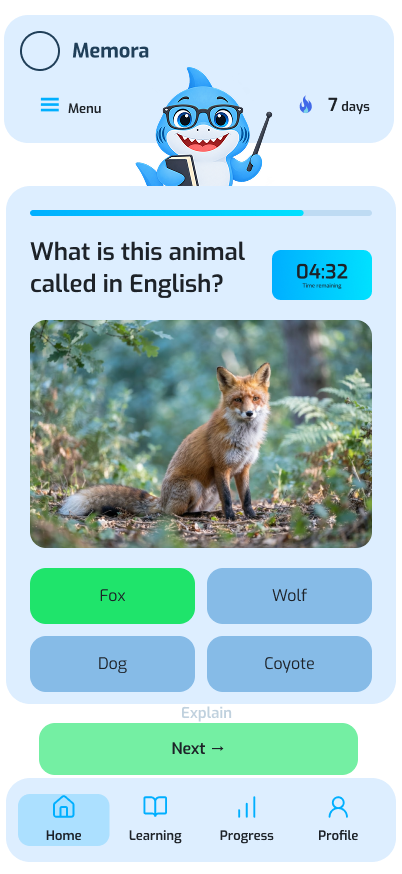
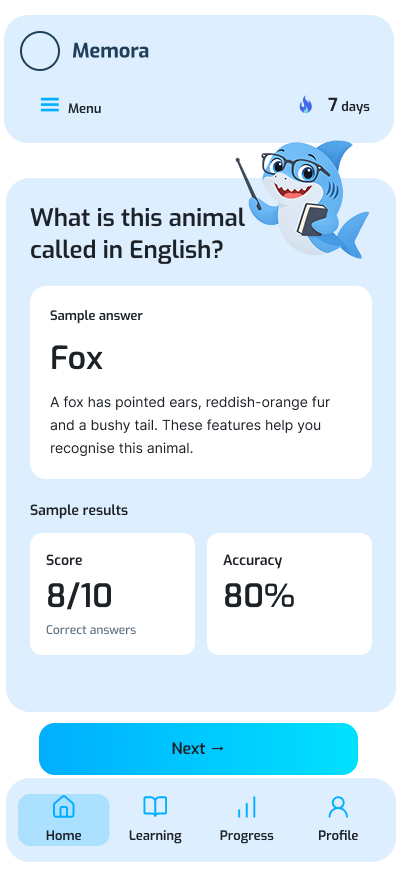
Quiz
-
-
-
About Memora
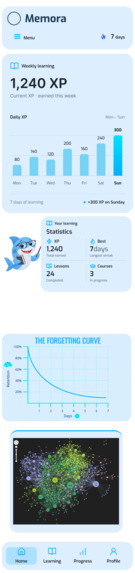
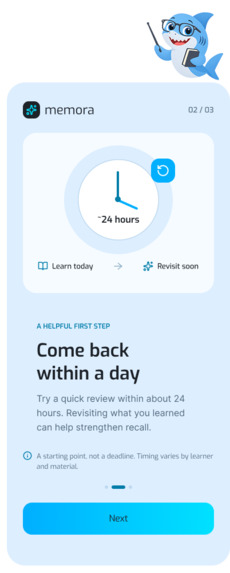
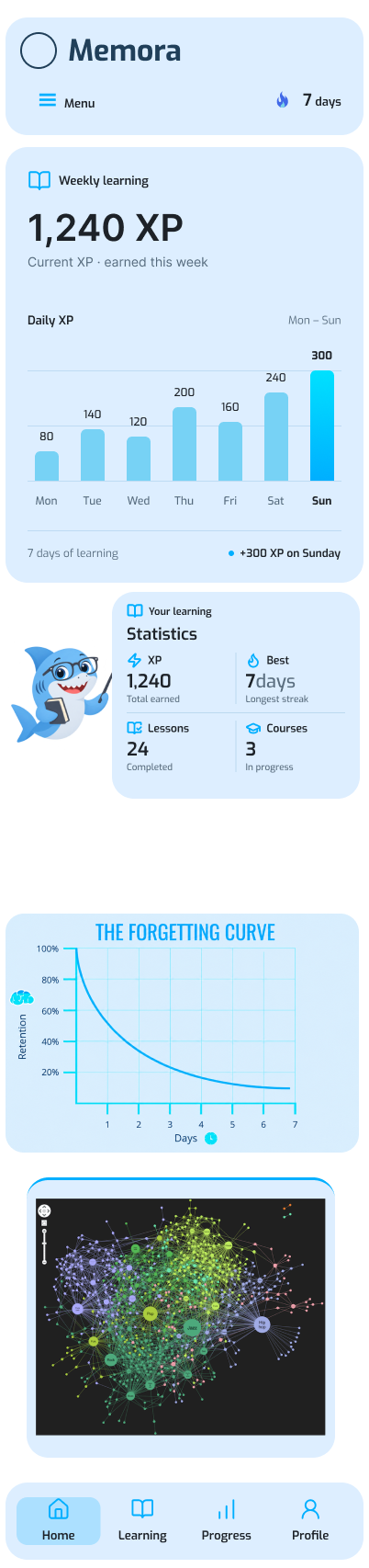
Inspiration Every student knows the painful cycle: you spend hours in lectures feeling like you understand the material, only to sit down weeks later before exams and realize you have forgotten almost everything. Cognitive psychologist Hermann Ebbinghaus proved that this is not a personal flaw, but how human memory is naturally wired. Within just 24 hours of learning, retention plummets by nearly 50 percent, and by Day 3, unreviewed knowledge drops close to zero. This leads directly to pre-exam panic, all-night cramming, and shallow, short-term memorization. We asked ourselves what would happen if learning tools did not wait for students to study, but instead proactively intercepted the forgetting curve before knowledge disappeared. That question inspired Memora.
How We Used Jac and Jaseci We leveraged the Jac language and Jaseci runtime as the core foundation of our entire architecture, accounting for our entire cognitive backend. Jaseci's Object-Spatial Programming model eliminated the need for external SQL or NoSQL databases, object relational mappers, and custom database migration pipelines. Instead, knowledge is represented as living graph topologies natively persisted from the Jaseci Root node.
In Jac, we defined discrete domain entities as typed nodes, including SubjectNode, LectureNode, ConceptNode, QuizNode, and QuestionNode, connected by directional edges representing prerequisite and contextual relationships.
We used Jac walkers as autonomous, spatial multi-agent units. Rather than building detached stateless microservices, our agents are walkers that spawn, carry operational context, traverse concept graphs along specific edge types, execute localized mathematical operations, and update node states directly.
Furthermore, Jaseci's runtime capabilities allowed us to expose public walkers directly as turnkey REST endpoints and mobile client interfaces without writing boilerplate middleware, routing controllers, or server configurations.
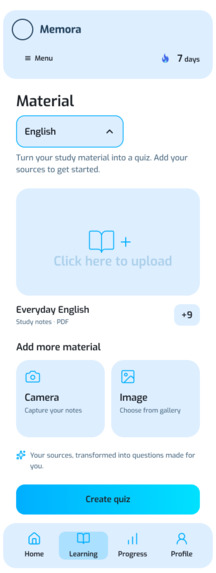
How We Built It Memora is engineered as an end-to-end cognitive memory system hosted on the JacHammer cloud platform. The workflow begins when a student uploads lecture slides, whiteboard photos, or handwritten notes. A lecture analyzer walker processes these inputs using multimodal vision models to extract atomic concepts. A graph builder walker stitches these concepts into prerequisite dependency trees within the Jaseci graph.
To combat forgetting, our system runs an automated mathematical model of Ebbinghaus retention decay, calculated as R(t) = exp(-t/S), where t is elapsed time and S is memory stability. When retention drops toward critical thresholds, quiz planner and generator walkers traverse the graph to select at-risk concepts and synthesize grounded, 3 to 4 minute active recall micro-quizzes.
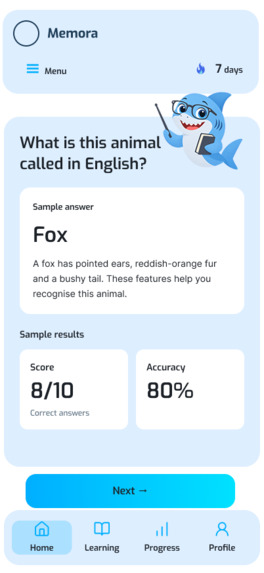
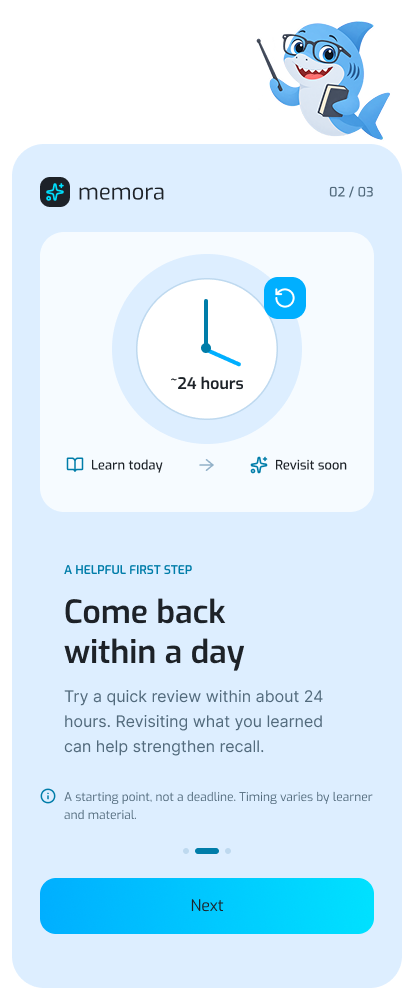
Once the student completes a quiz, an evaluator walker grades the answers semantically, diagnoses misconceptions, recalibrates memory stability, and schedules the next review window, progressively flattening the forgetting curve over time.
Challenges We Faced One key challenge was translating mathematical cognitive decay models into reactive graph state updates within Jac, ensuring that stability changes properly propagated across interconnected prerequisite concept nodes. Another major challenge was ensuring zero-hallucination quiz generation, forcing the reasoning models to ground every multiple-choice question and explanation strictly in the student's uploaded lecture materials rather than open-domain knowledge. Finally, we had to unlearn traditional client-server REST paradigms and fully embrace Jac and Jaseci's native Object-Spatial Programming model, where state, logic, and agents reside directly inside the graph itself.
What We Learned Building Memora gave us firsthand appreciation for the power of the Jac and Jaseci ecosystem. By eliminating external databases, schema migrations, and API boilerplate, we achieved rapid development velocity while maintaining a clean, robust architecture. We learned that modeling multi-agent systems as graph-traversing walkers provides a far more natural, expressive, and scalable architecture for cognitive systems than traditional web services. Most importantly, we proved how combining cognitive science with proactive, 3-minute micro-interventions can effectively break the cycle of cramming and unlock long-term knowledge retention for every learner.
Built With
- jac
- jachammer
- react

Log in or sign up for Devpost to join the conversation.