Inspiration
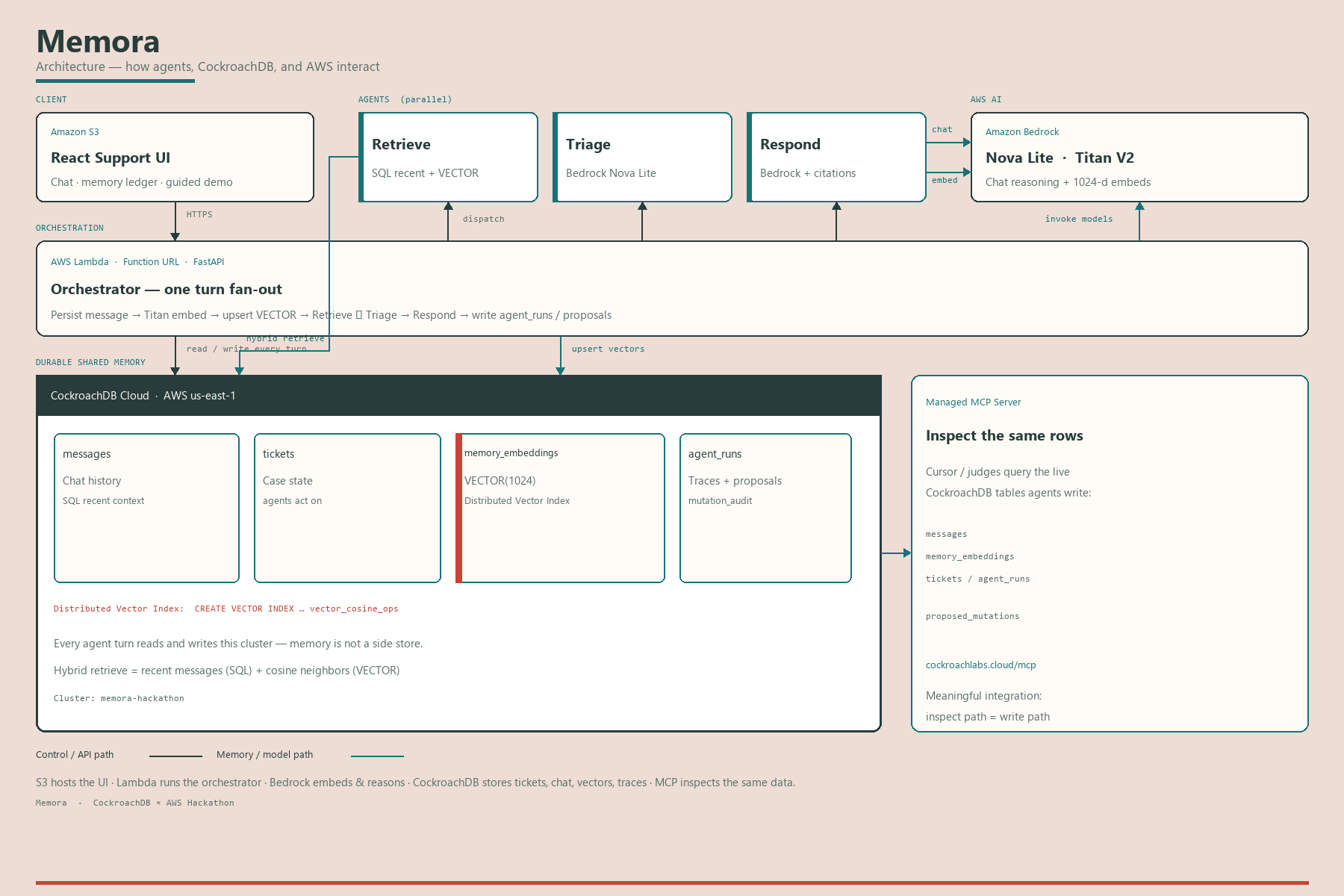
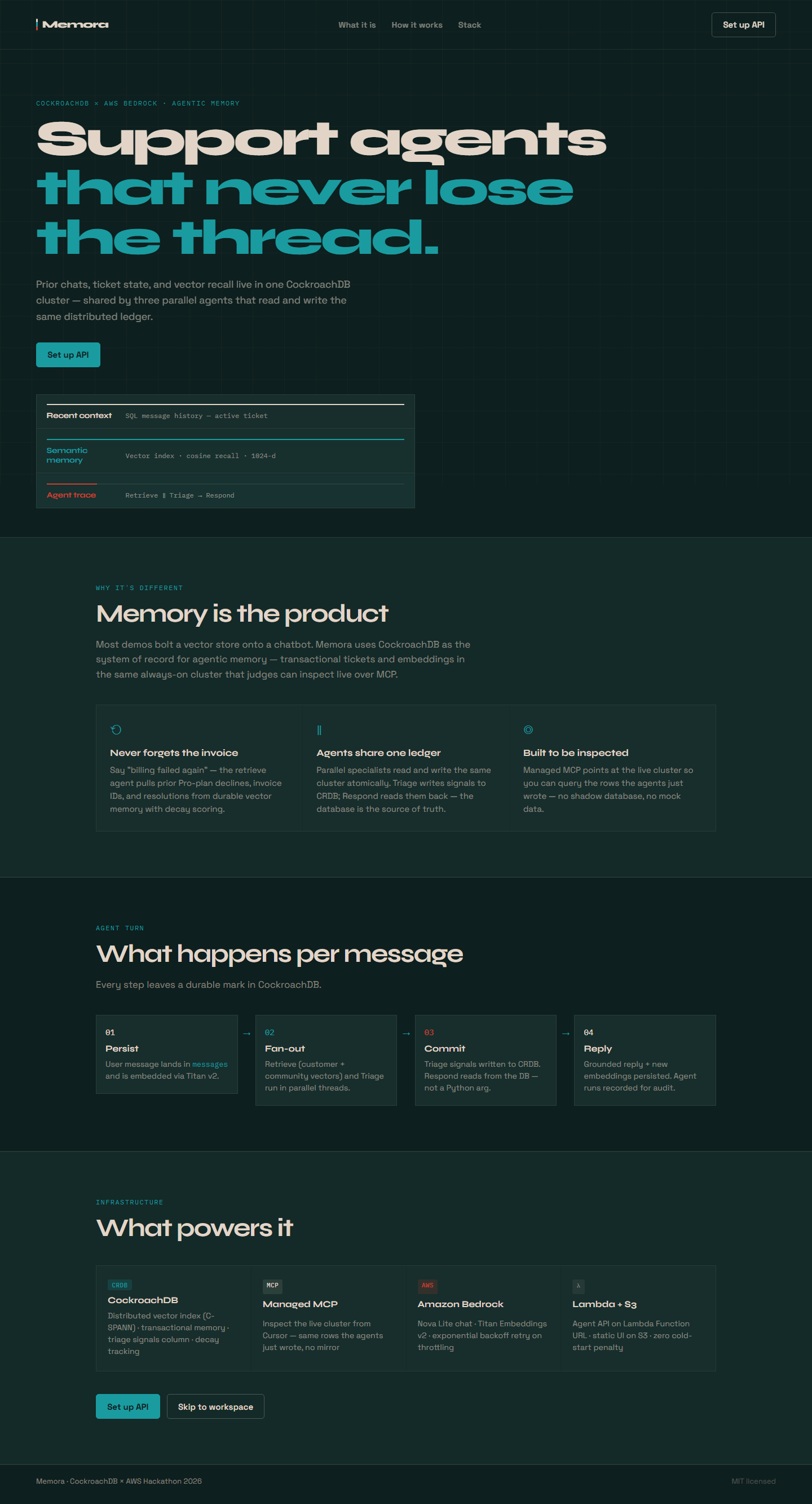
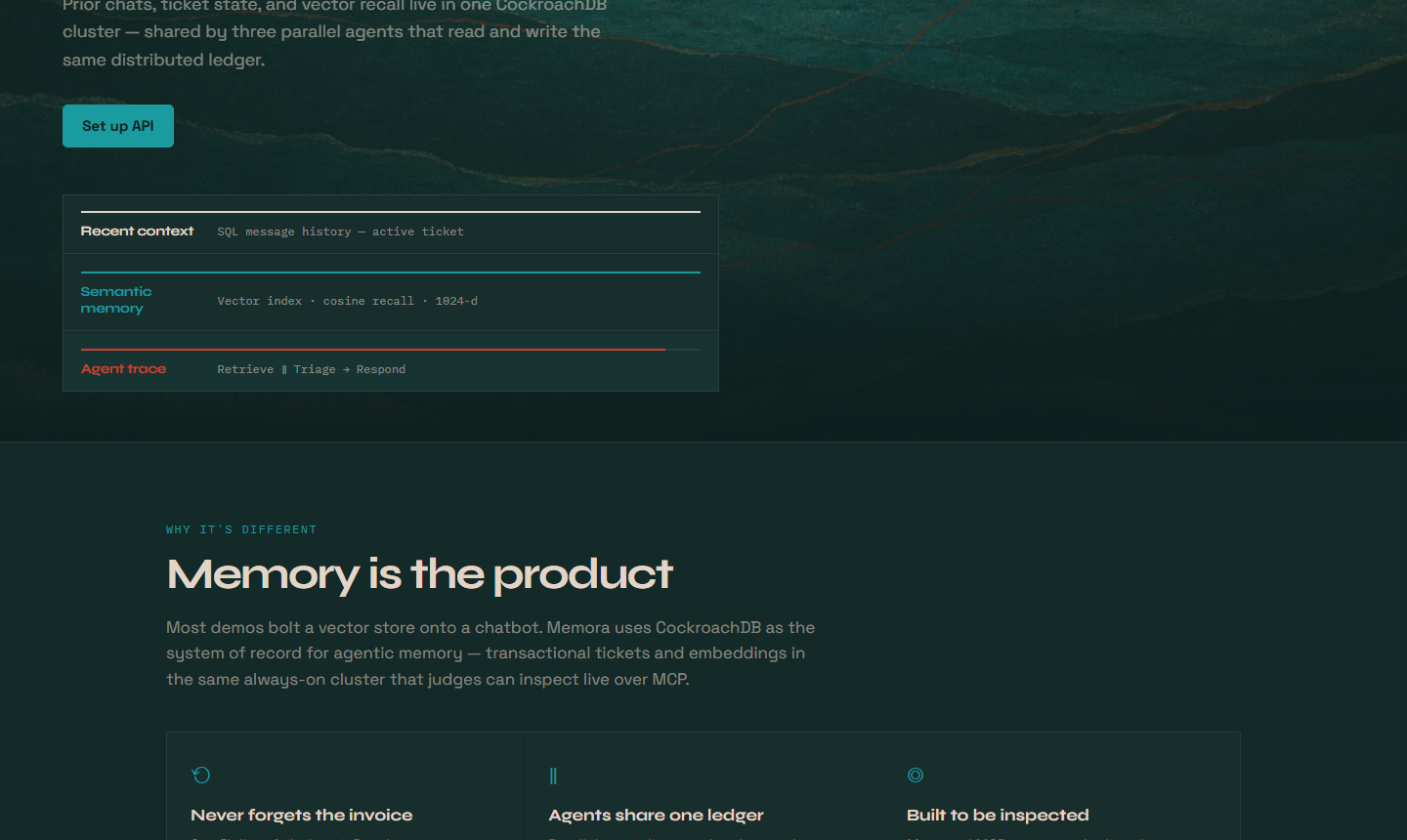
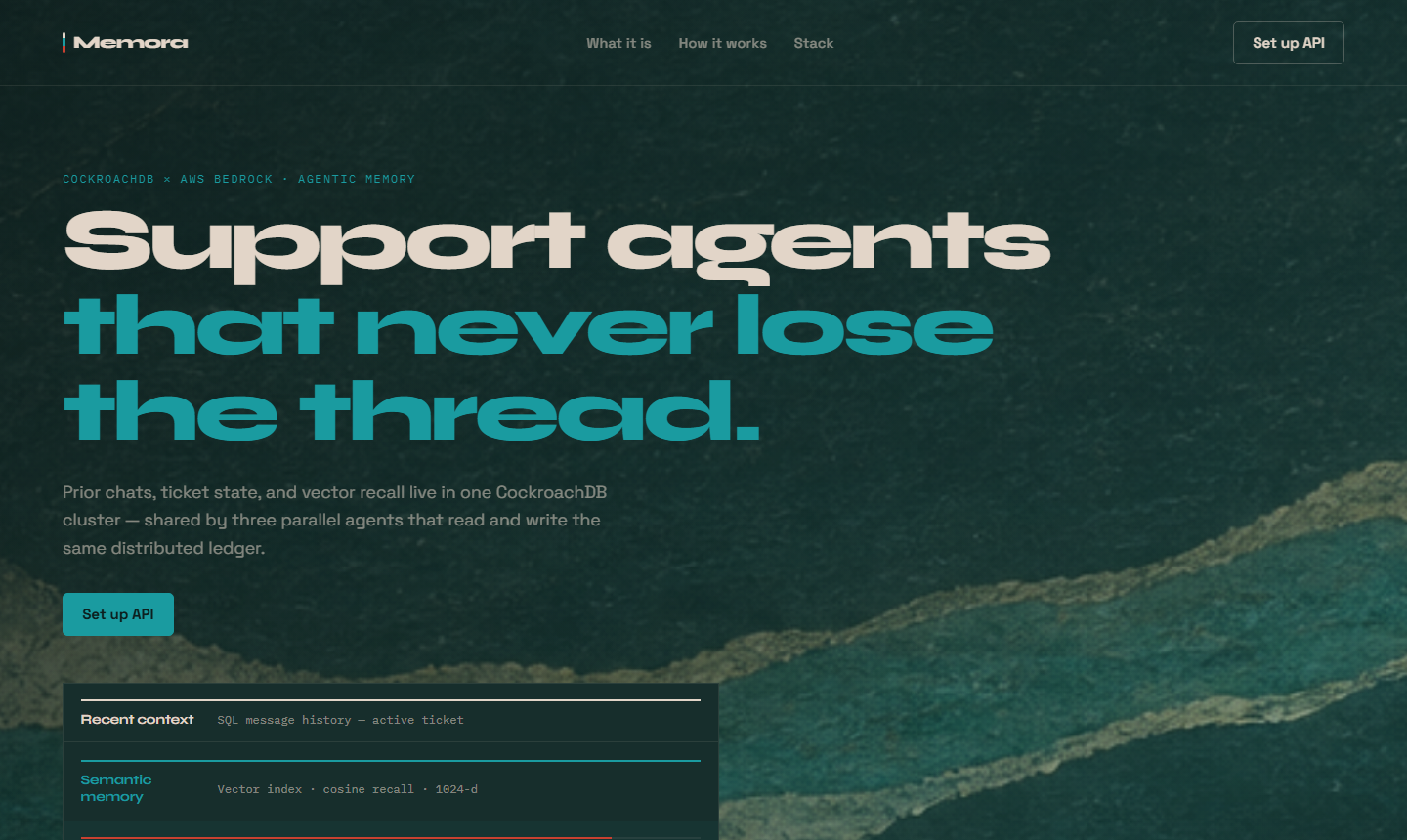
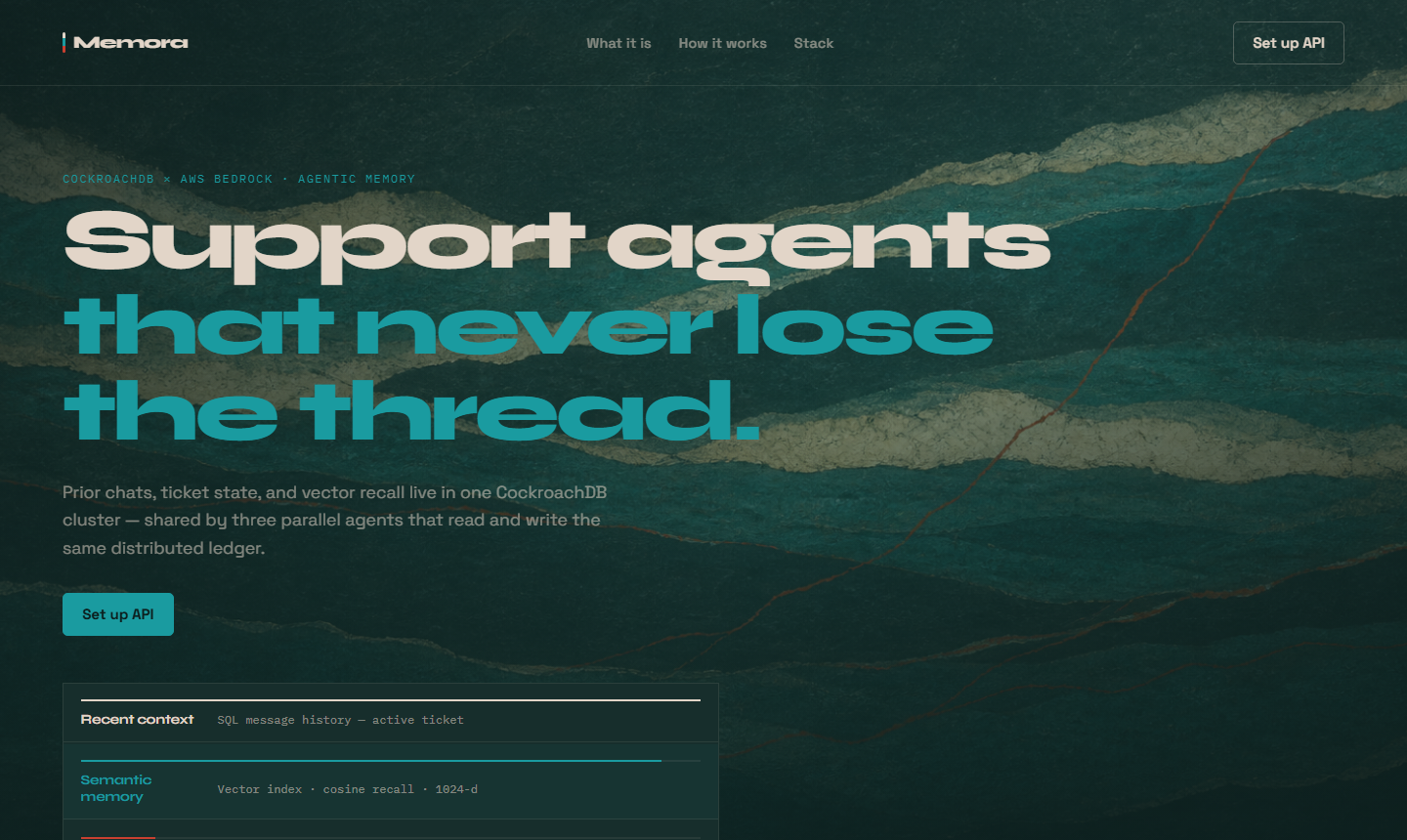
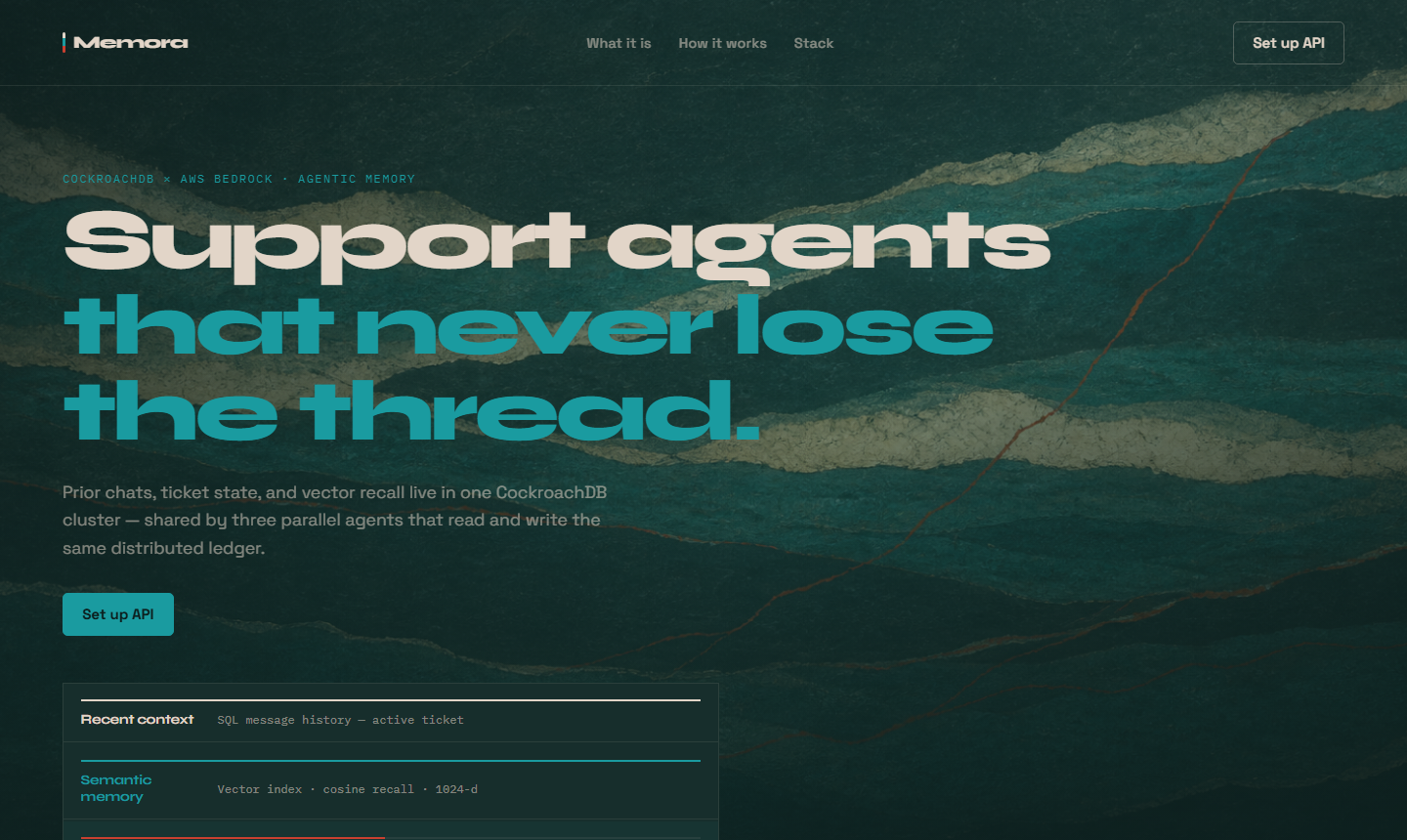
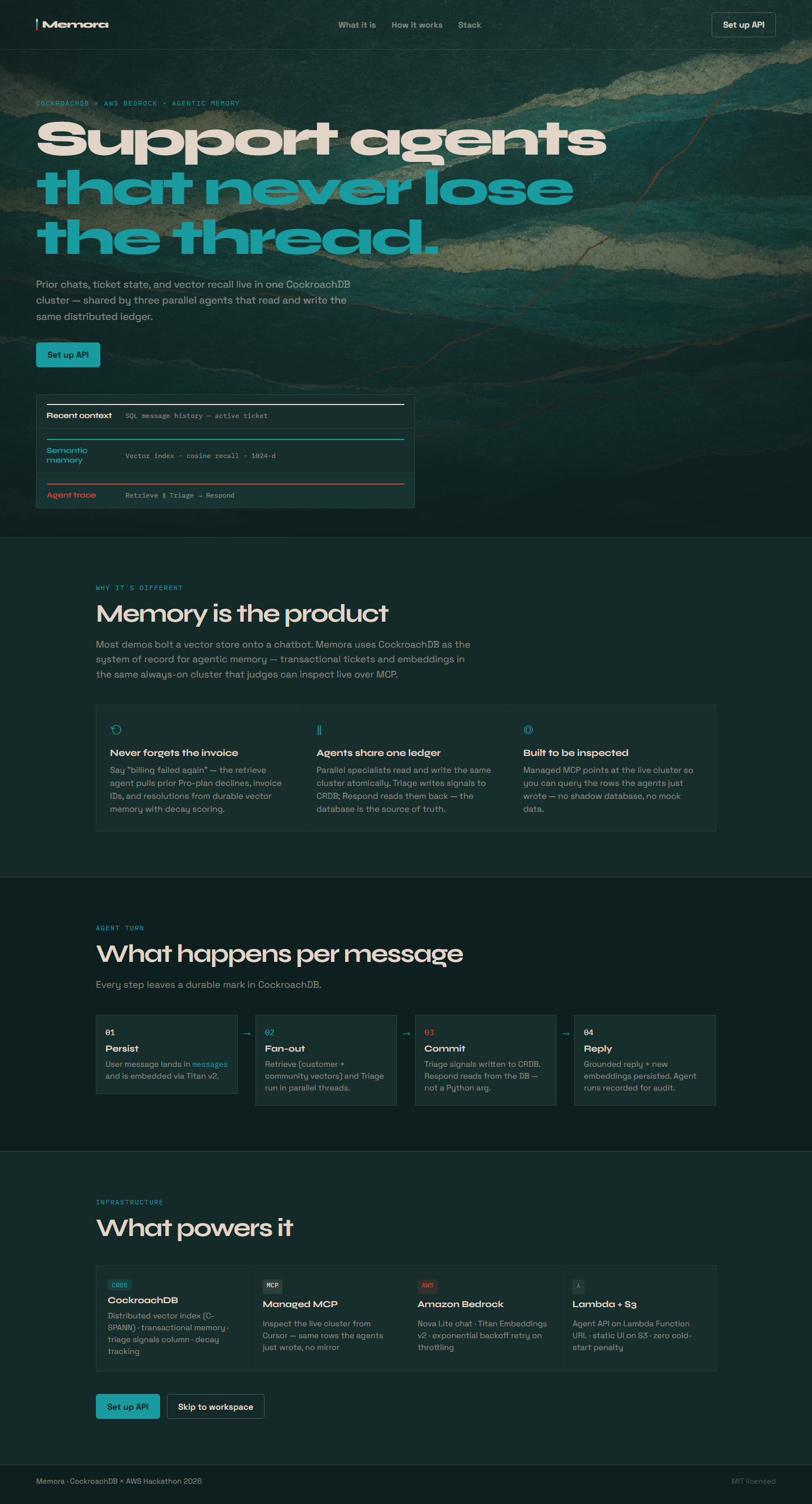
AI support agents fail in production when memory is bolted on as a separate store. Memora treats memory as the product: one CockroachDB cluster for transactional tickets and distributed vector recall, shared by parallel specialist agents.
What it does
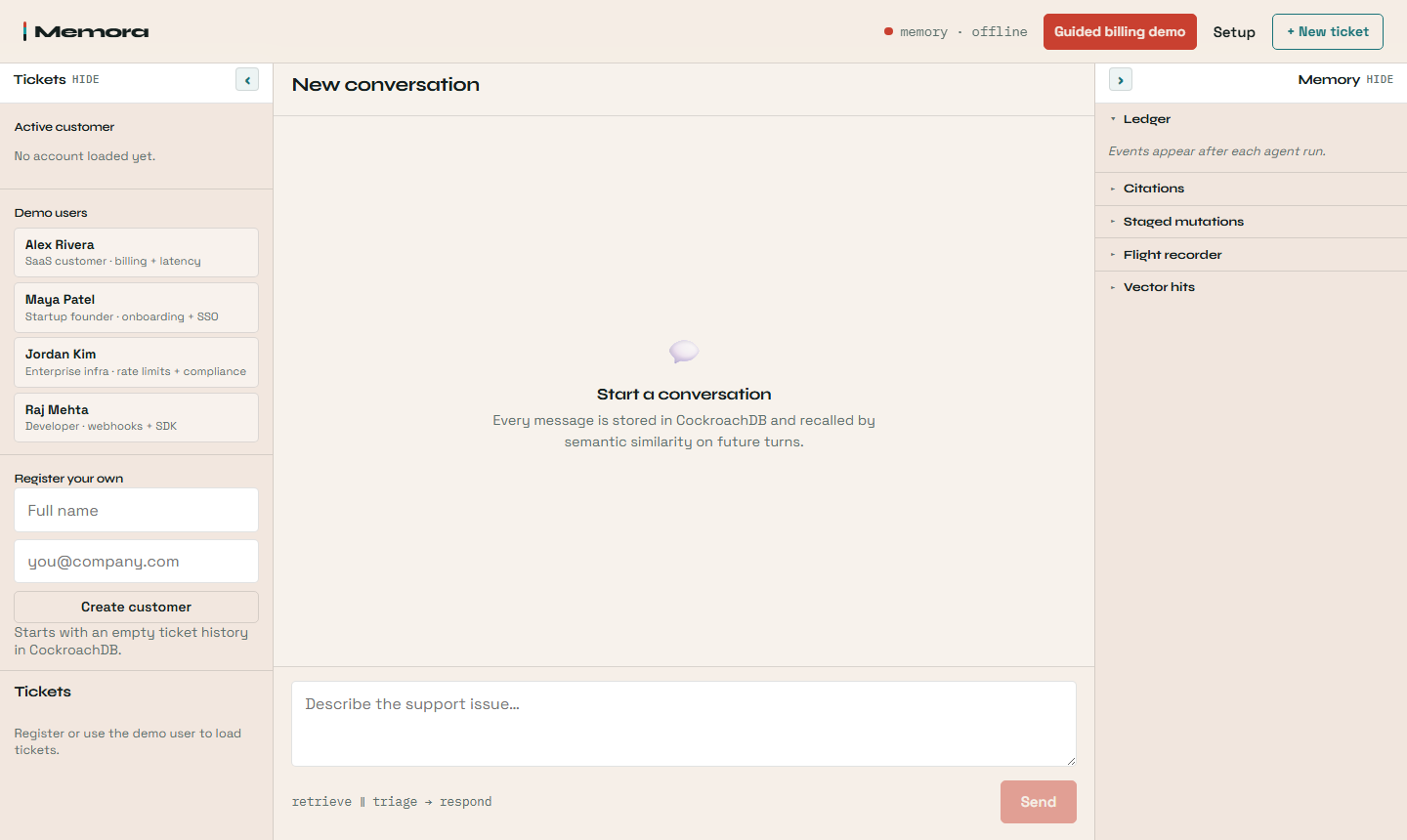
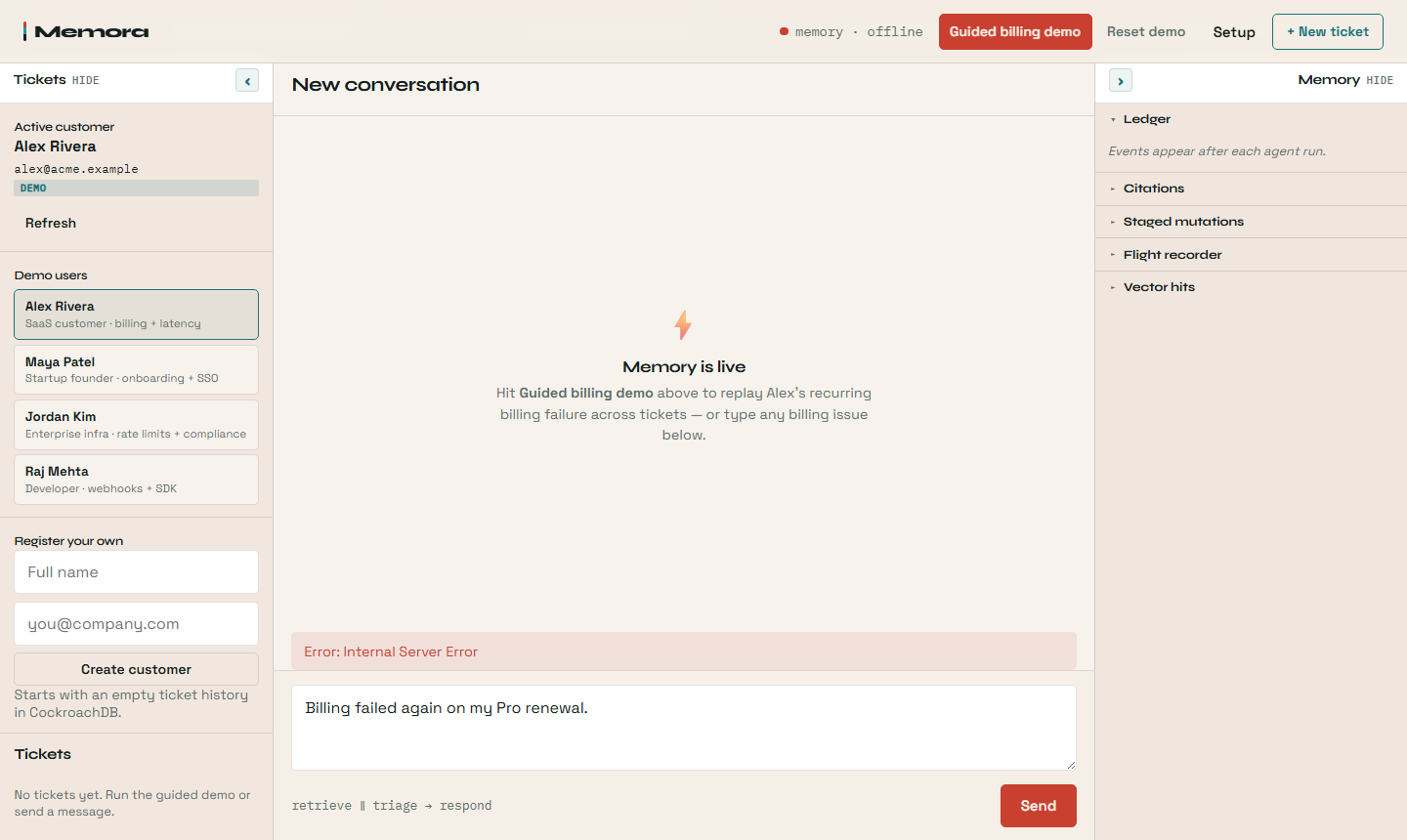
- Chat UI for SaaS support tickets
- Parallel Retrieve + Triage, then Respond
- Prior-chat context (SQL) + semantic memory (VECTOR index)
- Agents update ticket state and persist embeddings every turn
- Inspect the same cluster via CockroachDB Managed MCP Server
CockroachDB tools used
- Distributed Vector Indexing —
memory_embeddingswith cspann index; Retrieve agent runs similarity search for long-term support memory. - Managed MCP Server — Cursor/judges connect to the Cloud MCP endpoint and query the same tables the agents write (
messages,memory_embeddings,agent_runs).
AWS services used
- Amazon Bedrock — Nova Lite for chat/triage/respond; Titan Text Embeddings V2 for vectors
- AWS Lambda (Function URL) and/or Amazon ECS Fargate — agent API execution
- Amazon S3 — frontend hosting / artifacts
Built with
Python, FastAPI, React, Vite, CockroachDB, Amazon Bedrock, AWS Lambda/ECS, S3
Challenges
Aligning embedding dimensions with CockroachDB vector indexes; keeping the demo honest about MCP (inspect path) vs app SQL writes; shipping without local Docker by offering a Lambda deploy path.
What's next
Multi-region memory demos, attachment ingestion via S3 embed pipeline, and Agent Skills packaging for schema ops.
Optional feedback on CockroachDB AI tools
Managed MCP made “show the judges the rows” straightforward. Vector-in-the-OLTP-DB removed the usual RAG glue. Would love first-class examples for agent write paths alongside read-only MCP defaults.
Built With
- amazon
- amazon-web-services
- cockroachdb
- fastapi
- lambda
- python
- react
- vite

Log in or sign up for Devpost to join the conversation.