-
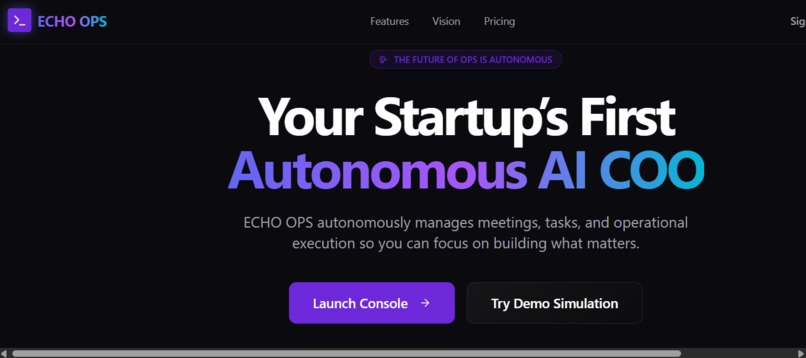
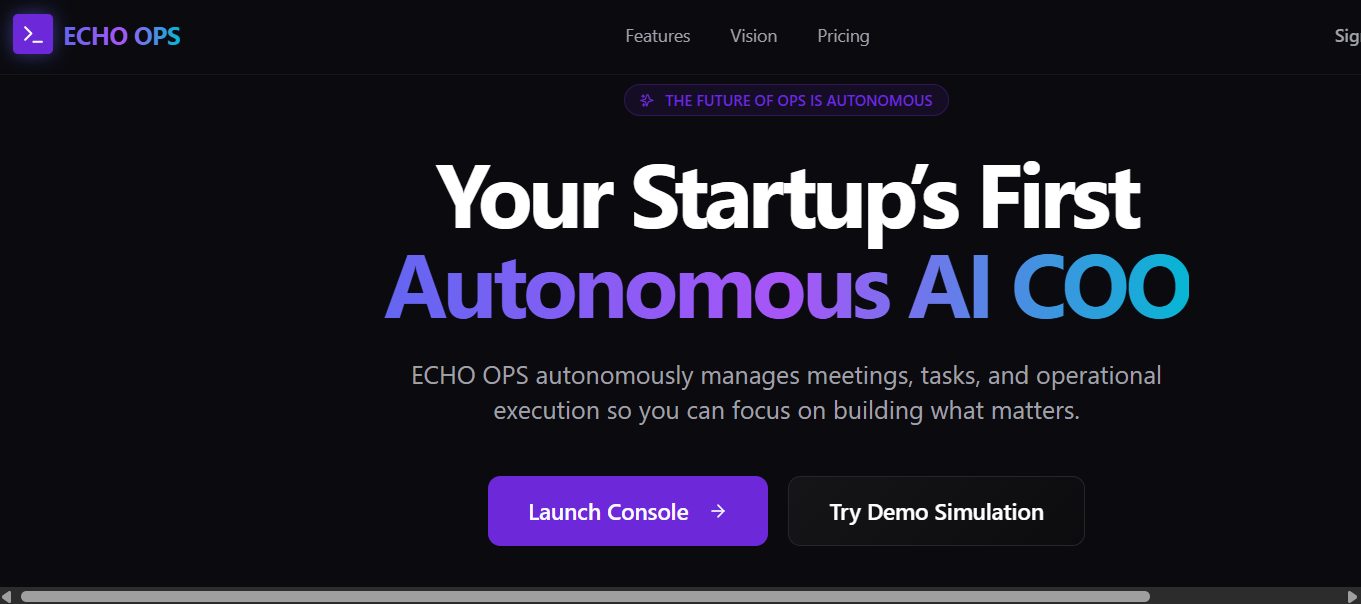
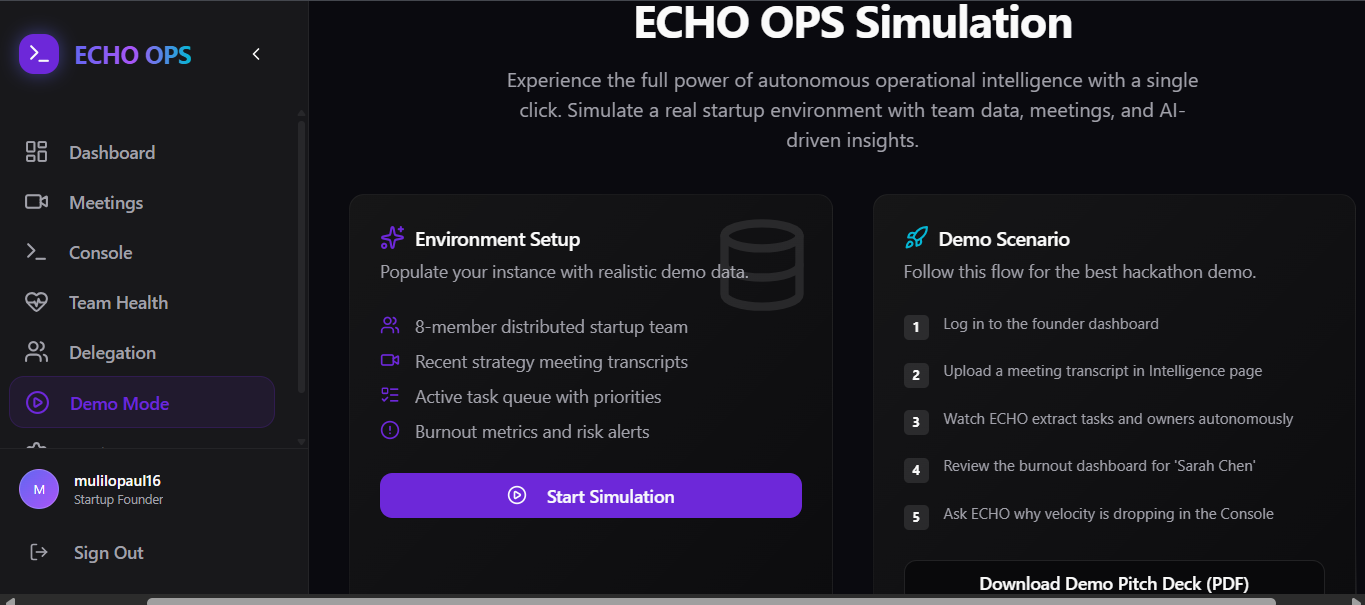
ECHO OPS introduces a futuristic AI COO platform designed to autonomously manage startup operations, execution, and team intelligence.
-
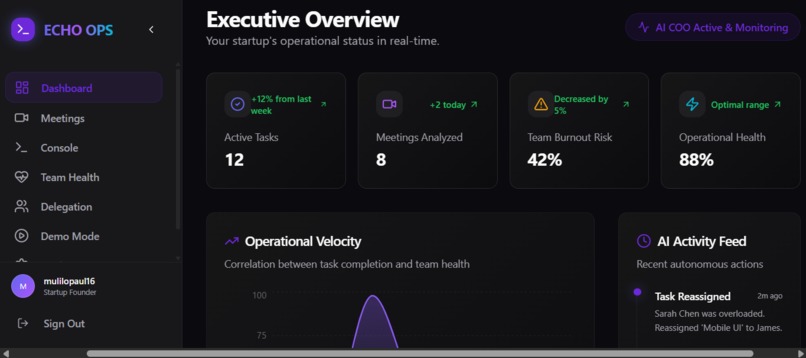
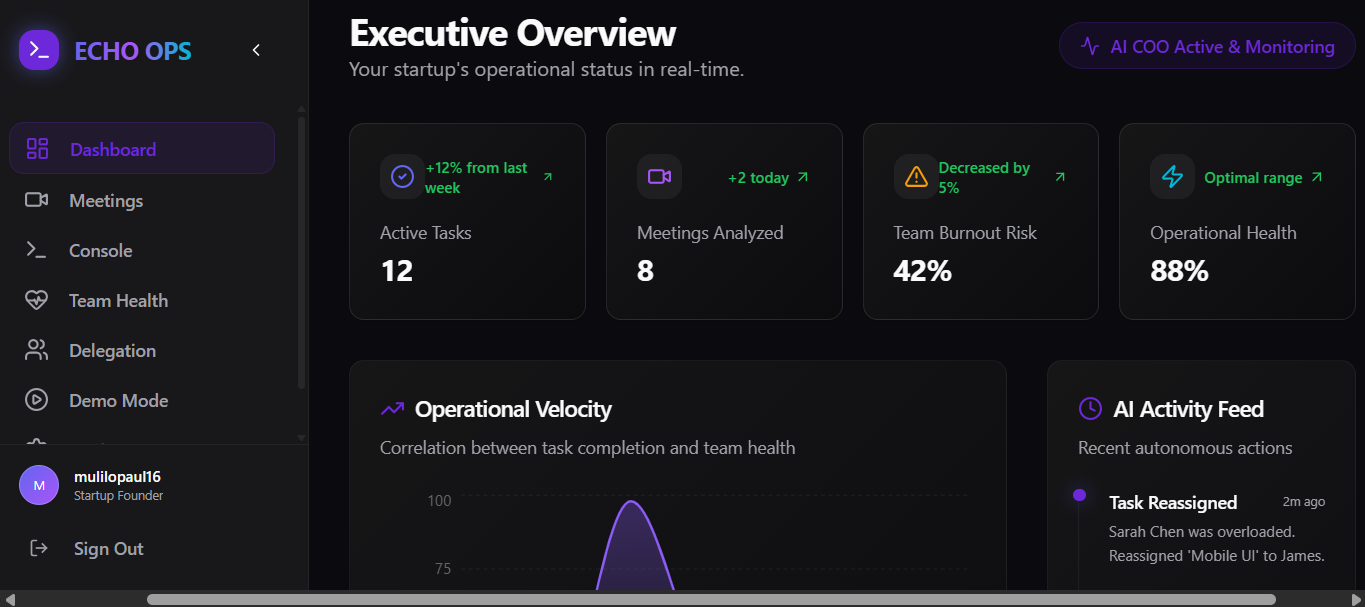
TheExecutive Dashboard provides realtime operational visibility including taskactivity, burnoutrisk, AI monitoring&company health analytics.
-
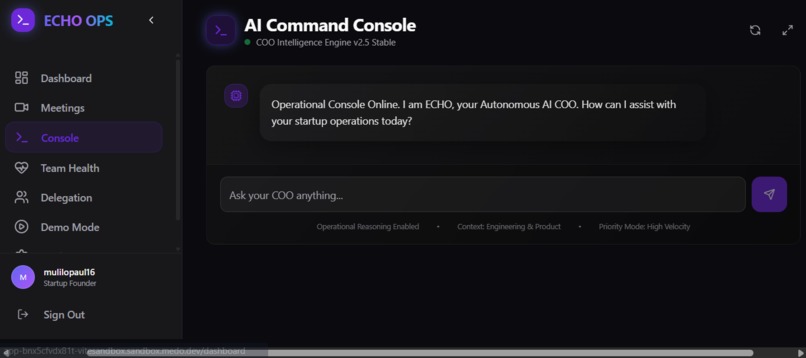
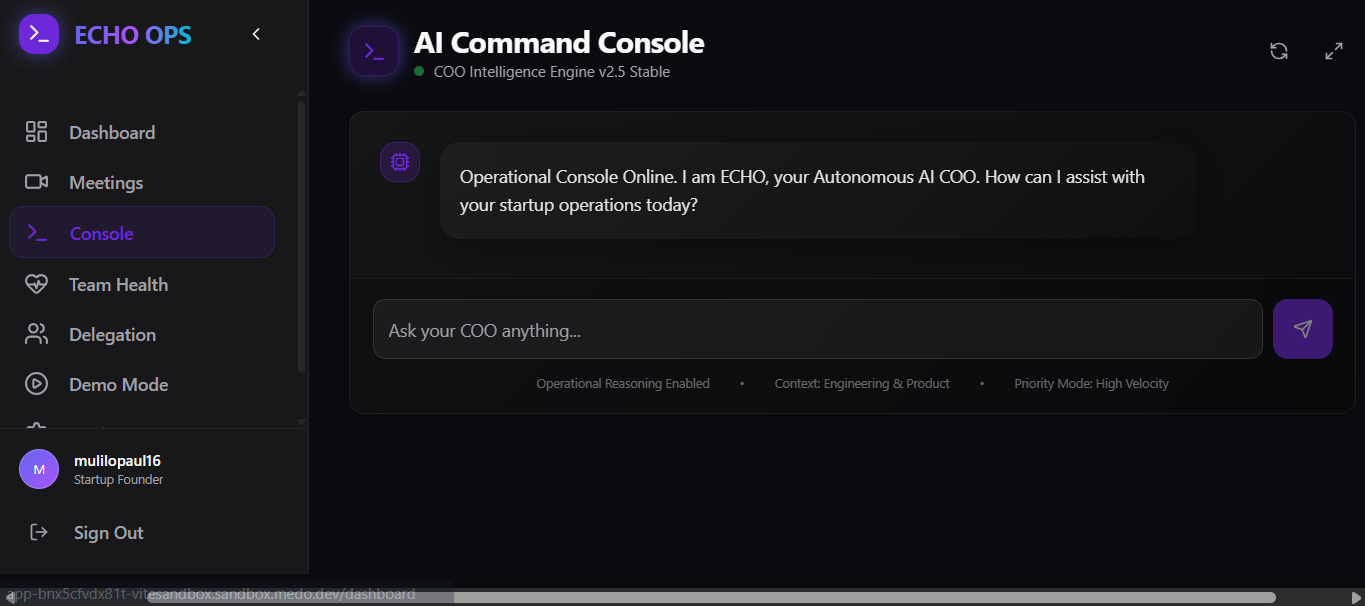
The AI Command Console allows executives to interact
-
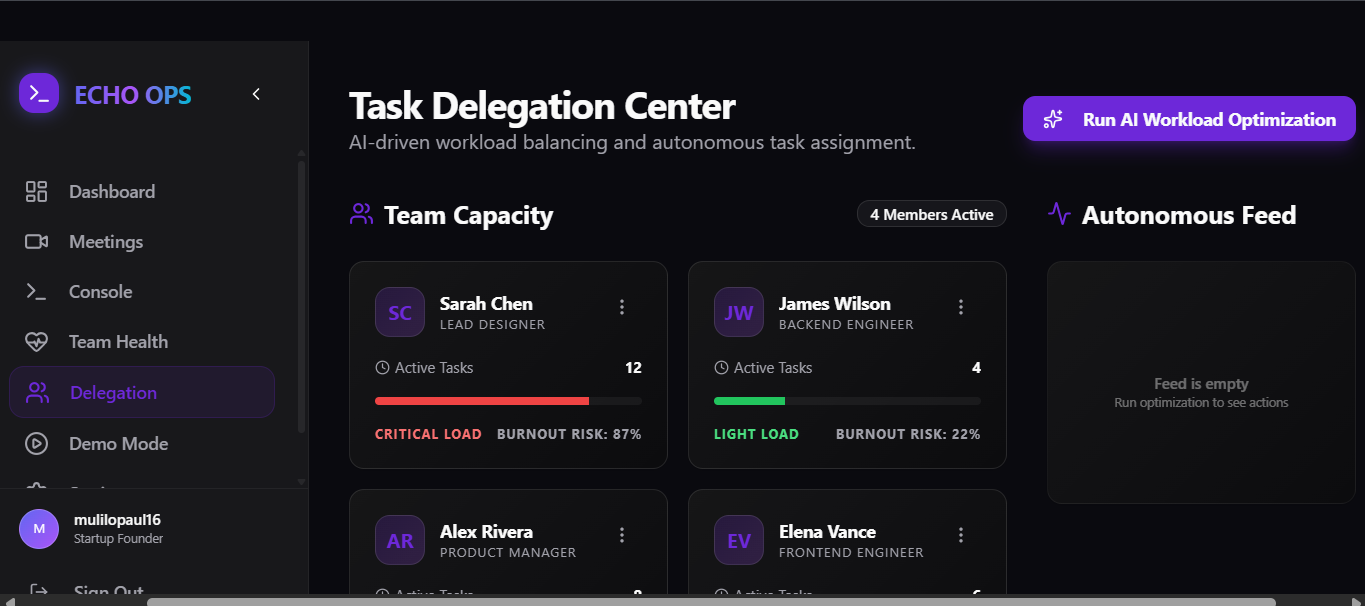
The Delegation Center autonomously balances workloads, optimizes task assignments, and reduces burnout risk using AIdriven operational logic
-
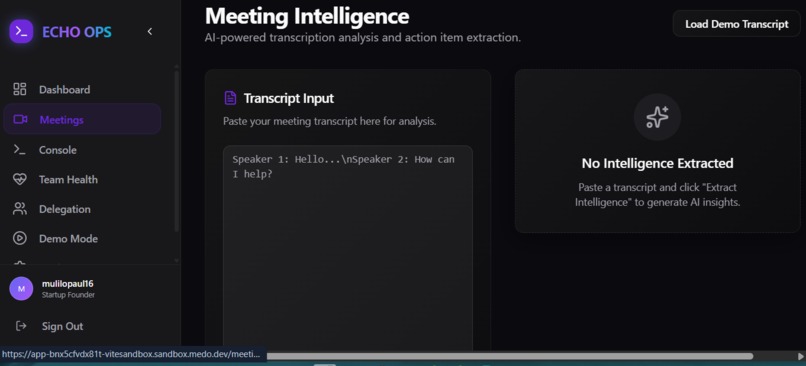
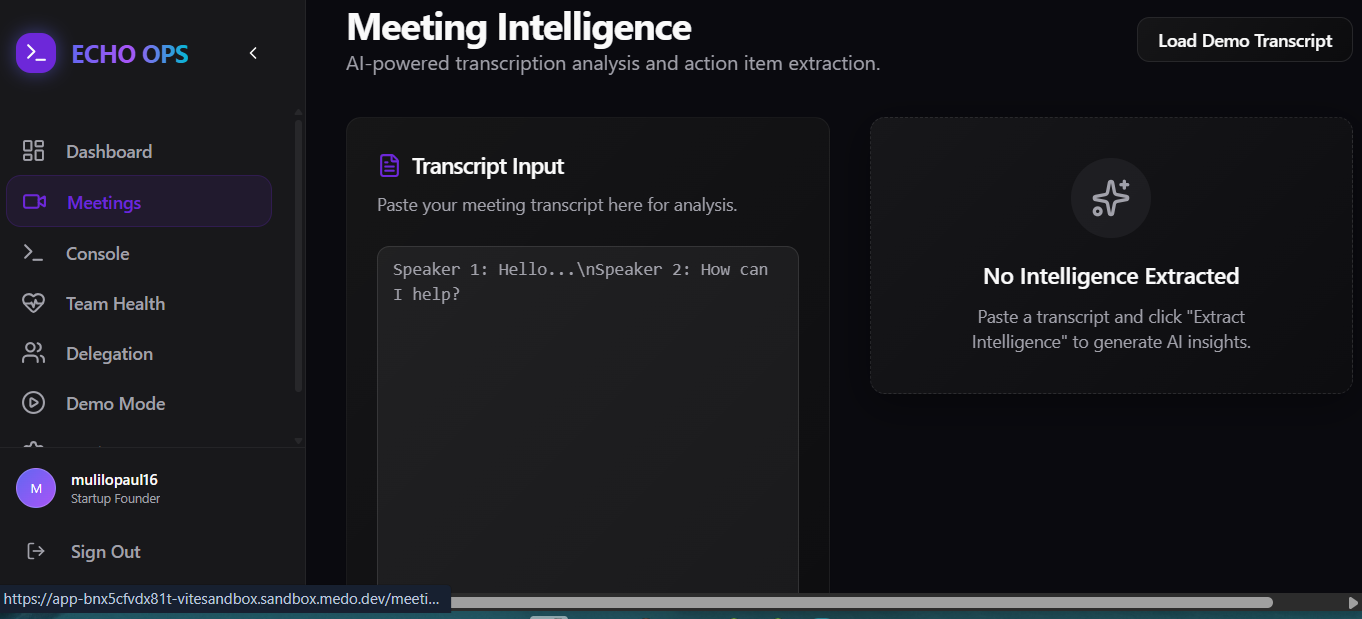
The Meeting Intelligence module analyzes meeting transcripts and extracts actionable operational insights, risks, and execution priorities.
-
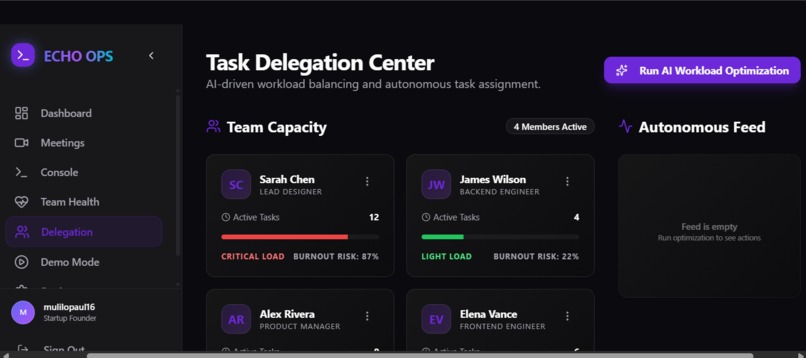
ECHO OPS demonstrates how AI can analyze operational pressure
-
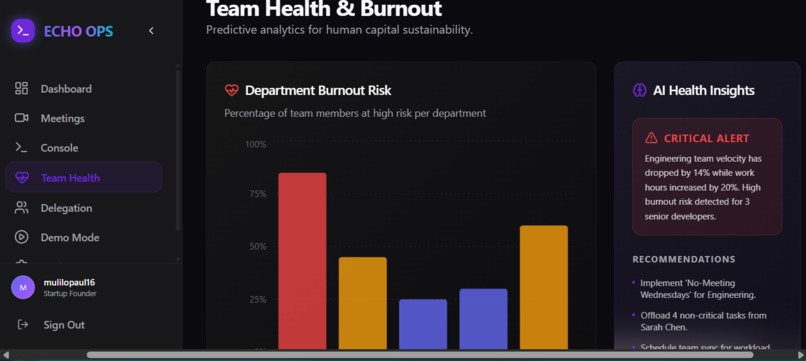
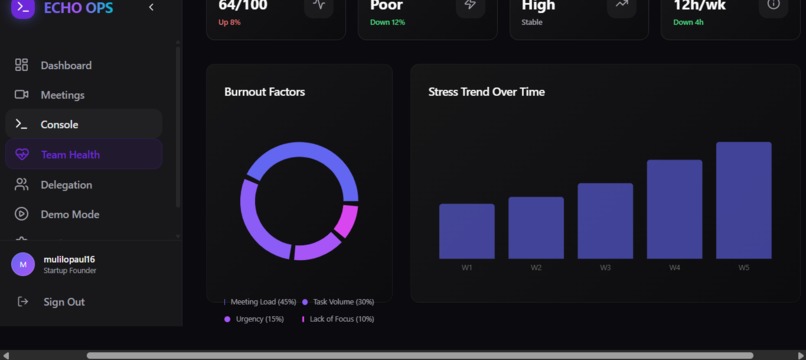
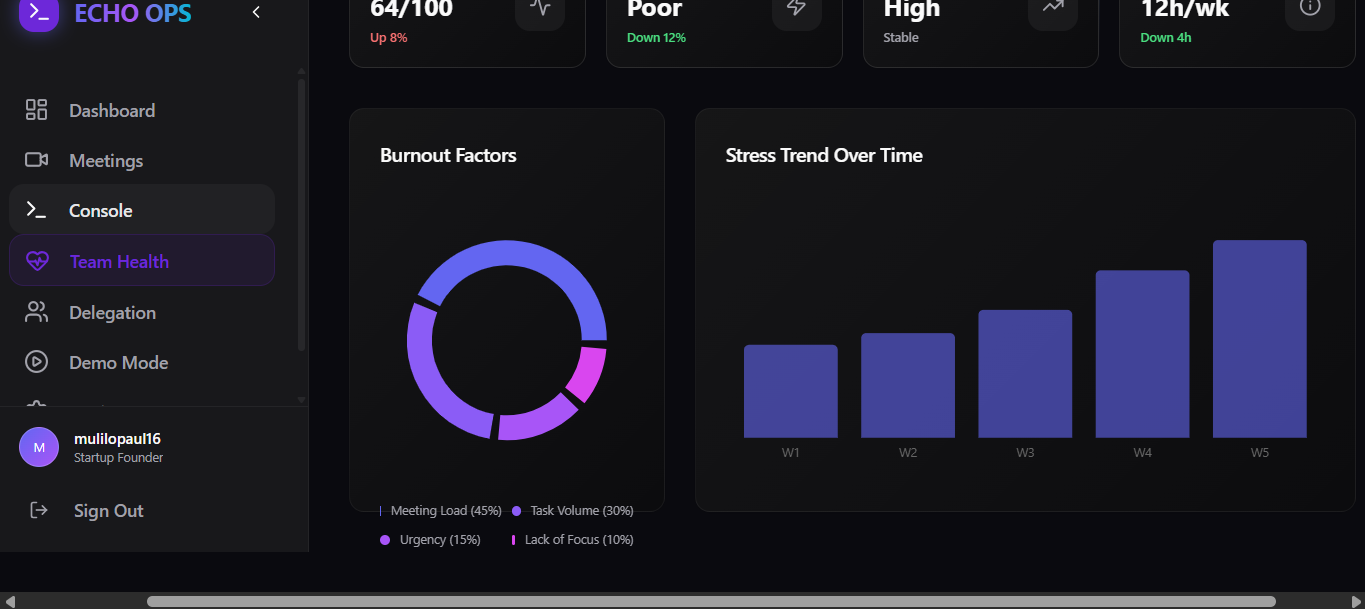
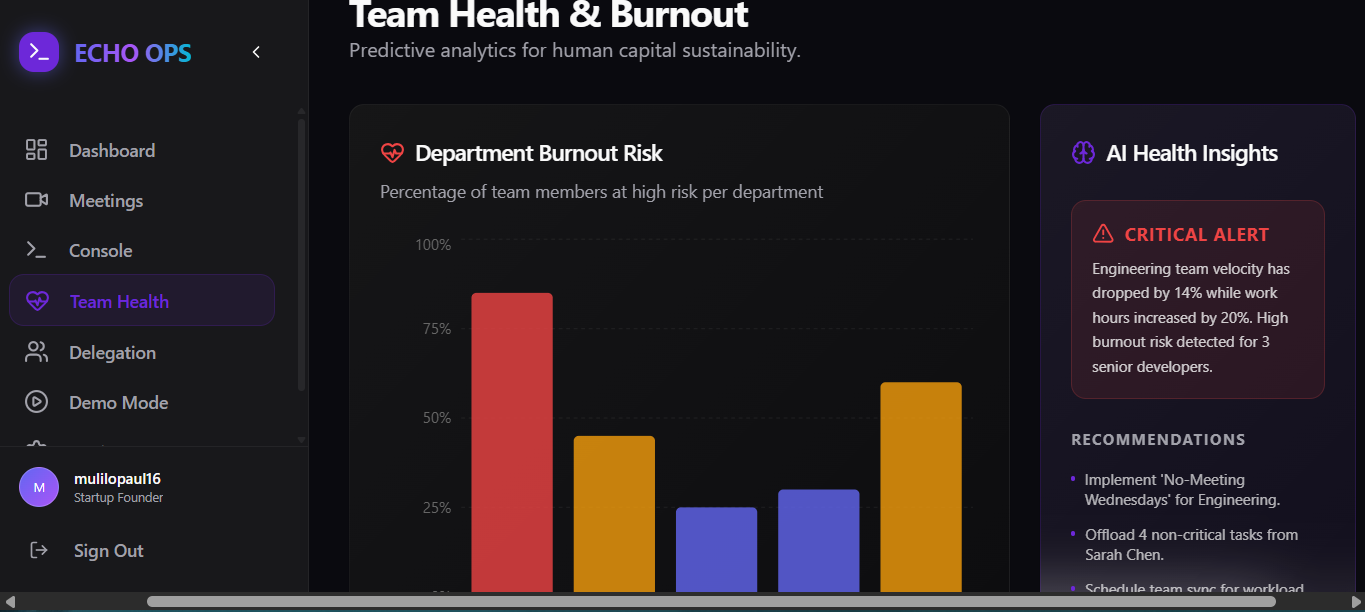
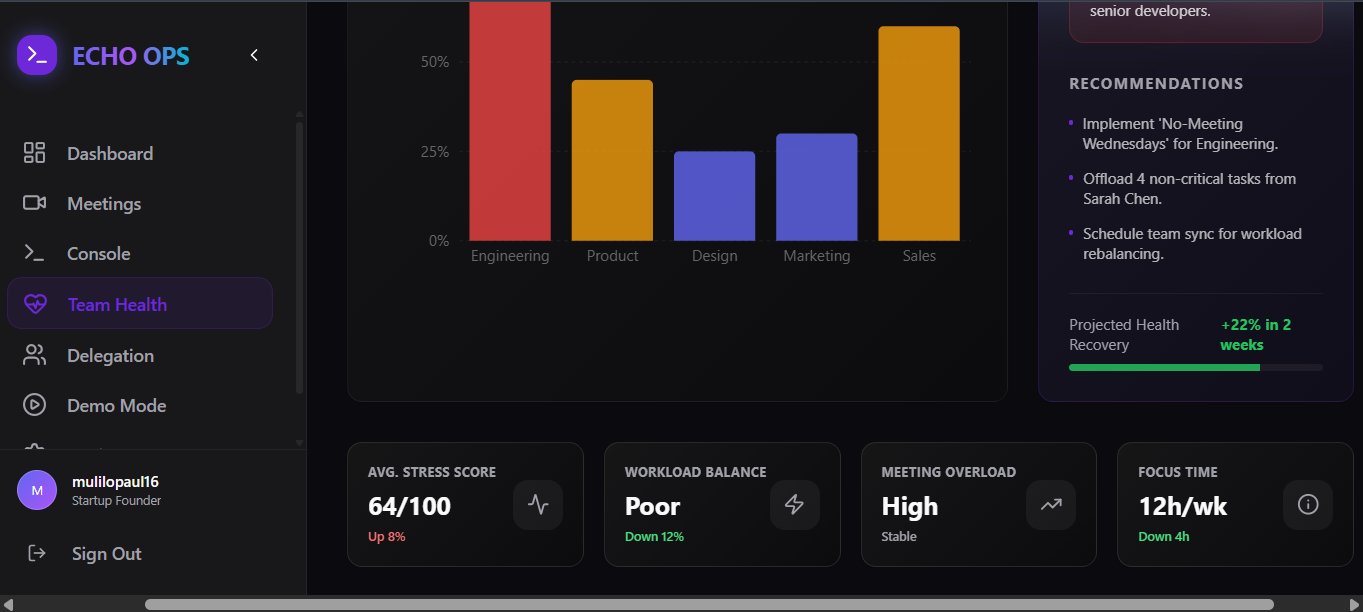
the Team Health module uses predictive AI analytics to detect burnout risks, workload imbalance, stress trends, and operational issues.
-
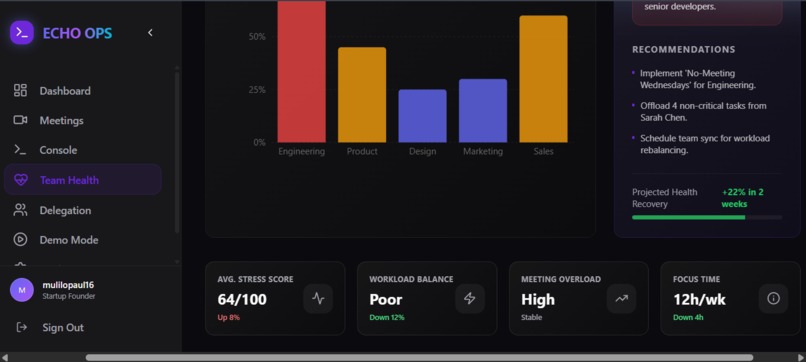
ECHO OPS visualizes workload pressure, burnout factors, and stress forecasting to help leadership teams prevent operational fatigue
-
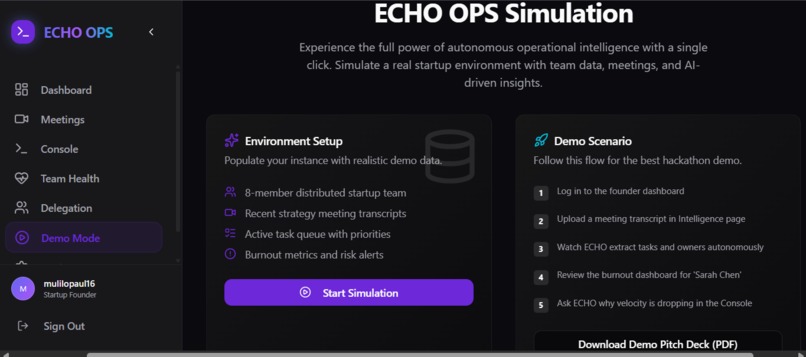
generate recovery plans, and actively guide startups through execution challenges.
Inspiration
Startups move fast, but operational chaos grows even faster.
Founders constantly juggle meetings, deadlines, burnout, blockers, sprint pressure, investor updates, and shifting priorities. Most teams use disconnected tools that only show information instead of actively helping leadership teams execute.
We asked ourselves:
What if startups had an AI COO?
That idea became ECHO OPS — an AI Operational Intelligence System designed to transform startup chaos into intelligent execution.
What it does
ECHO OPS acts like an autonomous AI Chief Operating Officer.
The platform helps teams:
- analyze meetings
- detect burnout risks
- identify blockers
- rebalance workloads
- prioritize launch-critical tasks
- generate executive briefings
- create operational recovery plans
- forecast execution risks
Instead of simply answering prompts, ECHO OPS proactively intervenes when operational risks increase.
How we built it
We built ECHO OPS using:
- React
- TypeScript
- Vite
- Tailwind CSS
- Framer Motion
- LocalStorage persistence
We designed the system with a cinematic futuristic UI inspired by elite SaaS platforms and AI-native operating systems.
A major technical challenge was building believable AI behavior without relying on expensive external APIs. To solve this, we engineered deterministic operational intelligence logic locally using TypeScript to simulate an intelligent AI COO experience.
Challenges we faced
One of the biggest challenges was balancing:
- enterprise-level intelligence with
- simplicity for non-technical users
We also spent significant time refining:
- burnout forecasting
- operational realism
- executive UX
- AI explainability
- simulation logic
- connected workflows
- cinematic UI polish
What we learned
This project taught us that the future of AI is not just conversation it is operational autonomy.
The most valuable AI systems will:
- understand organizational pressure
- detect risks early
- coordinate execution
- optimize operations
- protect teams from burnout
- help leaders make better decisions
Future Vision
Our long-term vision is to make ECHO OPS the AI operating system for modern companies.
Future versions could include:
- real-time collaboration
- integrations with Slack, Jira, and Notion
- AI-powered sprint planning
- predictive operational analytics
- autonomous meeting optimization
- organizational forecasting
- AI-generated execution playbooks
Built With
- ai
- analytics
- burnout
- css
- detection
- deterministic
- engine
- executive
- forecasting
- framer
- glassmorphism
- intelligence
- localstorage
- logic
- motion
- operational
- react
- responsive
- simulation
- system
- tailwind
- typescript
- ui
- vite

Log in or sign up for Devpost to join the conversation.