Inspiration
Memories shape our identity, yet many meaningful moments are easily forgotten or become fragmented over time. We were interested in exploring how technology could help people revisit and reflect on their experiences in a more structured and intuitive way.
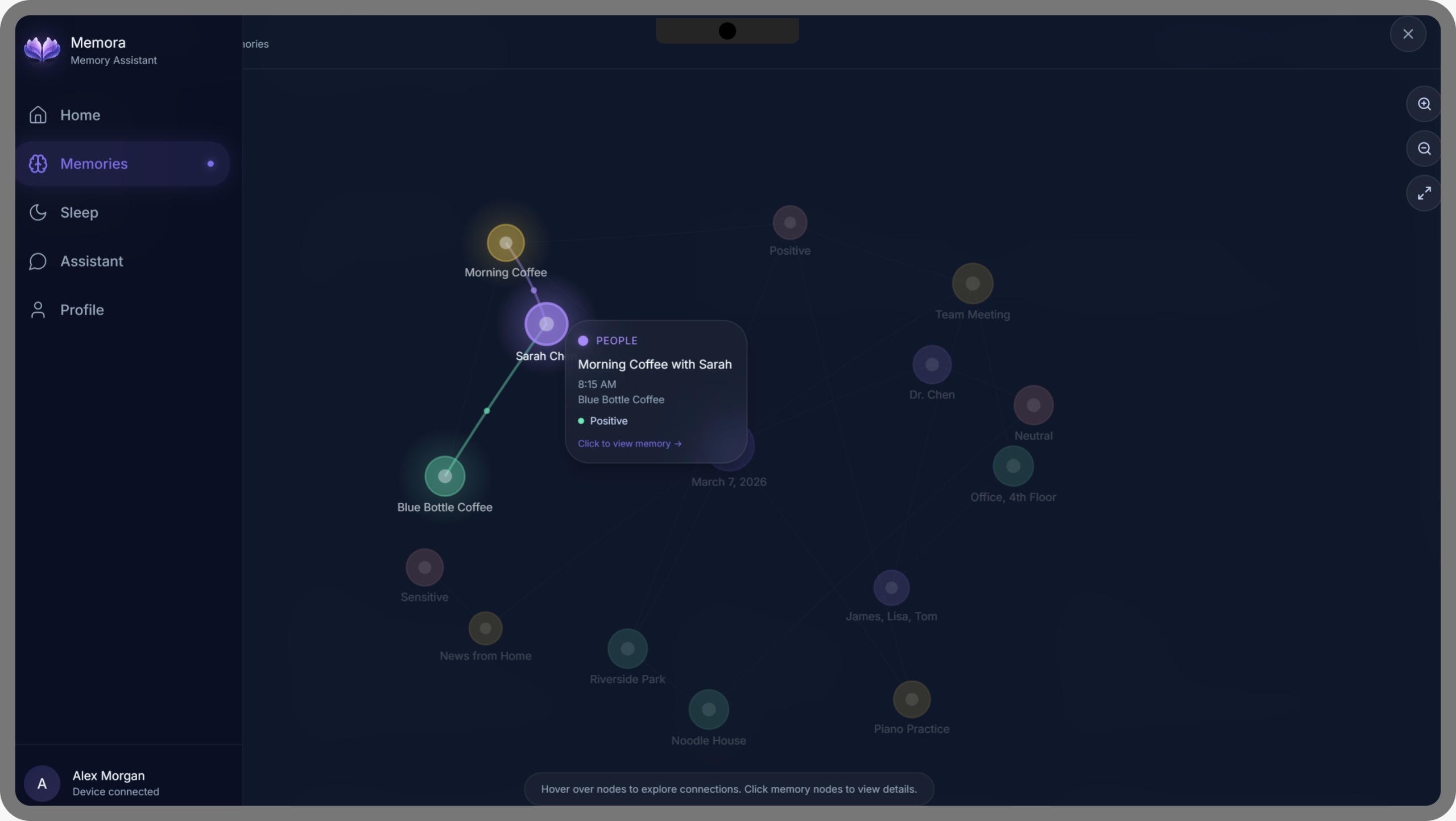
The idea behind Memora came from thinking about memory not as isolated records but as experiences connected through time, people, and places. We wanted to design an interface that allows users to navigate their memories in a calm and meaningful way, rather than simply storing information like a traditional archive.
Our goal was to create a digital space where memories could be explored visually, helping users rediscover moments that might otherwise fade away.
What it does
Memora is a cognitive memory assistant that helps users organize and revisit their experiences through a structured and visually guided interface.
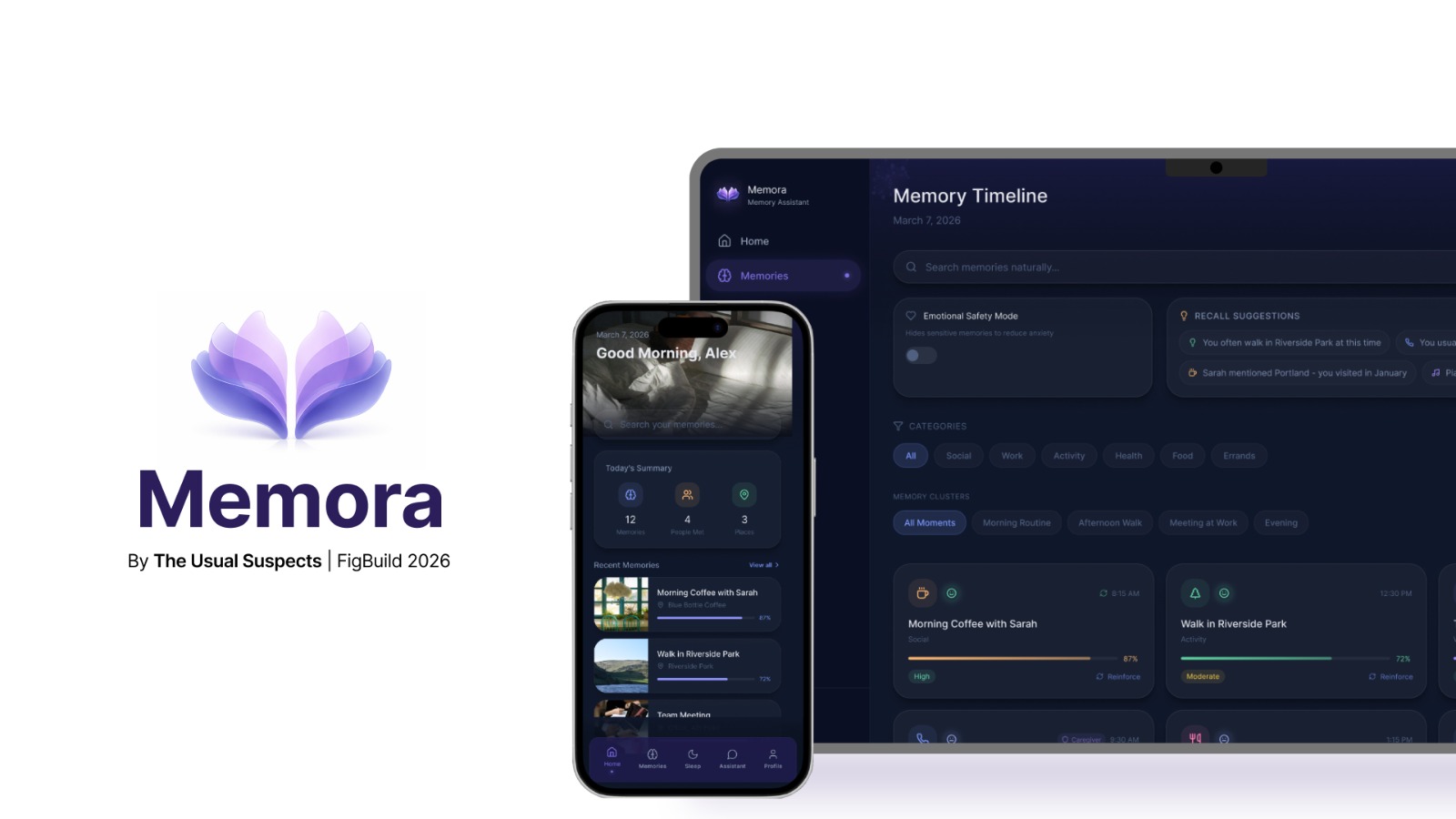
The application presents memories through an interactive timeline, where moments are grouped into meaningful clusters based on activities, locations, and interactions. Instead of scrolling through static records, users can explore their memories through contextual cues such as people met, places visited, and activities performed.
The interface highlights patterns within daily experiences and allows users to rediscover moments through a calm and intuitive browsing experience.
How we designed it
A key focus of this project was creating a user interface that feels reflective rather than overwhelming.
We designed the system around a timeline-based structure, which mirrors how people naturally recall events over time. Each memory appears as a card within a timeline, allowing users to quickly understand when something happened and what was associated with it.
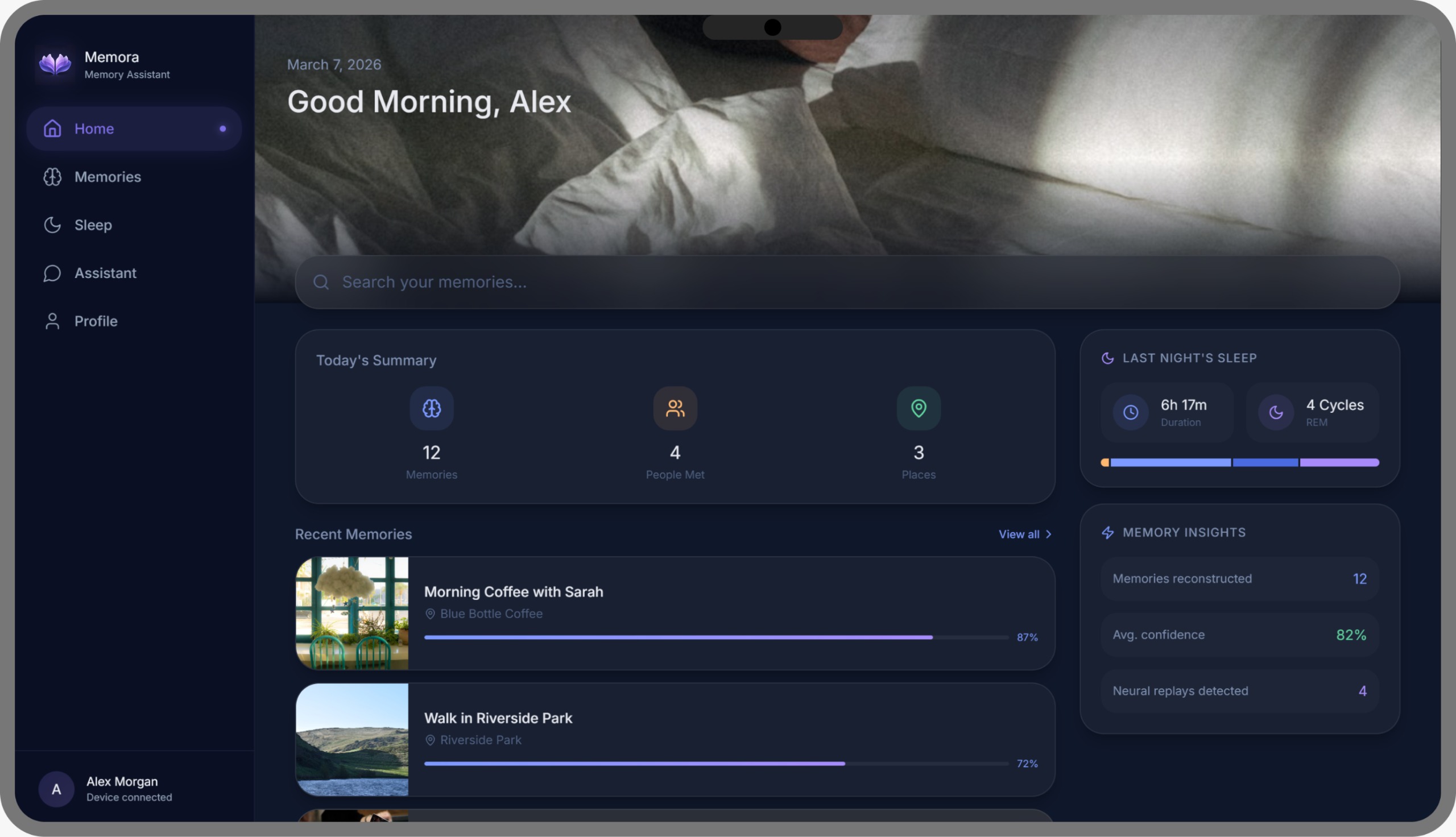
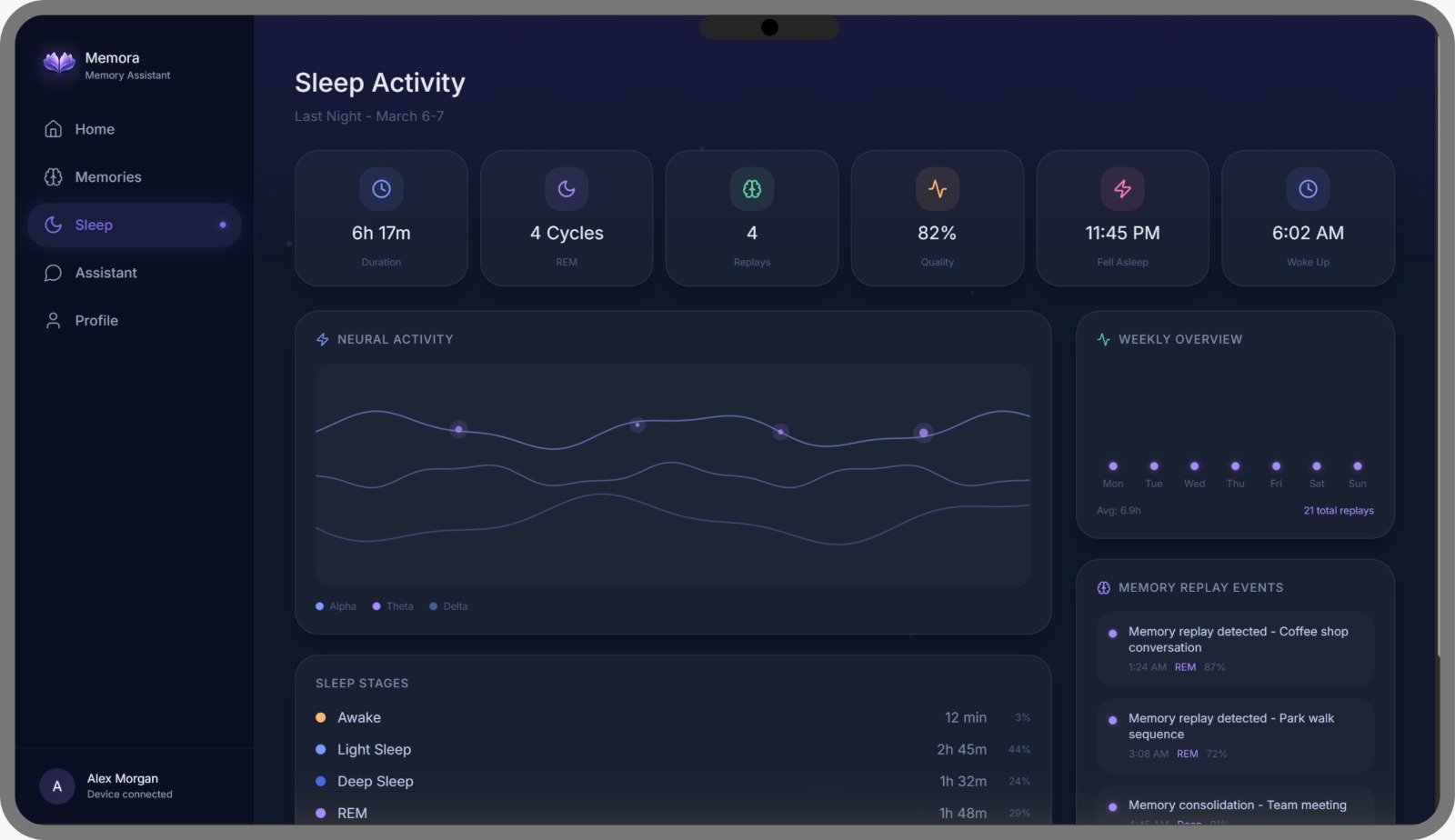
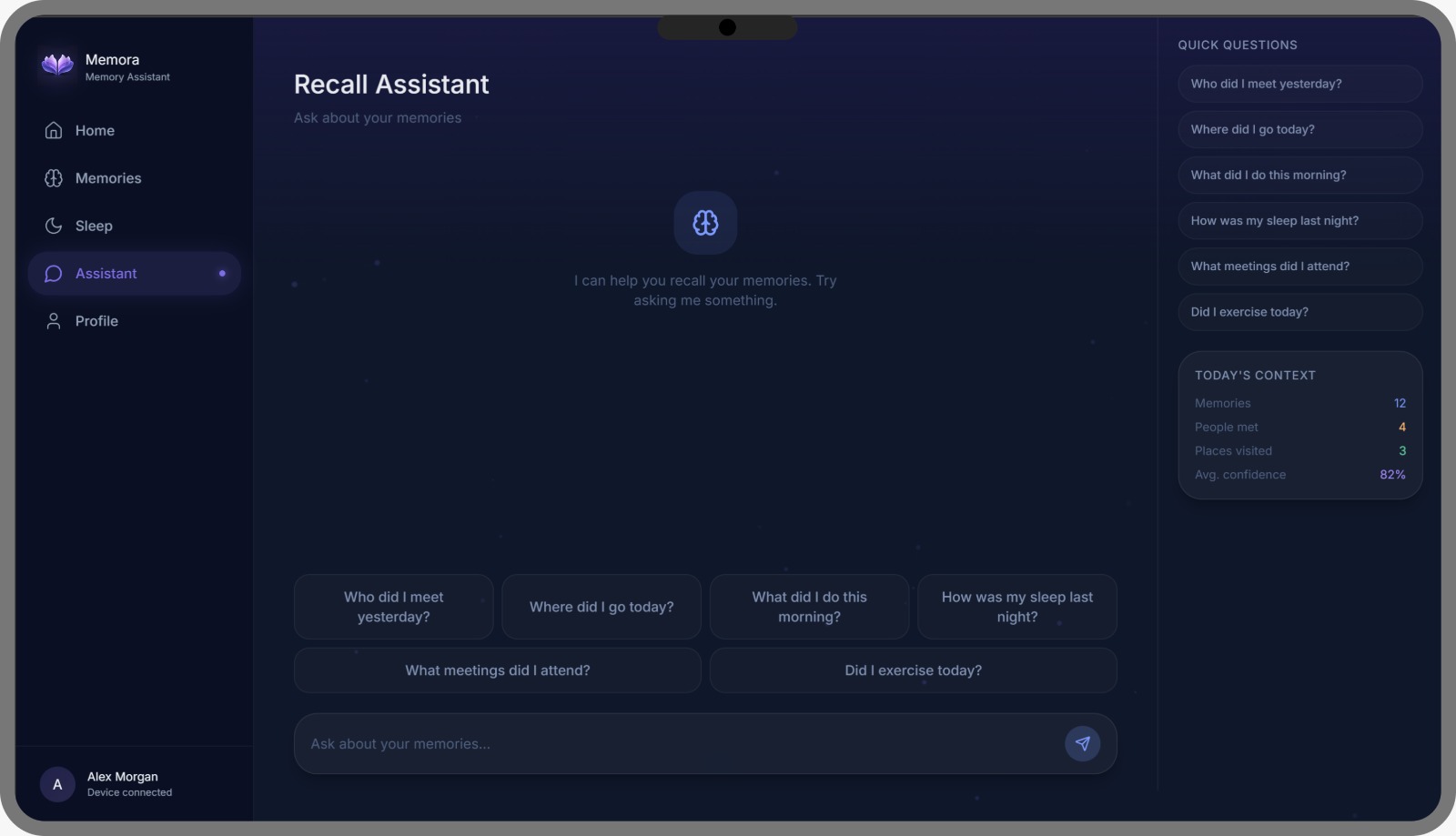
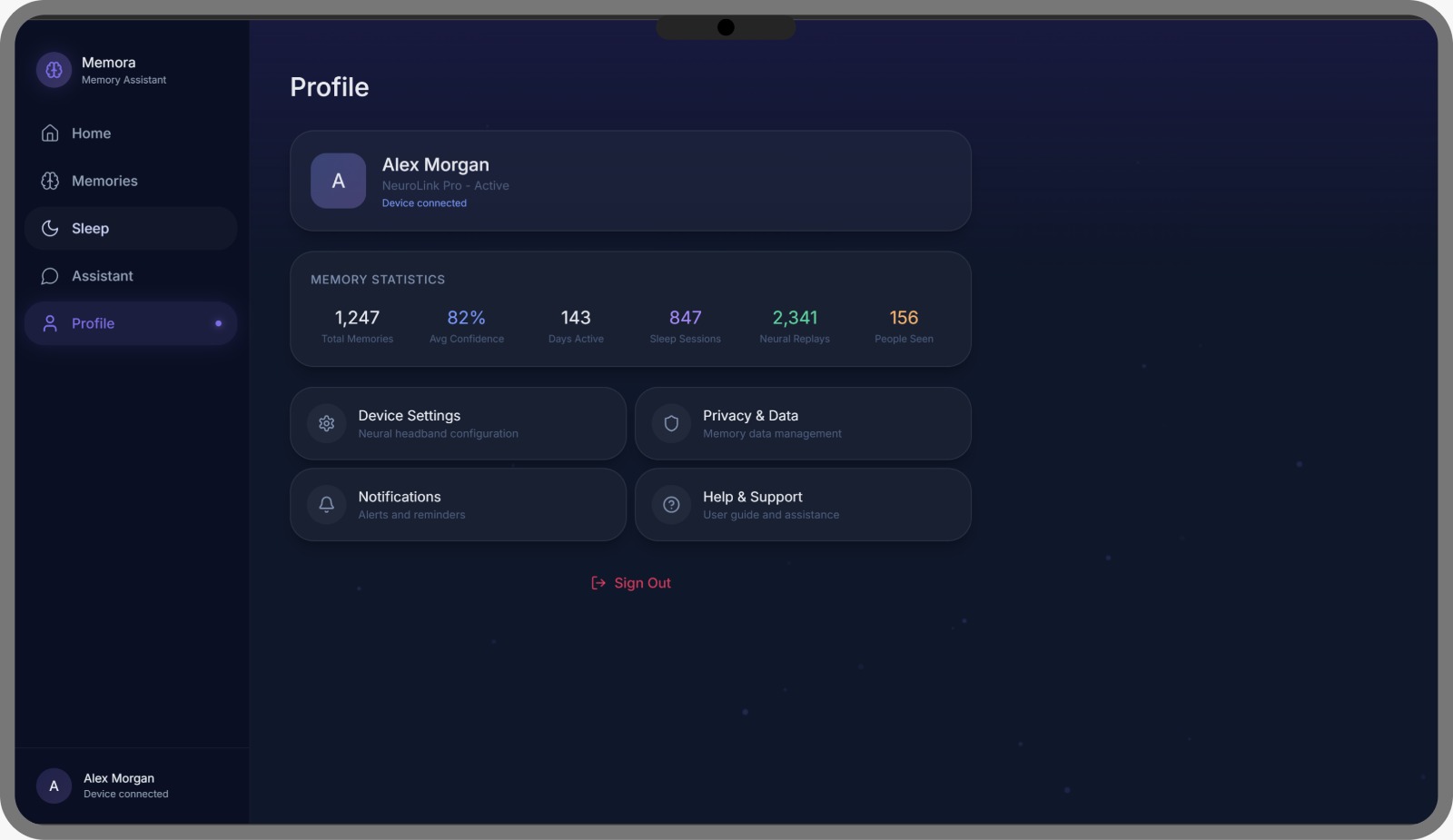
The layout uses a sidebar navigation system that separates different aspects of the experience, such as memories, sleep patterns, and insights. This helps users move between different sections of the application without losing context.
To improve usability, the interface prioritizes:
• Clear visual hierarchy • Minimal cognitive load • Contextual cues such as icons, locations, and timestamps • Easily scannable memory summaries
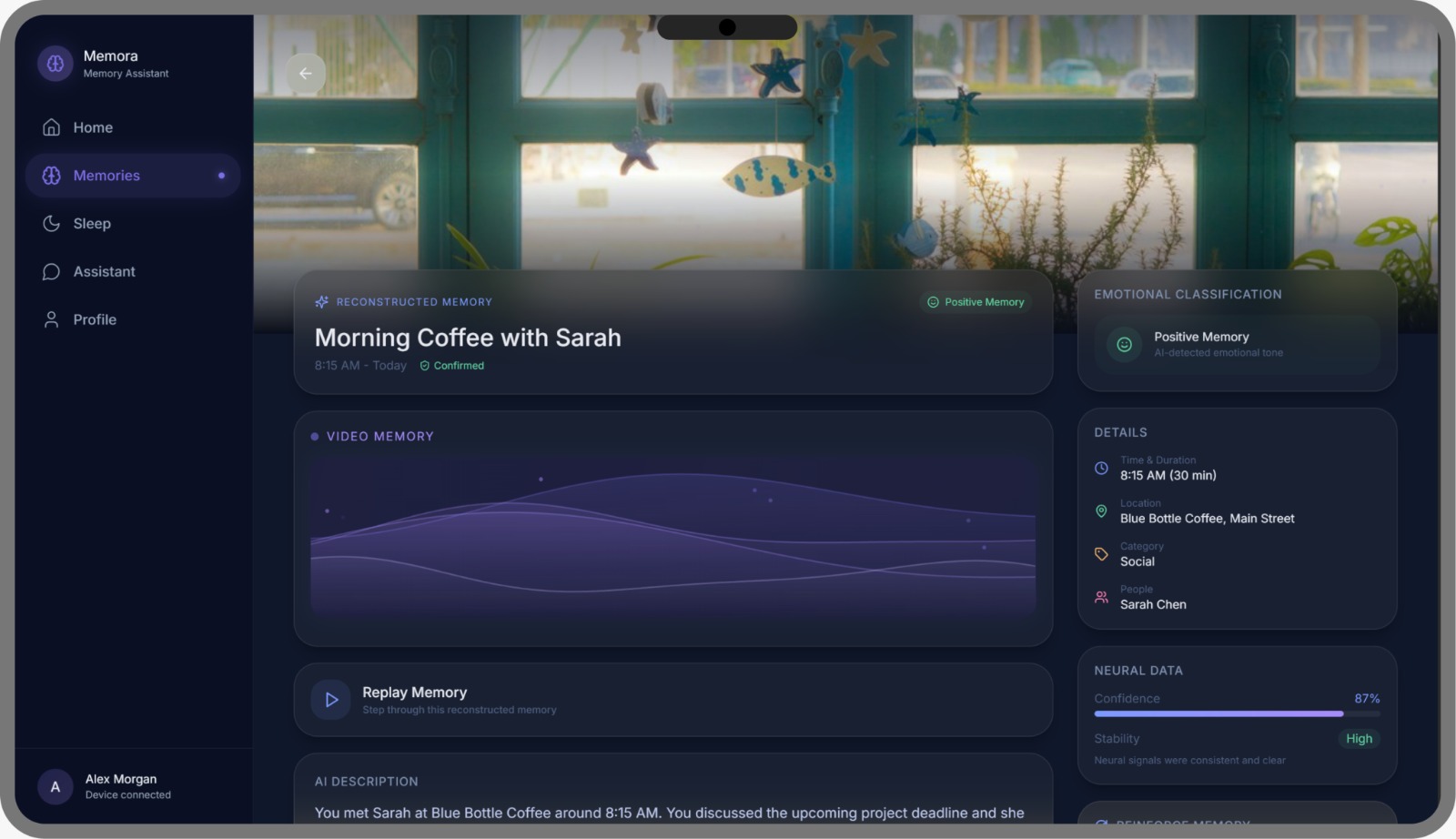
Each memory card provides a short description, contextual details, and a visual progress indicator that represents the clarity or strength of the memory.
User Experience Considerations
The interface was intentionally designed with a calm and ambient visual style. Since the application deals with personal memories, we wanted the experience to feel reflective rather than distracting.
The design system uses:
• Soft gradients and dark backgrounds to reduce visual strain • Rounded components that create a friendly and approachable interface • Clear typography to ensure readability across devices • Consistent spacing and layout structures to make navigation predictable
These choices help create an environment where users can comfortably explore their memories without feeling overwhelmed by information.
Challenges we ran into
One of the main challenges was designing a system that organizes memories without making the interface feel complex.
Memories often contain many layers of information such as people, places, activities, and time. Presenting all of this data while maintaining a clean and understandable interface required several iterations of layout and interaction design.
Another challenge was ensuring that the timeline remained visually structured even as more memories were added. We addressed this by grouping experiences into clusters and emphasizing the most relevant details within each card.
What we learned
Through this project we learned how important clarity and emotional sensitivity are when designing tools related to personal experiences.
Memories are deeply personal, so the interface must support reflection rather than simply display data. This required us to think carefully about visual hierarchy, interaction patterns, and how users navigate through information.
We also learned that good UX design is about simplifying complexity while still preserving meaningful context.
What's next for Memora
Future improvements would focus on expanding the ways users can explore their memories. This includes better filtering, deeper contextual insights, and improved ways of connecting related experiences.
We also plan to refine the interface to make memory exploration even more seamless and personal.
Our long-term vision is to develop Memora into a thoughtful digital space where people can revisit and understand their experiences in a meaningful and intuitive way.
Built With
- chatgpt-5.2
- figjam
- figma
- figma-make-(claude-opus-model)
- figma-slides
- prompt-engineering
- prototyping
- ui/ux-design


Log in or sign up for Devpost to join the conversation.