-
-

Memora
-
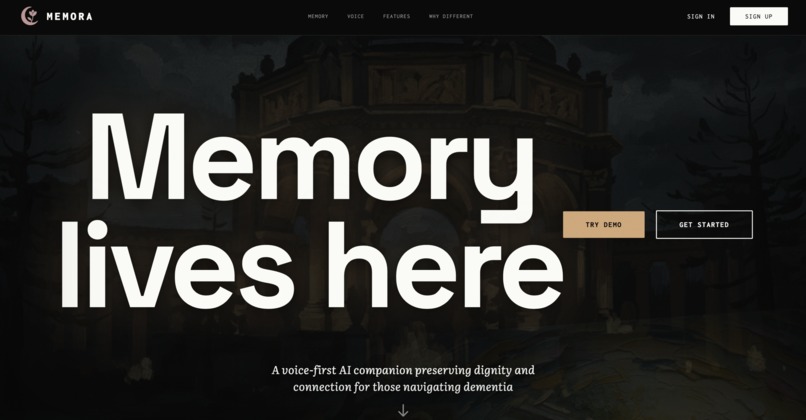
Landing
-
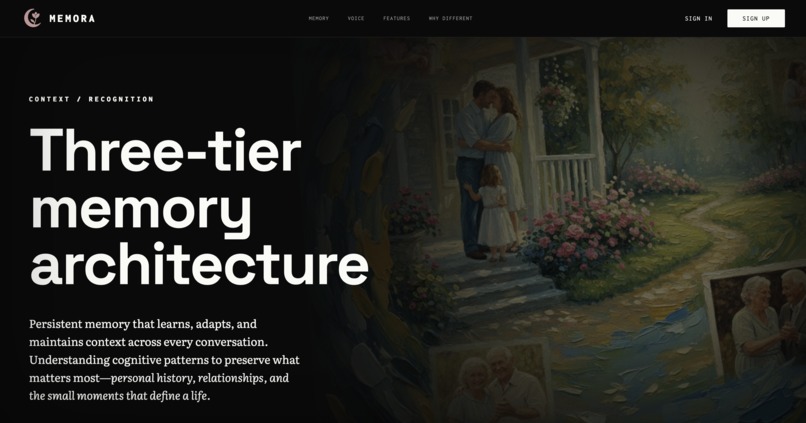
Three-tier Memory Architecture
-
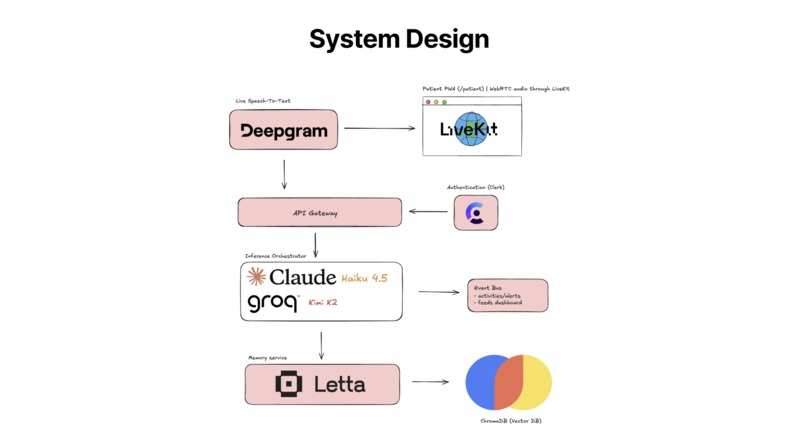
System Design
-
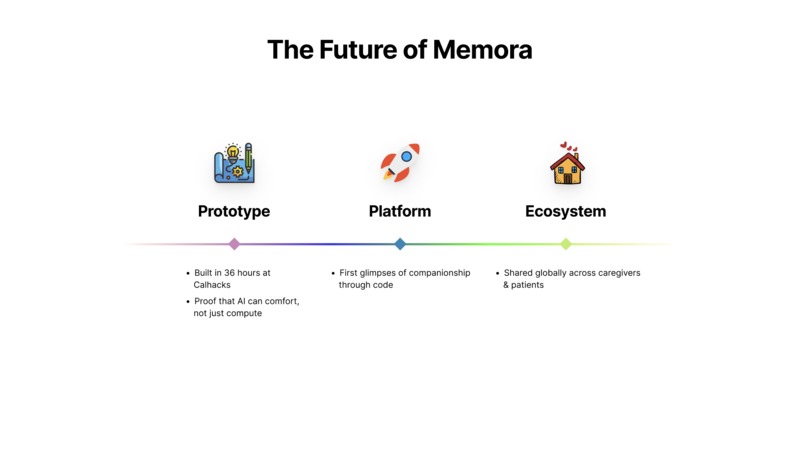
Future of Memora
-
Sponsors

Inspiration
When someone you love begins to lose their memory, care often becomes a constant tracking instead of real connection. Families feel stressed and helpless, while people with dementia often feel watched and confused.
We wanted to change that.
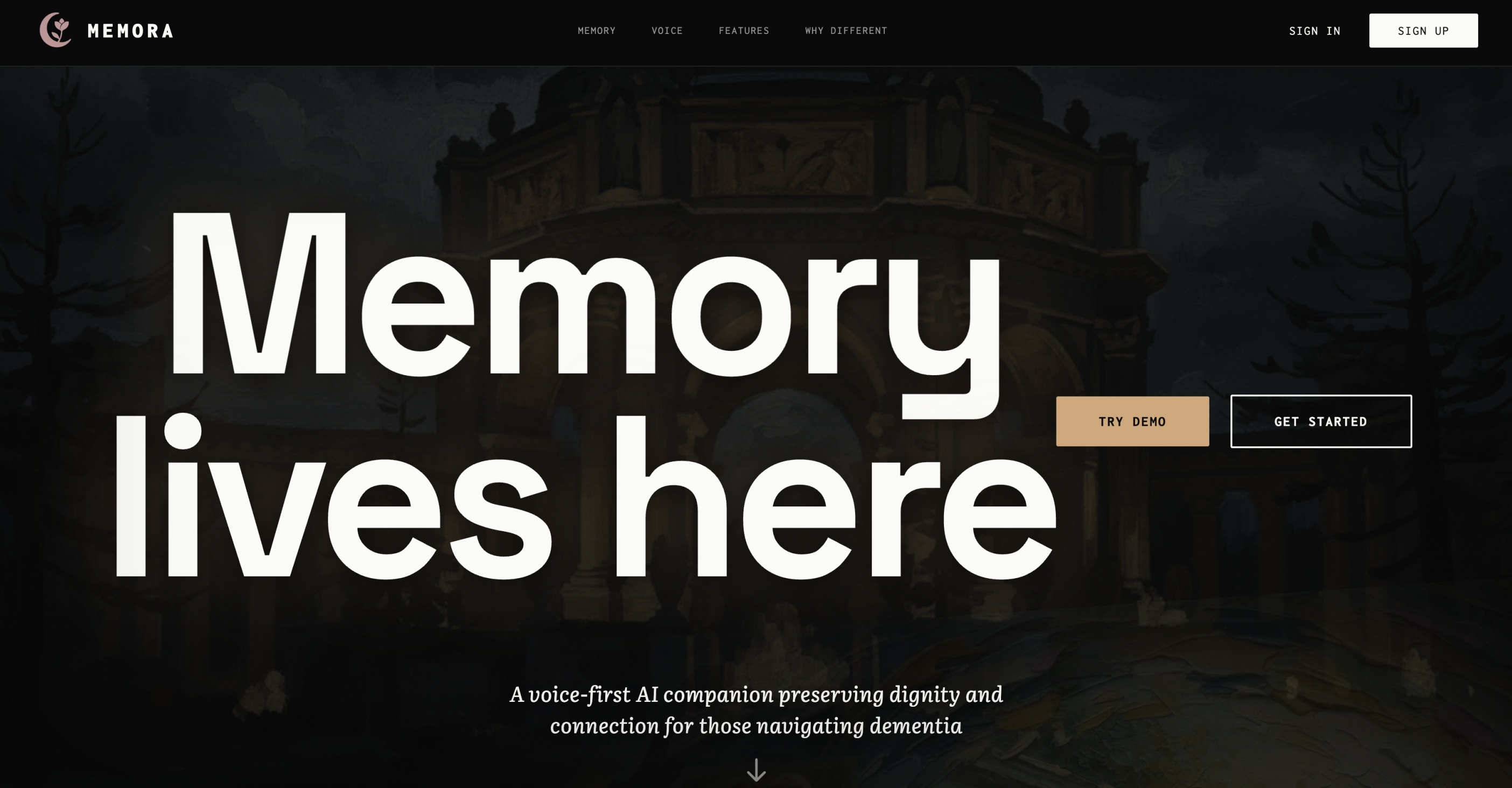
Memora brings empathy back into memory care. It’s a voice-first AI companion that listens, remembers, and supports both patients and caregivers without crossing the line between help and surveillance.
What it does
Memora is a full-stack dementia care app with two connected sides:
Patient Interface – a calm, voice-based companion that answers questions, gives reminders, and helps with orientation like the time, date, or weather. Patients can control what caregivers see through privacy settings.
Caregiver Dashboard – a web dashboard that shows memory insights, alerts, and activity summaries - only what the patient has agreed to share. Each AI action also includes a simple explanation for full transparency.
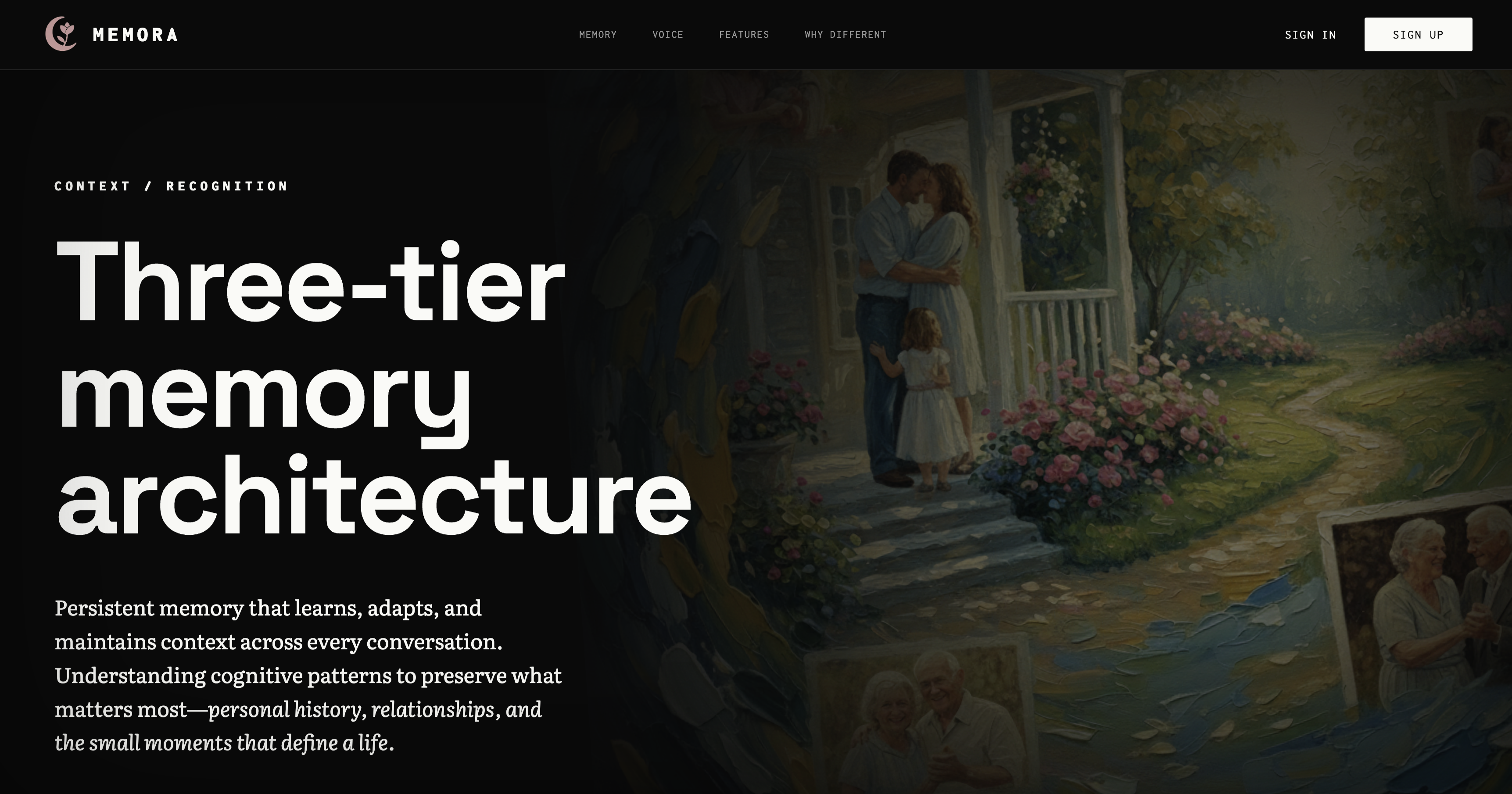
At its heart is Memora’s Three-Tier Memory System:
- Core Memory – who the patient is and how they like to be spoken to.
- Archival Memory – past conversations and moments stored for context.
- Alert Memory – safety and activity tracking, like wandering or fall detection.
Memora focuses on comfort, connection, and clear communication - not data or anything like that.
How we built it
Memora runs on Next.js, React, and TypeScript, styled with Tailwind CSS for a clean and accessible interface.
We built a real backend using Supabase PostgreSQL and Prisma ORM, with 18 API endpoints tested using Vitest. Clerk manages user authentication and role-based access so patients and caregivers see only what’s meant for them.
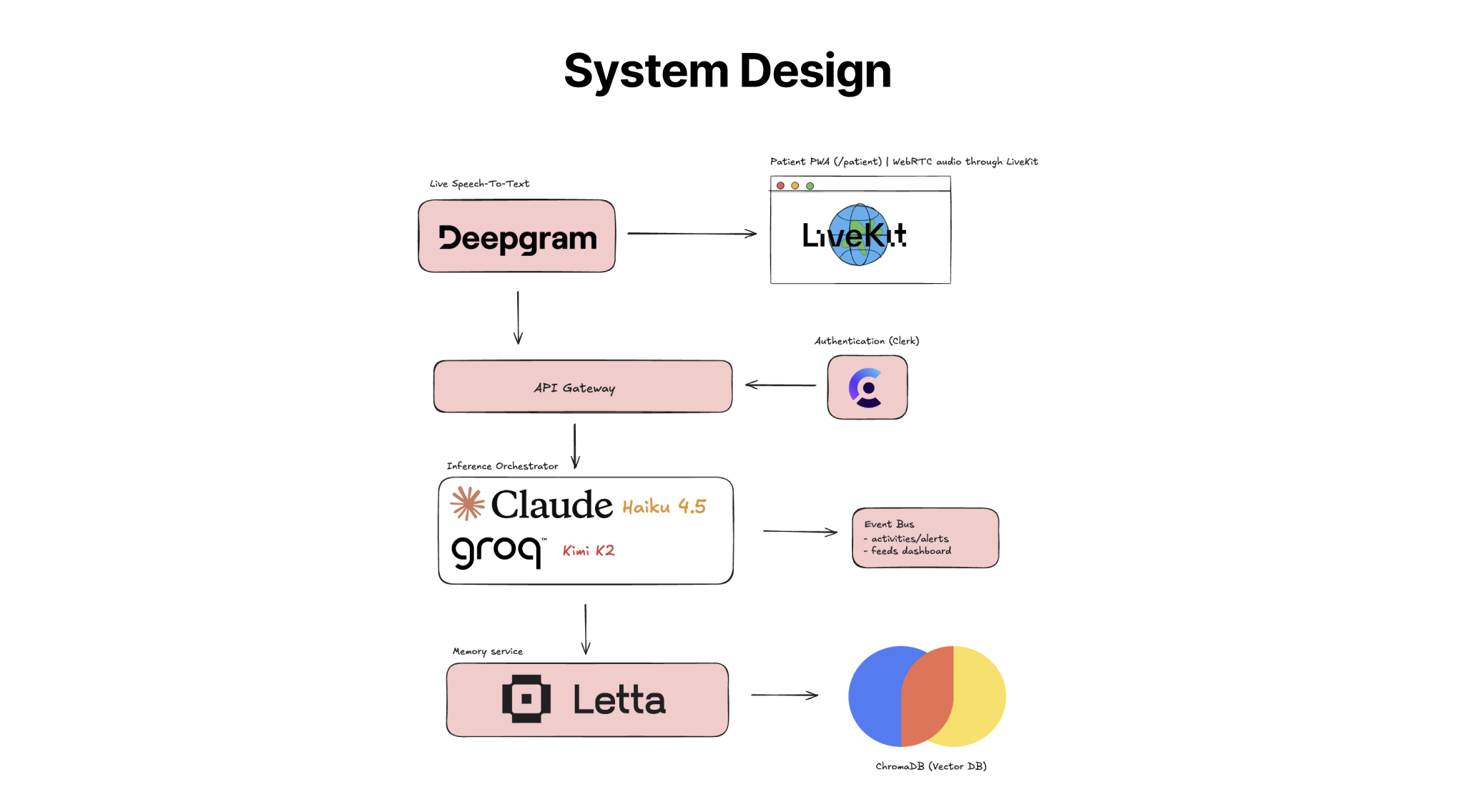
Our AI stack includes:
- Claude Haiku 4.5 (Anthropic) – fast, natural voice replies.
- Groq Kimi K2 – long-term behavioral insights and deep analysis.
- Deepgram – live speech-to-text processing.
- Letta + ChromaDB – persistent memory storage and retrieval.
- LiveKit – ready for real-time audio streaming.
- Clerk – authentication
The entire system is hosted on Vercel and live at https://getmemora.xyz/
Challenges we ran into
Designing a technology for dementia care required a lot of ethical thinking. We had to make sure patients always felt supported and not monitored. We also learned how complex it can be to connect many APIs while keeping everything fast, private, and easy to use. Making the voice interface feel calm and human took several design trials and lots of testing.
Accomplishments that we're proud of
- Solving a real problem that affects families everywhere.
- Building a full working app with real APIs and a deployed backend.
- Designing the Three-Tier Memory System, based on how people actually remember.
- Creating ethical, human-centered design, giving patients control and caregivers peace of mind.
What we learned
- The importance of privacy and consent in healthcare technology.
- How to use tools like Groq, Claude, Deepgram, and Letta together in one system.
- That small details, like voice tone, color, and pacing, can make a big emotional difference.
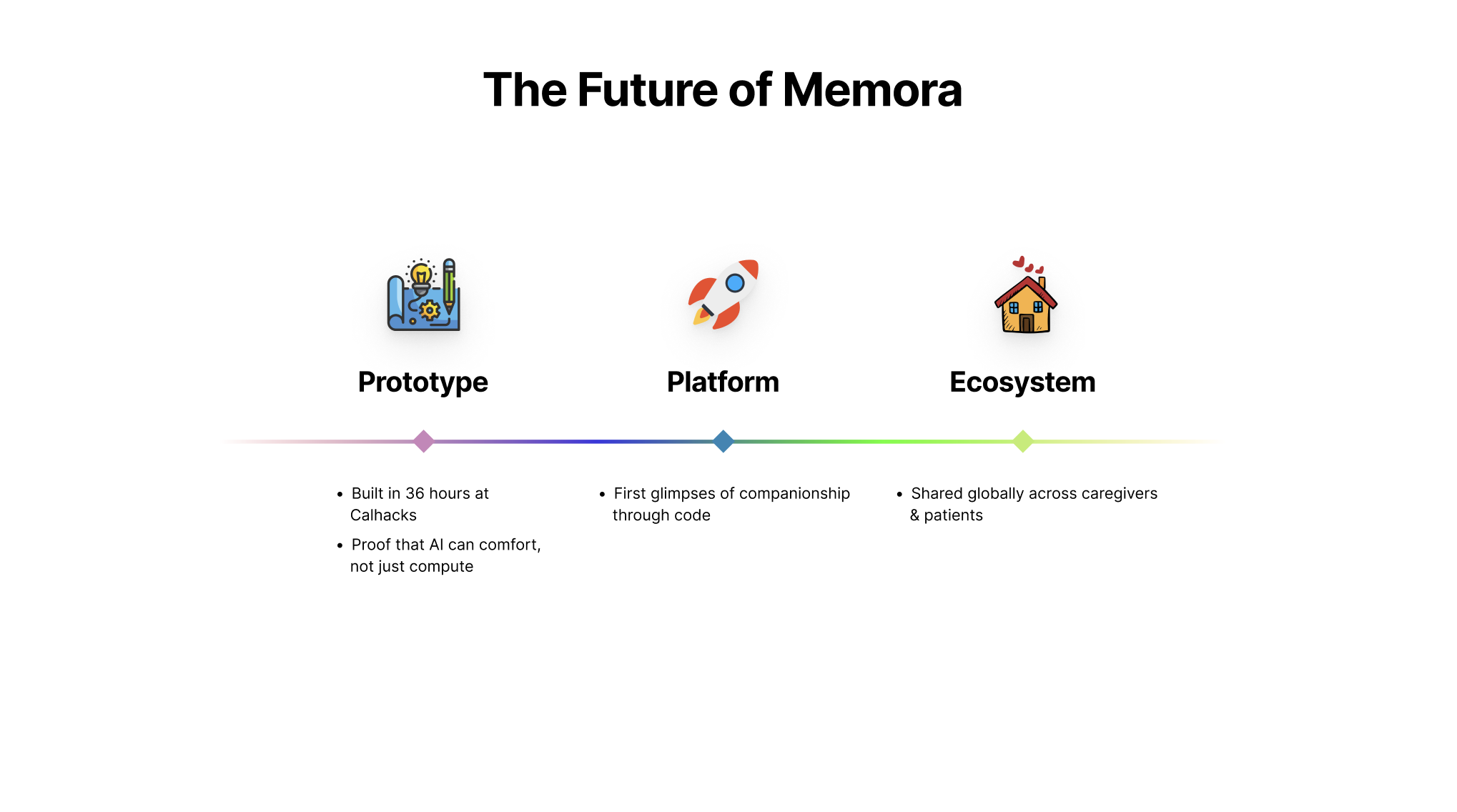
What's next for Memora
We hope to see it used in hospitals, care homes, and family settings, giving caregivers peace of mind and helping patients feel calm, safe, and cared for. In the future, Memora could grow beyond dementia care becoming a friendly voice companion for anyone who needs support, comfort, or help remembering what matters most.
-- Memora isn’t just about remembering - it’s about never forgetting the person behind the memory. --
Built With
- chromadb
- claude
- clerk
- deepgram
- groq
- letta
- livekit
- next.js
- react
- supabase
- tailwind
- typescript


Log in or sign up for Devpost to join the conversation.