The Story Behind Memora AI
The idea for Memora AI came from a problem I personally experienced many times after university tours and other events. Hundreds, sometimes thousands, of photos would be taken by different people. But sharing and finding those photos afterward was always a hassle. Photos were scattered across Messenger groups, Google Drive links, and individual phones. Finding the pictures you were actually in often meant scrolling through hundreds of images manually.
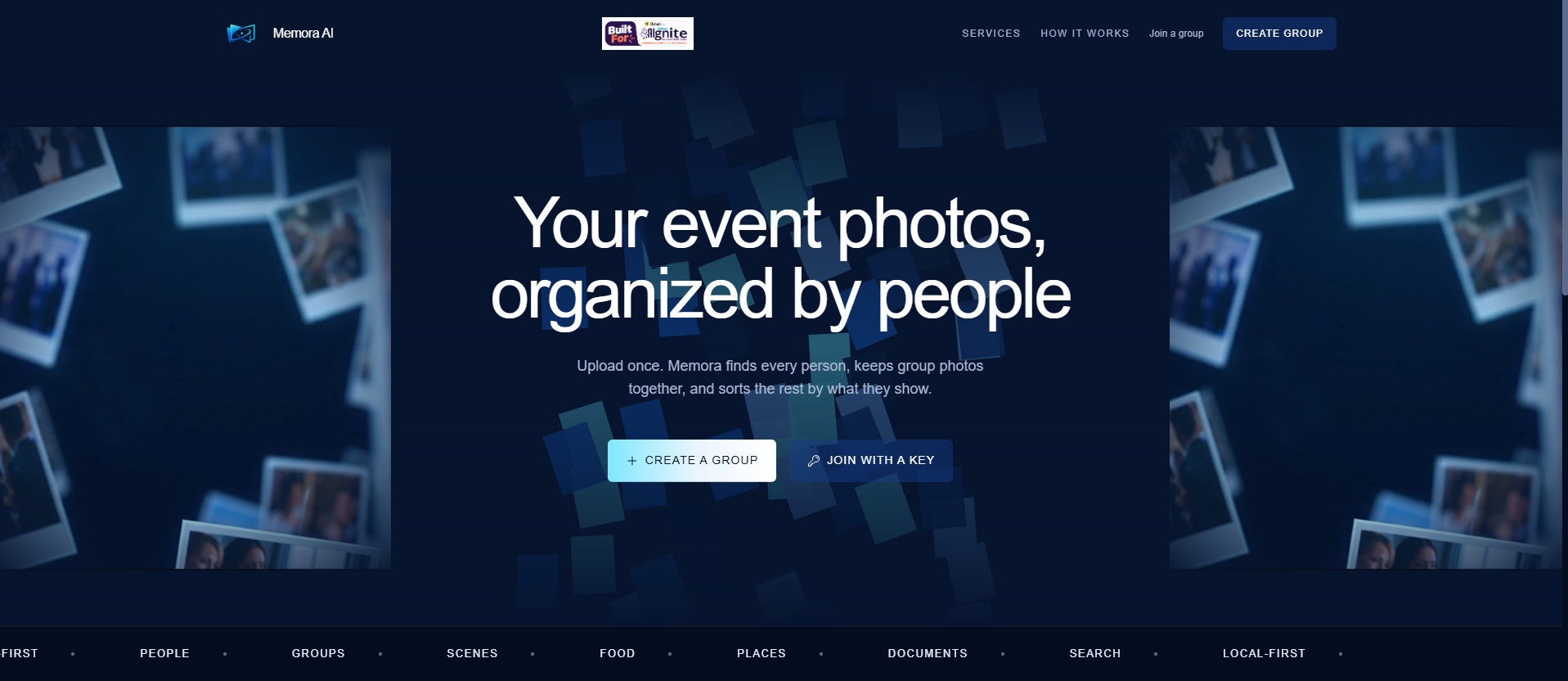
I started wondering: What if everyone could upload their event photos to one shared gallery, and AI could automatically organize them so people could easily find and download their pictures?
That idea became Memora AI.
How I Built It
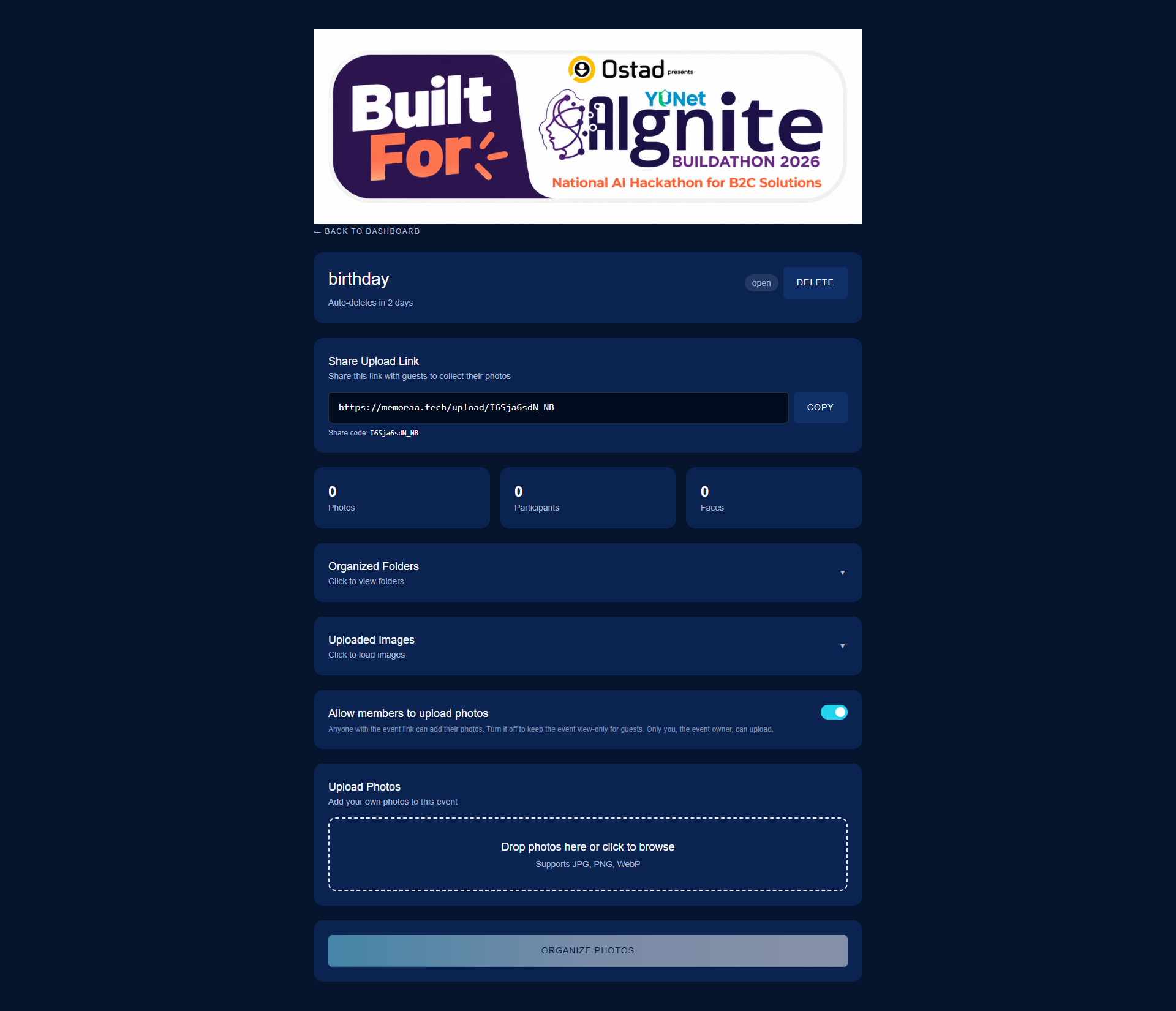
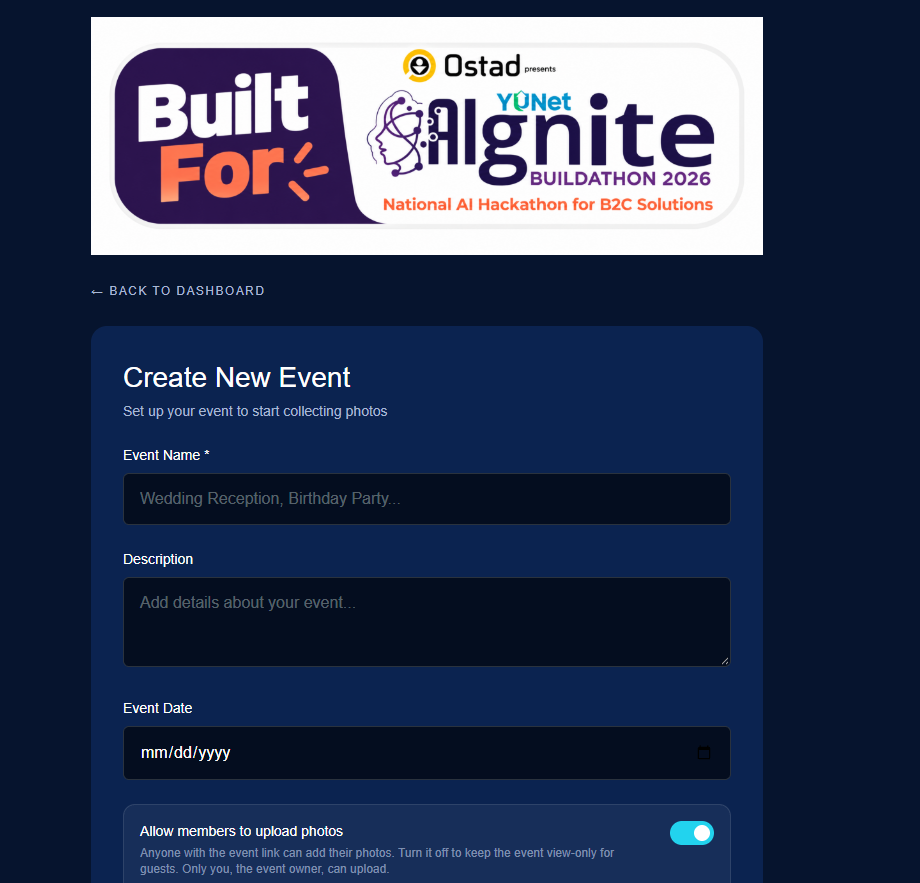
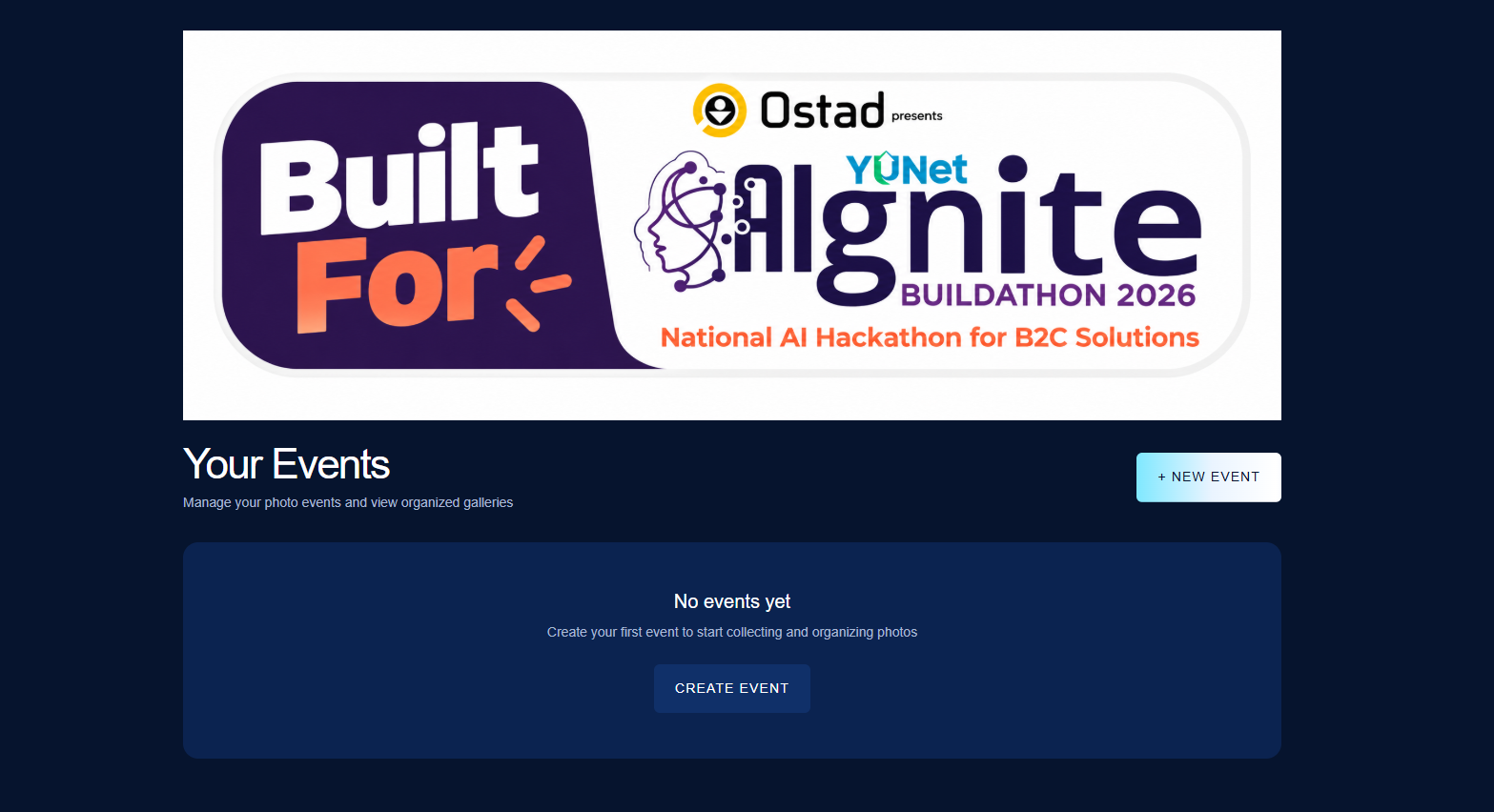
I built Memora AI around a simple workflow. An organizer creates an event and shares a single event link. Anyone with the link can join and upload photos to the shared gallery.
Behind the scenes, the computer vision pipeline detects faces, extracts facial representations, and uses hierarchical clustering to group visually similar faces into separate folders. Instead of manually sorting thousands of pictures, participants can browse the automatically generated face-based folders and download relevant photos.
Building this required bringing together backend engineering and computer vision into one working pipeline.
Challenges I Faced
The biggest challenge was building the complete computer vision pipeline on the backend. Getting individual components to work was one thing; making the entire process work reliably with a large collection of real-world event photos was much harder.
Achieving face grouping quality comparable to the experience people expect from platforms like Google Photos was particularly challenging. Variations in lighting, camera angles, facial expressions, image quality, and crowded group photos made the problem even more complex.
I had to experiment with different approaches, debug the pipeline, and think carefully about how face detection, feature extraction, and hierarchical clustering could work together.
What I Learned
Memora AI taught me that building an AI product is much more than training or integrating a model. The real challenge is turning computer vision into a reliable product that solves an actual problem.
I learned a lot about backend architecture, computer vision pipelines, face embeddings, clustering, and handling real-world image data. Most importantly, I learned to approach AI from a product perspective: start with a problem people genuinely experience, then build technology around making that experience better.
Memora AI is my attempt to make sharing and finding event memories effortless, starting with the event culture I know best: Bangladesh.
Built With
- fastapi
- javascript
- mysql
- numpy
- python
- react
- reddis

