-
-
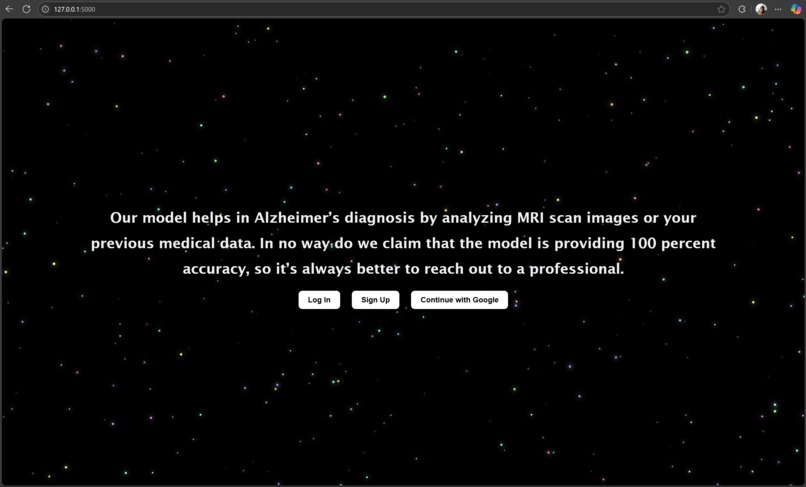
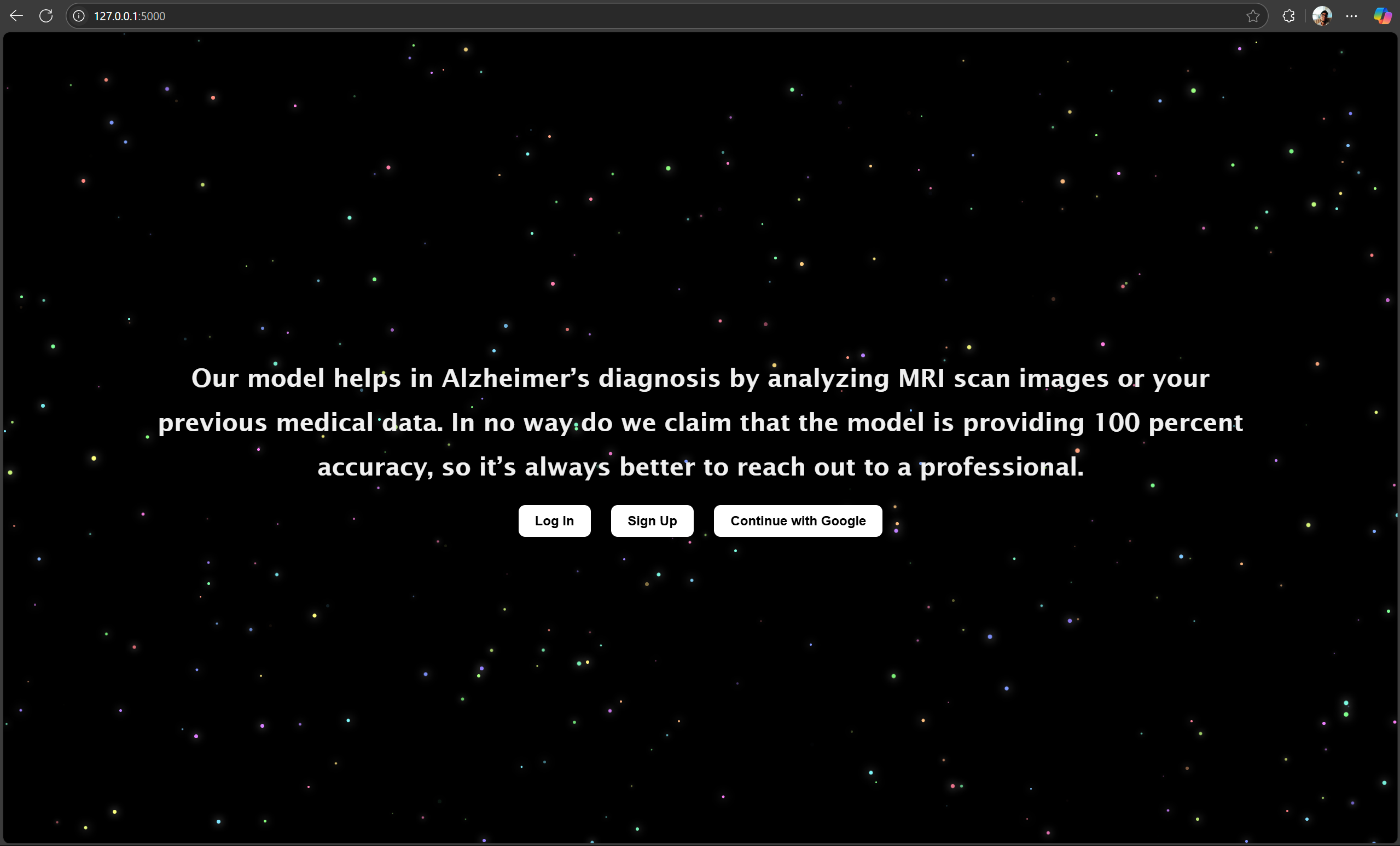
Login And Sign Up Page
-
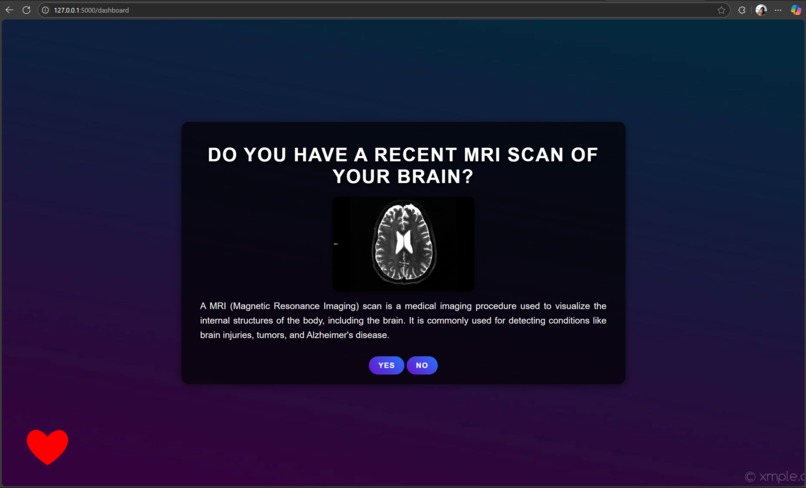
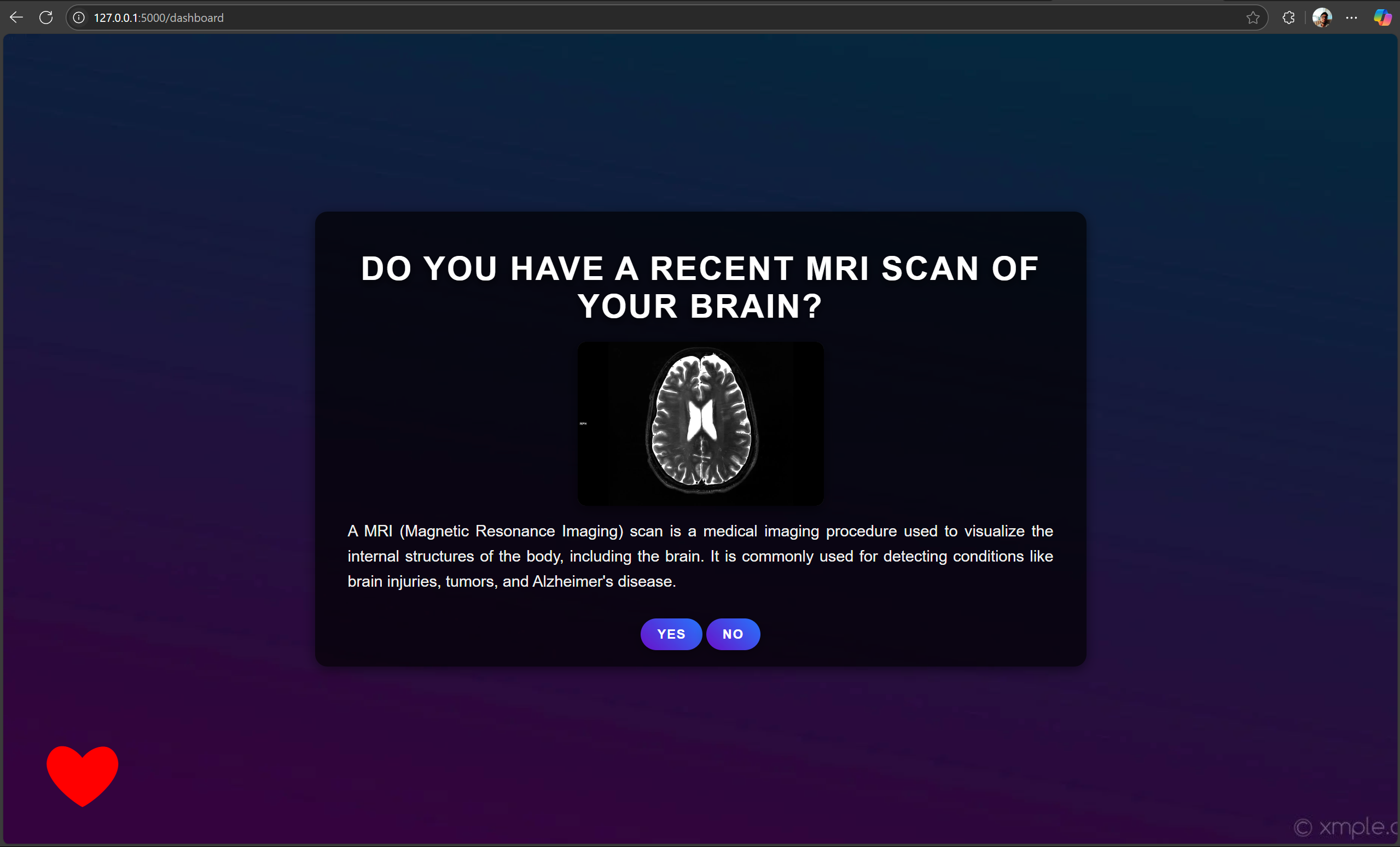
Dashboard page
-
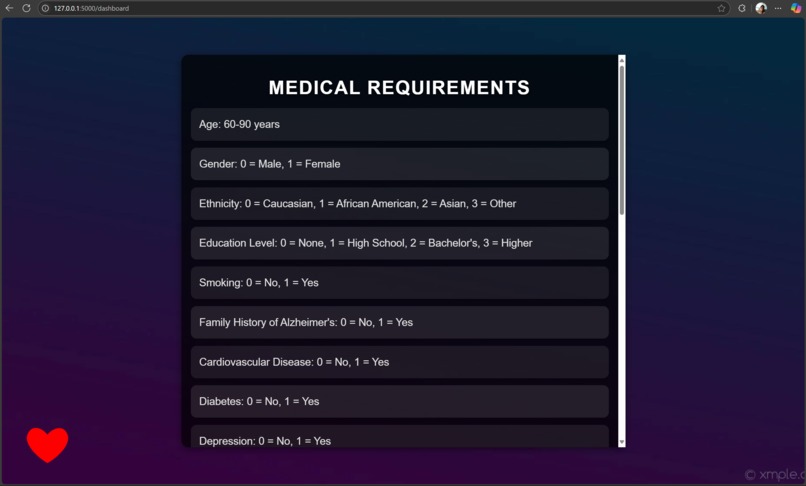
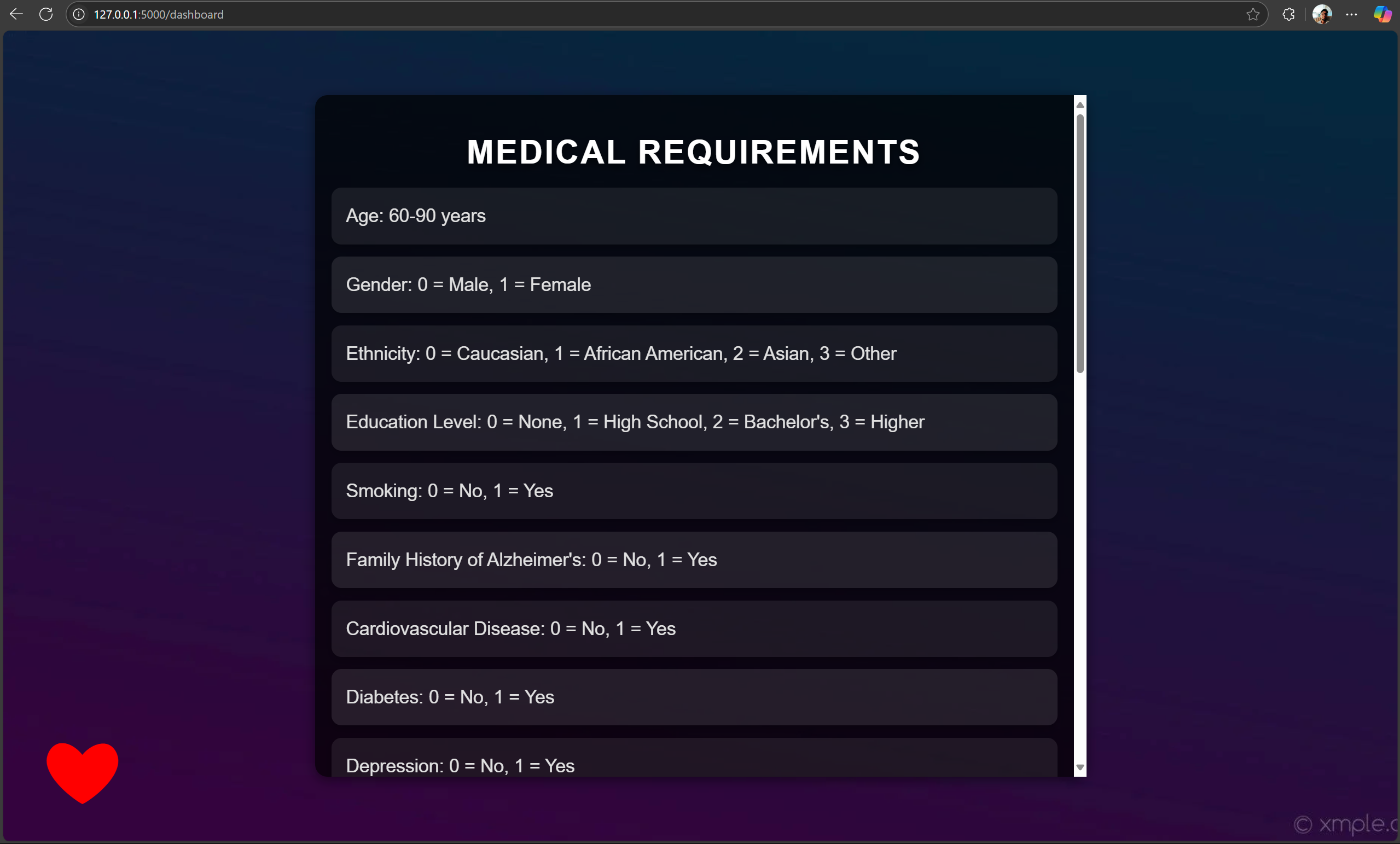
Medical requirements page
-
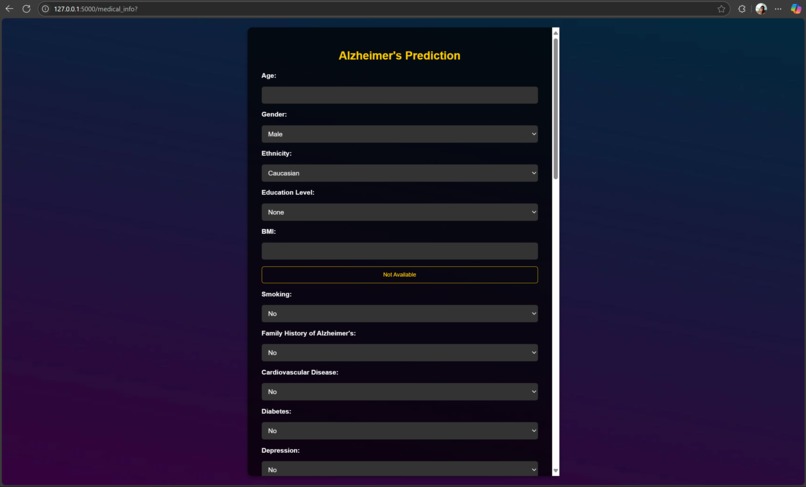
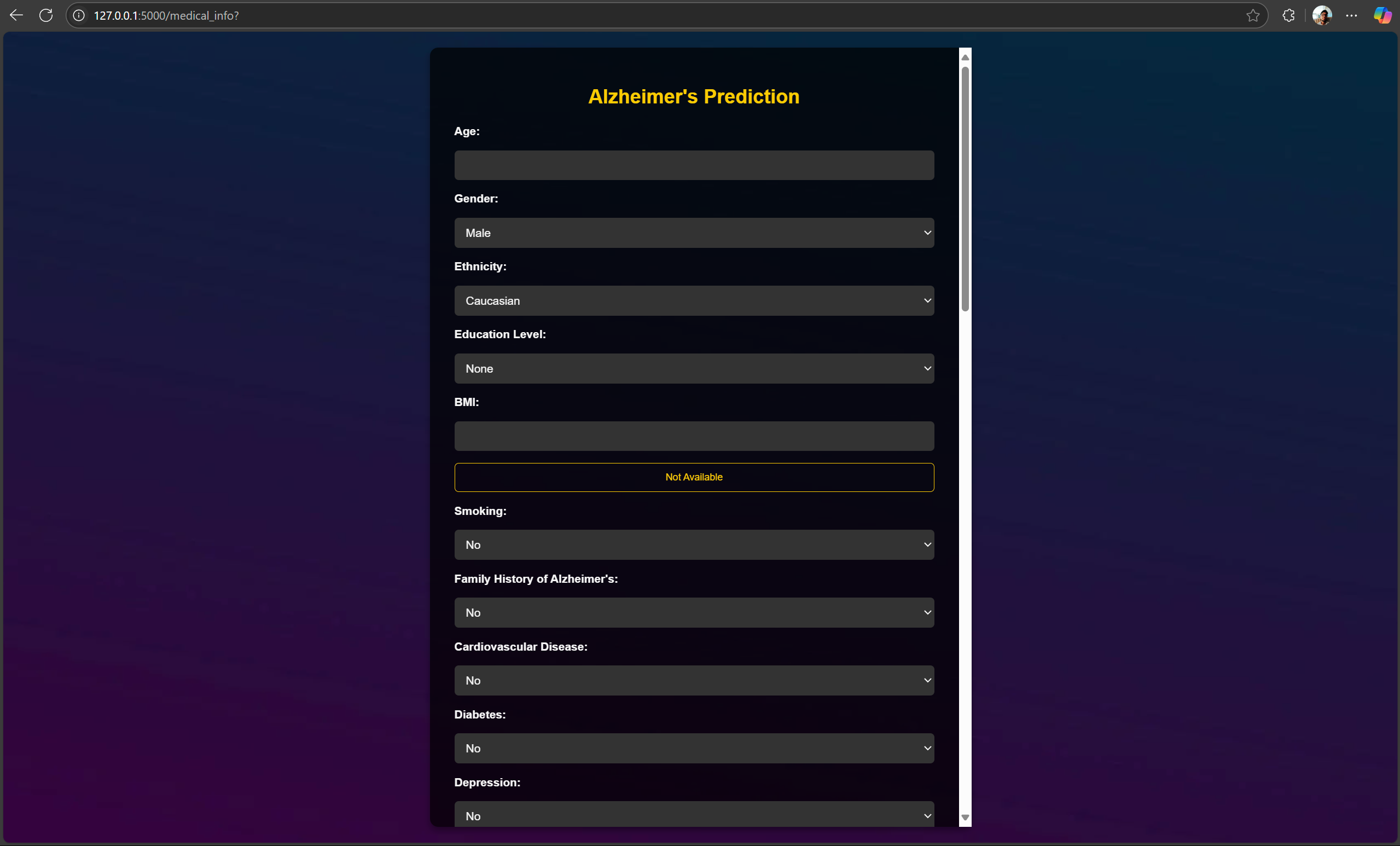
Alzheimer prediction page
-
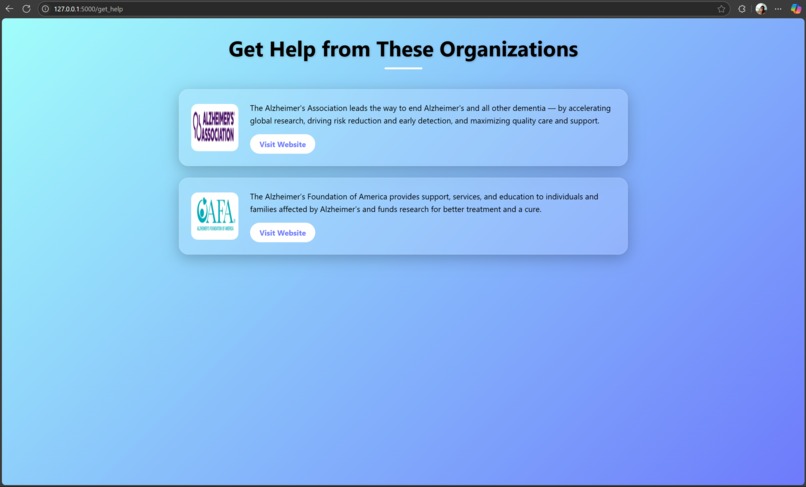
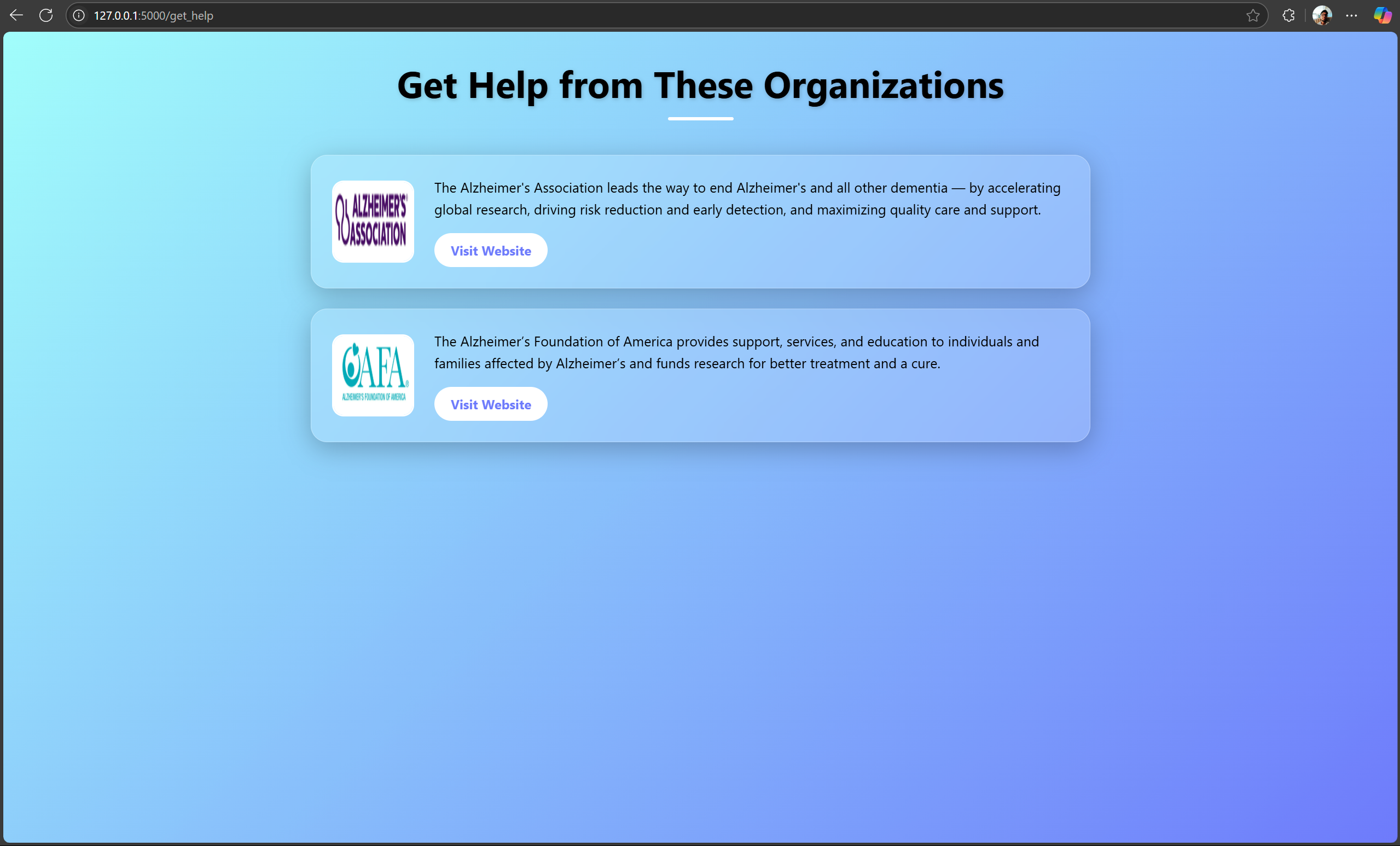
Get Help Page
-
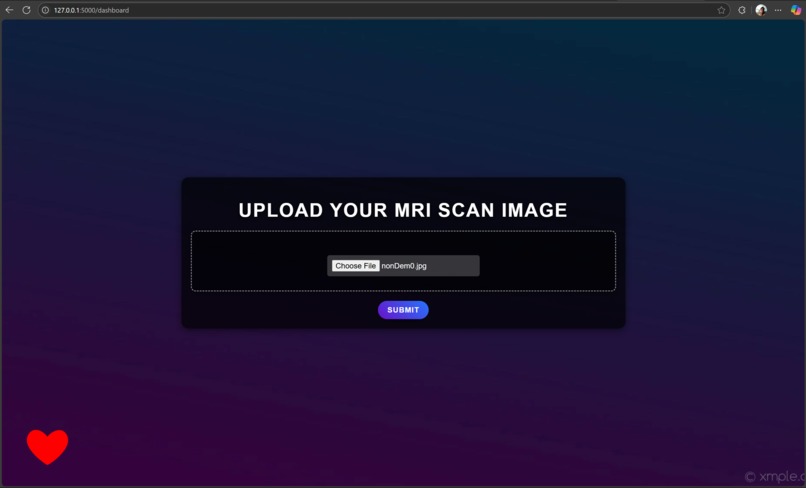
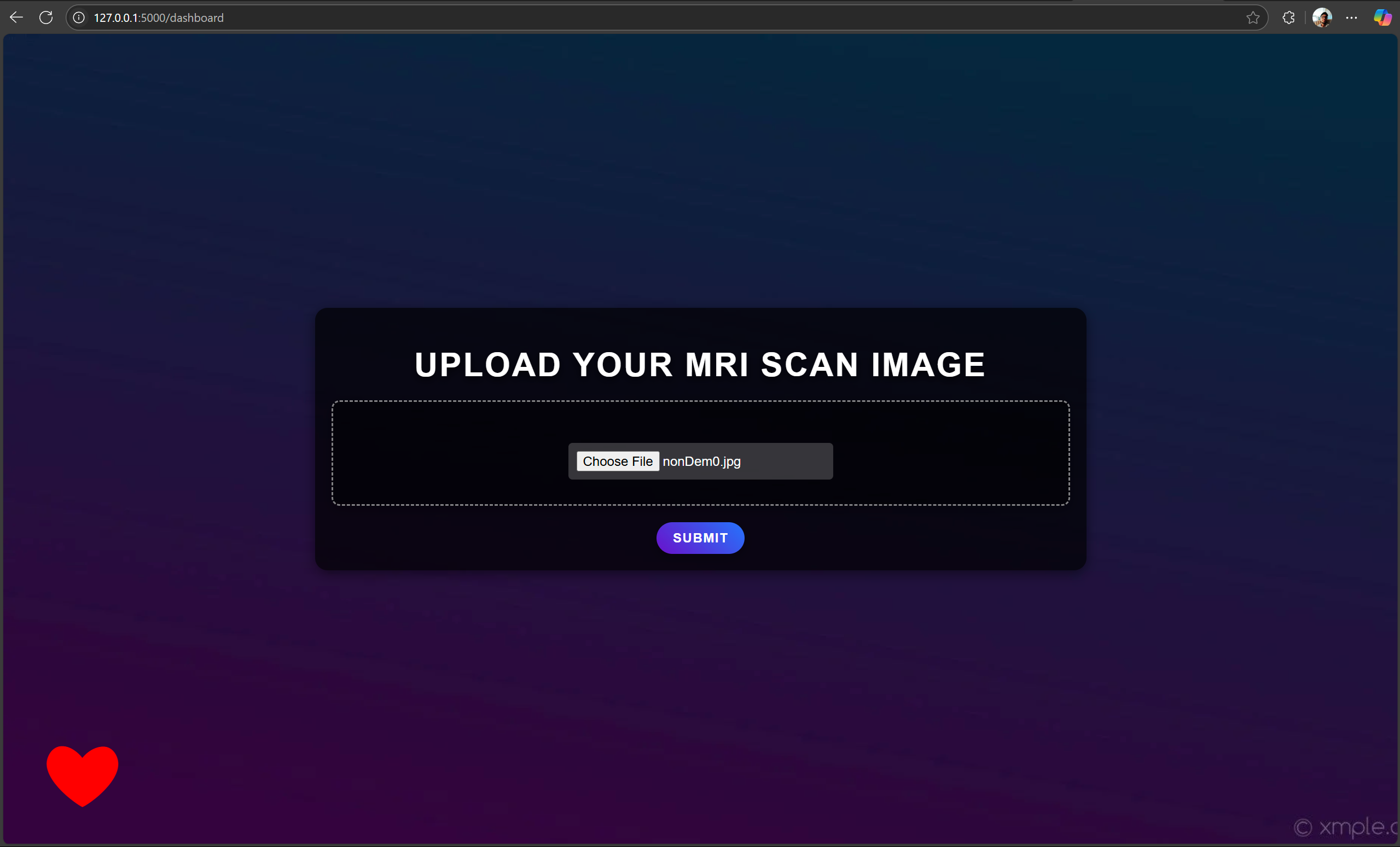
Upload your image page
-
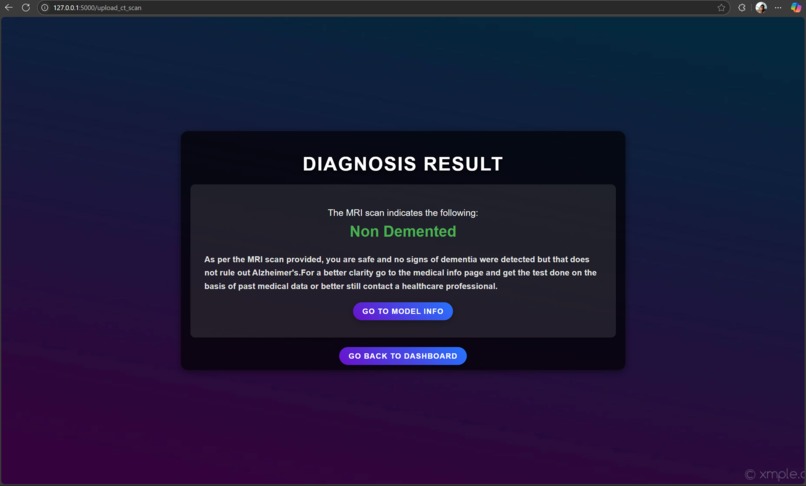
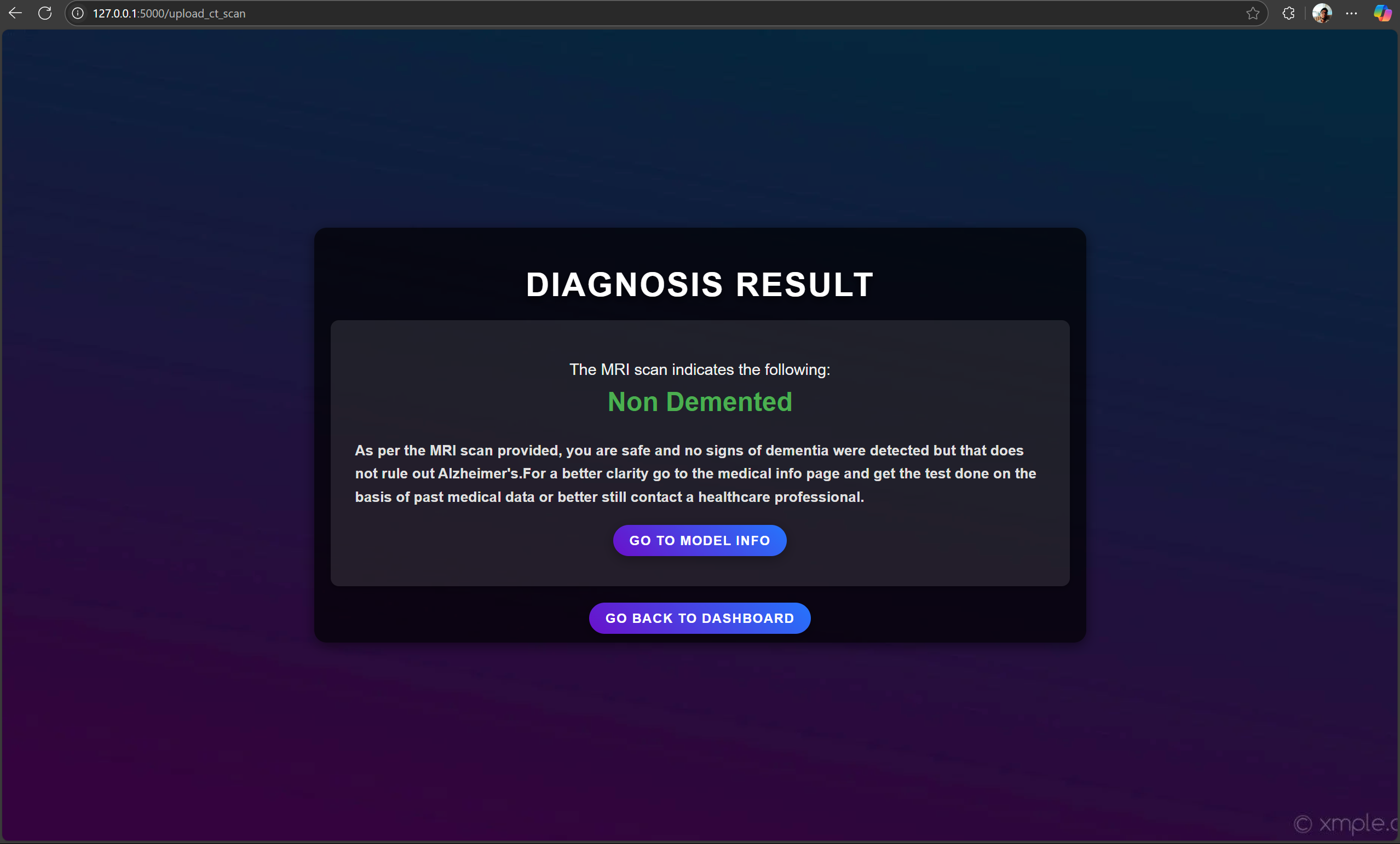
Non Demented Diagnosis
-
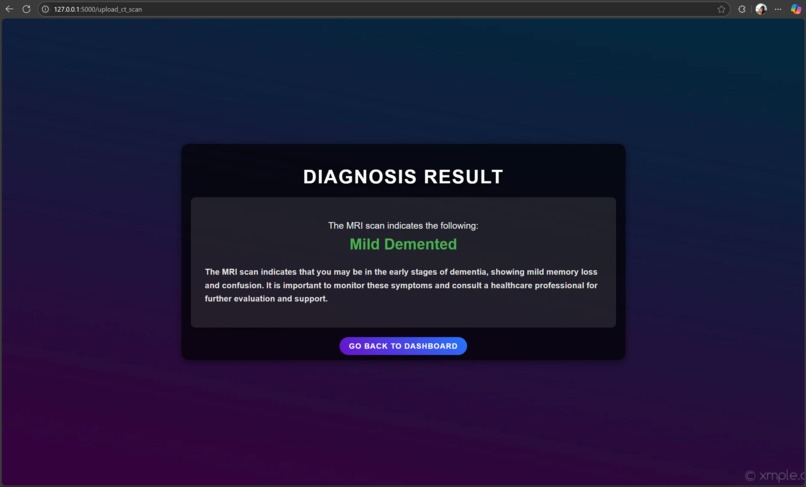
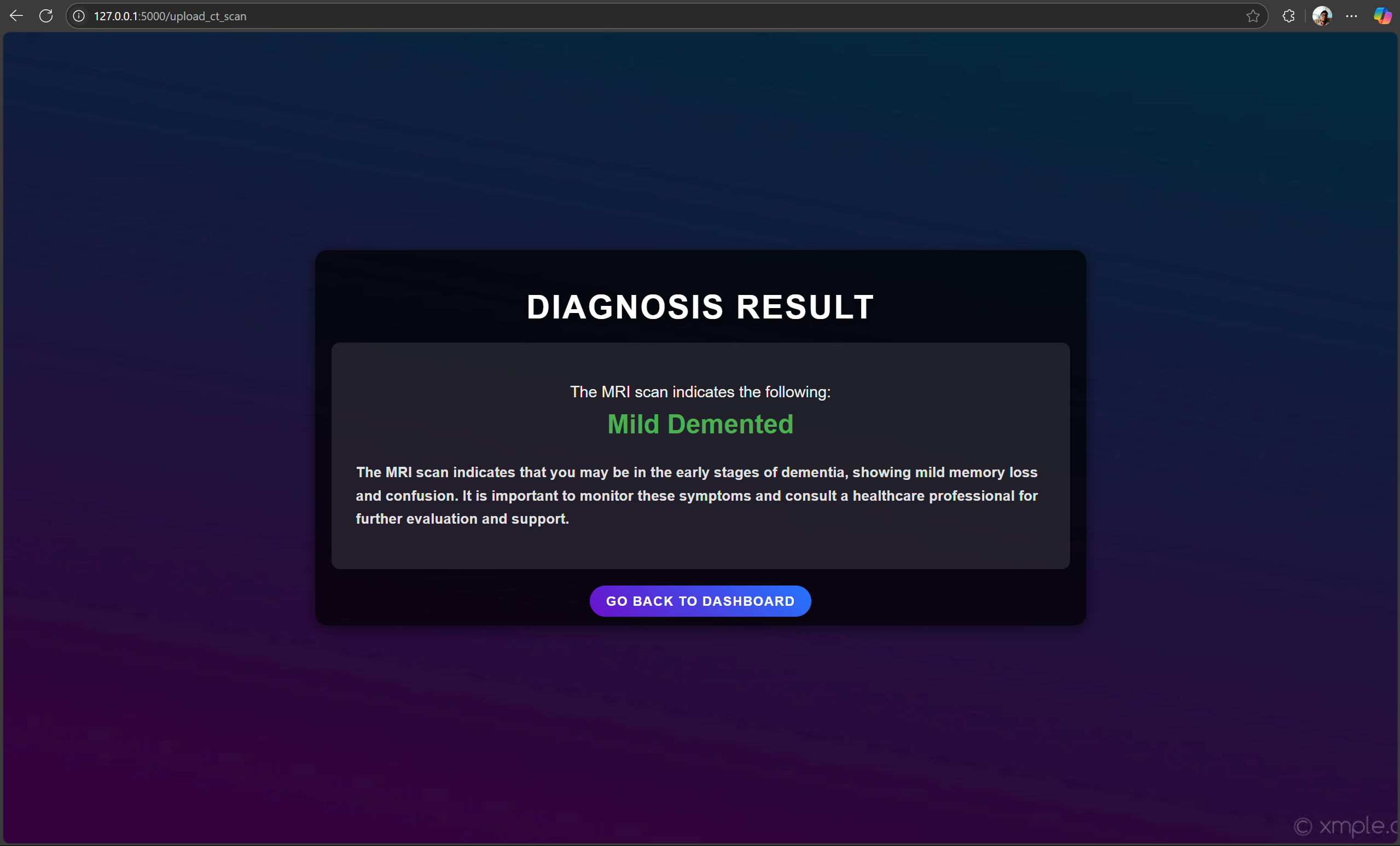
Mild Demented Diagnosis
-
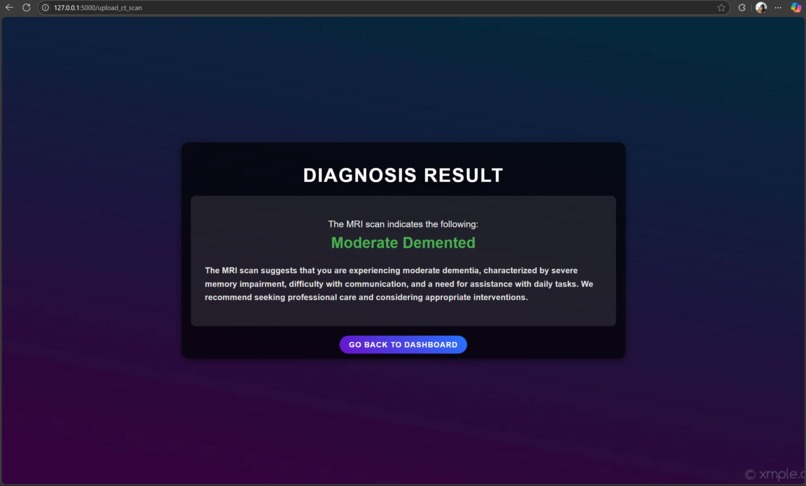
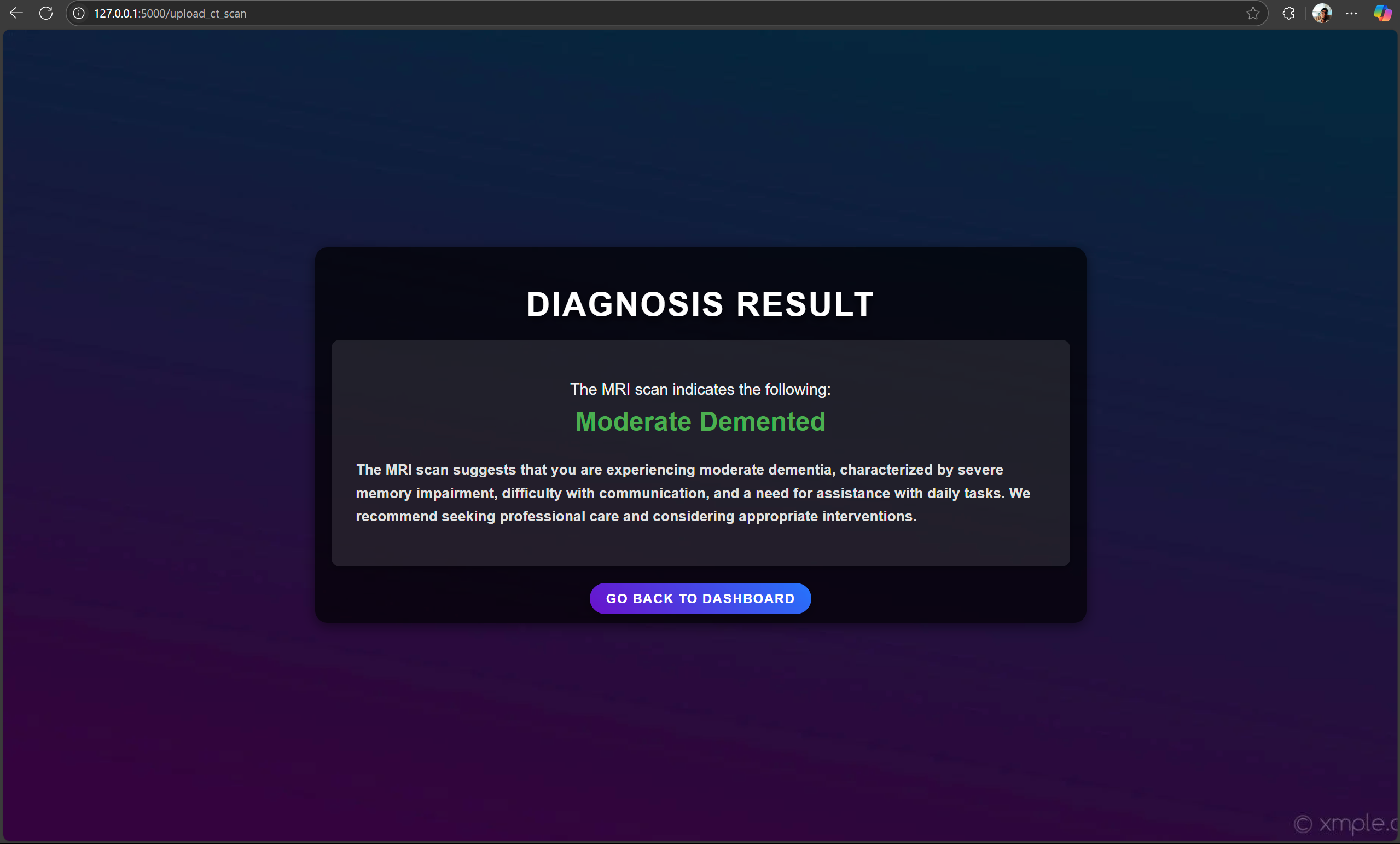
Moderate Demented Diagnosis
-
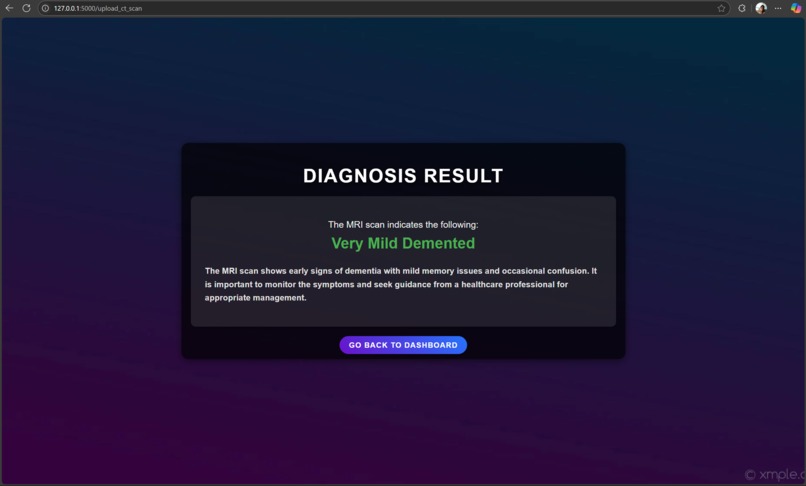
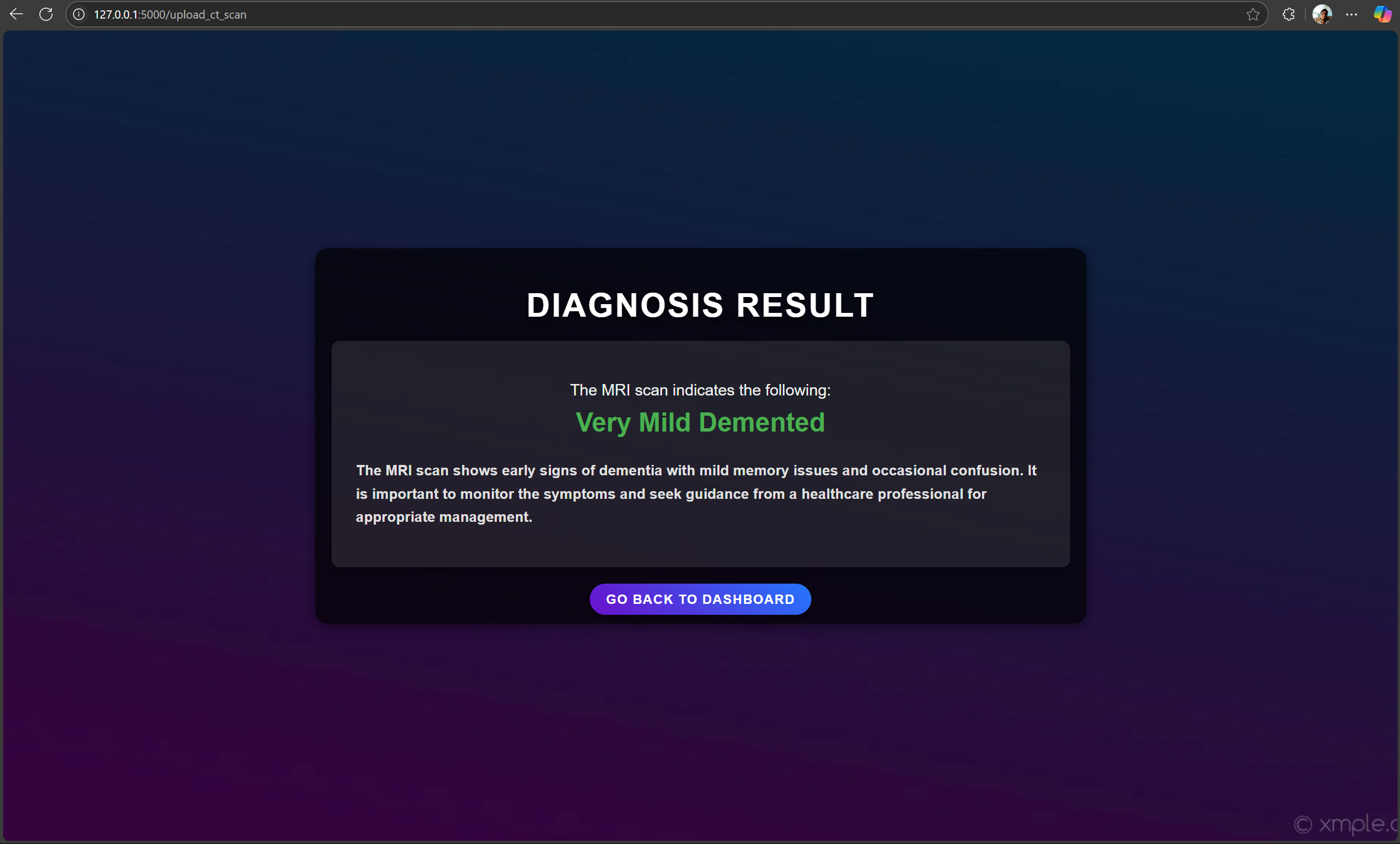
Very Mild Demented Diagnosis
-
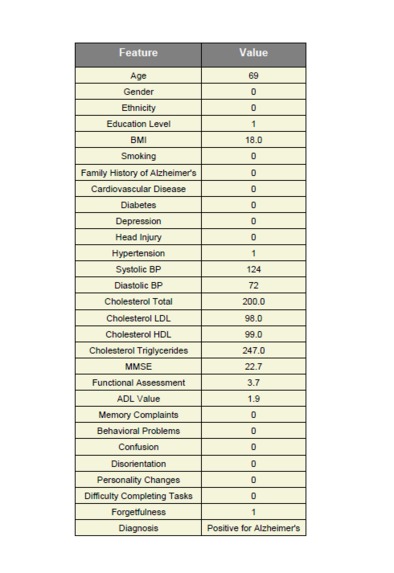
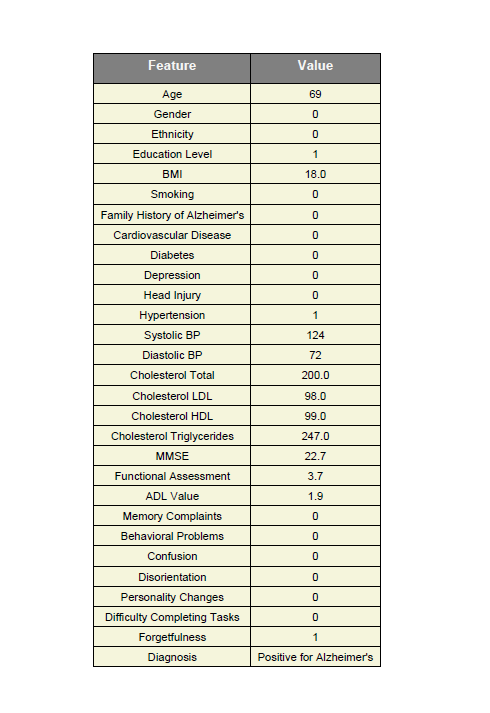
PDF with medical info and Diagnosis
Inspiration
In India, the prevalence of Alzheimer’s disease has traditionally been considered relatively low, which often leads to a lack of awareness about its devastating impact. Our own understanding of the disease was limited to what we had learned in school biology classes—until a close friend shared the story of his grandmother’s struggle with dementia. Hearing how she gradually lost her memories and sense of identity was deeply moving. It made us realize just how heartbreaking and life-altering Alzheimer’s can be—not just for the individual, but for their entire family.
What struck us most was how easily its early symptoms are mistaken for normal signs of aging. This widespread misconception makes timely diagnosis challenging, especially in communities where awareness is limited. As we researched further, we discovered that while there is no cure, early detection can significantly improve the quality of life for patients by enabling better care and support.
When we received the prompt for this hackathon—focused on preventative care and early diagnosis —we immediately knew we wanted to work on a solution for Alzheimer’s detection.
What it does
- Register and log in securely through a MongoDB-backed user system or using a Google account.
- Upload MRI scan images (for Dementia detection) and receive AI-based analysis using a pre-trained deep learning model. The model classifies scans into one of four categories: Mild Demented, Very Mild Demented, Moderate Demented, or Non Demented.
- Input clinical data (for Alzheimer’s detection) such as cognitive and behavioral symptoms to receive a binary result — Positive or Negative for Alzheimer’s.
- Receive a preliminary diagnosis along with a downloadable, auto-generated PDF report.
- "Get Help" Page, which connects users to organizations offering financial and social support for dementia and Alzheimer’s care.
How we built it
- Frontend: Developed using HTML, CSS, and JavaScript for a clean and intuitive UI.
- Backend: Built using Flask to handle form submissions, file uploads, user authentication, and AI model inference.
- AI Models:
- Dementia Detection Model (MRI): We used DenseNet-201 for feature extraction from MRI images, applied PCA for dimensionality reduction, and built a custom ANN for classifying into the four dementia categories.
- Alzheimer’s Detection (Clinical Data): We implemented a stacked machine learning model trained on structured medical and cognitive data for multi-modal predictions.
- Dementia Detection Model (MRI): We used DenseNet-201 for feature extraction from MRI images, applied PCA for dimensionality reduction, and built a custom ANN for classifying into the four dementia categories.
- Database: MongoDB was used for securely storing user data and login credentials.
- Report Generation: PDF reports are automatically generated using Python libraries, compiling diagnosis results in a structured and professional format.
Challenges we ran into
Unbalanced Dataset
Our dementia model initially suffered from a highly unbalanced dataset:
- Moderate Demented: 64 images
- Mild Demented: 896 images
- Very Mild Demented: 2,240 images
- Non Demented: 3,200 images
This imbalance led to poor model performance. To address this, we implemented data augmentation techniques such as zooming, cropping, and rotating to balance the dataset.
Model Accuracy (MRI-based Dementia Detection)
We experimented with several CNN architectures under tight time constraints. While initial attempts with EfficientNet variants gave us ~80% accuracy, we ultimately chose DenseNet-201, which provided better feature extraction. We also tested classifiers like SVM and ANN, and settled on ANN for its superior performance.
Model Accuracy (Clinical Data Alzheimer Detection)
As with most ML tasks, our initial models achieved moderate accuracy (~70–80%). Through model stacking we were able to significantly improve prediction performance.
Accomplishments that we're proud of
- Successfully implemented and integrated dual AI models for Alzheimer’s and Dementia detection using both image and clinical data.
- Enabled automatic generation of diagnostic PDF reports.
- Designed a user-friendly interface accessible to both medical professionals and the general public.
- Created a platform that provides accessible and trustworthy diagnosis, regardless of location or financial background.
What we learned
- Gained deep insights into the medical and technical aspects of Alzheimer’s and Dementia.
- Improved our understanding of working with imbalanced datasets and advanced model architectures.
- Learned how to integrate AI models into full-stack web applications.
- Explored real-world healthcare challenges and ethical considerations in diagnosis tools.
- Developed teamwork and rapid problem-solving skills under time pressure.
What's next for MemoCare
- Model Improvements: Train on more diverse and extensive datasets to enhance accuracy and generalization. With more time and resources, we aim to explore additional CNNs and hybrid models.
- "Happy Space" for Patients: Introduce a comforting digital space where dementia and Alzheimer’s patients can revisit important memories — audio from children, voice notes from grandkids, heartfelt family messages, and photo albums — all in one place to help stimulate memory.
- Collaboration with Charities: Partner with non-profits and NGOs to directly link patients and their families with support services, donations, and caregiving resources.
- Multilingual Support: Add regional language options to make the platform accessible to a broader Indian demographic and beyond.
Built With
- css3
- flask
- googleoauth
- html5
- javascript
- jupyter-notebook
- kaggle
- keras
- mongodb
- mongodb-atlas
- python
- report-lab
- scikit-learn
- vscode


Log in or sign up for Devpost to join the conversation.