-
-
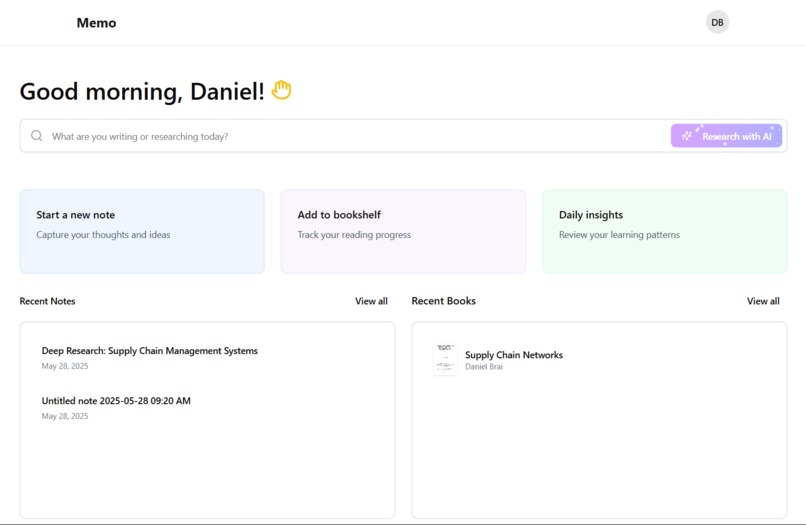
Home page
-
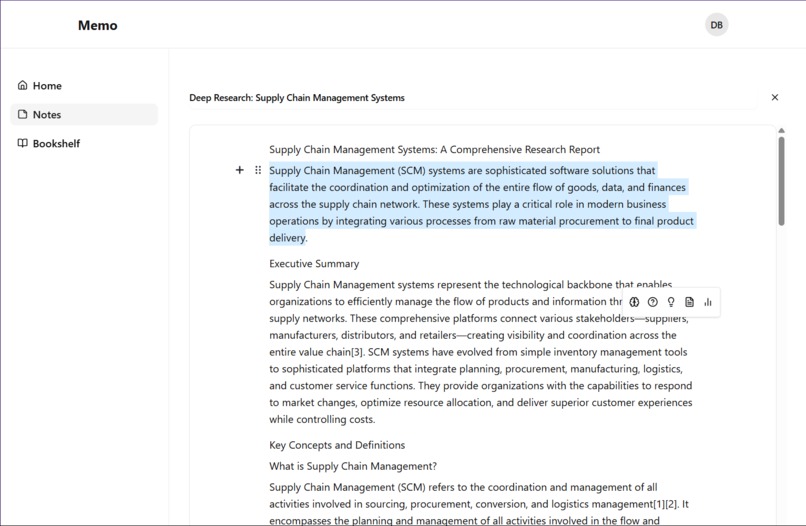
Notes Editor showing the assist toolbar
-
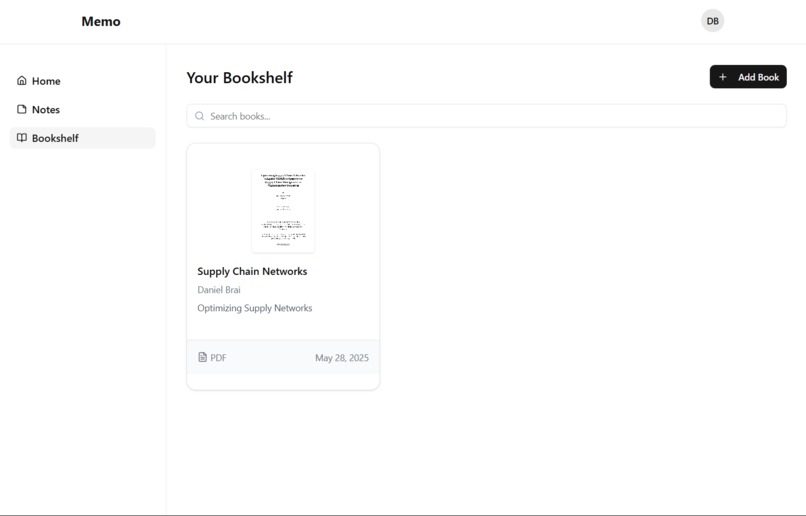
Bookshelf page


Memo: AI-Powered Learning Companion
Inspiration
We noticed students spending countless hours drowning in research without actually learning. They would open dozens of browser tabs, struggle to connect information from different sources, and often miss key insights buried in complex content. Traditional note-taking tools were just digital filing cabinets that stored information but didn't help students understand it.
The breaking point came when we realized students weren't lacking access to information - they had too much of it. We wanted to build something that would transform passive research into active intelligence, helping students focus on understanding rather than just collecting data.
What it does
Memo is an AI-powered learning companion that eliminates research fatigue and transforms information overload into actionable insights. It provides smart note creation with real-time AI assistance, deep research that synthesizes information from multiple sources instantly, and book intelligence that extracts key insights from uploaded documents.
The platform connects fragmented knowledge automatically, helping students see relationships between different concepts and sources. Instead of managing scattered notes across multiple platforms, students get a unified workspace where AI helps them understand and synthesize complex information effortlessly.
How we built it
We built Memo using FastAPI for the backend to handle AI processing and data management, with PostgreSQL as our database for storing user notes and research data. The frontend uses React with Tailwind CSS and ShadCN UI components to create a clean, intuitive interface that doesn't overwhelm students with complexity.
The core intelligence comes from integrating Perplexity's Sonar Pro API, which powers our research synthesis and smart note features. We designed the architecture to seamlessly blend AI assistance with user input, ensuring students maintain control over their learning while getting intelligent support when needed.
Challenges we ran into
Our biggest challenge was striking a balance between AI automation and meaningful learning. We had to ensure Memo enhances critical thinking rather than replacing it, which required careful fine-tuning of when and how the AI intervenes. Getting the right level of assistance without creating dependency was a constant balancing act.
On the technical side, the response time from the Perplexity Sonar API was noticeably slow for non-streaming requests, which sometimes made synchronous features feel a bit sluggish. We also grappled with integrating various data sources seamlessly and ensuring that our real-time AI responses didn't compromise the overall user experience. Finally, a significant challenge was ensuring that the AI-generated connections between different concepts, especially in deep research summaries, felt genuinely insightful and natural, rather than forced or irrelevant.
Accomplishments that we're proud of
We successfully created an AI system that feels like a natural extension of the learning process rather than a separate tool. Students report spending 60% less time on research while gaining a deeper understanding of their topics. The seamless integration between research, note-taking, and insight generation creates a workflow that enhances learning.
Our document intelligence feature can extract meaningful insights from complex academic papers and textbooks, making dense material accessible to students at any level. The real-time synthesis capabilities help students see connections they would have missed, turning information gathering into genuine knowledge building.
What we learned
We discovered that effective AI in education isn't about replacing human thinking but amplifying it at the right moments. Students don't need AI to think for them, they need AI to help them think better. This insight shaped every design decision, from when to offer suggestions to how we present combined information.
The importance of intuitive design became clear when we saw how quickly students abandoned tools that required learning new workflows. We learned that powerful features mean nothing if students can't access them naturally within their existing study habits.
What's next for Memo
We're planning to add collaborative features that let study groups share and build on each other's research insights in real-time. We also want to introduce personalized learning paths that adapt to individual students' research patterns and knowledge gaps, making AI assistance even more targeted and effective.
Long-term, we envision expanding beyond individual research to include integration with learning management systems and direct collaboration with educational institutions. Our goal is to make Memo the standard tool that transforms how students interact with information throughout their academic journey.
Built With
- fastapi
- postgresql
- react
- sse
- tailwindcss
- websocket

Log in or sign up for Devpost to join the conversation.