-
-
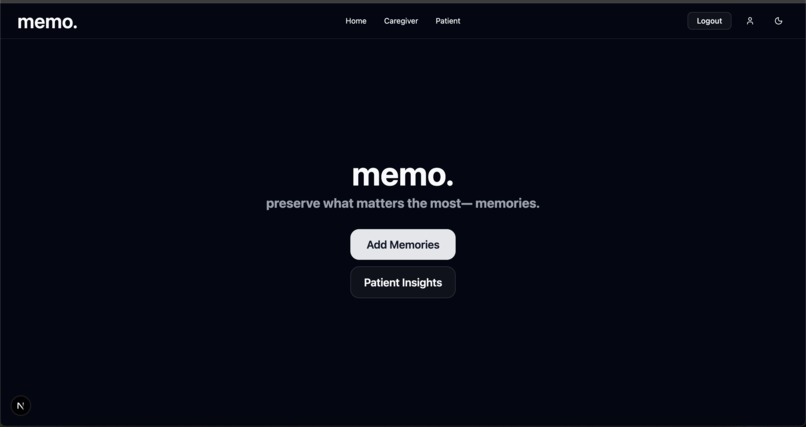
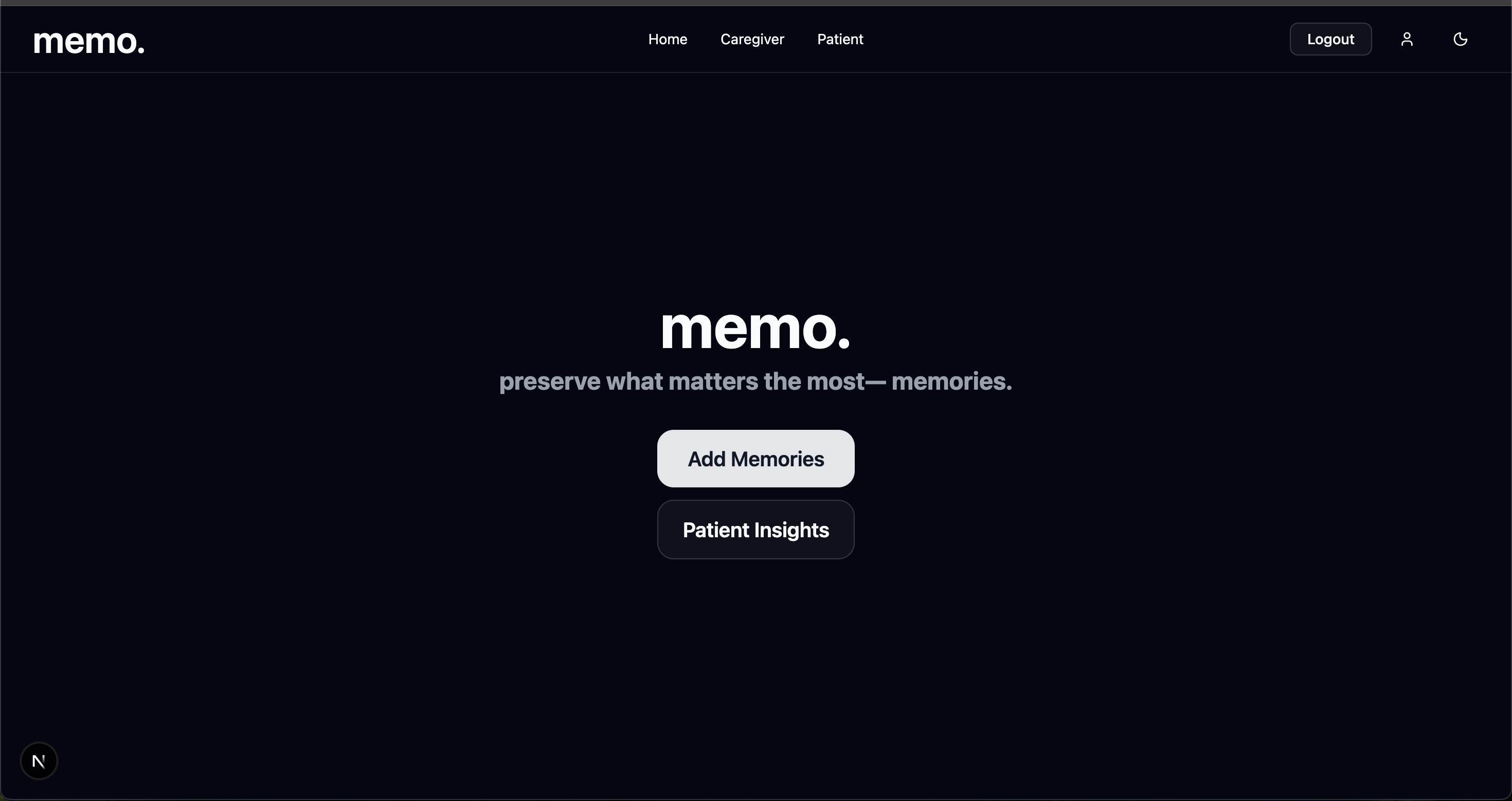
Caregiver Homepage
-
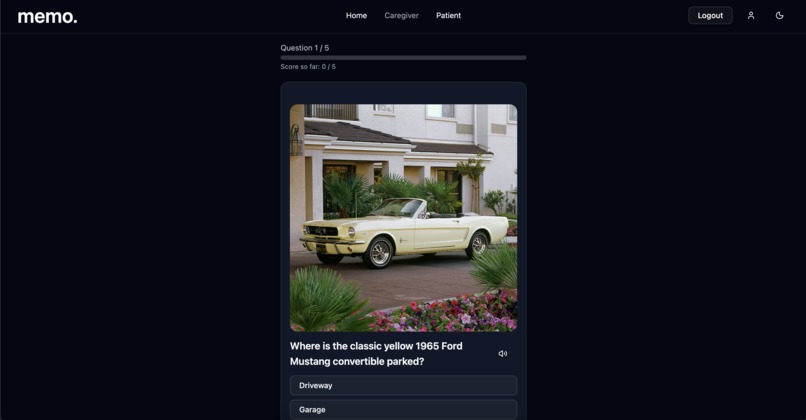
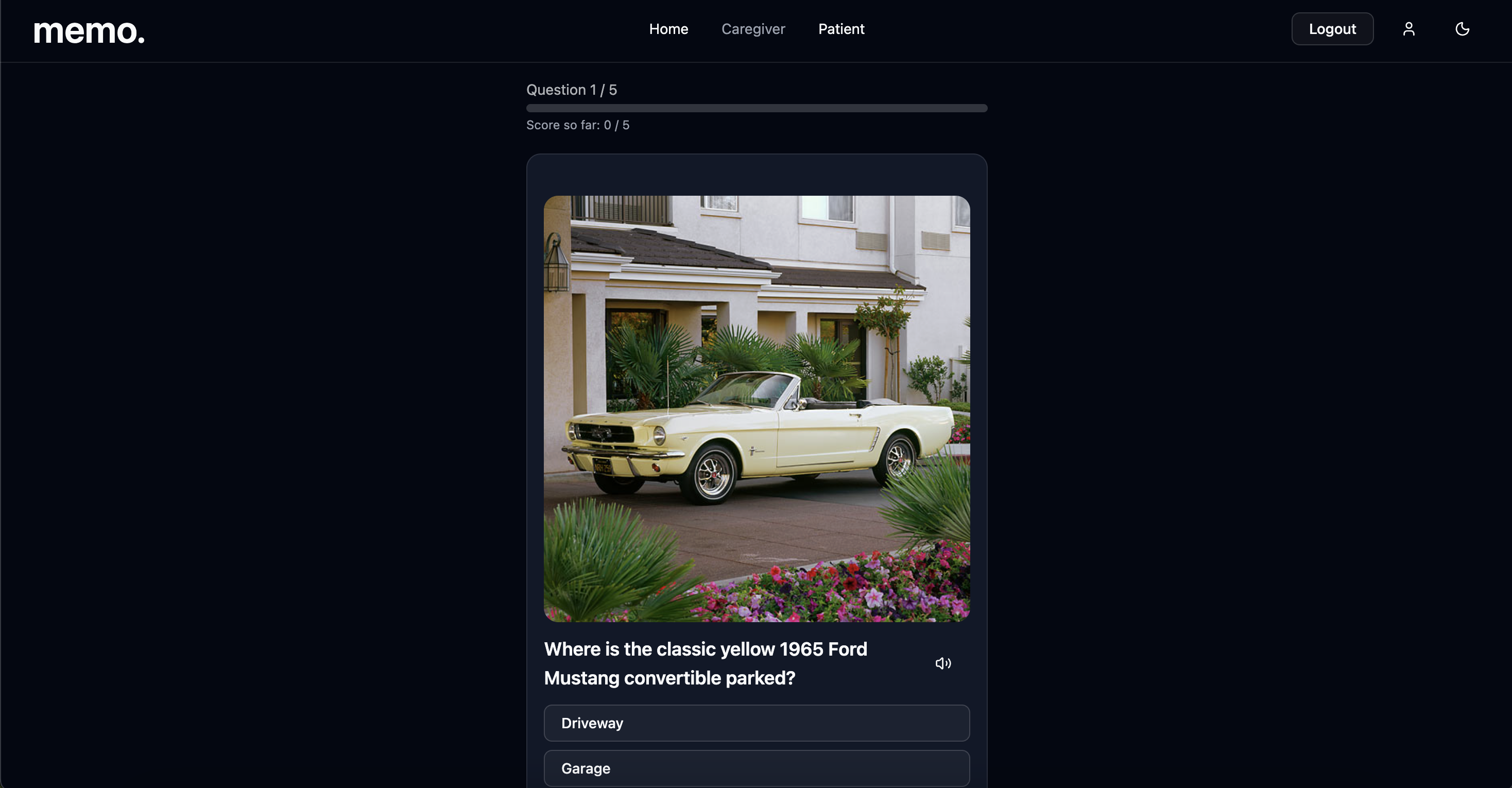
Patient Quiz UI
-
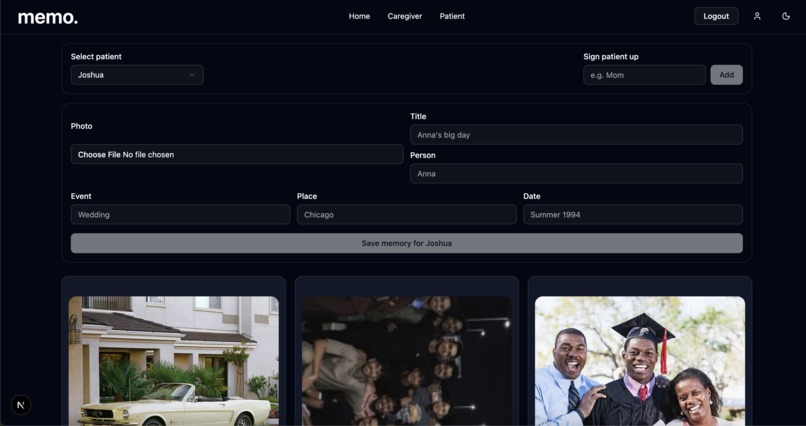
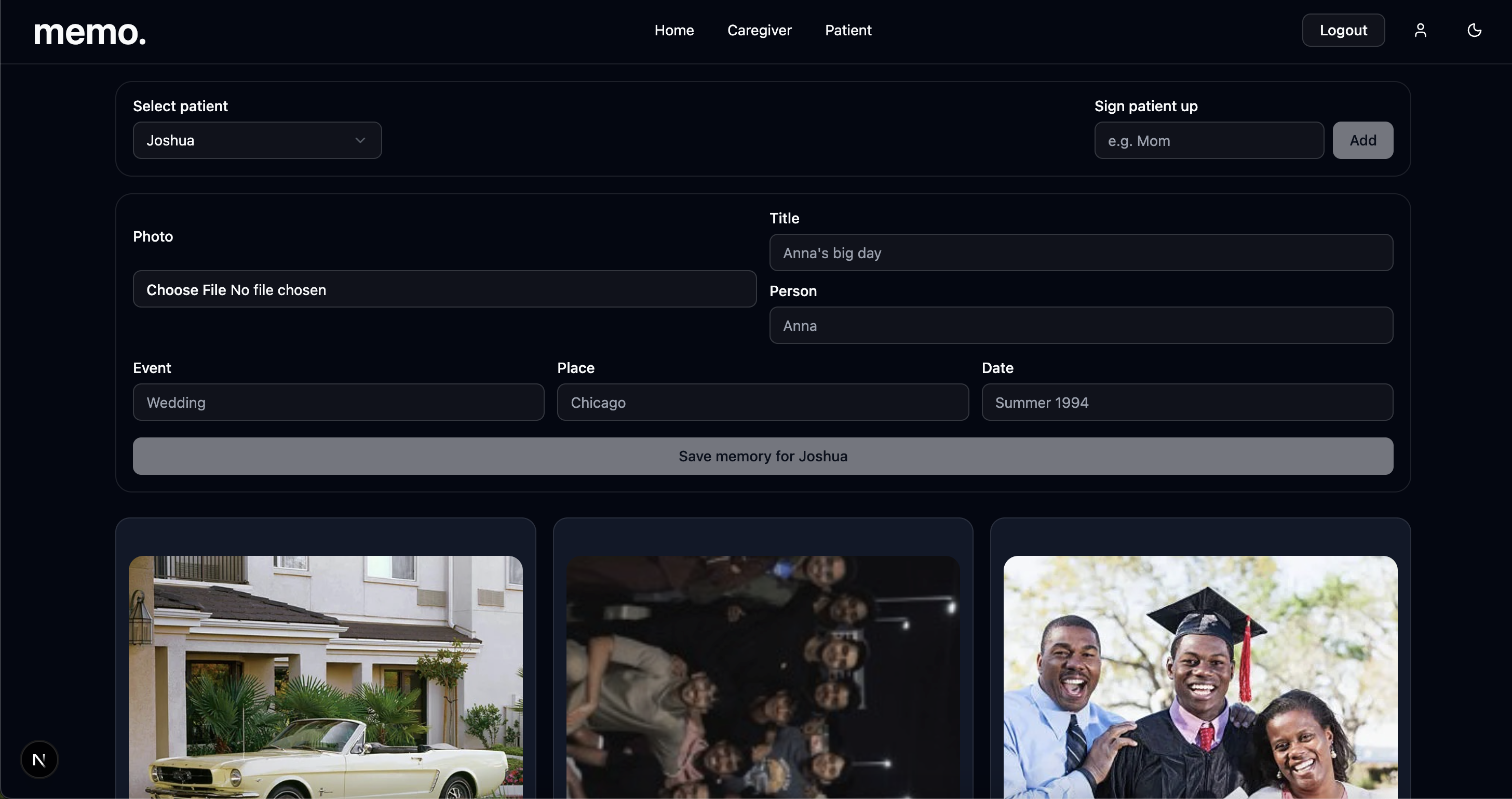
Adding memories
-
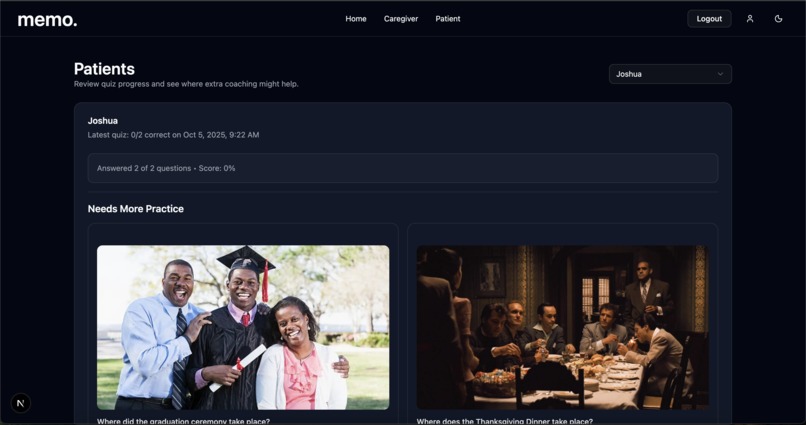
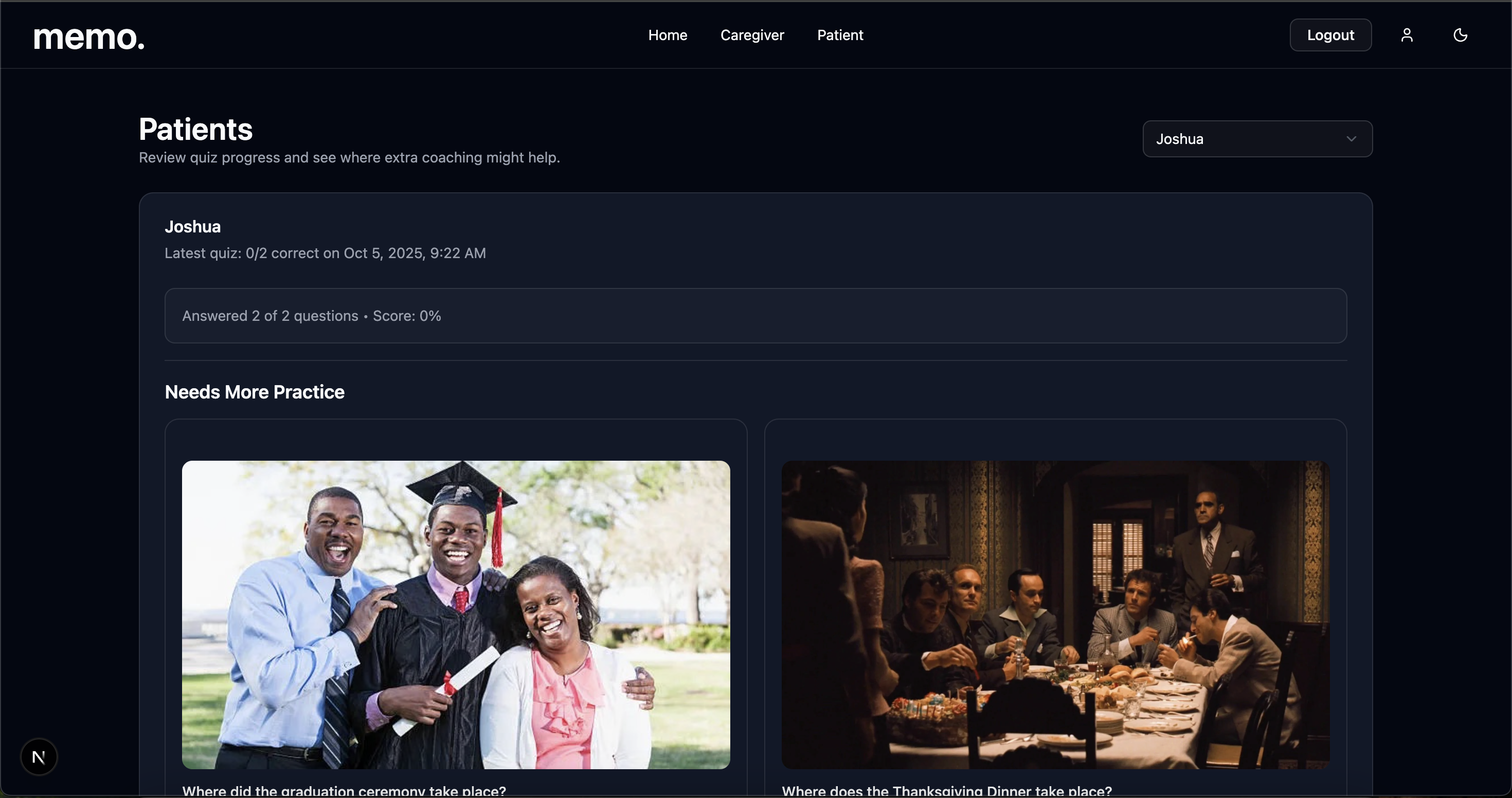
Patient result insights
Inspiration
Every 3 seconds, someone in the world is diagnosed with dementia or Alzheimer’s. Families often struggle to help loved ones remember the people, places, and moments that shaped their lives. We built "memo" to reinforce, not replace, human care: a gentle, tech-assisted way for caregivers to help patients reconnect with cherished memories through daily, low-friction interactions.
What it does
"memo" is an AI-powered memory reinforcement platform for Alzheimer’s and early-stage dementia patients. Caregivers upload photos plus names, places, and short descriptions. The app auto-generates personalized recall quizzes—short, gamified sessions where patients identify people, events, or locations from their own photos.
Supportive hints and positive feedback reduce anxiety and encourage learning.
AI (Gemini AI) creates natural-language captions, hints, and multiple-choice questions from the uploaded images.
Over time, Memo tracks responses to identify which memories are retained and which need more practice, using a spaced-retrieval approach grounded in cognitive therapy principles.
How we built it
Frontend: Next.js (App Router) + Tailwind + shadcn/UI for a clean, accessible interface.
Auth: Auth0 for secure, role-based access (caregiver - patient) and linked accounts.
Database & Storage: Firebase Firestore for user data/relationships/sessions; Firebase Storage for photos.
AI Integration:
Gemini API for both image captioning and semantic cues and for generating hints, distractors, and multiple-choice questions.
Voice Support: ElevenLabs to read out questions, hints, and supportive feedback for better accessibility.
Spaced Retrieval: Simple scheduling logic that increases or decreases review frequency based on patient performance.
First-time tech: This hack was our first time integrating Auth0, Gemini API, and ElevenLabs—we learned them on the fly and got them working end-to-end in our prototype.
Challenges we ran into
Auth0 to Firebase: Getting secure, role-aware flows and caregiver-patient linking right (and simple) under time pressure.
UX for older adults: Balancing simplicity for patients with control and visibility for caregivers (large tap targets, high contrast, gentle copy).
Emotionally appropriate AI: Prompting models to produce supportive, non-judgmental feedback; curating distractors that are helpful, not confusing.
API orchestration: Coordinating Auth0, Gemini AI, Firebase, and ElevenLabs within 24 hours.
Accomplishments we’re proud of
A working prototype where caregivers upload memories and patients take personalized recall quizzes on real photos.
Secure, role-based authentication with linked caregiver-patient accounts.
An intuitive, minimal UI designed for accessibility and calm interaction.
Demonstrating that AI can enhance memory therapy by reducing cognitive load and adding positive reinforcement—without replacing human connection.
What we learned
How to stand up a modern stack quickly: Auth0 + Next.js App Router + Firebase Admin SDK + GeminiAI. Accessibility isn’t an add-on; it’s a core product decision (large type, forgiving flows, fewer choices, calmer language). Small, well-scoped, empathetic features can deliver outsized impact.
Voice & Accessibility
ElevenLabs reads captions, hints, and questions aloud with adjustable speed/intonation for patients who prefer listening. Next steps include voice input so patients can answer verbally and get immediate, supportive feedback.
Privacy & Ethics
Patient data stays within our controlled Firebase project; images are only used to generate therapeutic content.
We avoid clinical claims; Memo is a support tool, not a diagnosis or treatment.
Controls for deleting photos/data and exporting sessions are on our near-term roadmap.
What’s next
Mobile app (React Native): Care anywhere.
Full voice interaction: Read questions aloud and accept spoken answers.
Analytics dashboard: Trends in recall, per-memory strength, and spaced-retrieval scheduling.
Family library: Let multiple relatives contribute photos and stories.
Clinical pilots: Partner with local memory care programs to evaluate outcomes.
Analytics: Analytics: Use ML models to evaluate which areas of memory (people, places, events, timelines) need more focus and improvement, then personalize spaced-retrieval frequency accordingly.
Built With
- auth0
- elevenlabs
- gemini
- nextjs
- typescript


Log in or sign up for Devpost to join the conversation.