-
-
-
-
-
-
-
-
-
-
-
-
-
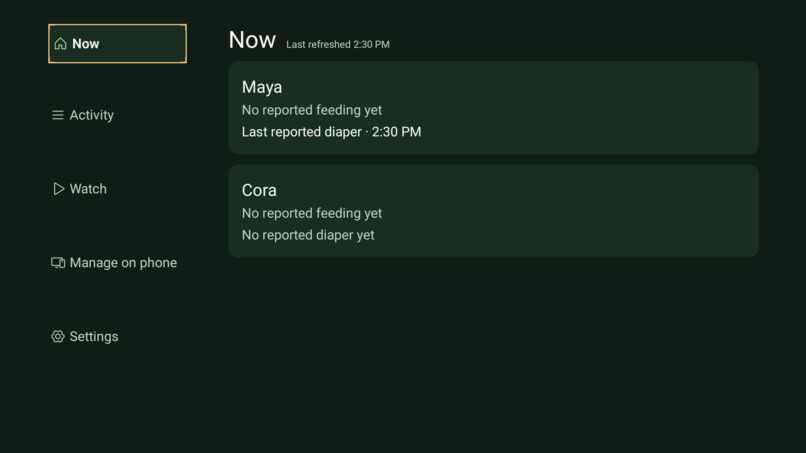
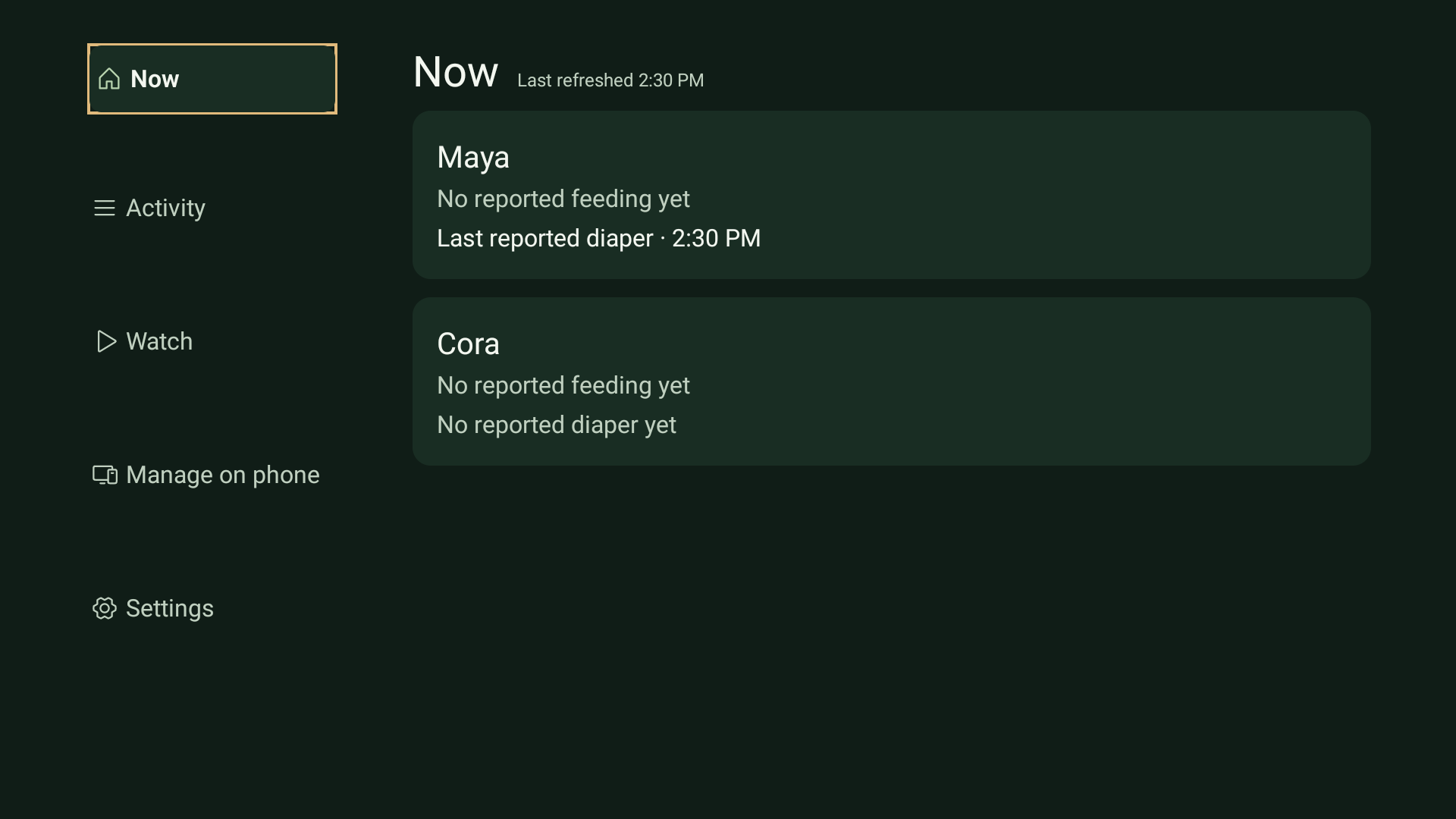
Paired Fire TV app on Android TV emulator · shared household data
-
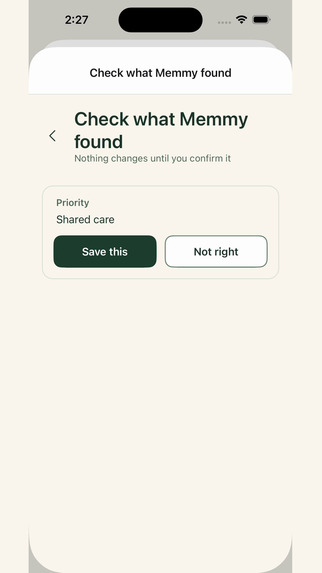
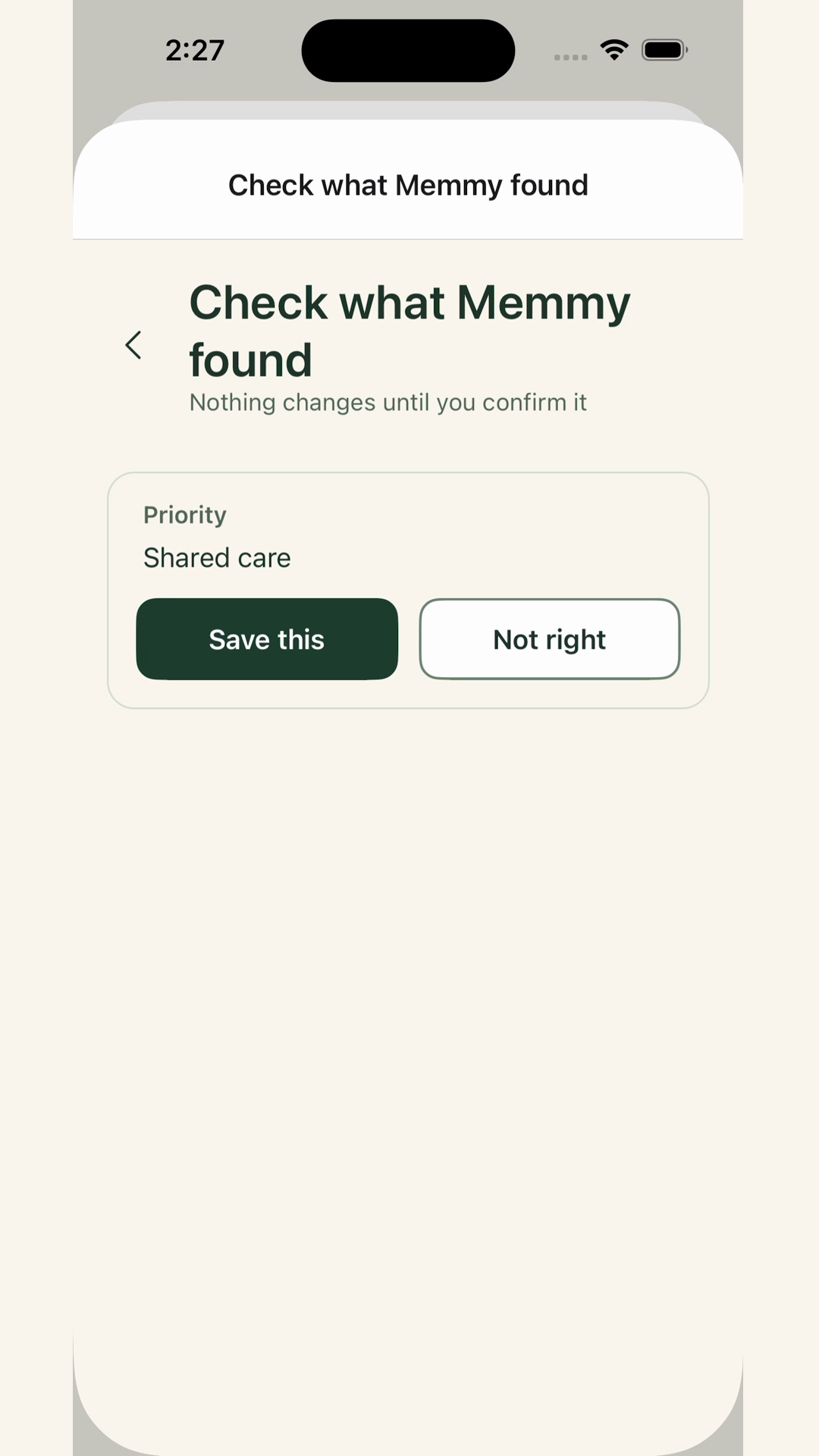
Review what Memmy learns before saving it · synthetic family · actual app capture
About Project
Inspiration
I have an 18-month-old daughter and another baby arriving in about four weeks. Becoming a parent has been one of the best things in my life. It has also taught me how quickly two reasonably capable adults can lose track of a diaper.
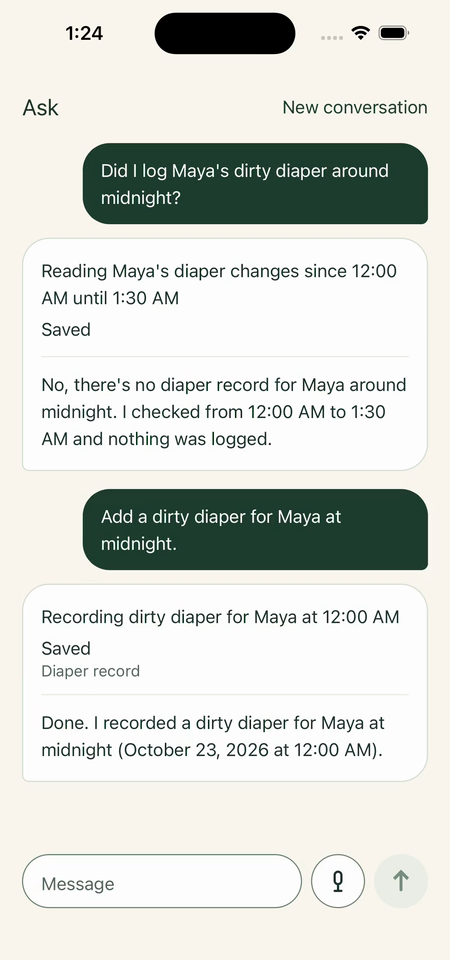
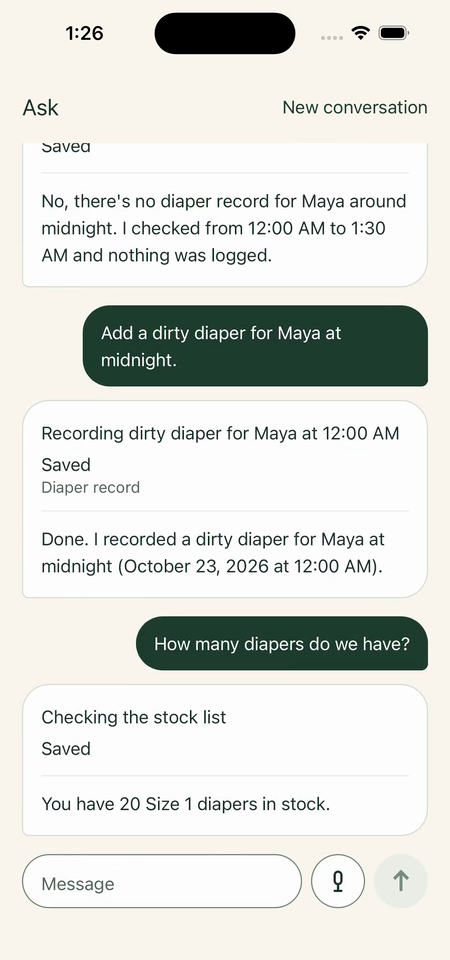
Did we log it? Who’s handling drop-off tomorrow? Are there more diapers upstairs, or are we both assuming the other person knows?
You can read the books and take the classes. At one in the morning, with a crying baby and both hands occupied, remembering everything is still hard. And the toddler has absolutely no interest in your carefully considered plan.
I built Memmy for our family. I wanted help connecting all those little details as we head into life with a newborn again: an AI assistant that gets to know the baby and the household, keeps that context, and helps us see what needs attention. The newborn is the reason for the change. The whole family has to live through it—including an older sibling who still needs dinner, a routine and something to do.
What it does
It starts by getting to know your family. In the discovery conversation, parents explain their situation: who’s at home, what their routines look like, and where they need help. Memmy asks follow-up questions and proposes details for the parents to review before saving them as household context.
In our demo, that includes a newborn, an older sibling, shared overnight care and Dad’s upcoming return to work. The parents decide what Memmy remembers. Those details can carry forward into later conversations and evaluations.
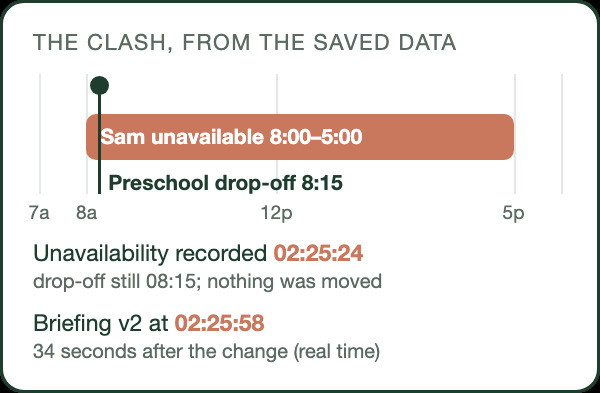
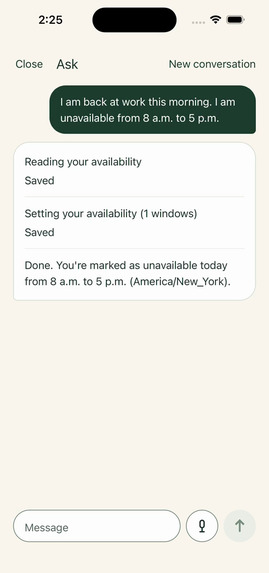
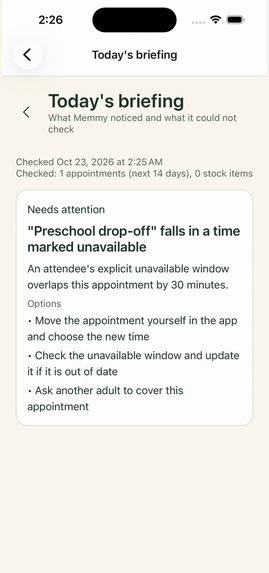
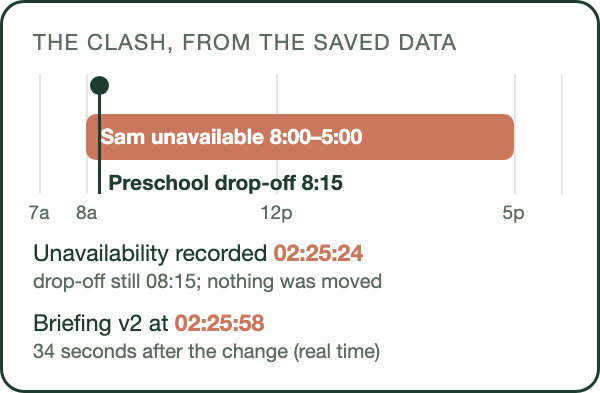
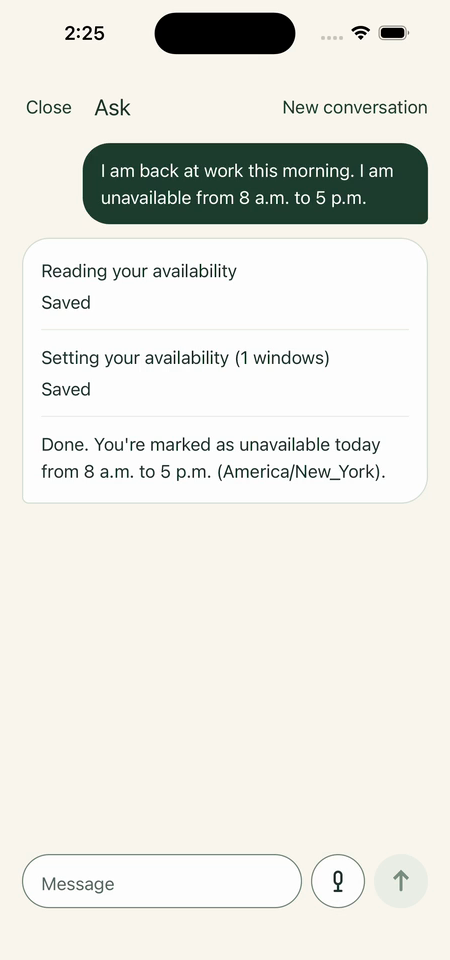
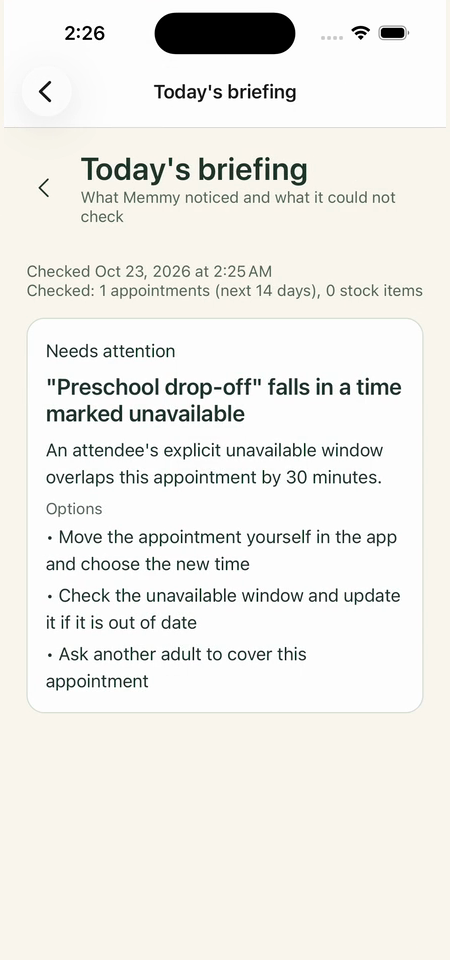
Then it puts that context to work. Dad records that he will be unavailable from eight until five. The saved change triggers an AI evaluation. Memmy connects it with the family’s existing preschool drop-off, flags the clash and offers options—without another question prompting it to look. The parents decide what happens next.
That is the experience we are building toward throughout the first year: share a detail, let the assistant connect it with what it already knows, and get help with the consequences.
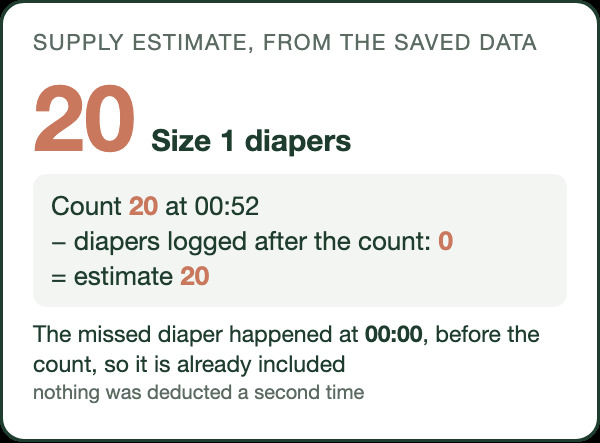
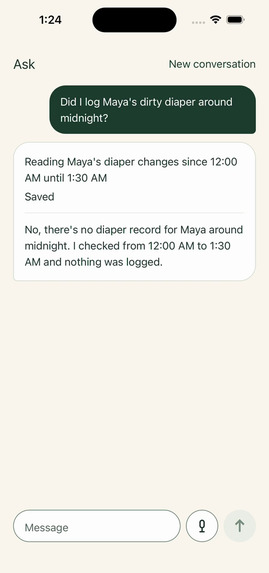
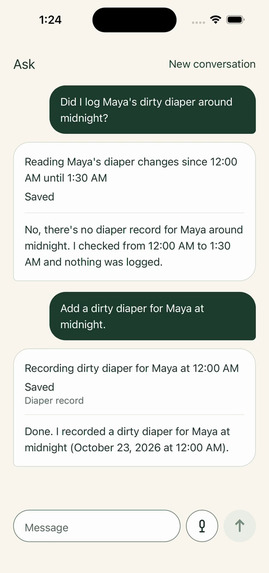
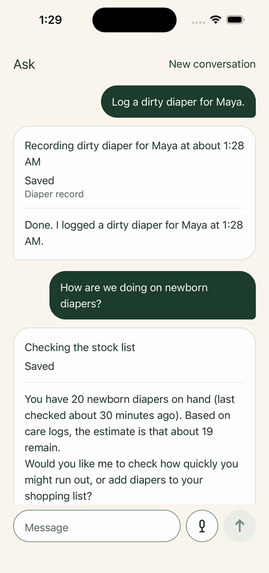
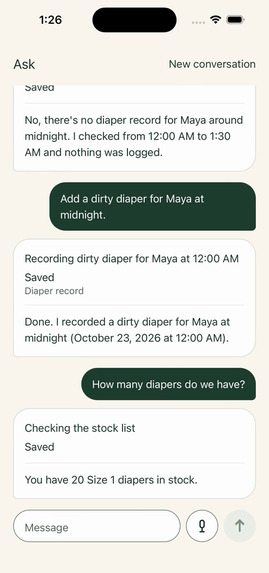
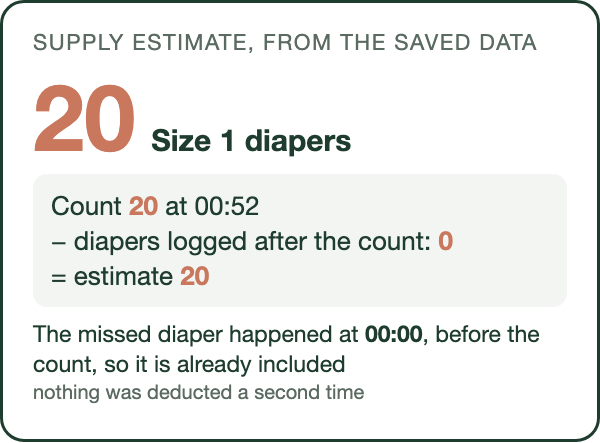
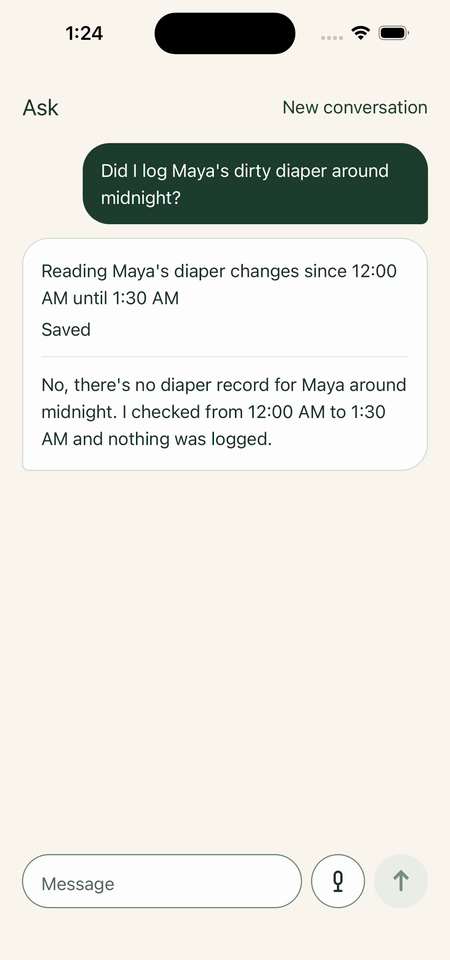
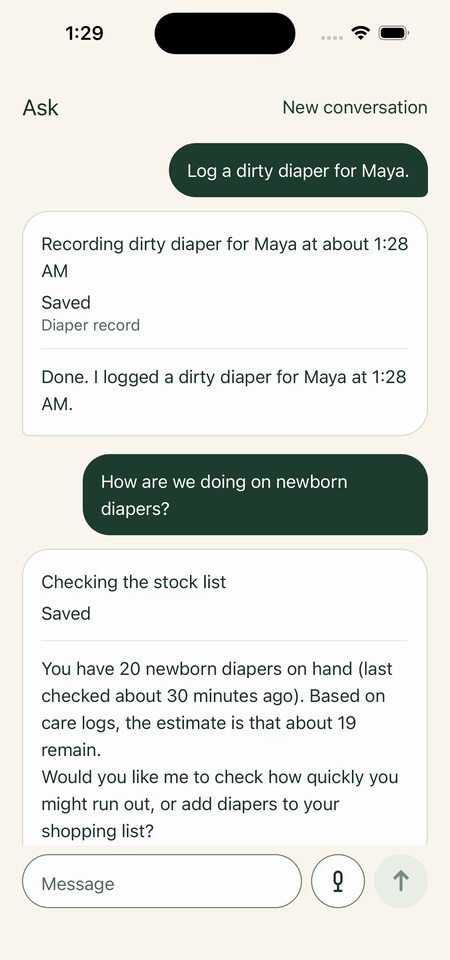
Everyday care contributes to the picture. A diaper log informs the supply estimate too. Forgotten entries can be added later, and a later physical count prevents the same diaper from being deducted twice.
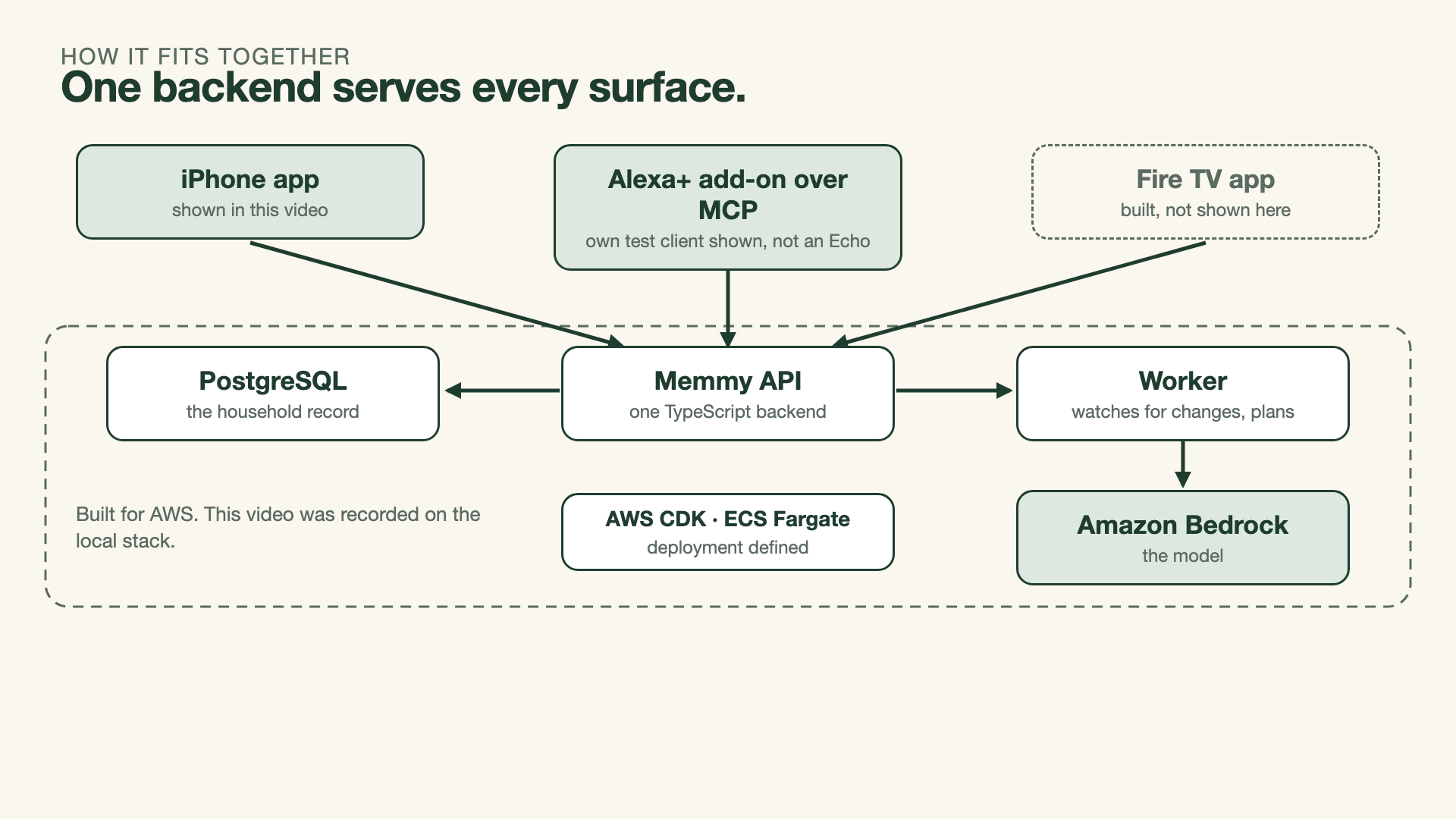
The home is part of the product. Hands-free interaction matters when your hands are busy with a baby. Our Alexa+ integration is a working self-hosted MCP server with household tools. The native phone app provides detailed views and voice controls. Fire TV adds a shared household screen, with family profiles and a Watch surface for family media.
The media idea comes from our living room: finding something our daughter enjoys, that we are happy for her to watch, and that we haven’t already heard four hundred times while making dinner. The demo shows the real TV app sharing household context on an Android TV emulator. Media playback is not demonstrated.
How we built it
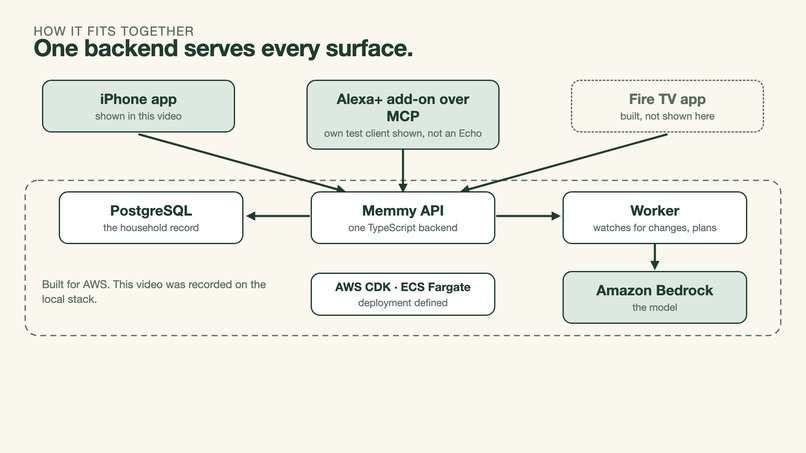
Memmy combines Expo and React Native, a React Native TV app, and a TypeScript backend with a Hono API, MCP server, worker and PostgreSQL database.
Strands Agents SDK runs the agent on Amazon Bedrock. Committed changes enter a transactional outbox; the worker evaluates relevant household context and saves a versioned briefing with findings and suggested next steps. Learning here means retaining the information parents provide and using updated facts in later interactions.
Amazon Bedrock is exercised live in the recorded local stack. AWS CDK defines the wider infrastructure, including ECS on Fargate, RDS PostgreSQL, Cognito, S3 and CloudFront. An earlier version was deployed to AWS; the newest demonstrated fixes run locally.
Challenges we ran into
The difficult part was making the connections dependable. Discovery output must be reviewable. A saved change must reach the evaluator. A forgotten care entry must affect supplies correctly.
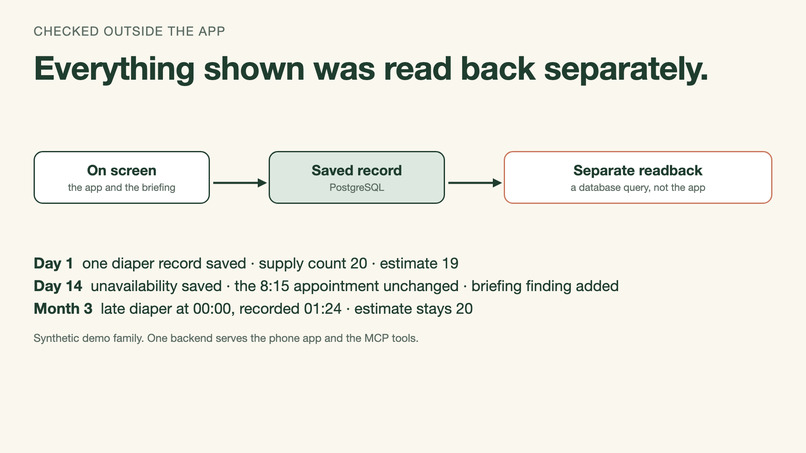
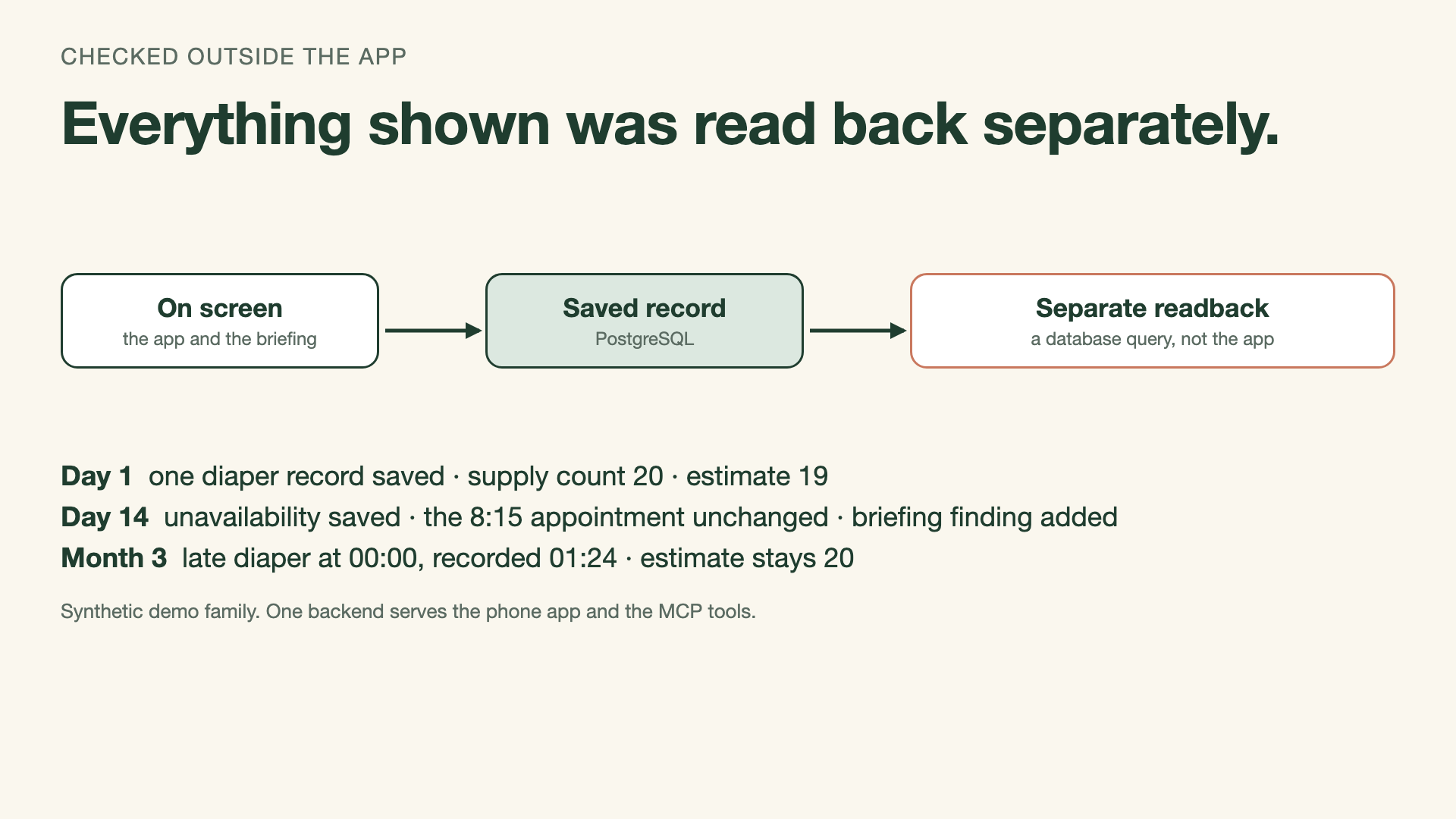
Real rehearsals exposed contract mismatches, discovery mistakes and missing event information. We repaired these paths with regression tests and checked persisted results separately from the screens. We also bounded agent calls and narrowed tool exposure to reduce unnecessary context and cost.
Accomplishments that we’re proud of
A working loop from discovery to retained family context, then from a changed fact to a relevant finding.
The schedule example captures why I wanted to build this: the assistant helps a tired parent notice a problem without requiring them to think of every follow-up question first.
What we learned
Useful AI needs dependable memory and state changes. It also needs to work with real parents: people who forget entries, correct themselves and change plans. Including us.
What’s next for Memmy
Camera and video understanding is the next major missing input. With appropriate permissions and supported integrations, observations from a baby-camera system could contribute context for parents to review and reduce manual entry. It is clearly marked as future work in the diagram and is not built today.
We also plan real-device Alexa+ and Fire TV validation, more reliable family-media workflows, supply accounting across rooms, and broader evaluation across changing routines throughout the first year.
About the demonstration: The family is fictional and based on ours. Recordings use simulators, real local backend operations and live Amazon Bedrock. Narration is synthetic and the footage is edited for time. MCP is demonstrated with our own client, not a physical Echo. Camera processing is future work. The demo and evidence distinguish implemented features from successful runtime demonstrations.
Built With
- agents
- alexa
- amazon
- amazon-web-services
- bedrock
- cdk
- cloudfront
- cognito
- ecs
- expo.io
- fargate
- hono
- mcp
- native
- postgresql
- rds
- react
- s3
- sdk
- strands
- typescript

Log in or sign up for Devpost to join the conversation.