Inspiration
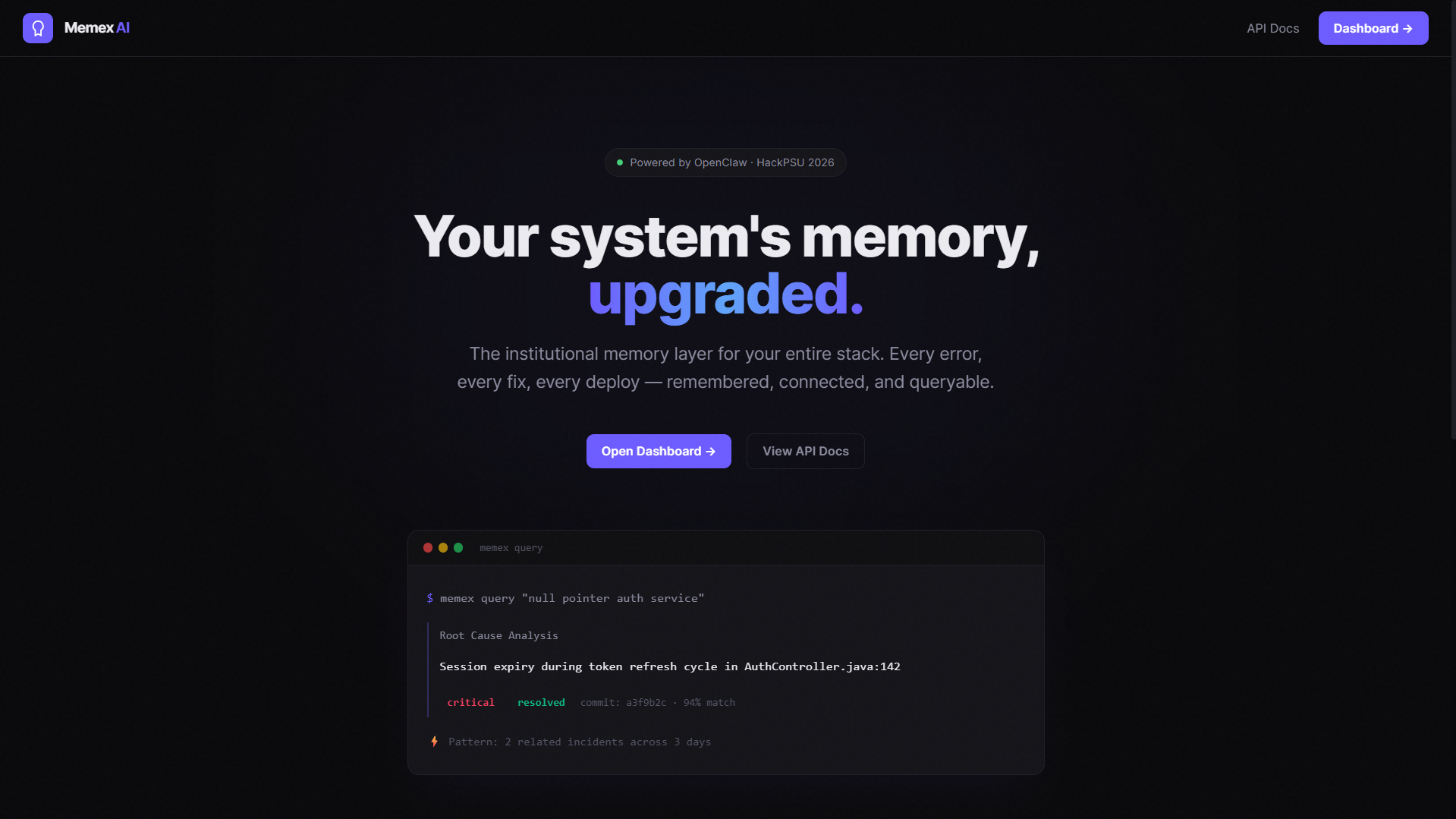
Debugging is one of the most repetitive and frustrating parts of development. We noticed that developers (and even AI systems) keep solving the same bugs because there’s no persistent memory of past issues. Inspired by GitHub’s ability to track code history, we set out to build a “GitHub for debugging” that remembers every bug and its solution.
What it does
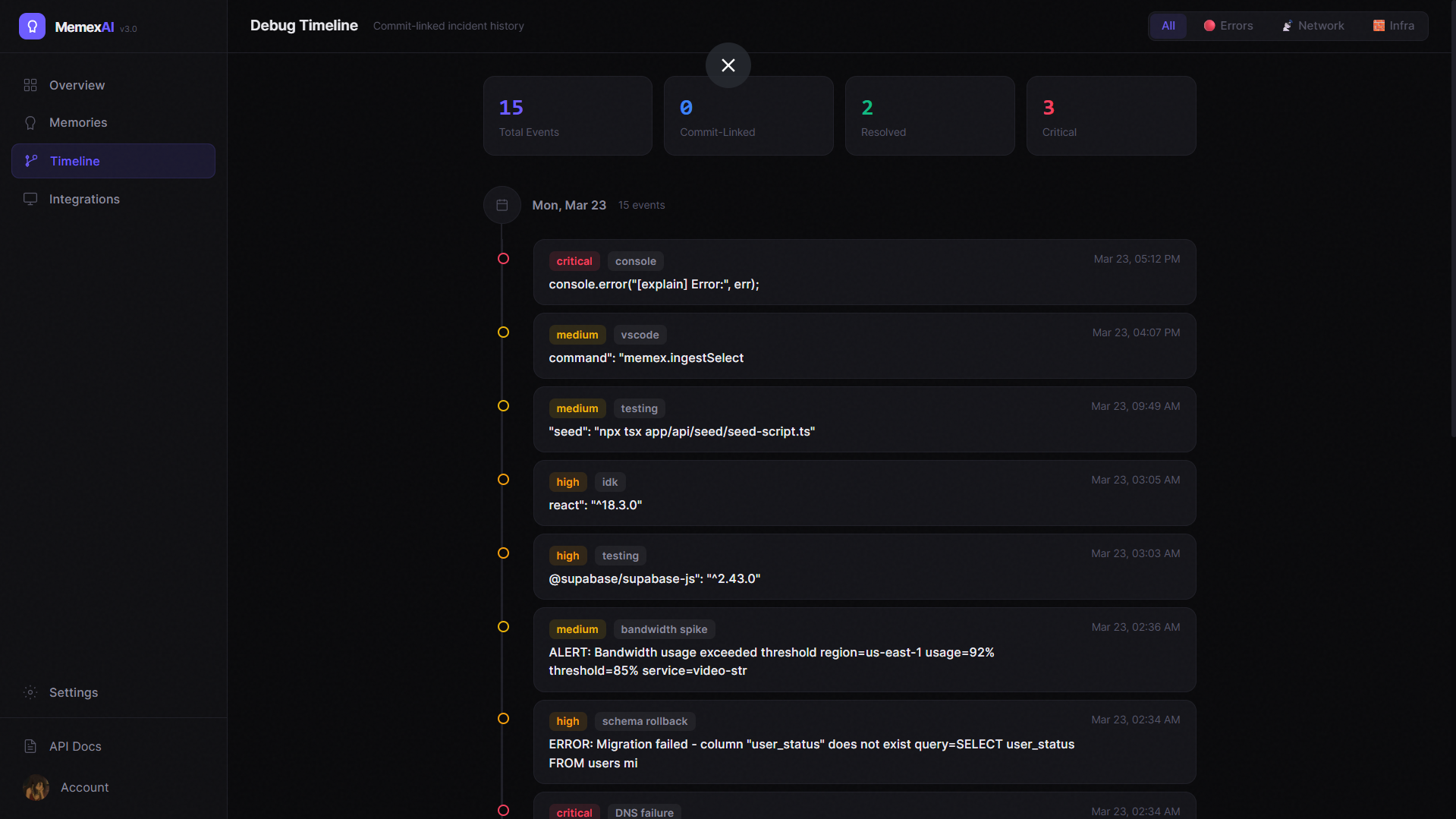
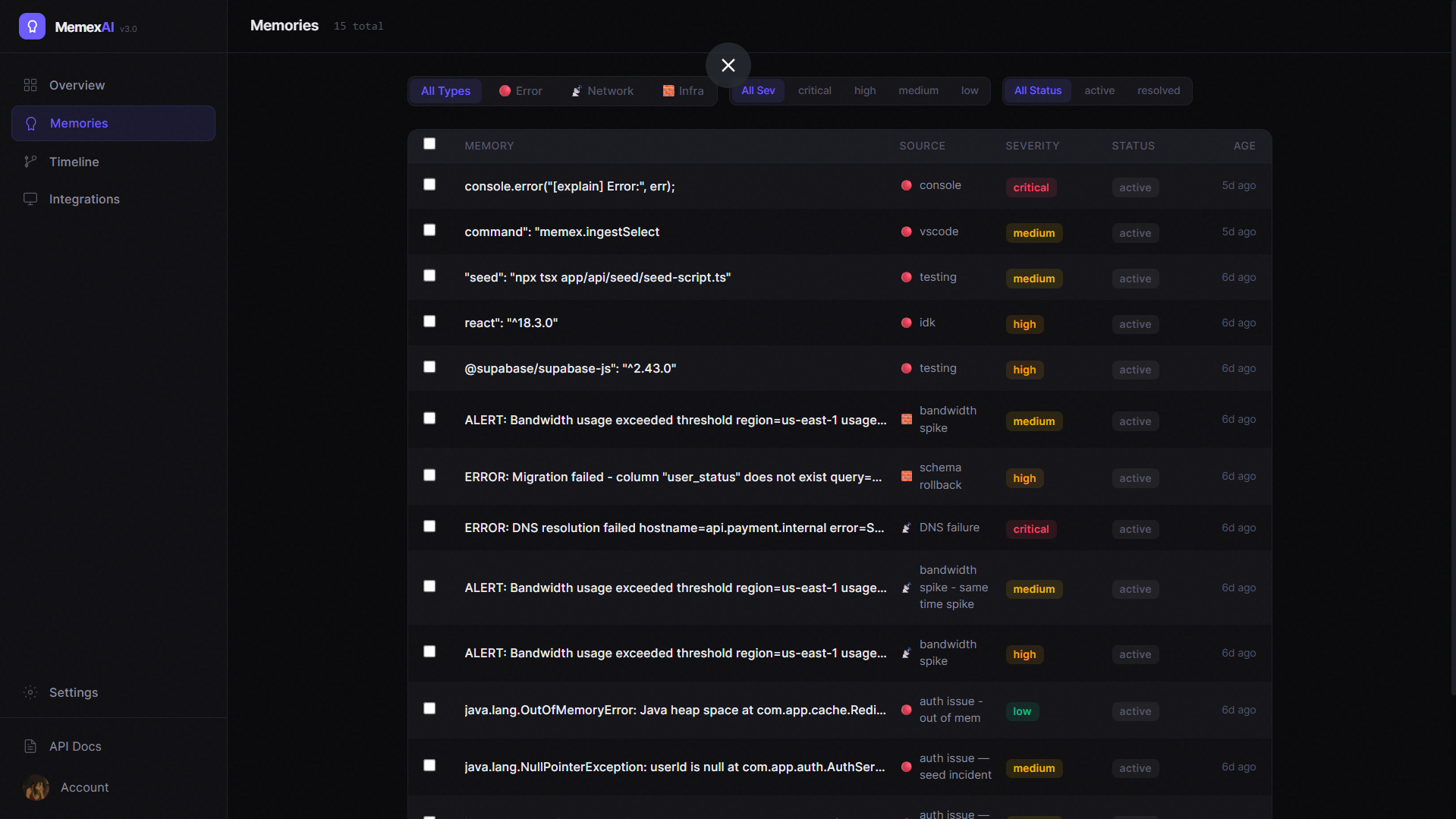
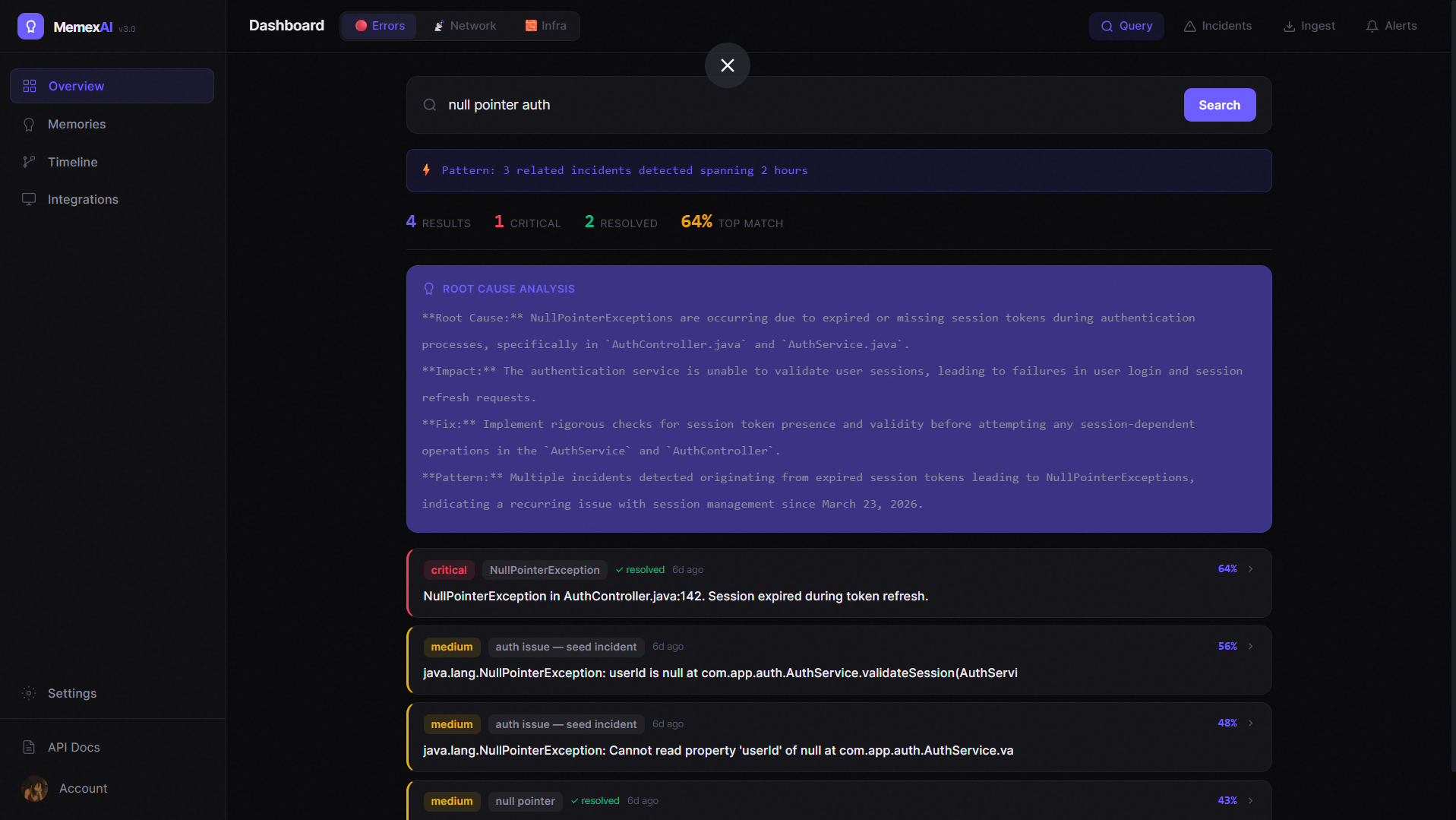
MemEx captures errors, logs, and fixes from tools like VS Code, APIs, and CI pipelines, and organizes them into a searchable memory system. With semantic search and a commit-linked timeline, developers can instantly find past solutions and avoid debugging the same problem twice. It acts as a persistent memory layer for both developers and AI agents.
How we built it
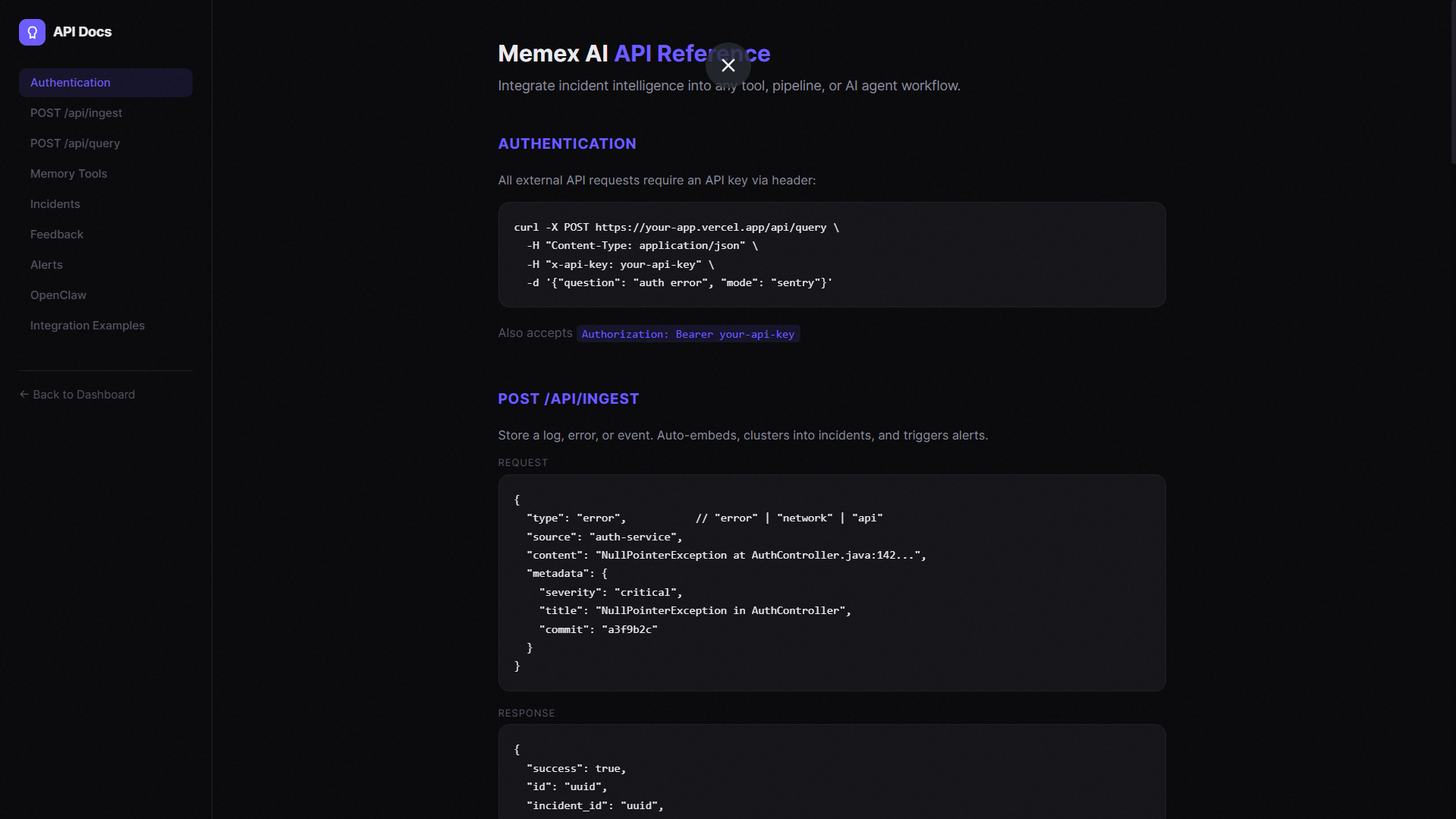
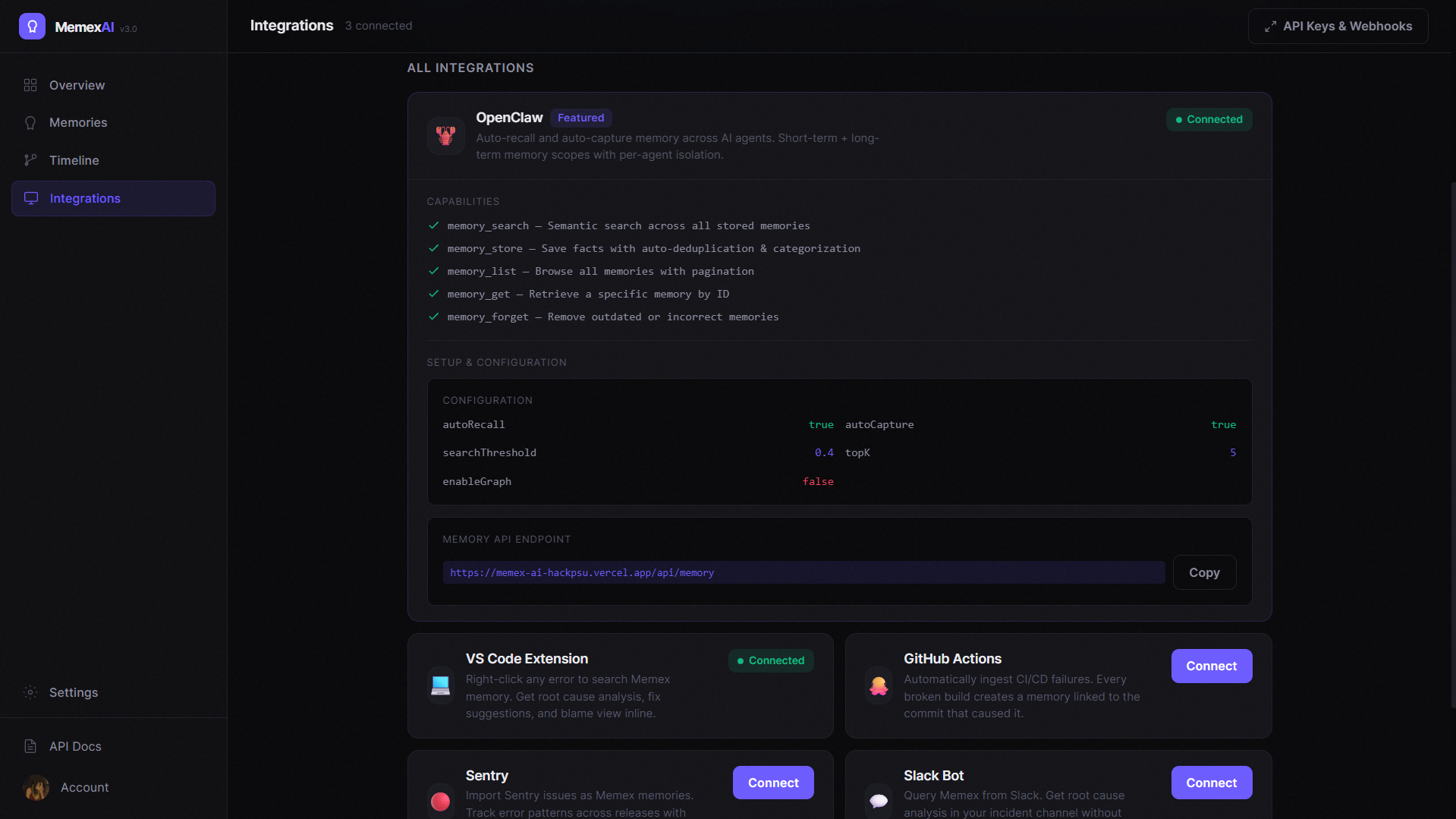
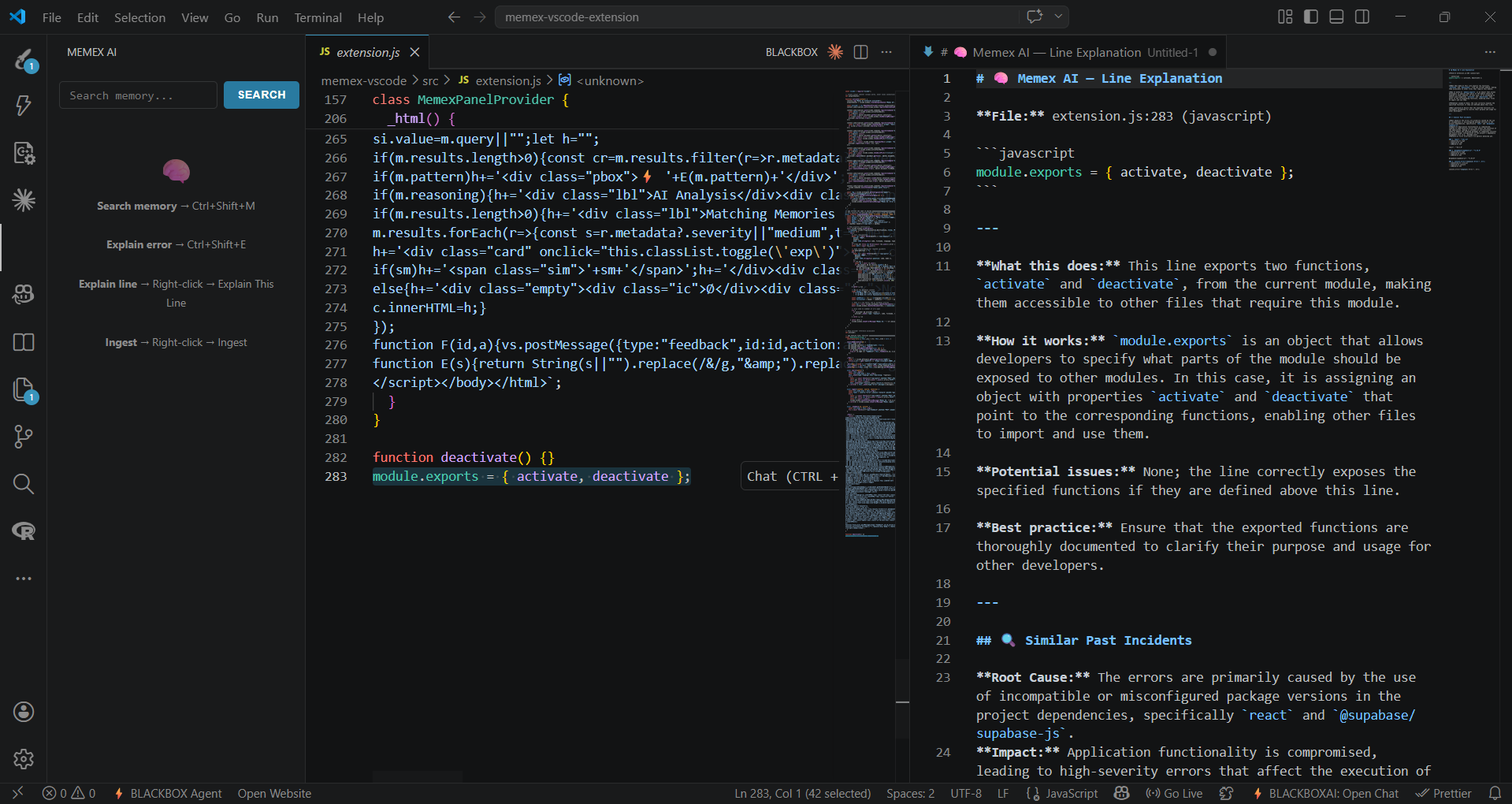
We built MemEx using Next.js for the frontend and API routes, Supabase for storage, and OpenAI embeddings for semantic search. We created a VS Code extension for real-time ingestion and added webhook endpoints for GitHub Actions and external tools. The platform includes memory APIs (store, search, list, forget), a timeline view, and an integrations dashboard.
Challenges we ran into
One major challenge was structuring debugging data in a way that’s both useful and searchable. We also had to balance real-time ingestion with meaningful long-term storage. Integrating multiple tools like VS Code, APIs, and webhooks into a seamless system required careful design and debugging itself.
Accomplishments that we're proud of
We successfully built a working “GitHub for debugging” with real-time ingestion, semantic search, and a clean developer-focused UI. The VS Code extension, API system, and integrations make MemEx feel like a real product, not just a prototype.
What we learned
We learned how to design systems that combine real-time data with long-term memory, implement semantic search, and build developer tools that integrate into existing workflows. We also explored how self-supervised learning can turn debugging data into reusable intelligence.
What's next for MemEx
We plan to add deeper integrations (Slack, Sentry), improve auto-recall with smarter ML models, and enable team-based shared memory. Our goal is to make debugging faster, smarter, and truly cumulative for both developers and AI systems.
🛠️ Tech Stack
- Frontend: Next.js (React), TypeScript, Tailwind CSS
- Backend: Next.js API Routes (Node.js)
- Database: Supabase (PostgreSQL)
- AI / ML: OpenAI Embeddings (semantic search), self-supervised learning pipeline
- Developer Tools: VS Code Extension (TypeScript)
- Integrations: GitHub Actions (CI), Webhooks (custom ingest pipeline), REST API
- Auth & Security: API key-based authentication, Clerk (user auth)
- Deployment: Vercel
- Other: Semantic search indexing, real-time ingestion pipeline, memory APIs (store, search, list, forget)
Built With
- clerk
- github-actions
- next.js
- node.js
- openai-embeddings
- postgresql
- real-time-ingestion-pipeline
- rest-api
- tailwind
- typescript
- vercel
- webhooks-(custom-ingest-pipeline)


Log in or sign up for Devpost to join the conversation.