-
-
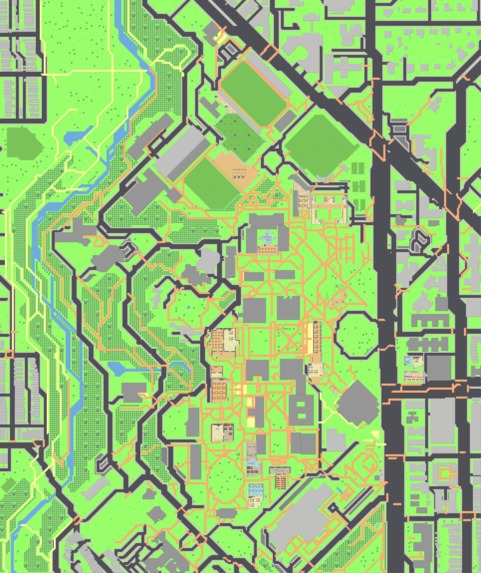
Our simulated world-looks a bit familiar, isn't it?
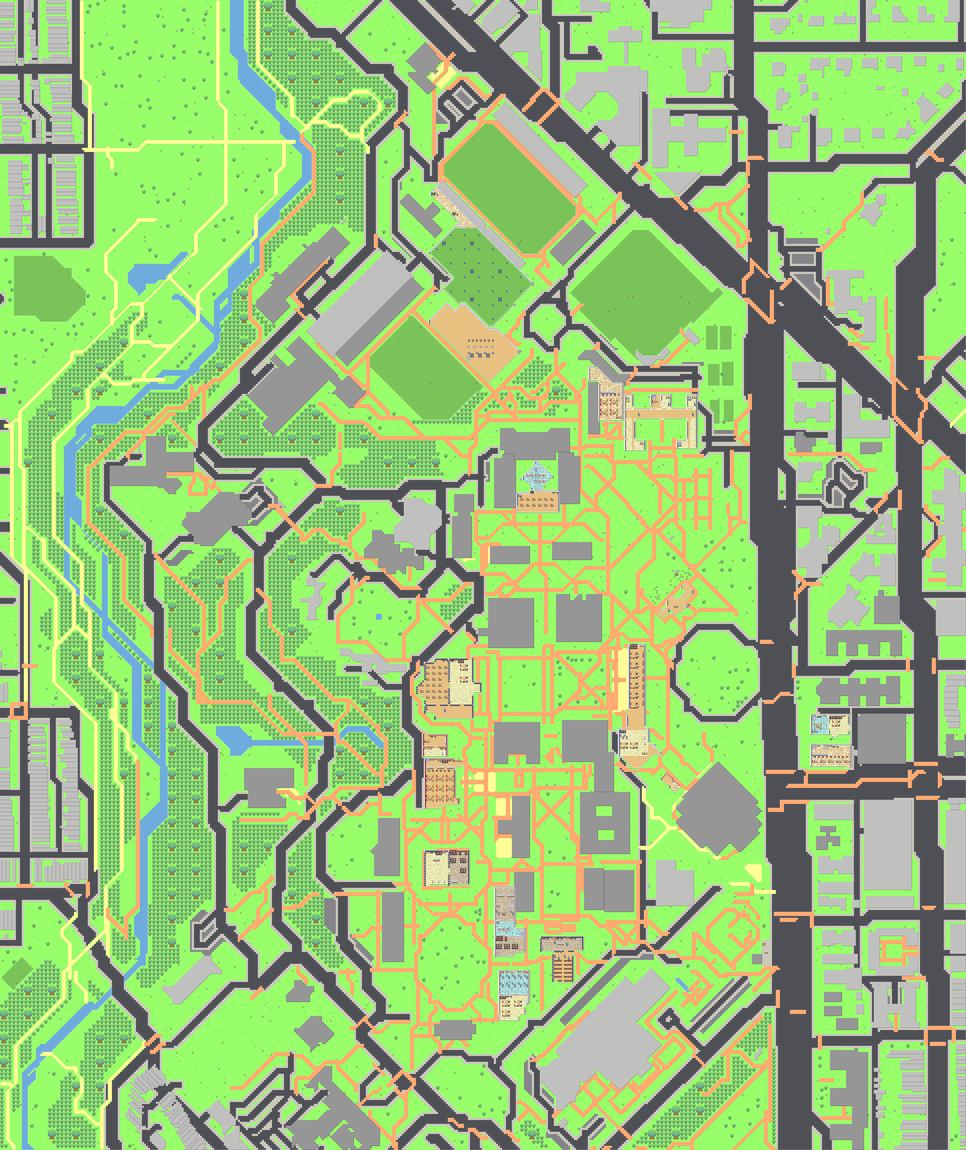
🌐 MemeWorld
A world for evolving ideas, memes and concepts.
One mind remembers. Two minds share. A society makes it culture.
✨ How does “something I said” become “something we say”?
A joke escapes its original conversation. A nickname becomes the obvious name for a place. A phrase starts as encouragement and ends up marking who belongs.
Some ideas travel. Some transform. Most disappear.
MemeWorld gives us a world to explore why.
It is a living AI society populated by agents with personalities, relationships, routines, and imperfect memories. They meet, talk, remember, forget, and reinterpret their experiences. Through these everyday interactions, we investigate how shared language and cultural conventions take shape.
🧠 How small words become daily catch-phrases?
Start with the simplest ingredients: someone experiences something, remembers part of it, and brings it into a conversation. Another person hears it—and carries a different version forward.
Experience → Memory → Conversation → Reinterpretation → Shared culture
Repeat this across a society, and bigger questions emerge:
- What makes an idea catch on?
- Why do some expressions cross communities while others stay local?
- How does a phrase become a joke, a norm, or a signal of belonging?
- When does forgetting help create something new?
🔬 A world you can watch. A history you can inspect.
MemeWorld connects the visible life of a society to the memories and conversations underneath it.
🏘️ Build a society. Give agents a shared environment and opportunities to interact.
🌱 Introduce an idea—or let one emerge. Follow what gets repeated, reshaped, or left behind.
🎛️ Change the conditions. Explore how memory, relationships, communication, and influence shape an idea’s journey.
🔍 Follow the evidence. Move from a society-wide pattern to the encounters and memories behind it.
The starting conditions are yours to choose. What takes hold is the question.
🧪 A simulation of how words spread
We gave four invented phrases to 5 agents each in a society of 100 AI agents and watched them interact for two simulated days. Two phrases referred to real situations; two referred to things that never occurred. Halfway through, we quietly repaired the faulty fume hood described by the phrase “ochre hood.”
What happened?
Words need a reason to be retrieved. Grounded phrases were used 141 times; ungrounded phrases only once. This mirrors cue-dependent retrieval: memories may be available but remain inaccessible without a matching situational cue (Tulving & Pearlstone, 1966; Tulving & Thomson, 1973).
Culture spread through social transmission. “Ochre hood” reached 41 new adopters, and 39/41 could be traced to an earlier exposure. This gives us a controlled way to separate social learning from independent invention, a classic problem in cultural evolution.
Exposure alone did not determine adoption. Non-adopters heard the phrase 6.9 times on average, versus 4.6 times before adoption for adopters. This is more consistent with complex contagion than simple exposure: who conveys an idea and in what social context can matter more than raw repetition (Centola & Macy, 2007).
Shared testimony outlived direct experience. After the hood was repaired, 80/100 agents personally experienced it working, yet 77% of later mentions still described it as broken. This resembles informational social influence and source-monitoring errors, where testimony can outweigh direct perception and people can lose track of whether something was experienced or merely heard (Deutsch & Gerard, 1955; Johnson et al., 1993).
The environment changed faster than the culture did. MemeWorld lets us experimentally connect cultural outcomes to the cognitive mechanisms underneath them.
🗣️ More conversation. More spread? Not for every meme.
In another experiment, we introduced “seven six,” “rizz,” “lock in,” and “aura farming” to five initial carriers each in a society of 100 AI agents across four communities.
Then we changed how readily agents started conversations—keeping the population, communities, and initial carriers the same.
Across the same 5.5 simulated hours, the more talkative society produced 2.6× as much dialogue and 3.5× as many conversations across community boundaries.
But the memes did not all benefit.
Some expressions found new voices.
In the more talkative society, “seven six” and “rizz” appeared in later conversations initiated or continued by agents who had previously heard them. These were uses beyond immediate repetition.A quieter society carried a different winner.
“Aura farming” reached 33 listeners beyond its initial carriers in the quieter condition, compared with 4 in the more talkative one. Two listeners carried it into later conversations in the quieter society; none did so in the talkative society during that window.Being heard was not enough.
“Lock in” reached 62 listeners beyond its carriers in the quieter society, yet none carried it into a later conversation. Circulation and adoption were different outcomes.The words could travel before the meaning settled.
Agents repeated “aura farming” while asking what it meant. Others applied “rizz” to choosing campus events. The record reveals opportunities to study clarification and reinterpretation alongside repetition.
🔍 From counting mentions to following minds
A phrase can be spoken, overheard, remembered, echoed, questioned, and eventually reused elsewhere. MemeWorld lets us distinguish those steps—and inspect the conversations connecting them.
These observations turn cognitive questions into visible evidence: What remains accessible in memory? When does repetition become independent reuse? How do people—or agents—negotiate what a phrase means?
An idea’s first audience is only the beginning. What matters is what the next speaker does with it.
🚀 The bigger ambition: a laboratory for artificial culture
As AI agents increasingly interact with one another, their shared language, conventions, and social histories become a new frontier for exploration.
MemeWorld makes these questions concrete enough to experiment with and visible enough to investigate. For researchers, it offers a configurable environment for studying cultural mechanisms. For builders, it opens a window into agents with persistent social lives. For everyone else, it invites a closer look at how “mine” becomes “ours.”
Build a society. Give an idea its first audience. Discover what it becomes.
Built With
- anthropic
- next.js
- openai
- python

Log in or sign up for Devpost to join the conversation.