-
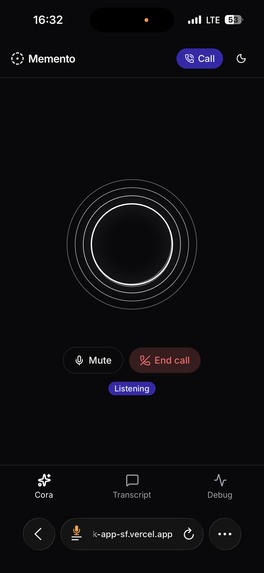
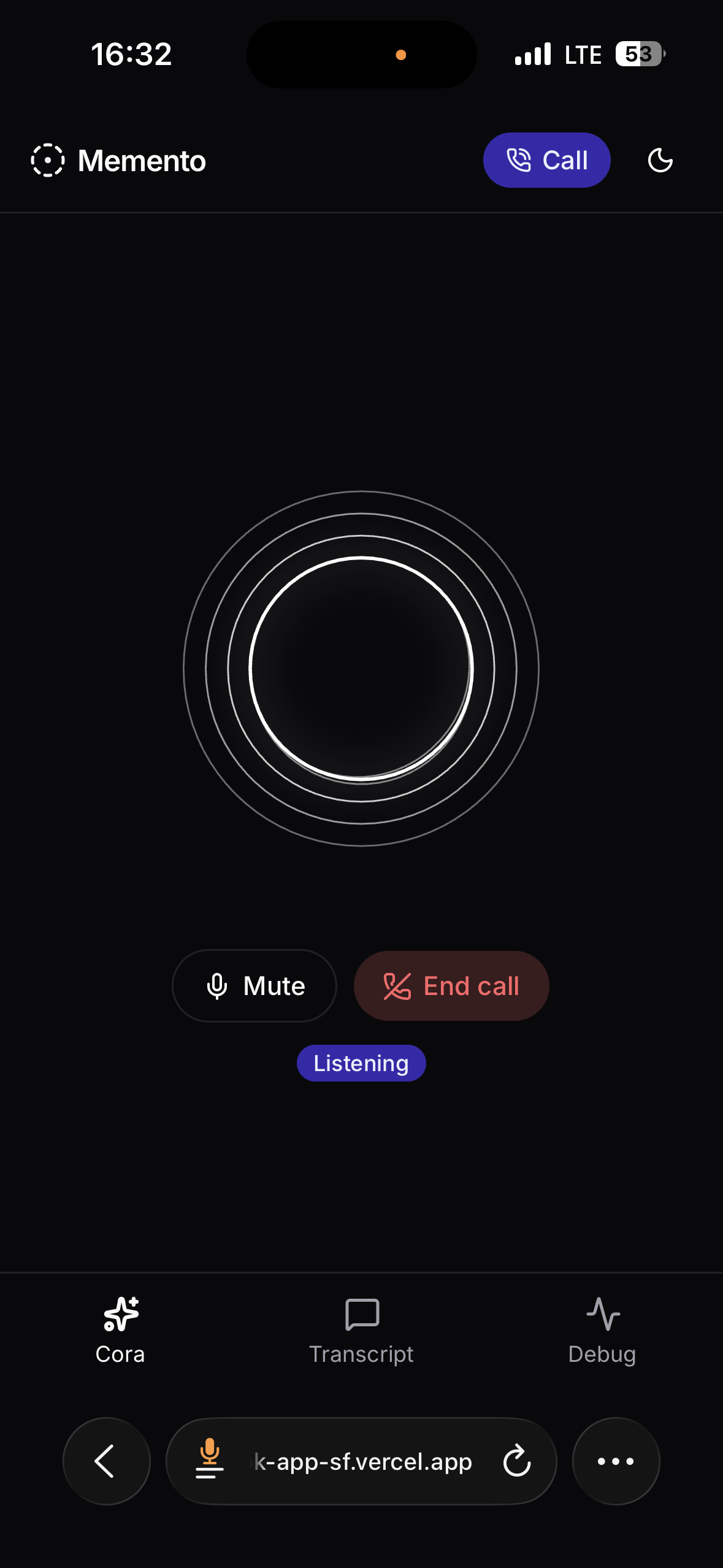
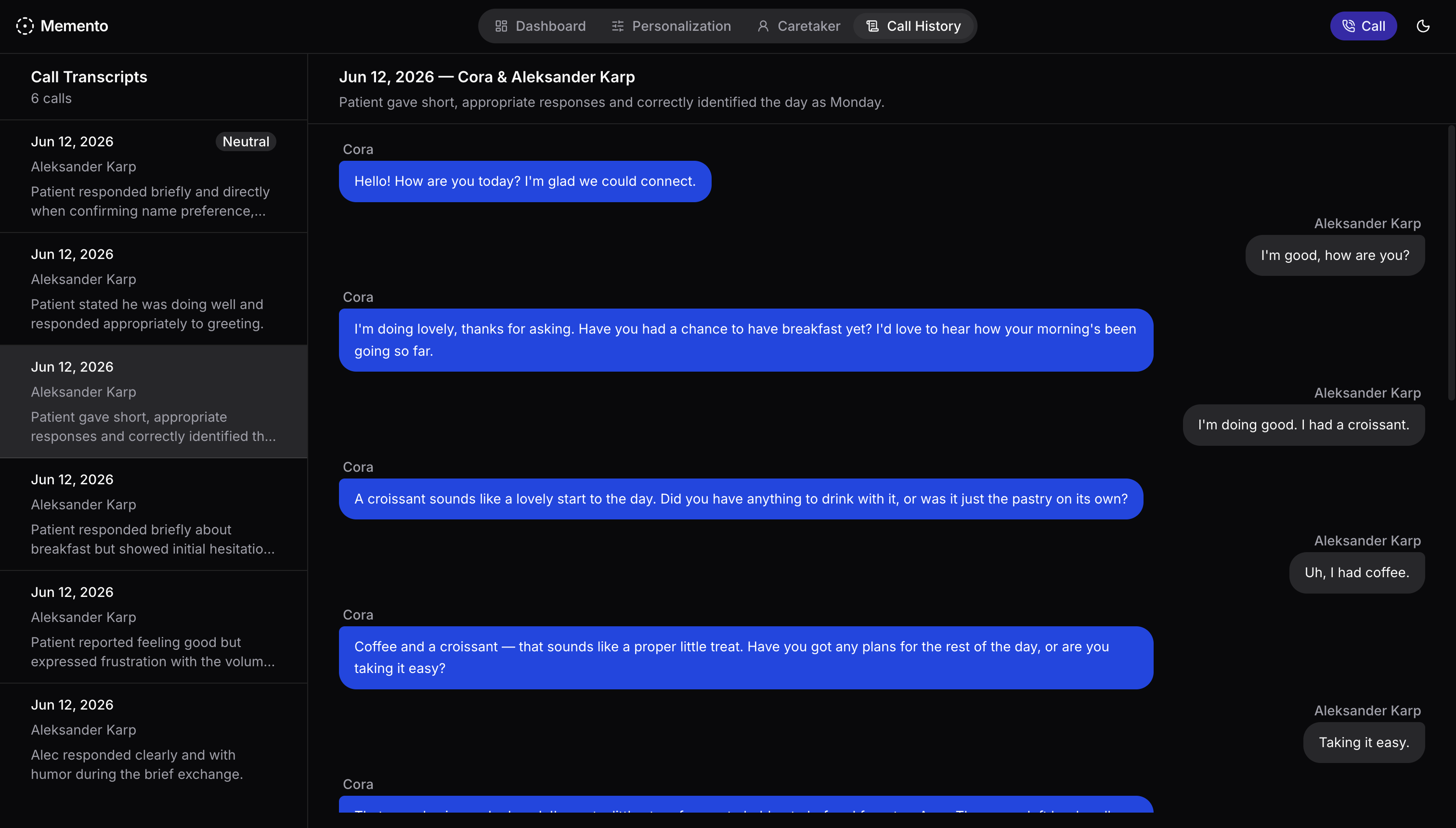
Cora Agent Live Call
-
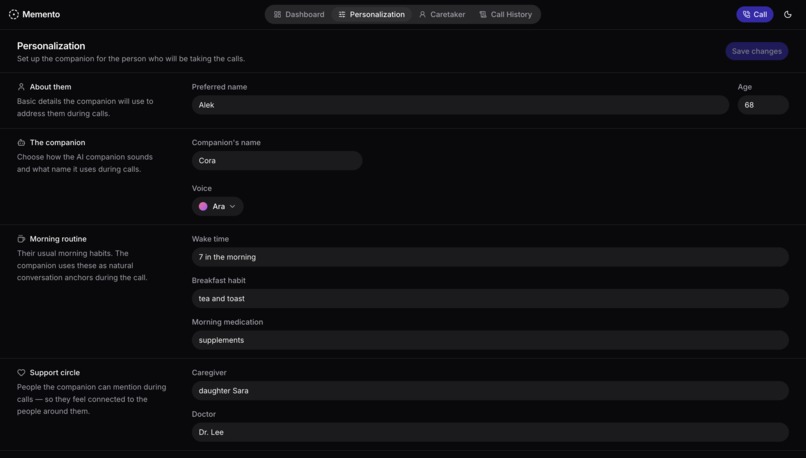
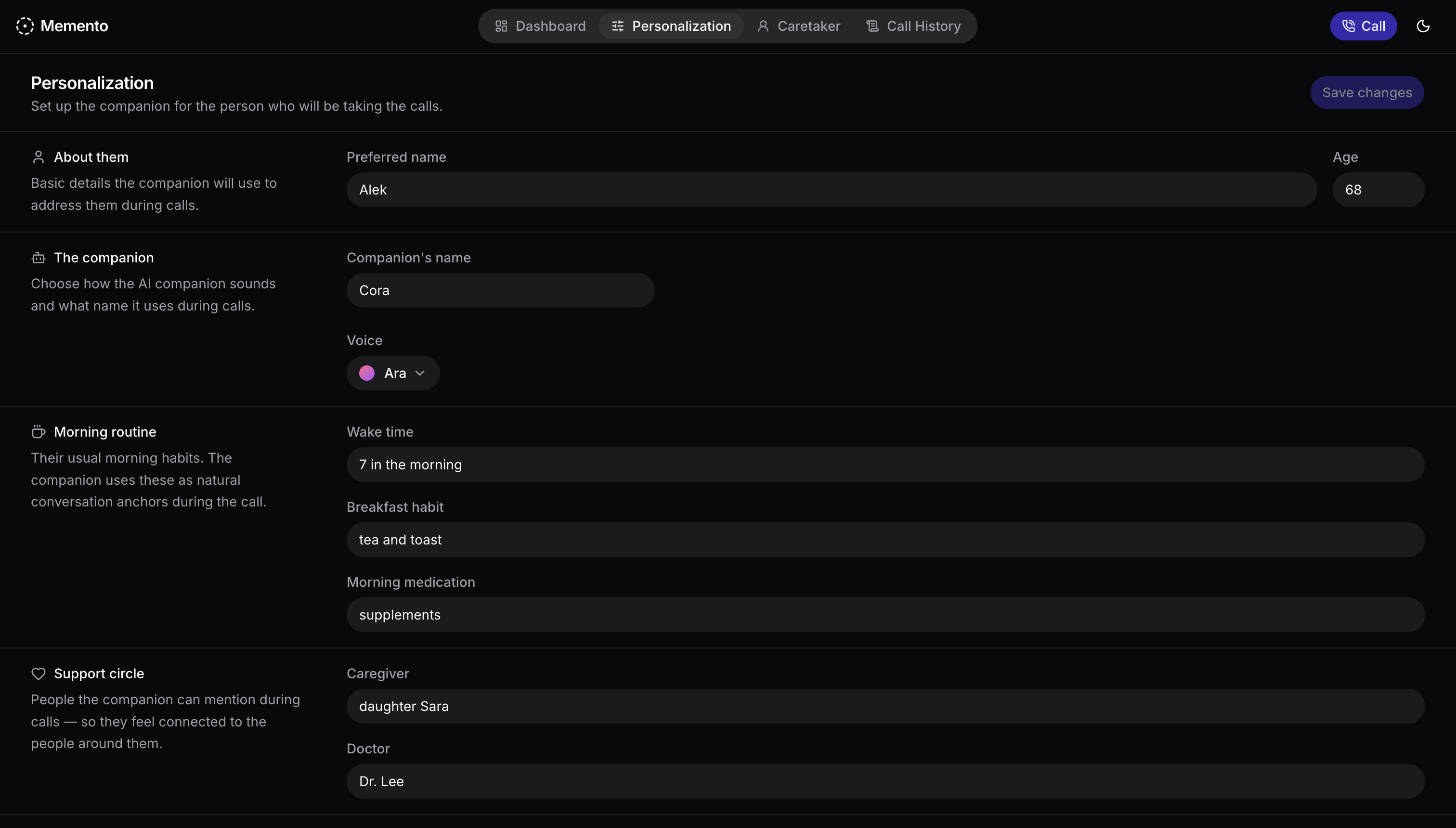
Curation of Cora and knowledge base of client
-
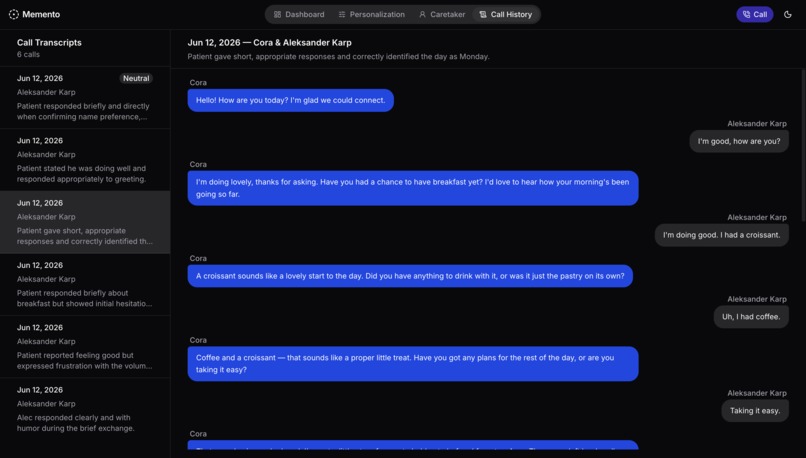
Call transcript
-
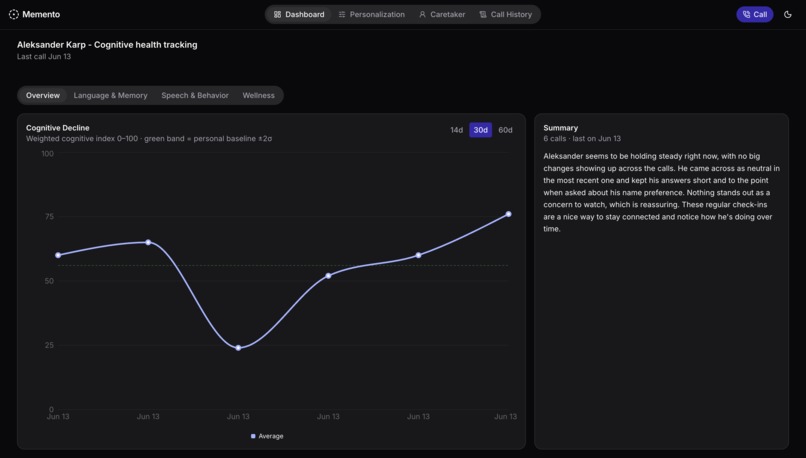
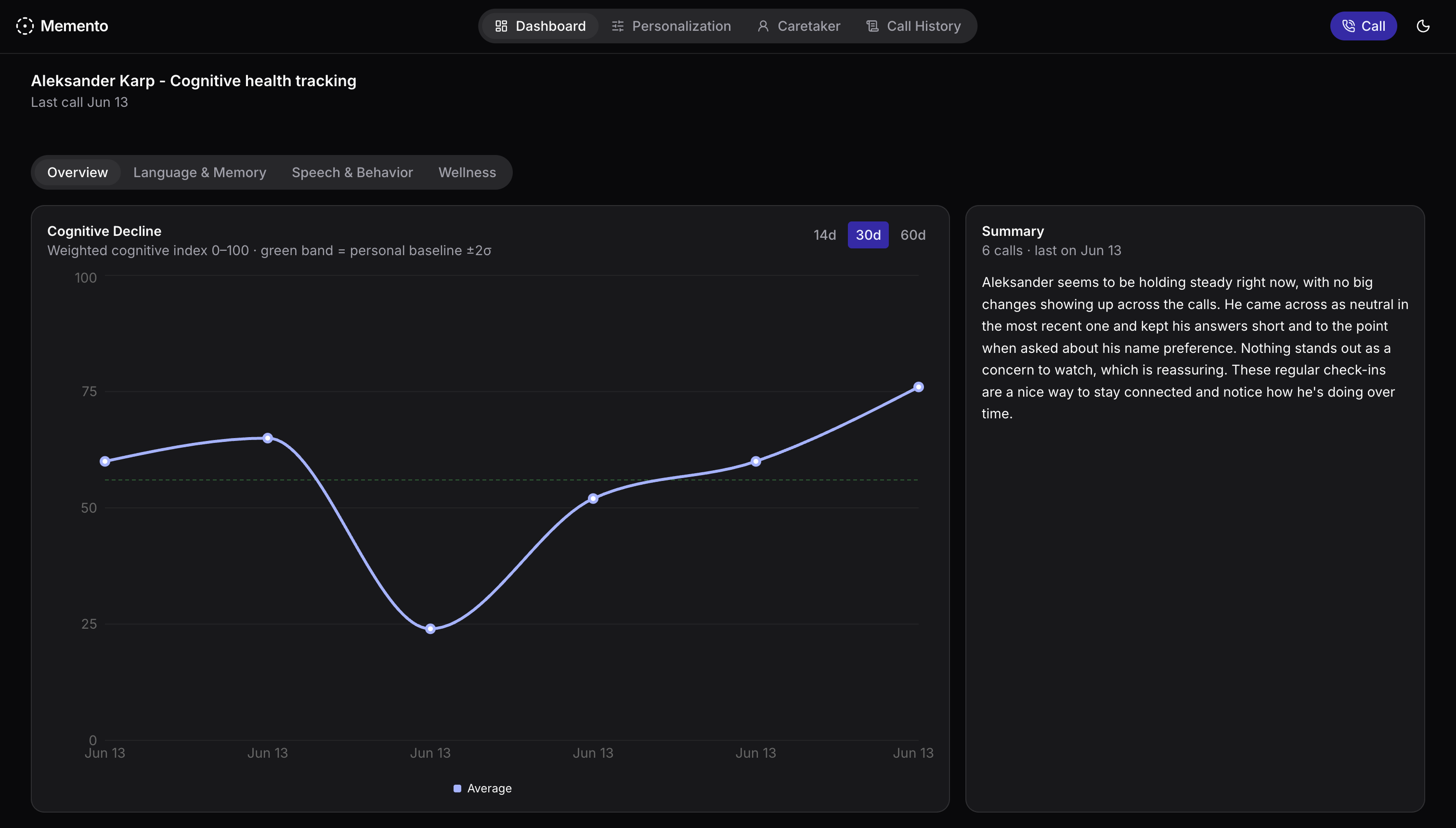
Major cognitive trend over time
-
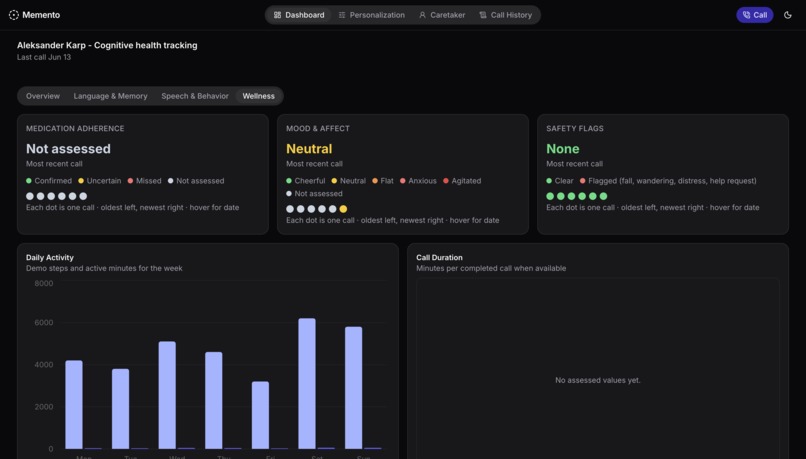
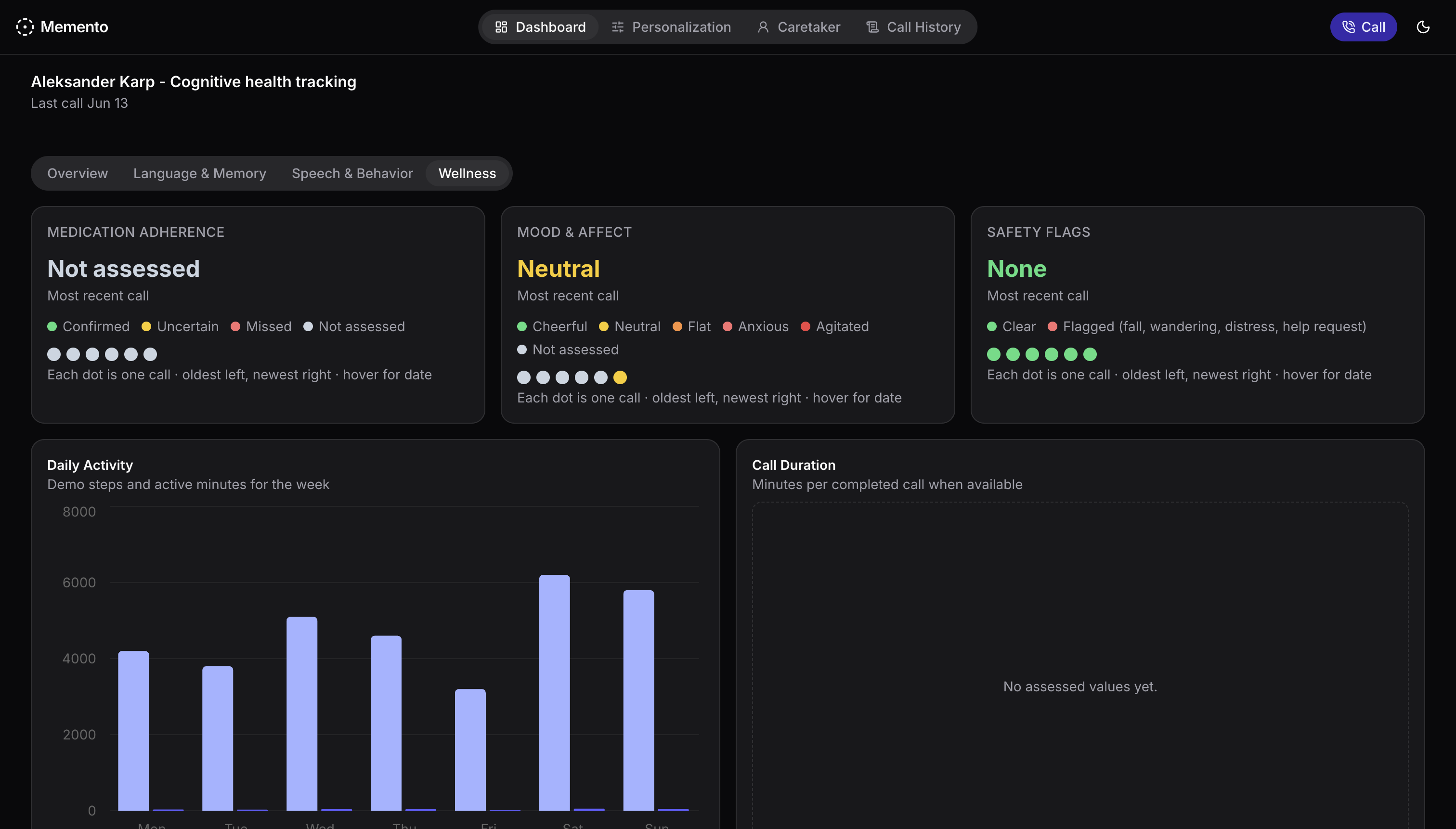
Specific cognitive measurement KPIs
-
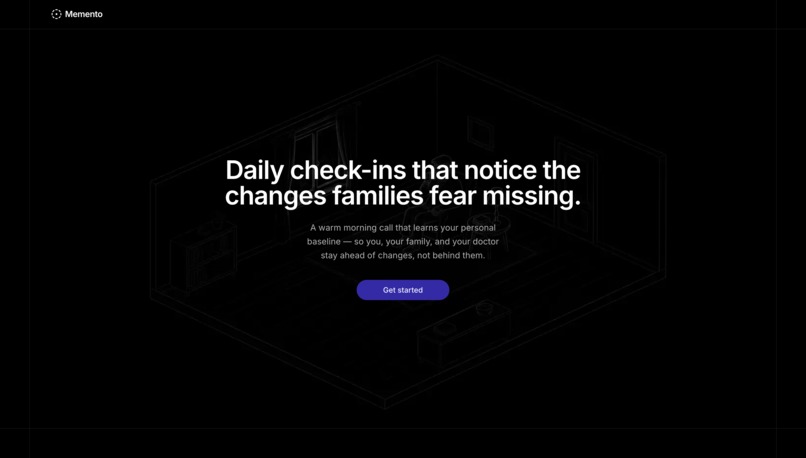
Memento
Inspiration
Dementia care has a quiet crisis hiding in plain sight: the gap between clinic visits.
A patient might see their neurologist once every few months. In between, caregivers are expected to notice subtle shifts in memory, speech, mood, and daily functioning with no structured tools, no longitudinal record, and no clear way to escalate. Most of what changes between visits simply disappears.
That creates a problem for everyone involved. Caregivers are left guessing. Clinicians are forced to make decisions from sparse, outdated snapshots. Patients often have the least visibility into their own patterns of change.
What struck us most was not just the caregiver burden. It was the patient's invisibility in their own care.
Mary, 76, with early MCI, has no idea whether this Tuesday was better or worse than last Tuesday. She cannot easily direct her own care team. She has no clear voice in what gets shared or with whom.
We wanted to fix that, not by adding another chatbot, but by making a phone call feel like a friend while quietly collecting the kind of cognitive, behavioral, and speech signals that are usually hard to capture consistently.
Our approach is grounded in real-world dementia monitoring methods and recent research showing that phone-based assessments, conversational speech, and longitudinal voice data can provide useful signals related to cognitive decline.
What We Built
Memento is a daily AI voice companion for dementia patients.
It calls each morning, has a warm natural conversation, and embeds cognitive and behavioral KPI collection into the flow of that call. Instead of requiring tedious assessments or constant clinician involvement, Memento collects lightweight longitudinal data over time and turns it into actionable trends for the patient, their care circle, and their clinicians.
For clinicians, Memento reduces the burden of making decisions from incomplete snapshots. It gives them a clearer view of how a patient is changing between visits, helping surface when medication review, care plan updates, or earlier follow-up may be worth considering.
For patients, Memento makes monitoring feel personal and supportive instead of clinical and intimidating.
Core Loop
Personalized voice call
→ Speech and conversation signal extraction
→ Longitudinal cognitive and behavioral KPI tracking
→ Patient reviews their own trends
→ Patient decides what to share
→ Caregiver and clinician act on patient-authorized signals
Built With
- bun
- grok-(grok-4.3)
- grok-voice-(grok-voice-think-fast-1.1)
- neon-(postgres)
- next.js-(app-router)
- shadcn
- supermemory
- tailwind-css
- typescript
- vercel
- xai-api

Log in or sign up for Devpost to join the conversation.