-
-
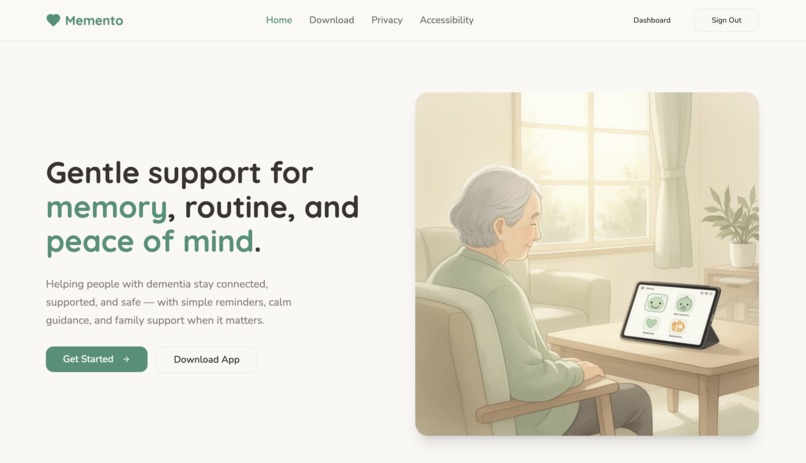
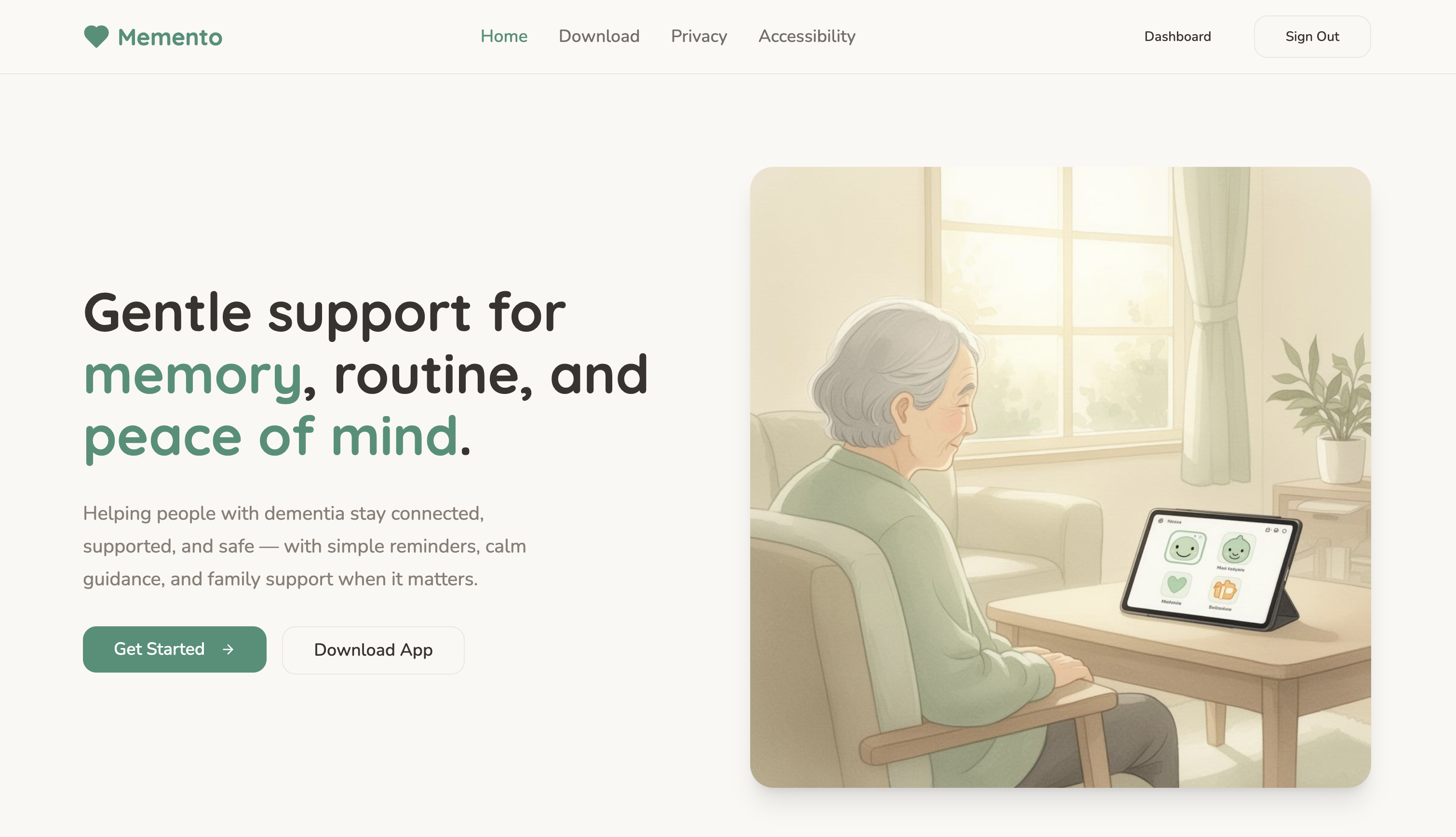
Memento Web App
-
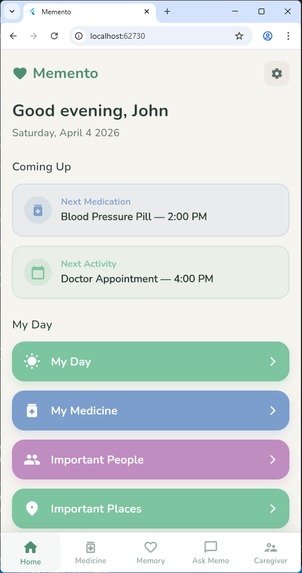
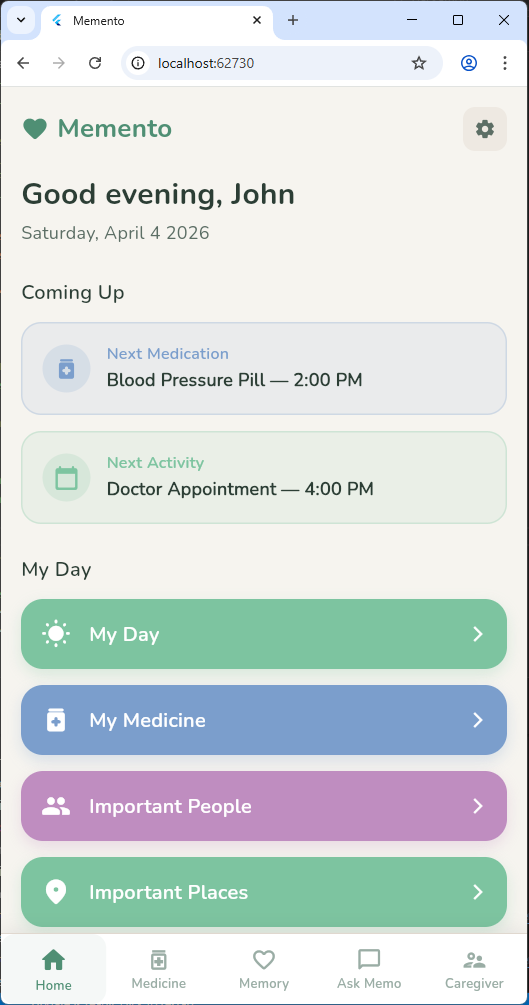
Memento Mobile App
Inspiration
We built Memento because dementia care is not only about schedules and medication, but also about fear, confusion, and emotional safety. One of the problems we kept thinking about was what happens when a person with dementia becomes overwhelmed, forgets where they are, or starts to panic. In those moments, they do not need a complicated app. They need calm guidance, familiar names, reassuring routines, and quick access to the people who make them feel safe.
That idea shaped the entire project. We wanted to create something that could reduce distress for patients while also giving caregivers a practical way to prepare support ahead of time.
What it does
Memento is a care companion designed for people living with dementia and the caregivers supporting them. It helps create a calmer daily experience by combining routine, reassurance, and connection.
Caregivers can set up a patient profile with important memory cues, familiar relationships, comfort notes, routines, medications, and emergency contacts. This allows the patient’s portal to feel more personal and more supportive instead of generic.
Patients use a simplified portal where they can see what is planned for the day, review medications, reach trusted contacts, and talk to the Memento Assistant. The assistant is designed to respond in a gentle and reassuring way, helping remind patients who they are, who they are close to, and what parts of their day are familiar and safe. The goal is not just organization, but emotional grounding.
How we built it
We focused on building an experience around real dementia-care needs. We designed the patient side to feel simpler and calmer, while giving caregivers the ability to shape the information that matters most: who the patient trusts, what routines bring comfort, and what reminders help reduce stress.
We also built the assistant experience around continuity. Instead of treating every interaction like a blank slate, we wanted it to remember context and respond in a way that feels more supportive and human. That matters especially in moments when a patient may feel disoriented, anxious, or afraid.
Challenges we ran into
The hardest challenge was designing for emotional care, not just task management. A normal productivity-style app does not work well for dementia. We had to think carefully about how information should be presented so it feels grounding rather than overwhelming.
Another challenge was making sure the caregiver’s understanding of the patient actually carries over into the patient’s experience. If a caregiver adds comfort notes, trusted people, routines, or support details, those need to appear in a way that genuinely helps the patient feel safer. That required us to keep both sides of the app synchronized and centered around the patient’s lived experience.
We also had to think about trust. Patients should not have to deal with difficult login systems or confusing flows, especially when they may already be anxious. That pushed us toward a much simpler access model and a more supportive interface overall.
What we learned
This project taught us that dementia care technology has to be built with empathy first. The most important question is not just “what feature can we add,” but “will this help someone feel calmer, safer, and more oriented?” We learned that familiar names, gentle wording, predictable routines, and clear support pathways can make a huge difference.
We also came away with a deeper appreciation for caregivers. They carry a huge emotional and organizational load, and tools like Memento should reduce that burden while helping them create a more reassuring world for the person they care for.
Built With
- dart
- flutter
- node.js
- openai-api
- react
- shadcn/ui
- sqlite
- tailwind-css
- typescript
- vite
- zod


Log in or sign up for Devpost to join the conversation.