-
-
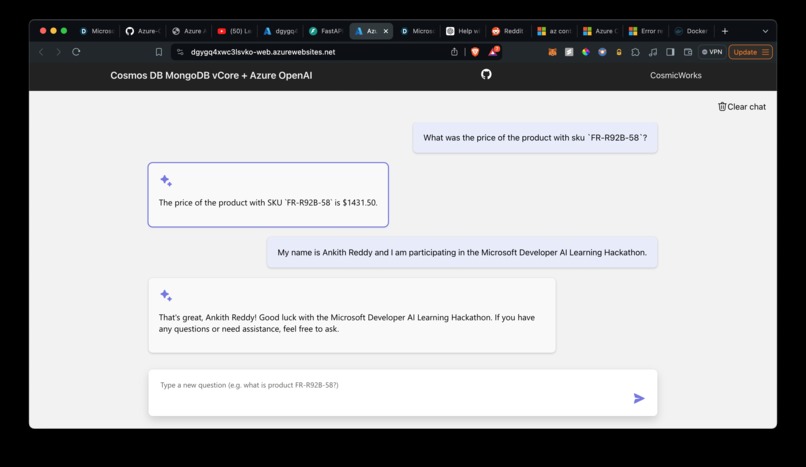
phase 1 co-pilot confirmation
-
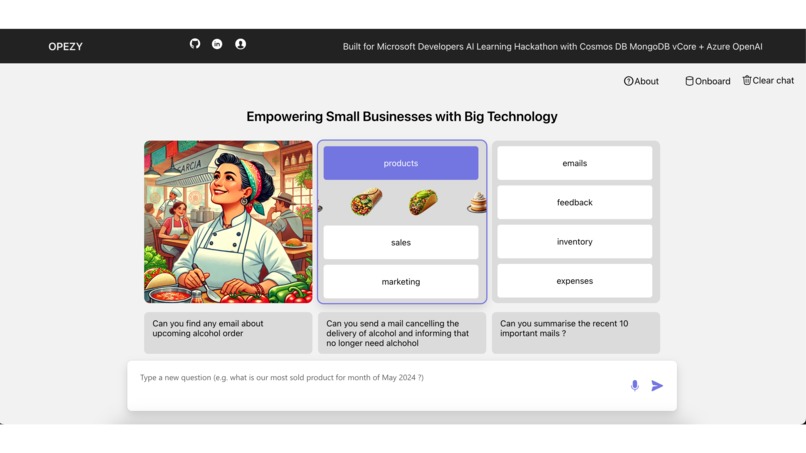
phase 2 custom co-pilot
-

Cloud skill challenge completion part 1 email confirmation
-

Cloud skill challenge completion part 2 email confirmation

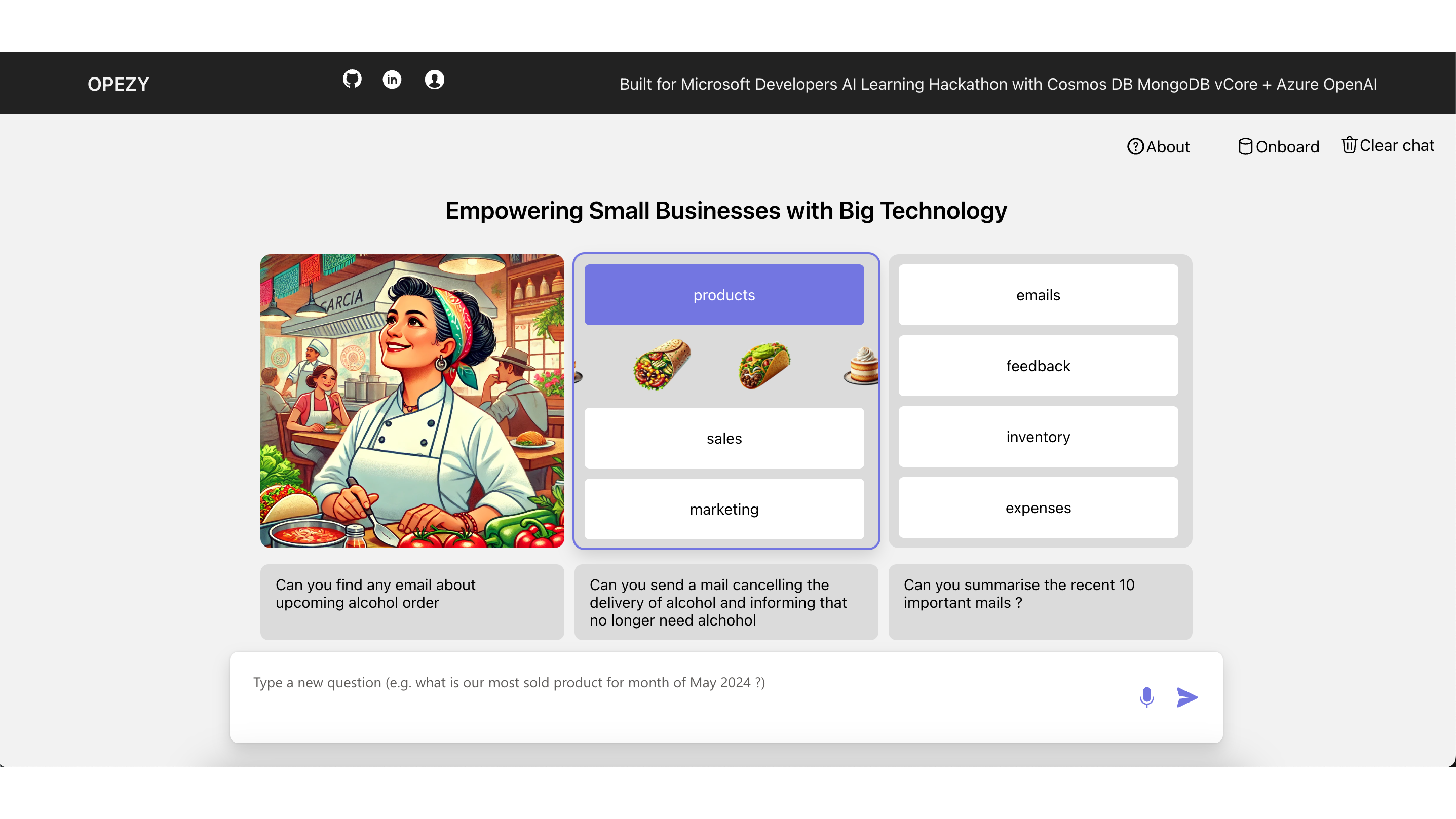


Inspiration
The inspiration for creating Opezy stems from personally witnessing the incredible talents of small business owners, whether they're crafting gourmet dishes, creating unique retail experiences, or providing top-notch services. Many of these entrepreneurs excel in their craft but may not have extensive training or resources in business management. This realization sparked the idea for Opezy—an AI copilot designed to bridge the gap, allowing these skilled individuals to thrive not just in their craft but also in their business operations. Opezy is built to empower these entrepreneurs, providing them with the tools to make data-driven decisions and streamline tasks like sales analysis, inventory management, customer feedback, and marketing, ultimately enhancing their productivity and growth.
What it does
Opezy is an AI platform that simplifies several key business operations for small businesses:
- Sales Analysis: Identifies best-selling products and tracks sales trends to highlight underperforming items.
- Inventory Management: Uses GPT-4 vision to check inventory quality, ensuring that all products meet freshness standards.
- Customer Feedback: Analyzes feedback using vector databases to understand common complaints and areas for improvement.
- Demand Forecasting: Uses advanced statistical models and real-time data to predict product demand, optimizing inventory levels and reducing waste.
- Marketing: Automates the sending of targeted marketing emails and manages social media campaigns.
- Expense Management: Uses machine learning models like the Isolation Forest, along with vector embeddings of expense data, to detect financial anomalies and manage costs effectively.
- Voice Interaction: Incorporates a voice-enabled chatbot to provide real-time support and information, enhancing user experience and accessibility.
How it was built
Opezy was developed using a range of cutting-edge technologies:
- Data Storage: Azure Cosmos DB for MongoDB (v-core) is utilized for its flexible storage of database collections and vector embeddings, from sales data to customer feedback.
- AI Integration: Azure OpenAI services were integrated for tasks like natural language processing and The GPT-4 vision API is employed to visually inspect inventory and assess quality.
- Marketing Automation: The Gmail API and Twitter API facilitate the automatic sending of enriched marketing emails and tweets.
- Anomaly Detection: Machine learning models like the Isolation Forest are used to spot irregularities in expense records, combined with vector embeddings of expense data, to detect anomalies in respective category effectively.
- Conversational AI: Agent and tools capabilities from LangChain are implemented to interact with users and provide quick answers based on their queries.
- Cloud Deployment: The entire platform is deployed on Azure Cloud, ensuring scalability, reliability, and seamless integration across all services.
What's next for Opezy
- Scalability : Aiming to scale the platform to support a broader range of small businesses and onboard business data seamlessly.
- Enhanced Marketing Features: Plans include adding more advanced marketing tools like personalized recommendations and automated social media posts.
- Expanded AI Capabilities: Looking to broaden AI features to include more detailed predictive analytics .
- User Feedback: Continuously refining Opezy based on user feedback to ensure it meets their evolving needs.


Log in or sign up for Devpost to join the conversation.