Inspiration
Every party has that moment when someone does a perfect impression of a meme and the whole room falls apart laughing. I wanted to bottle that moment and turn it into a game anyone can join in seconds. No controllers to pass around, no app to install, just a TV, your phones and a bit of courage.
What it does
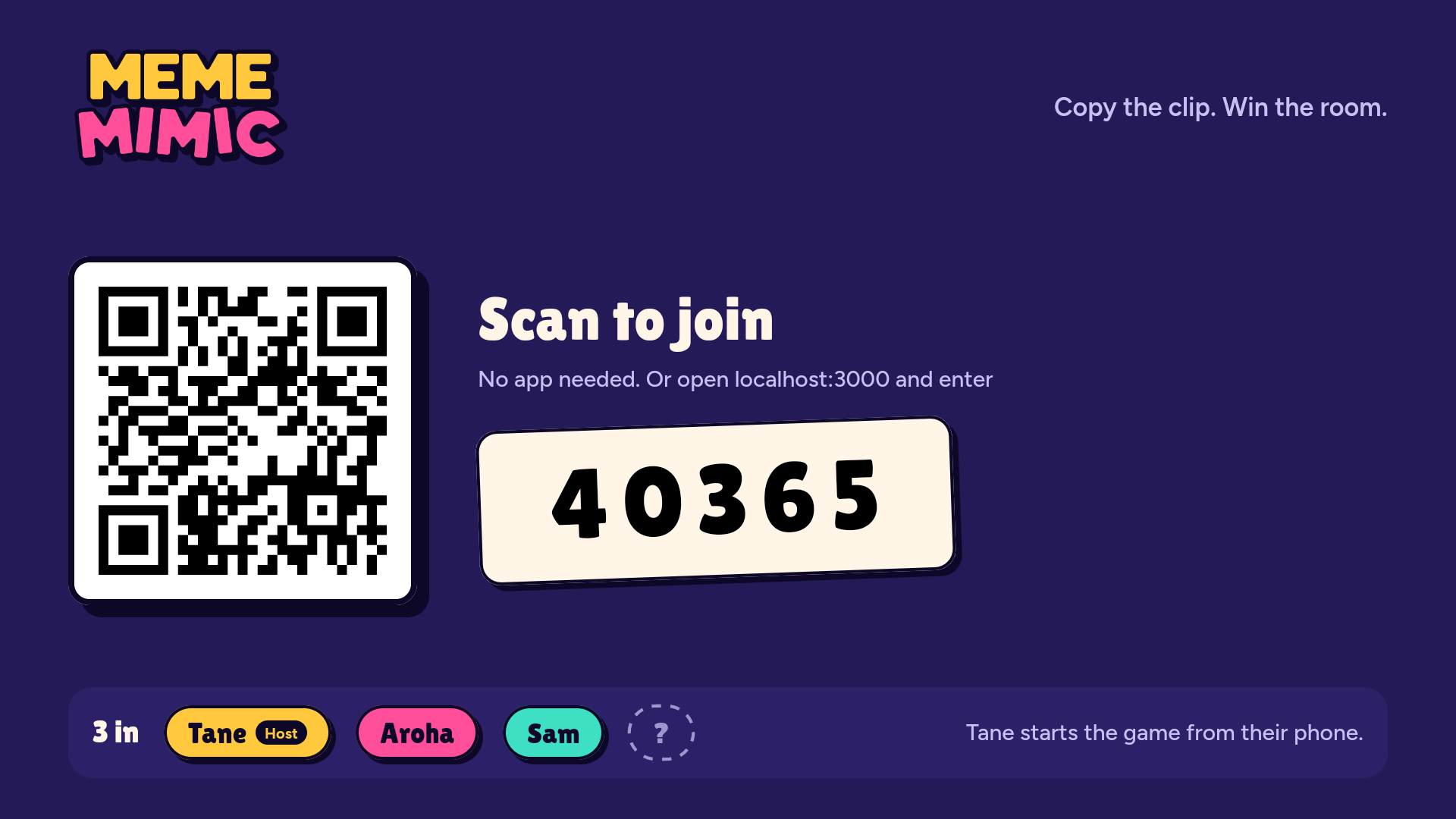
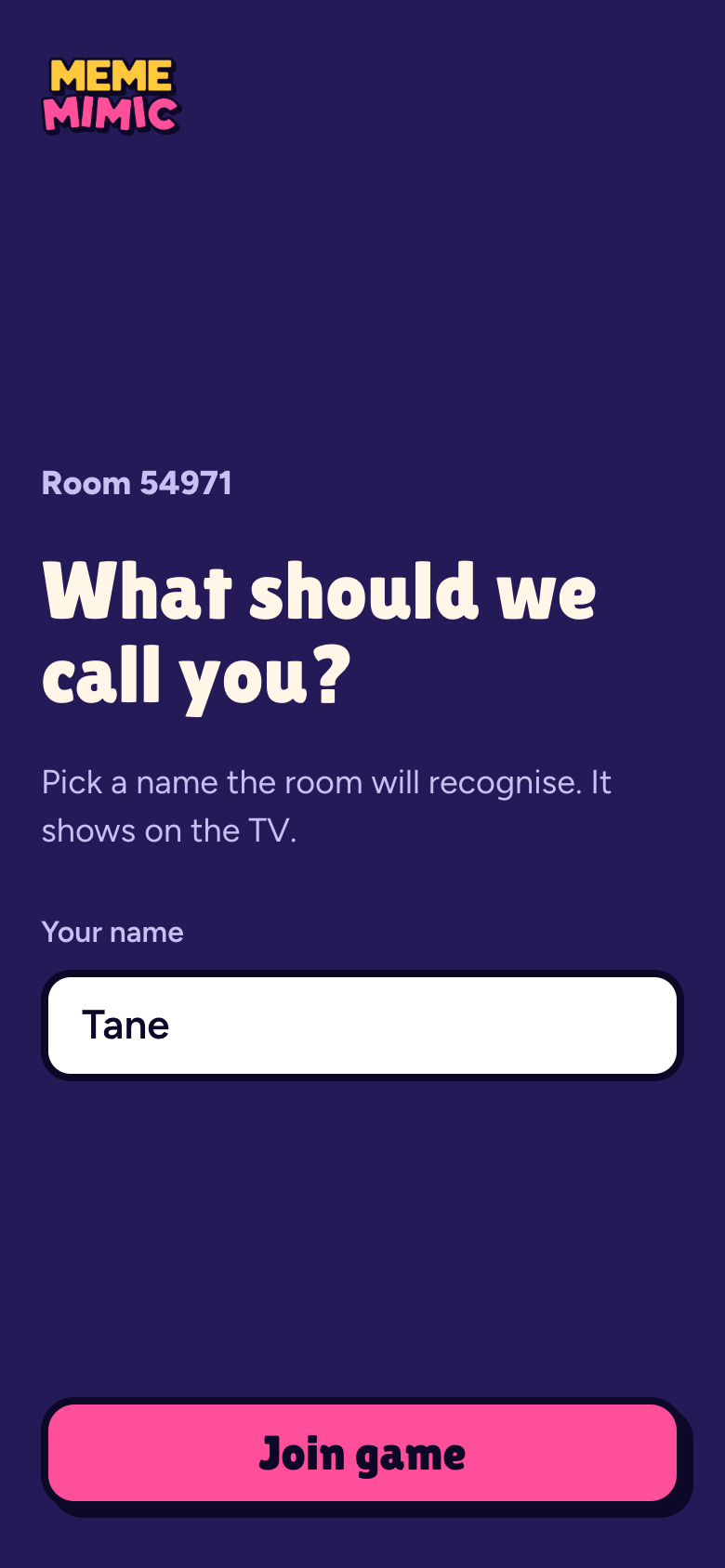
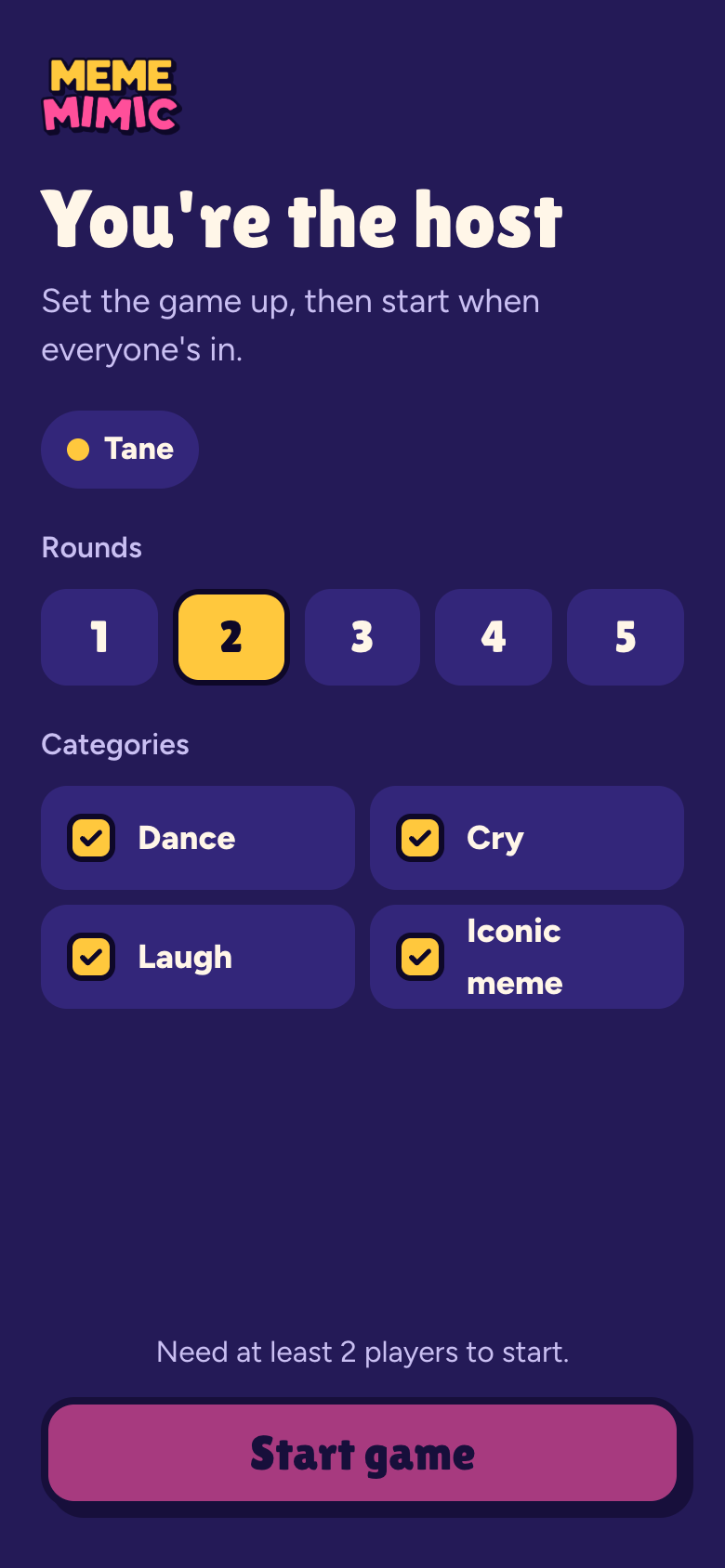
Meme Mimic is a party game for Fire TV. The TV shows a QR code, everyone scans it with their phone and picks a name. The first person in becomes the host and chooses how many rounds to play and which categories to include: dances, cries, laughs or iconic memes.
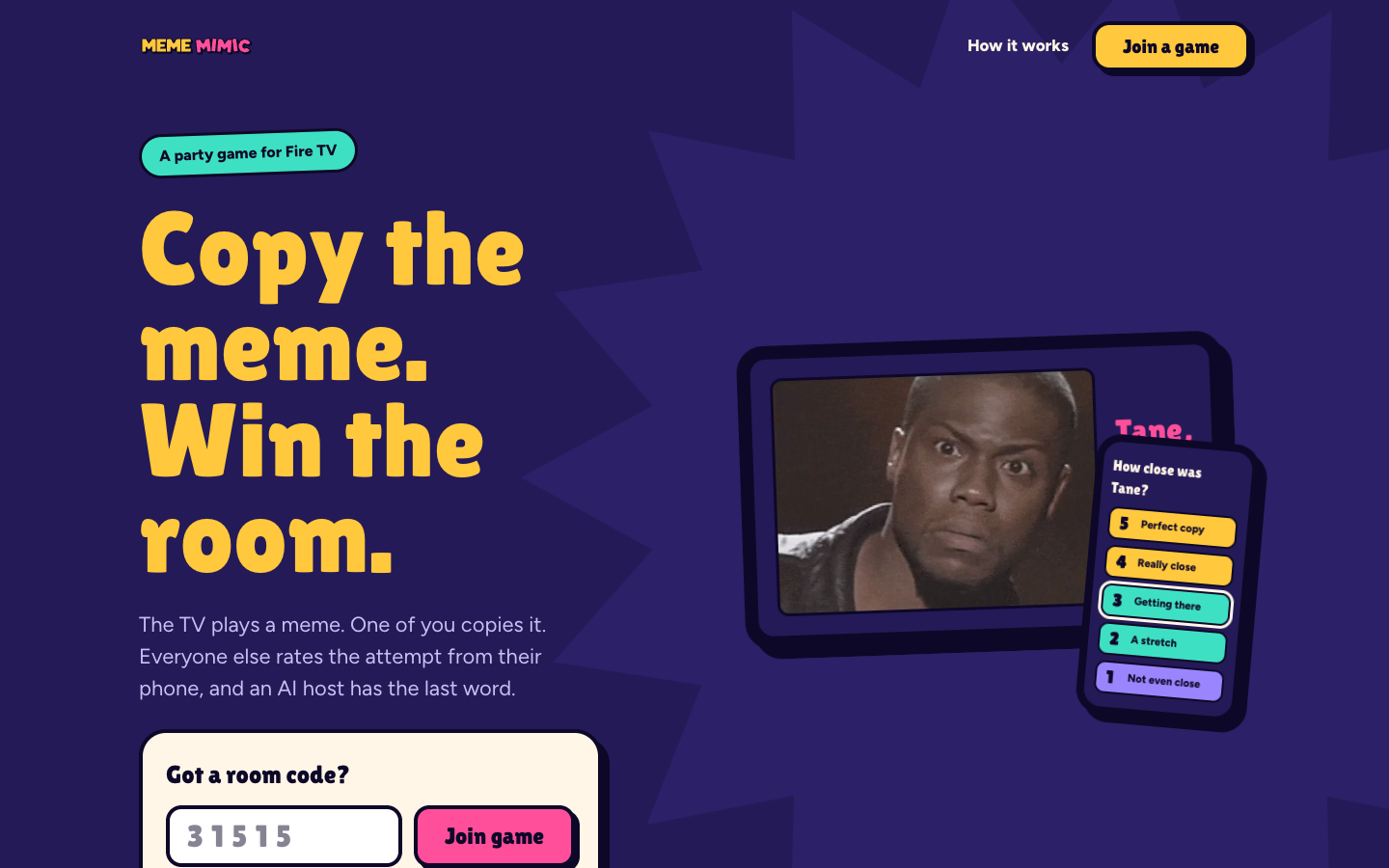
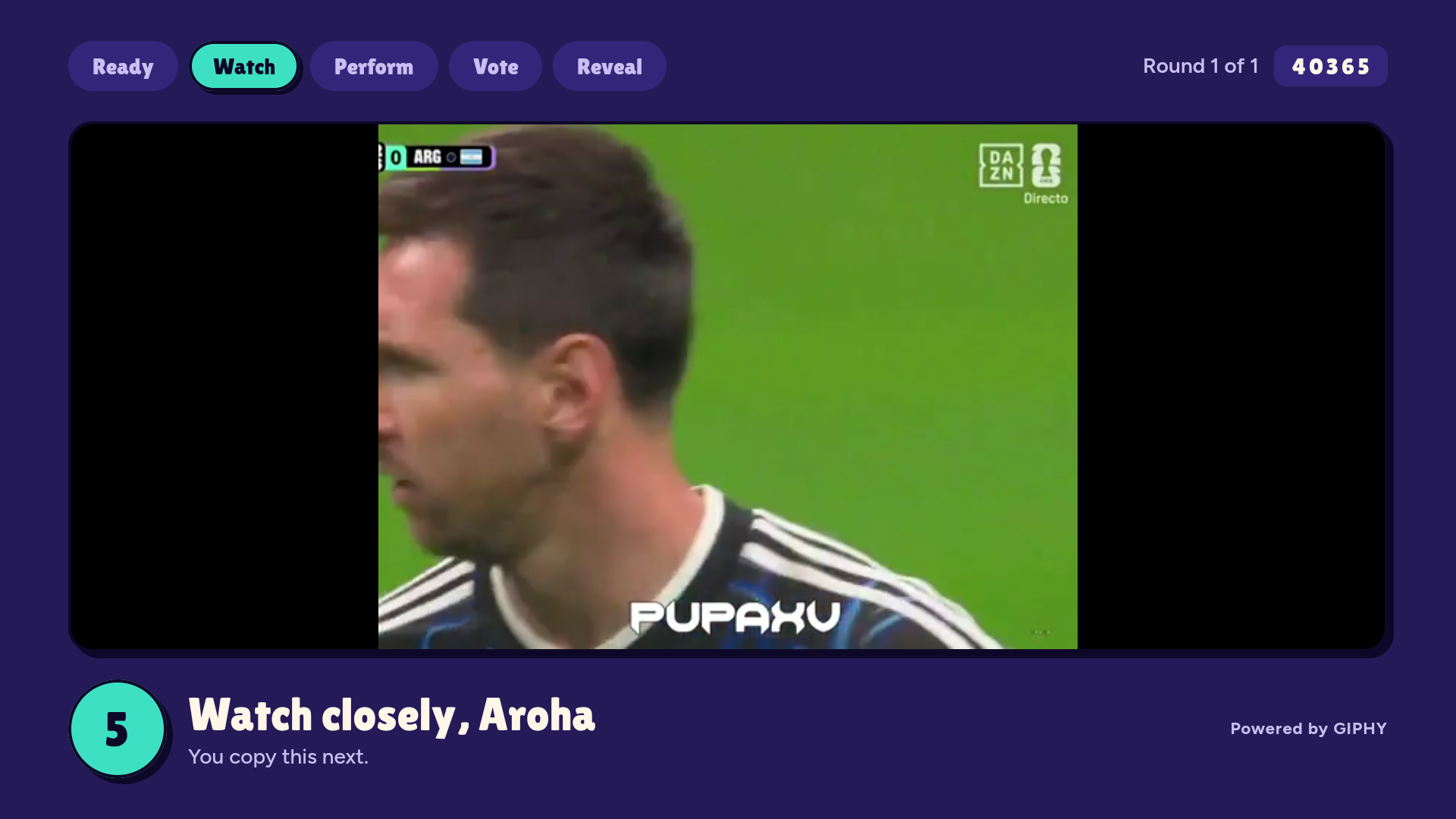
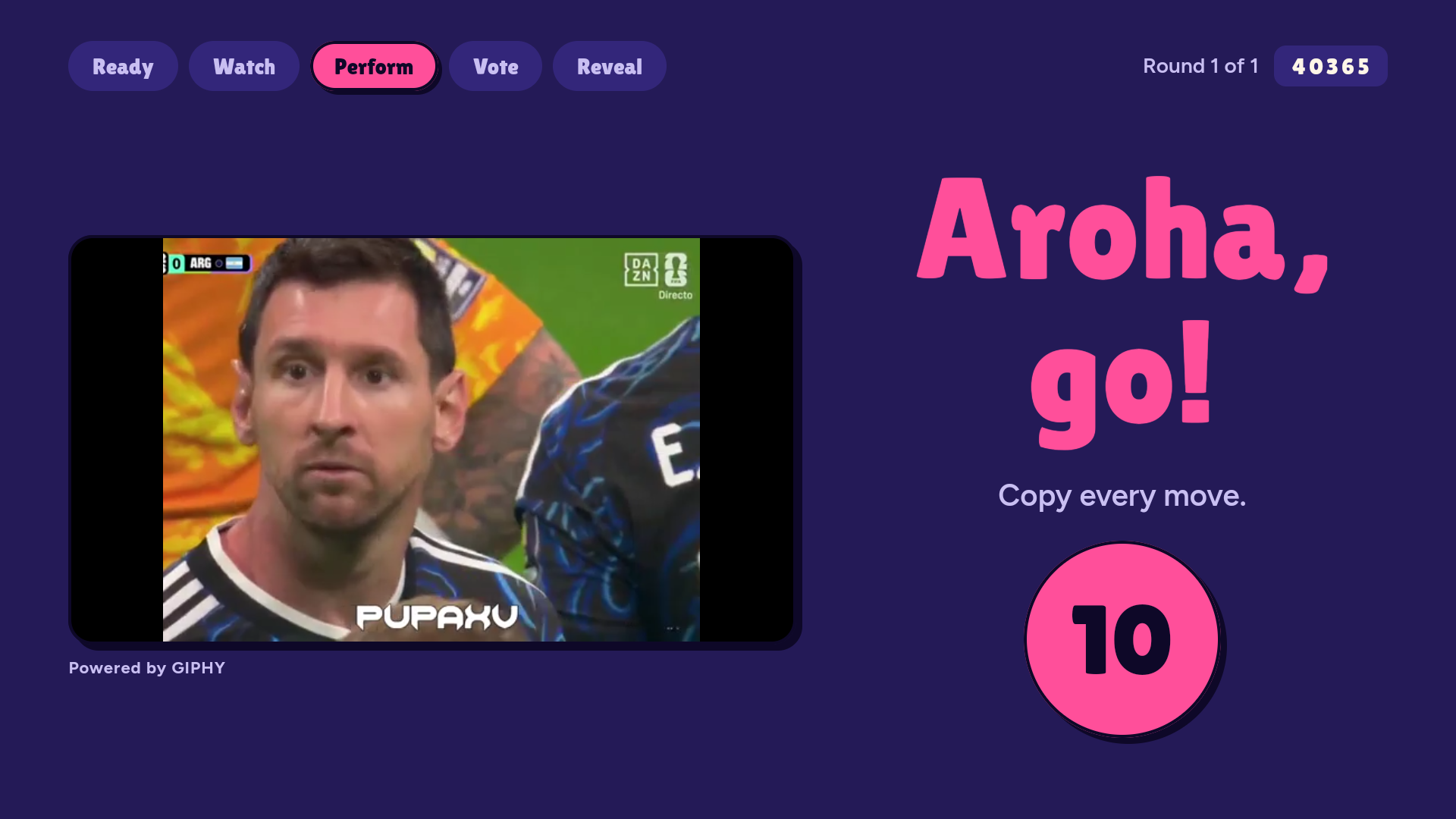
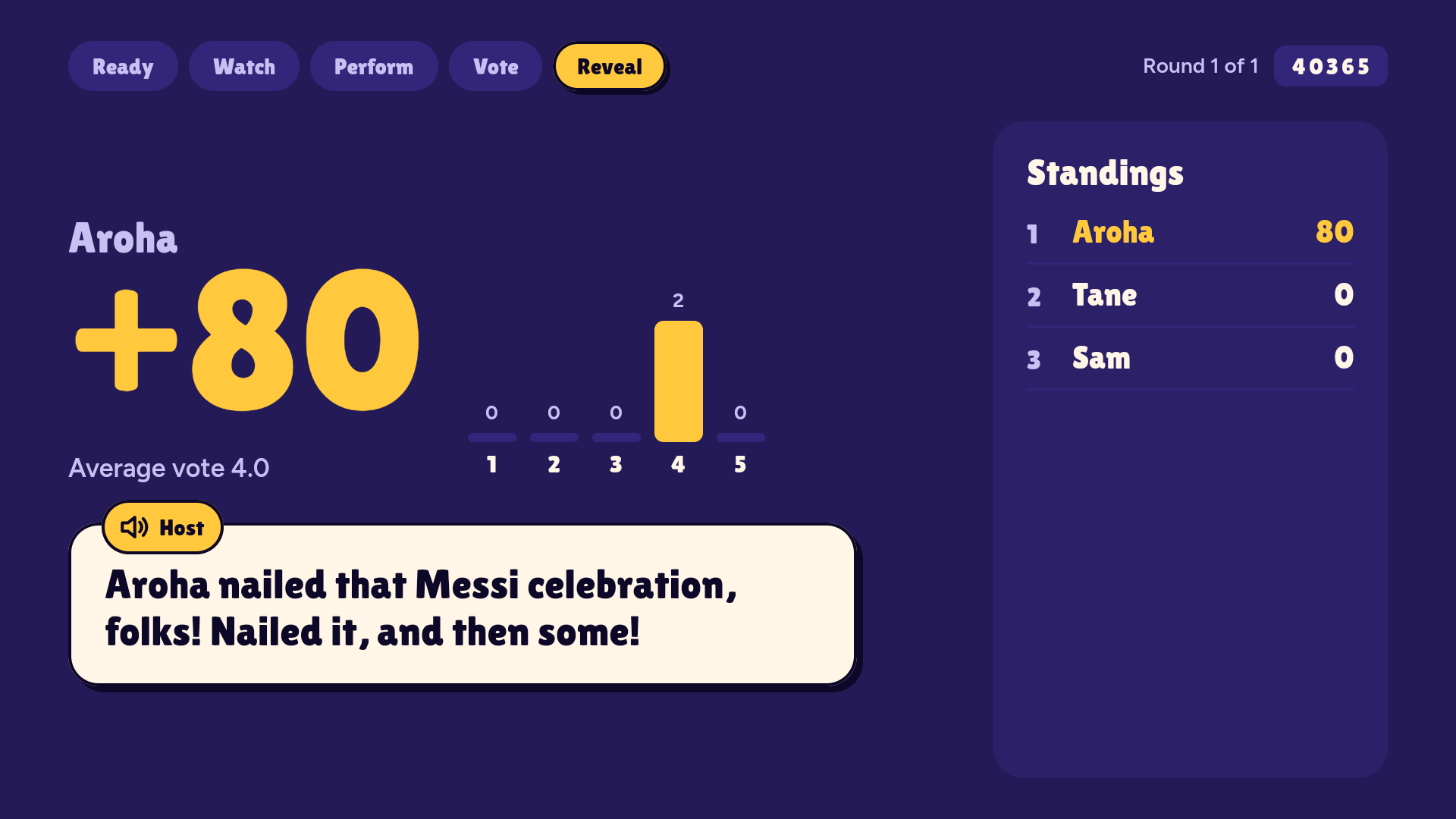
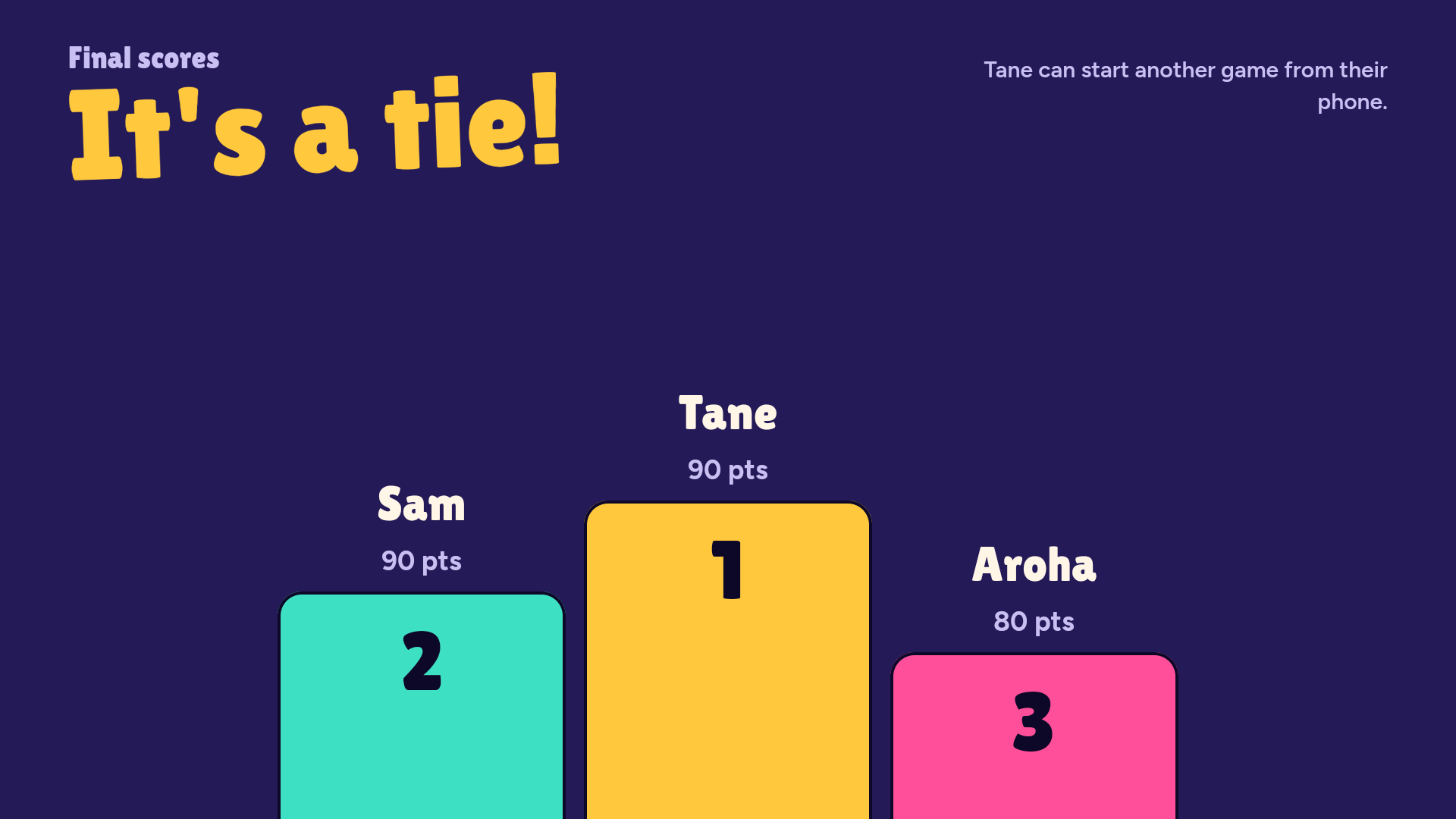
Each turn the TV plays a meme clip from GIPHY. The player who is up gets fifteen seconds to copy it in front of everyone while the clip keeps looping. Everyone else rates the attempt from 1 to 5 on their phone. Once the votes are in, the host reveals the score and an AI host sums up the performance in one cheeky line, read out loud on the TV. Most points at the end wins.
How I built it
The TV app is built with React Native on Vega OS, Amazon's new operating system for Fire TV. Players use a web page on their phone, built with TanStack Start, so there is nothing to download.
The game itself runs on Cloudflare. Every room is its own Durable Object that holds the players, scores and timers, and talks to the TV and every phone over WebSockets. The server owns the clock, so the TV and all the phones count down together and nobody can cheat the timer.
Clips come from the GIPHY API, using the MP4 versions so they play smoothly on a streaming stick. The AI host uses Amazon Bedrock to write a line based on the clip and the votes, and Amazon Polly to say it out loud in a New Zealand voice.
Challenges I ran into
Getting set up on Vega OS was harder than I expected. It looks like React Native, but a lot of popular libraries simply do not work on it. Some packages only work once you swap them for Amazon's ported versions, and others have no Vega version at all. There is no Expo, and the styling library I wanted needed a newer React than the SDK I started on, so I went back to plain StyleSheet. A good chunk of my early time went into finding out what worked before I could build anything.
GIPHY clips come in every shape, from tall phone videos to wide film scenes. My first layout put the instructions on top of the video and they kept covering the funniest part, so I redesigned the screen so nothing ever sits on the clip.
Keeping the TV and a room full of phones in sync took some care. Every screen counts down from the same server time, and if a phone drops off or goes to sleep, the player can rejoin without losing their score. Rooms also had to clean themselves up once everyone goes home.
Accomplishments that I'm proud of
You can go from opening the app to playing in under a minute, and nobody needs to install anything or make an account. The AI host turned out to be the bit everyone waits for, and letting the host choose when to reveal the score adds a proper drumroll moment. I'm also proud of the look: chunky stickers, bold colours and big type you can read from the couch.
What I learned
This was my first app on Vega OS and my first time building a real time multiplayer game on Durable Objects. I learned how much a TV interface depends on big type, clear focus and short text, and how small details like a countdown being one second out can break the feeling of a live game. I also learned that people will absolutely commit to an ugly cry if there are points on the line.
What's next for Meme Mimic
I want to add team mode, more categories and custom clip packs for birthdays and office parties. I'm also exploring an optional AI judge that uses a phone camera to score how close each copy is, and a version for Fire OS so even more TVs can join the party.
Built With
- amazon
- amazon-web-services
- api
- bedrock
- bun
- cloudflare
- durable
- fire
- giphy
- hono
- native
- objects
- os
- polly
- react
- start
- tanstack
- tv
- typescript
- vega
- vite
- websockets
- workers


Log in or sign up for Devpost to join the conversation.