-
-

Random Meme from our CDN
-
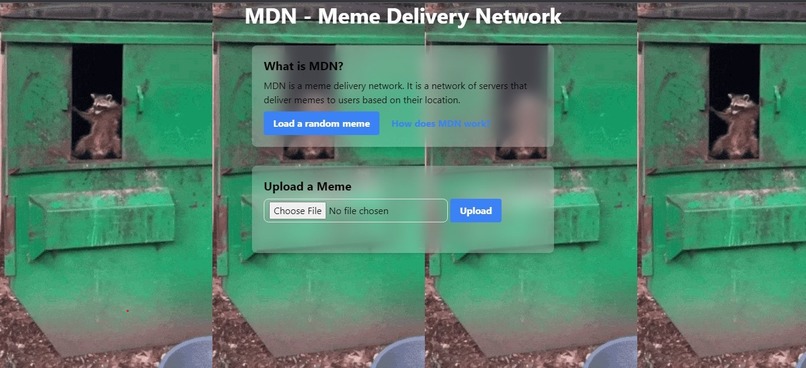
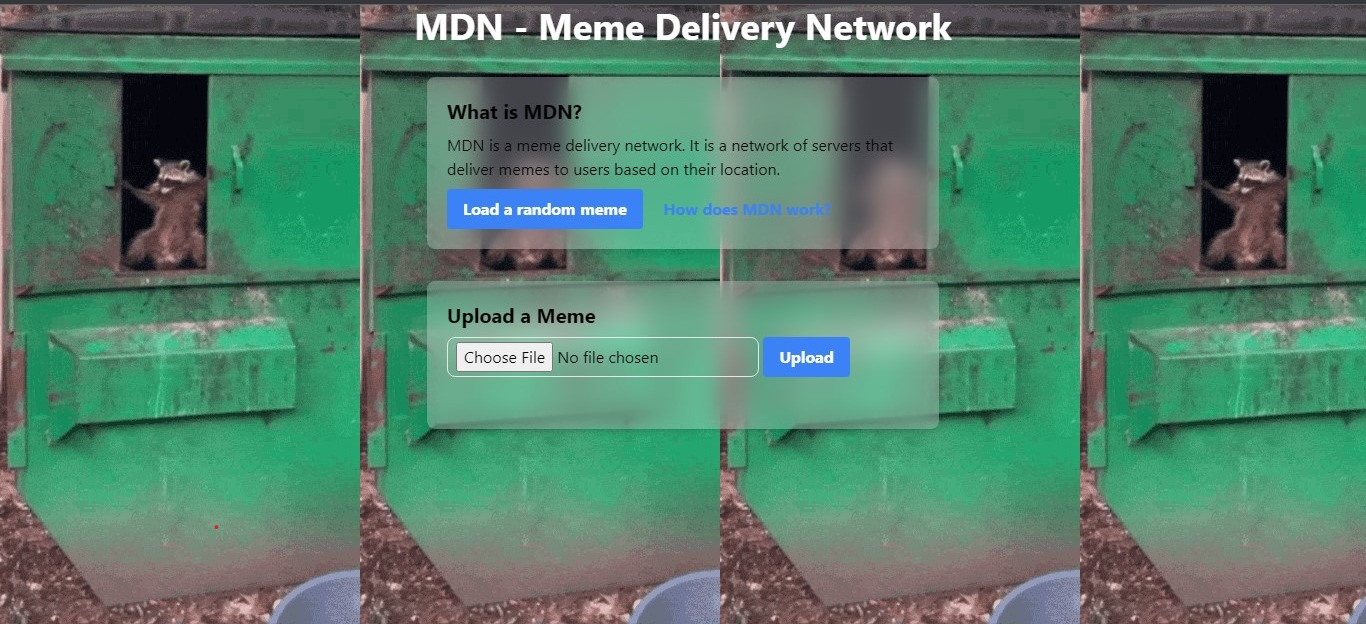
memecdn.me website
-

meme uploaded acknowledgement


Introduction
🚀 Introducing MDN - The Meme Delivery Network! memecdn.me 🚀
What in the world is MDN, you ask? 🤔 Well, imagine a bunch of sneaky servers slinging memes all around the globe like nobody's business! 🌍💨
Picture this: You're sitting in your cozy little corner of the internet, craving some meme magic to brighten your day. Enter MDN, the mythical meme messenger that knows exactly where you are! 📍
Our meme masters have done the impossible! 🧙♂️ They've scattered our meme-tastic database across the planet like confetti at a meme party! 🎉 So, no matter if you're chilling in the Big Apple 🍎, surfing in Australia 🏄♀️, or hiding in Area 51 👽, we'll shoot out the most epic memes straight from the server in your neck of the woods! 🌲
Worried about slow meme connections? Fret not! With MDN, your memes will travel faster than a caffeinated sloth 🦥 on a skateboard! Zoom, zoom! ⚡
So, if you want your daily dose of internet awesomeness, look no further than MDN! Because when it comes to memes, we deliver them like pizzas - hot, fresh, and right to your virtual doorstep! 🍕🎁
Join the MDN party now and prepare yourself for meme-orable moments that'll have you ROFL-ing like there's no tomorrow! 😂🤣
Inspiration
The inspiration behind the Meme Delivery Network (CDN) project was to create a scalable and efficient content delivery system specifically designed to cater to the ever-increasing demand for delivering memes and other viral content quickly and reliably to users all over the world. The team recognized the need for a specialized CDN service that could handle the unique requirements of delivering media-rich and frequently changing content, such as memes, in a way that ensures a delightful user experience.
What it does
The Meme Delivery Network is a content delivery system that optimizes the delivery of memes and viral content to end-users across the globe. It utilizes TiDB, a distributed NewSQL database, to store and manage the metadata and access patterns of the memes efficiently. The CDN is responsible for caching and serving the media content associated with the memes, ensuring reduced latency and faster load times.
How we built it
The project was built using a combination of technologies, including:
TiDB Database:We chose TiDB as the backend database for its distributed and horizontally scalable architecture, enabling it to handle large volumes of meme metadata effectively.
Digital Ocean: We chose digital ocean as the cloud provider for deployment. Its easy-to-use interface and reliable infrastructure allowed us to focus on the CDN's development and deployment.
Content Delivery Network (CDN) Infrastructure: We have built a custom CDN infrastructure on top of the TiDB database. This infrastructure handles cache management, content replication, and load balancing to ensure optimal performance and high availability.
APIs and Frontend: The CDN is accompanied by APIs that handle user requests and serve the cached meme content efficiently. A user-friendly frontend have been developed to showcase the memes to end-users.
Challenges we ran into
While implementing the Meme Delivery Network, we have encountered several challenges:
Cache Invalidation: Keeping the CDN cache up-to-date with the latest memes and handling cache invalidation efficiently was a significant challenge due to the dynamic nature of meme content.
Latency Optimization: Ensuring low latency across different geographical regions while delivering memes required careful consideration of the CDN's architecture and caching strategies.
Scalability: Designing a scalable system to handle rapid increases in traffic and meme popularity was a complex task that demanded a robust and flexible infrastructure.
Database Performance: Optimizing the performance of the TiDB database to handle the read-heavy workload and maintain responsiveness for users presented its own set of challenges.
Accomplishments that we're proud of
Despite the challenges faced, the team achieved several noteworthy accomplishments:
High-Performance CDN: Successfully developing a high-performance CDN that delivers meme content with reduced latency, resulting in an enhanced user experience.
Scalable Architecture: Implementing a scalable architecture that allows the CDN to handle varying workloads and traffic spikes effectively.
Reliability and Availability: Ensuring the CDN's reliability and high availability, minimizing downtime and providing seamless meme delivery to users.
Efficient Database Management: Effectively managing the TiDB database to store and retrieve meme metadata efficiently, optimizing database performance.
What we learned
Through the development of the Meme Delivery Network, we have gained valuable insights and skills:
Distributed Databases: Understanding the concepts and challenges associated with distributed databases like TiDB.
CDN Architecture: Learning about CDN architecture and cache management techniques to improve content delivery.
Load Balancing and Replication: Implementing load balancing and content replication strategies to improve performance and fault tolerance.
Handling Dynamic Content: Dealing with the complexities of handling frequently changing and dynamic content like memes.
What's next for Meme Delivery Network
The future roadmap for the Meme Delivery Network includes several exciting possibilities:
Advanced Caching Strategies: Implementing more sophisticated caching strategies to further reduce latency and improve content availability.
Content Analytics: Incorporating analytics to gather insights into meme popularity, user engagement, and content trends.
Global Edge Locations: Expanding the CDN's presence by deploying edge locations in different geographical regions to reduce latency and improve global accessibility.
Security Enhancements: Strengthening the security aspects of the CDN to protect against potential threats like server overload, DDoS attack and ensure safe content delivery using protections like rate limiting, black-listing etc.


Log in or sign up for Devpost to join the conversation.