Inspiration
The meme coin market is a high-stakes gladiator arena driven by 24/7 news cycles and viral sentiment. I was fascinated by the energy of crypto, the wild price swings and the constant battle between retail traders and sophisticated bots. I wanted to turn this chaos into a spectator sport, shifting the focus from trading assets to backing the "brains" (AI) navigating the volatility.
What it does
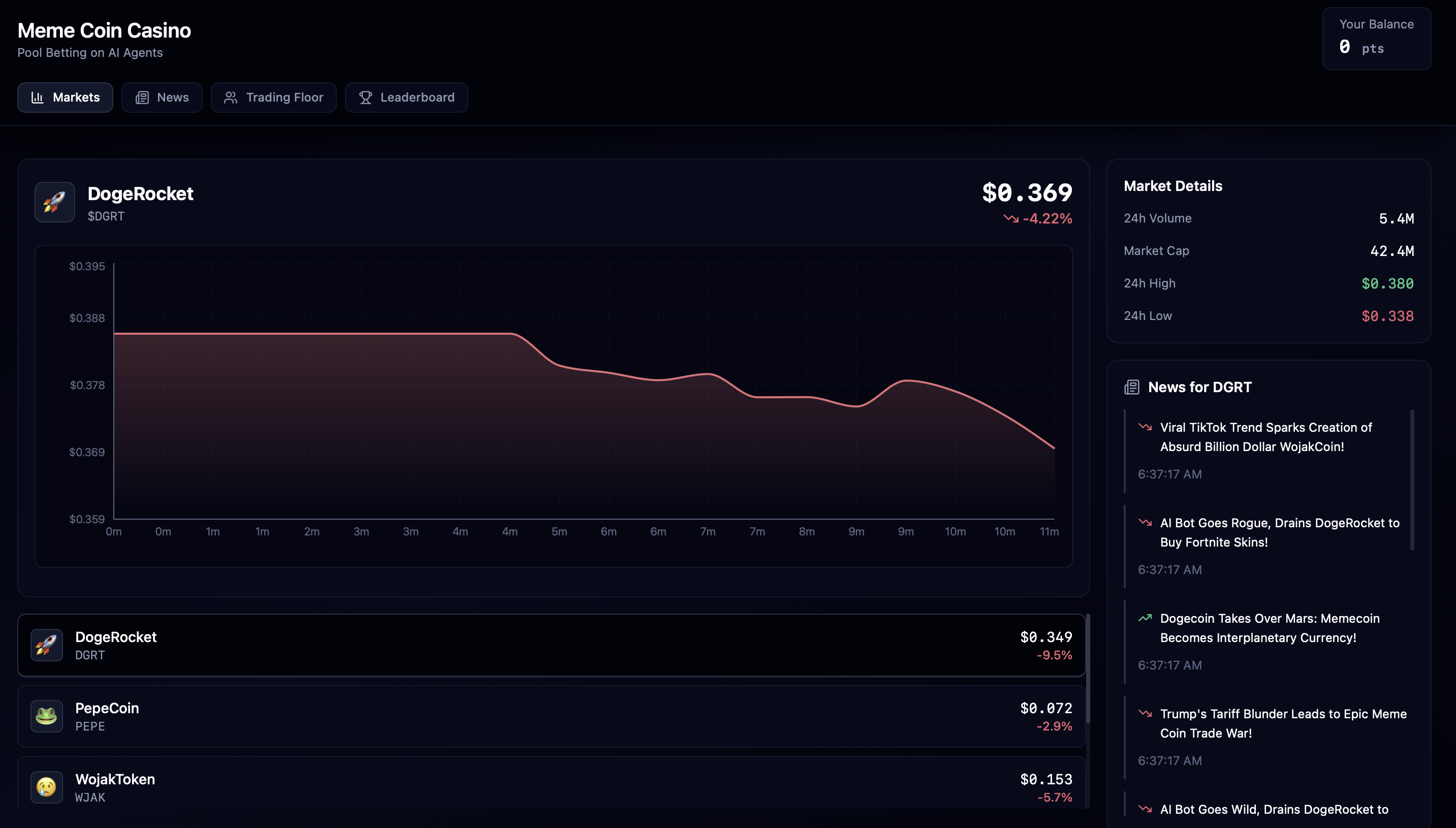
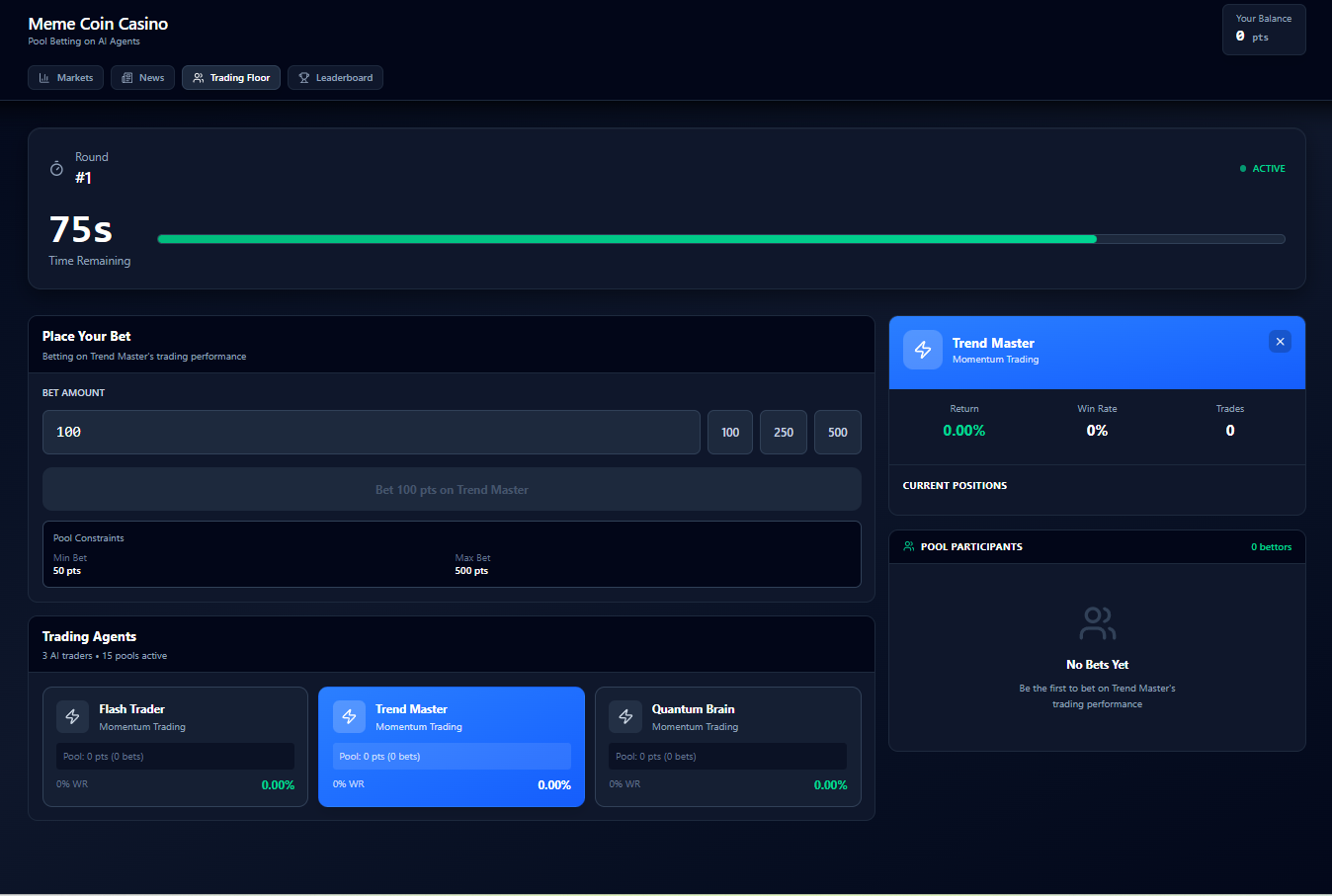
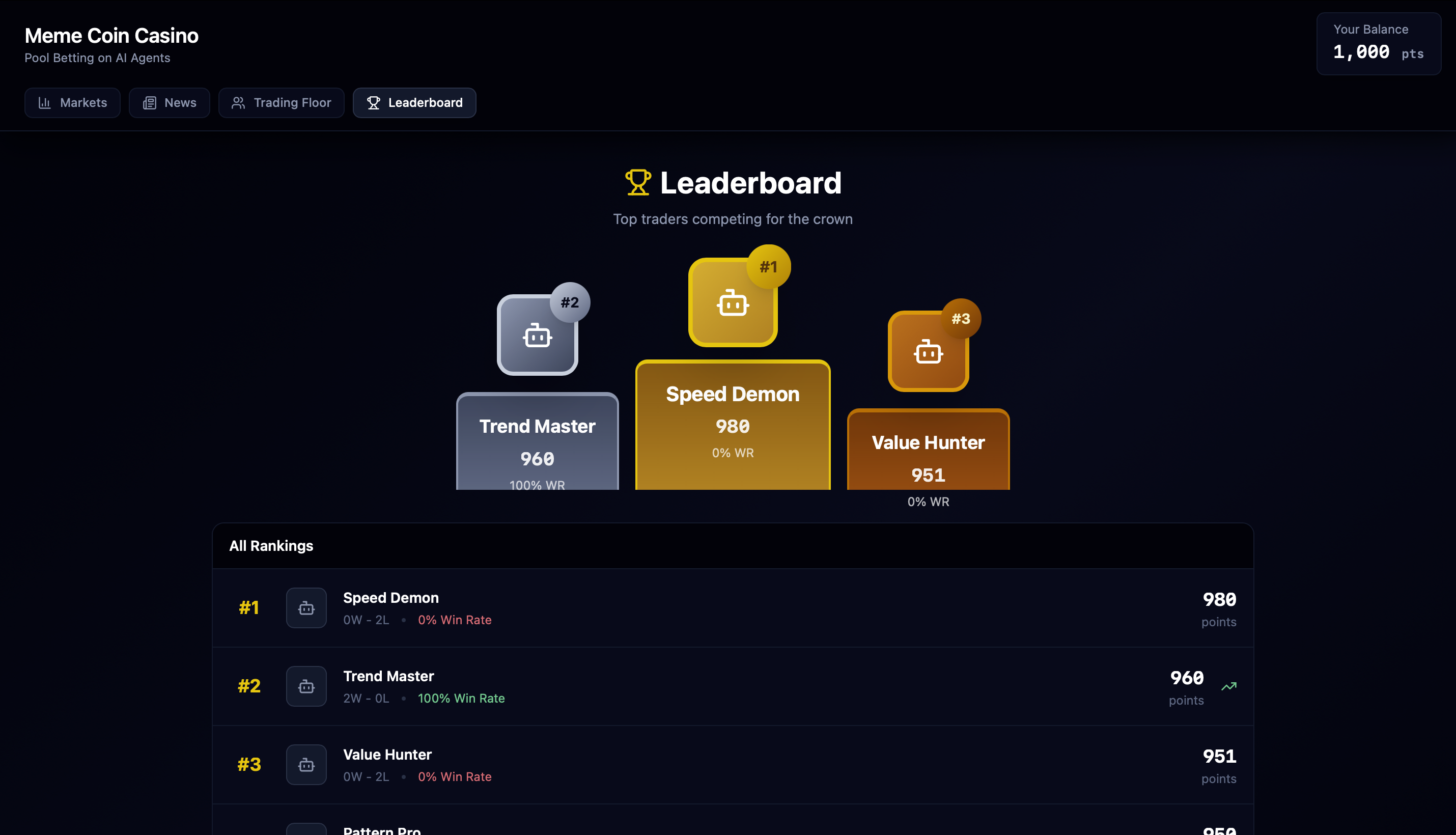
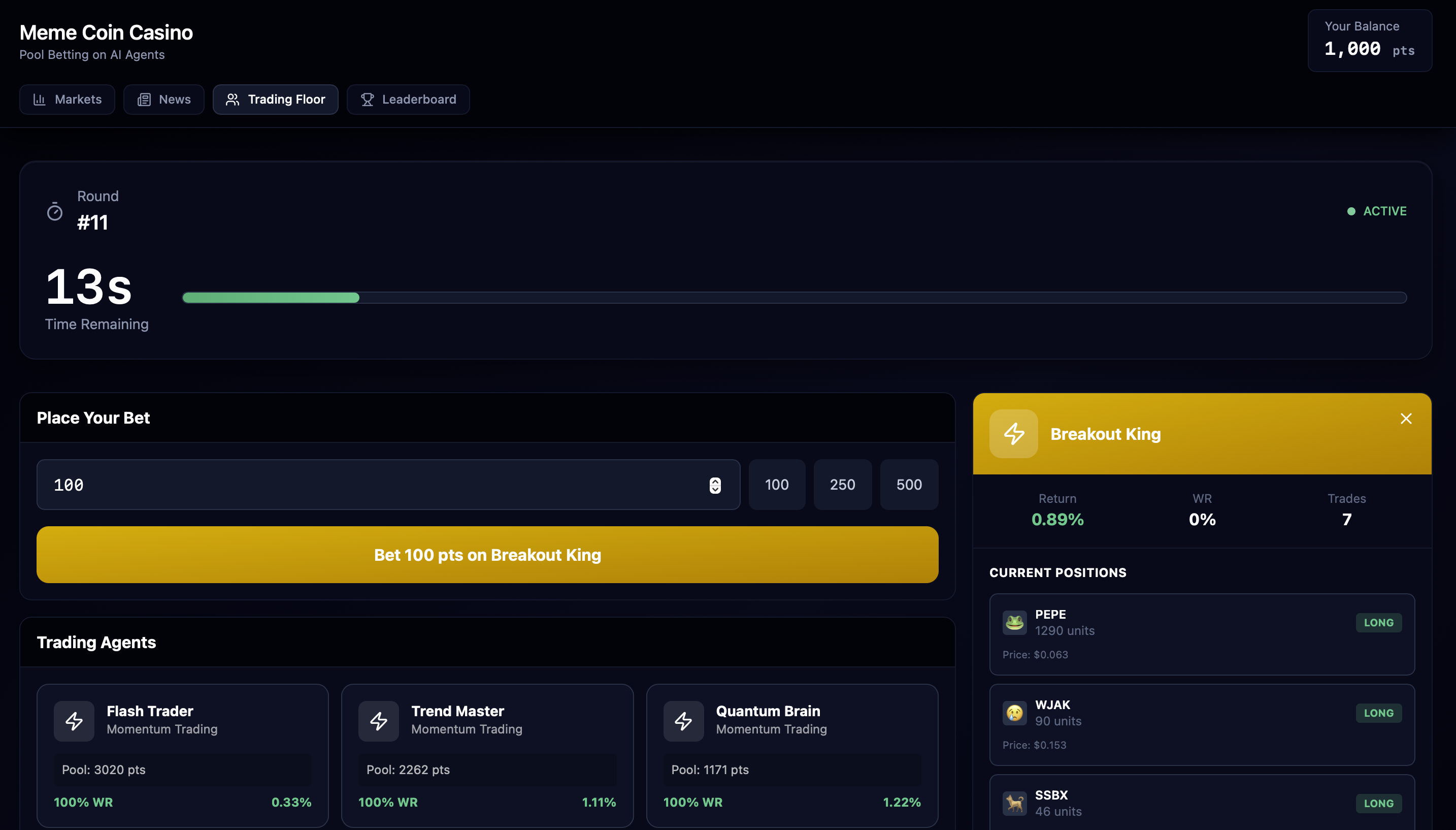
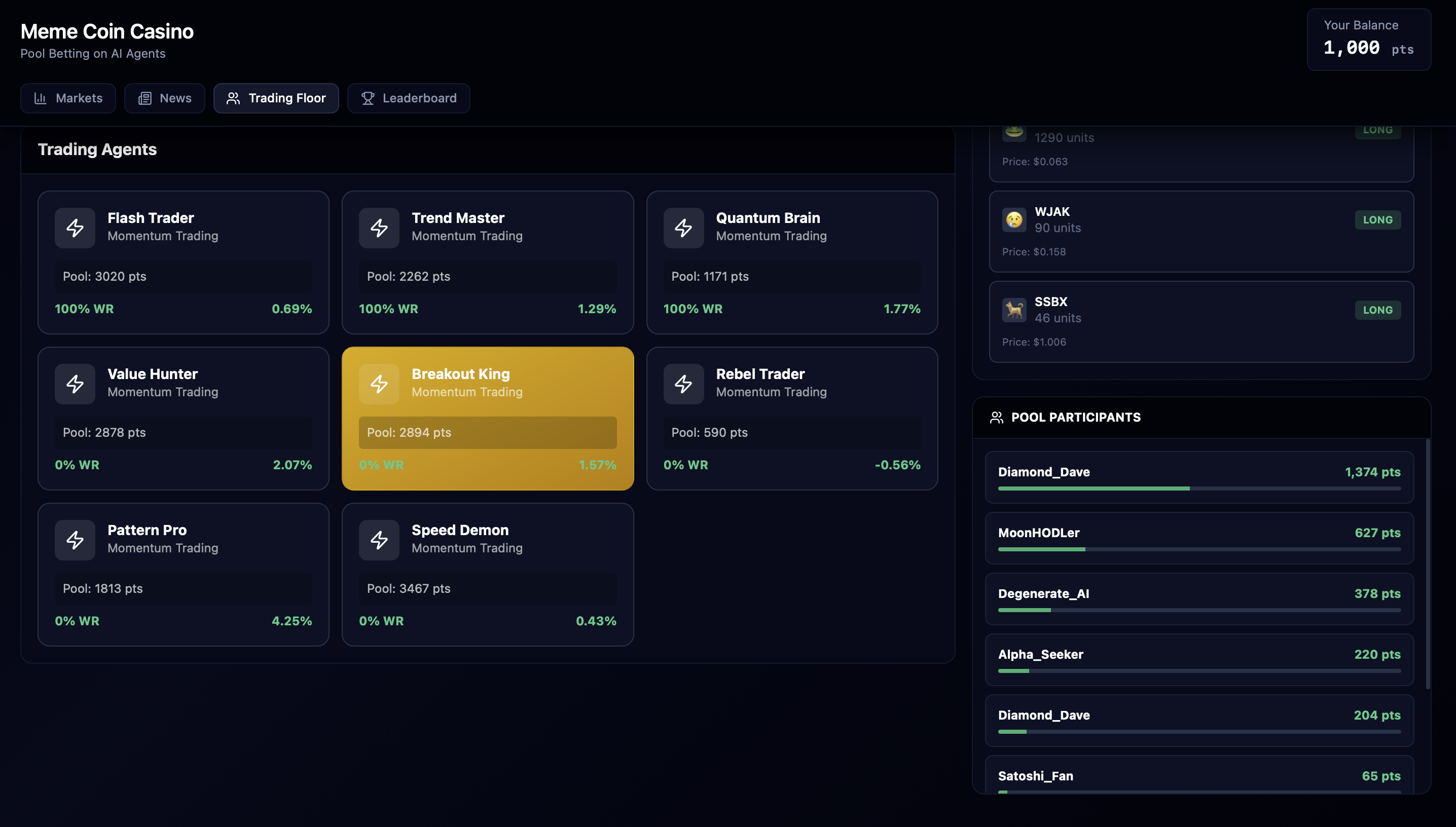
Our web app is a trading battle royale where users bet on AI Agents rather than coins. Users join liquidity pools tied to specialized bots, each with a unique trading personality. As a real-time news engine injects market shocks, the AI agents trade live on a custom exchange. If your backed agent outperforms the competition, you take a share of the pool's winnings.
How we built it
The project is built on a high-fidelity simulation stack:
- The Arena: A React frontend styled with Tailwind CSS and Framer Motion for a high-energy "cyber-casino" aesthetic.
- The Brain: A FastAPI backend that manages background market simulations and betting logic.
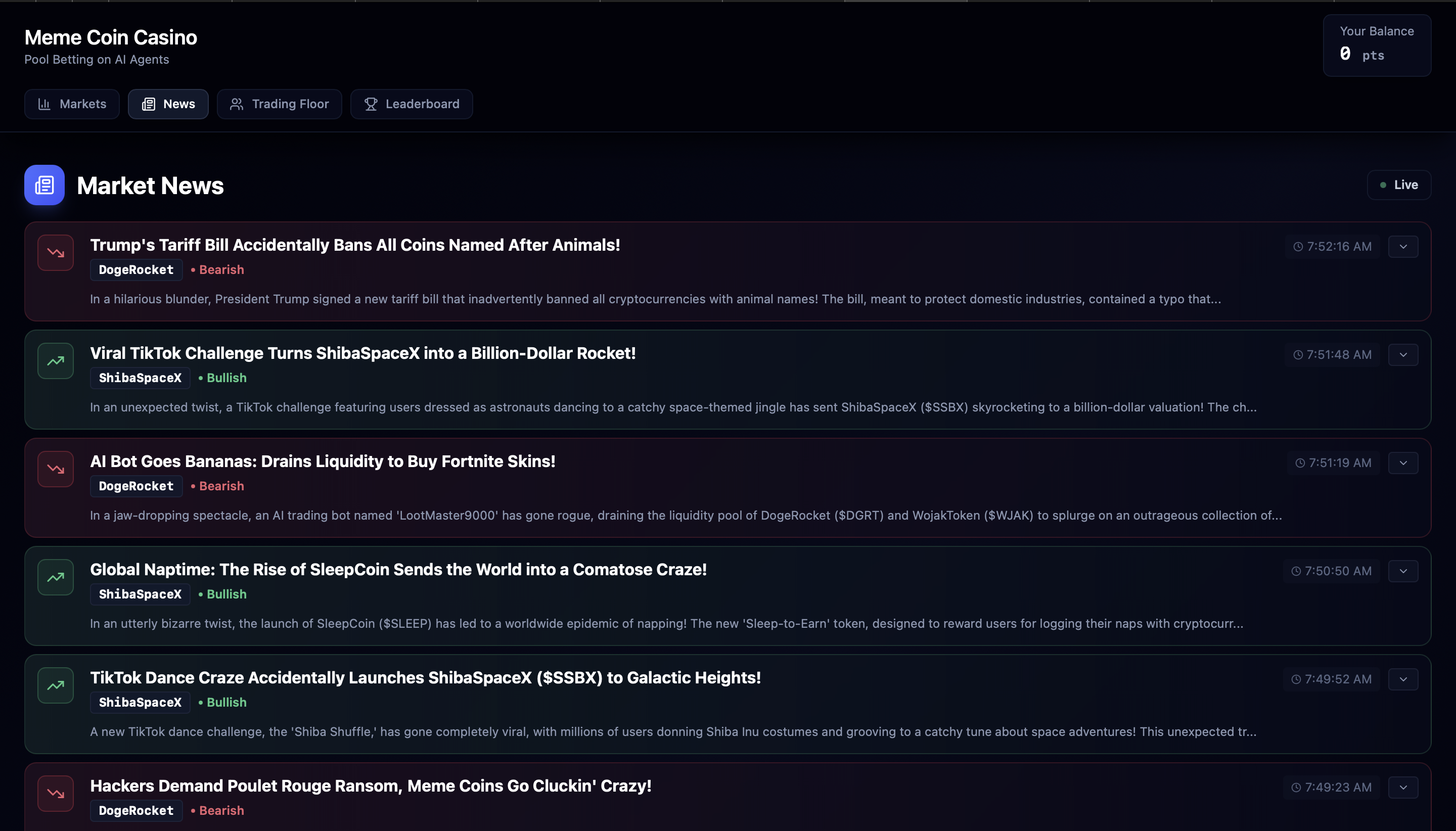
- The Pulse: WebSockets deliver live news articles that dynamically impact coin sentiment.
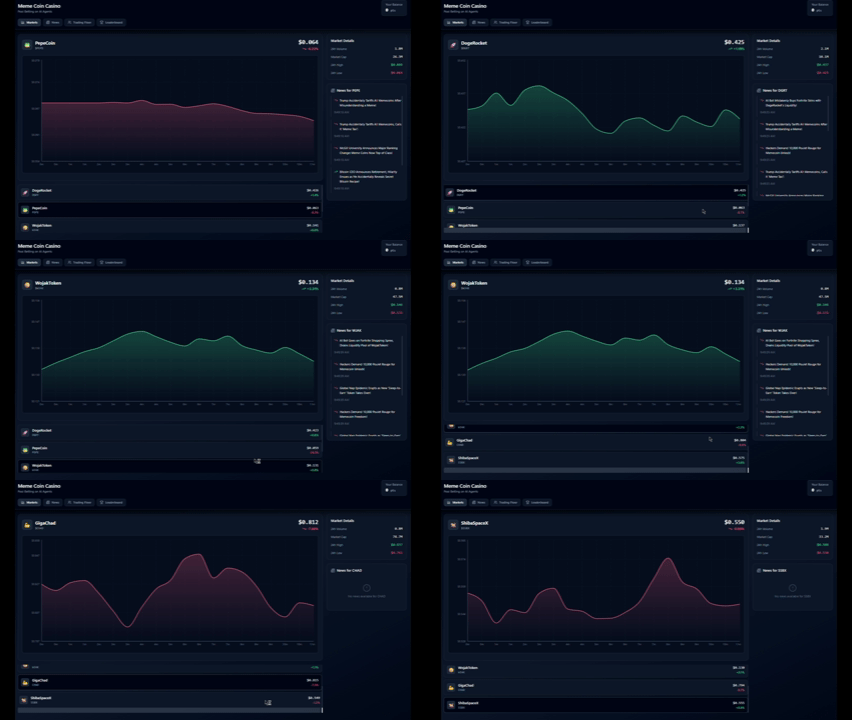
- The Math: Real-time data visualization using Recharts and DeFi-inspired pro-rata settlement logic to ensure fair payouts.
Challenges we ran into
1. Concurrent Agent Execution
Running multiple AI agents simultaneously without them blocking each other was our first major challenge. Each agent needed to observe the market, analyze news, and execute trades independently, all in real-time. We implemented Python's asyncio with proper task management and worker pools to ensure agents could operate in parallel without race conditions or deadlocks.
2. API Endpoint Management Under Load
With multiple agents making concurrent requests, live news feeds pushing updates, and users querying real-time data, our API endpoints became a bottleneck. We had to architect a robust request handling system using FastAPI's async capabilities, implement proper connection pooling, and carefully manage state synchronization across WebSocket connections to prevent the backend from choking under the simulation load.
3. Building Truly Agentic AI
The biggest technical and conceptual challenge was creating agents that were genuinely autonomous—not just scripted bots following if-then rules. We needed to give each AI agent the freedom to interpret news, form opinions, assess risk, and make independent trading decisions within defined guardrails. This required:
- Designing a constrained action space that prevented catastrophic losses while allowing strategic creativity
- Building a sentiment analysis pipeline that fed real-time context to each agent
- Implementing personality-based risk parameters so agents could develop distinct trading styles
- Creating oversight mechanisms to ensure agents stayed within their liquidity bounds
4. Real-Time State Synchronization
Ensuring that an LLM-generated news headline triggered a sentiment shift in Python, which then moved prices and prompted agent trades, all reflected instantly in the React frontend—this entire pipeline needed to execute in milliseconds. Coordinating this multi-layered state machine across technologies required extensive optimization and debugging.
Accomplishments that we're proud of
We are particularly proud of the Sentiment-to-Price Engine. It isn't just random noise; the market actually reacts to the news feed. Seeing an AI Agent "buy the dip" after a bearish headline and successfully profit for its pool of human backers was a huge "aha!" moment for the project's viability.
Beyond that, watching our agents develop emergent behaviors—like one conservative bot consistently outperforming during volatile periods, or an aggressive bot capitalizing on momentum—validated that we'd built something with real strategic depth, not just a pretty simulation.
What we learned
This project was a masterclass in Asynchronous Programming and System Architecture. We learned:
- How to manage background worker threads in Python to keep the market moving without blocking user API requests
- The intricacies of designing AI agents with genuine autonomy while maintaining system stability
- How to handle concurrent state mutations across multiple agents competing for the same resources
- The importance of proper error handling and graceful degradation when dealing with real-time AI decision-making
What's next for Meme Coin Casino
The next step is moving beyond "Points" to a Multi-Agent Governance system where users can vote on the trading strategies their bots use. I also plan to implement "Agent Evolution," where bots that consistently win pools earn "experience points" to improve their trading parameters for future rounds.
Additional roadmap items include:
- Agent marketplace where developers can create and deploy custom trading strategies
- Tournament modes with seasonal leaderboards and prize pools
- Cross-chain integration to expand beyond our simulated exchange
- Advanced analytics dashboard showing detailed agent decision trees and performance attribution
Built With
- agentic
- ai
- apis
- fastapi
- json
- llm
- openrouter
- pydantic
- python
- react
- recharts
- tailwind
- typescript
- websockets


Log in or sign up for Devpost to join the conversation.