-
-
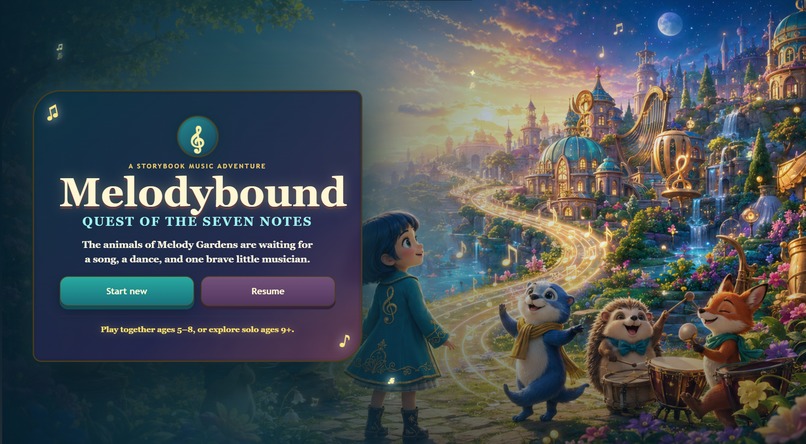
Title page
-
-
-
-
-
-
-
-
-


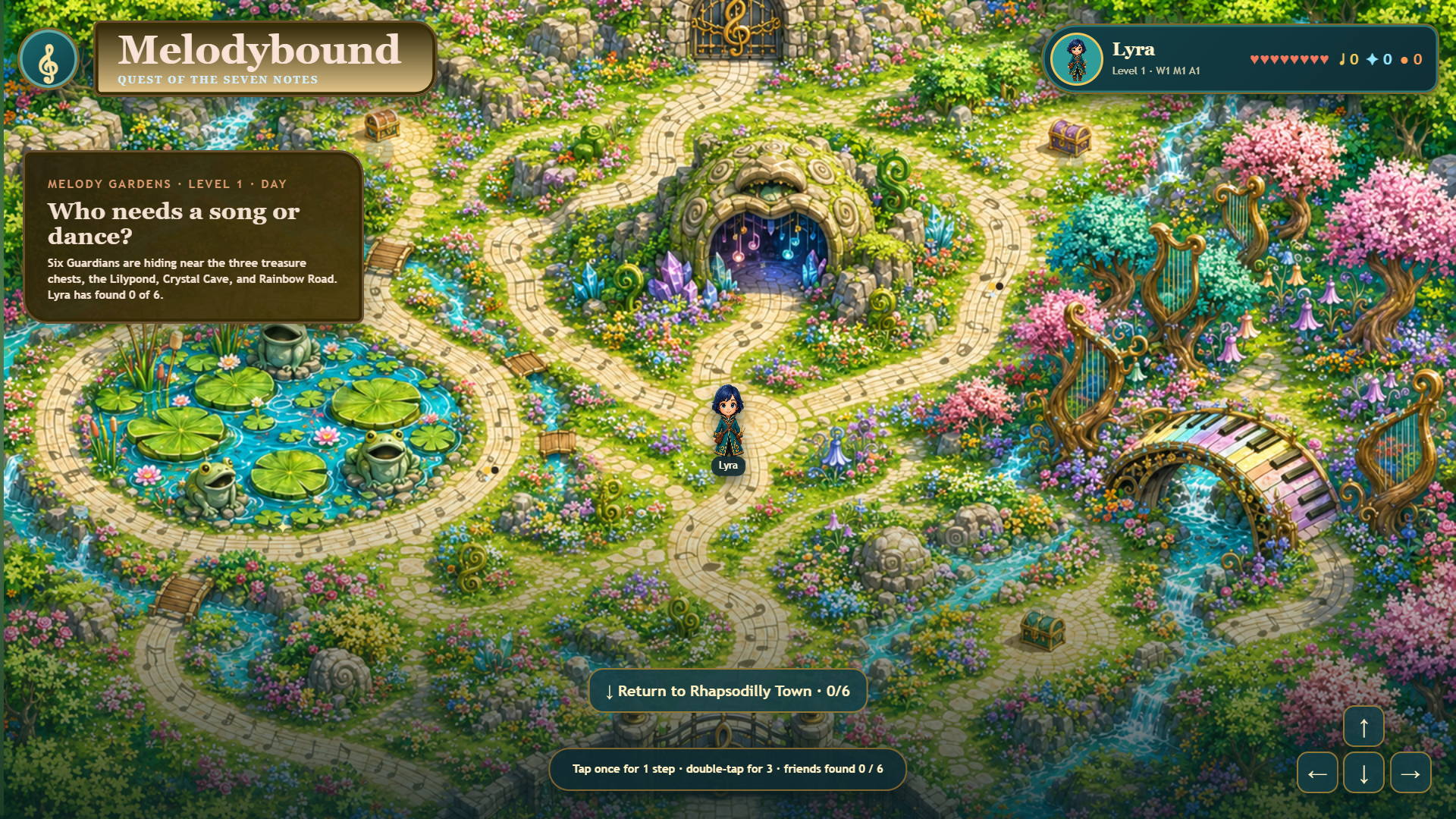
Building Melodybound: Quest of the Seven Notes What inspired me
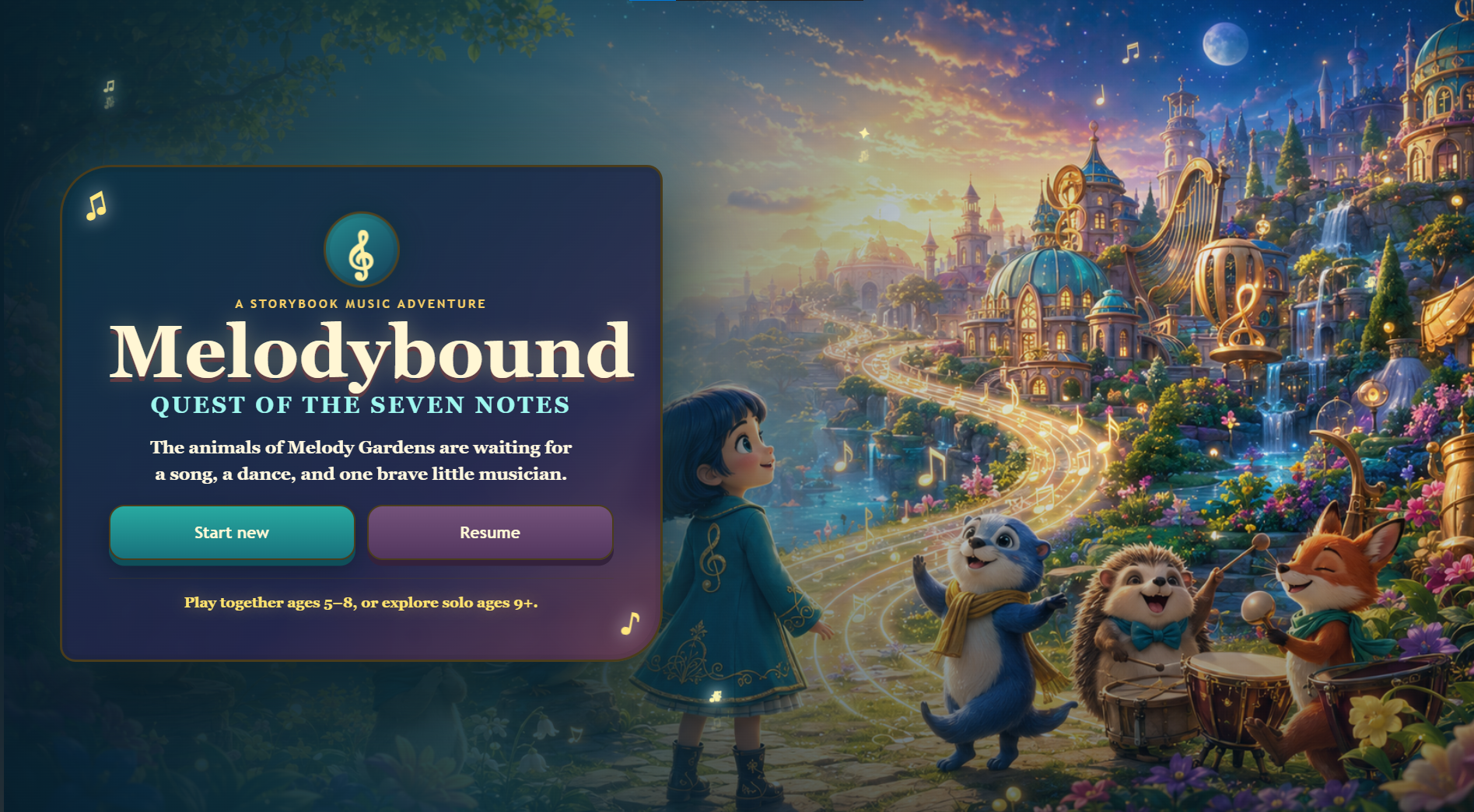
I created Melodybound after watching young beginner piano students meet music theory for the first time. Notes, rhythms, staffs, and unfamiliar words can feel abstract—especially to a child who is still learning to read. I wanted to transform those first lessons into something colourful, welcoming, and wonderfully silly: an interactive storybook in which learning music helps an entire world sing again.
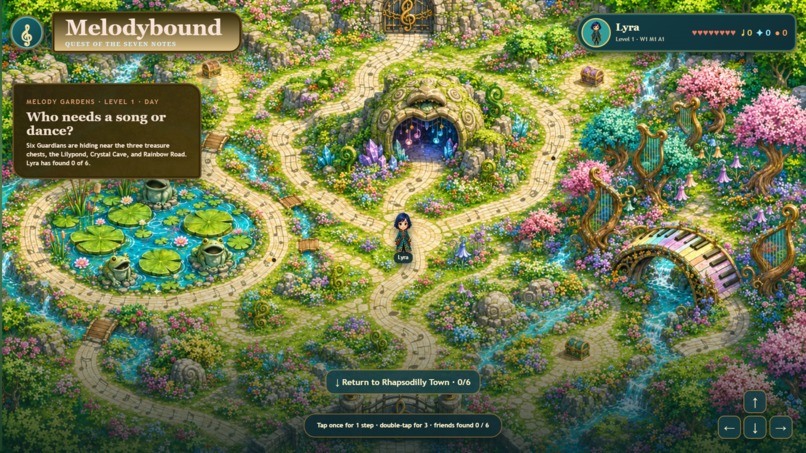
Instead of battling frightening monsters, Lyra meets lovable animal Guardians who have misplaced their songs and dances. Some want to sing; others are waiting for an irresistible beat. When players answer a question correctly, the Guardians hum, twirl, bounce, and eventually perform with joy. They thank Lyra with Melody Crystals and Beatstones rather than disappearing in defeat.
What the game teaches
The adventure begins with the solfège staircase:
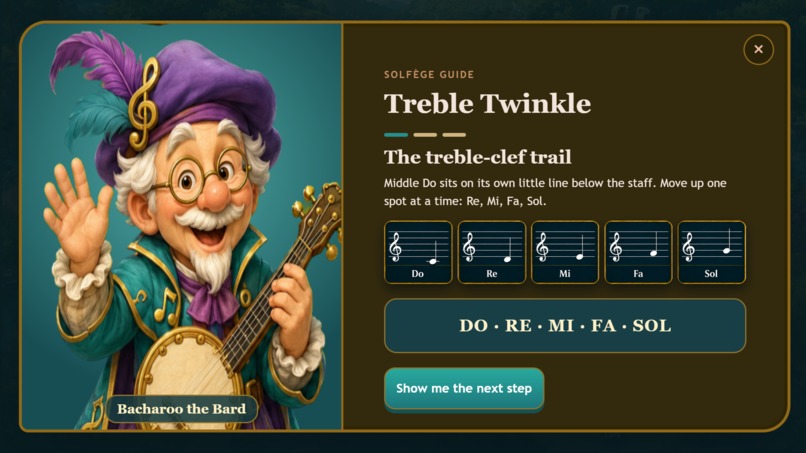
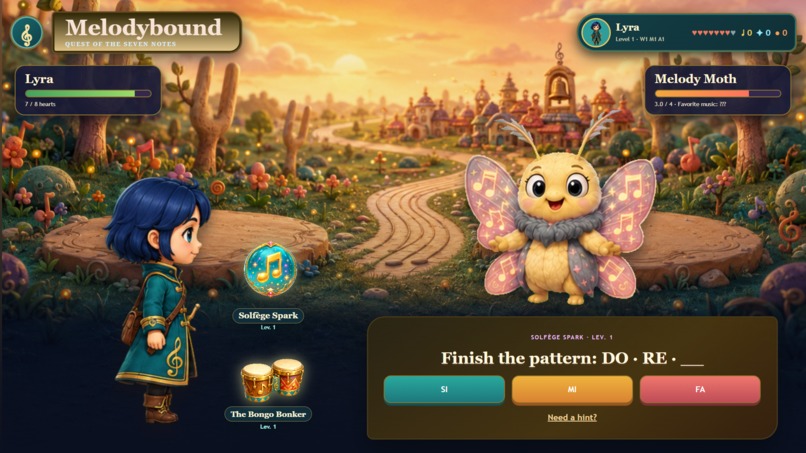
Do, Re, Mi, Fa, Sol, La, Si, Do
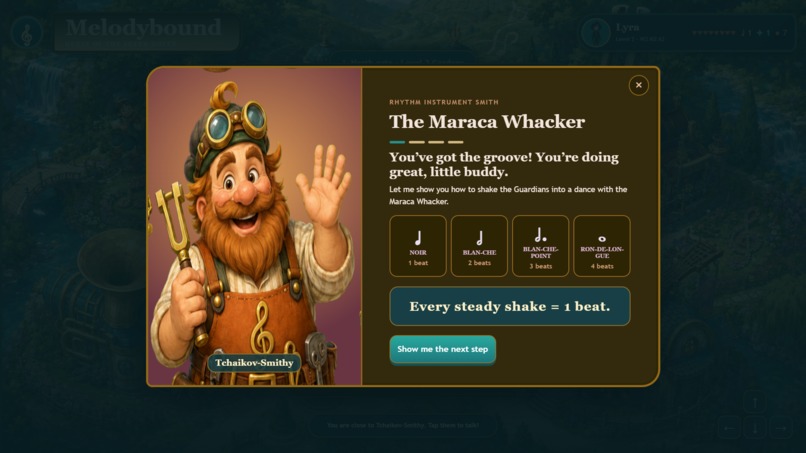
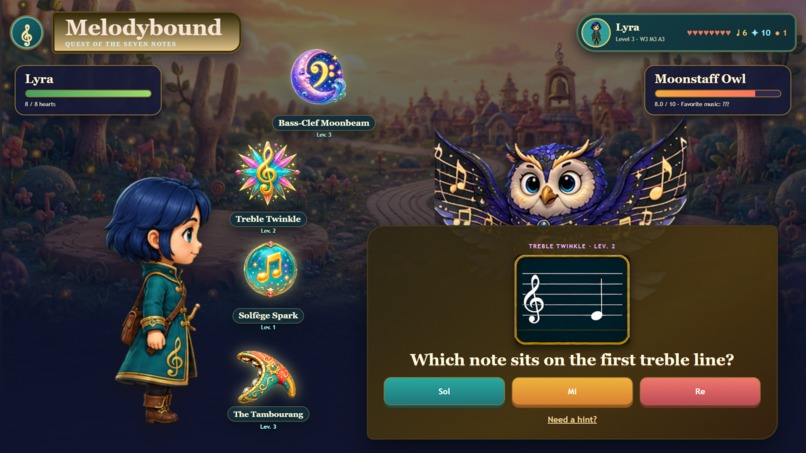
Players gradually learn note order, rhythmic values, treble-clef notes, bass-clef notes, and simple rhythm arithmetic. A Noir lasts one beat, a Blanche lasts two, and a Ronde-longue lasts four. Later lessons introduce equations such as 1+1=2, subdivisions such as
1 = 1/2 + 1/2
and four quick sounds sharing one beat:
1 = 1/4 + 1/4 + 1/4 + 1/4
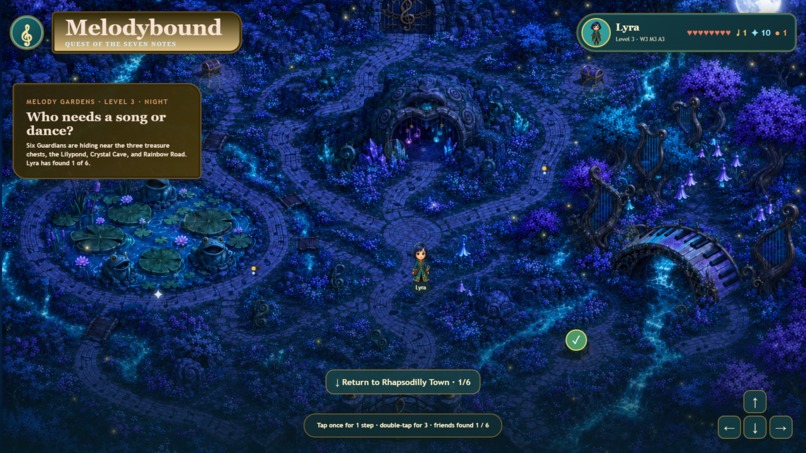
The material becomes more challenging across three chapters: the sunny Day Gardens, golden Dusk Gardens, and glowing Moonlit Gardens.
How I built it
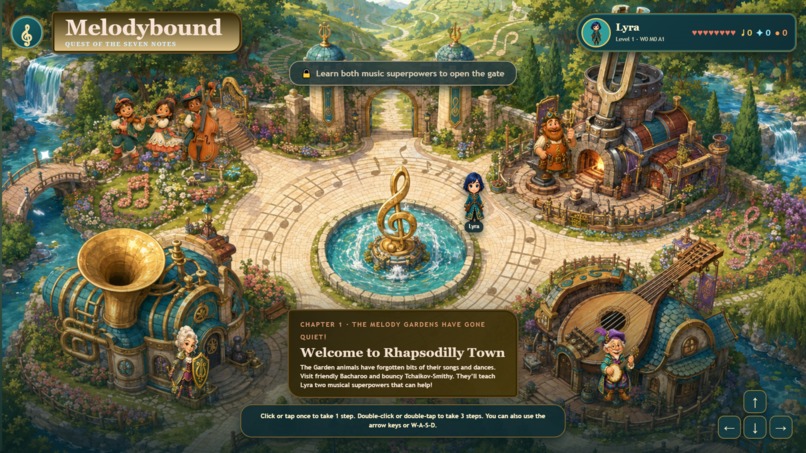
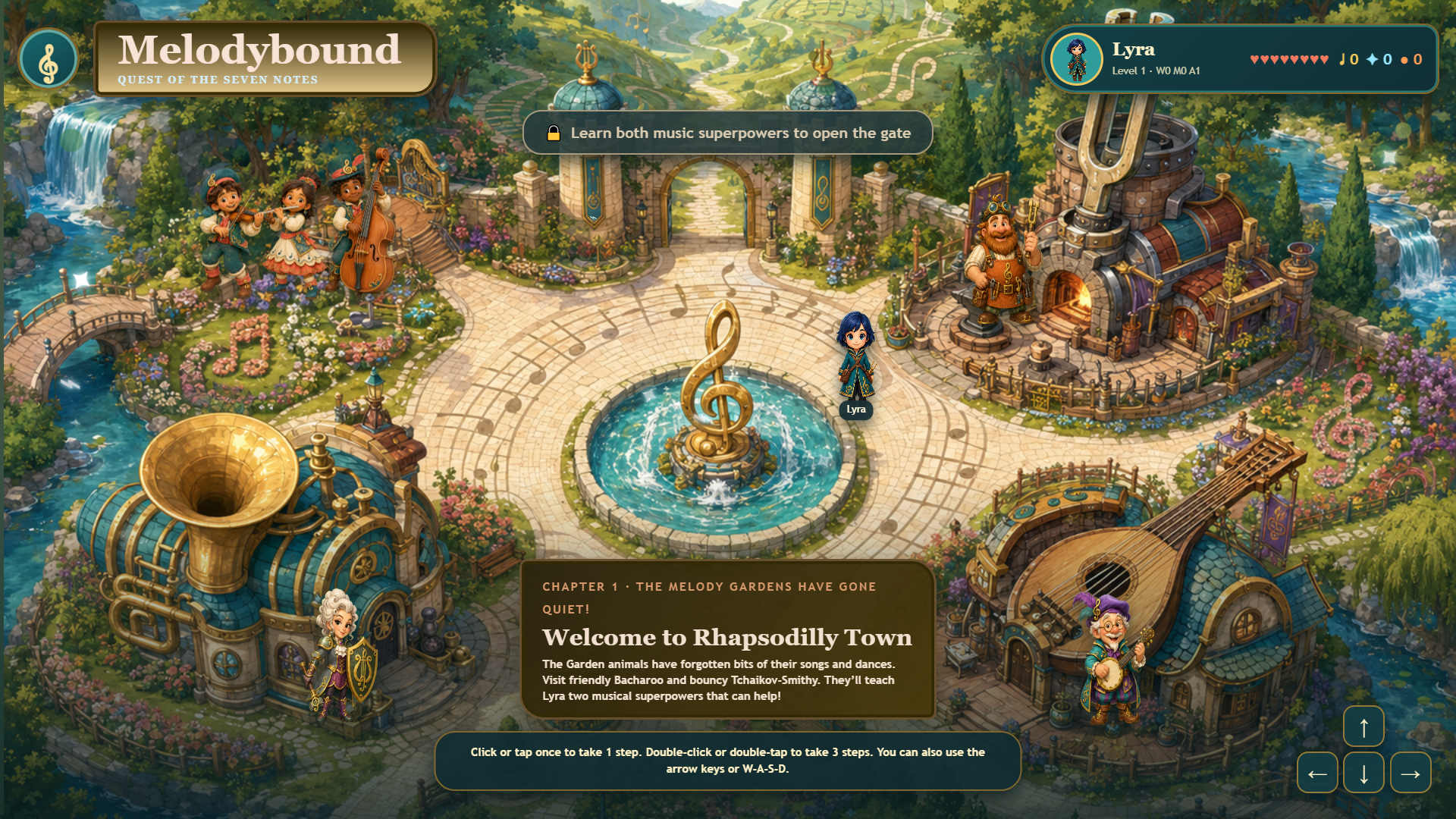
I designed the project as a browser-based adventure combining exploration, animated conversations, music lessons, mini-games, and question-driven Guardian encounters. Players can walk through Rhapsodilly Town and Melody Gardens using a keyboard, mouse, touchscreen, or directional controls.
Each teacher has a distinct personality. Bacharoo is friendly and helpful, Tchaikov-Smithy is bursting with enthusiasm, and Motzartin treats every armor upgrade like a fabulous fashion emergency. Their tutorials unlock singing spells and percussion instruments, including Solfège Spark, Treble Twinkle, Bass-Clef Moonbeam, the Bongo Bonker, Maraca Whacker, and legendary Tambourang.
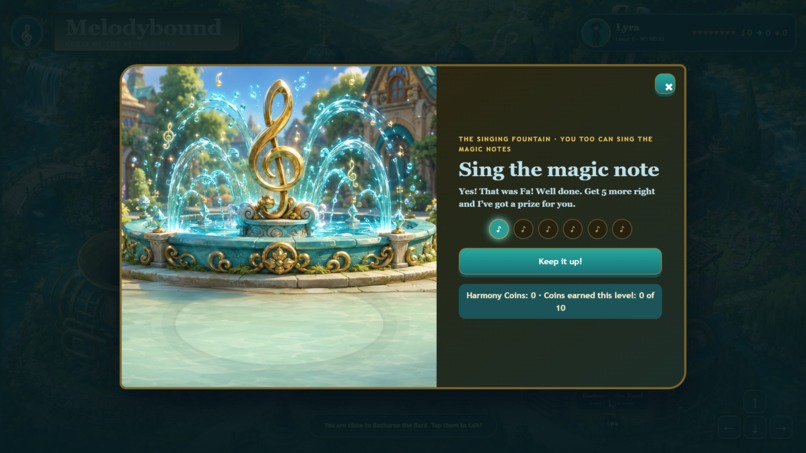
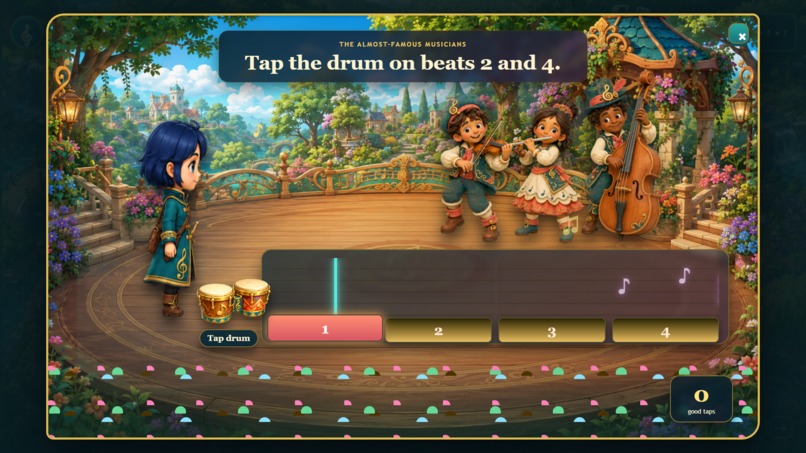
I also created a Singing Fountain pitch-matching game, a rhythmic stage performance, printable notebook pages, four save slots, animated chapter scenes, and adaptive music that becomes clearer as Lyra helps more Guardians.
Challenges and discoveries
The greatest challenge was making real musical notation accurate, readable, and attractive on phones, tablets, laptops, and different browser zoom levels. Every staff needed exactly five lines, and every note had to sit in precisely the correct place.
Pitch detection created another challenge: the fountain must recognize the correct note in any octave without rewarding a nearby wrong pitch. Movement boundaries, touch controls, animation states, saved progress, and continuously changing background music also required careful tuning.
Most importantly, I learned that educational games need kindness. A wrong answer should never feel like punishment. It should create curiosity, offer a helpful clue, and invite another try. Melodybound was built around that idea: learning music is an adventure, mistakes are part of the melody, and every small success deserves a little celebration.
Built With
- codex


Log in or sign up for Devpost to join the conversation.