Inspiration
Music is deeply emotional, but the tools we use to understand it are often fragmented, technical, or locked behind expensive software. As musicians, creators, and learners, we noticed a gap between how music feels and how music is analyzed.
We wanted to build something that could listen the way a musician listens. Not just detecting BPM or chords in isolation, but understanding the full musical DNA of a song and presenting it in a way that is intuitive, editable, and actually useful.
SongSenseAI was inspired by the idea that music theory should not be a barrier. It should be a lens that helps anyone decode, learn, remix, or deeply understand a song.
What it does
SongSenseAI analyzes a song and extracts its complete musical DNA.
From a single input, it can generate:
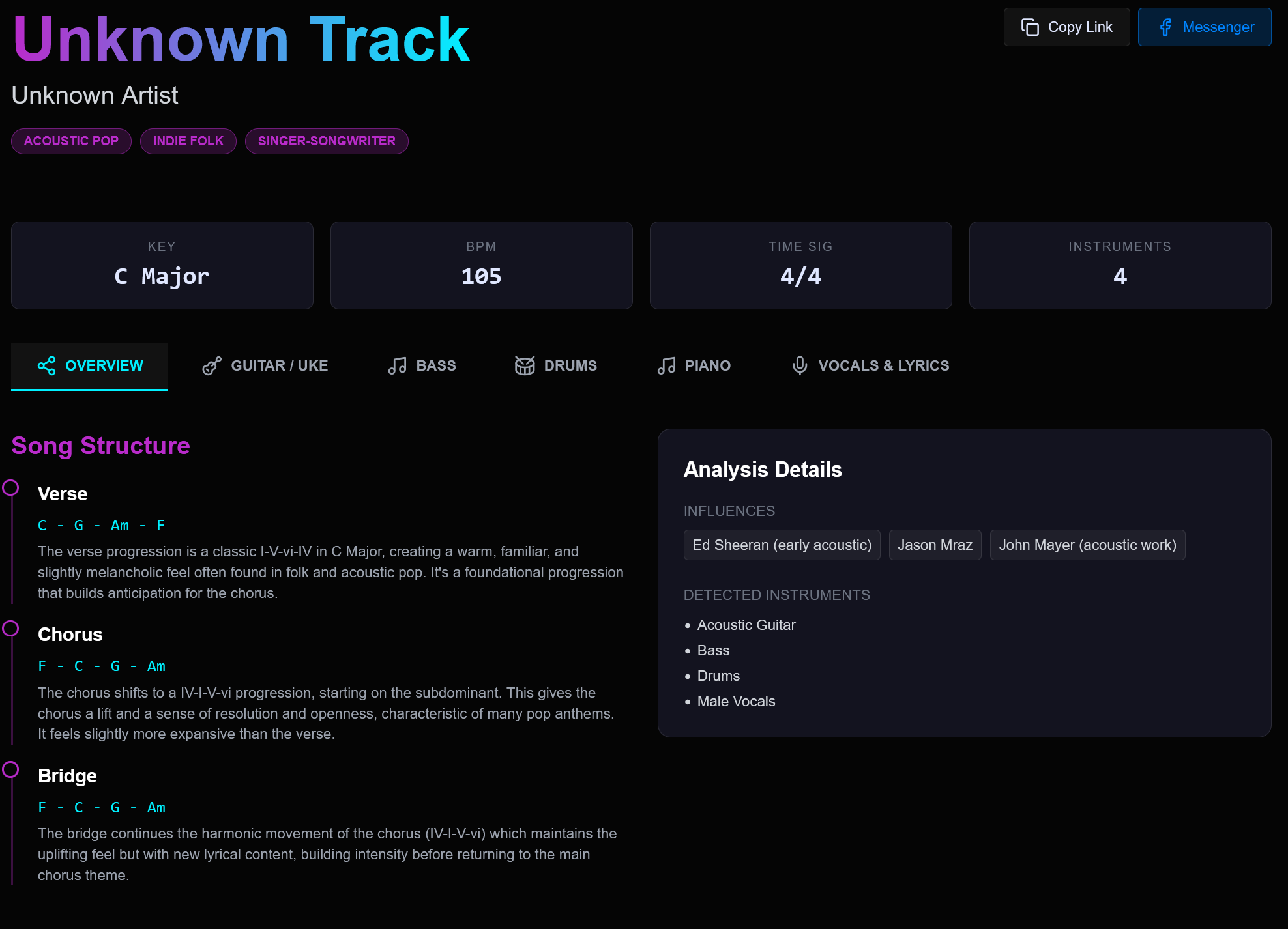
BPM and time feel
Key signature and harmonic context
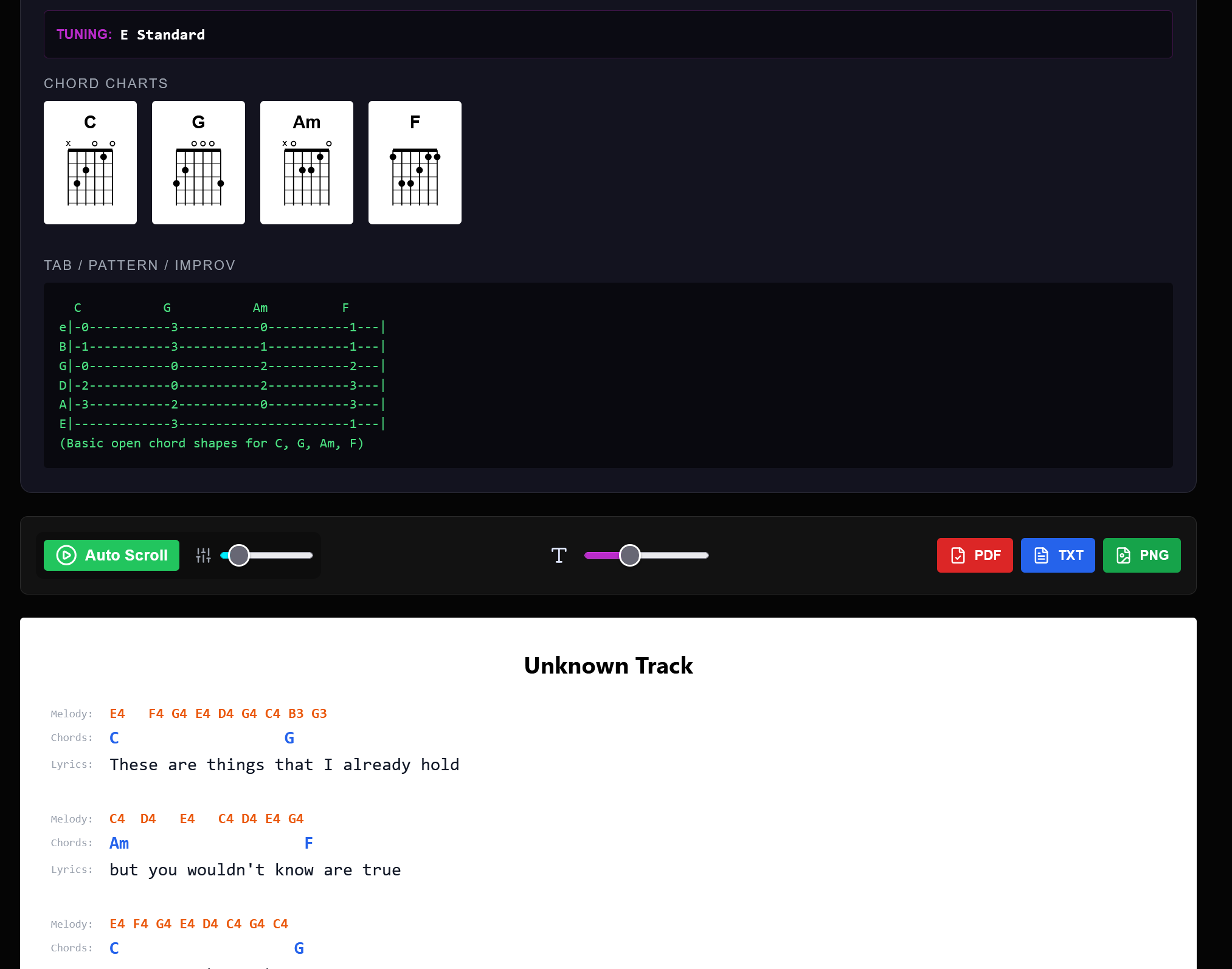
Chord progressions and intervals
Strumming patterns and rhythmic structure
Fully aligned lyrics with chords placed directly over the correct words
A clean, fully editable text based output that can be exported and reused
Instead of scattering information across multiple tools, SongSenseAI delivers everything in one cohesive, musician friendly format designed for learning, creation, rehearsal, remixing, and analysis.
How we built it
SongSenseAI was built using Google’s Gemini 3 Pro as the core reasoning engine to interpret and synthesize musical data at multiple levels.
We combined:
Audio feature extraction for tempo, key, and harmonic structure
AI driven pattern recognition for chords, intervals, and strumming styles
Structured reasoning to map musical analysis into readable and editable text
A flexible output system that prioritizes human readable and exportable results
Gemini’s ability to reason across modalities allowed us to unify signal level analysis with high level musical understanding.
Challenges we ran into
One of the biggest challenges was balancing precision with usability. Many music analysis tools output accurate data, but in formats that are difficult for humans to actually use.
Another challenge was aligning lyrics, chords, and musical timing in a way that feels natural to musicians, especially across different genres and strumming styles.
We also had to carefully structure prompts and reasoning flows so Gemini could consistently produce musically correct, editable, and logically grouped results rather than isolated facts.
Accomplishments that we're proud of
Creating a single unified output that replaces several separate music tools
Translating deep music theory into an approachable and editable format
Demonstrating Gemini 3 Pro’s ability to reason about complex creative structures
Building a tool that serves musicians, educators, and creators equally well
Delivering an experience that feels more like a musical collaborator than an analyzer
What we learned
We learned that AI is at its best not when it replaces creativity, but when it reveals structure without killing inspiration.
We also learned that musicians want context, flexibility, and control just as much as accuracy. Editable outputs and clear musical logic mattered as much as raw analysis.
Working with Gemini reinforced how powerful large reasoning models can be when applied to creative domains, not just traditional technical problems.
What's next for SongSenseAI Analyze your sound
Next, we plan to:
Add genre aware analysis and adaptive strumming models
Support MIDI, DAW, and notation exports
Enable comparison between songs for harmonic and rhythmic similarity
Expand into real time analysis for live practice and collaboration
Continue refining Gemini powered reasoning to make results even more musician intuitive
SongSenseAI’s goal is simple. Help people truly understand the music they love and create better music because of it.

Log in or sign up for Devpost to join the conversation.