-
-
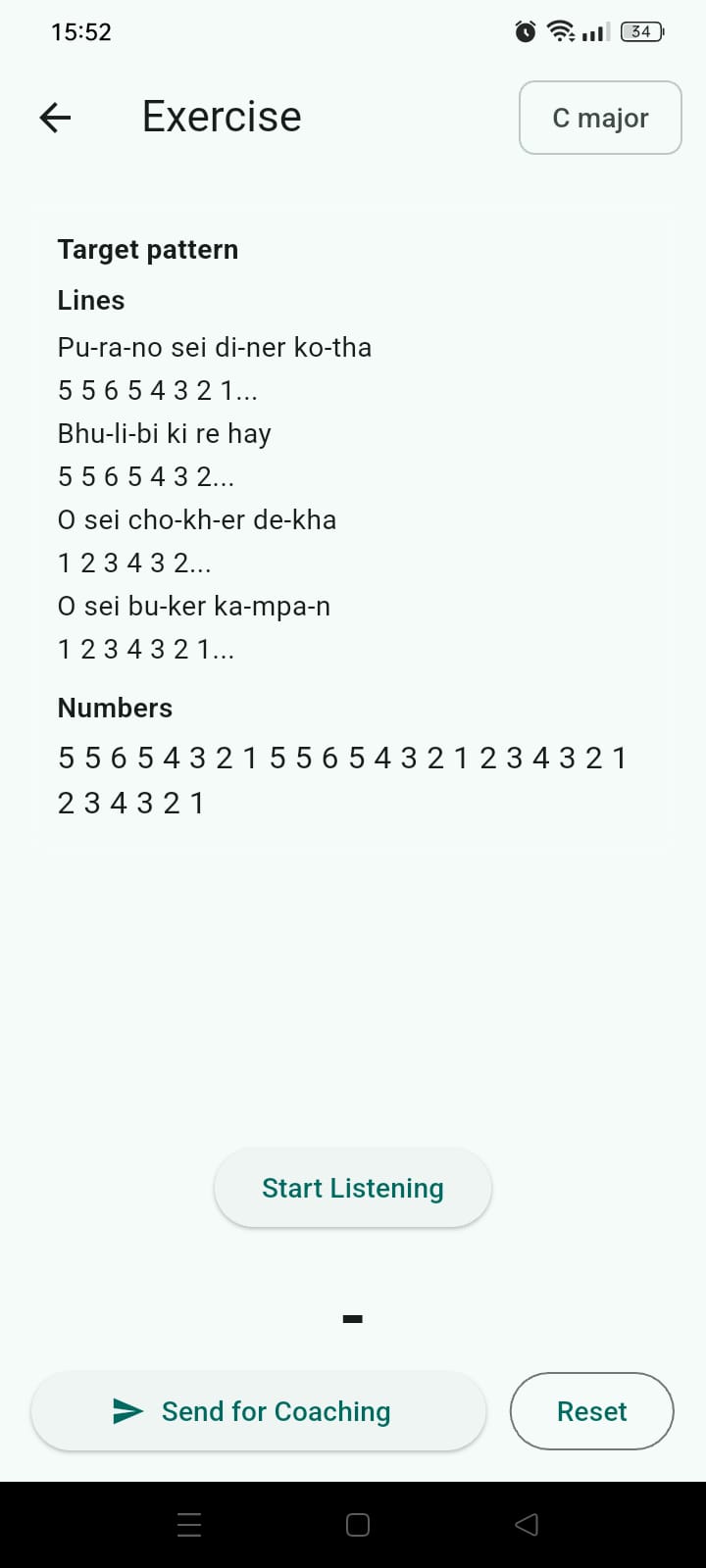
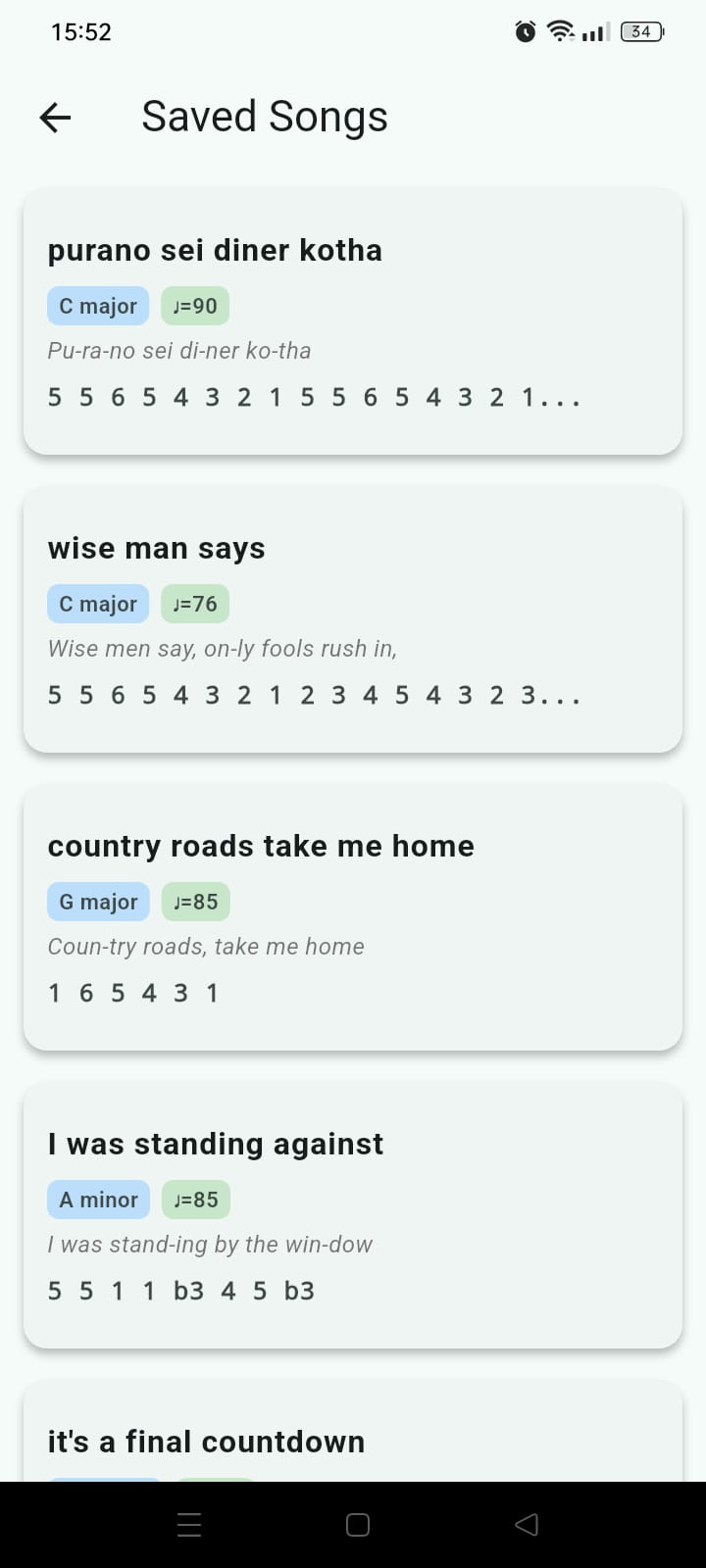
song notes
-
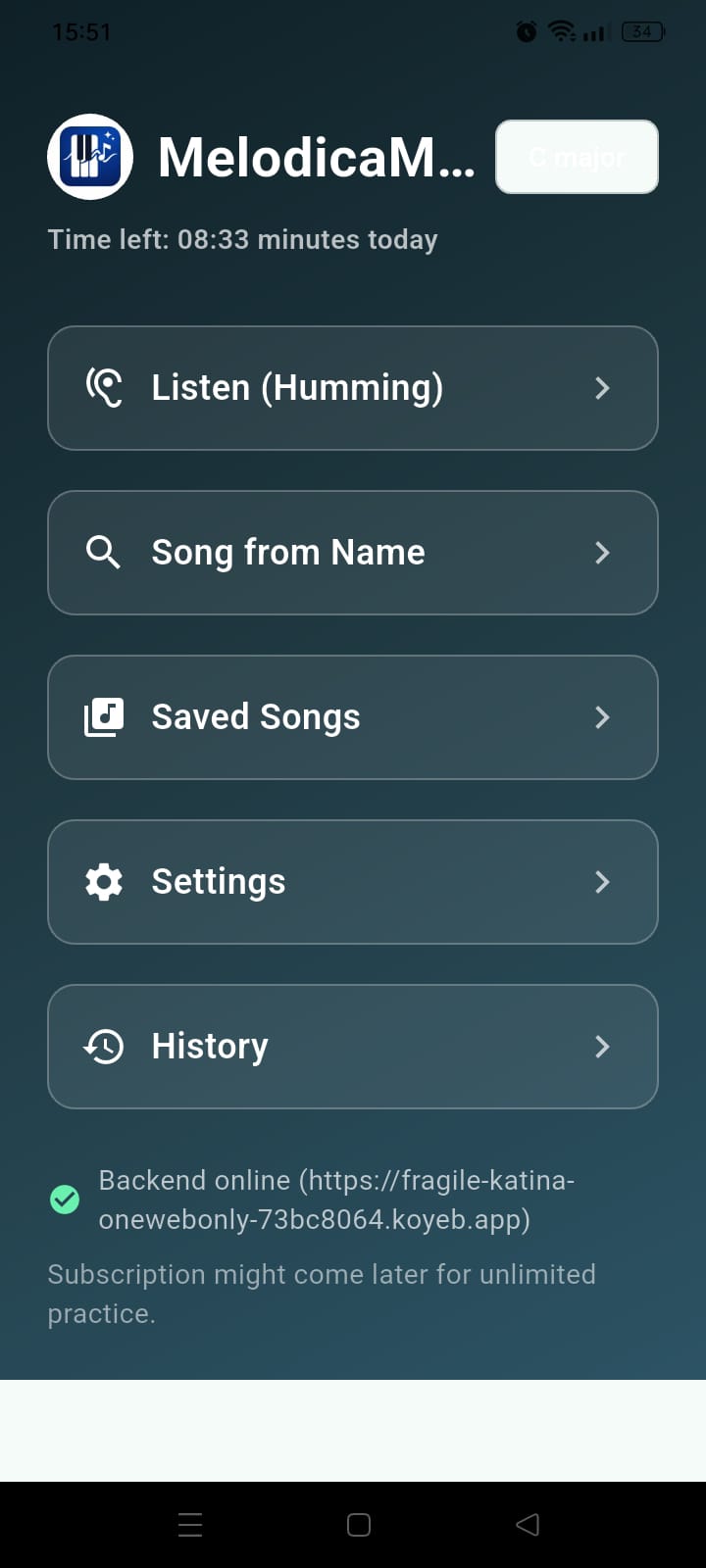
Home Page
-
song history
-
search page
-
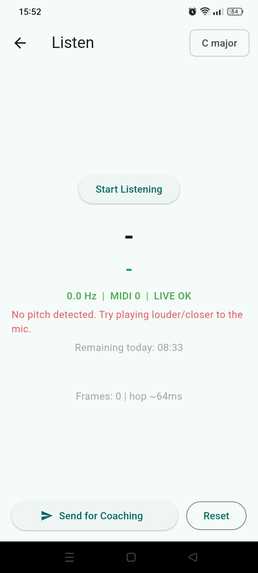
practice page
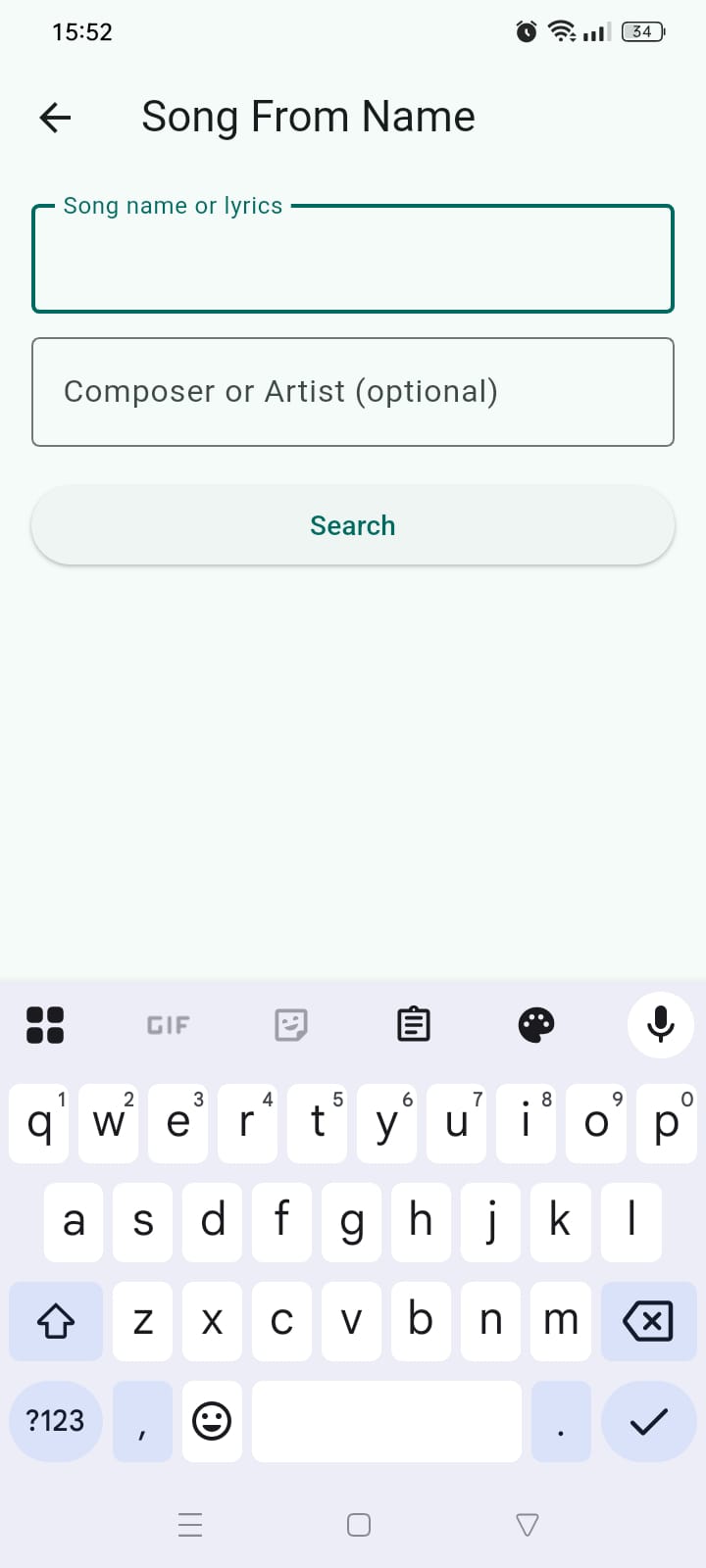
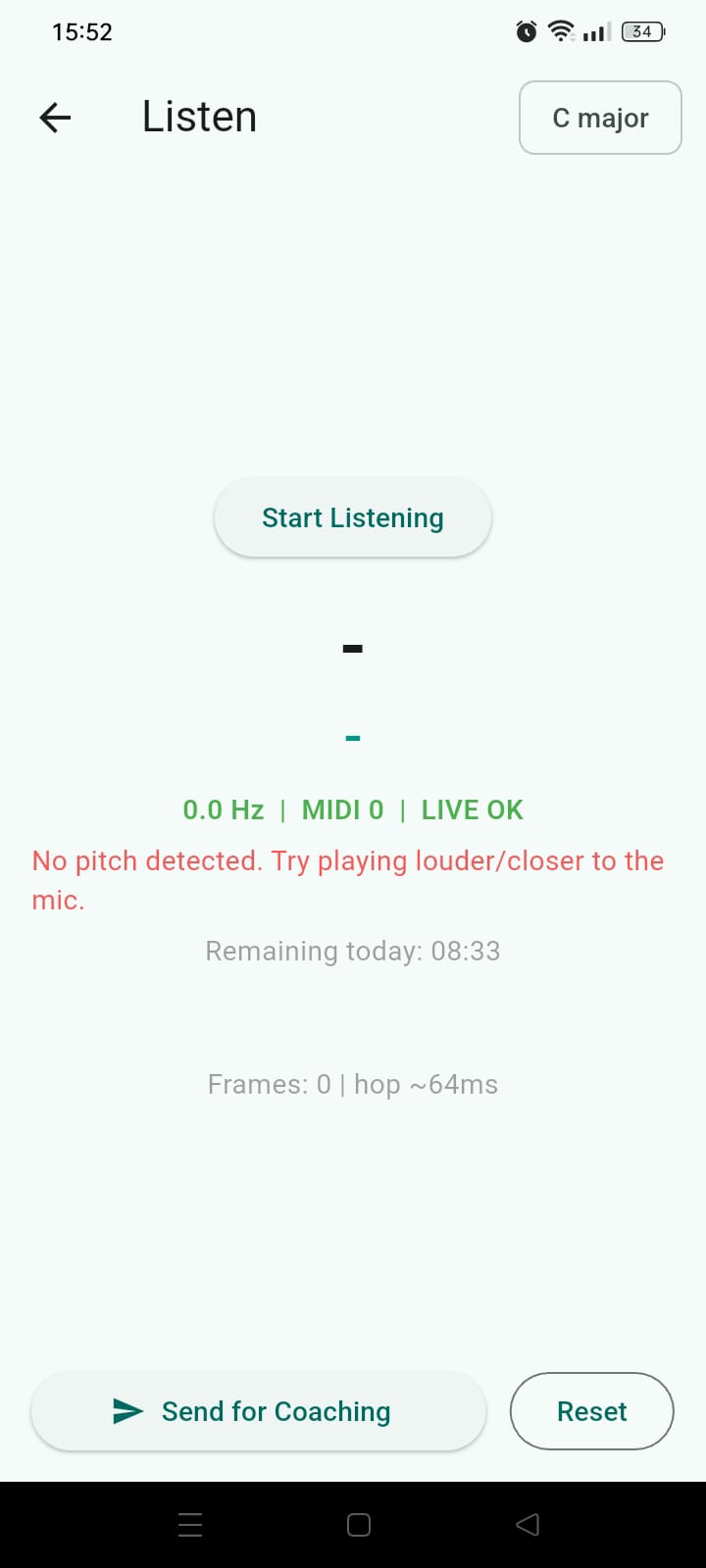
Inspiration
Learning music alone is frustrating — especially for adults who don’t have time for classes or teachers. I wanted a tool that could listen to me, talk back, and guide me patiently, even if I’m terrible at music. The idea was to build a “teacher” that doesn’t judge, doesn’t get tired, and is always available — even for the worst music student ever.
What it does
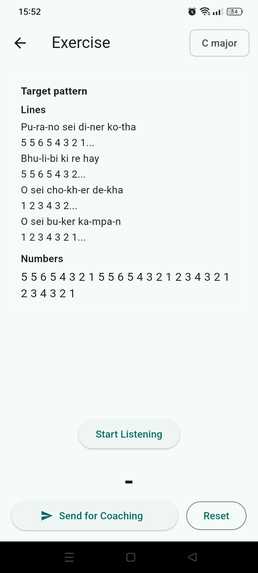
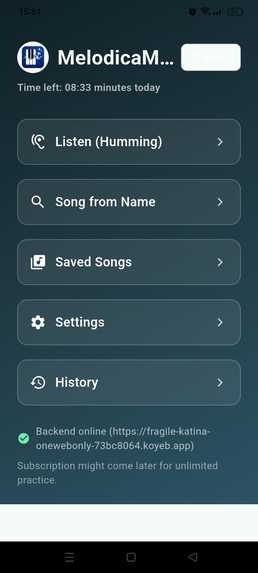
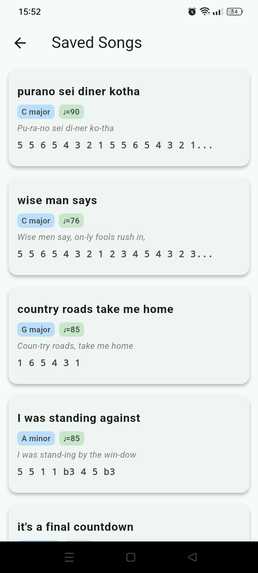
MelodicaMate is a voice-based AI music tutor that listens to live playing or singing and gives spoken feedback. It supports both classical note names and number notation (1–7), making it easier for beginners. Users can practice freely, get real-time guidance, and receive coaching through natural voice responses.
The app focuses on learning by doing, not watching videos or reading theory.
How we built it
Flutter for the Android mobile app
On-device pitch detection to analyze live audio (no audio stored)
Flask backend hosted in the cloud
Google Gemini for generating short coaching feedback
ElevenLabs for natural, human-like voice responses
Local storage on device for sessions and limits
The system is designed to be privacy-first and lightweight.
Challenges we ran into
One challenge was finding open-source notes that fit the tone of the project and could be safely used in the app and pitch materials.
Another major challenge was that I personally cannot play music well. Because of that, the melodies and notes I played were often incorrect, which made it difficult to fully judge whether the app’s musical feedback was right or wrong. This made testing harder, but it also reflected the real experience of a beginner — which the app is built for.
Accomplishments that we're proud of
Built a working prototype that listens to live input instead of prerecorded audio
Created a conversational, voice-first learning experience
Implemented a realistic daily usage limit to support future monetization
Designed the app to remain usable even when AI services fail (graceful fallback)
Stayed honest about limitations instead of hiding them
What we learned
Real-time audio interaction is much harder than static AI demos
Simplicity matters more than perfection in early prototypes
Fallbacks and failure handling are essential for real products
You don’t need to be an expert user to build tools for beginners — sometimes being a beginner helps
What's next for MelodicaMate
Improve pitch accuracy and timing analysis
Test with real musicians and beginners for better validation
Expand beyond melodica to piano and keyboard
Add richer exercises and progress insights
Introduce an optional paid plan with unlimited coaching once the experience is stable
MelodicaMate is still early — but it’s a genuine step toward making music learning more accessible, patient, and human.
Built With
- elevenlabs
- python

Log in or sign up for Devpost to join the conversation.