-
-
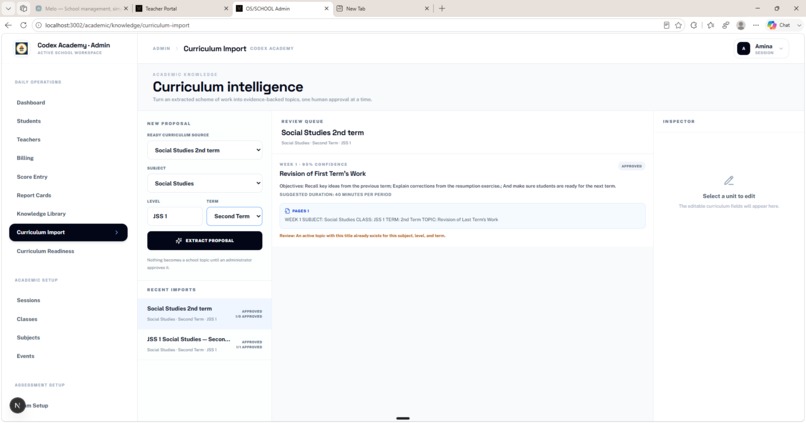
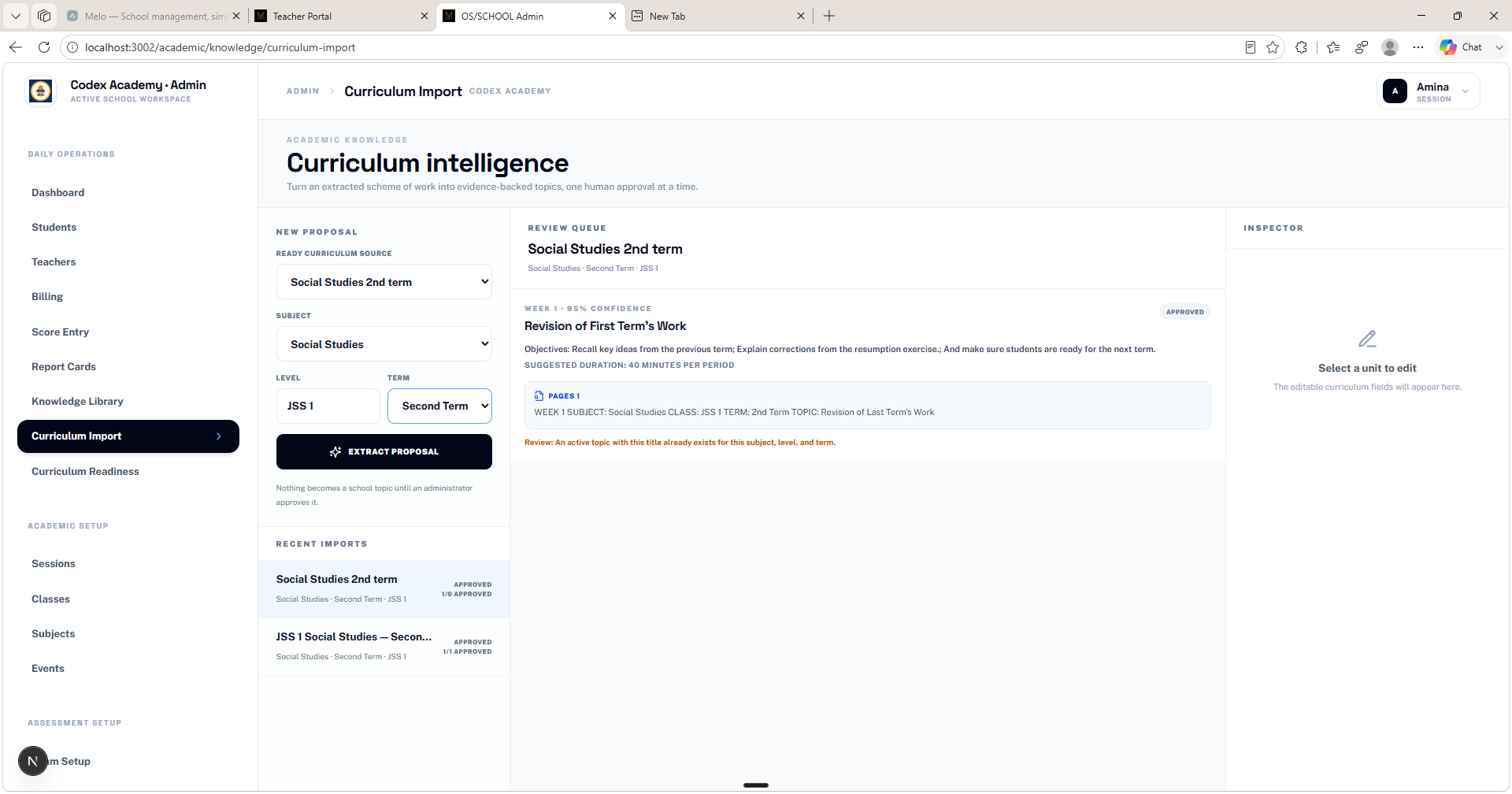
Curriculum Intelligence setup with source, subject, level, and term
-
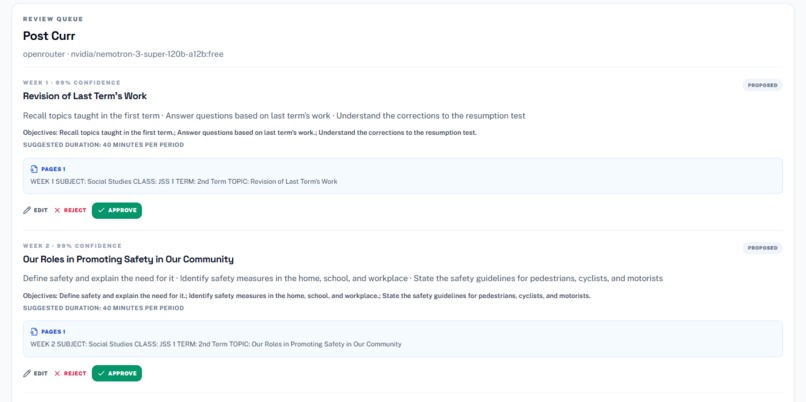
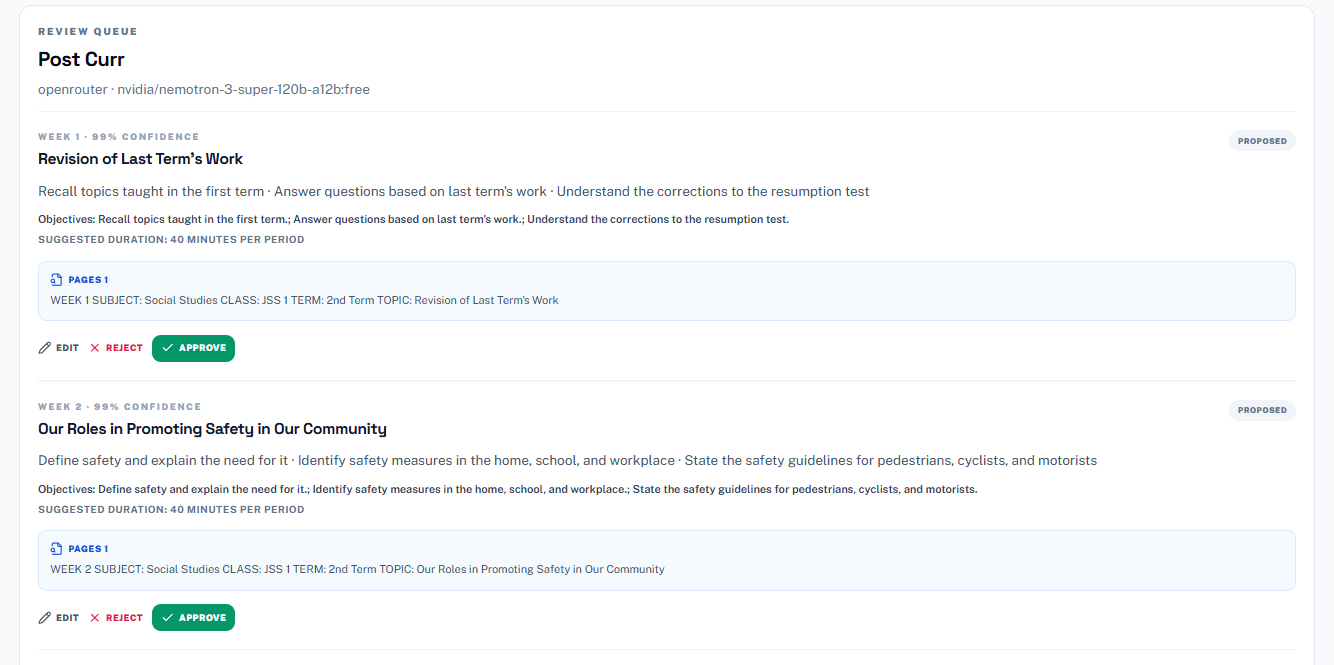
Proposal card showing week, confidence, pages, and supporting evidence
-
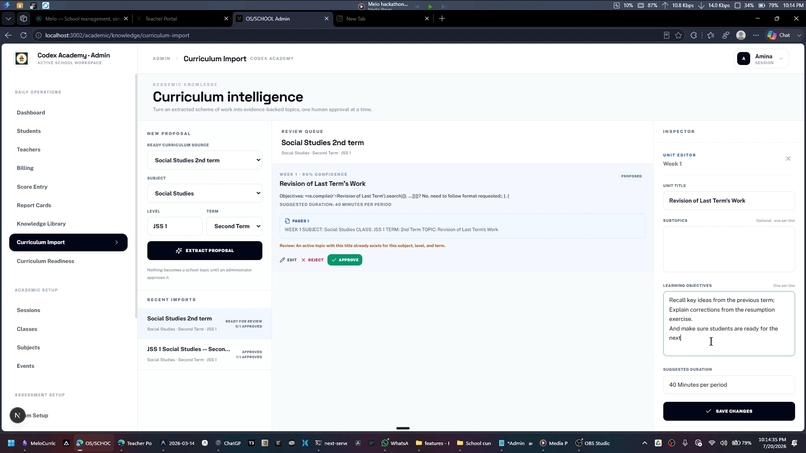
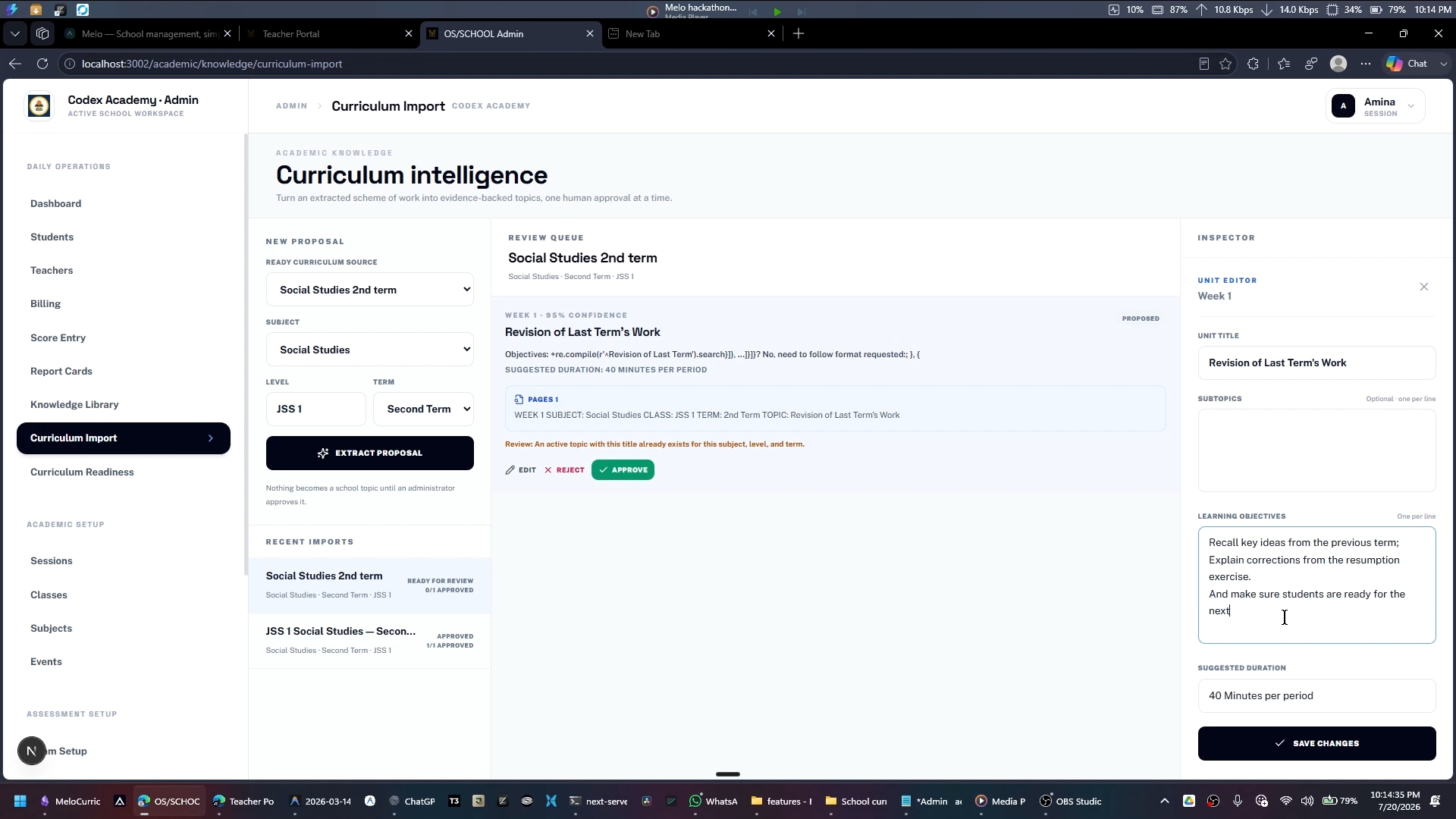
Edit panel or approval confirmation
-
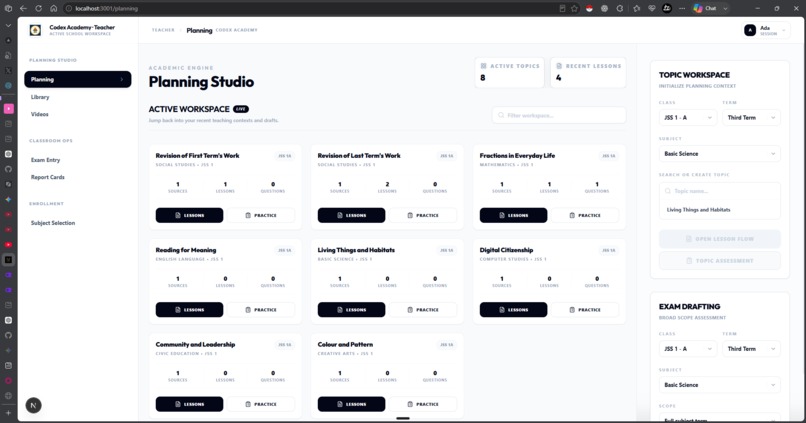
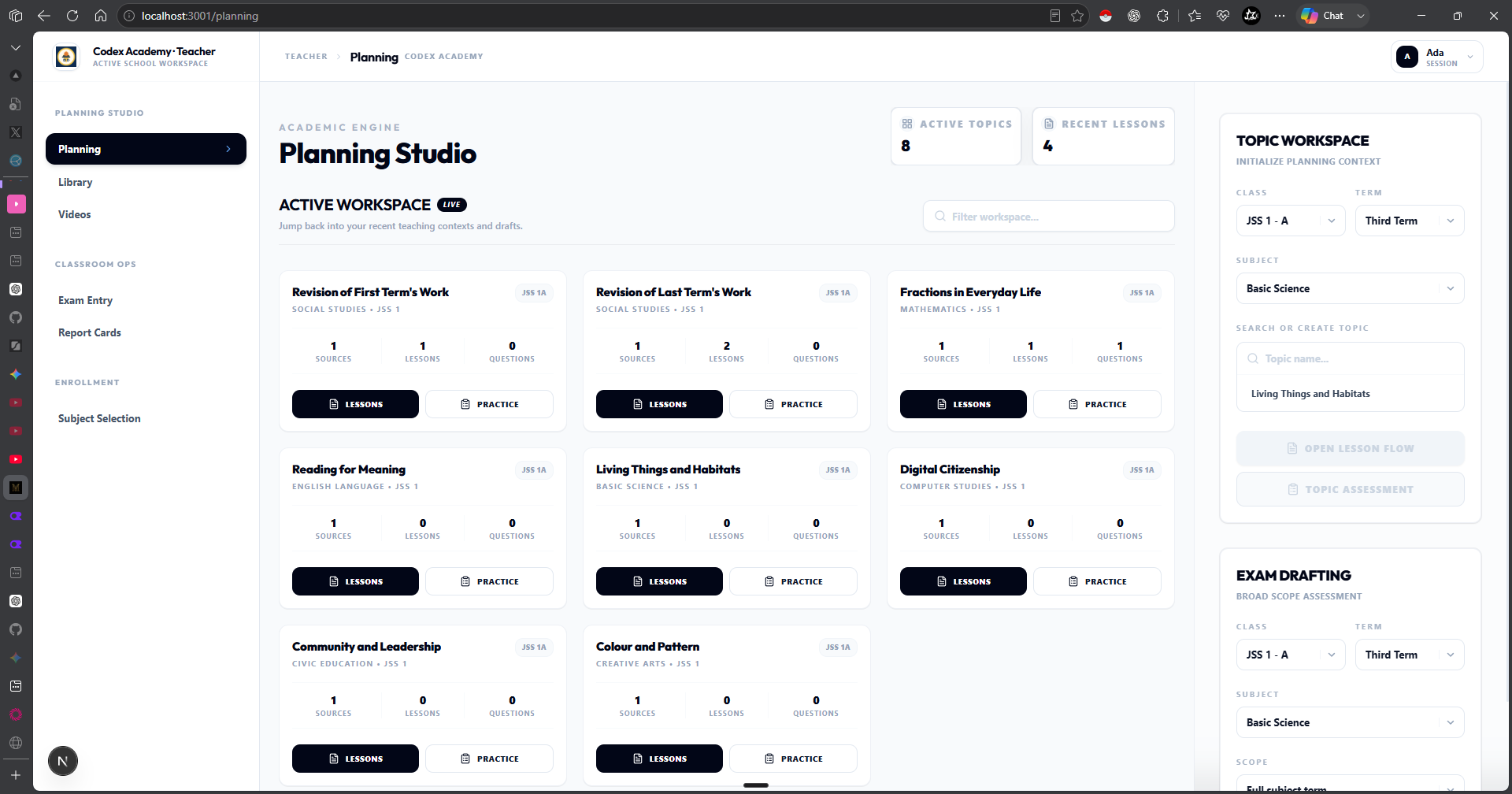
Approved topic visible in Teacher Planning
-
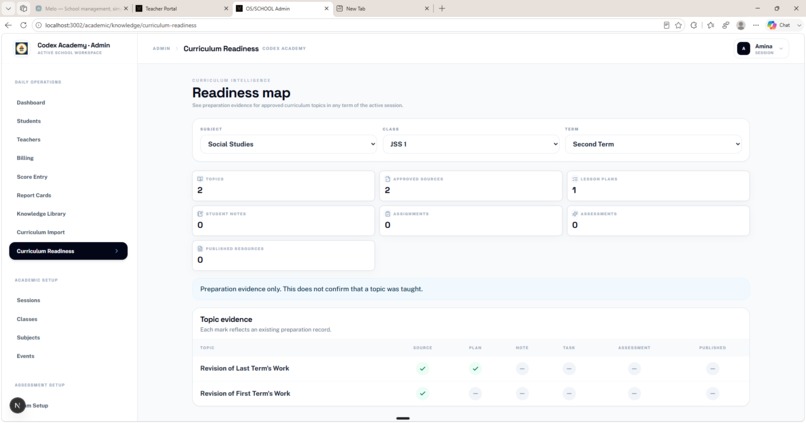
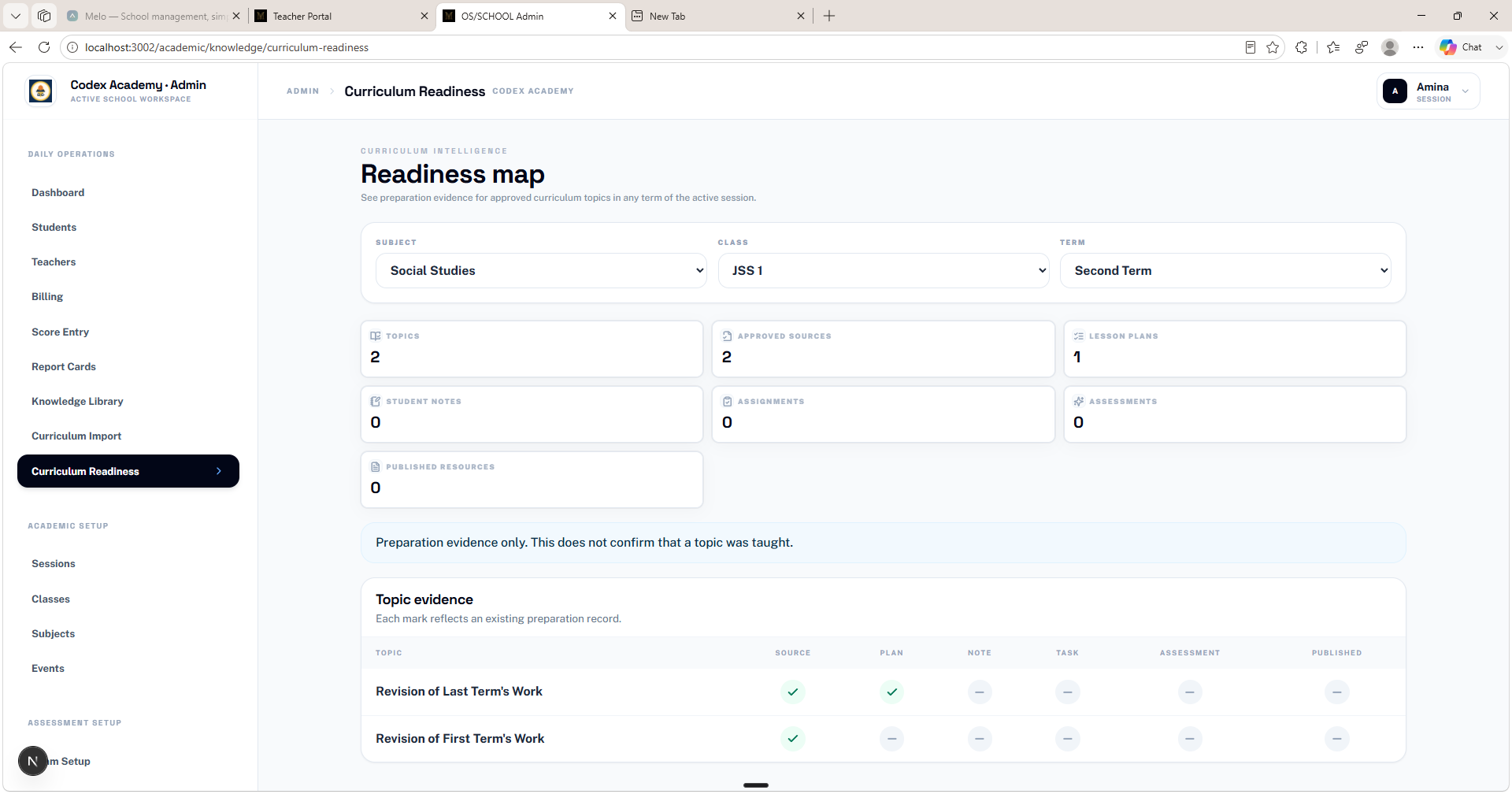
Curriculum Readiness Map
Inspiration
Many schools already have an approved scheme of work, but it often exists only as a PDF or another static document. Before teachers can use it, someone must manually recreate every week, topic, and learning objective inside the school’s planning system.
That creates more than administrative work. Curriculum information becomes disconnected from lesson preparation, assessments, and school oversight. Teachers may prepare materials independently, while administrators have no reliable way to see which parts of the curriculum are ready and which still need attention.
We built Melo Curriculum Intelligence to close that gap.
What it does
Melo turns an extracted scheme of work into a structured, reviewable academic plan.
A school administrator selects a curriculum document and its subject, class level, and term. Melo analyses the source and proposes weekly curriculum units containing:
- Topics and subtopics
- Learning objectives
- Suggested lesson duration
- Confidence indicators
- Source pages and supporting excerpts
The AI cannot publish these proposals. An administrator must inspect the source evidence and then edit, reject, or approve each unit.
Approved units become real academic topics within Melo’s existing school-management system. Teachers can immediately use them in their normal planning workflow to prepare lesson plans, student notes, assignments, quizzes, question banks, and examinations.
Melo also provides a Curriculum Readiness Map. It uses real school records to show which approved topics already have lesson materials, assessments, or published student resources—and where preparation gaps remain.
The result is one connected workflow:
Curriculum source → verified weekly topics → teacher preparation → assessment → school-wide readiness
How we built it
Melo is a multi-tenant school-management platform built with Next.js, React, TypeScript, Convex, Tailwind CSS, the Vercel AI SDK, and OpenRouter.
Curriculum Intelligence extends Melo’s existing academic and teacher-planning infrastructure instead of operating as a separate AI demonstration.
The workflow begins with material that has already passed through Melo’s document extraction and indexing pipeline. GPT interprets the document and returns schema-constrained curriculum proposals. Deterministic application code then validates:
- The selected subject, class, and term
- Source-page references and supporting evidence
- School permissions and data boundaries
- Duplicate topics
- Required curriculum fields
Each proposed unit remains linked to the exact source material that supports it. Approval creates or connects to Melo’s existing academic topics, so teachers do not need to use a separate curriculum application.
The AI provider and model are configurable through the deployment environment. The final submission workflow uses the required GPT model through OpenRouter, while saved fixtures and lower-cost models supported development and testing.
Codex helped us inspect the existing monorepo, design the architecture, implement the frontend and backend, write tests, diagnose failures from real documents, and deploy the finished workflow.
Challenges we faced
The hardest challenge was treating AI output as useful without treating it as automatically correct.
A curriculum is an authoritative school document. A plausible-looking topic is not enough. Melo therefore verifies every citation against the extracted source pages and refuses to accept unsupported evidence.
Real curriculum documents are also inconsistent. Some separate topics, subtopics, and objectives clearly; others combine everything into one line. The system had to preserve those distinctions without inventing information that was absent from the source.
Another challenge was integrating the feature into a working school platform. Approved topics needed to appear correctly in teacher planning, inherit their curriculum source, contribute to readiness calculations, and remain isolated within the correct school.
Accomplishments we're proud of
We are proud that this is not an isolated chatbot or document generator.
Melo Curriculum Intelligence connects AI document understanding to a complete operational workflow:
- Evidence-backed curriculum extraction
- Human review and approval
- Existing teacher-planning tools
- Lesson and assessment preparation
- School-level readiness reporting
- Tenant-aware permissions and audit records
We also built a full demonstration school with administrators, teachers, parents, 36 students, three classes, seven subjects, assessment records, report cards, invoices, curriculum sources, and prepared lesson material. This allows the feature to be demonstrated inside a realistic school environment rather than an empty prototype.
What we learned
We learned that educational AI becomes more valuable when it improves a real institutional process instead of only producing text.
The model is good at interpreting inconsistent documents. Traditional software is better at enforcing permissions, validating evidence, preventing duplicates, and calculating reliable status. School administrators must remain responsible for decisions that change the official curriculum.
Combining those three strengths—AI interpretation, deterministic validation, and human authority—produced a much safer and more useful system.
What’s next
The next stage is to move from curriculum readiness to measurable curriculum coverage.
Planned improvements include:
- Teacher confirmation when a topic has actually been taught
- Learning-objective-level assessment alignment
- Detection of exam questions outside the approved curriculum
- Curriculum version comparison
- Safer archival of obsolete imports and topics
- Improved processing for scanned and photographed documents
- Readiness reports across classes, terms, and academic sessions
The long-term goal is to help schools prove that what they planned, prepared, assessed, and eventually taught remains aligned with their approved curriculum.
Built With
- ai
- codex
- convex
- css
- github
- gpt-5.6
- next.js
- node.js
- ocr
- openai
- openrouter
- playwright
- pnpm
- processing
- react
- sdk
- tailwind
- turborepo
- typescript
- vercel
- vitest
- zod


Log in or sign up for Devpost to join the conversation.