-
-
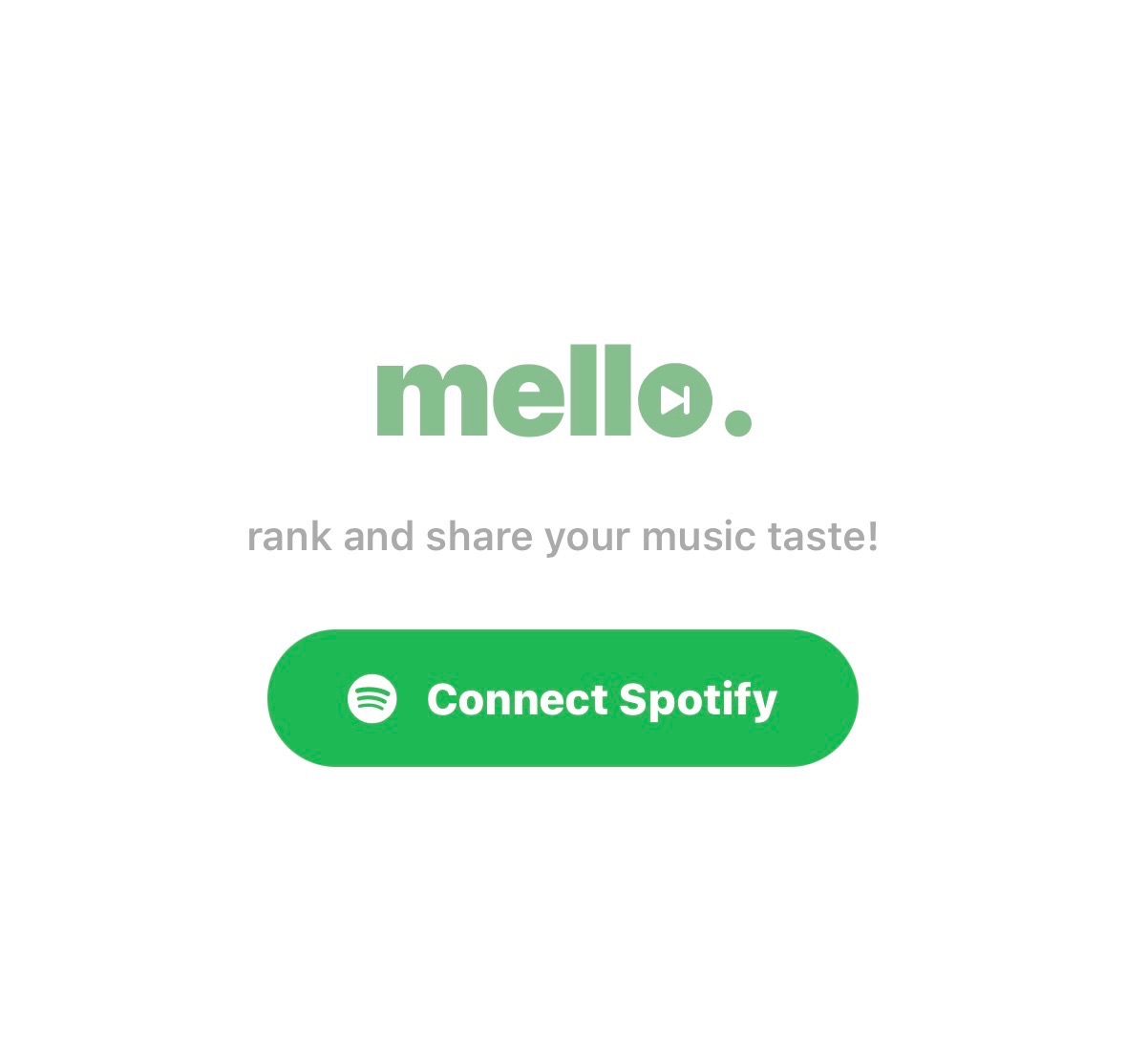
onboarding screen
-
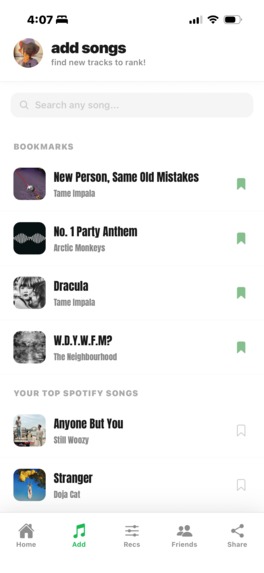
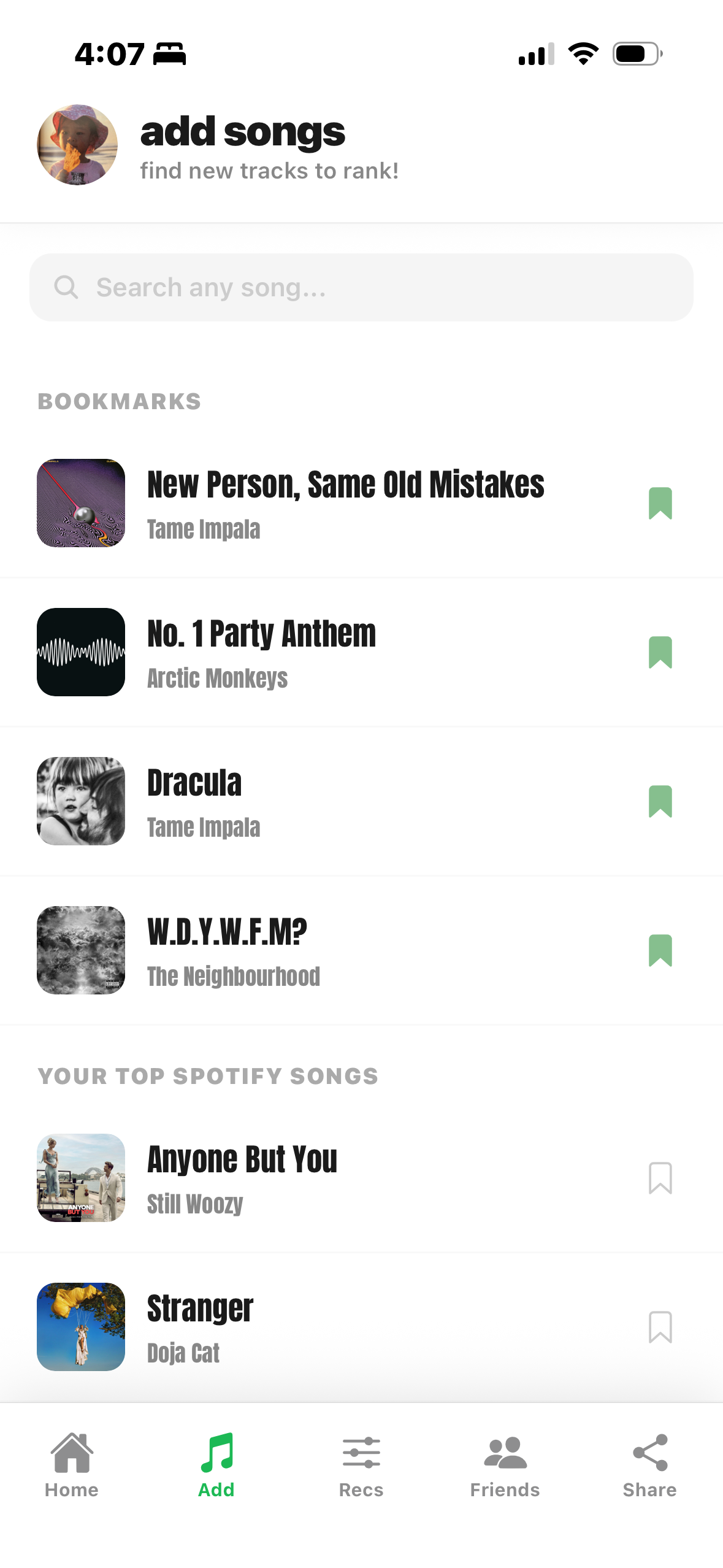
bookmarks and my top spotify songs
-
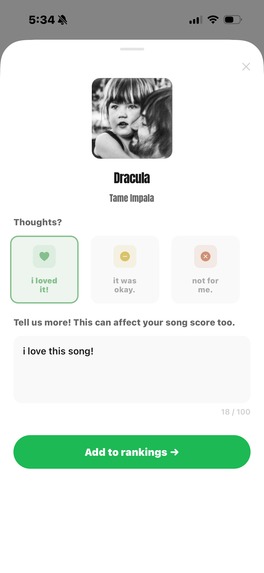
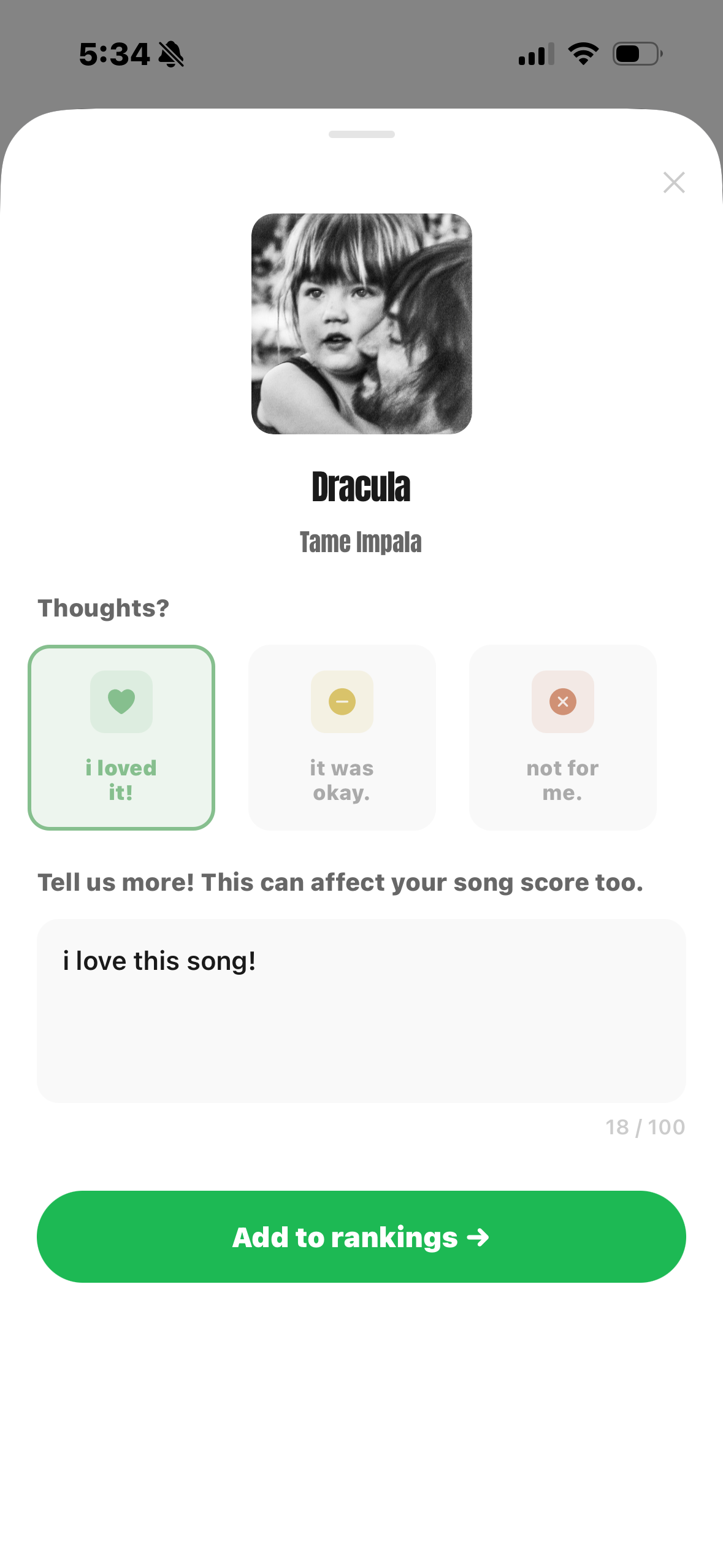
rating and comments
-
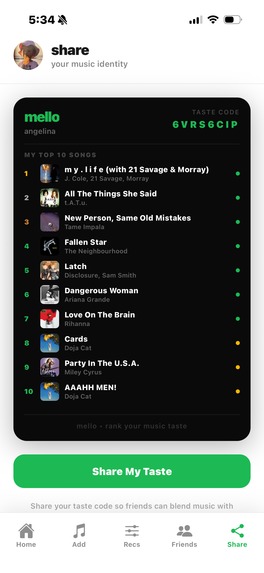
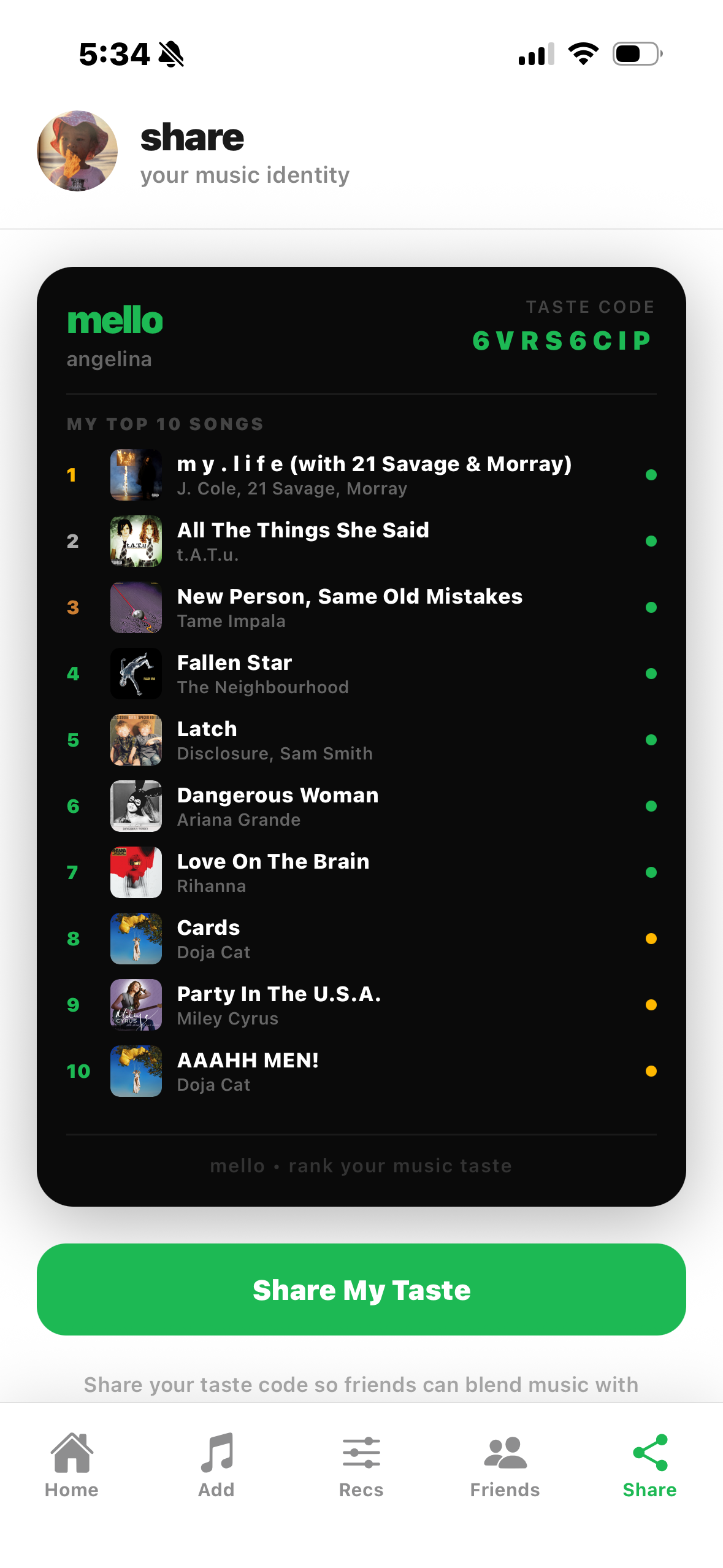
shareable screen
-
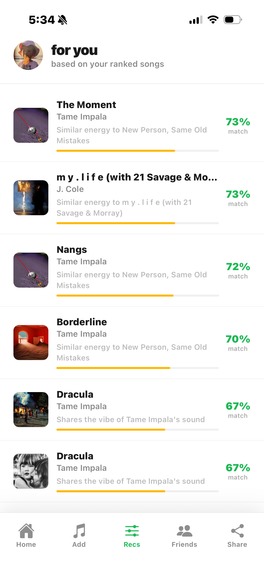
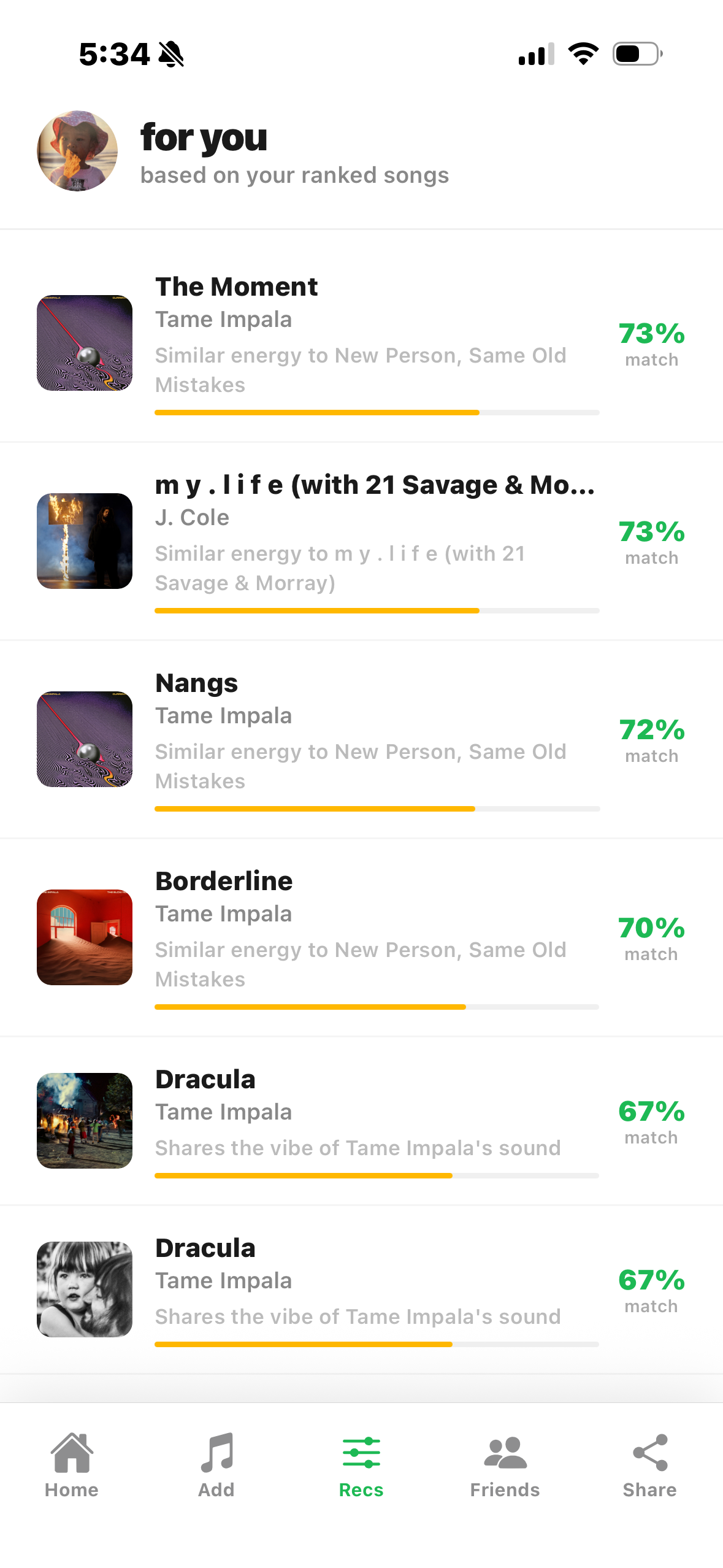
generated recommendations and reasoning
-
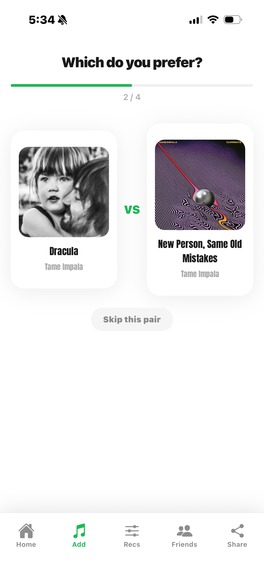
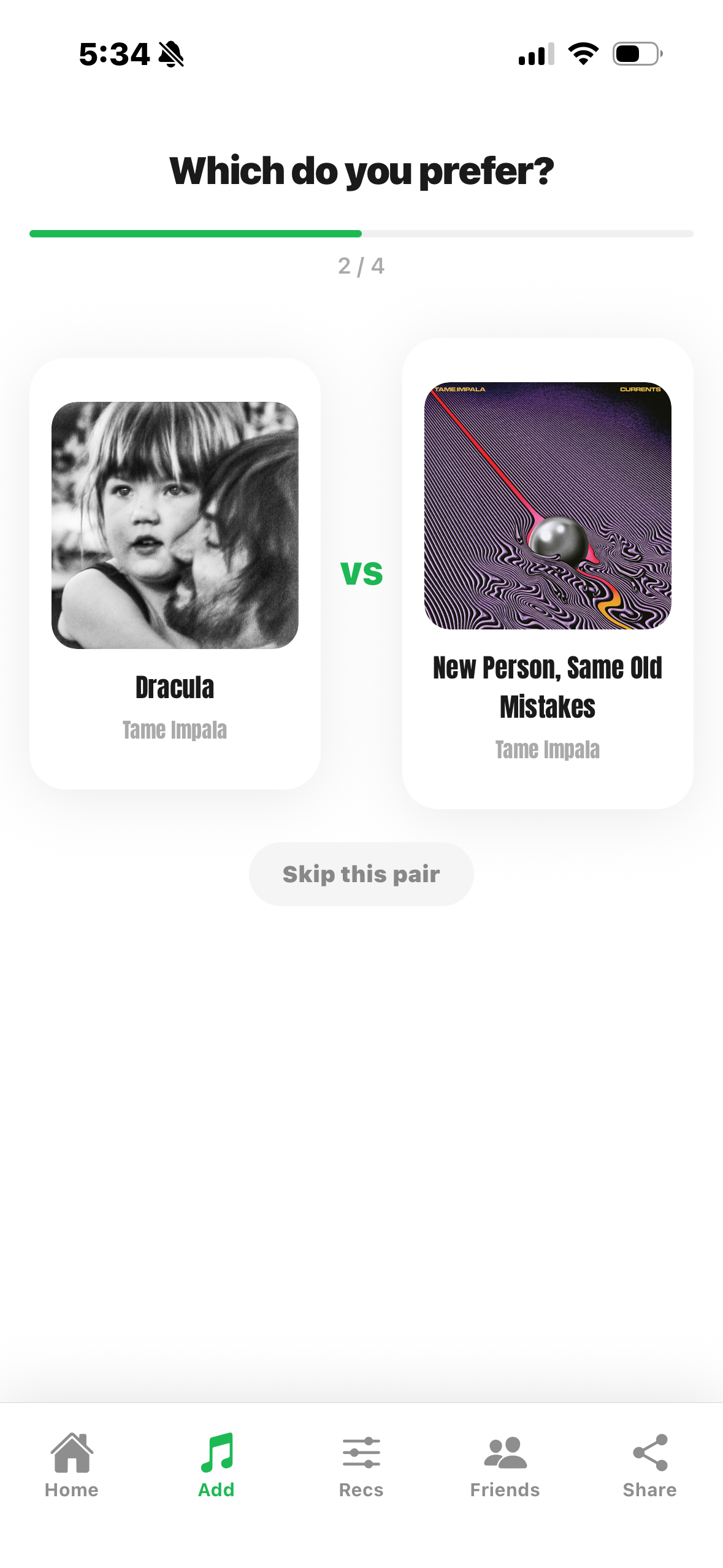
direct comparisons
-
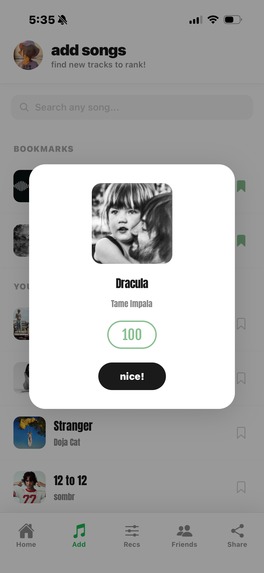
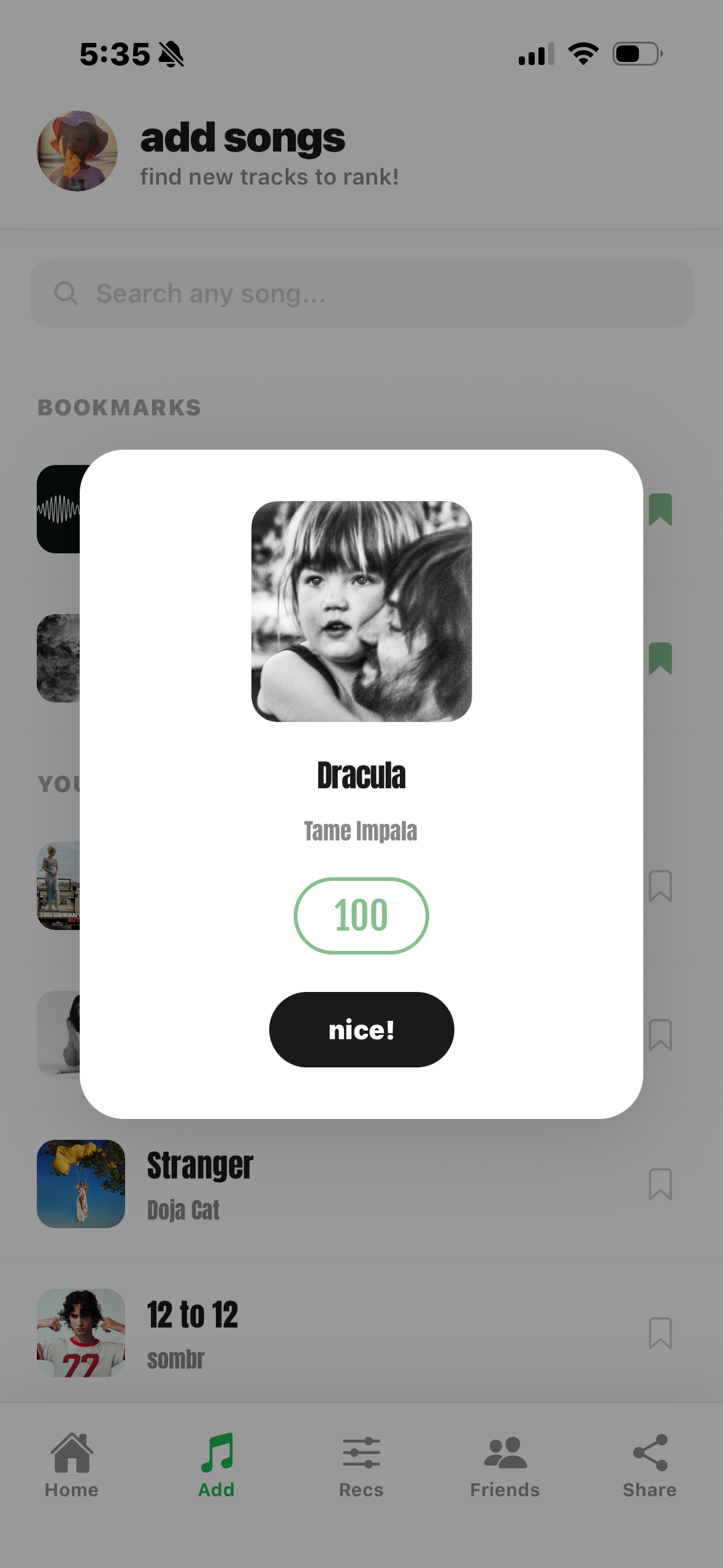
rated song!
-
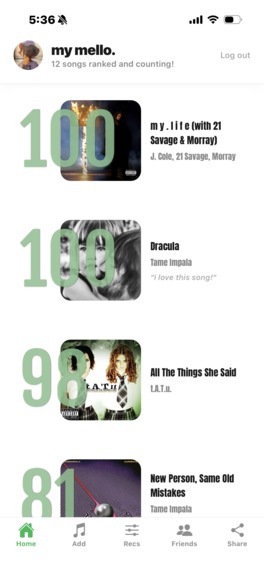
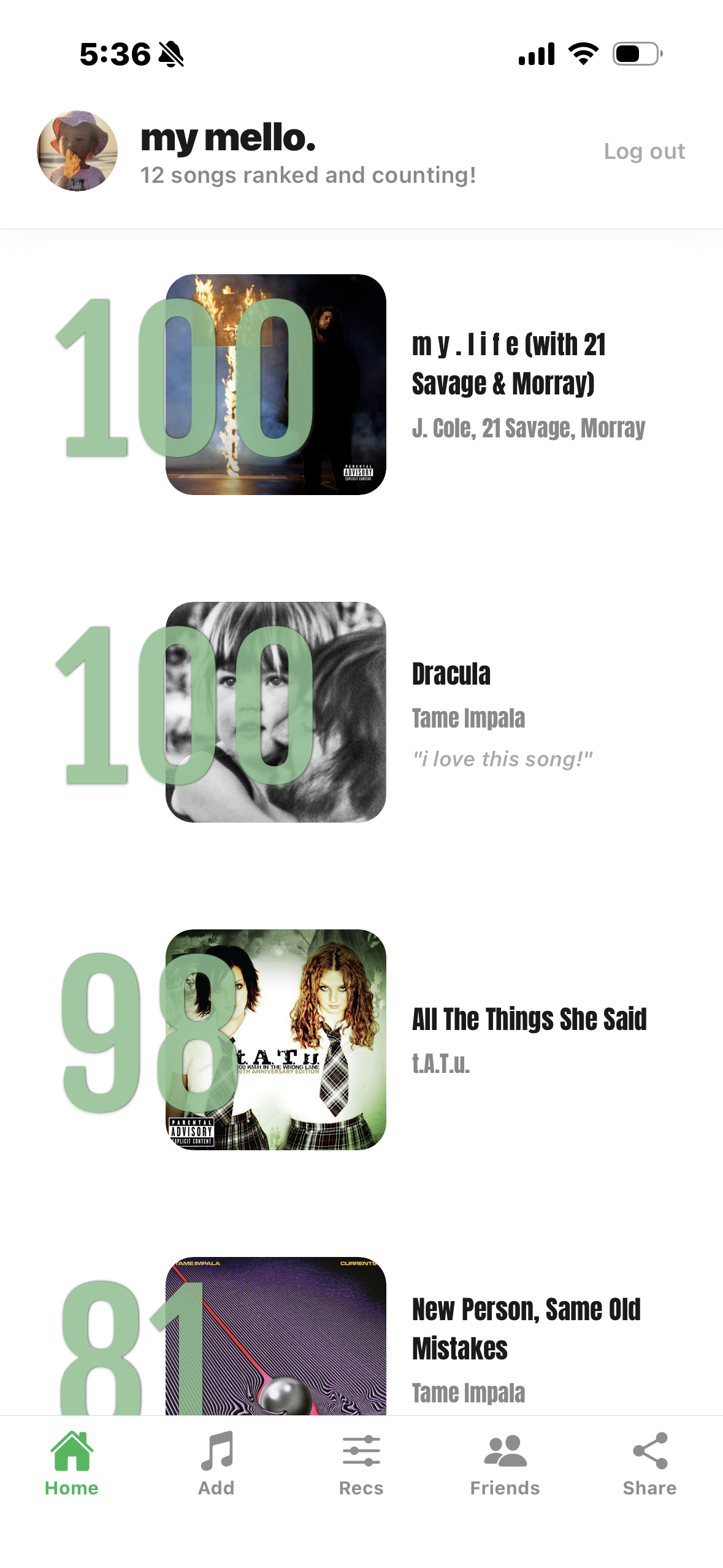
my mello dashboard with my rankings!
Inspiration
As huge fans of Letterboxd, we saw how it built a culture around rating and reviewing films, and it was something we wanted to bring to music. But we didn't want a simple star rating system; we wanted something definitive, something mathematical, and something advanced to keep up with the modern age of AI and ML. Mello was born from the question: what if you could actually prove what your favorite song is?
What it does
Mello is a mobile music preference engine that uses Spotify authentication to pull in your listening history as a foundation, then refines your taste profile through head-to-head song comparisons powered by an ELO rating algorithm, the same system used to rank chess grandmasters. Every song gets a precise normalized score and is sorted into three preference tiers: loved, okay, and not for me. Songs are encoded as embedding vectors via real-time ML inference, powering personalized recommendations and a social layer where users can compare how they rated the same songs as their friends.
How we built it
We built Mello on React Native and Expo with TypeScript, using Spotify OAuth for authentication and the Spotify API for track data and search. The backend runs on Next.js deployed to Vercel. The recommendation engine uses Modal for GPU-accelerated embedding inference and Supermemory to persist and evolve each user's taste vector over time. The ELO system and normalization logic were built entirely from scratch.
Challenges we ran into
The recommendation system was the most technically demanding piece: getting real-time ML inference working end-to-end and connecting it meaningfully to user preference data took significant iteration. Spotify API integration also presented unexpected friction, particularly around token management and search endpoint behavior in React Native. Mobile development was new territory for our team, which added a learning curve across the board.
Accomplishments that we're proud of
We're proud of shipping a product that feels genuinely polished — the UI is clean, consistent, and intentional from end to end. Beyond the frontend, we're proud of building a real recommendation engine that runs on actual math rather than heuristics, and successfully integrating a full authentication flow, a custom ELO system, GPU inference, and vector storage into a cohesive mobile experience in a single hackathon.
What we learned
This project pushed us deep into mobile development for the first time, teaching us the nuances of React Native, Expo's ecosystem, and the challenges of building performant UI on device. We also gained hands-on experience with end-to-end product development, working all the way from authentication flows to ML inference pipelines, and learned a lot working with newer infrastructure tools like Supermemory and Modal.
What's next for mello.
The immediate priority is strengthening the social layer. We want users to be able to connect more seamlessly through taste codes, view each other's full rankings, and see exactly how a mutual song was rated by someone else side by side. Longer term, we would love to see Mello evolving into a true music identity platform, where your rankings tell a story about who you are, and shared taste becomes a way to discover both music and people.
Built With
- expo.io
- figma
- modal
- nextjs
- react-native
- spotifyapi
- spotifyoauth
- supermemory
- typescript
- vercel


Log in or sign up for Devpost to join the conversation.