-
-
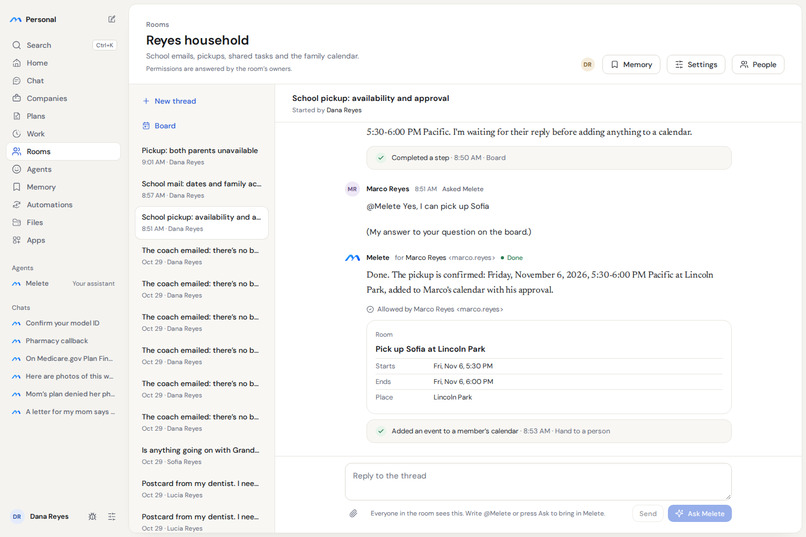
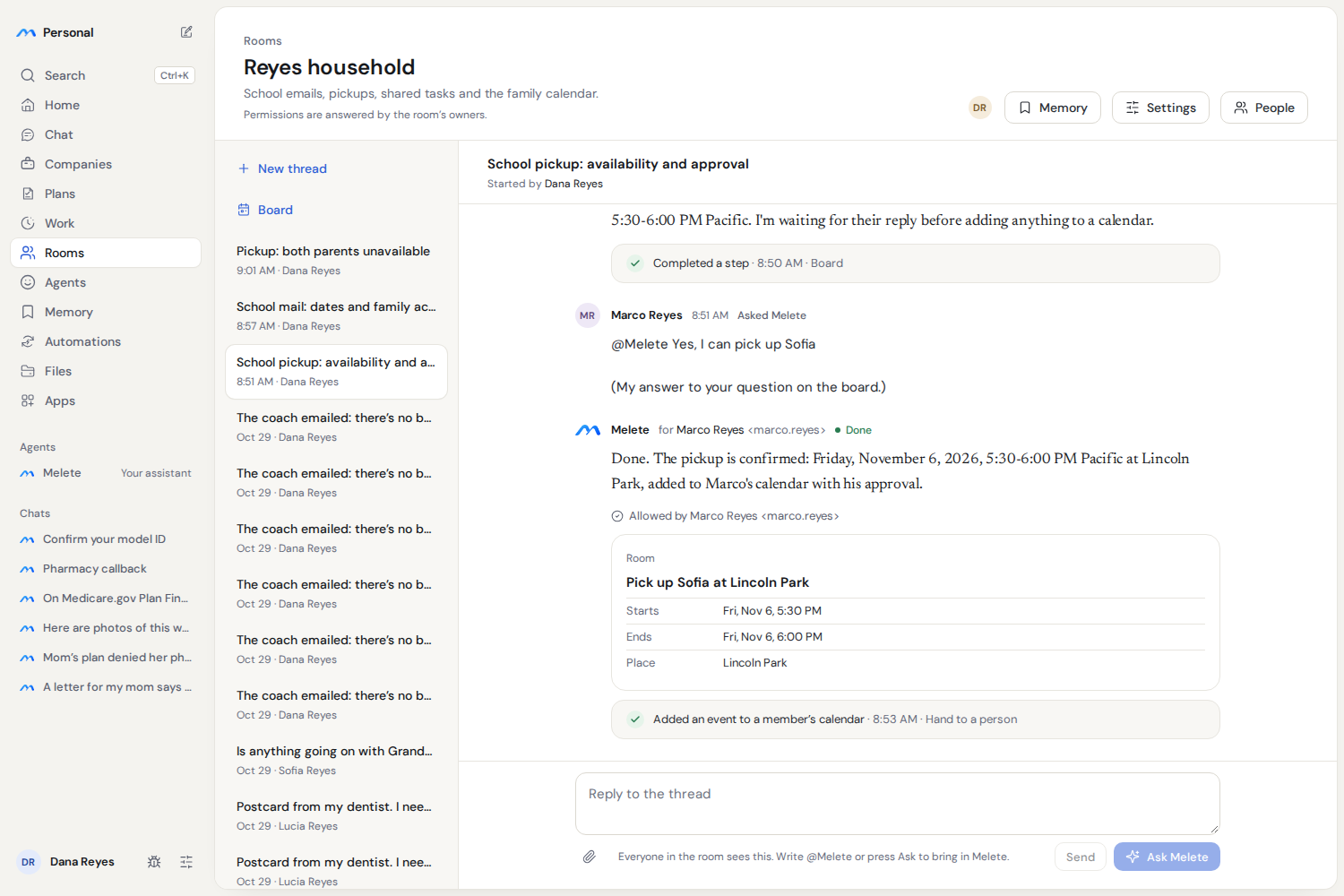
From availability to approval to a confirmed pickup. Melete adds the event only after its calendar owner agrees. Demo household.
-
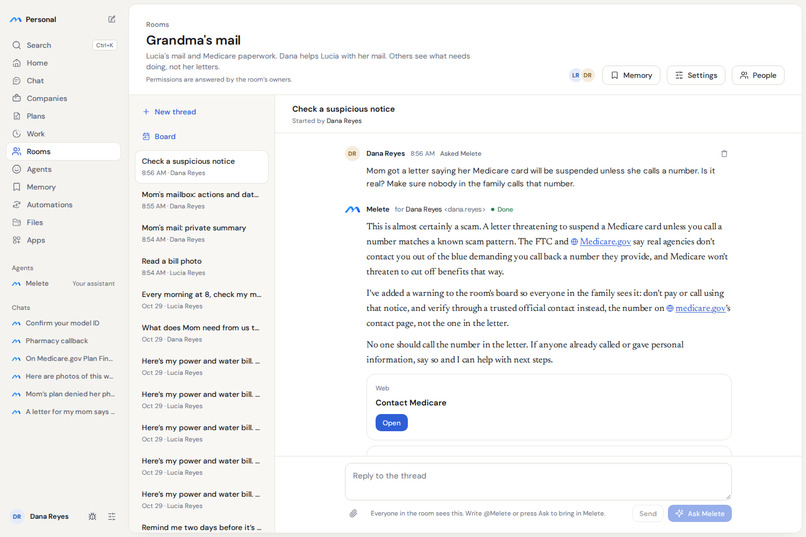
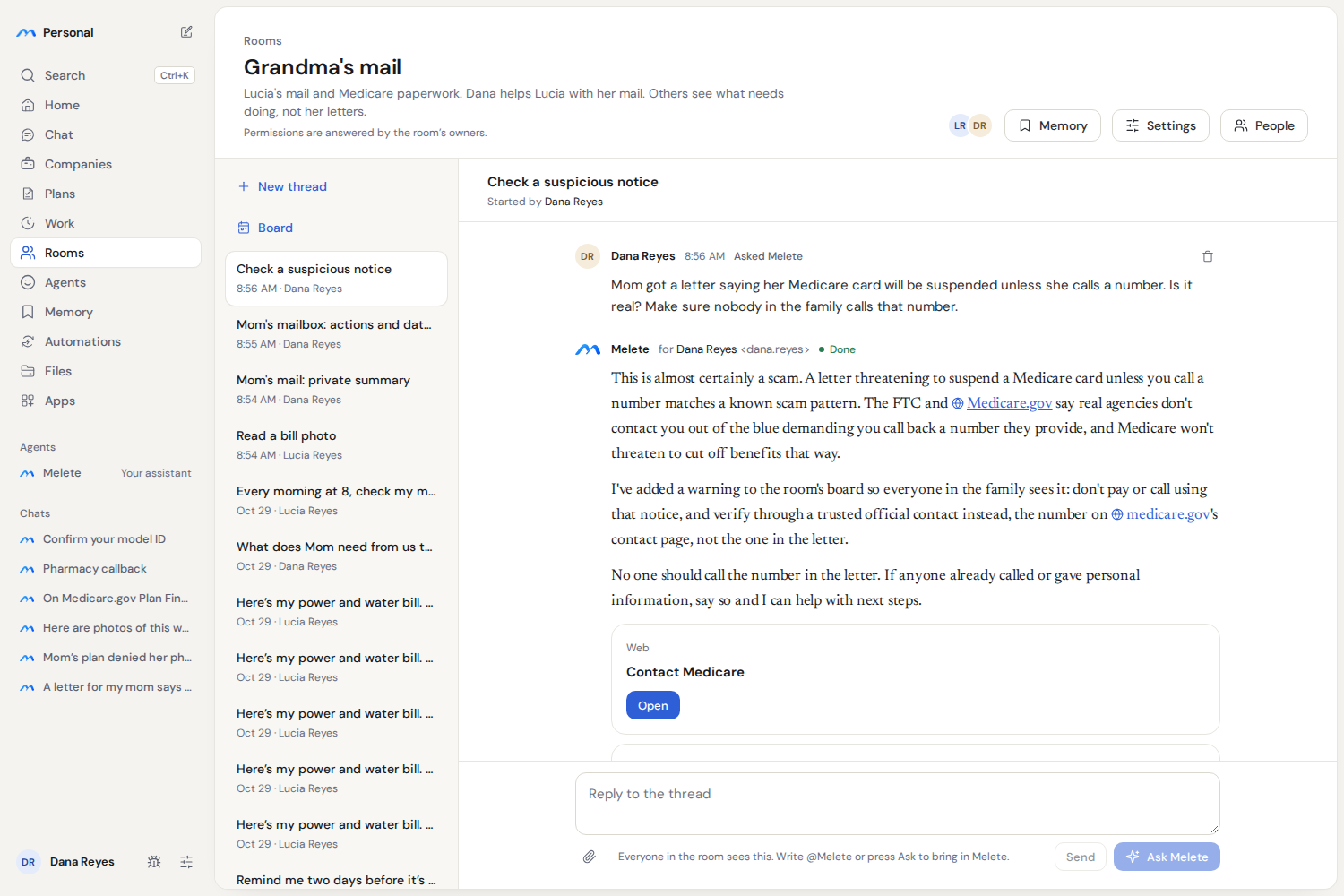
A suspicious letter checked against official sources with Tavily, followed by a warning for the family. Demo household.
-
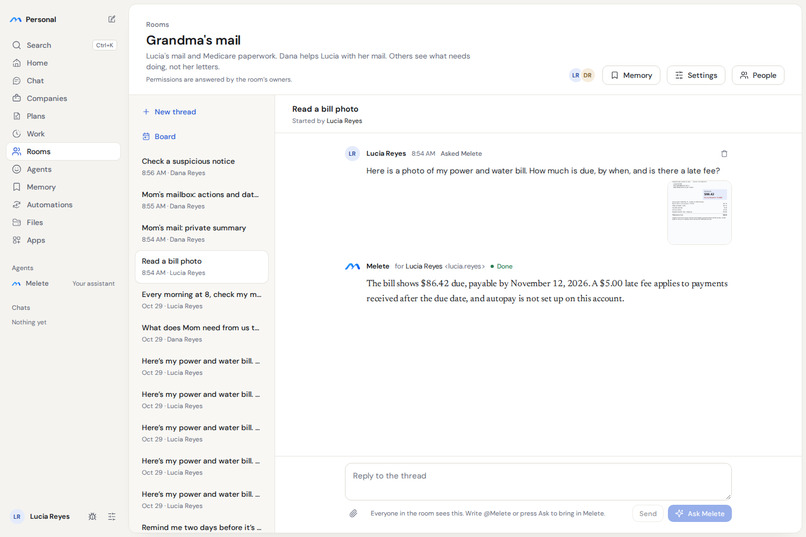
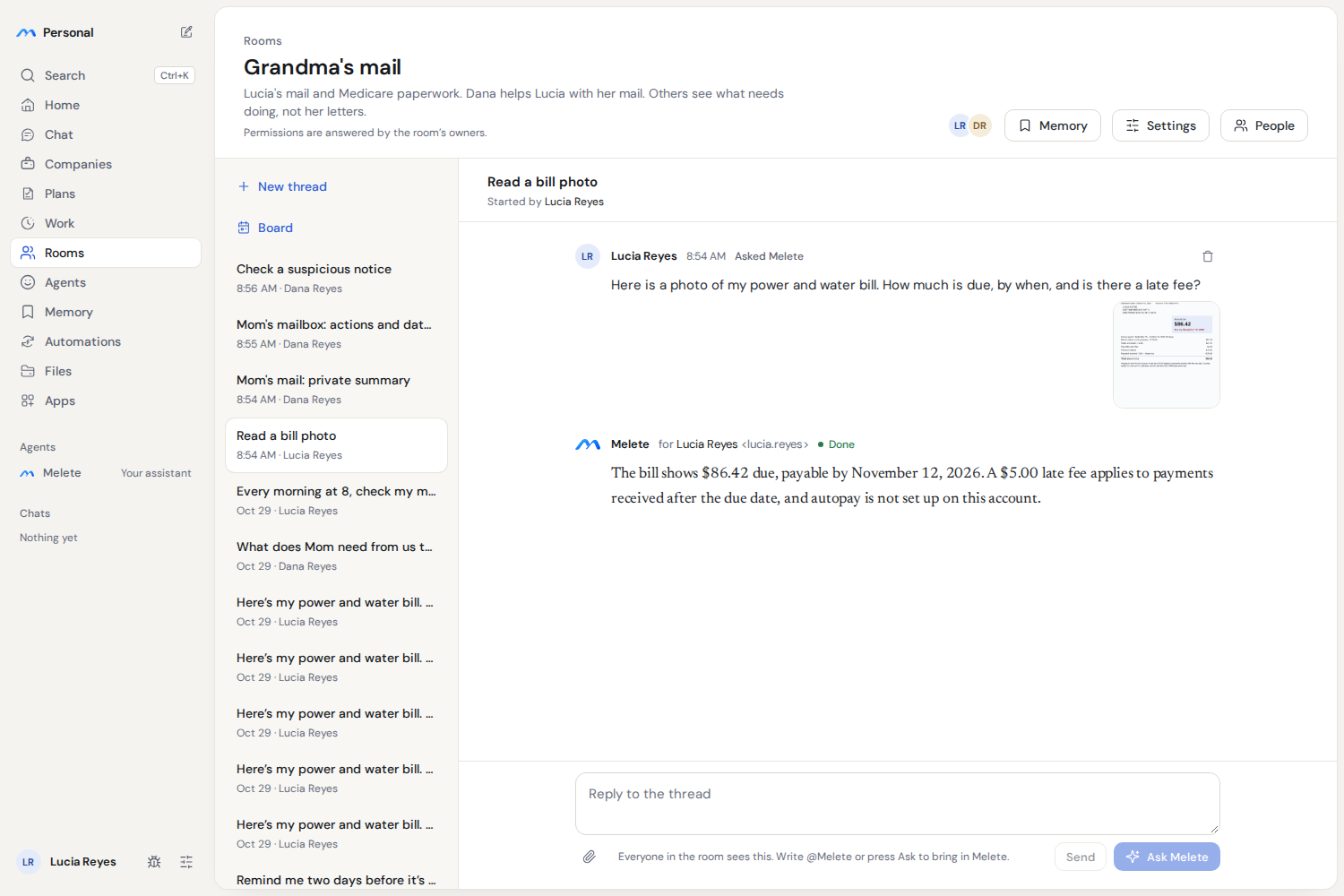
A phone photo becomes a clear answer: amount, due date, late fee and autopay status, read by Nemotron Super VL. Sample bill.
-
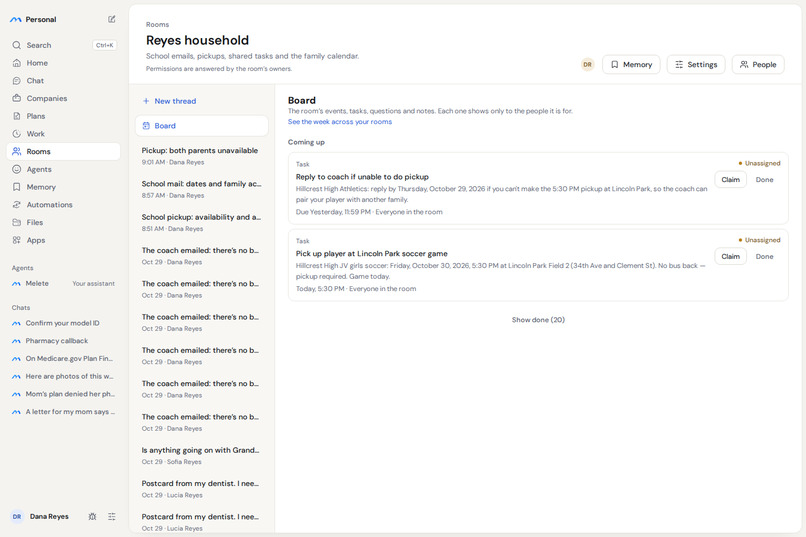
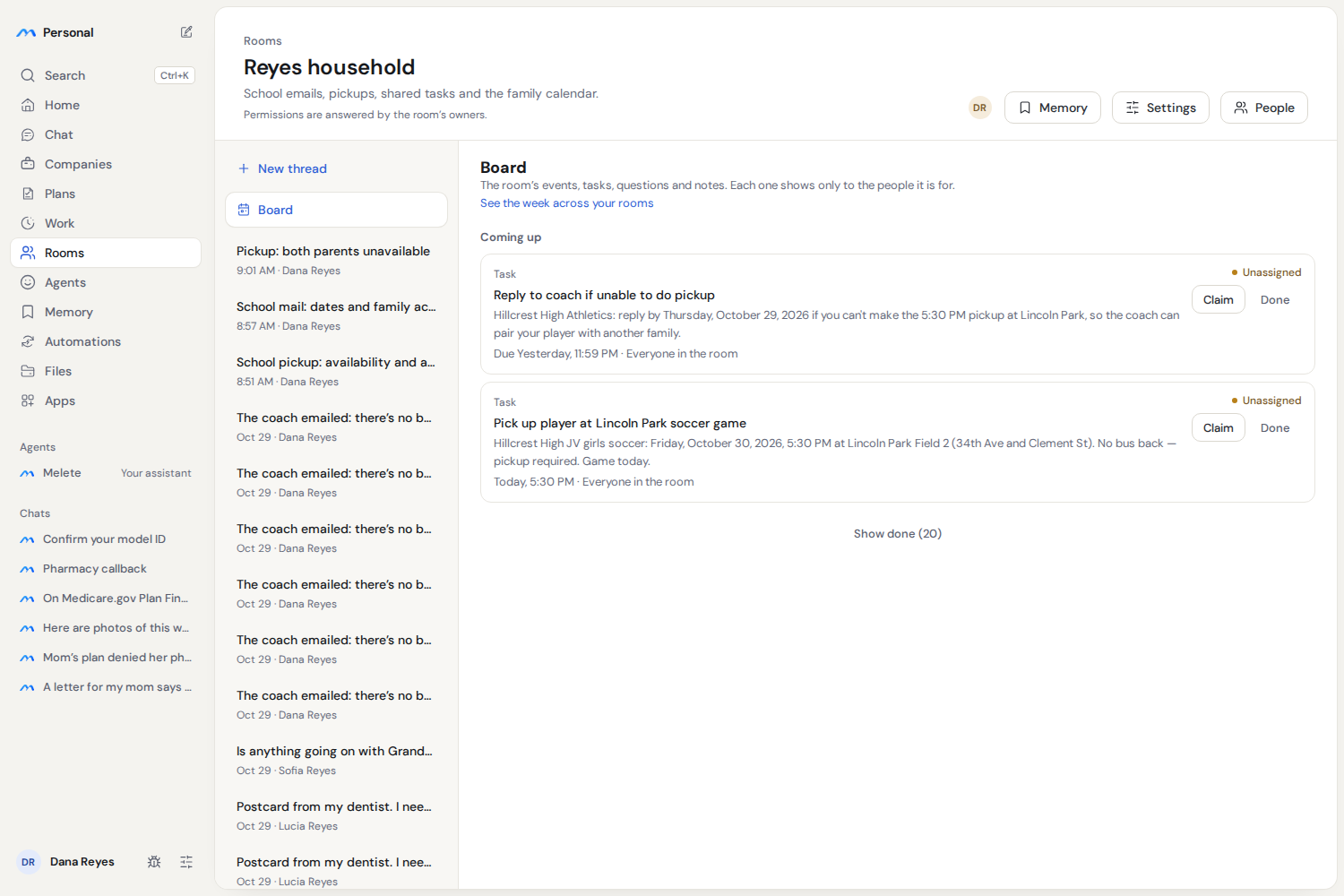
School mail becomes shared tasks with dates on the family board, so one person doesn't have to keep track of everything.
Inspiration
In a family, one person often ends up keeping track of everything. They read the school email, remember the appointment, work out who's free, chase an answer, and check that it actually happened. Add an aging parent's bills and confusing mail, and that job gets bigger.
I built Melete around that person. I wanted a personal AI that could help a whole family follow through, while letting each person keep control of their own accounts.
What it does
Melete gives the family one place to talk to an agent and see what needs doing. Each person connects their own mail and calendar. Shared rooms bring the useful parts together: availability, tasks, decisions, and the next step.
For example, a school email changes a pickup. Melete reads it, checks the parents' availability, asks the person who's free, and waits for that person's approval before adding anything to their calendar. It checks the result and updates the family board. If nobody is available, the task stays unresolved.
The same idea helps with an older parent's paperwork. Post a photo of a bill and Melete reads the amount and due date. Ask about a suspicious letter and it checks official sources through Tavily, gives a clear verdict, and puts a warning where the family can see it.
The demo follows a fictional three-generation household. It runs real model calls, mail and calendar tools, approvals, and saved board updates against sample accounts and documents.
How I built it
Melete's agent engine is built on Hermes Agent and customised for the product. The application uses TypeScript, Bun, React, PostgreSQL, and Docker.
NVIDIA Nemotron 3.5 Super VL runs through Nebius Token Factory. It reads the paper photos, reasons about what needs to happen, calls the tools, and writes the reply. Having vision and tool use in the same model matters here: a photo of a letter should be able to become a useful next step in the same conversation.
I added a short set of Nemotron-specific instructions based on repeated household tests. They cover practical details such as local times, reading a message before judging it, continuing after approval, and confirming an action only after the tool reports success. There is no fine-tuning.
The model works inside permissions enforced by the application. Shared calendars expose free/busy times without event titles or locations. Calendar writes require the account owner's approval. A summaries-only room limits what helpers receive from another person's mail. Those boundaries hold in the tools and server checks.
What was hard
The difficult part was getting the handoffs right. A parent saying they can do a pickup and that parent authorising a calendar change are separate decisions. Melete has to ask the right person, wait, pick up where it left off, and keep the shared board consistent with what actually happened.
Privacy also gets much harder when several people share an assistant. A useful reminder might need a date and an amount, while the account number and private details should stay with the owner. I worked on that distinction throughout the mail, calendar, and room flows.
Testing meant checking the saved result. A convincing reply wasn't enough: I checked whose calendar changed, whether consent happened first, and what another family member could see.
What I'm proud of
The family flow now connects all the way through: notice, check, ask, approve, act, and read back the result. It feels like one product, with a shared board people can understand.
The live verification also checked the boundaries directly. Another family member could not approve a write to Marco's calendar, and Sofia could not open the private room for Grandma's mail.
Cost was another important result. In my internal household evaluation, Nemotron with the guidance averaged about $0.019 per task. A family assistant needs to be affordable enough to use for the small, ordinary jobs too.
What I learned
The most useful improvements came from watching where an otherwise sensible answer stopped short of finishing the job. A timezone error, a missed approval, or a task left on the wrong person's board matters more to the family than how polished the answer sounds.
I also learned how much a short, specific set of instructions can help an open model. On the 14-task household suite, Nemotron improved from 32/42 passes without the guidance to 57/70 with it across repeated runs. That gave me a concrete way to improve the product and check the tradeoffs.
What's next for Melete
The next step is trying these flows with real households, especially families helping an older relative. I want to learn which reminders help, which interruptions get ignored, and where someone still has to step in.
I'm also working toward more reliable follow-through across longer tasks and clearer ways for each person to decide what their family assistant can see and do. The goal is simple: less remembering, chasing, and coordinating for the person who usually carries it all.
Built With
- caldav
- css3
- docker
- drizzle-orm
- graphql
- hermes-agent
- hono
- html5
- imap
- javascript
- libsodium
- mcp
- nebius-token-factory
- nvidia-nemotron
- pg-boss
- playwright
- postgresql
- python
- react
- tavily
- typescript
- vite
- zod


Log in or sign up for Devpost to join the conversation.