MelaHealth: Culturally Sensitive Health Assistant
Inspiration
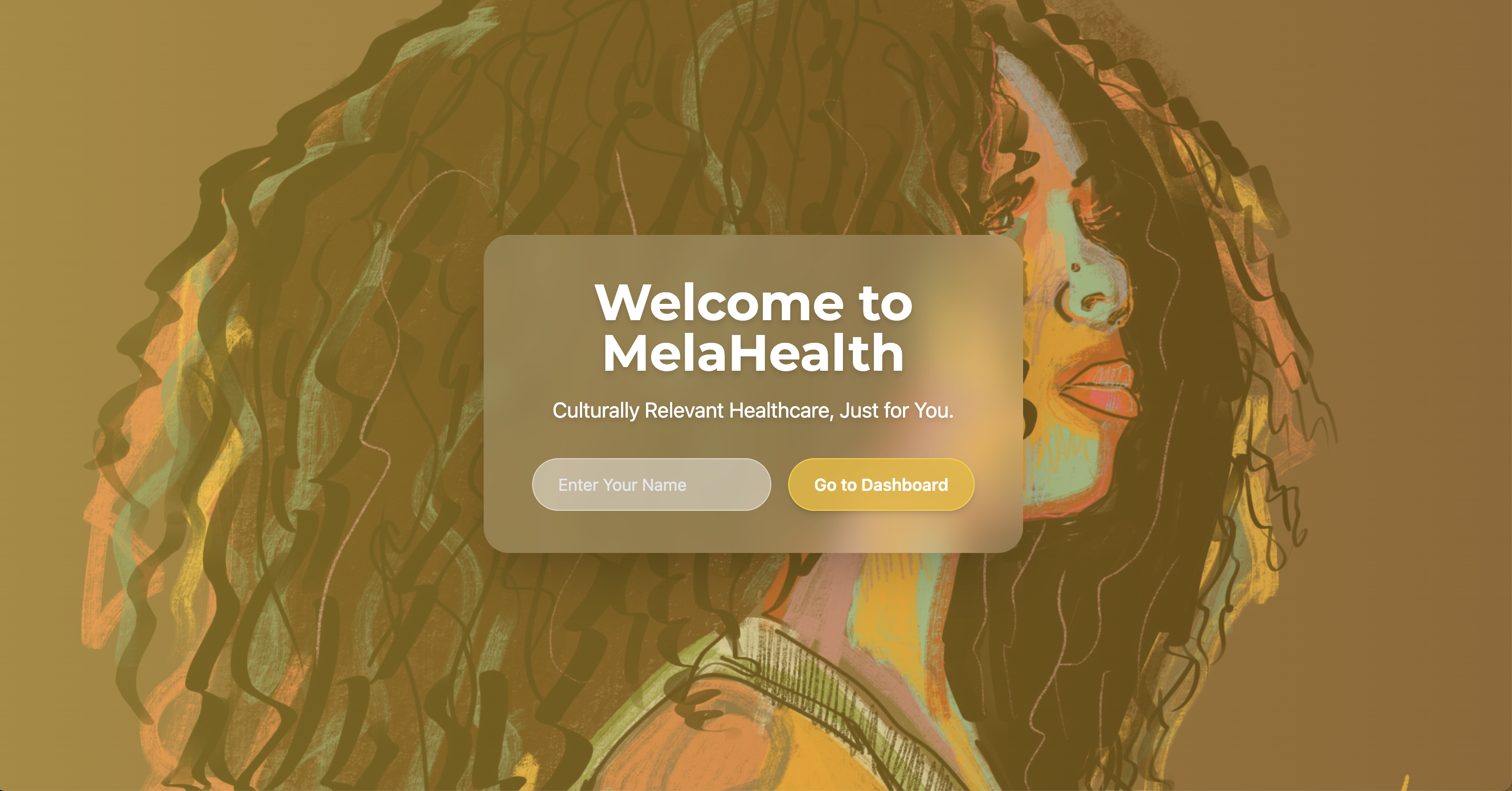
The inspiration for MelaHealth came from the noticeable gaps in healthcare for communities of color, especially when it comes to culturally relevant care. Hypertension, diabetes, and other health concerns disproportionately affect these communities, yet many resources fail to provide tailored advice that considers cultural preferences and challenges. Our goal was to create a virtual health assistant that not only provides reliable medical guidance but also integrates cultural awareness and respect into every interaction.
What it does
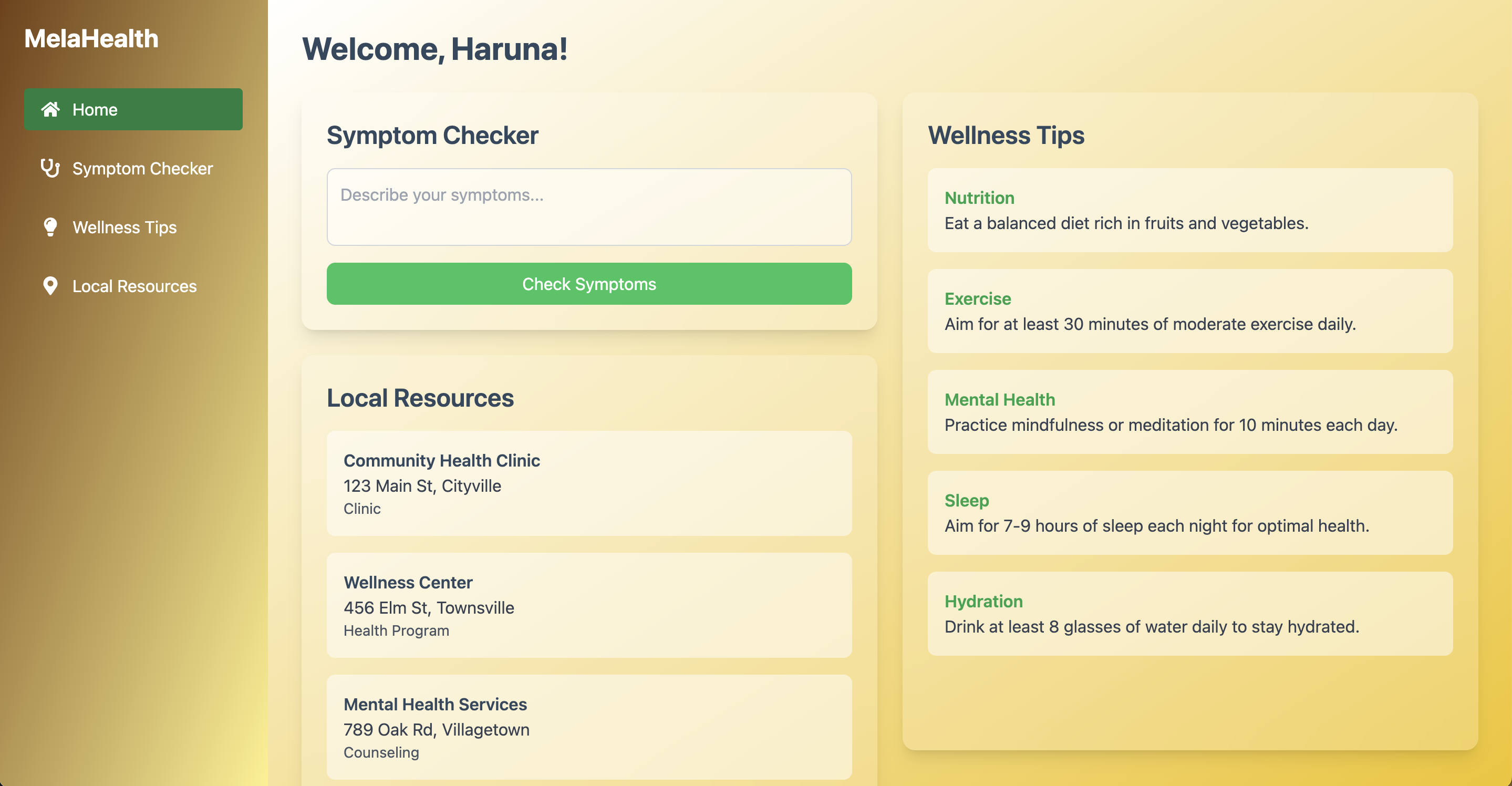
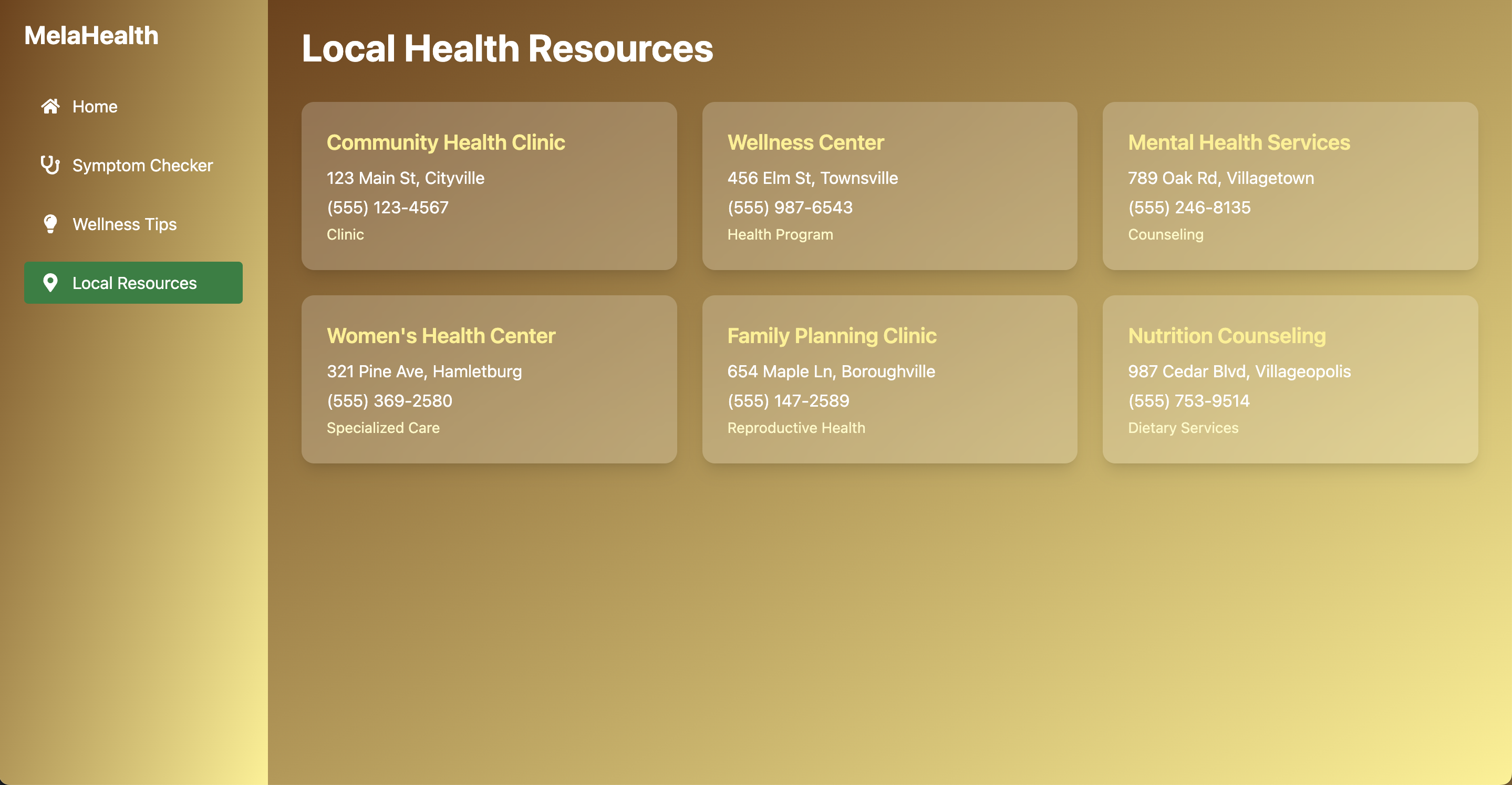
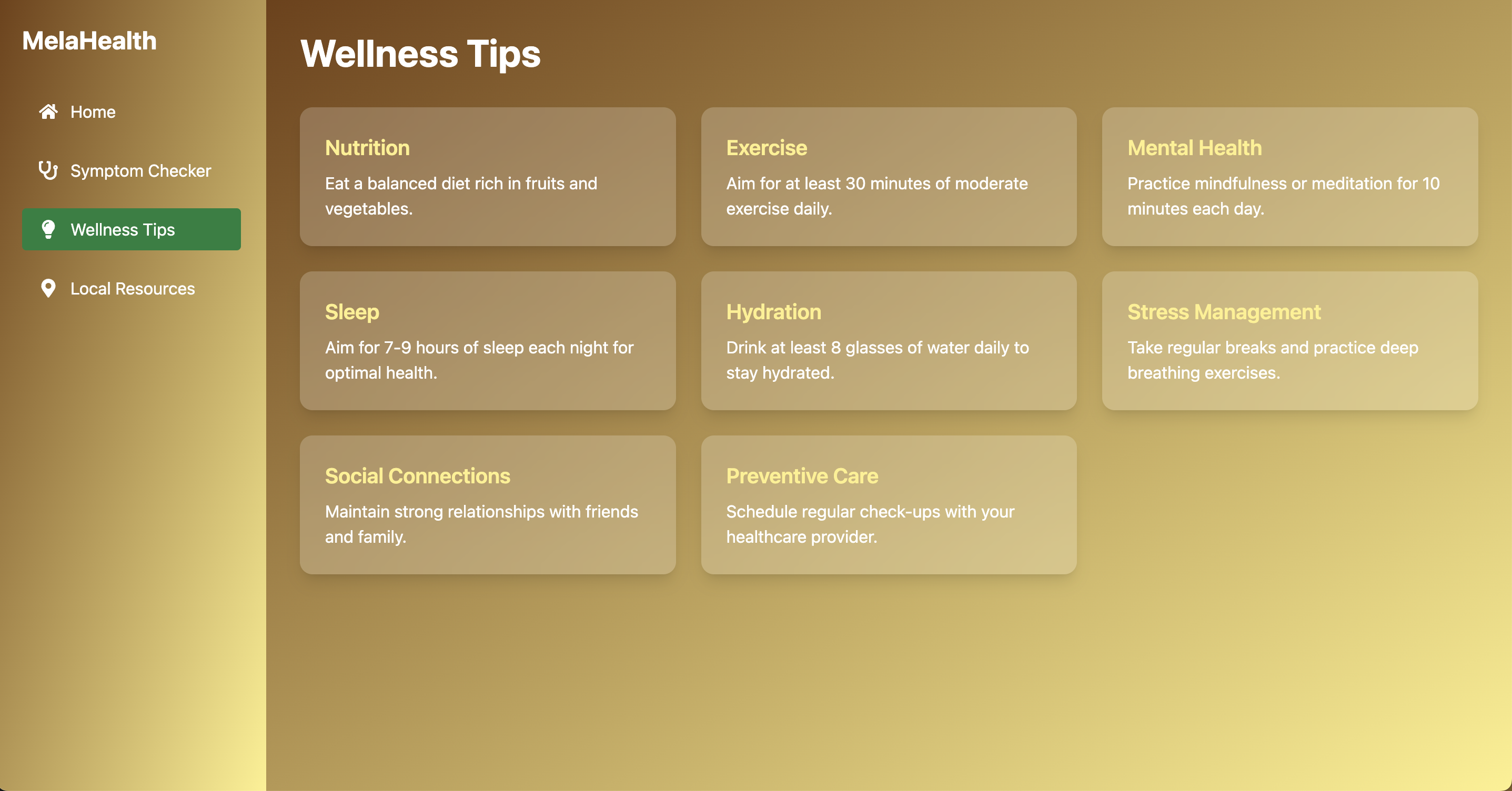
MelaHealth is a virtual health assistant that delivers culturally relevant health information and resources. It features a Symptom Checker that interprets user input to provide health guidance, Wellness Tips tailored to cultural preferences, and a Local Resources feature to connect users with nearby health services.
How we built it
We built MelaHealth using a React frontend, styled with Tailwind CSS to create a sleek and responsive UI. The backend is powered by Node.js, handling all the API requests and data processing. For the symptom checker, we integrated the OpenAI's API, which allows for advanced natural language processing to interpret user input and deliver personalized health advice. We also used the API for the local resources feature, enabling users to find nearby clinics and healthcare providers.
Challenges we ran into
One of the main challenges we encountered was ensuring that the health information provided was culturally relevant and personalized to the communities we aim to serve. Integrating AI that could interpret cultural nuances was particularly tricky. Additionally, ensuring that the user experience was seamless, especially on mobile devices, required optimizing performance given the resource-heavy nature of the Glassmorphism UI design.
Accomplishments that we're proud of
We are incredibly proud of the cultural sensitivity integrated into MelaHealth. Building a symptom checker that understands not just health conditions, but also the specific needs of communities of color, is a significant achievement. We are also proud of how seamlessly the Glassmorphism UI elevates the user experience, making the platform feel modern, intuitive, and beautiful. Successfully integrating AI-driven insights to provide tailored wellness tips is another highlight for us.
What we learned
This project taught us the importance of designing with empathy and inclusion in mind. By considering the unique health challenges of communities of color, we were able to create a tool that offers real value. On a technical level, we learned how to integrate advanced AI tools, optimize performance in resource-heavy UIs, and develop with both backend and frontend complexities in mind. We also gained deeper insights into healthcare-related data systems and APIs.
What's next for MelaHealth
Our next steps for MelaHealth include expanding the Symptom Checker’s capabilities to recognize a broader range of symptoms and provide even more personalized advice. We also aim to collaborate with more local healthcare providers to improve the Local Resources feature. Additionally, we plan to add new features like Booking appointment with the local resources, where users can log their health data (such as blood pressure and glucose levels) and receive ongoing guidance and support. Finally, we are looking into adding multi-language support to further expand accessibility for users in different cultural communities.


Log in or sign up for Devpost to join the conversation.