-
-
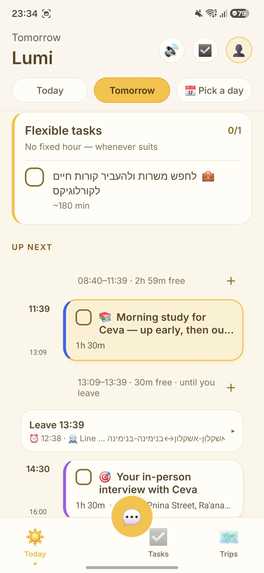
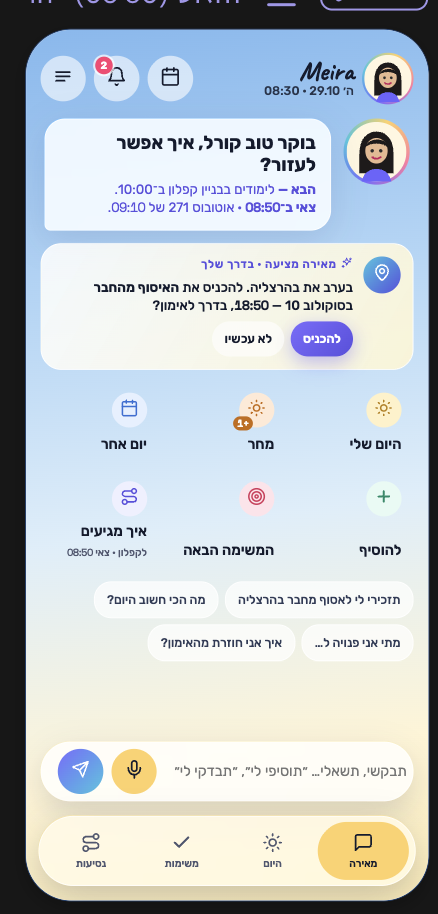
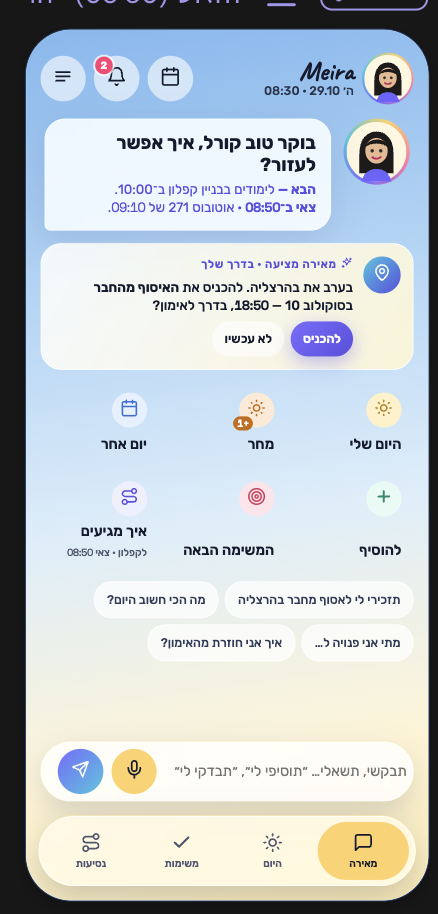
Meira sees your schedule and helps you get better
-
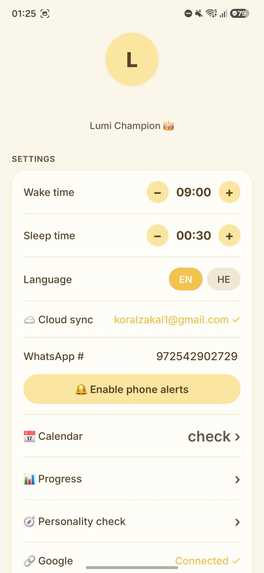
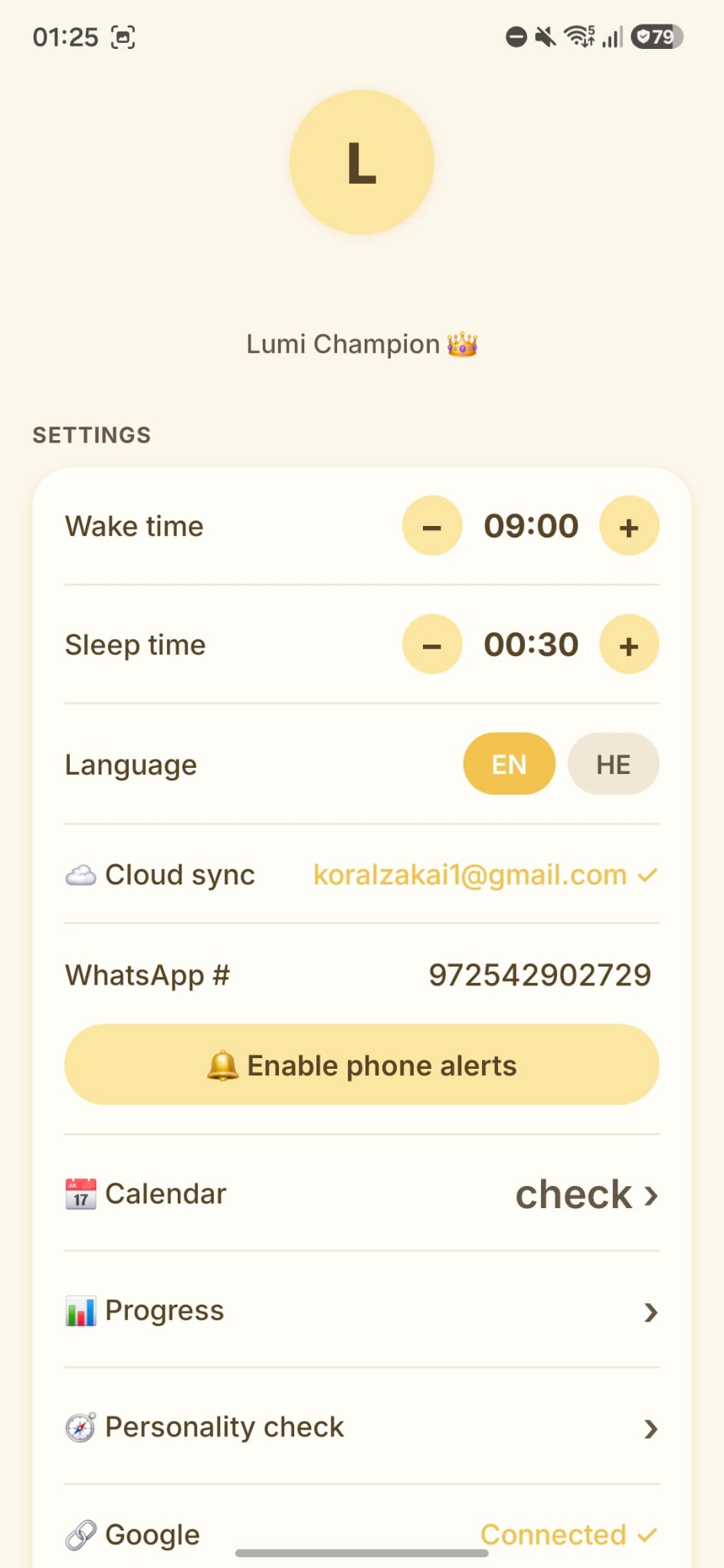
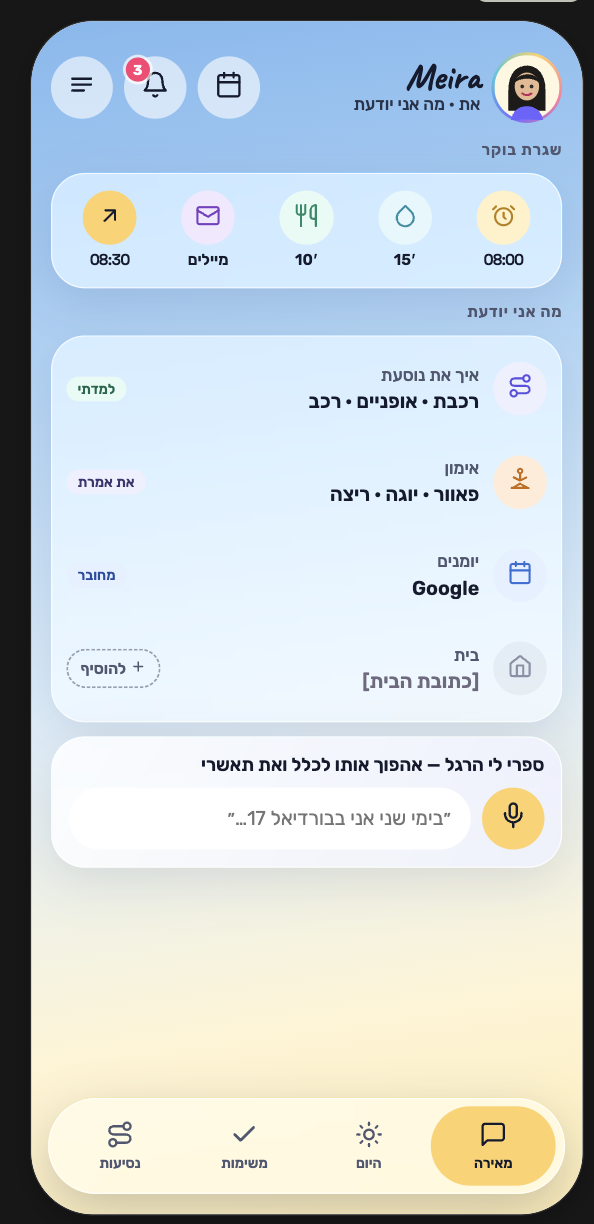
profile connect to your google and whatsapp, add your habbits hobbies , wish list
-
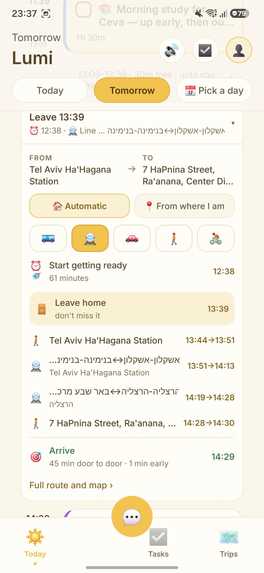
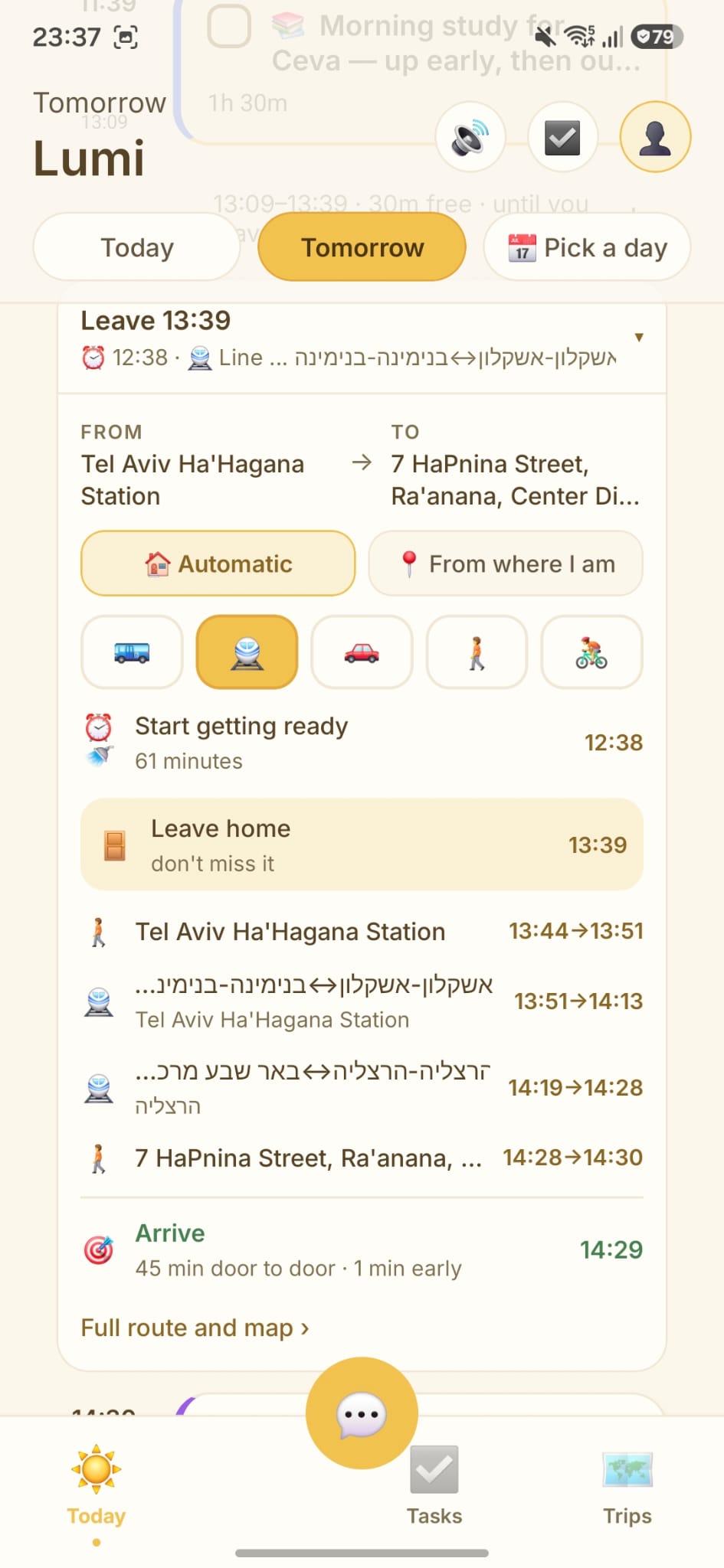
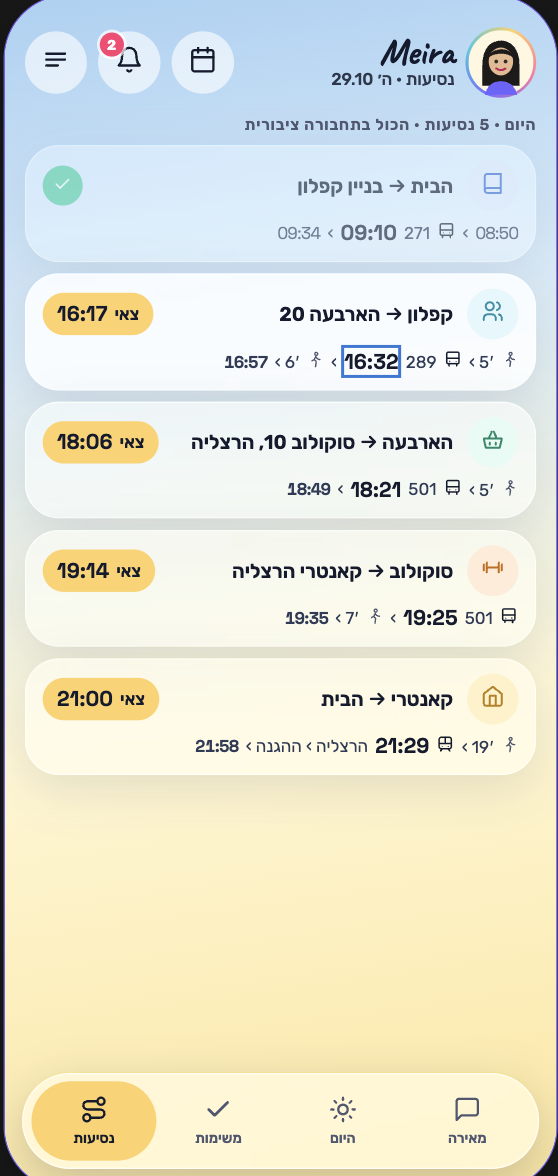
travel route, automatic beacuse a task has a location
-
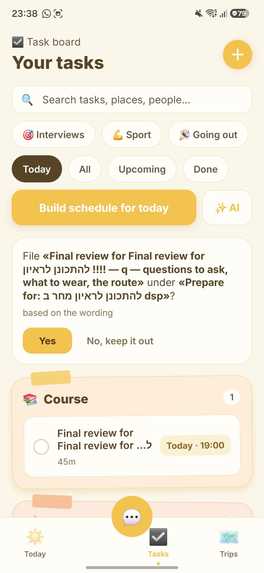
semantic embedding
-
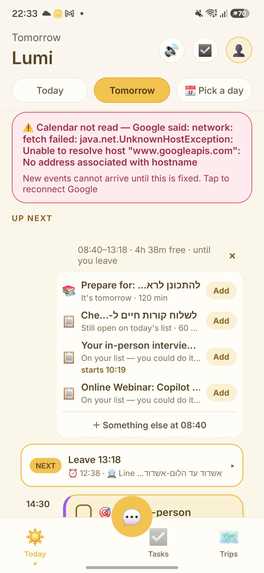
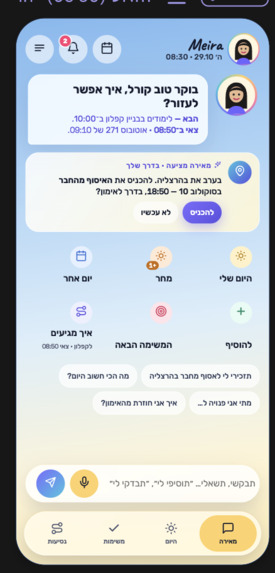
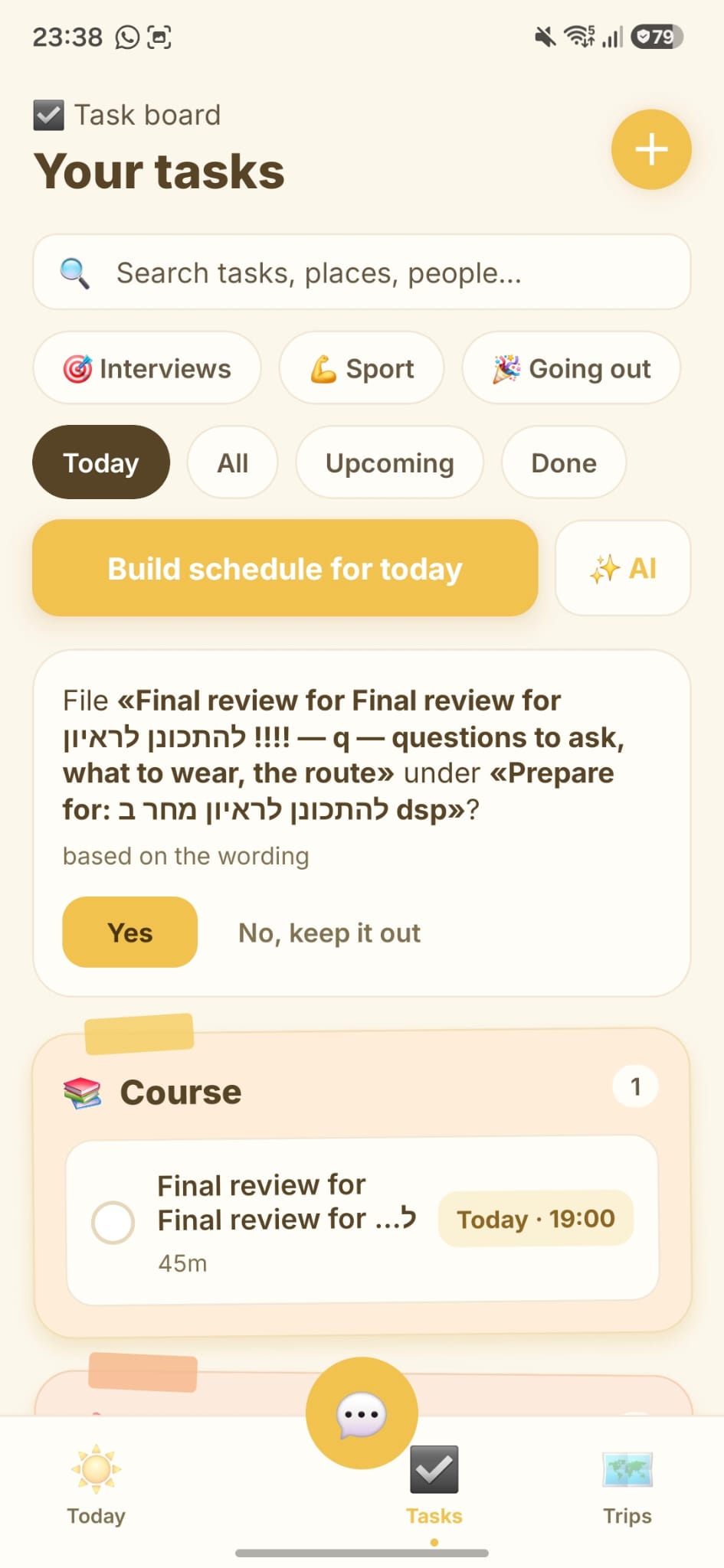
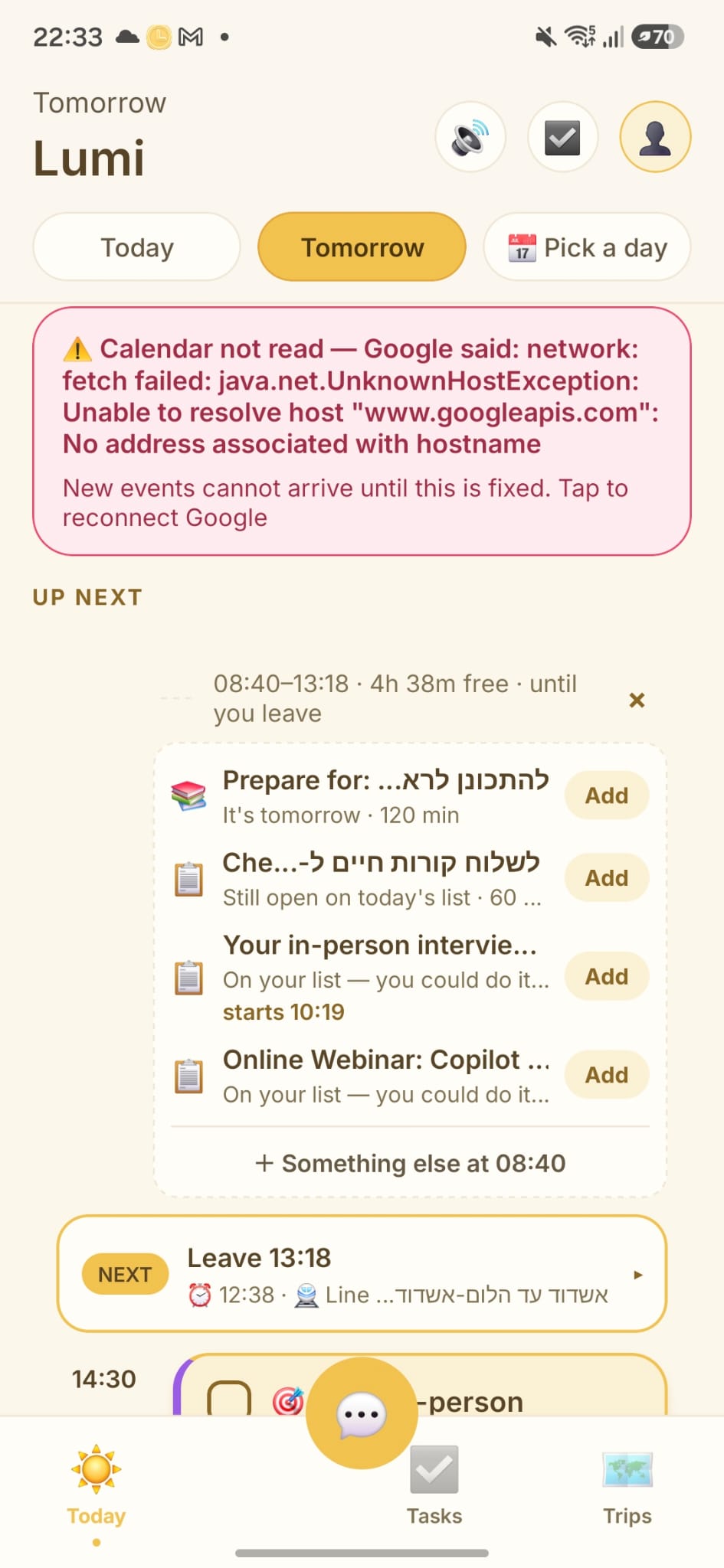
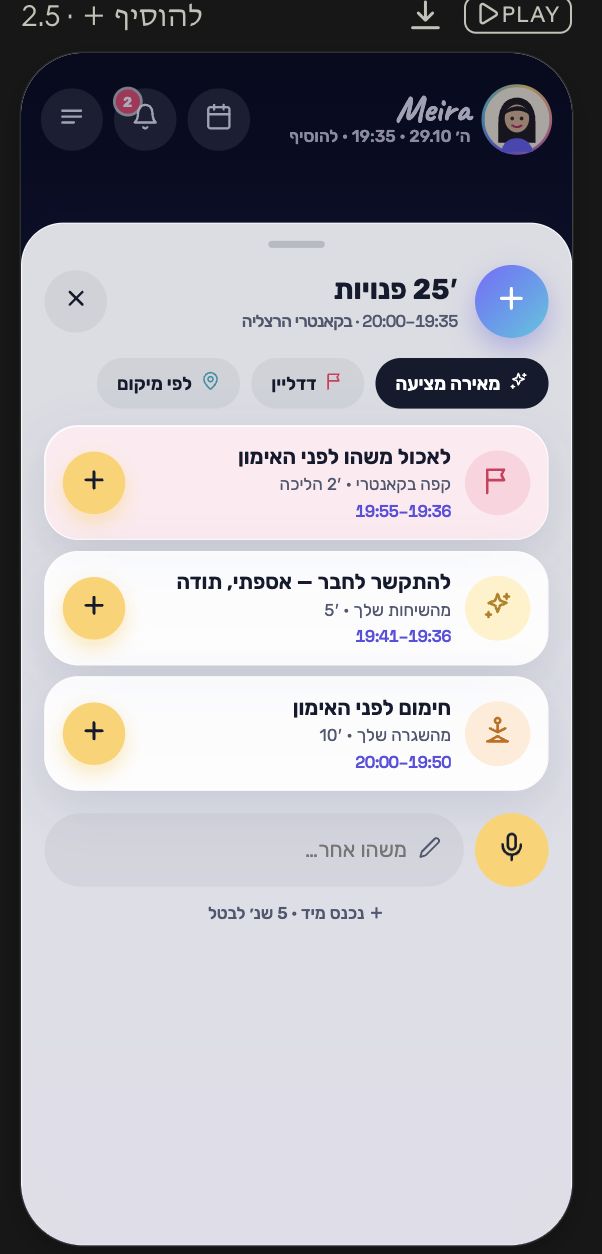
Meira suggest
-
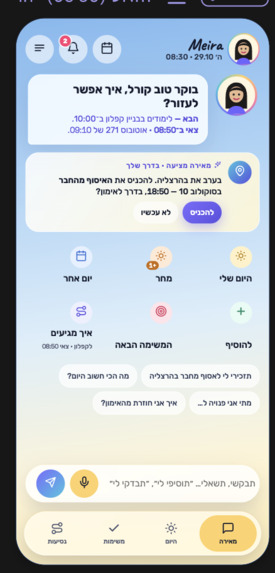
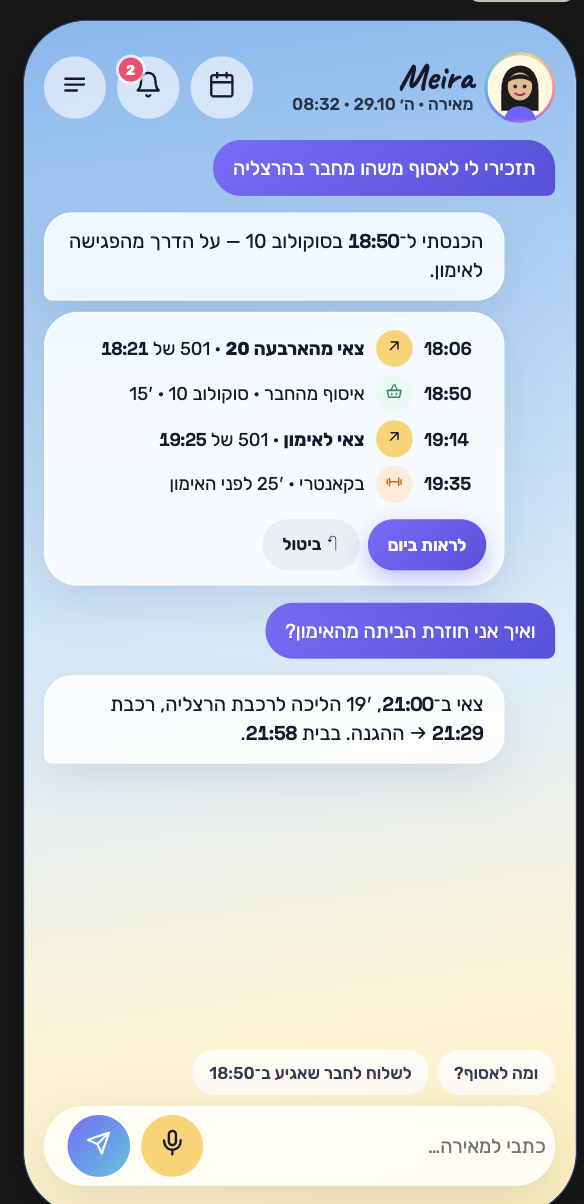
meira chat bot
-
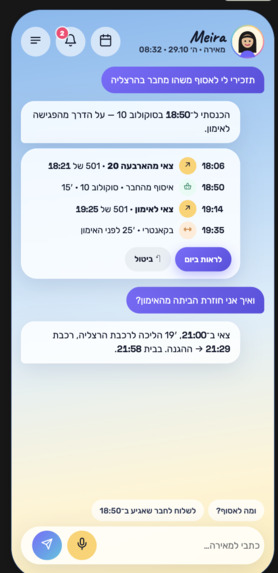
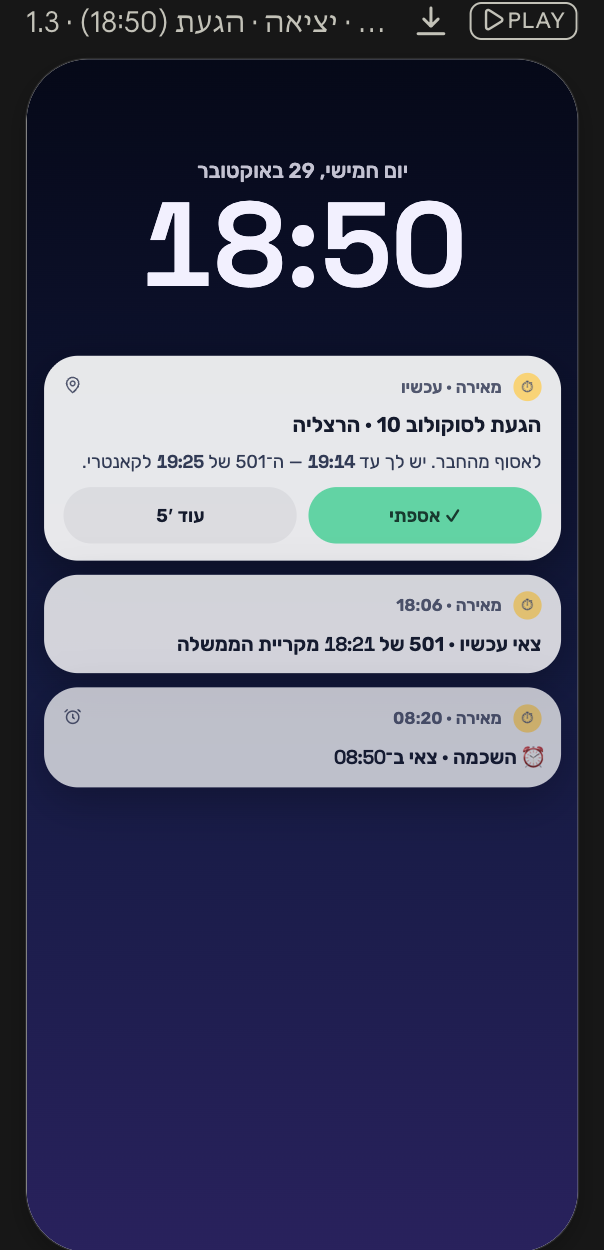
loaction aware reminder
-
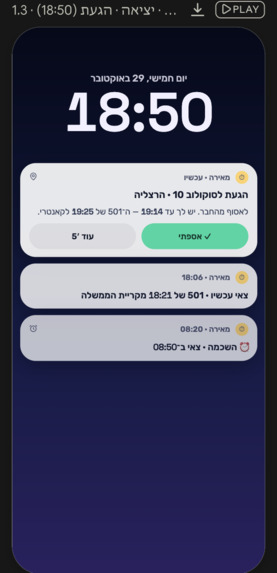
location aware notifications
-
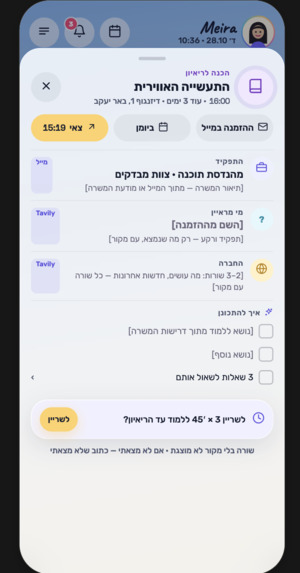
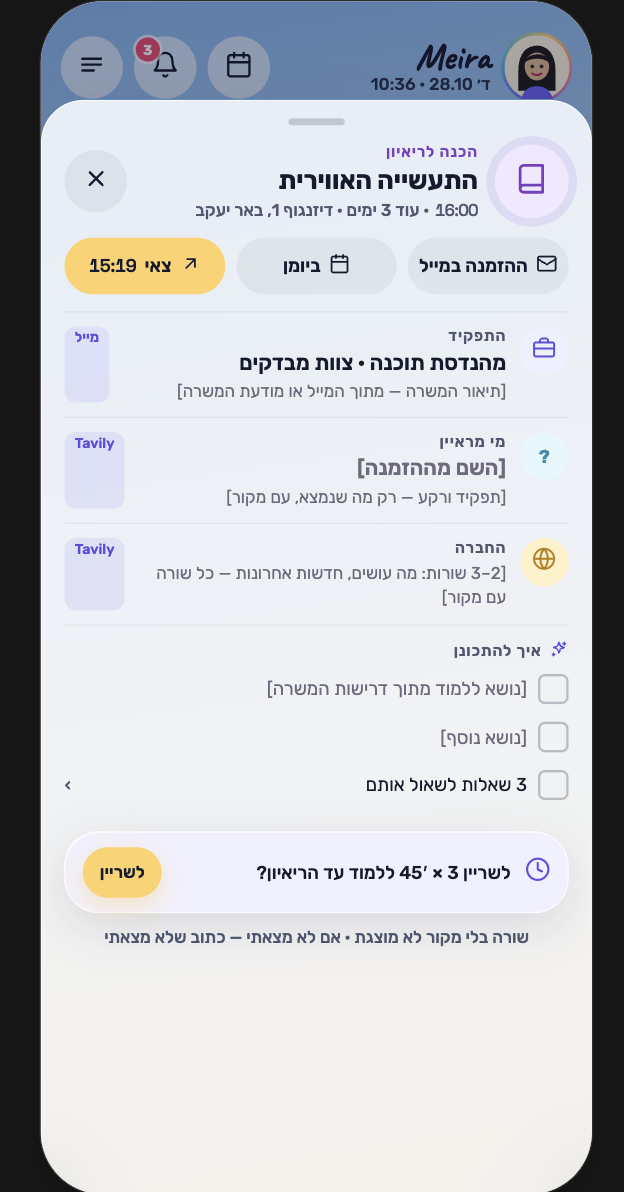
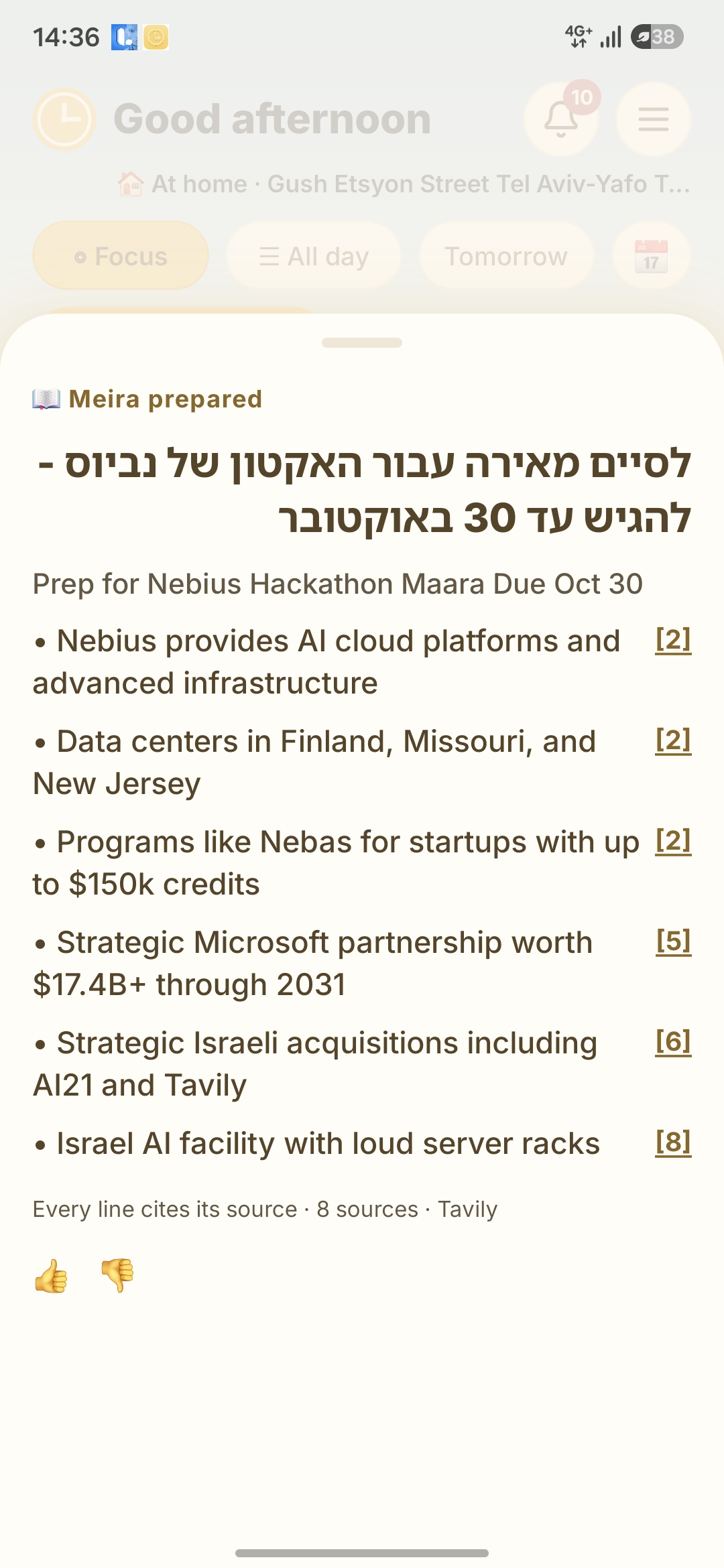
Tavily api helps you prapare ahead
-
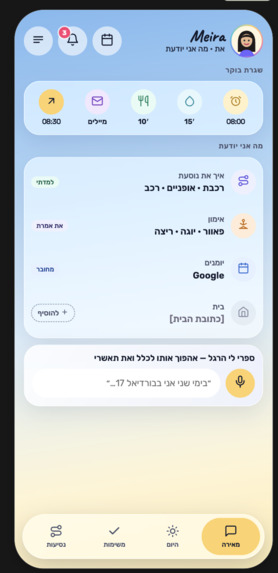
Personal retrival data
-
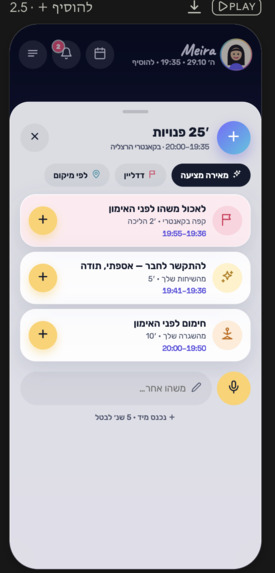
smart suggestions
-
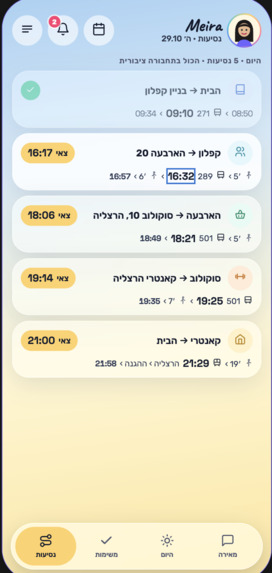
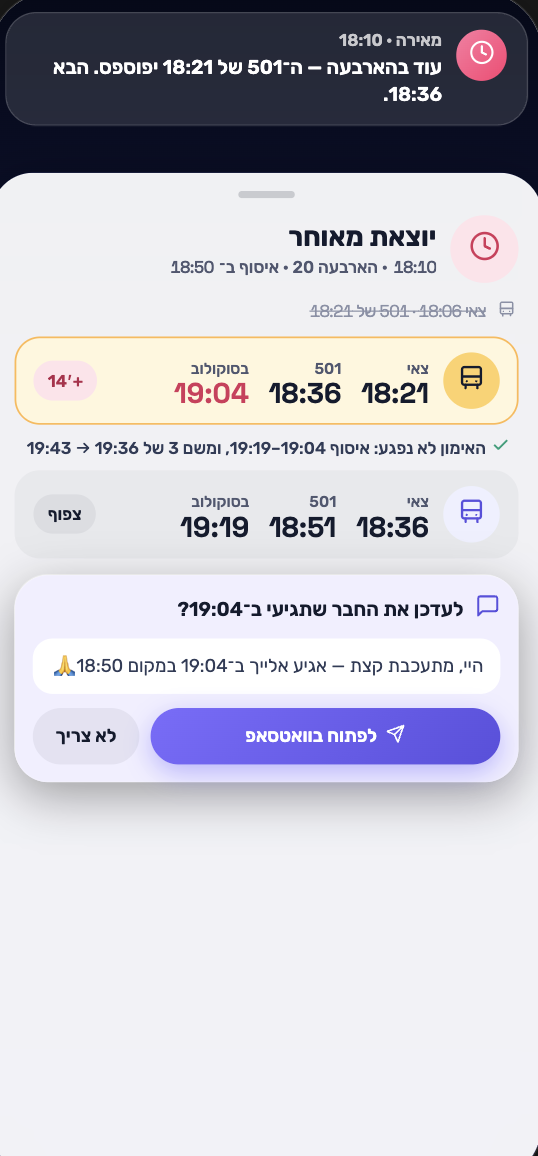
loaction aware cloack alam - from now on you don't need to check ways and calculate your self when it's time to leave, now you can be focus
-
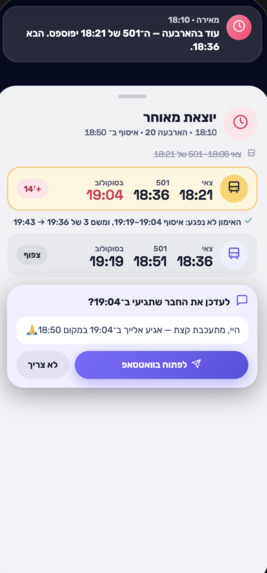
calculate automaticlly the next buss / train if it sees you haven't leave
-
-
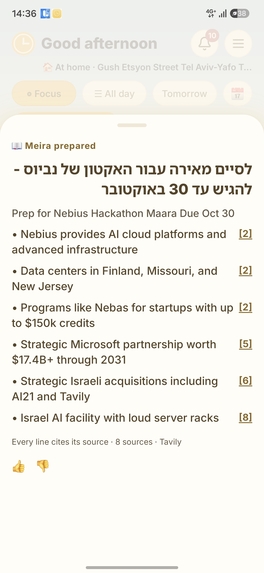
Tavily data for preparation
Inspiration
We all have calendars, maps, alarms, and transportation apps. Yet we still spend a surprising amount of time figuring out the gaps between them.
When do I need to leave? How long will getting ready take? Which route should I take? Can I make it from one meeting to the next? When should I wake up?
For many people, managing these small decisions throughout the day creates a constant mental load. A calendar tells us what we need to do, but not everything we need to do to make it happen.
We wanted to build a personal secretary that bridges this gap between digital schedules and real life.
Meira was inspired by one simple idea: You keep the calendar. Meira gets you there.
What it does
Meira is a location-aware personal AI secretary that turns calendar commitments into actionable plans for everyday life.
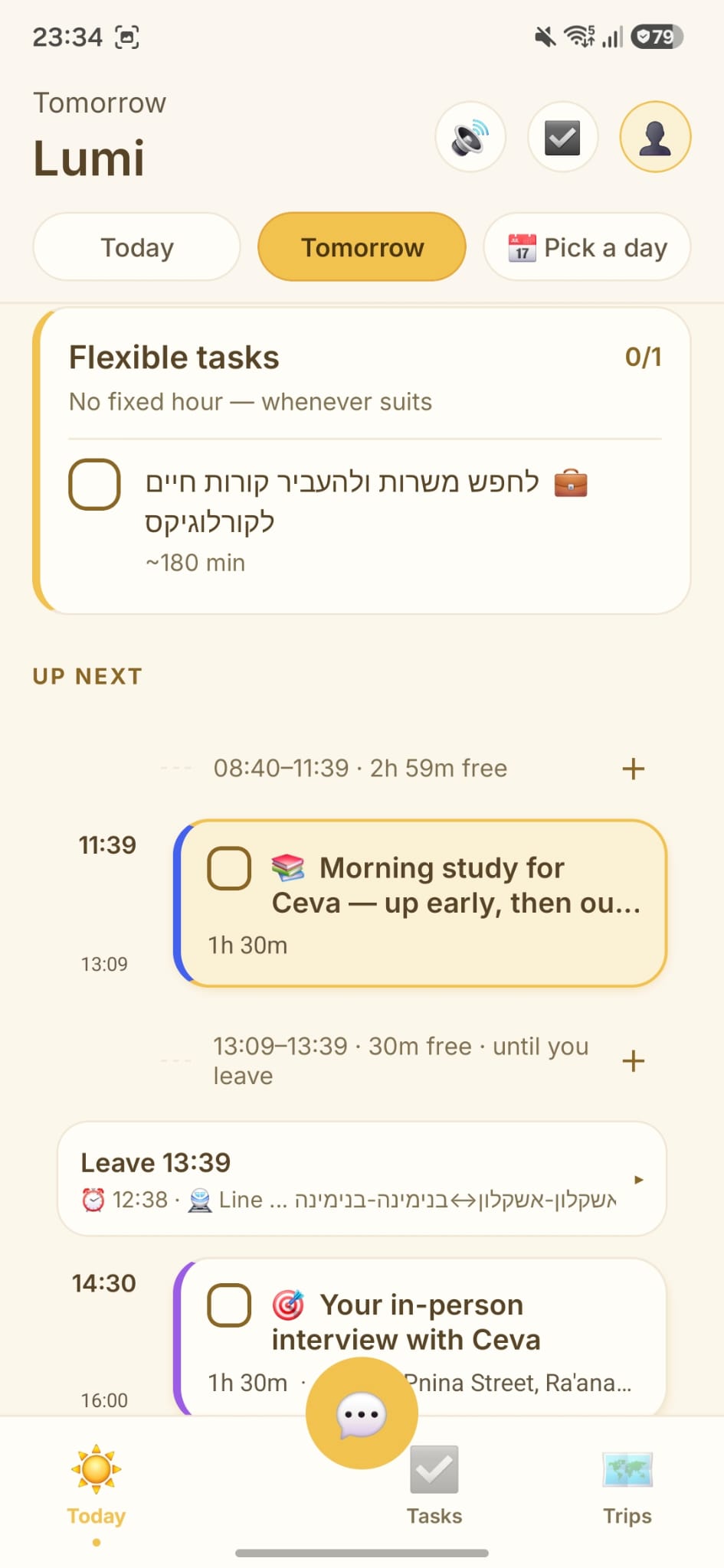
Instead of simply reminding you that you have a meeting at 10:00, Meira works backwards from that commitment to figure out what needs to happen before it — from preparation and getting ready to transportation, departure time, and the wake-up alarm.
Meira brings together calendar events, locations, travel options, personal routines, and time constraints to help users understand what to do next.
Its capabilities include:
- Backward planning: Calculates the sequence of actions leading up to a commitment, including preparation, getting ready, travel, and wake-up time.
- Personalized routines: Adapts to how long things actually take the user, rather than relying entirely on generic assumptions.
- Timely reminders and alarms: Helps users wake up, get ready, leave on time, and notice when they are at risk of missing their transportation.
- Transportation-aware planning: Considers preferred transportation modes and travel time when building a plan.
- Schedule conflict detection: Identifies when two appointments may be incompatible because of the journey between them, even when their calendar times do not overlap.
- Context-aware preparation: Helps users make time for important preparation, such as studying before an exam or preparing for a job interview.
- A configurable nudge experience: Lets users choose how actively Meira should prompt them.
The goal is simple: less searching, less calculating, less checking the clock — and more confidence about what to do next.
How we built it
One of our biggest challenges was realizing that planning a real person's day is much more complex than generating a convincing text response.
A useful plan has to account for interacting variables: calendar events, locations, travel time, preparation time, personal routines, transportation preferences, buffers, and conflicting commitments.
We designed Meira around the idea that AI reasoning and deterministic software should complement each other.
The AI layer helps interpret user intent, understand context, and decide which actions or tools are relevant. Deterministic logic handles precise calculations and time constraints, where unreliable guesses are unacceptable.
We also focused on making planning contextual rather than treating every event or question in isolation. The same information about a user's routine, location, and commitments can influence multiple decisions throughout the day.
This approach allows Meira to go beyond answering “When should I leave?” and work toward answering the more useful question: “What needs to happen for me to get there on time?”
Accomplishments we're proud of
We built a working prototype that demonstrates our core vision: See Your Day — a calendar transformed into a sequence of actions.
For example, imagine a job interview at 10:00 in Ra'anana.
Instead of leaving the user to calculate everything, Meira can build a plan such as:
- 07:10 — Wake up
- 07:18 — Review interview notes
- 07:43 — Start getting ready
- 08:28 — Leave home
- 08:36 — Catch the planned bus
- 10:00 — Arrive for the interview
Each step is connected to the final commitment. Change the travel option or preparation time, and the plan needs to adapt accordingly.
We also expanded the vision beyond individual appointments. Meira's experience addresses schedule conflicts that traditional calendars miss, such as two meetings that are technically separate but physically impossible to attend on time.
Another important part of the product is personalization. Getting ready does not take everyone the same amount of time, and a useful assistant should learn from actual routines rather than expecting users to repeatedly explain themselves.
We are proud to be building more than another chatbot or calendar interface. Meira is an execution layer between a person's digital schedule and their physical day.
What we learned
We learned that building a useful AI product is not just about choosing a powerful model. It is about giving the system the right context, tools, constraints, and responsibilities.
We also learned that real-world AI applications benefit from combining language-model reasoning with deterministic software. Models are useful for understanding intent and navigating ambiguity, while traditional software is better suited to precise calculations and predictable execution.
Finally, we learned that personalization is not simply remembering facts about a user. It means using context to make better decisions at the moment those decisions matter.
A personal assistant becomes significantly more useful when it understands the relationships between time, location, routines, and commitments — rather than treating each interaction as an isolated conversation.
What's next for Meira
Our vision is to make Meira a truly proactive personal secretary that continuously understands and adapts to the user's day.
Next, we want to improve real-time traffic and transportation information, respond to delays and schedule changes, deepen personalization, expand contextual preparation, and make the mobile experience increasingly seamless.
We also want to develop richer proactive assistance, including voice interaction, better long-term contextual memory, and more ways to coordinate schedules with other people.
Our long-term vision is simple:
Meira should understand what your day requires, anticipate what could go wrong, and help you get where you need to be — without making you manage every detail yourself.
Built With
- agent
- ai
- claud
- expo.io
- fly.io
- llm
- pytho
- react-native
- server
- supabase

Log in or sign up for Devpost to join the conversation.