Inspiration
During a three-month stay in the United States, I tried a multiplayer AR experience using SPECS at AWE and had the opportunity to speak with people from Snap. Playing together with people in the same physical space left a strong impression on me.
I usually spend time in VR. While VR lets me enter another world from home, what excites me about AR is the opportunity to put on glasses, go outside, and enjoy experiences connected to real places and people.
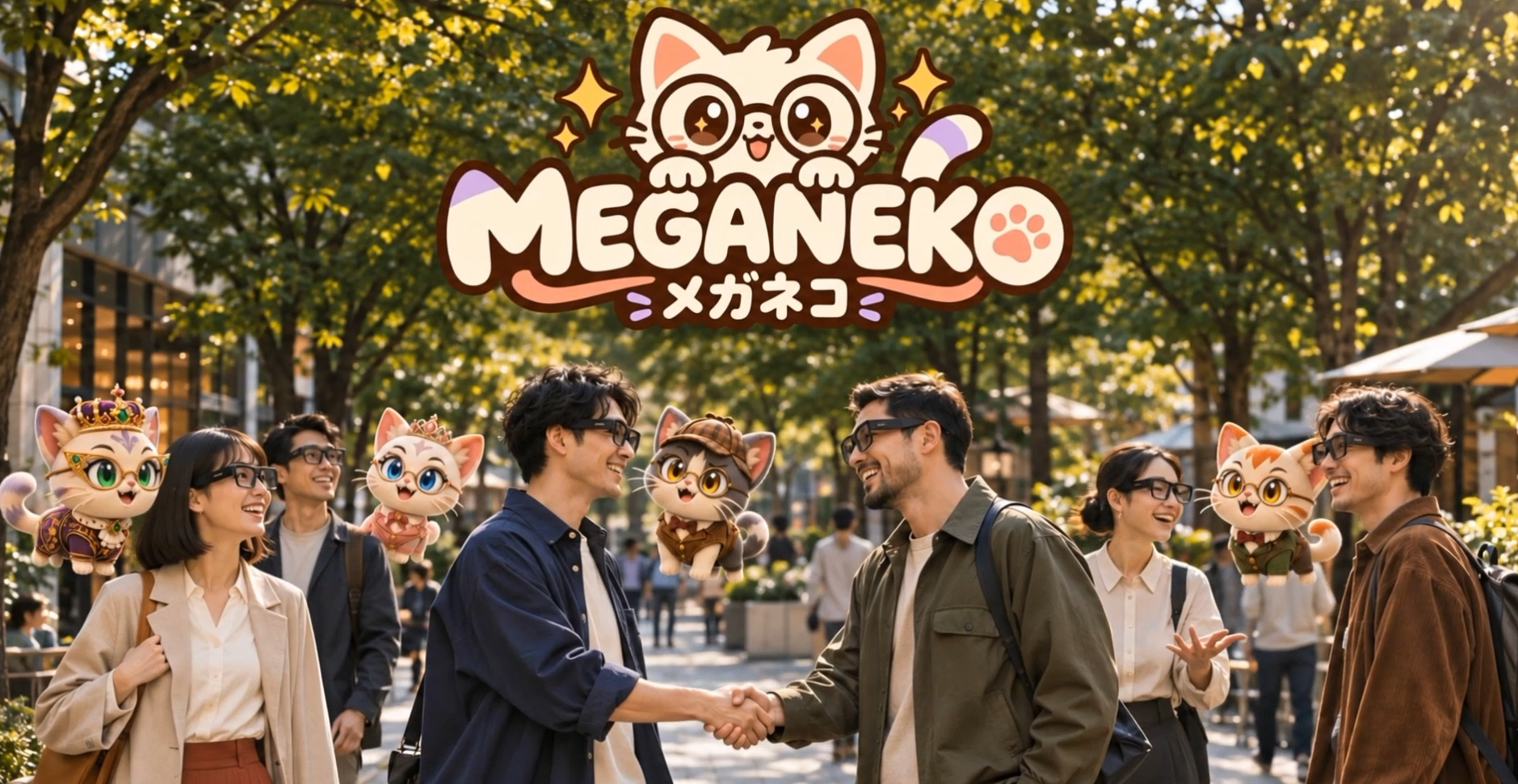
I imagine that by around 2030, wearing AR glasses and enjoying digital content while walking through a city or riding a train could become an everyday activity, much like using a smartphone today. MegaNeko is a game I would like to play in that future: a cat companion to take on walks, and a reason to stop and say hello to someone new.
The idea also draws on my experience running a VR community of approximately 1,600 members, with events held every day. Encouraging people to return regularly has been a challenge. Recently, I introduced a collection system where visitors receive a fish and can fuse fish to obtain a randomly selected new character. People began returning for the draws and talking about their results: “What did you get?” or “I found a rare one!”
That experience showed me how collecting characters could create both a reason to return and a topic of conversation. MegaNeko brings that idea into AR. Starting a conversation with a stranger can be difficult, but “We have the same cat!” could be a simple beginning.
The name combines the Japanese words megane, meaning glasses, and neko, meaning cat.
What it does
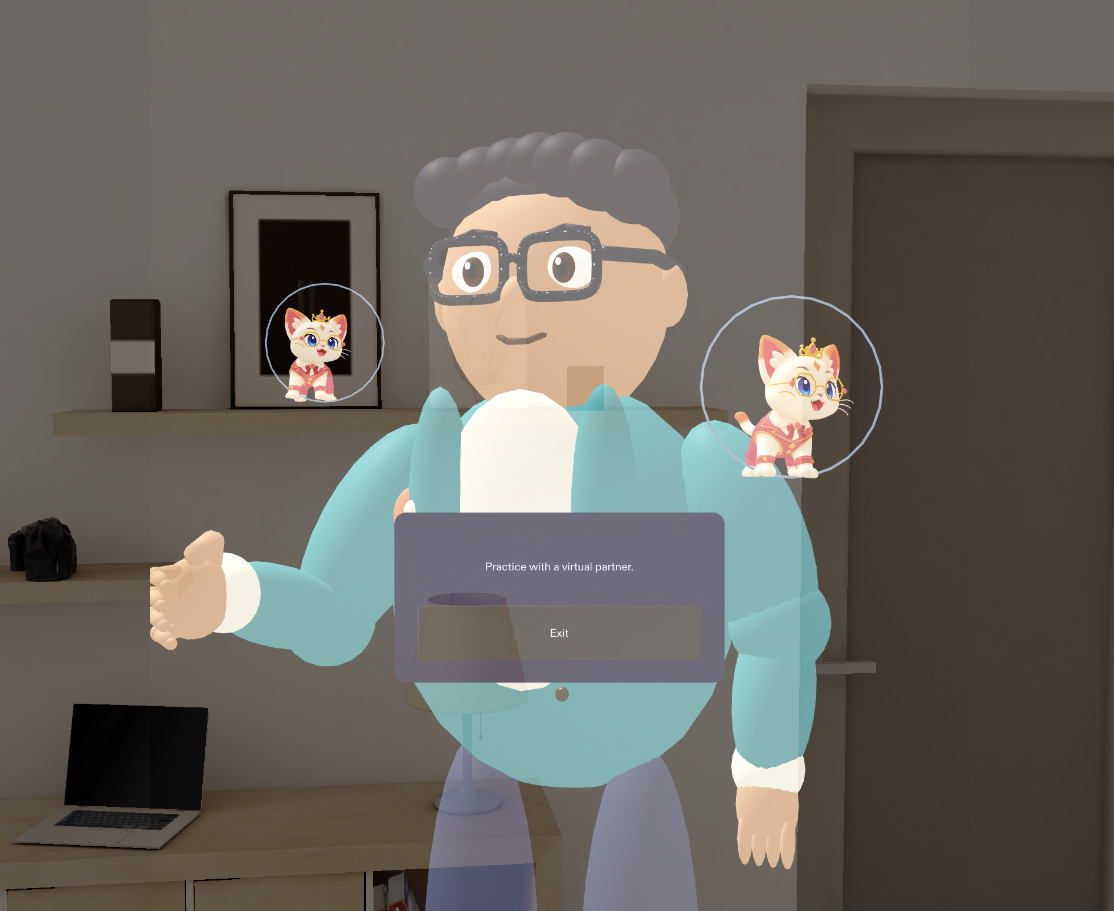
MegaNeko is an AR companion and collection game designed for SPECS. Each player begins with one randomly assigned MegaNeko—a glasses-wearing cat that accompanies them as they explore.
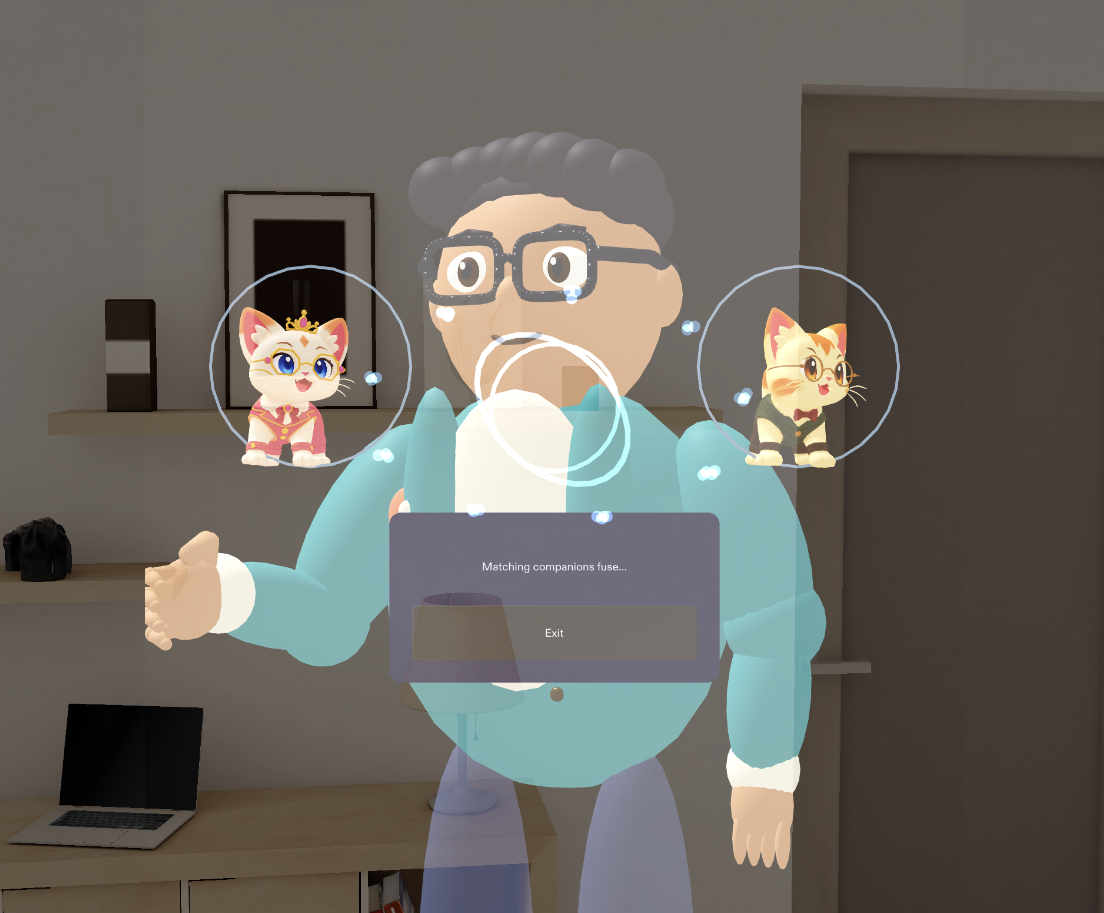
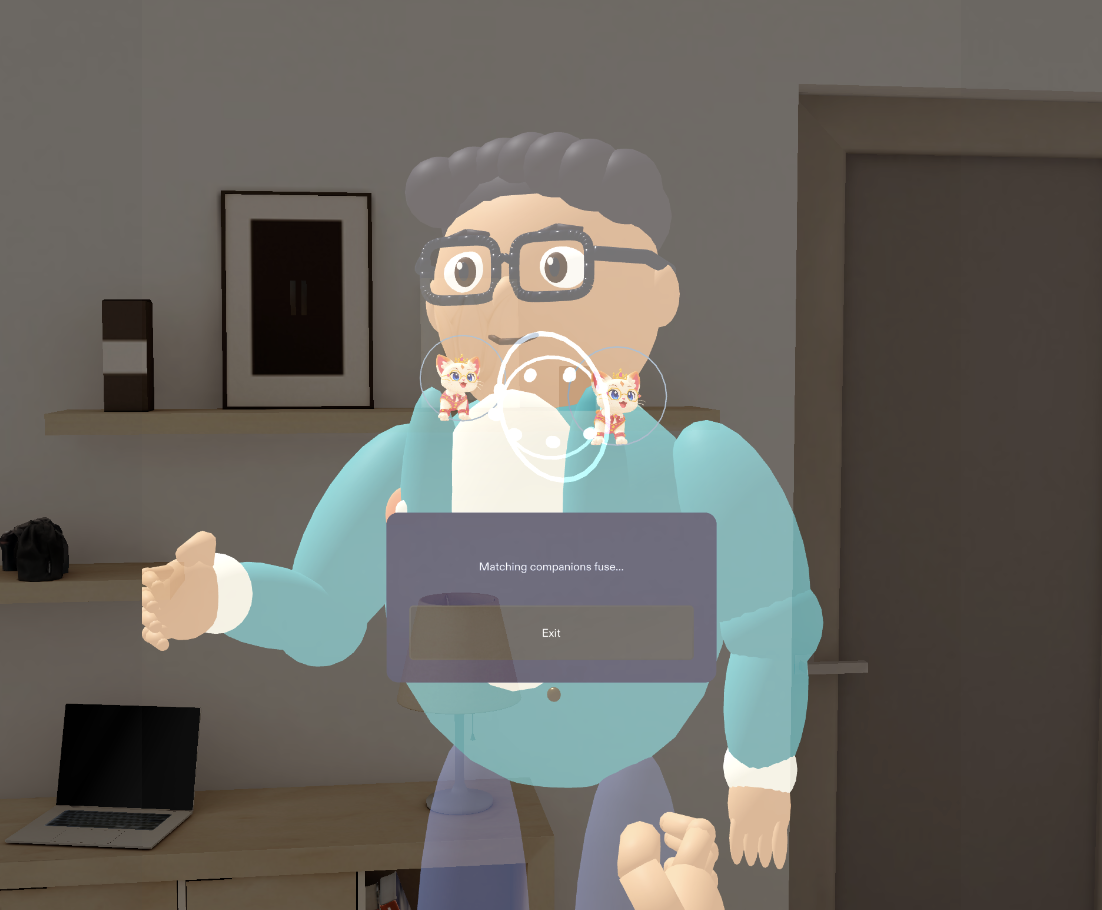
When two players meet with the same type of MegaNeko, they can choose to fuse their companions through a handshake. Golden light surrounds the cats, and each player receives a randomly selected new companion.
The results are drawn independently. One player might receive a Princess MegaNeko while the other receives a Detective MegaNeko. A previously discovered cat can appear again, too. Sharing those results gives the players something to talk about before continuing their walks.
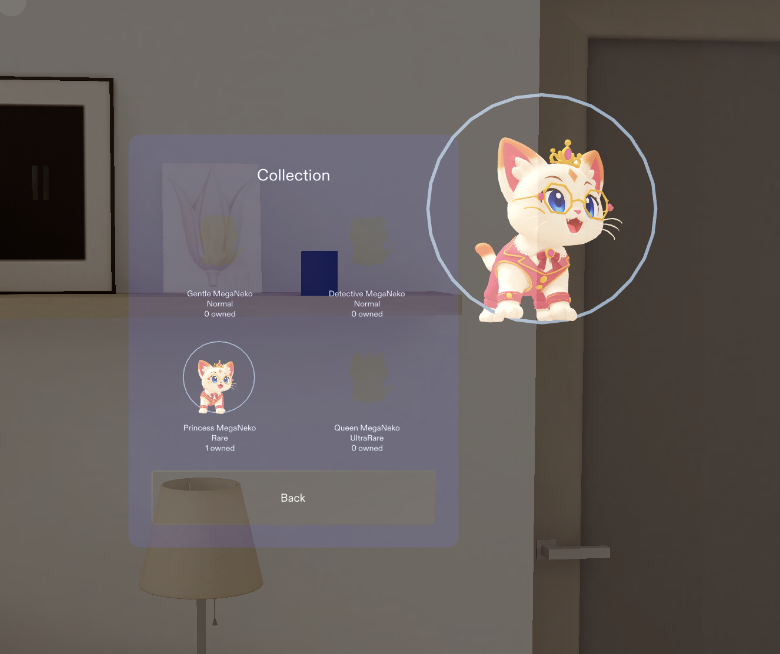
A collection catalog records the MegaNeko they have discovered, giving players a reason to meet more people and search for rare companions.
The characters are inspired by 19th-century Victorian London: little gentlemen and ladies wearing glasses, distinctive clothes, and accessories that reflect their personalities.
The hackathon version includes four characters:
- Gentle MegaNeko — Normal
- Detective MegaNeko — Normal
- Princess MegaNeko — Rare
- Queen MegaNeko — Ultra Rare
A tutorial with a virtual partner demonstrates the handshake and fusion sequence in the Lens Studio preview.
How we built it
I built MegaNeko as a solo project in Lens Studio, using OpenAI Codex and Snap’s CLAD plugin to assist with implementation and iteration.
For the characters, I created AI-generated reference images and used Tripo AI to generate the 3D models. I then used Blender to prepare and adjust the models before bringing them into Lens Studio.
Development focused on the companion display, collection catalog, fusion sequence, and tutorial. As the project evolved, I simplified the interface to make the central interaction easier to understand.
For the presentation video, I drew a storyboard, created images based on its compositions, animated those concept scenes with Higgsfield, and edited the footage in DaVinci Resolve.
Challenges we ran into
One of the biggest challenges was 3D model generation with Tripo AI. Providing reference images did not always produce a usable model. Some results appeared to interpret the character’s front and back incorrectly, while others placed face-like textures on the back of the head.
I could not use those models as they were. With limited generation credits, I revisited the inputs, reviewed the results, and selected replacement models. These problems contributed to the decision to reduce the hackathon lineup to four characters and focus on completing a manageable prototype.
Another challenge was the interface. An early version had too many modes and choices. I removed unnecessary options and returned to the essential experience: see your companion, browse your collection, and meet someone with a matching cat to fuse them.
Because I do not own SPECS hardware, I developed using the Lens Studio preview; real-world handshake recognition and the shared experience between devices still need on-device testing.
Accomplishments that we're proud of
I turned the idea of walking with a cat companion and meeting other people into a Lens Studio prototype with four distinct characters, a collection catalog, fusion effects, and a tutorial.
I am especially pleased with the idea that a shared fusion can give the two players different companions. The interaction does not end with the handshake: it creates a moment to compare results, react, and talk.
It was also rewarding to bring lessons from running a daily VR community into an AR project. MegaNeko connects two things I care about: giving people a reason to return and making it easier for them to start a conversation.
What we learned
This was my first AR project. I learned how to bring 3D assets into Lens Studio, work with a coding agent, and improve an experience through preview testing.
Working with Tripo AI also taught me that generated assets need careful review. AI can help move a project forward, but checking the results, identifying problems, and deciding what to use remain important parts of the creative process.
The main game-design lesson was to keep the interaction simple and connect collection rewards to social moments. Finding a rare cat is fun, but I want the conversations and shared reactions along the way to be just as meaningful.
What's next for MegaNeko
My first priority is testing on physical SPECS devices, especially handshake-based fusion and the shared experience between two players.
I would then like to expand the collection from four characters to around twenty while developing the Victorian London-inspired world. Ideas include scientist cats, capitalist cats, and magician cats, each with a distinct personality and design.
I also want to develop rewards for repeated discoveries, such as increasingly elaborate catalog frames and golden versions of companions. Finding the same cat again should still feel worthwhile.
Ultimately, I want MegaNeko to be a companion that makes an ordinary walk a little more social—a game where collecting cats also creates opportunities to connect with people.
Built With
- blender
- clad
- codex
- davinci
- higgsfield
- lens
- specs
- tripo

