Inspiration
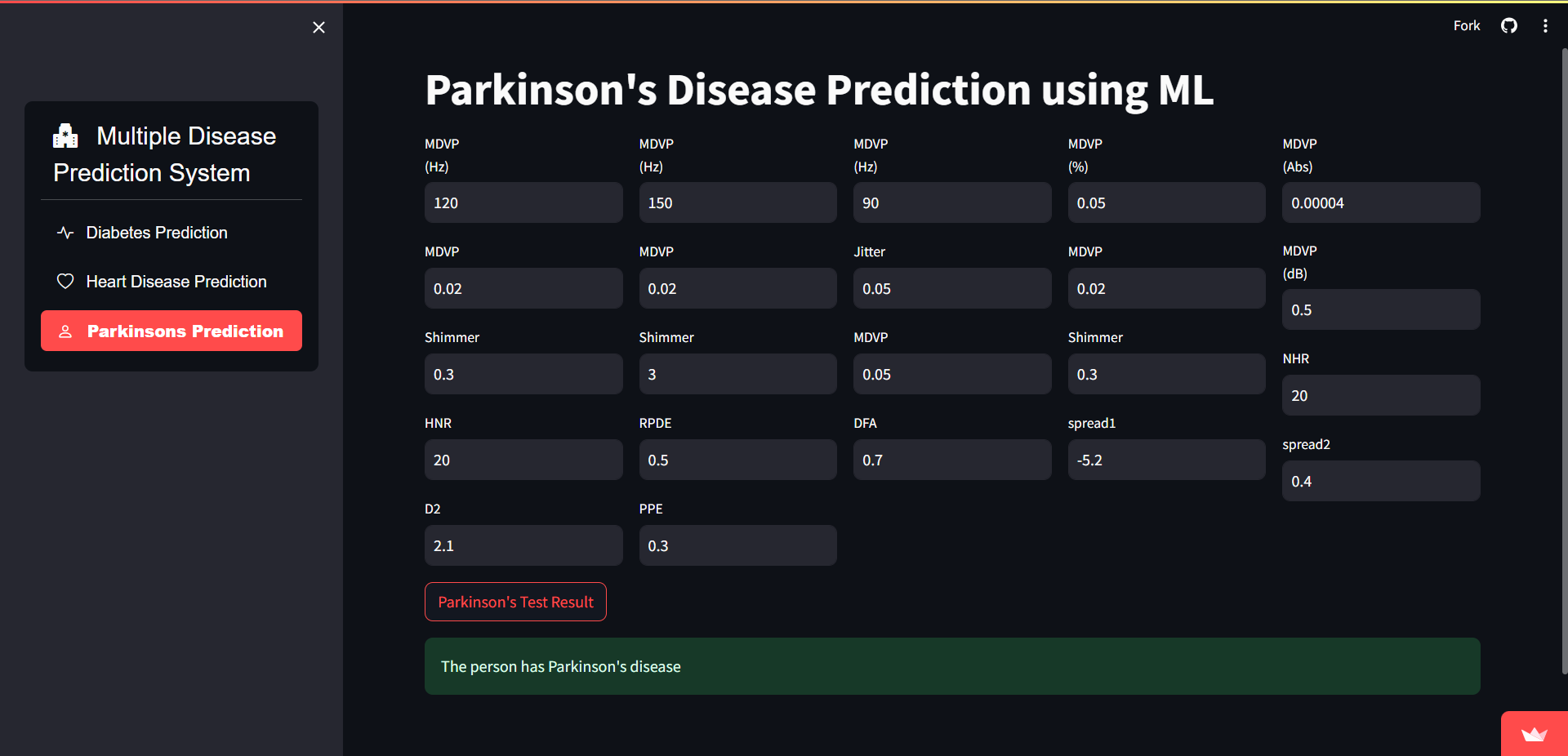
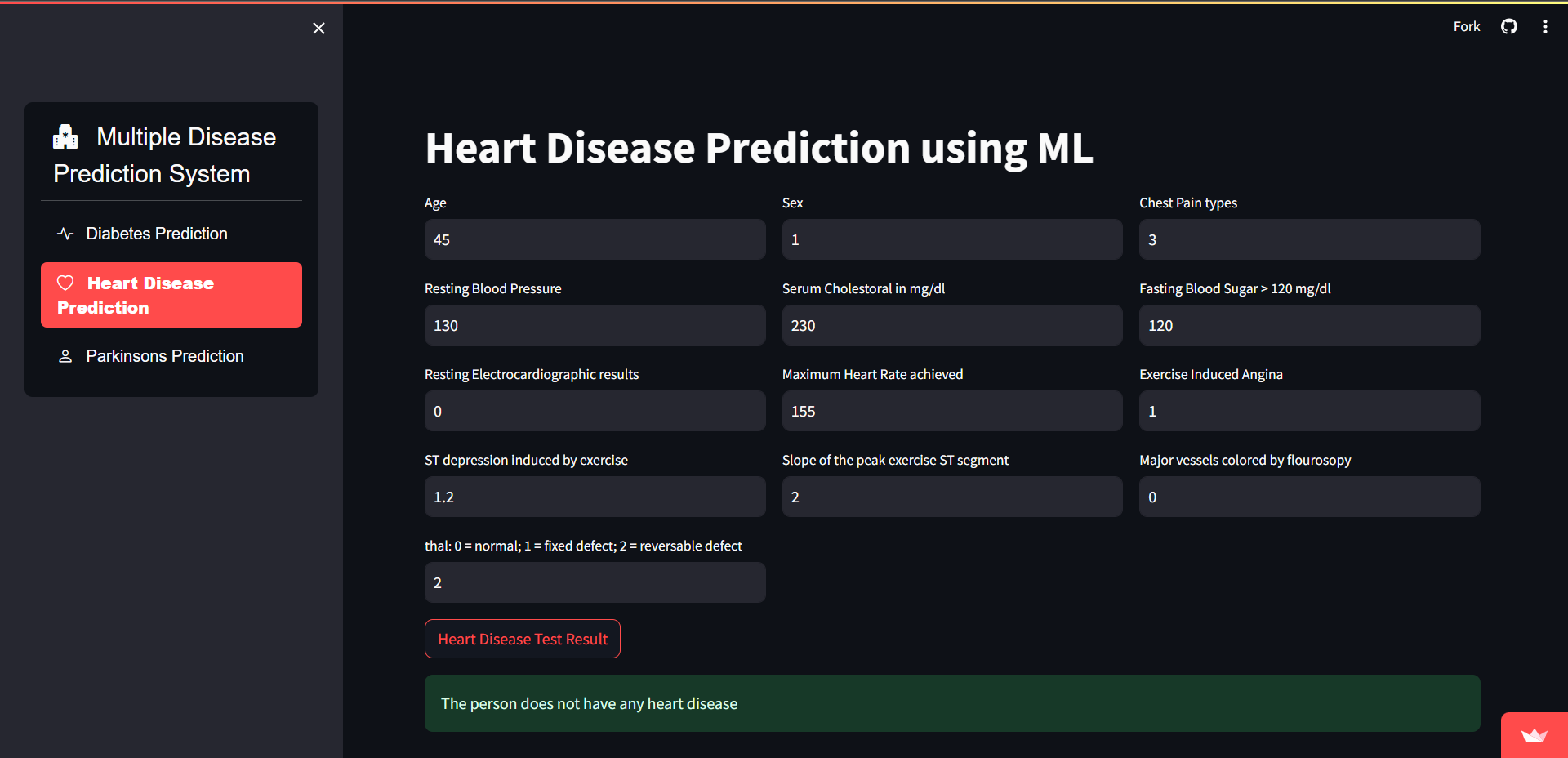
Motivated by the need for early disease detection, we aimed to create a predictive model to help identify health risks, specifically for conditions like Parkinson's and heart disease.
What it does
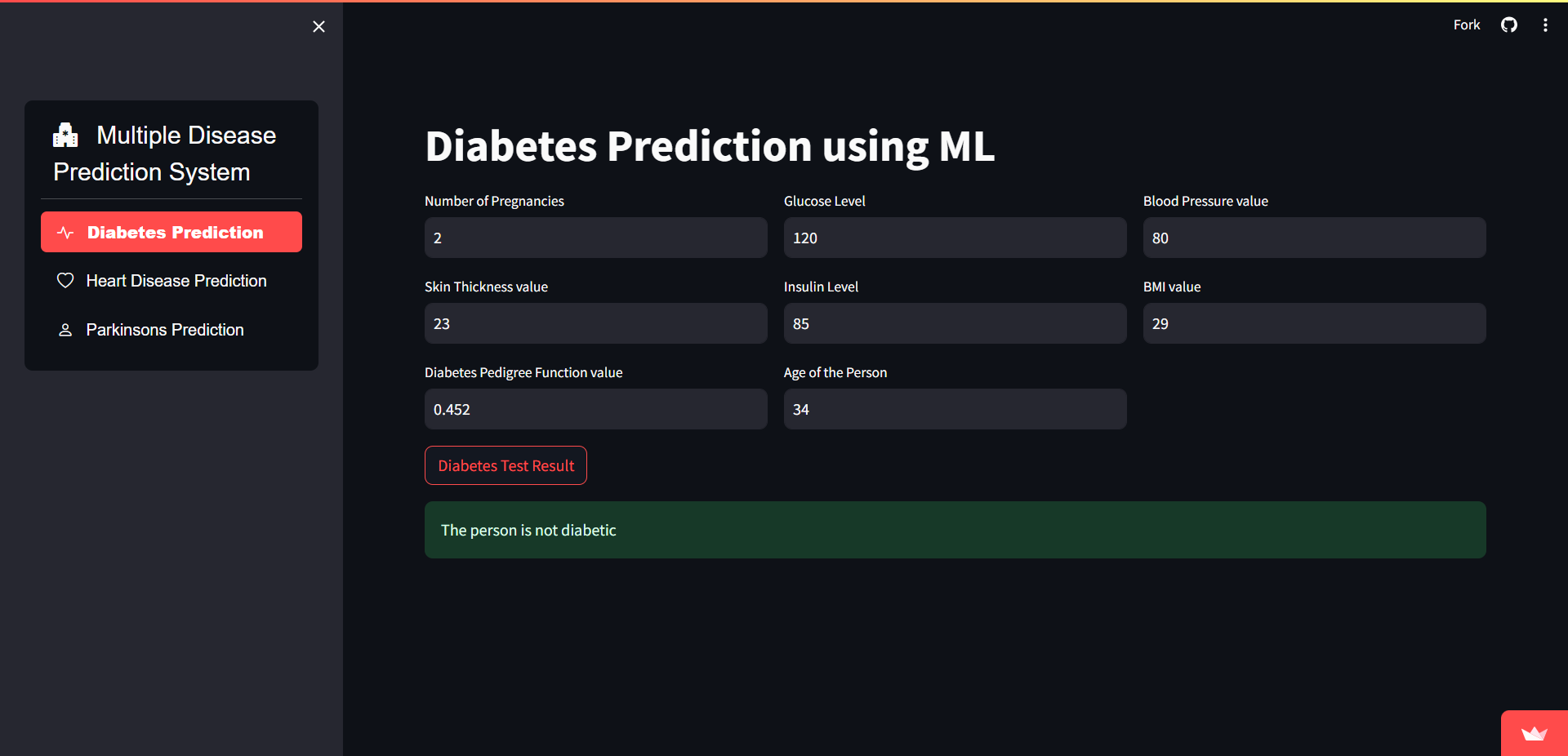
MediForecast uses machine learning to assess the likelihood of diseases based on health indicators, allowing for timely interventions and better decision-making.
How we built it
We collected and cleaned relevant datasets, then implemented logistic regression to model the relationship between health features and disease outcomes. The project was developed with Python and Streamlit for an interactive interface.
Challenges we ran into
We faced issues with data collection and quality, including missing values. Optimizing the model for both accuracy and interpretability required extensive testing.
Accomplishments that we're proud of
We created a predictive model with good accuracy in distinguishing between healthy individuals and those at risk, contributing to early disease detection efforts.
What we learned
We learned the importance of data preprocessing, feature selection, and model interpretability, particularly in healthcare, where decisions can have significant impacts.
What's next for MediForecast
Next, we plan to refine our model, integrate more data sources, and explore deployment options to make early detection tools more accessible.
Built With
- jupyter
- machine-learning
- numpy
- python
- scikit-learn
- streamlit


Log in or sign up for Devpost to join the conversation.