-
-
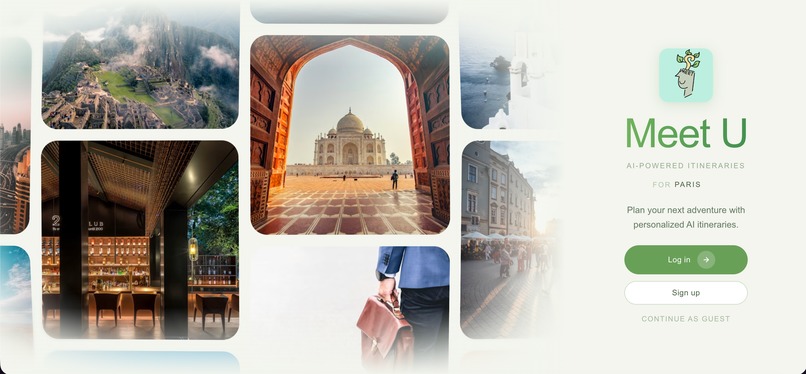
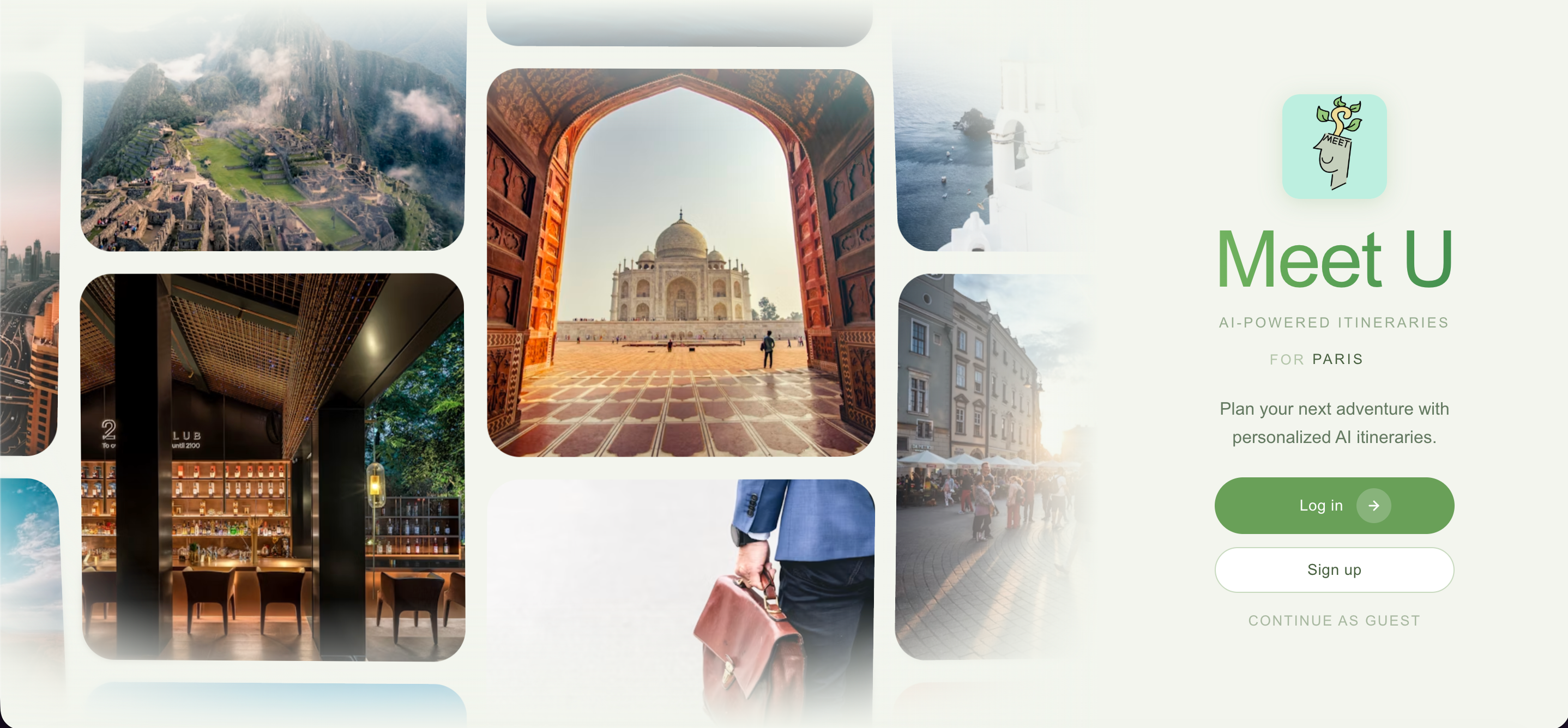
login page
-
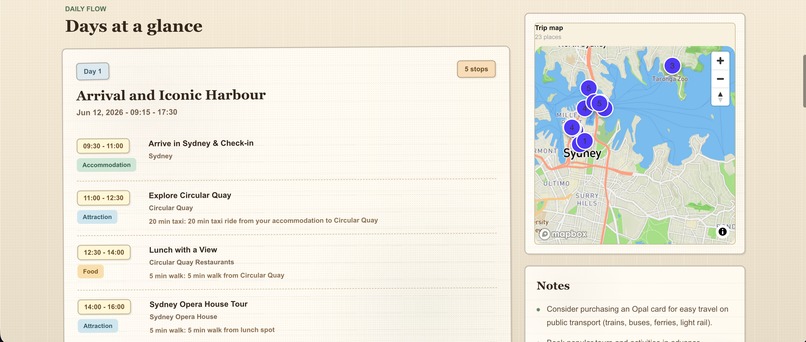
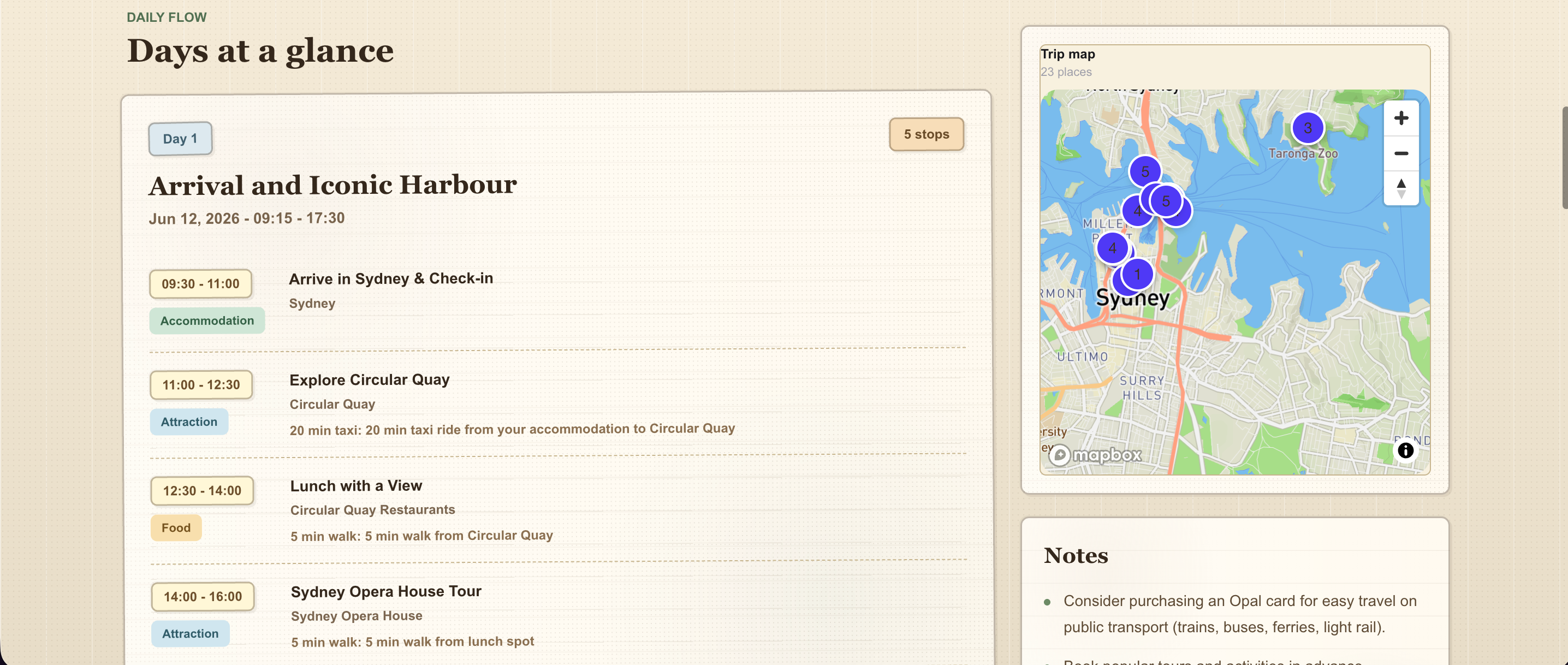
trip overview page
-
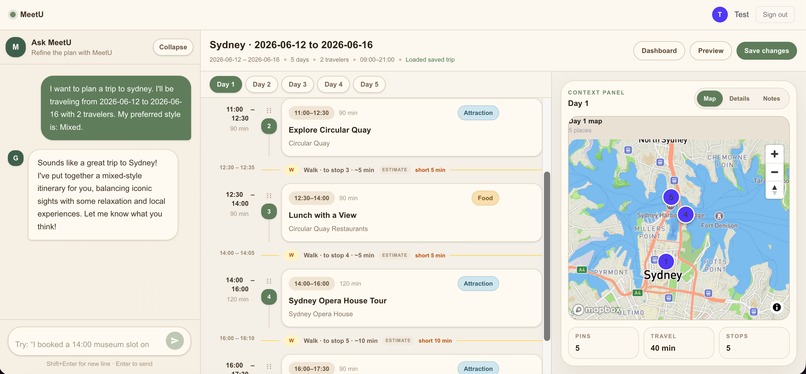
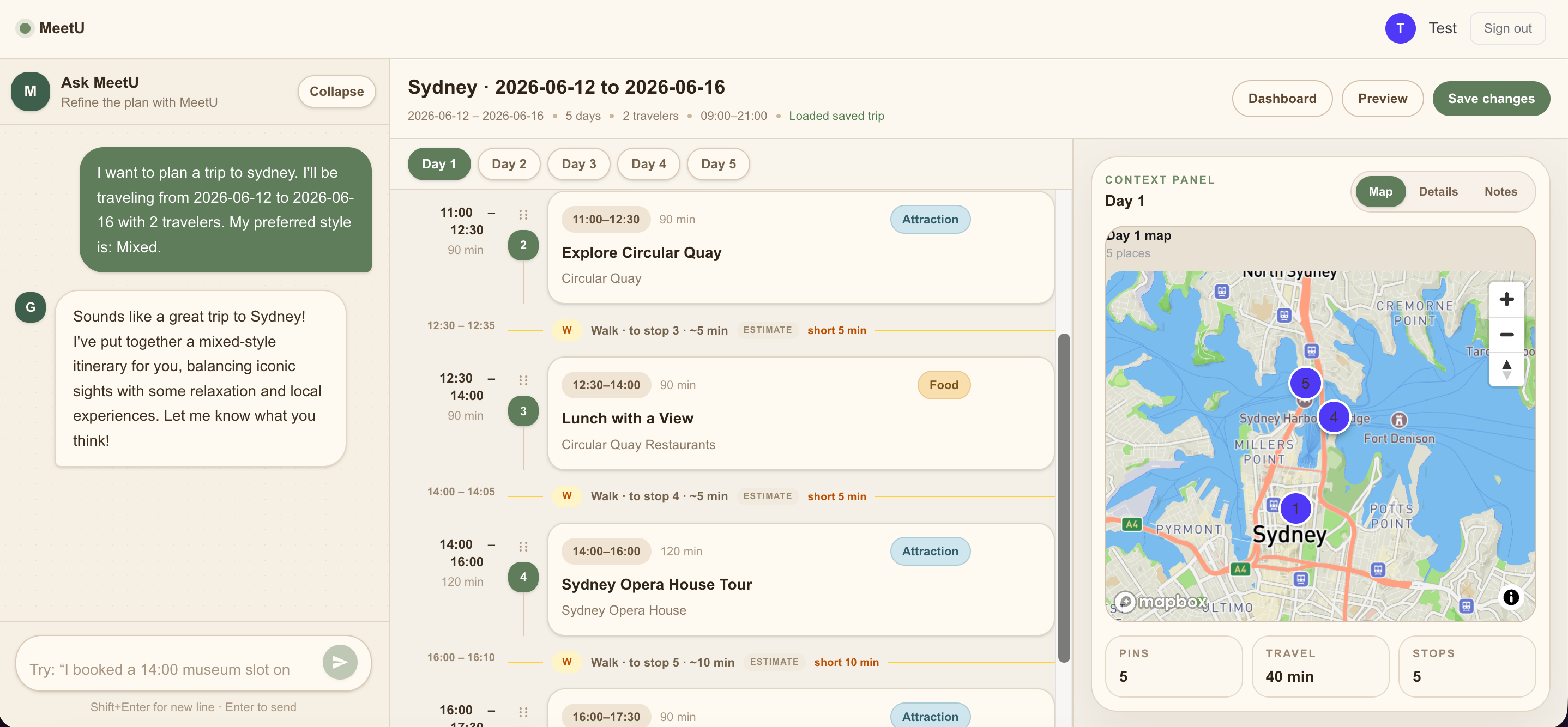
trip plan edit page
-
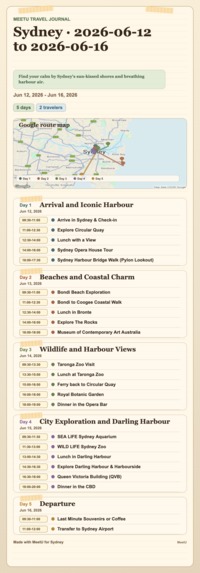
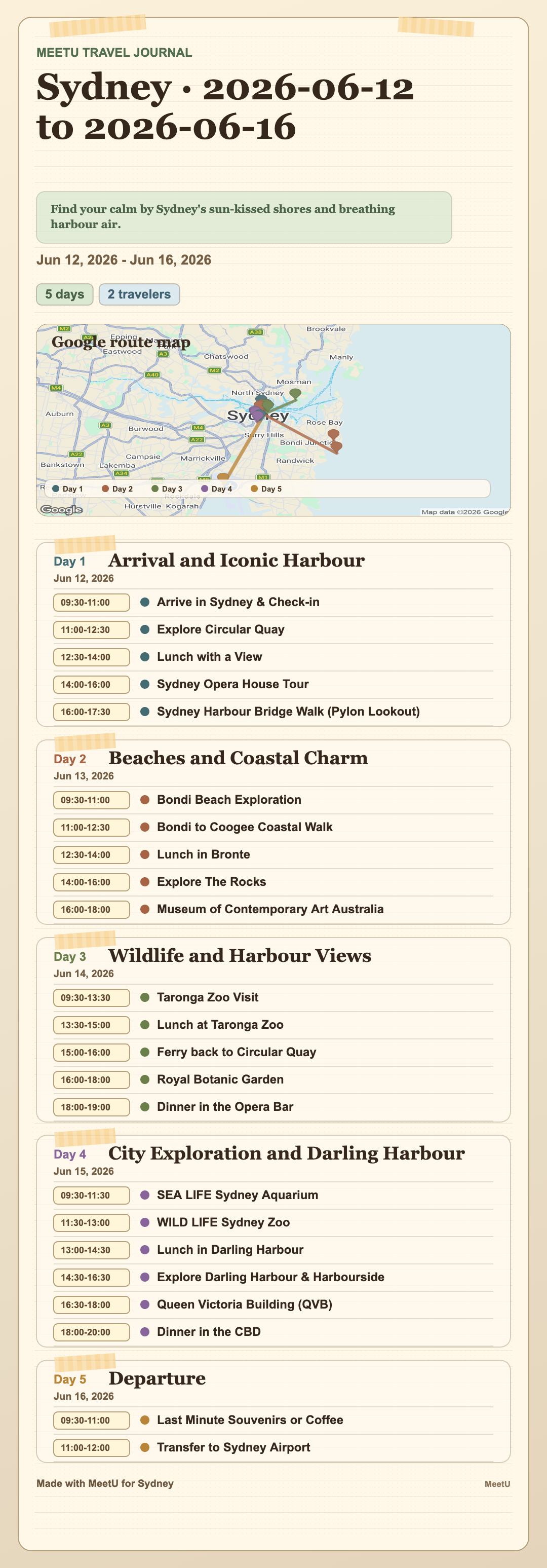
trip export poster
-
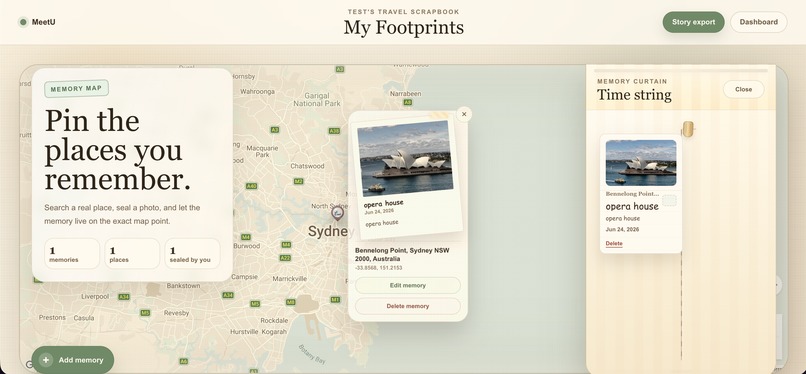
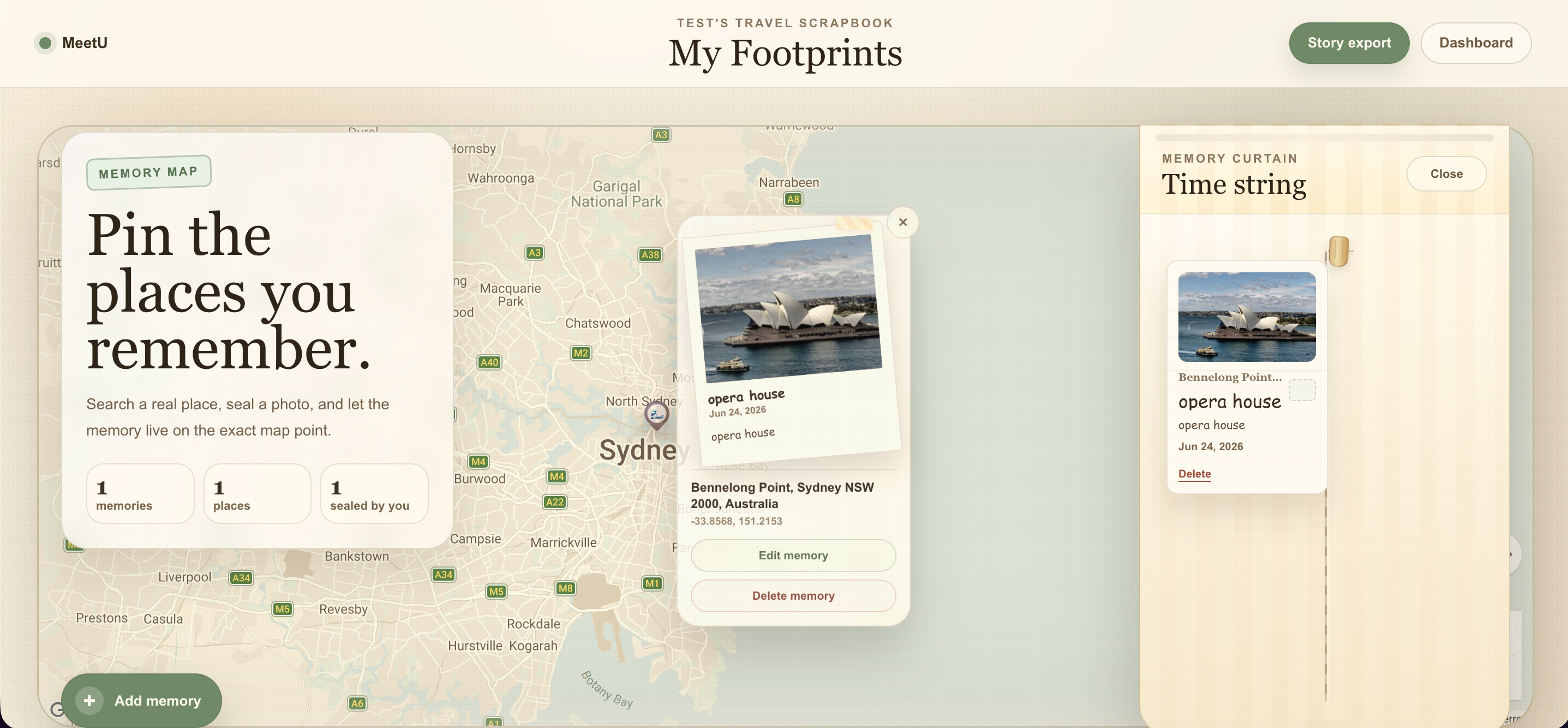
footprint page
MeetU
MeetU is an AI-powered travel planning agent that turns a loose travel idea into a structured, editable, and shareable itinerary.
Inspiration
Planning a trip often starts with excitement, but quickly becomes messy: scattered notes, Google searches, maps, opening hours, transport times, restaurant ideas, and exported documents all live in different places. We wanted to build something that feels less like filling out a spreadsheet and more like having a thoughtful travel companion.
MeetU was inspired by the idea of a digital travel journal: practical enough to plan a real trip, but warm enough that the final itinerary feels like something worth saving, sharing, and remembering.
What It Does
Planning a trip with friends is chaos, group chats, scattered links, a dozen open tabs. MeetU turns a conversation into a living, collaborative itinerary. You describe your trip, the AI builds a complete day-by-day plan, and your whole group refines it together in real time.
Plan with AI
- Enter trip basics — destination, dates, travelers, travel style, accommodation area, daily available time — and get a full day-by-day itinerary
- Detailed timeline with specific start/end times and travel segments between stops
- Route options powered by Google Maps, plus opening-hours and place context where available
- An AI chat agent that asks clarifying questions and refines the plan on request
Plan together, live (real-time, backed by Amazon Aurora PostgreSQL)
- Multiple people edit the same trip simultaneously, with live presence so you see who's here
- Edit-locks prevent conflicting changes; inline comments anchor discussion to specific days and stops
- Role-based sharing — owner, editor, commenter, viewer — so you control who can do what
Save, share & remember
- Saved trips in a personal dashboard, each with a polished overview page
- Shareable public links and a public gallery of published itineraries
- Export as a poster-style image or a clean PDF for a formal travel plan
- Footprints — save travel memories on a real map with photos, notes, emoji pins, and a scrapbook-style memory timeline
How We Built It
MeetU is built as a full-stack web application using:
- Next.js for the frontend and backend API routes
- Vercel for frontend deployment
- AWS Aurora DSQL as the main database
- Prisma for database modeling and queries
- Google Gemini for itinerary generation and AI refinement
- Google Maps APIs for maps, places, and route context
- NextAuth for authentication
- React-based interactive UI components for the dashboard, itinerary editor, overview pages, gallery, and Footprints experience
We chose AWS Aurora PostgreSQL because our data is naturally relational: users, saved trips, trip days, itinerary stops, route segments, share links, published gallery entries, and memory pins all connect to each other. Aurora PostgreSQL gives us a scalable foundation while still letting us model structured travel data clearly.
Challenges We Faced
One major challenge was making the AI output feel like a real itinerary rather than a generic list of morning, afternoon, and evening activities. We had to redesign the prompt structure and data model so the agent generates specific timelines, realistic durations, and transport time between stops.
Another challenge was editing. If a user says, “I booked the Opera House tour on Day 3 at 4 PM,” the agent should not simply add another stop. It needs to understand the existing itinerary, move or remove duplicates, and adjust the surrounding schedule. Making the AI behave more like an actual planning assistant required careful prompt design and structured JSON validation.
We also spent a lot of time balancing utility and emotion. The edit page needed to feel like a powerful workspace, while the overview page needed to feel like a finished travel journal that users would actually want to share. This led us to separate the planning experience from the presentation experience.
What We Learned
We learned that building an AI agent is not just about calling a model. The product needs structure around the model: schemas, validation, fallback handling, database persistence, map data, route context, and a UI that helps users understand and trust the output.
We also learned how important design is for AI products. A travel planner should not feel cold or mechanical. The more personal the output becomes, the more the interface needs to support that feeling through layout, typography, export design, sharing, and memory features.
What's Next
Next, we want to improve MeetU with:
- Collaborative trip planning between multiple users
- More itinerary themes and export templates
- Smarter budget planning
- Real-time availability and booking integrations
- More advanced route optimization
- A richer Footprints annual review experience
- Video or animated story export for travel memories
Our long-term vision is for MeetU to become both a travel planning agent and a personal archive of where users have been, what they loved, and what they want to remember.
Built With
- amazon-web-services
- gemini
- google-maps
- next.js
- nextauth
- react
- vercel


Log in or sign up for Devpost to join the conversation.