-
-
logo
-
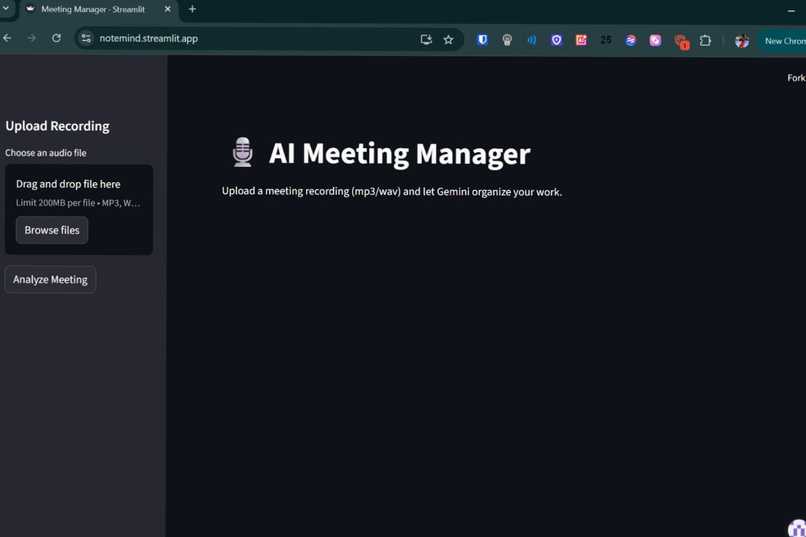
front end
-
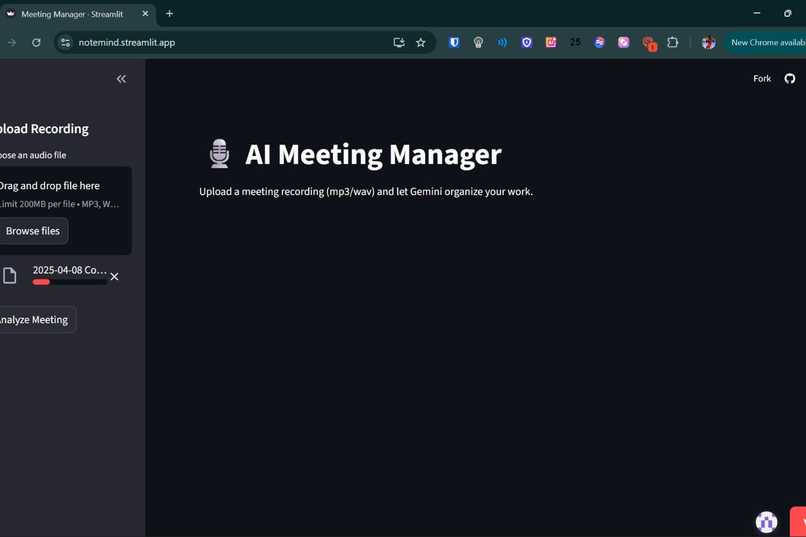
file loading
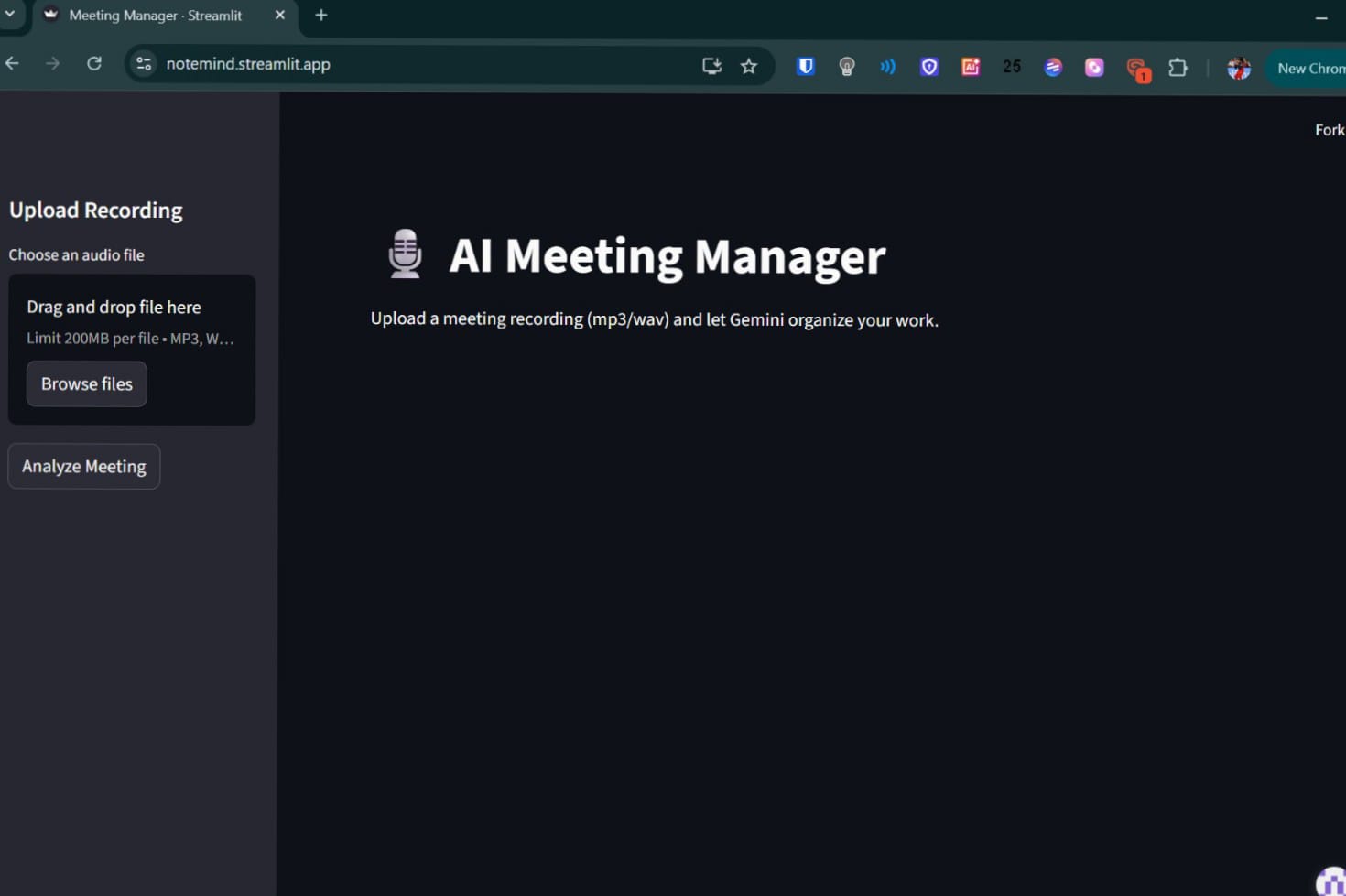
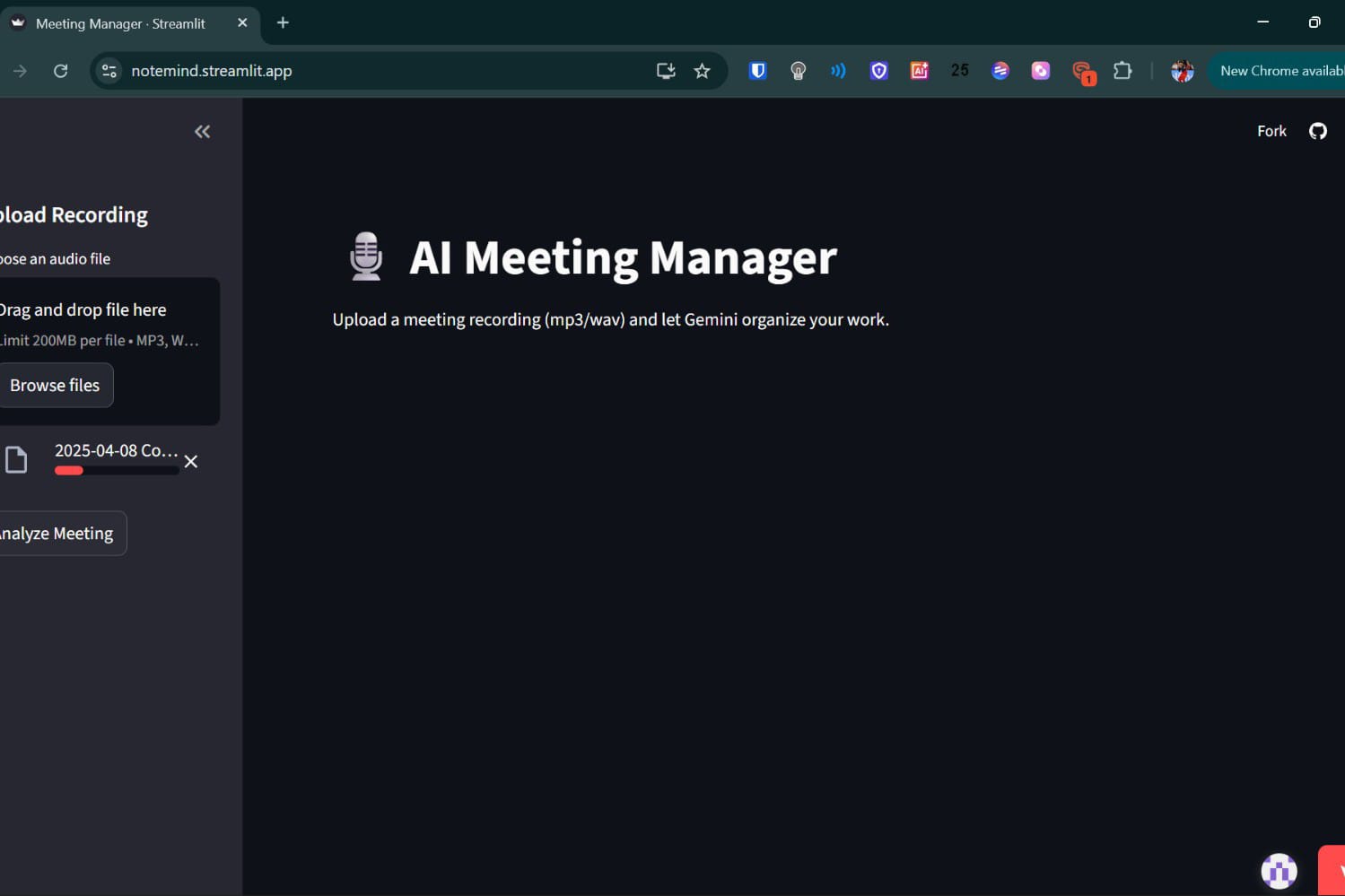
Inspiration Notemind is inspired by a simple, time-tested frustration: meetings produce plenty of words but very little memory. Important decisions get buried in long transcripts, action items slip through the cracks, and “we’ll revisit this later” becomes a permanent promise. Notemind is built to bring order back to that chaos—turning raw meeting notes into clear, structured insights.
How It Was Built The project uses Gemini as its core intelligence engine to analyze meeting transcripts and notes. Gemini processes the content to identify key points, decisions, action items, deadlines, and discussion themes. The system then organizes this information into concise summaries that are easy to scan and share. A clean, minimal interface ensures the focus stays on clarity rather than clutter, keeping the experience professional and efficient.
What We Learned This project taught me how to design AI-driven systems that prioritize usefulness over novelty. I learned how to guide large language models with precise prompts, structure unorganized text into meaningful outputs, and balance automation with reliability. It also strengthened my understanding of UX—how small design choices can greatly improve comprehension and trust.
Challenges Faced One major challenge was handling messy, inconsistent meeting notes—real conversations are rarely neat or logical. Ensuring accurate extraction of action items without losing context required careful prompt tuning and iteration. Another challenge was maintaining neutrality in summaries, avoiding bias or over-interpretation while still being decisive.
In the end, Notemind stands as a practical tool rooted in a classic idea: if something is worth discussing, it’s worth remembering properly.

Log in or sign up for Devpost to join the conversation.