-
-
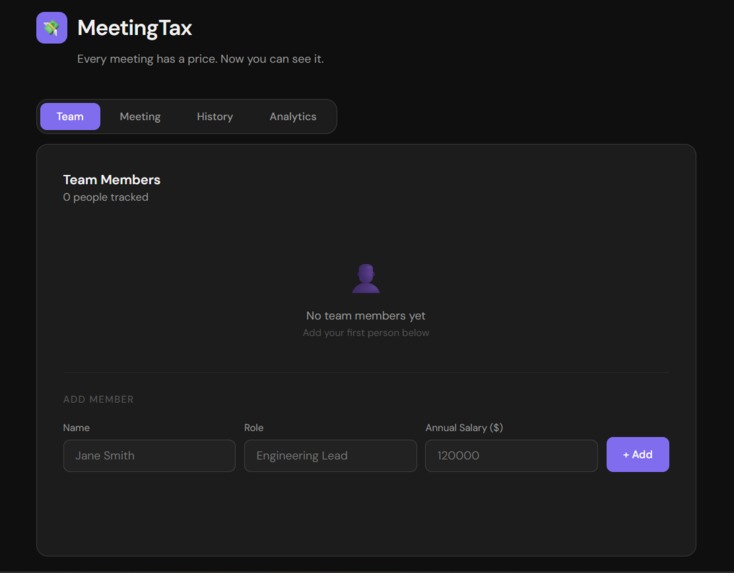
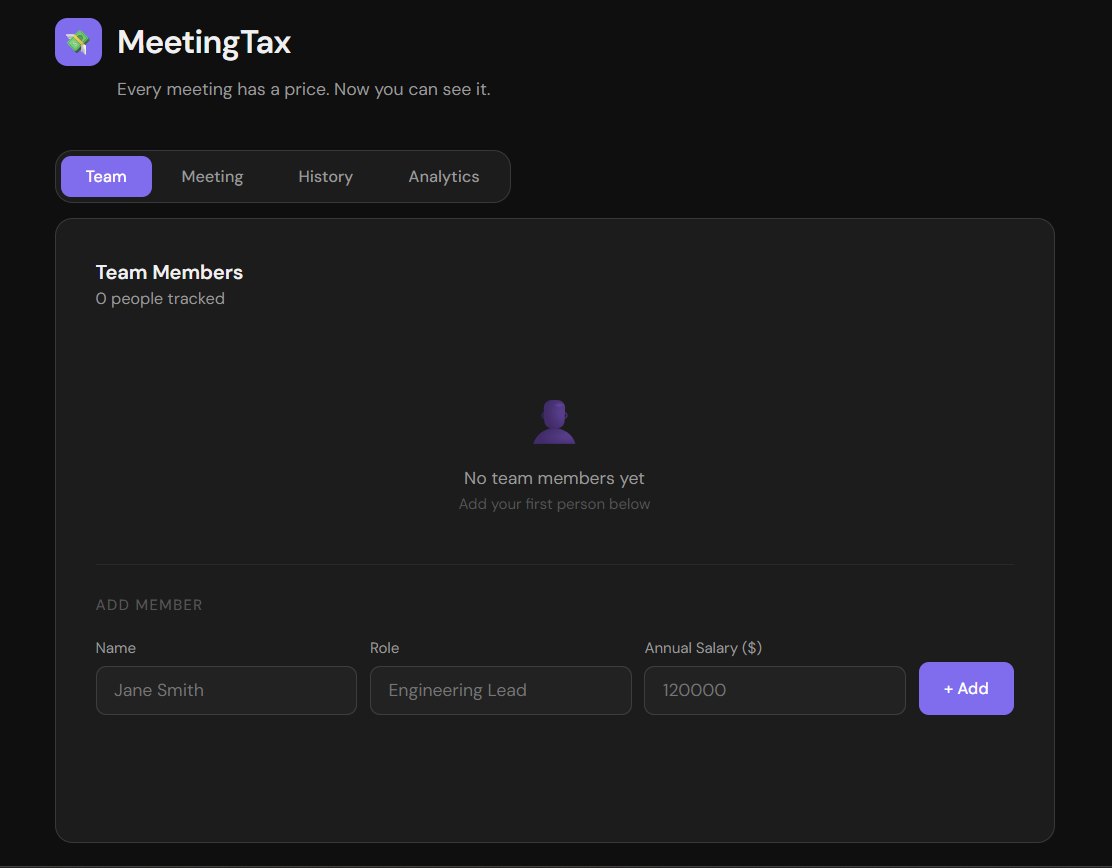
Set up your team with names, roles, and salaries — hourly rates calculated automatically
-
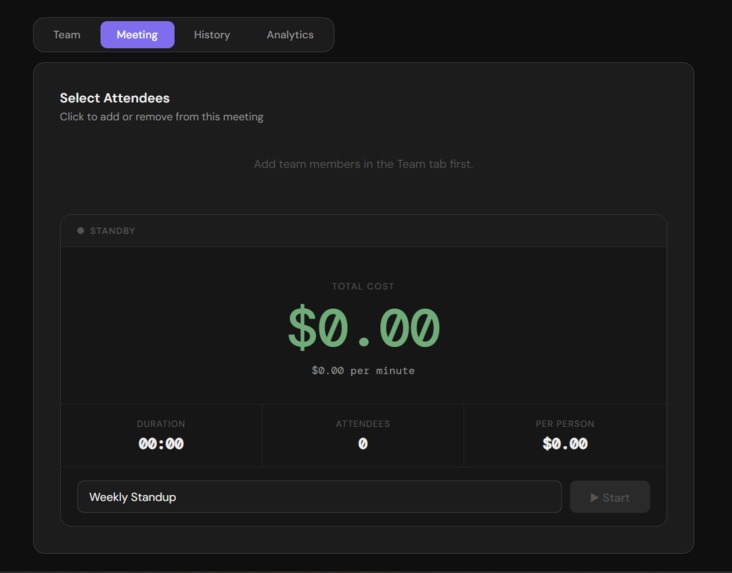
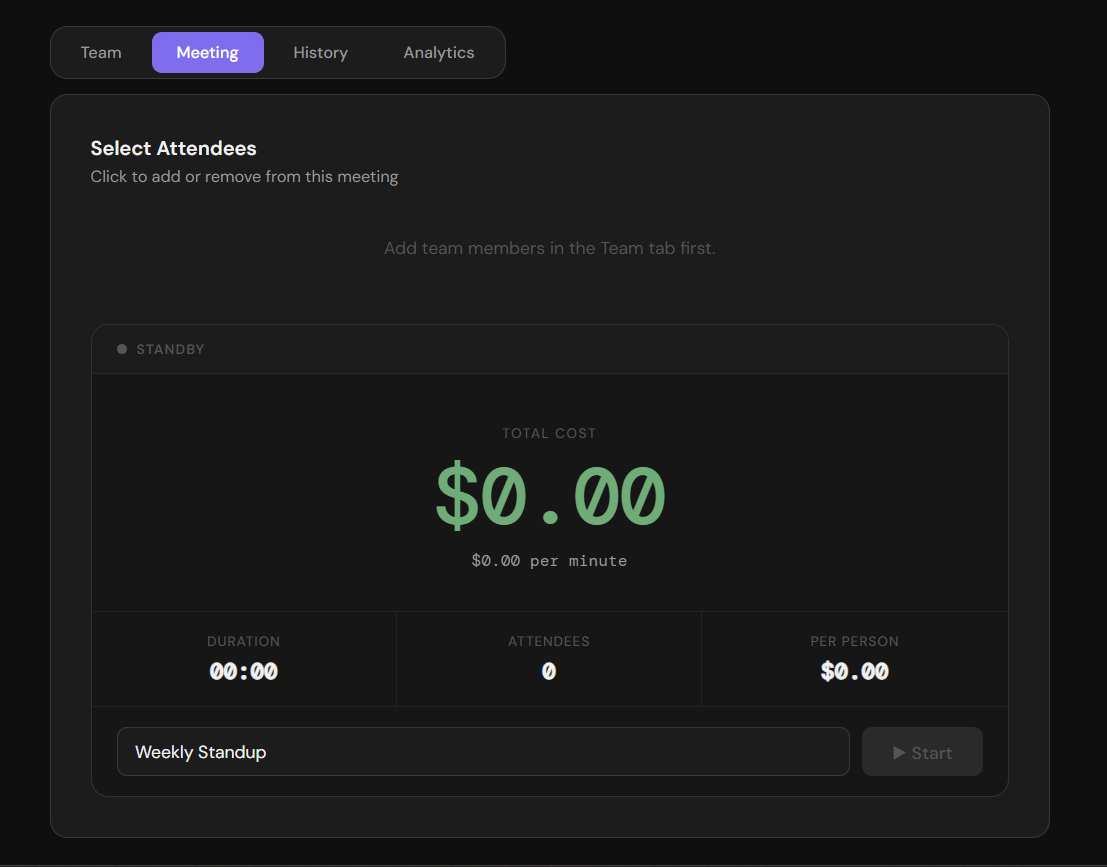
Live meeting room — select attendees, hit start, watch the dollar counter tick in real time
-
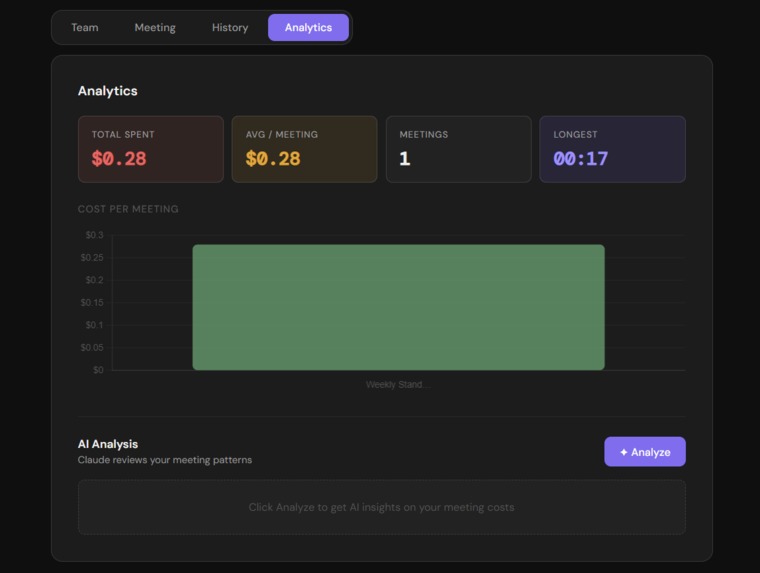
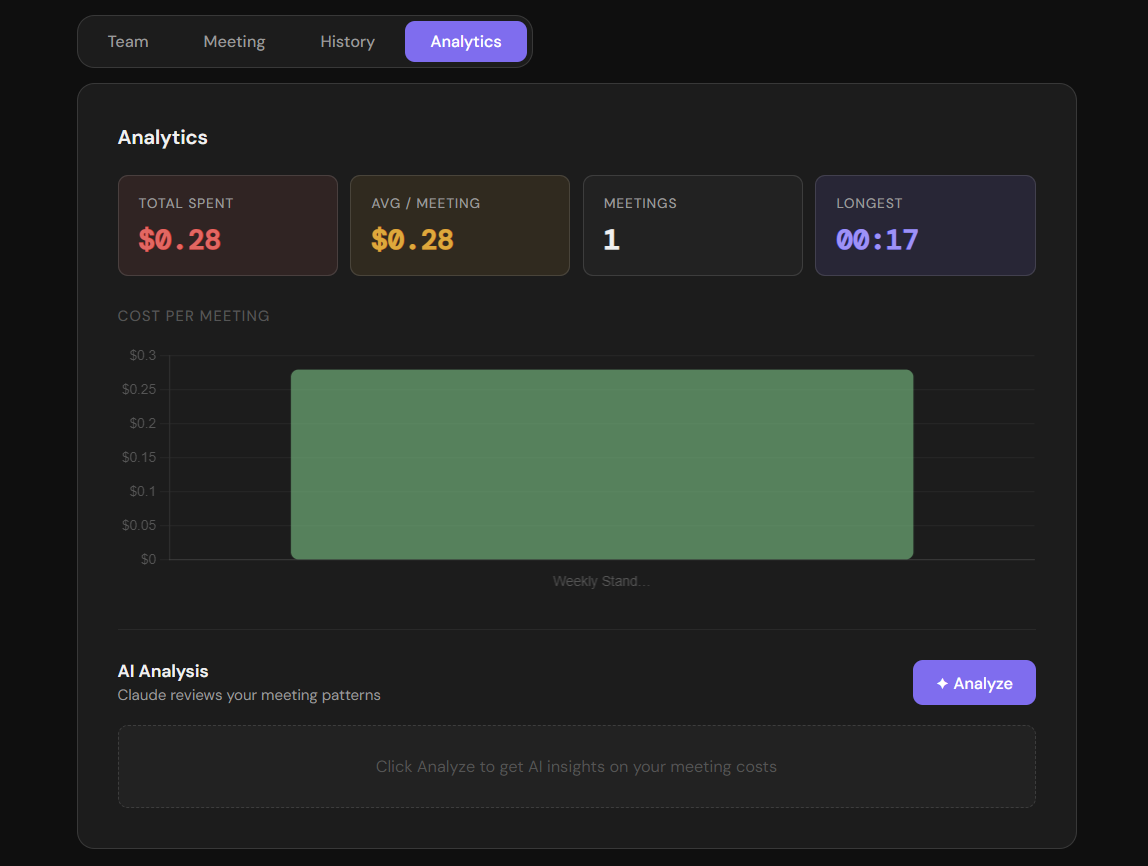
Analytics dashboard — total spend, averages, and cost per meeting chart powered by DynamoDB
-
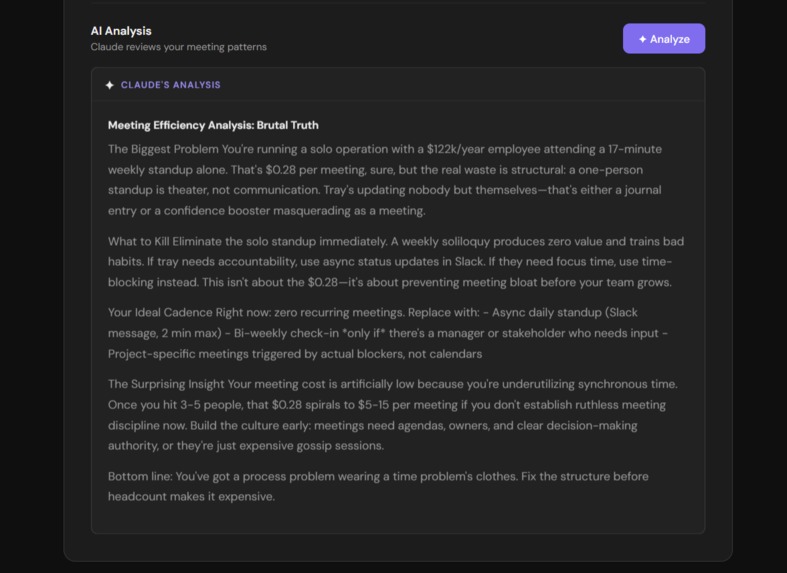
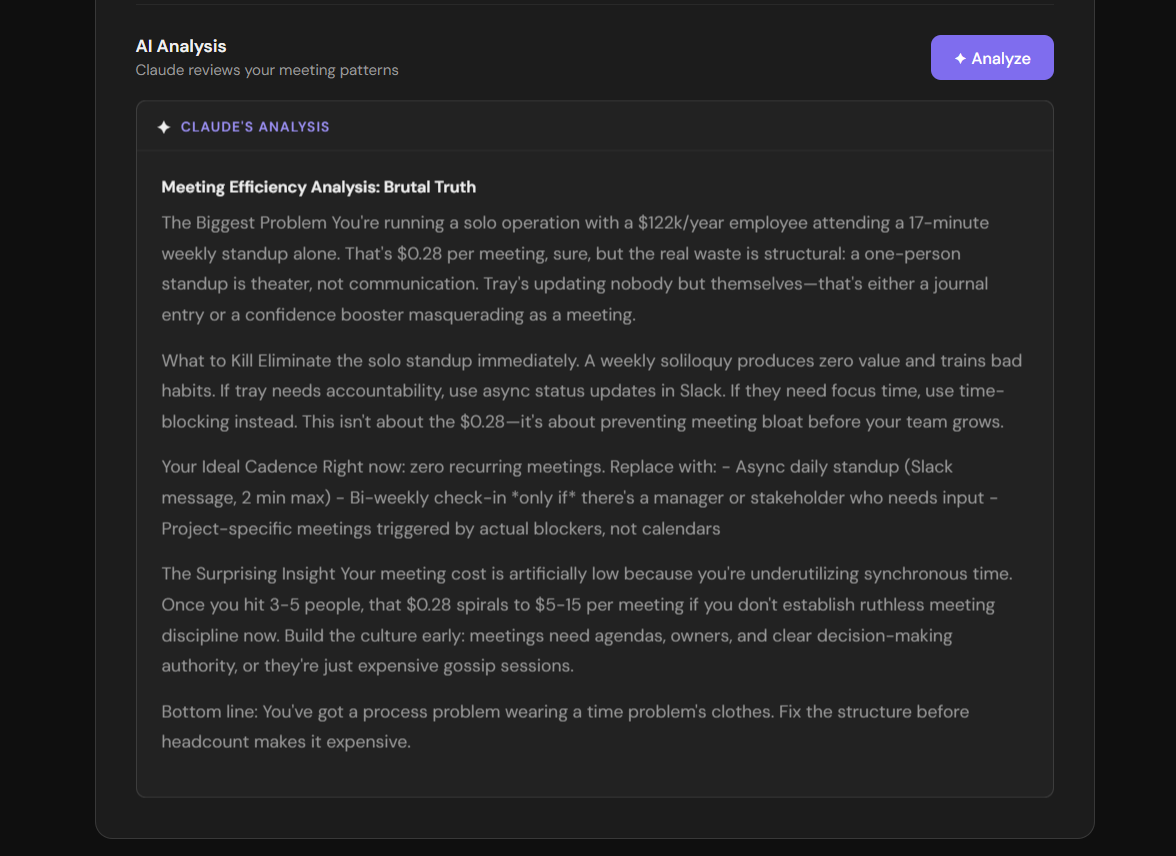
Claude AI analyzes your meeting patterns and tells you exactly which meetings to cut
Inspiration
Every week, companies hemorrhage money in meetings nobody needed. A 6-person standup with senior engineers costs $50 before anyone says a word. Multiply that by 52 weeks and you're looking at $2,600 — just for one recurring meeting. Most teams have dozens. The problem isn't that people don't care about wasted time, it's that the cost is invisible. We built MeetingTax to make it visible.
What it does
MeetingTax is a real-time meeting cost calculator for teams. You add your team members with their salaries, select who's attending a meeting, hit start, and watch a live dollar counter tick up every 500ms. The number turns amber when you hit $50, red when you hit $200. When the meeting ends, the full record is saved, cost, duration, attendees, and added to a history log.
The analytics dashboard shows total meeting spend, average cost per meeting, and a bar chart of your most expensive sessions. A Claude-powered AI analysis button sends your meeting data to Anthropic's API and returns sharp, specific insights: which meetings to cut, which to shorten, and what an ideal meeting cadence looks like for your team.
How we built it
- Frontend: Next.js 15 (App Router) deployed on Vercel, built with React and TypeScript
- Database: AWS DynamoDB with PAY_PER_REQUEST billing — two tables,
meetingtax-peopleandmeetingtax-meetings - AI: Anthropic Claude Haiku via the official SDK, called from a server-side Next.js API route
- Deployment: Vercel, connected to GitHub for auto-deploy on every push
The real-time counter runs client-side using setInterval at 500ms, calculating cost from each attendee's hourly rate (annual salary ÷ 2080 working hours). All meeting records are written to DynamoDB when the meeting ends, making each save atomic and independent, critical for a product where multiple teams could be ending meetings simultaneously.
Why DynamoDB
DynamoDB was the deliberate choice, not the default. Meeting data has a clear access pattern: write once when a meeting ends, read many times in the history and analytics views. PAY_PER_REQUEST billing means the cost scales to zero overnight and spikes during work hours — perfectly matching real meeting behavior. And because Next.js API routes on Vercel are stateless serverless functions, DynamoDB's connection-less SDK integration is a natural fit with no pooling required.
Challenges we ran into
Getting the real-time cost update to feel smooth without hammering the server was the first challenge, the solution was purely client-side calculation with a 500ms interval, only hitting the API when a meeting ends. Designing a DynamoDB schema flexible enough to support future features (tags, recurring meetings, team workspaces) while keeping queries simple also required careful thought.
Accomplishments we're proud of
The live cost counter genuinely changes behavior, watching money tick away in real time is a completely different experience than reading a retrospective report. We're also proud of how tight the Claude integration is: it's not a chatbot bolted on, it's a specific analytical function that takes structured meeting data and returns actionable business insights.
What we learned
DynamoDB's PAY_PER_REQUEST model is genuinely underrated for products with spiky, unpredictable usage patterns. We also learned that the most effective AI integrations are narrow and specific — asking Claude to analyze a concrete dataset produces far better results than open-ended prompts.
What's next for MeetingTax
- Slack integration — post a cost summary to a channel when a meeting ends
- Google Calendar sync — automatically import scheduled meetings
- Multi-team workspaces with invite links
- Weekly email digest of your top 5 most expensive meetings
- CSV export for finance teams
Built With
- anthropic-claude-haiku
- aws-dynamodb
- chart.js
- next.js
- react
- tailwind-css
- typescript
- vercel

Log in or sign up for Devpost to join the conversation.