-
-
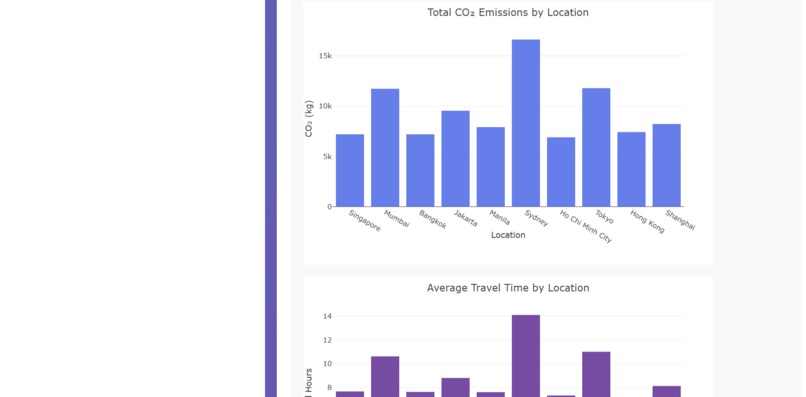
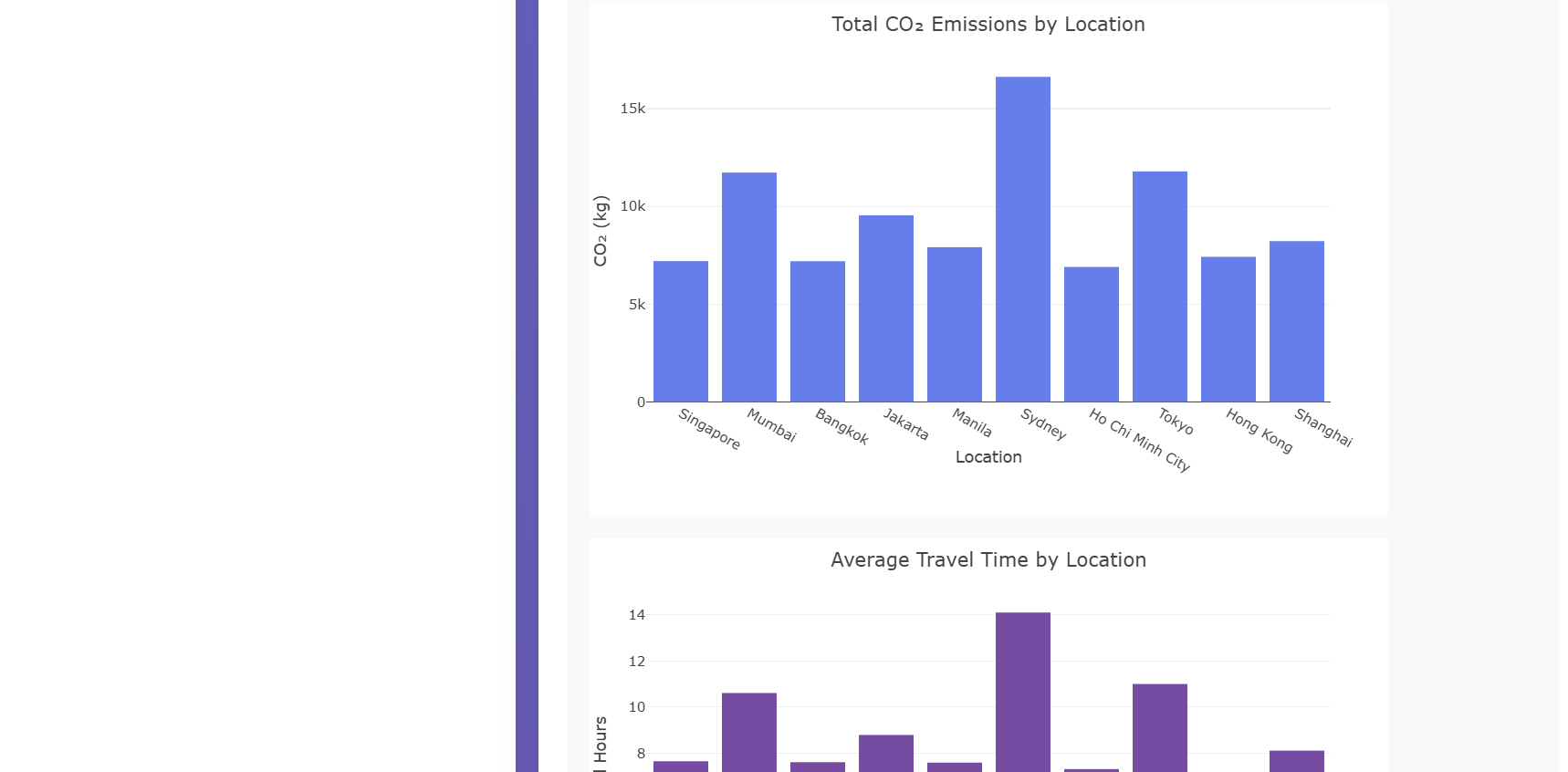
Graphs to show emission, average travel time, and fairness score for each location
-
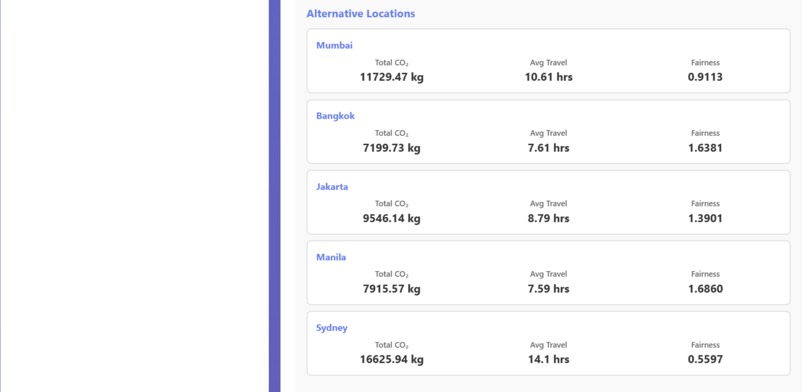
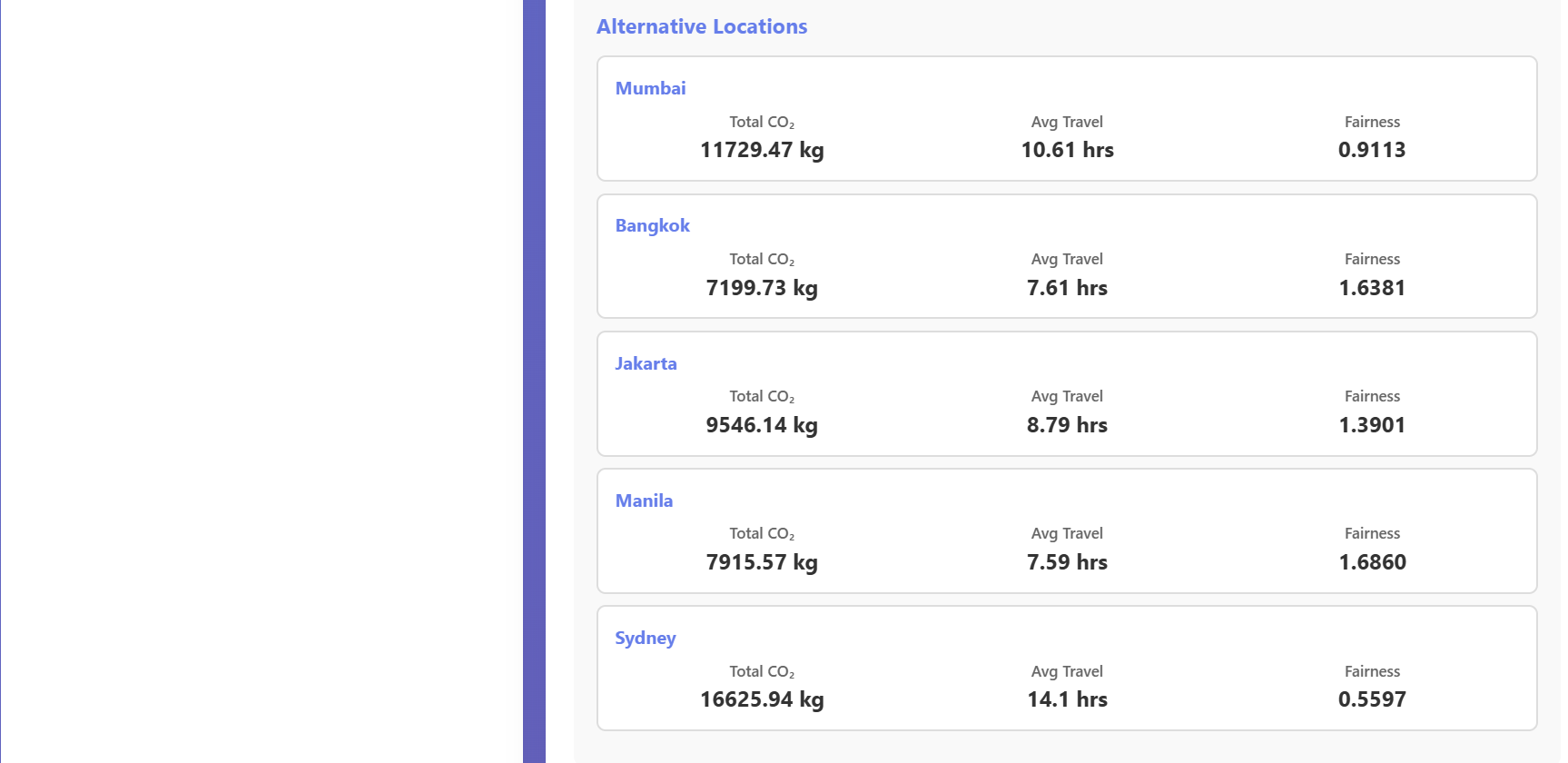
Shows alternative locations
-
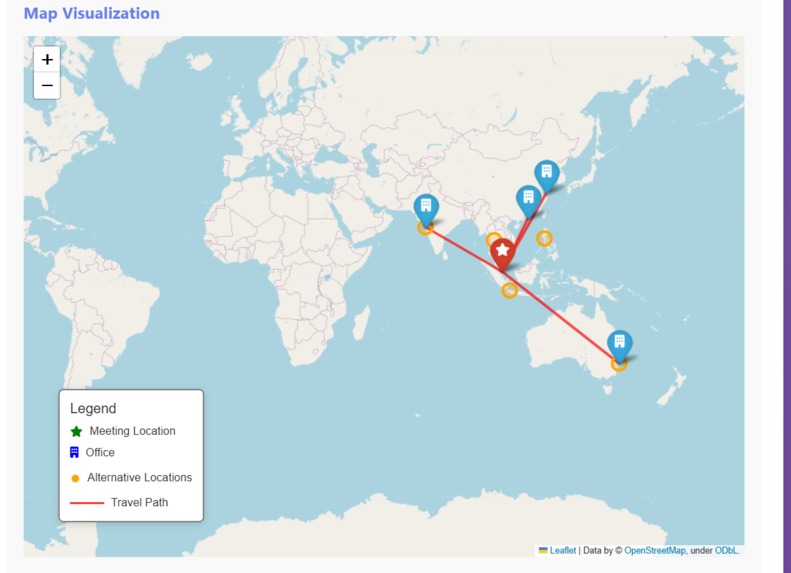
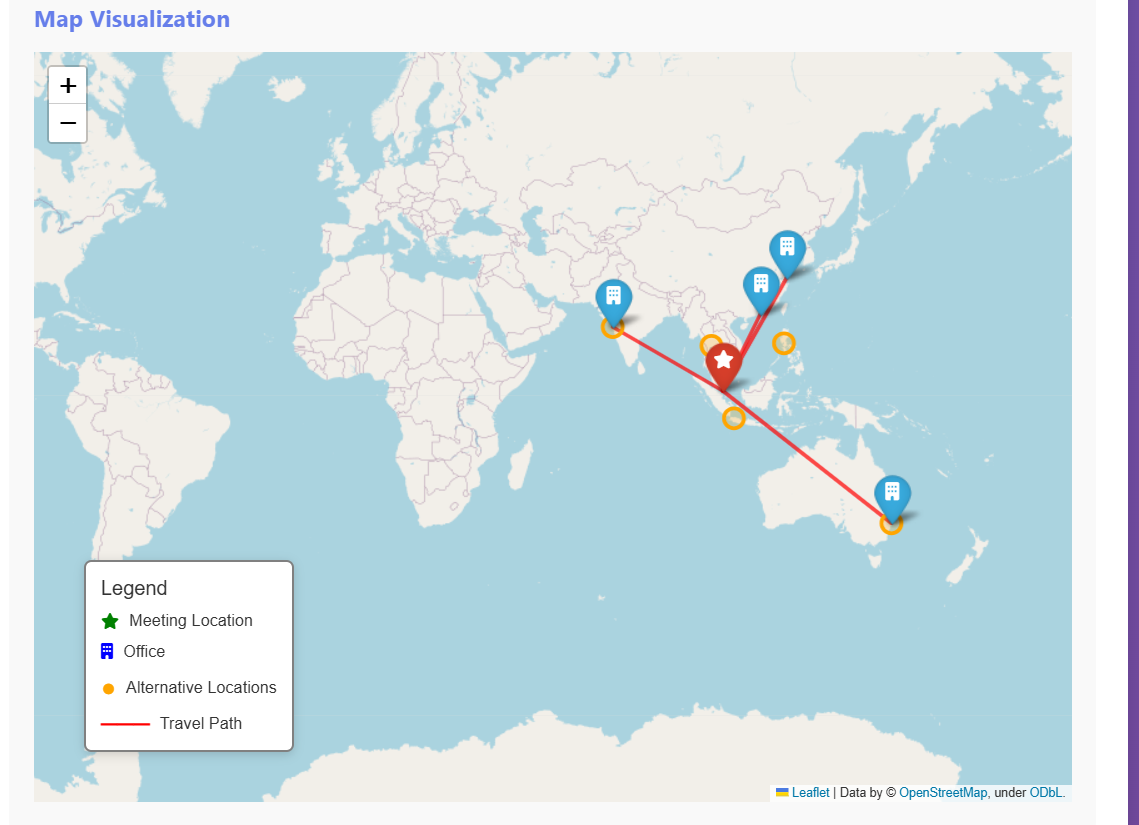
Map visualisation
-
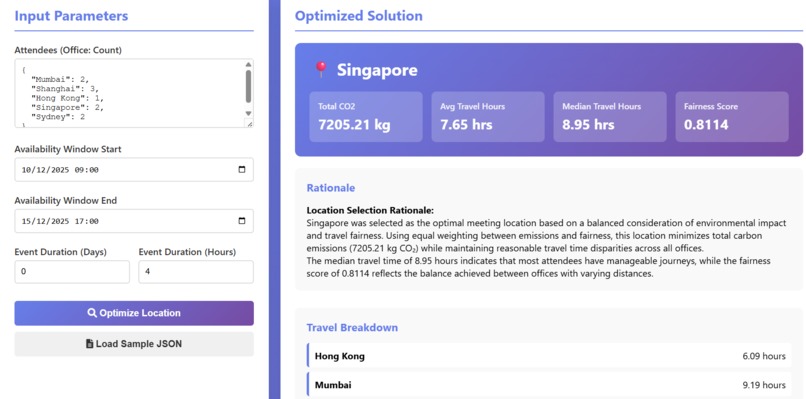
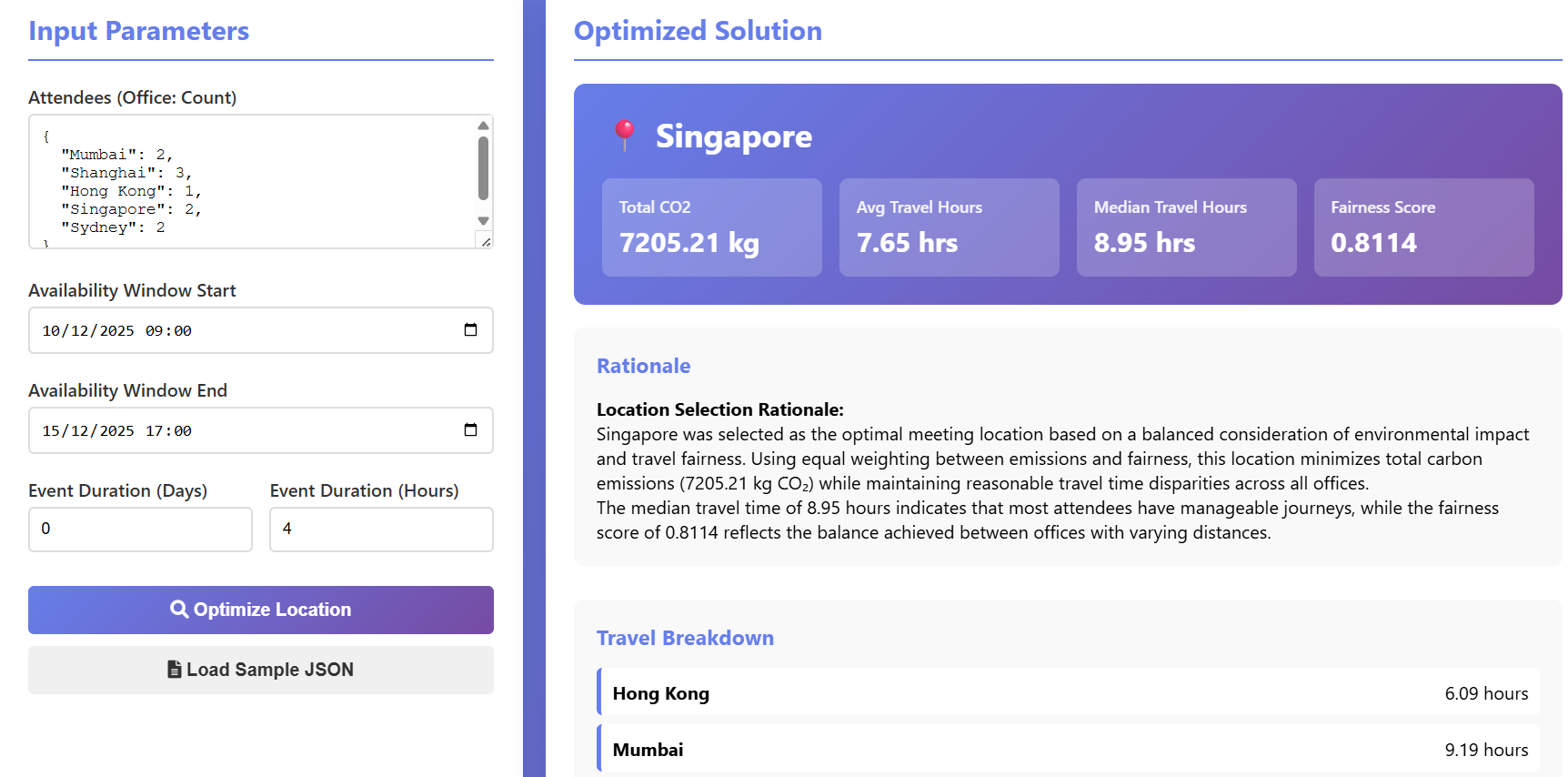
Displays important information at the top
Global teams face a classic coordination dilemma: where should everyone meet to minimize both travel emissions and inequality in journey times? This project was built to answer that question with data, fairness, and clarity.
Problem
Hosting an in-person meeting across international offices requires trade-offs. Flying everyone to a single location can be expensive, environmentally costly, and unfair to offices that are consistently farther away. The challenge: find a host city that minimizes total CO₂ emissions and balances travel burdens across all attendees, within available time windows.
Approach
Our project ingests a JSON input describing:
- The number of attendees per city
- Their collective availability window
- The required event duration
Using OAG’s global flight and CO₂ emission datasets, the system models real-world travel options between cities.
For each potential host city, it:
- Generates feasible travel plans for every attendee using available flight schedules within the window.
- Calculates metrics:
- Total and per-capita CO₂ emissions
- Average, median, and max travel times
- Time span between first arrival and last departure
- Scores each city on: Environmental cost (emissions) Fairness (variance in travel times) Feasibility (availability fit within window)
The algorithm then recommends the location with the best weighted score.
Users can adjust weights between carbon and fairness or simulate new meeting scenarios.


Log in or sign up for Devpost to join the conversation.