-
-
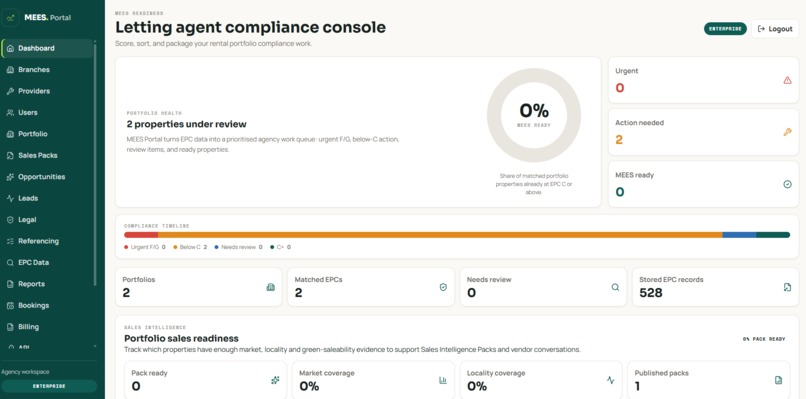
Mees Portal Dashboard
-
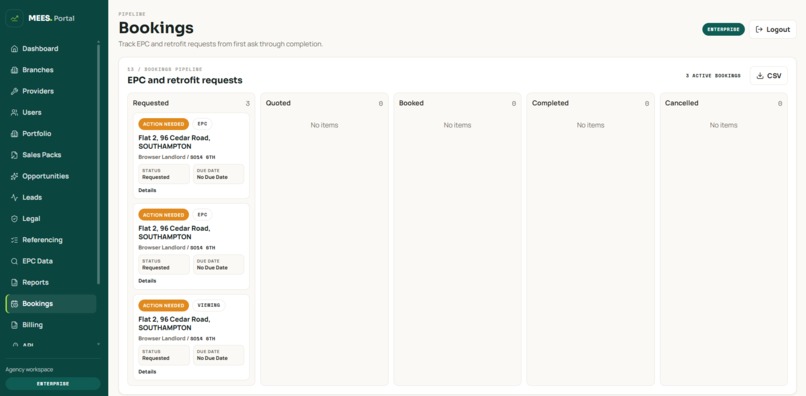
Mes Bookings
-
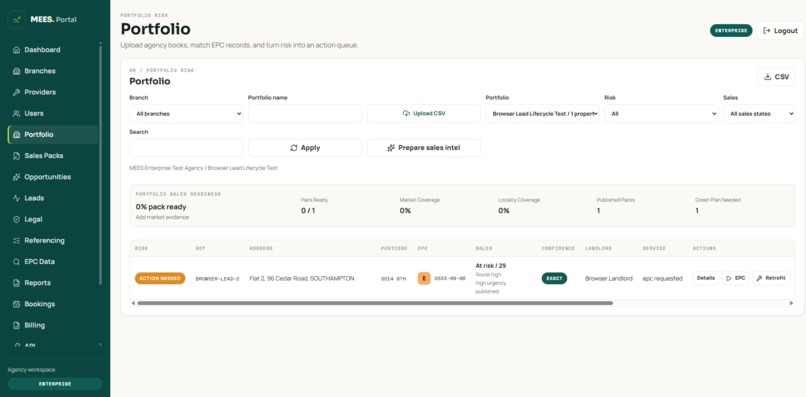
Portfolio
-
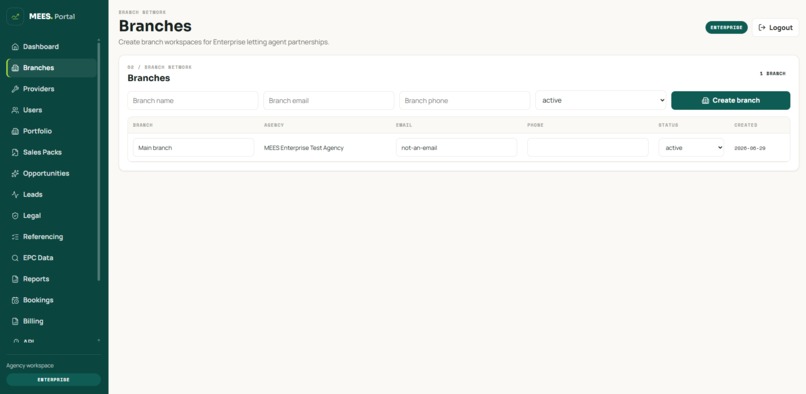
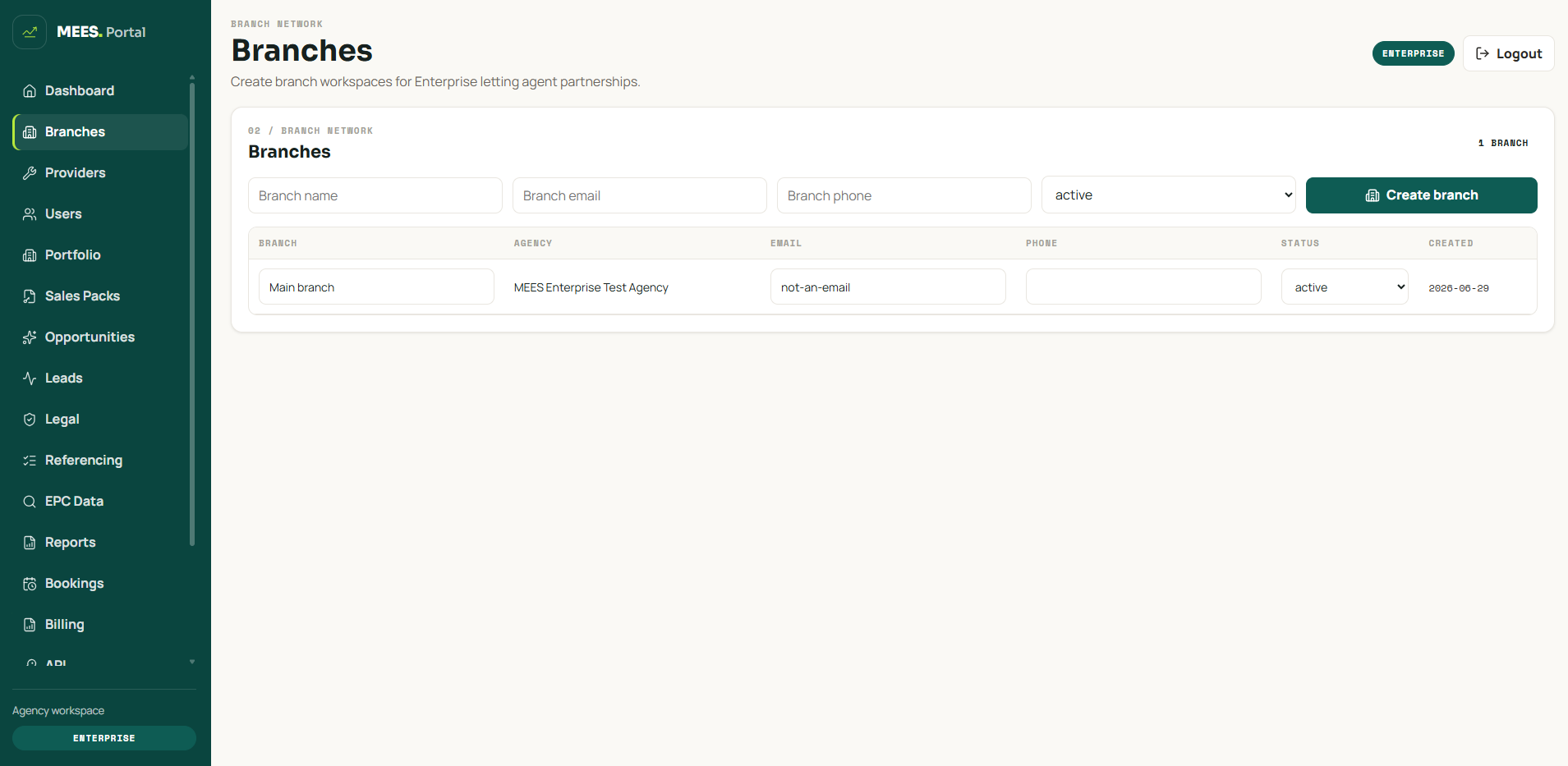
Branches
-
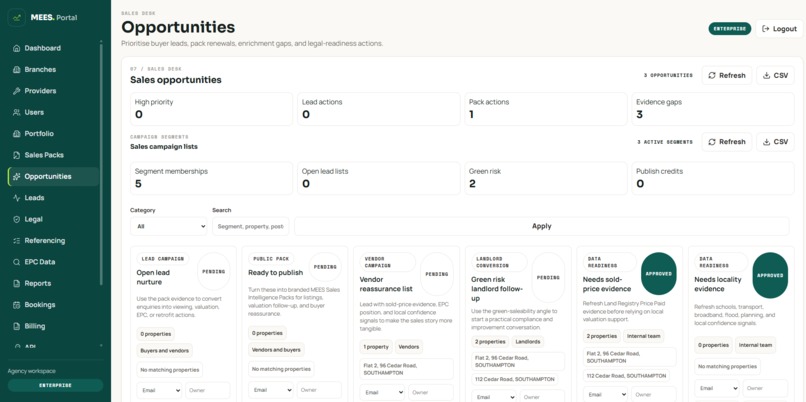
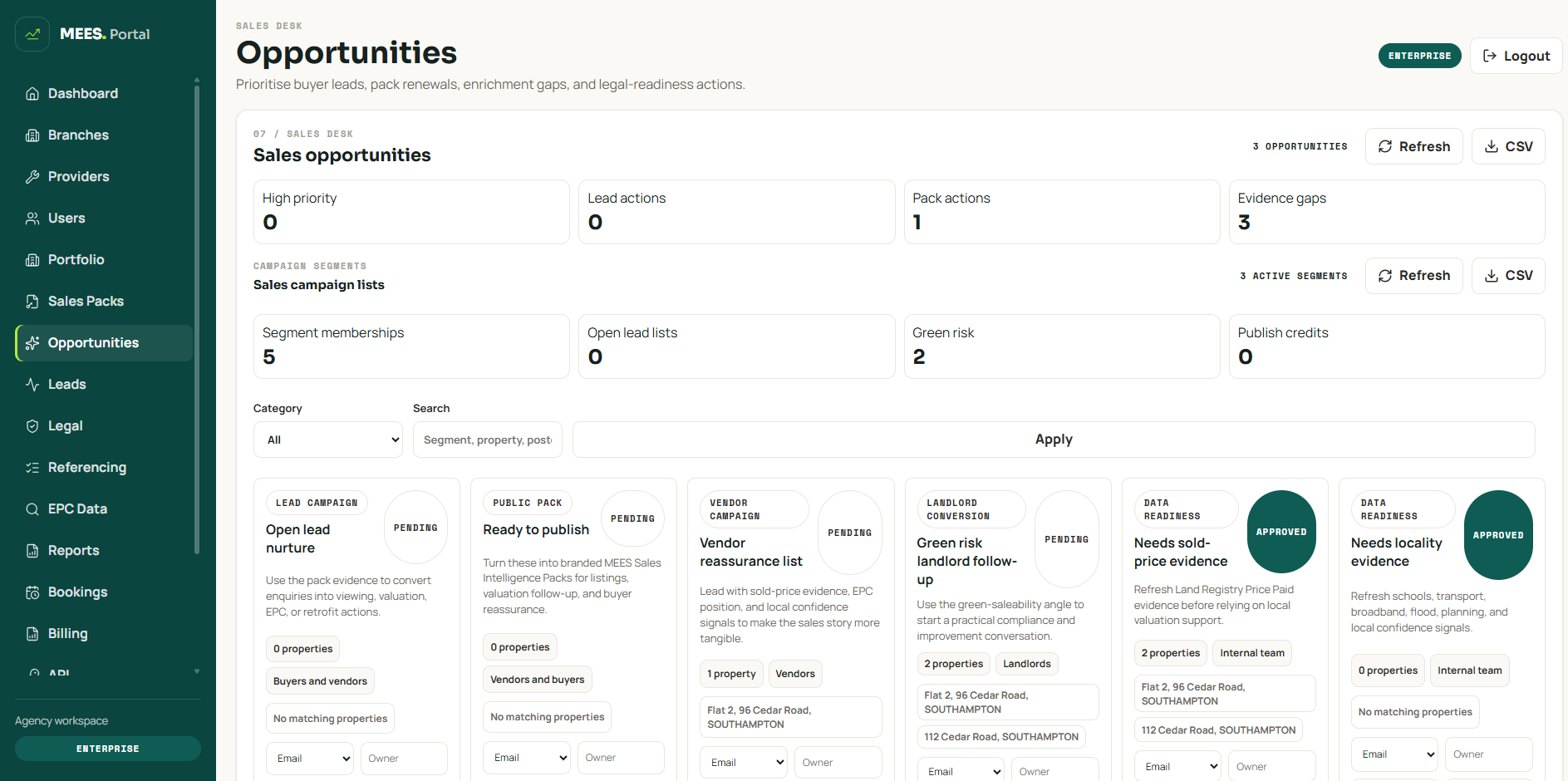
Opportunities
-
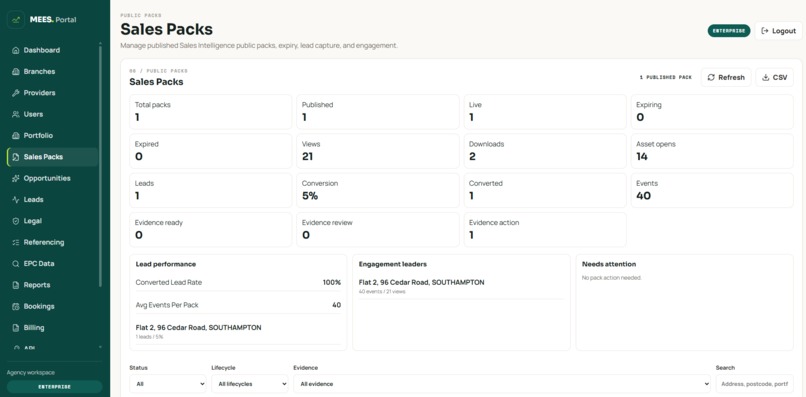
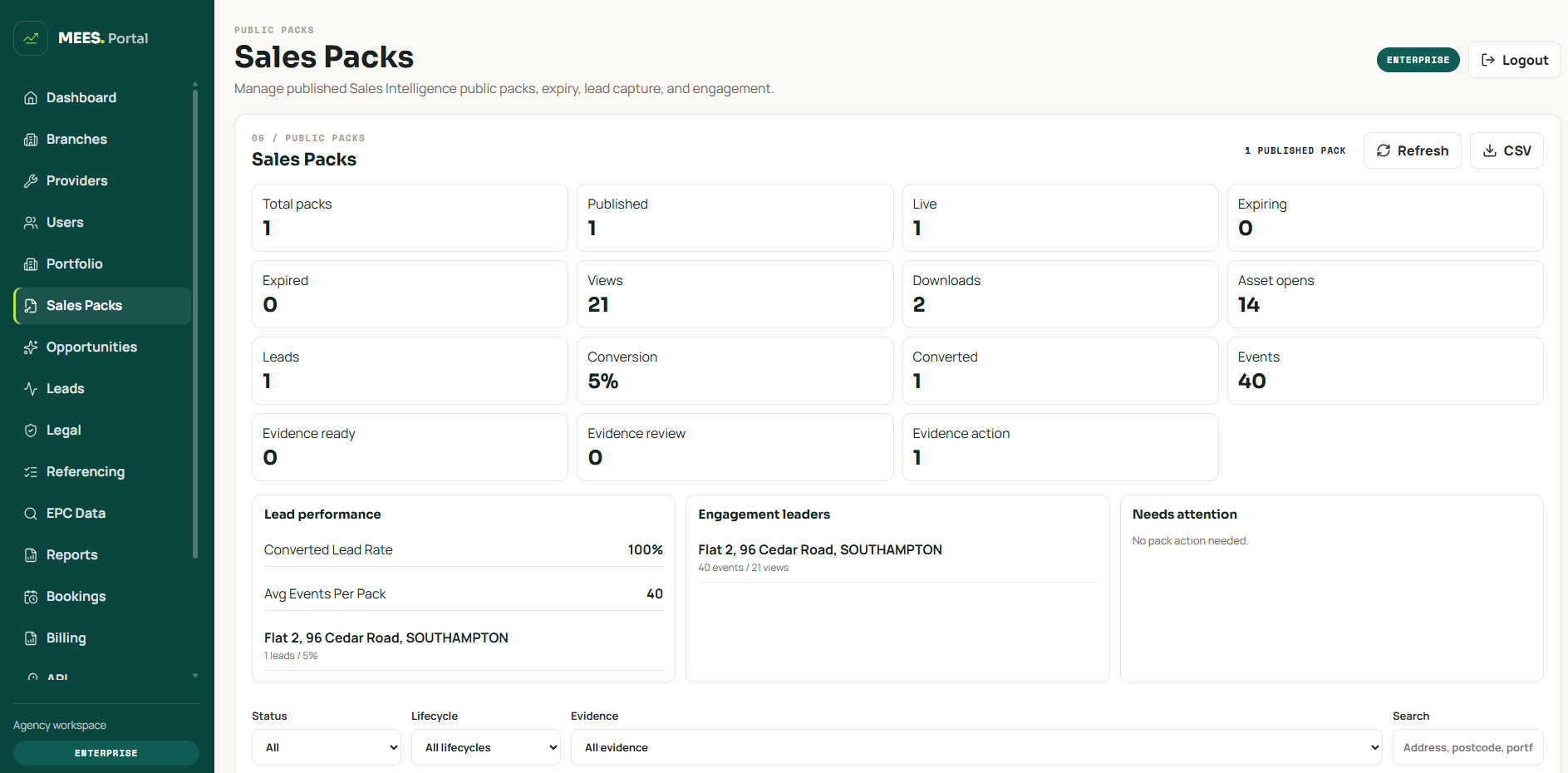
Sales Pack
-
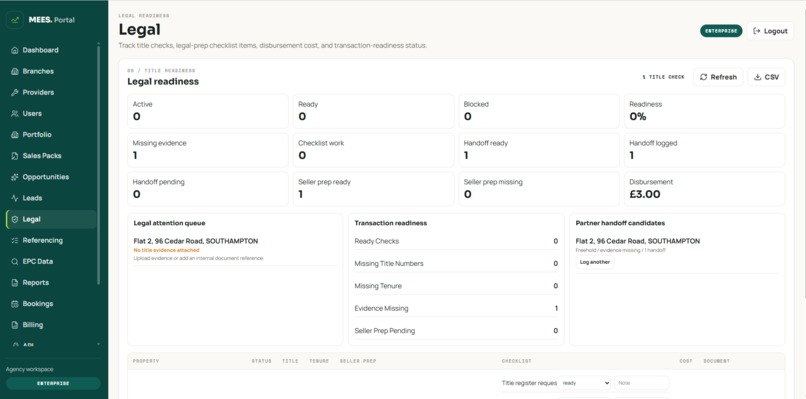
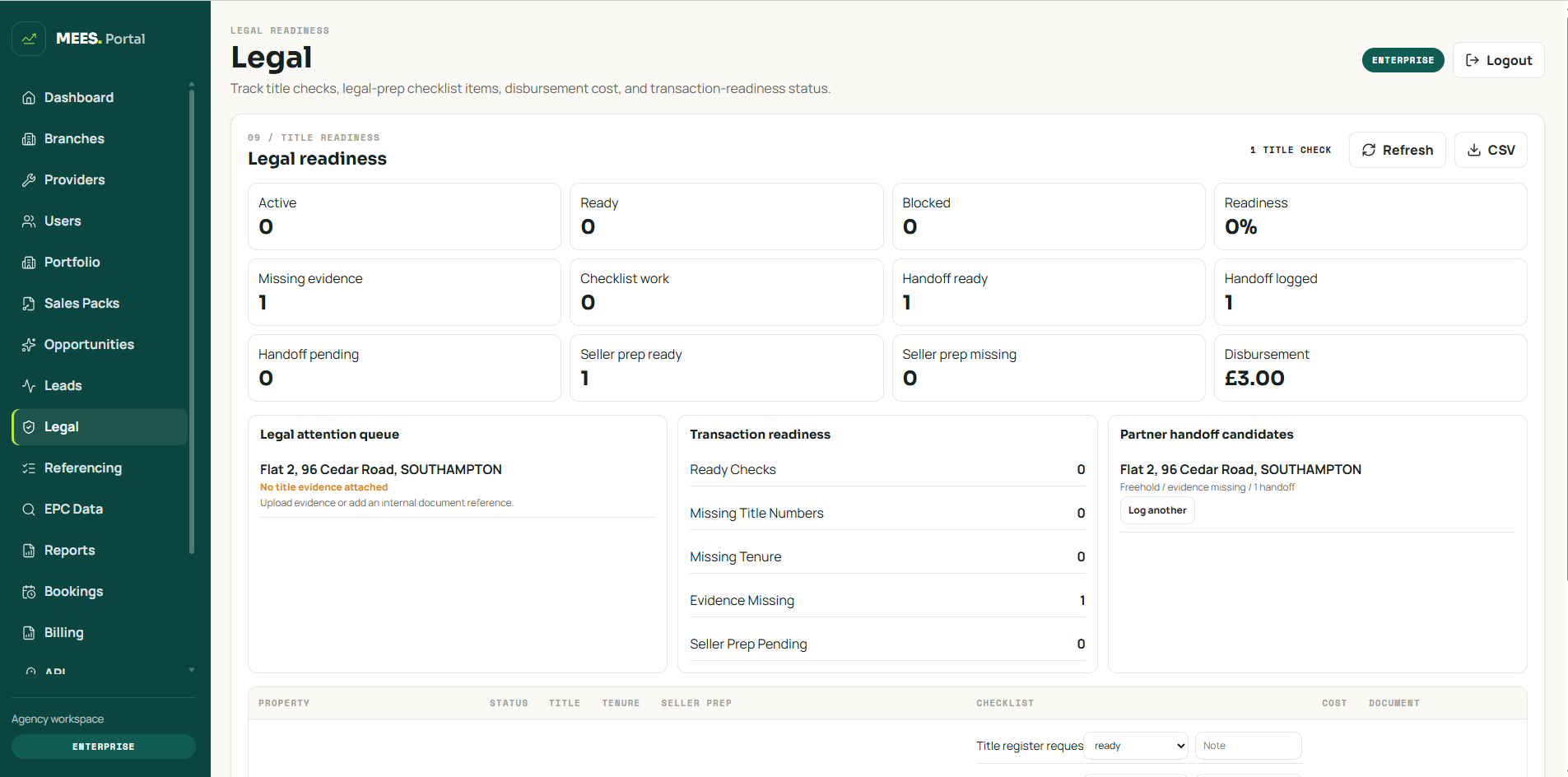
Legal
-
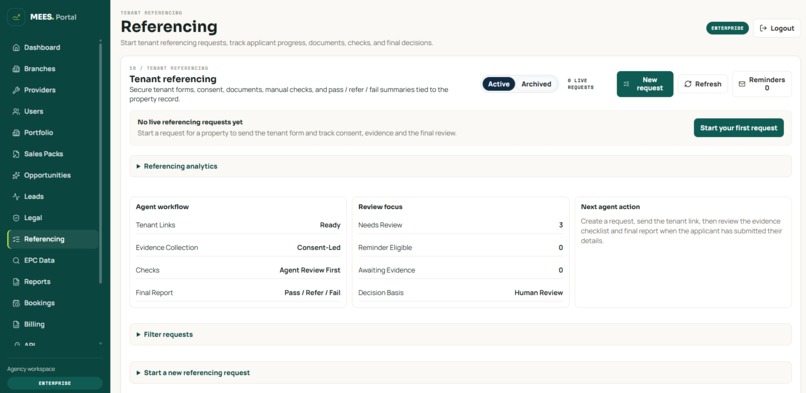
Referencing
-
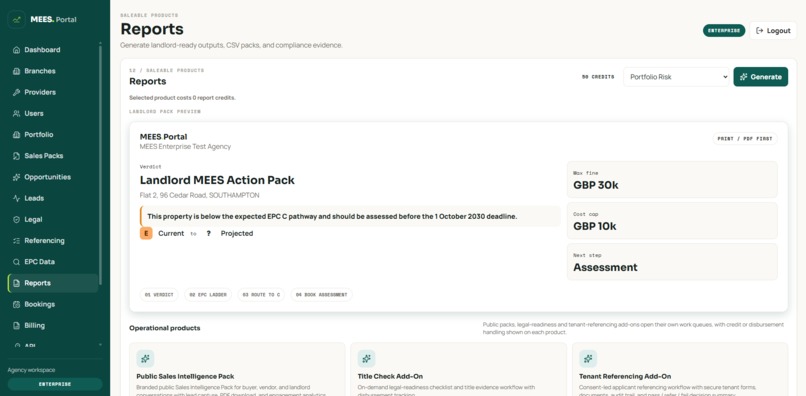
Reports
Inspiration
The UK's homes produce over 20% of the country's carbon emissions, and the private rented sector is among the least efficient housing stock there is — 52% of rental properties are still rated below EPC band C. That's why the government has confirmed that every privately rented home must reach EPC C by 2030 on the road to net zero. Upgrading them all would cut around 4.5 million tonnes of CO2 a year — the equivalent of taking 3 million cars off the road.
But policy doesn't retrofit homes. Someone has to find the millions of below-standard properties, convince their landlords, and get the work booked — and that job lands on letting agents, who today track compliance in spreadsheets nobody fully trusts. They discover an expired EPC at the worst possible moment: at renewal, at listing, or when a tenant is ready to move in. A blocked letting is lost fee income, and the agent is the one explaining it to the landlord. We kept seeing the same pattern — the data in one place, the advice in another, the follow-up in a third — and no single live view of what's actually at risk. That gap is the bottleneck between the UK's climate targets and warmer, cheaper-to-run homes. It felt solvable.
What it does
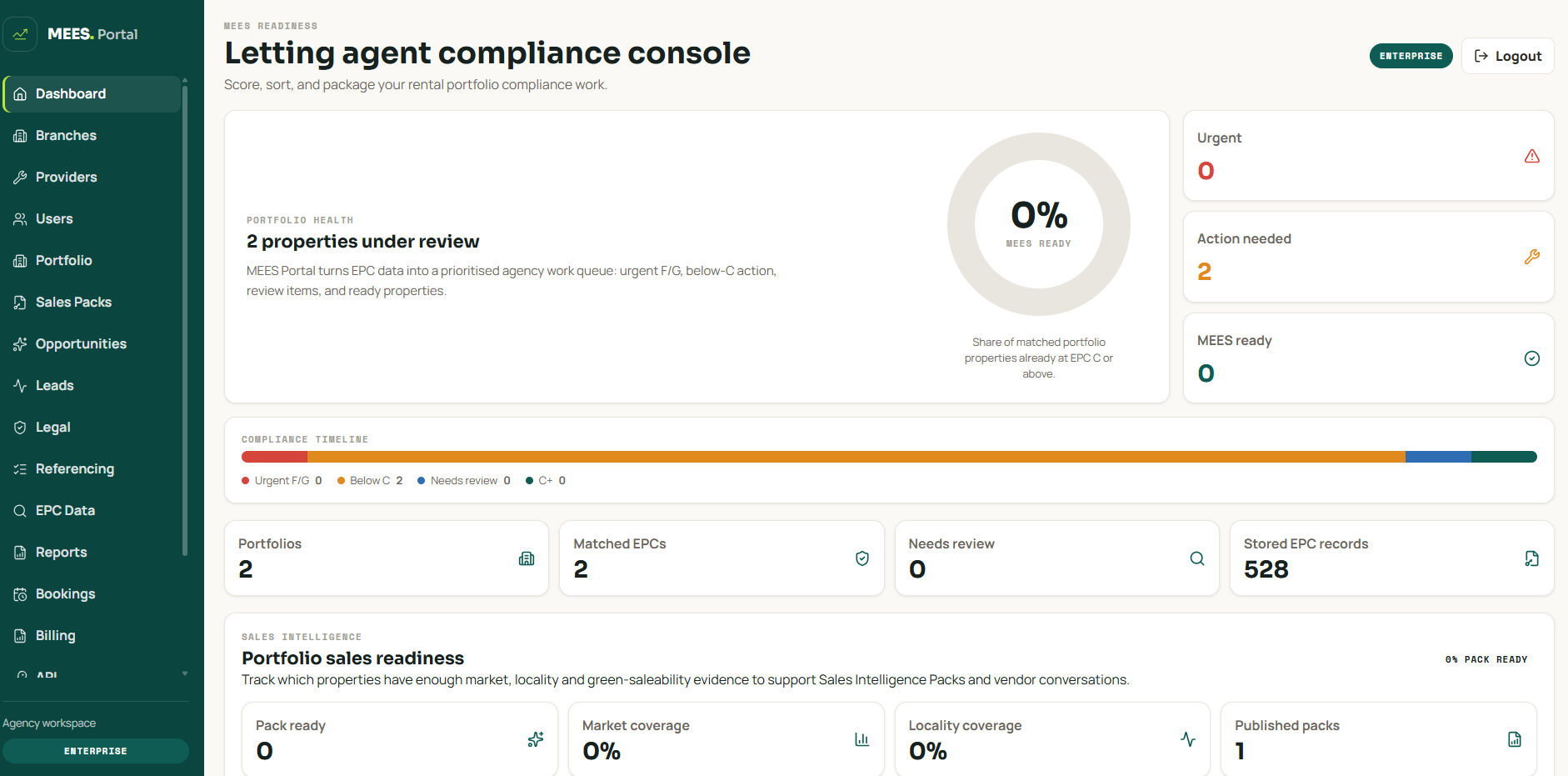
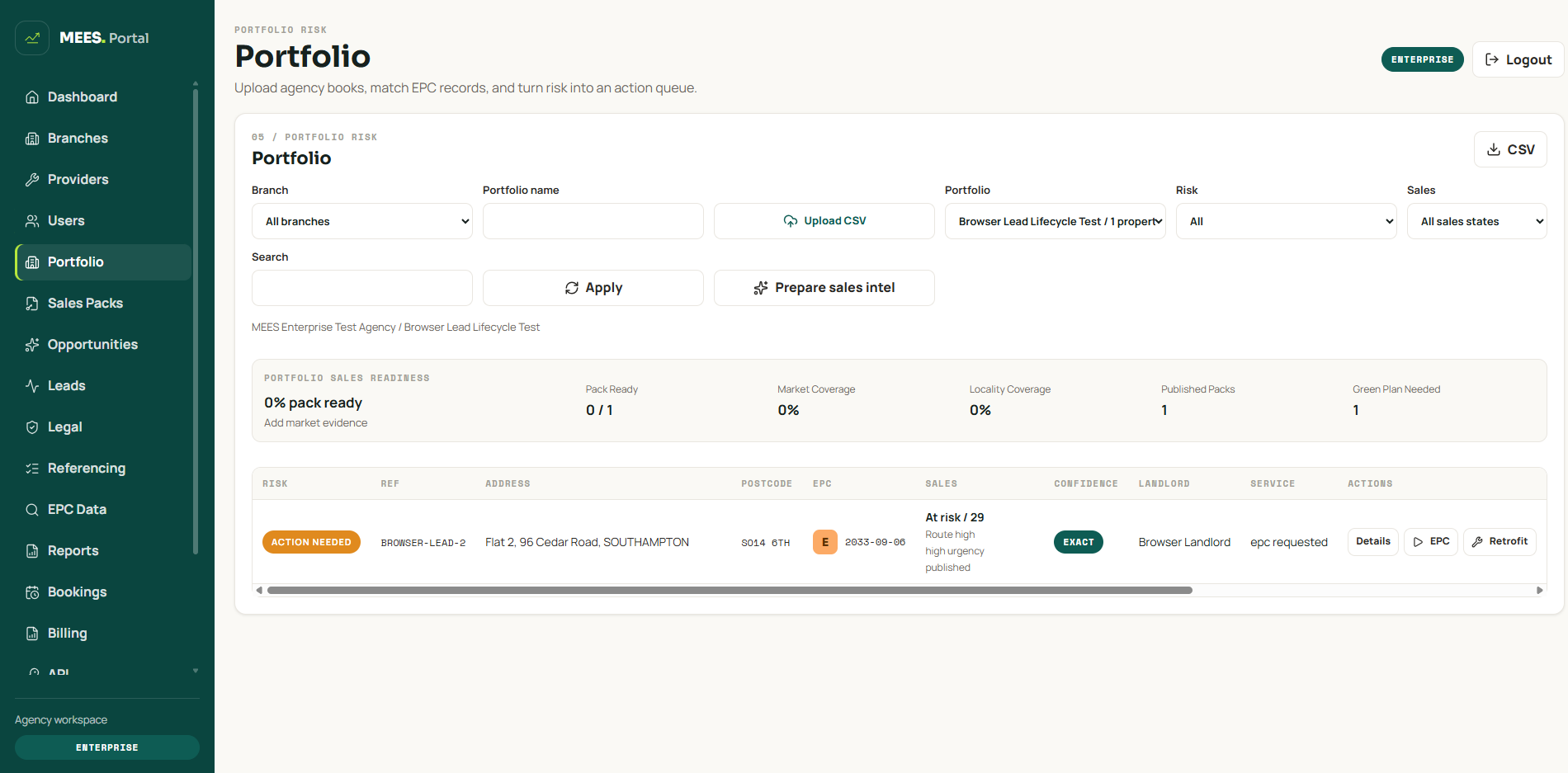
Agents upload their managed portfolio as a CSV. MEES Portal matches every property against the official government EPC register API and instantly scores the whole book into a prioritised risk queue: urgent F/G, below-C action needed, review, and ready. From there an agent can:
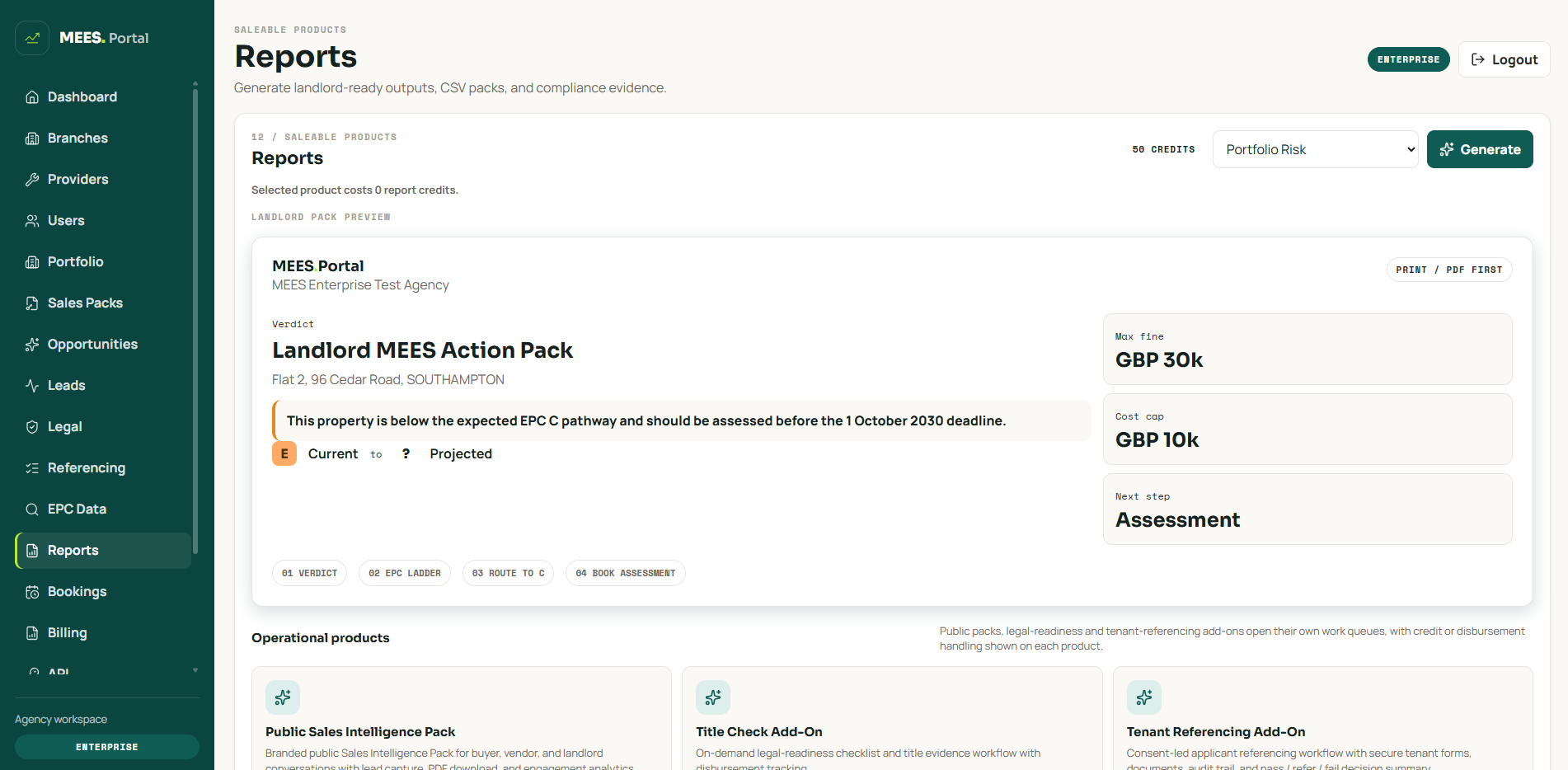
- Generate premium four-sheet landlord reports (HTML + PDF) with current/potential ratings, expiry dates and recommended next steps
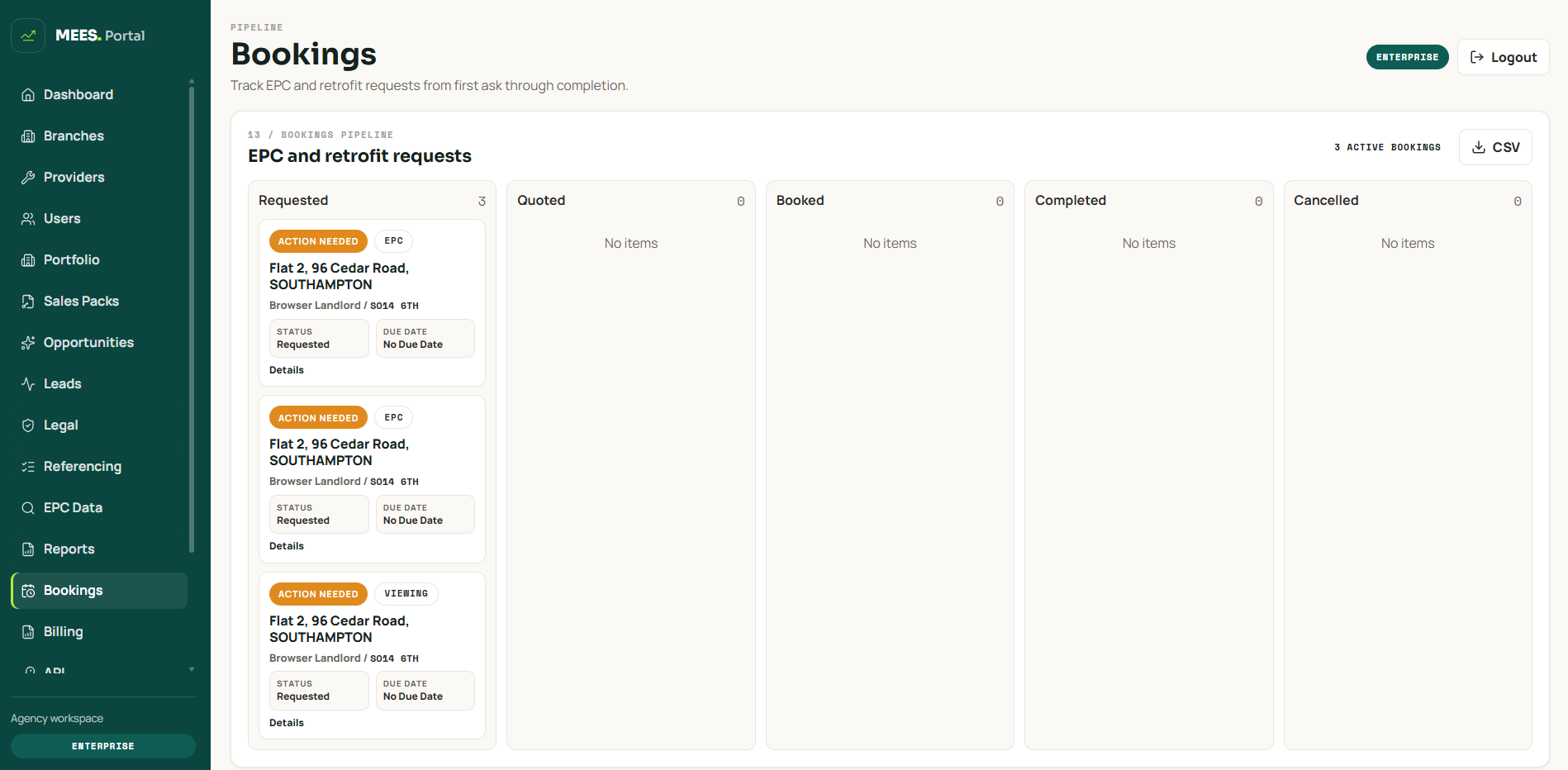
- Book EPC assessments and retrofit work directly from a property record
- Produce branded Sales Intelligence Packs — energy position, green saleability and local sold-price evidence — that win instructions and capture vendor/buyer leads
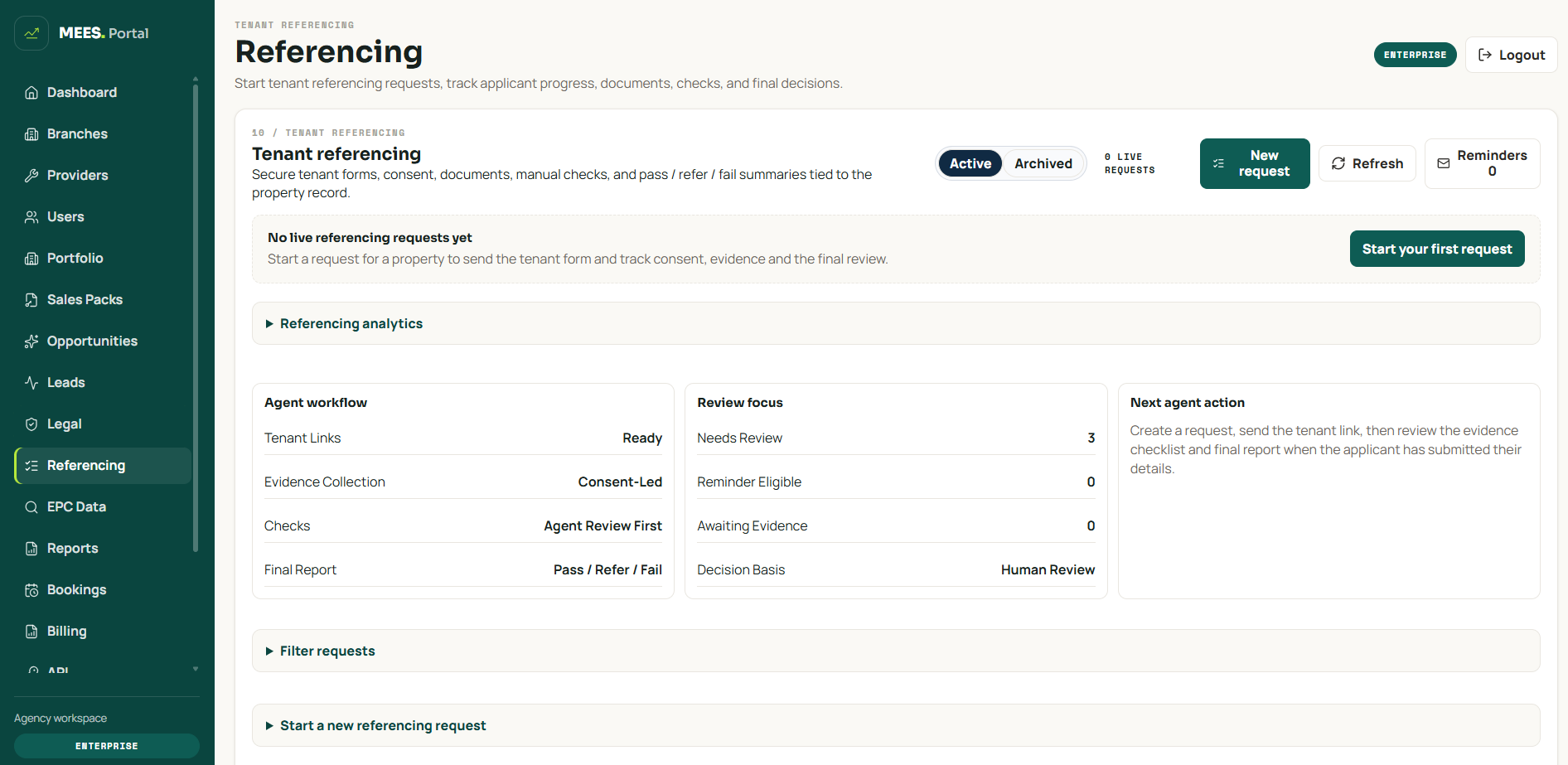
- Run tenant referencing with identity, credit and open-banking provider integrations
- Integrate via a scoped agent API (branch-level key scoping, OpenAPI 3 contract, per-key usage logging)
This is not a prototype. It is a live, multi-tenant SaaS in production at https://mees.epcscanpro.com with agency approval workflows, trial/basic/pro/enterprise plan gating, branches, users, MFA, audit logging, billing with invoice PDF export, and rate limiting.
How we built it
This was such a wonderful project to build and push the ability of codex in ways that i had not done before. The stack is React (Vite) on the front end, Express and SQLite on the back end — and the core was built in Codex sessions with GPT-5.6 doing the heavy lifting across the full stack:
- Full-stack feature construction. Codex built and iterated the Express API (4,500+ line server), the SQLite repository layer, and the React front end — including the risk-scoring engine, plan-gating middleware and the scoped API-key system with its OpenAPI contract.
- Document rendering. GPT-5.6 designed and implemented the landlord report renderer (premium four-sheet HTML/PDF design), the invoice renderer and the Sales Intelligence Pack renderer.
- Test coverage at scale. Codex wrote and maintained a 6,800-line smoke-test suite that gates every deploy — the reason a solo-built product of this size stays shippable.
- Codebase-scale refactors. Terminology audits, security hardening (MFA, rate limiting, upload validation) and the tenant-referencing provider abstraction were executed as multi-file Codex refactors that would have taken weeks by hand.
Overall: 292 commits, ~53,000 lines of code, built solo — Codex made the difference between "compliance dashboard demo" and "production SaaS with billing, API and referencing."
Challenges we ran into
- EPC register matching. Real-world portfolio addresses are messy; matching them confidently against the government EPC register meant building normalisers and surfacing match status/confidence rather than pretending every match is certain.
- Staying honest with regulated claims. EPC E is law today; EPC C is policy direction, not statute. We ran a full internal consistency audit so the product never overstates the rules — recommendations and costs are clearly labelled indicative until they're data-driven.
- Solo scale. A multi-tenant SaaS with billing, referencing and an API is a lot of surface area for one builder. The answer was the Codex-written test suite: every deploy is gated by 6,800 lines of smoke tests.
- Security done properly. Scoped API keys, branch-level restriction, MFA, upload validation and rate limiting all had to work together across tenants without breaking the agent experience.
Accomplishments that we're proud of
- A live, revenue-ready production SaaS — not a demo — built solo with Codex: plans, billing, branches, audit, API, referencing.
- Every property scored from real official EPC register data, with honest match confidence.
- A landlord report good enough that agents can put it straight in front of a client.
- 292 commits and ~53,000 lines that stay shippable because the test suite grew with the code.
What we learned
- Codex is most powerful at codebase scale: multi-file refactors, consistency audits and test generation compressed weeks into sessions.
- Tests are the leverage that makes solo AI-assisted development safe — write them early and let them gate every deploy.
- In a regulated market, honesty is a feature: "EPC C is coming, be ready either way" sells better than fear-mongering, and clearly-labelled indicative guidance builds more trust than false precision.
What's next for MEES Portal
Data-driven retrofit recommendations built from EPC recommendation fields and a measures/pricing engine; deeper lead-pipeline analytics; and public launch to UK letting agencies ahead of the EPC C transition — so every landlord conversation starts with the answer already in hand.
Built With
- codex
- express.js
- gpt-5.6
- javascript
- nginx
- node.js
- openai
- openapi
- pm2
- python
- react
- rest-api
- smtp
- sqlite
- vite

Log in or sign up for Devpost to join the conversation.