-
-
1
-
3
-
2
Inspiration
Alex, a college student, takes notes during lectures using Word. He spends hours integrating these notes with additional readings and creates a cheatsheet at the end of the semester. Alex finds it hard to manage the overwhelming amount of information from lecture videos and PDF books. Traditional note-taking is time-consuming and inefficient, leading to frustration and lower retention of critical information. Meermind was inspired by students like Alex who need a better way to manage their study materials.
What it does
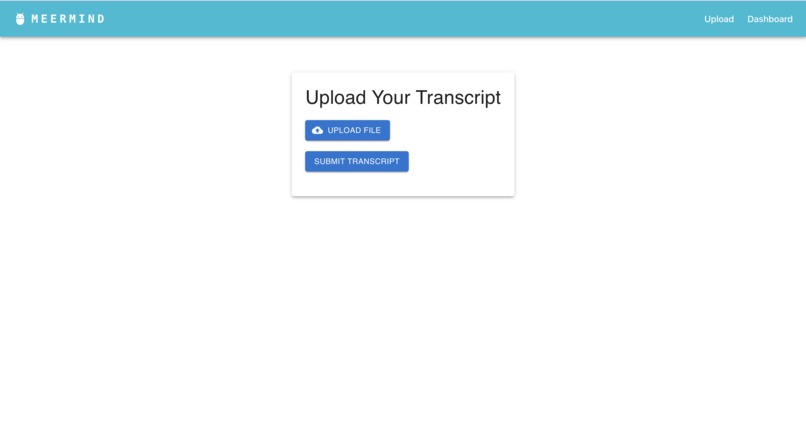
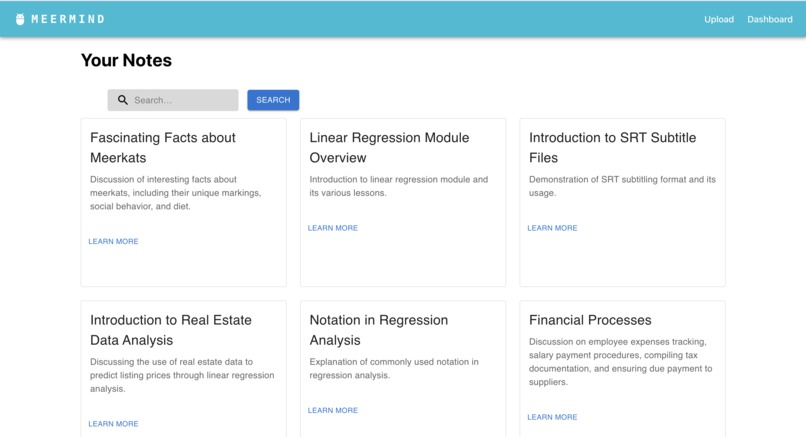
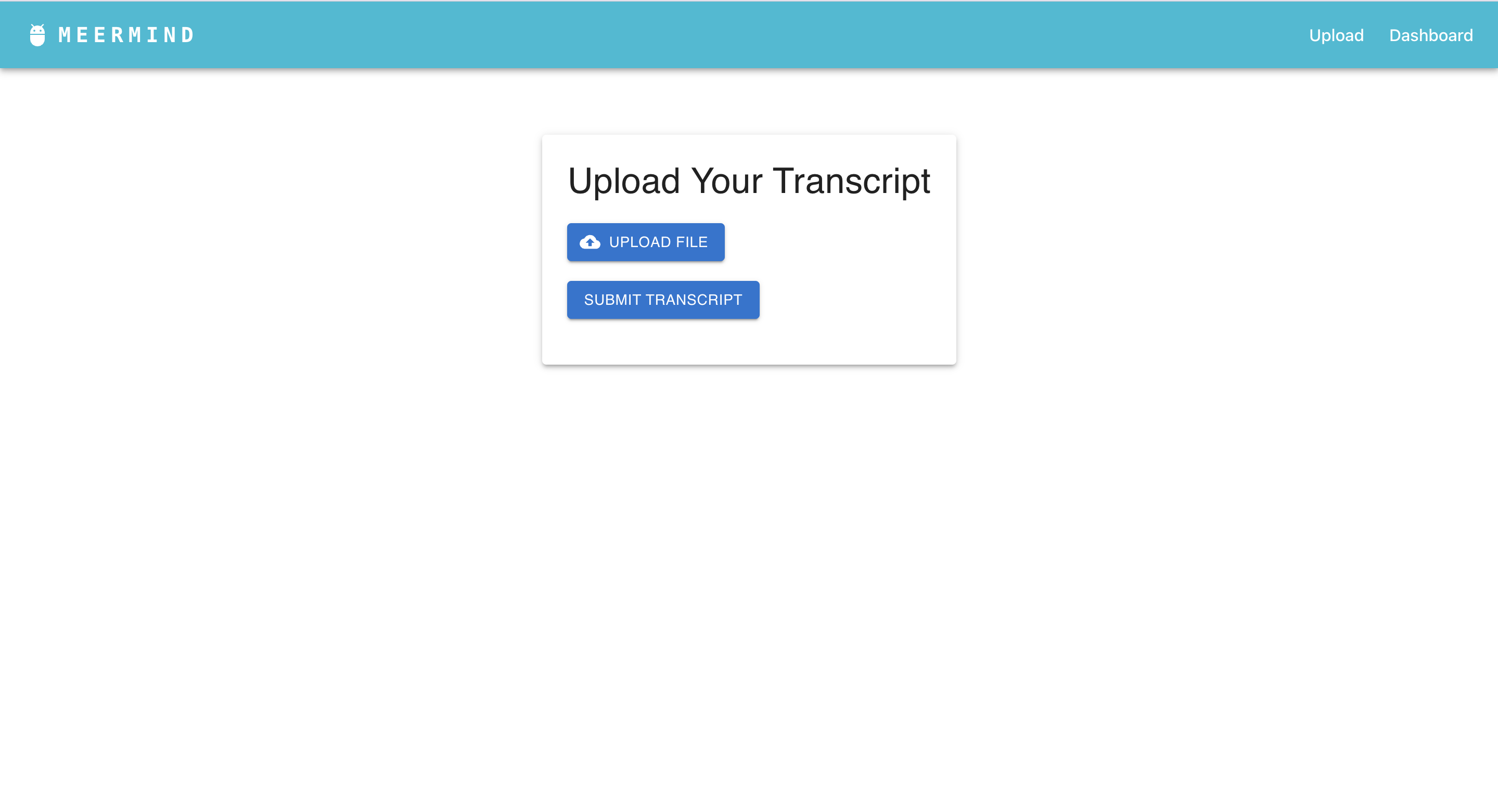
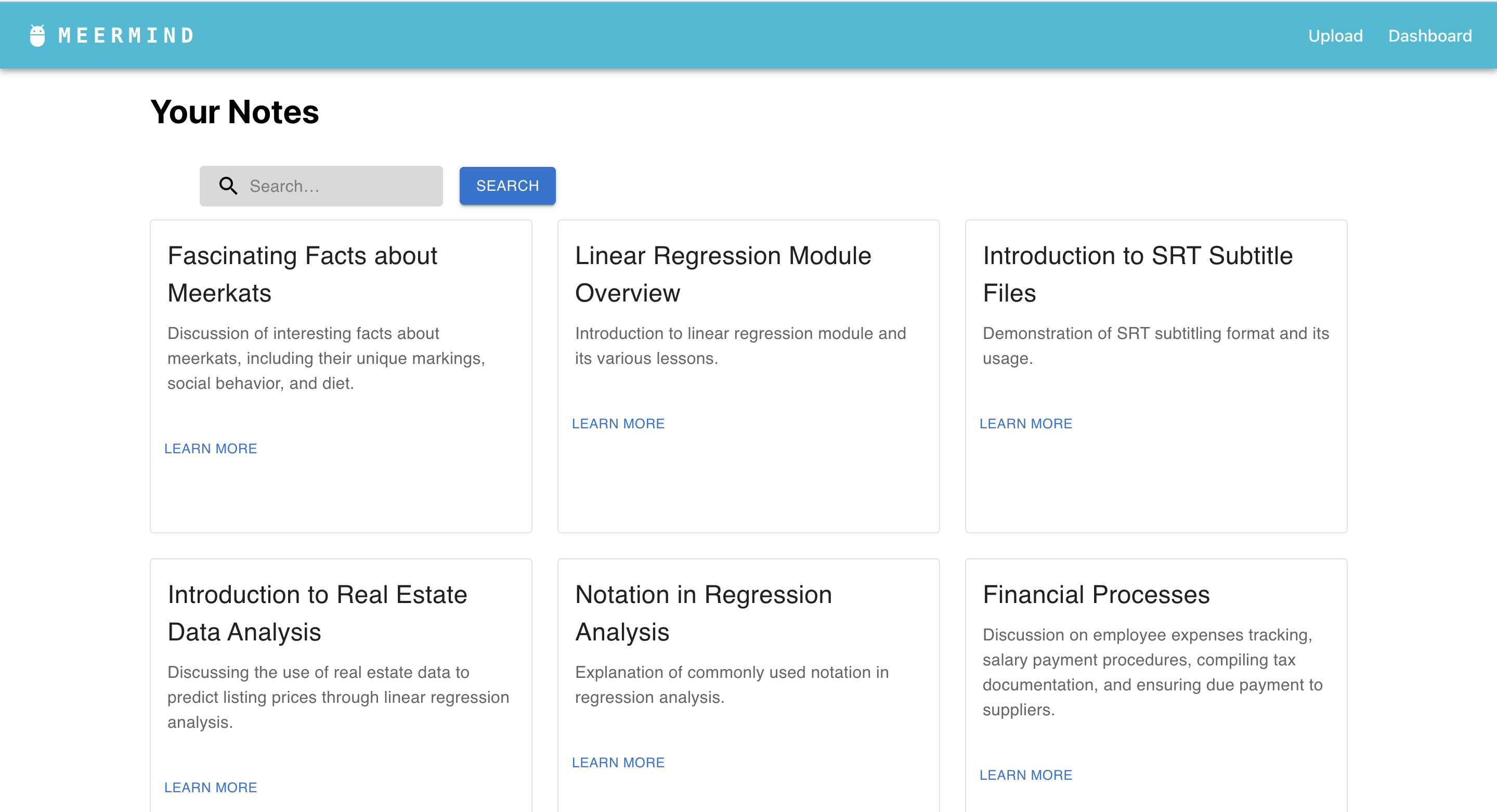
Meermind transforms Alex’s study routine by using AI to automatically generate concise summaries from .txt transcripts of his lecture videos, organizing his notes in an interactive dashboard for quick overviews and detailed insights. It employs embeddings to help Alex find similar content and make study recommendations, allowing him to connect different pieces of information more efficiently. Meermind aims to provide (in the next iteration) editable AI templates that Alex can refine (i.e., "Human-in-the-Loop"), ensuring a perfect blend of automation and personalization, and enables collaboration by letting Alex share and edit notes with classmates, turning studying into a team effort.
How we built it
React for the front end Python for the back end Flask for hosting the Python App and API Requests MongoDB Atlas for storing lecture documents and vector embeddings AI models for summarizatio, embeddings and similarity searches
Challenges we ran into
We faced many technical challenges, including CORS errors and issues with converting binary objects to JSON serializable formats. Many teammates were working with new technologies for the first time, which added to the complexity. However, we overcame these hurdles by helping each other, fostering a strong sense of teamwork and resilience. This experience was a significant learning opportunity for everyone involved, ultimately leading to the successful completion of our project.
Accomplishments that we're proud of
Despite these challenges, we are proud of what we have accomplished with Meermind. It was the first hackathon for everyone on the team, and we managed to build a full-stack app that we all liked. Our AI models achieved high accuracy in information extraction and similarity search, and the user interface has received positive feedback for its ease of use. The integration of MongoDB for efficient document and embedding management was another notable achievement.
What we learned
We learned that hackathons are friendly environments where people are eager to contribute and build something meaningful. We gained valuable knowledge from each other's experiences in areas like the ChatGPT API, UI state management, and React. Collaborating quickly and effectively was key, and we are all looking forward to spending more time with each other's code, learning about different languages and modules, and expanding this project further.
What's next for Meermind
Looking ahead, we have exciting plans for Meermind to better serve Alex and students like him. We aim to support more document formats, giving Alex greater flexibility in managing his study materials. Our AI models will be enhanced for better accuracy in summarization and recommendations. We are introducing collaborative features to the platform to make social learning more interactive and effective.
Personalized learning recommendations will tailor the study experience to Alex’s needs. A mobile app will allow Alex to access his notes on the go. Anki flashcards will aid in effective studying and retention. We will improve search functionality, similarity searches, and clustering with embeddings.
We will expand the sharing feature for better collaboration, introduce advanced prompt engineering, ensure editability and user control, set limits on updates to manage GenAI costs, and add validations to maintain data integrity. Our goal is to make Meermind the ultimate tool for efficient and effective learning.


Log in or sign up for Devpost to join the conversation.