-
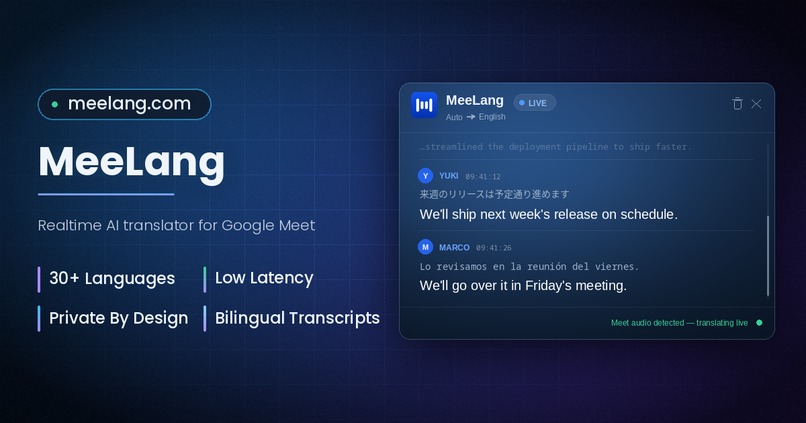
product
-
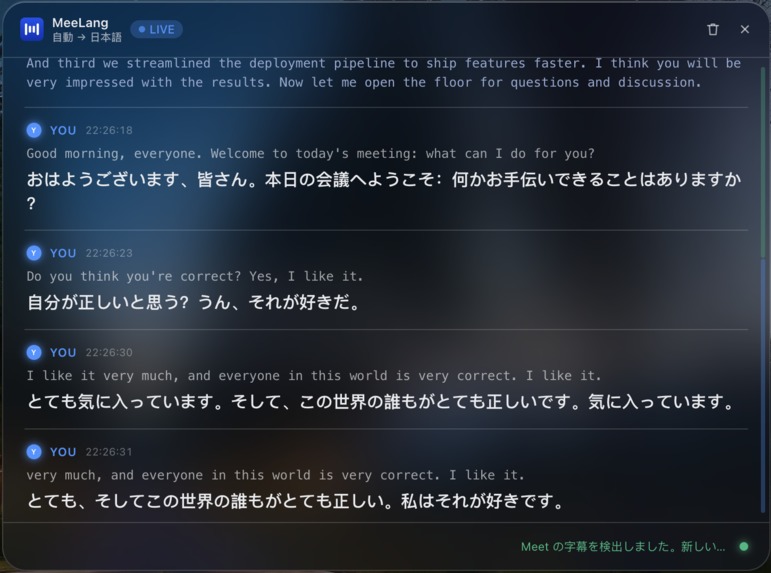
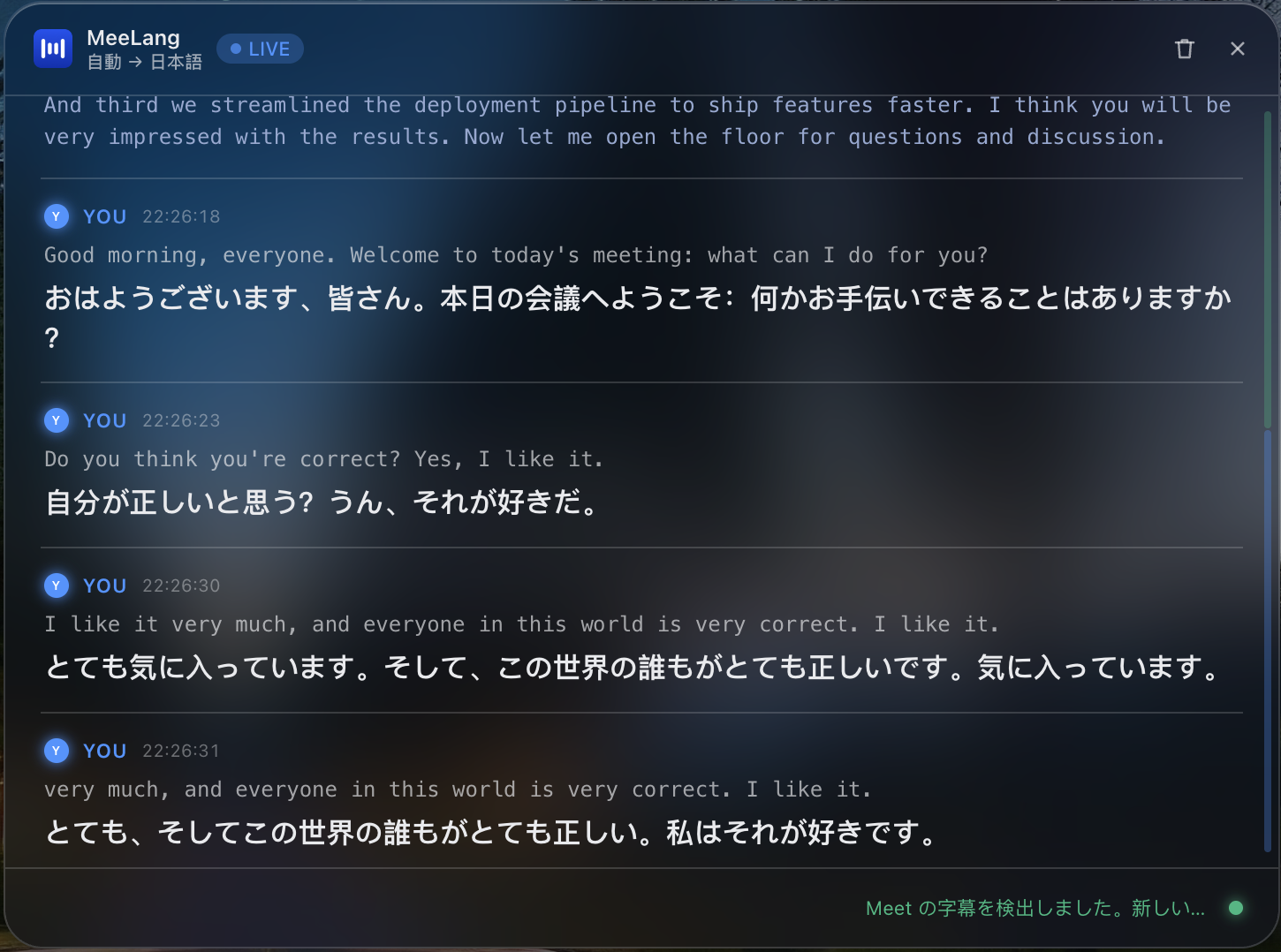
translator window in google meet
-
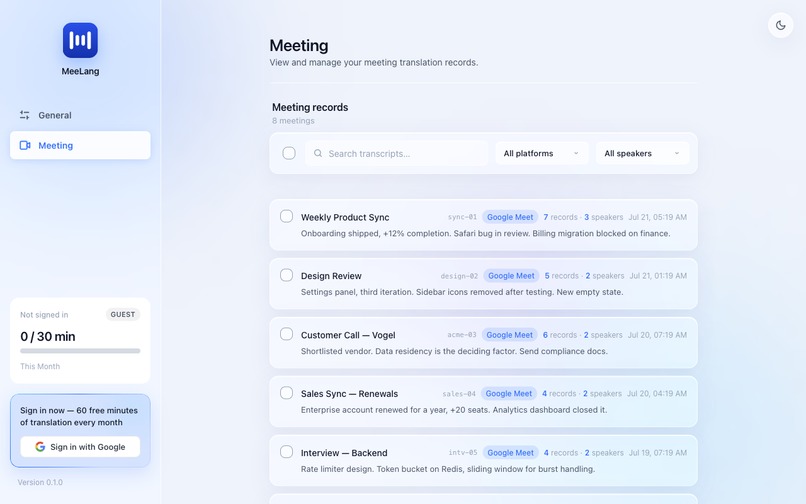
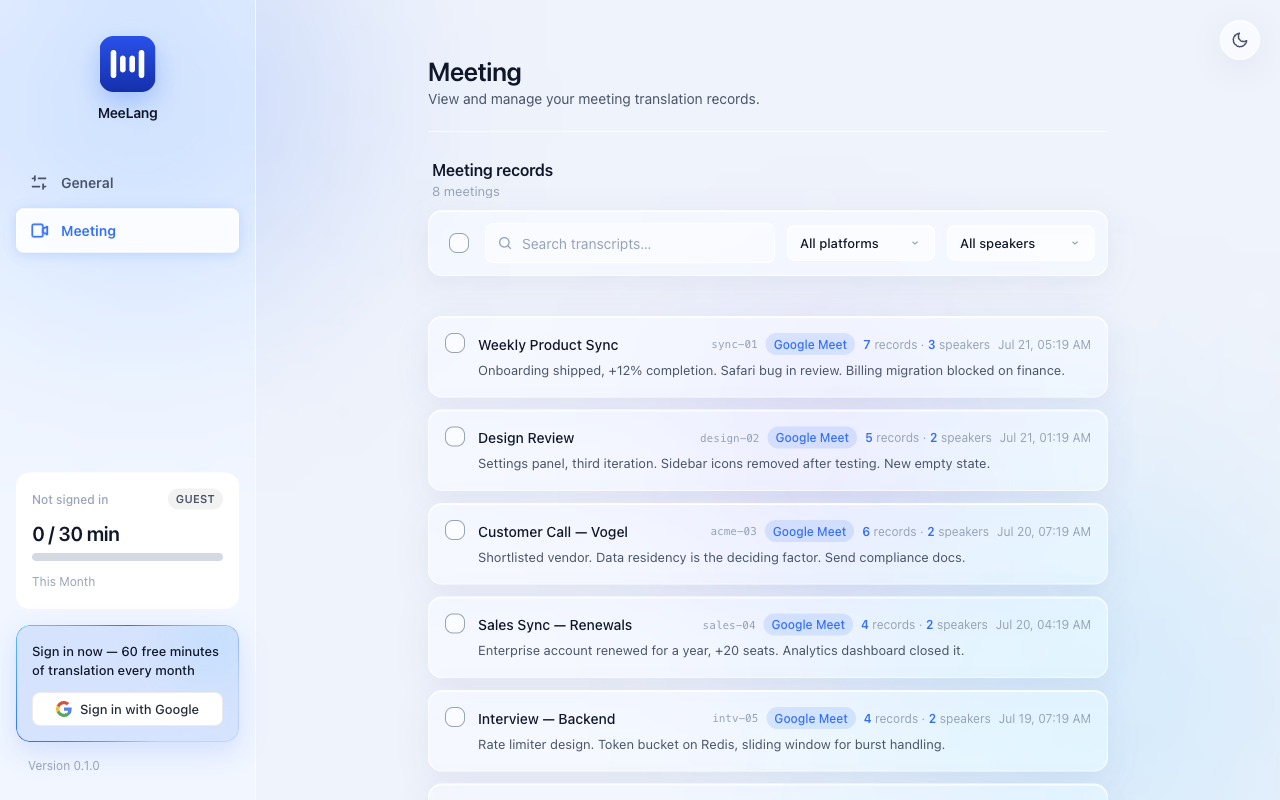
meeting transcript in dashboard
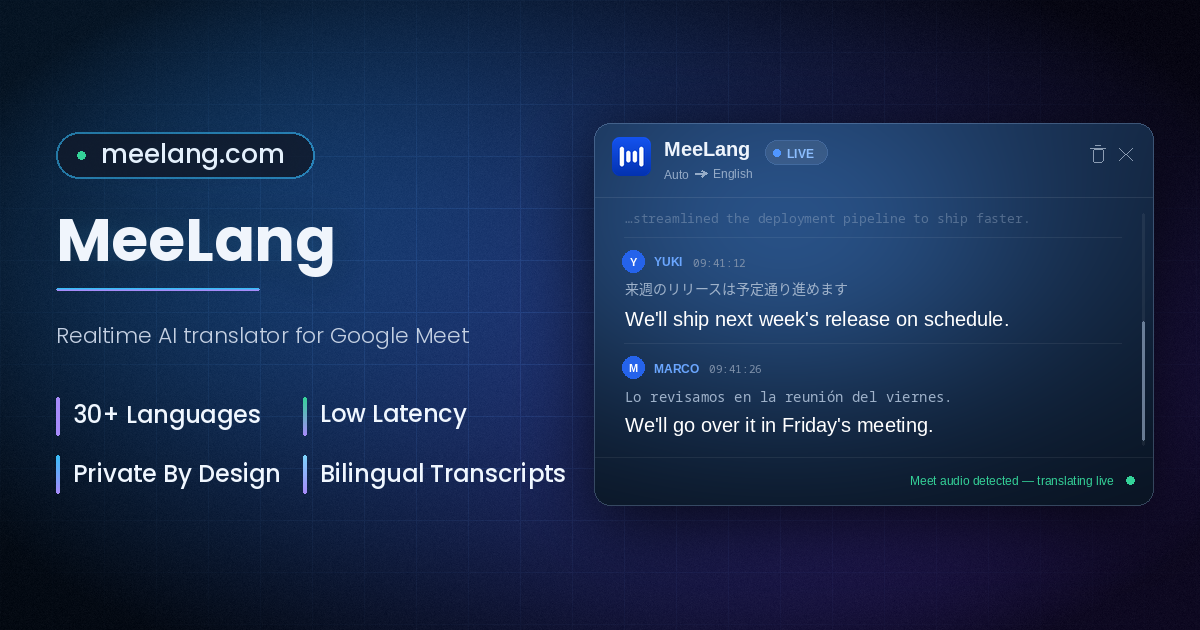
I originally didn’t want to build a small tool like this myself — a real-time translation Chrome extension. I assumed there should already be mature products on the market.
But after doing some research, I found that the existing real-time translation tools for Google Meet were surprisingly disappointing.
So, I decided to build one myself.
As AI has evolved, building a real-time meeting translation tool shouldn’t be that difficult, right? So I asked Claude Code to create a demo for me. The initial implementation was surprisingly fast.
The technical approach was also quite simple: capture Google Meet’s live captions and use an LLM in the backend for translation. At first, the results were pretty good. It was a tool that was at least usable. However, while AI helped me build the initial demo quickly, the countless improvements, adjustments, and debugging afterwards still took a considerable amount of time.
Yes, AI can give you a great starting point, but you still have to walk the rest of the journey yourself. Turning an idea into a truly usable product is far from something that can be done in just one week.
So I started thinking from a product perspective: what else do I need to build? What needs to be done before I can hand this product over to real users?
- User authentication;
- Meeting management: users may also want to manage their meeting records;
- Multi-language support: my target users are global;
- Subscription and payment system: after all, I’d like to make some extra income from it, even if it may not be much;
- Usage analytics: tracking users’ usage time;
- Security: secure API access and rate limiting.
And that’s how this project started growing like a snowball. From a simple frontend-only prototype, to a separated backend API, and then to a database-driven system. After a month of continuous iteration and optimization, this small tool finally started to look like a real product.
But the journey didn’t end there.
After launching, I started thinking about a fundamental question: why would users choose my real-time translation tool instead of others? What makes it different?
So I researched all the similar products on the market, analyzed their strengths, identified what features I was missing, and thought about how I could improve.
During this process, I discovered a major issue with my original implementation: it r


Log in or sign up for Devpost to join the conversation.