Inspiration
Medicine labels are written for pharmacists, not patients dense medical terms, tiny print, and abbreviations that are hard to parse even for someone tech-savvy. For elderly patients managing multiple prescriptions, this isn't just an inconvenience it's a real risk. Missed doses and dosing mistakes are one of the most common reasons older adults end up back in the hospital. I wanted to build something that removes that friction entirely: point your camera at a label, and get back exactly what you need to know with a reminder already set.
What it does
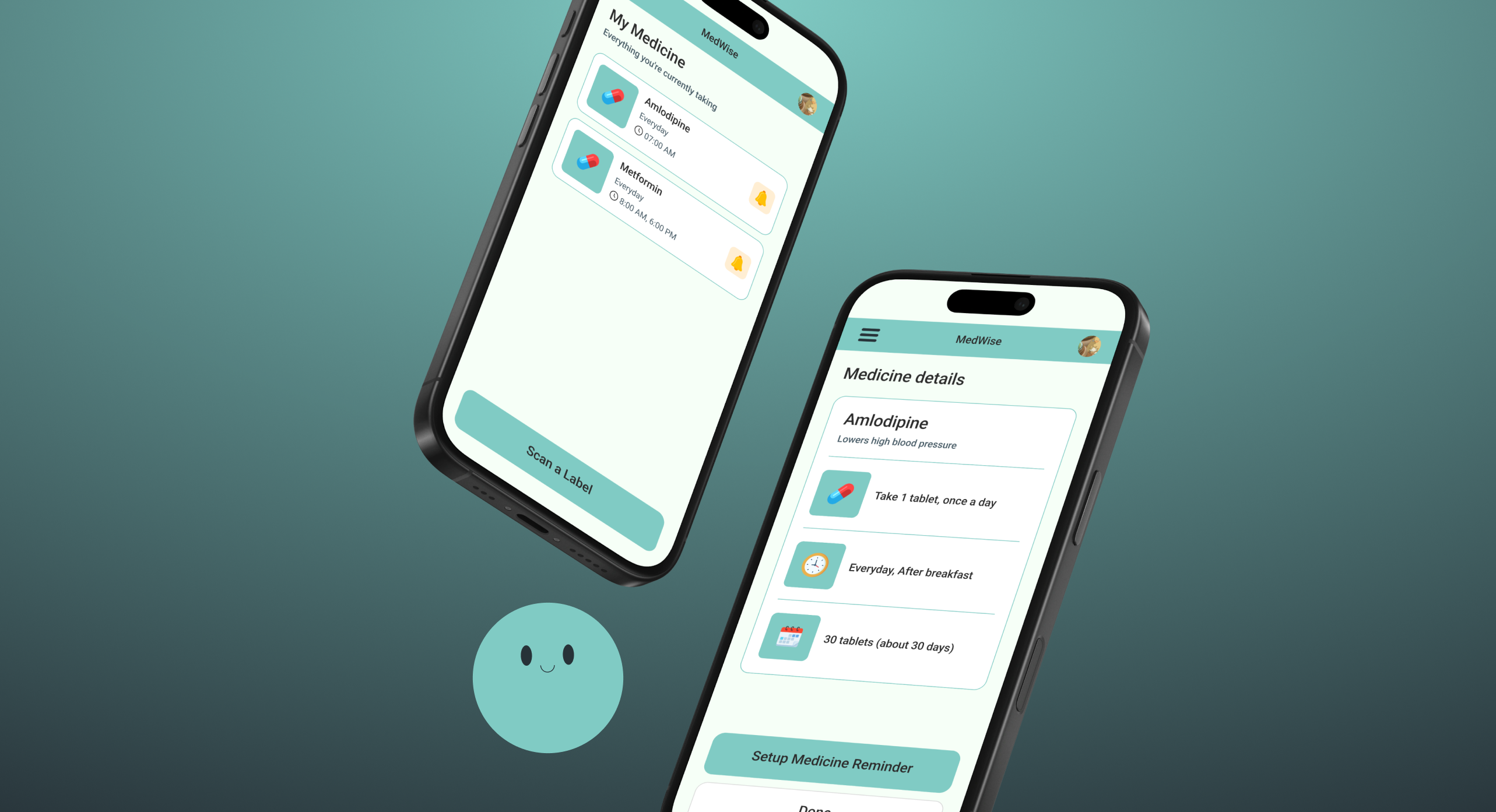
MedWise lets you photograph a medicine label and instantly turns it into:
- A plain-language summary: what the drug is for, how much to take, and when no medical jargon.
- Automatic reminders, pre-filled from the label's dosing instructions, so there's nothing to configure manually.
- A Pill List home screen showing every medication currently being tracked, at a glance.
How I built it
The interface was designed screen-by-screen starting from hand-drawn wireframes, then built out as a high-fidelity interactive prototype. (drug name, purpose, dosage, timing, warnings, reminder times) that the UI renders directly into the summary card and reminder screen.
Challenges I ran into
- Readability for the target audience: every design decision text size, contrast, tap target size, icon clarity had to be evaluated against "would this actually work for someone in their 70s or 80s?" rather than general UI conventions.
- Turning unstructured text into something actionable: medicine labels don't follow a consistent format, so getting a reliable, structured summary (rather than just a shorter paraphrase) took careful prompt design.
Accomplishments that I proud of
Designing a full, coherent user flow from scanning a label to getting a plain-language summary to a working reminder setup that's genuinely usable by someone unfamiliar with technology, not just visually polished.
What I learned
How much of a product's value can be communicated through design alone: tone of copy, hierarchy, and interaction flow can make an idea feel real and testable even before a single line of code exists.
What's next for MedWise
Turning the Figma prototype into a working build: OCR for real label scanning, an LLM to generate the plain-language summaries and reminder times, and local notifications to actually deliver the reminders.
Built With
- figma

Log in or sign up for Devpost to join the conversation.