-
-
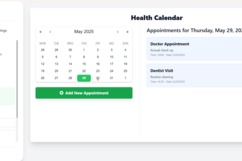
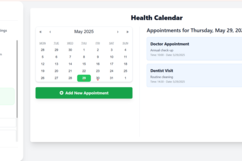
Claendar for medical appointments etc
-
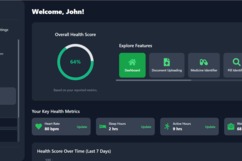
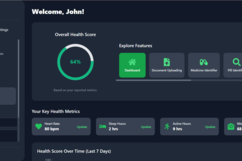
Dashboard
-
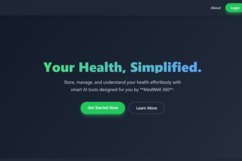
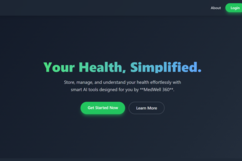
Homepage
-
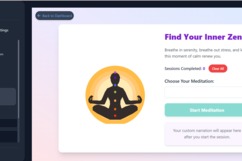
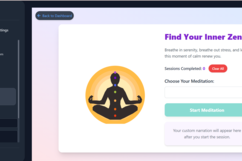
Zen AI friend(for Meditation)
-
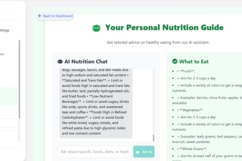
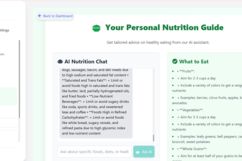
Personal nutrition guide based on our activities
Inspiration
We were inspired by the need for a comprehensive digital health companion that doesn’t just store medical records but actively assists users in managing their physical and mental well-being. Most existing apps focus on one aspect of health—be it fitness, symptom checking, or reminders—but very few unify everything into one seamless, user-friendly experience. My goal was to make healthcare more accessible, proactive, and personalized, especially for people juggling multiple health tasks or chronic conditions.
What it does
MedWell 360 offers a complete health assistant platform that includes: 1)AI-powered prescription reader and medicine identification
2)Symptom checker and health chatbot
3)Secure health document vault with filtering and categorization
4)Guided meditation and mental wellness tools
5)Lifestyle & nutrition tips based on user activity
6)Health calendar to track appointments, pills, and reminders
7)Interactive vitals dashboard for heart rate, sleep, and more All this is personalized per user using Firebase Auth and MongoDB.
How we built it
1)Frontend: React.js with TailwindCSS for responsive UI and dark mode support.
2)Backend: Node.js, Express, MongoDB with Mongoose for data modeling.
3)Authentication: Firebase Authentication to manage secure user sessions.
4)AI Tools: Used OCR + Groq API to extract and validate text from prescription images.
5)APIs: Integrated a custom symptom checker and chatbot using Groq’s LLM
Challenges we ran into
1)OCR accuracy issues when parsing handwritten prescriptions.
2)Handling sharp module compatibility errors on Render.
3)Syncing Firebase user data with our backend MongoDB structure.
4)Form inputs had lag issues initially due to uncontrolled state handling.
5)Balancing scope and time to deliver multiple working features within the hackathon timeframe.
Accomplishments that we're proud of
1)Delivered all key features integrated into a clean dashboard.
2)Built an AI-powered prescription and symptom pipeline with accuracy fallbacks.
3)Created a scalable document vault system that filters by category and date.
4)Seamlessly combined mental wellness and physical health into one platform.
What we learned
1)How to architect a modular health platform with feature-rich React components.
2)Integrating AI with frontend UX and syncing cloud-auth users with backend DBs.
3)Advanced use of Recharts, OCR pipelines, and Firebase logic.
4)Debugging deployment-specific bugs, especially related to native modules like sharp.
5)Effective team collaboration and task prioritization in high-pressure timelines.
What's next for MedWell 360
1)Add multi-language support for accessibility.
2)Use Google Fit or Apple HealthKit APIs to sync vitals automatically.
3)Enable doctor-facing dashboards for B2B use cases.
4)Add emergency health summary download for travel or clinical use.
5)Expand our AI health coach for lifestyle habit formation and stress tracking. 6)Launch a mobile app version for even better usability.
Built With
- api
- cloudinary
- firebase
- flask
- groq
- mern
- ocr

Log in or sign up for Devpost to join the conversation.