-
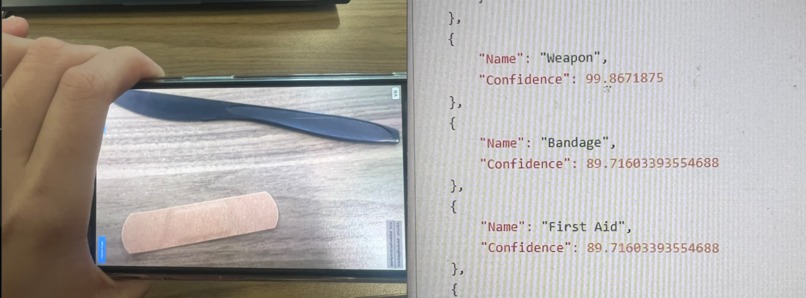
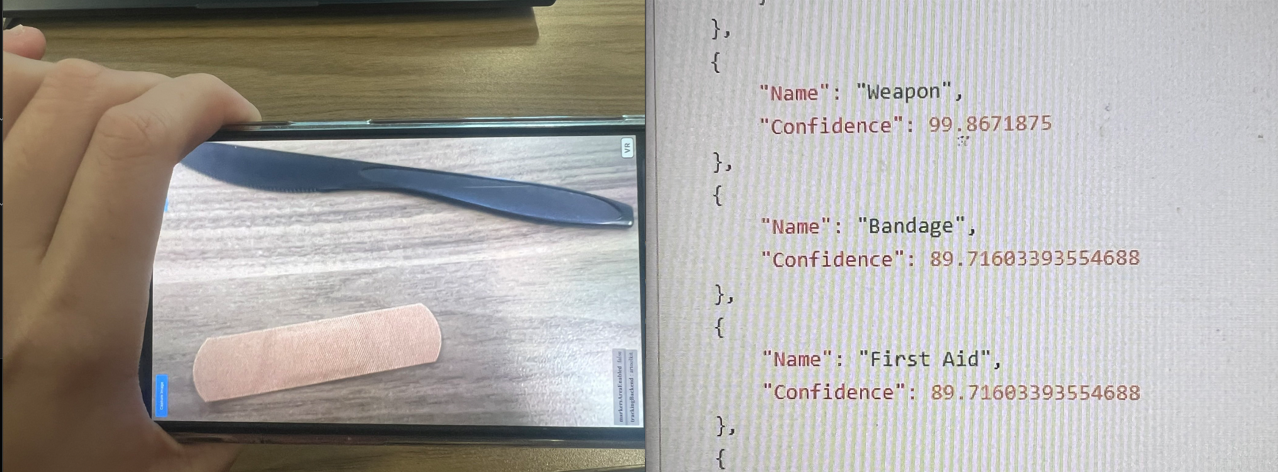
Using iPhone to capture a photo of equipment by using data sent to AWS Rekognition with AWS Web Services
Inspiration
Retained surgical bodies (RSB) are any foreign bodies left inside the patient after the operation. They occur due to a lack of organization and communication between surgical staff (NCBI). The June 2005 Joint Commission mandate states: retained surgical item cases are a sentinel event (patient safety event that results in death, permanent harm, or severe temporary harm…debilitating to both patients and health care providers involved in the event)” (No Thing Left Behind). [X-ray] practice pattern exposes patients and personnel to unnecessary radiation, prolongs the room turn over time and sometimes provides false assurance to the surgeon when a needle is not detected by x-ray (ARVO Journals). Even if an RSB is asymptomatic, its existence augments patient stress and heightens distrust of the medical system—rendering them less likely to seek medical care in the future. Current solutions to track surgical equipment have limitations and setbacks: dry erase boards are messy and unclear, magnetic sides only work for magnetic objects, and existing softwares only track equipment through sterilization (and do not track individual objects).
What it does
MedVisio-on works as a second brain and set of eyes for the perioperative nurse by tracking equipment to decrease their cognitive load so they can focus on the surgery, and also greatly reduces the preventable risk of Retained Surgical Bodies—thereby lowering the rate of morbidity and mortality to improve health outcomes and save patient lives.
We created an application demo of where someone from the surgery team will enter all the equipment they have accounted for in each phase of the surgery.
Before the OR: This will be entered well before the surgery. The medical staff should already have an idea of how much equipment will be present in the surgery and what they enter will be saved for comparison later on.
Right Before the Surgery: This will be entered right before the surgery when all the equipment is laid out in front of them and they are organizing it. They will start counting how much of each equipment they have and can stop entering once they are done. When they finish entering all the equipment the program will compare what they entered to what was entered in the ‘Before OR’ section and will let the medical staff know whether something is missing or if there is extra equipment. User will also be prompted to take a picture of the surgical trays for comparison later.
Finishing up the Surgery: Now when you are finishing up the surgery you will enter all the equipment you currently have with you again. If you are missing something the program will let you know what you are missing and give a warning for the hazardous equipment that could potentially be most harmful in the body as well as show what equipment seems to be missing based on the information provided earlier as well. User will be prompted to take a picture of the surgical trays to compare with the "Before Surgery" picture and detect discrepancies.
How we built it
Created the application through pycharm and coded in python. 2 lists were used. One to keep track of the type of equipment and the other to keep track of the number of each type of equipment, in each of the phases. The two lists you enter in the first phase of the surgery (PriorOR()) are global lists and there is also a global variable to keep track of the total number of equipment needed for the surgery. This was done so that the program will remember the original number of equipment in the surgery and the original sets of equipment. Then in the PriorSurgery() function and PostSurgery() function, they will compare the lists of what the user just entered to the original information given then it is coded to give the necessary feedback on what equipment may be missing or if there is any extra equipment that was counted.
The code is designed to connect with a camera system, making use of Amazon AWS services, S3 buckets, API Gateway, and Amazon Rekognition for the purpose of medical object detection. This integration enhances healthcare by enabling the identification of essential medical objects and providing support for medical professionals in their tasks.
Challenges we ran into
Healthcare has no margin for error (especially in surgery), so our project needs to be accurate, clear, and efficient. Due to the high demands of the work environment, anything we implement needs to be as streamlined and simple as possible. Making it practical, feasible, and appealing for all to increase probability of user uptake and success was a challenging balancing act.
There was so much that could have been added but not enough time to add things. However, all the important parts of the application were implemented and if there was more time I would have added more ways to keep track of all the equipment more securely and make it easier to use.
Accomplishments that we're proud of
We came together as a team despite all of the setbacks and obstacles that came up throughout the process. We all learned so much from the representatives, fellow hackers, and each other—and most importantly, we never gave up nor left anyone behind.
What we learned
We learned how to bring together different fields of knowledge and bridge gaps so people in every level of exposure to the medical field can understand.
What's next for MedVisio-on
In the future, we plan to implement advanced image tracking to differentiate between very similar surgical equipment, and tackle headset integration. On a headset, object tracking visuals would be hidden to the user to avoid distraction. The perioperative nurse (most likely user of headset) will already be watching everything in the surgery so the headset will be able to easily gather all object tracking information. AR/VR application would include showing a three-dimensional arrow directly on top of the lost object to aid in quick retrieval and save precious seconds in the Operating Room. Hand tracking would allow touchless interaction with the user interface to increase sterility.
Built With
- amazon-rekognition
- amazon-web-services
- api
- api-gateway
- javascript
- lambda
- python
- s3buckets

Log in or sign up for Devpost to join the conversation.